DD
MM
YYYY

PAGES

DD
MM
YYYY

spot_img

PAGES

Home Blog Page 3841

Facts and Developments about the Evergrande Debt Crisis

0

Evergrande is one of the largest and most indebted real estate developers in China and the world. The company has been struggling to repay its debts, which exceed $300 billion, amid a regulatory crackdown on the property sector by the Chinese government. The crisis has raised concerns about the stability of China’s economy and the potential spillover effects on global markets.

Evergrande was founded in 1996 by Xu Jiayin, who became one of China’s richest men by expanding the company rapidly across hundreds of cities. Evergrande diversified into various sectors, such as electric vehicles, football, and bottled water, but its core business remained property development.

Evergrande’s troubles began in 2020, when the Chinese government imposed new rules to curb excessive borrowing and speculation in the property sector, known as the “three red lines”. Evergrande failed to meet these thresholds and was forced to deleverage by selling assets and cutting prices.

Evergrande’s liquidity crisis worsened in 2021, as it faced a series of debt deadlines and lawsuits from creditors, suppliers, and homebuyers. The company warned that it could default on its debts and that it faced “tremendous” pressure to raise cash. It also suspended trading of some of its bonds and sought to renegotiate terms with bondholders.

In September 2021, Evergrande missed interest payments on two offshore bonds, triggering a grace period of 30 days. The company also failed to pay interest on a domestic bond but reached an agreement with the bondholders to avoid default. The missed payments prompted ratings agencies Fitch and Moody’s to downgrade Evergrande’s credit rating and declare it in default.

In October 2021, Evergrande made a surprise payment of $83 million for an offshore bond that was due on September 23, staving off default for the time being. The company also resumed some of its construction projects that had been halted due to lack of funds. However, Evergrande still faced several other debt deadlines and uncertainties over its restructuring plan.

In November 2021, Evergrande proposed a restructuring plan that would involve swapping its debts for equity or new bonds. The plan would require approval from creditors, regulators, and courts. Evergrande said that the plan complied with international norms and best practices and that it aimed to protect the interests of all stakeholders.

In December 2021, Evergrande missed another interest payment on an offshore bond, triggering another grace period of 30 days. The company also reported a 29% drop in revenue for the first nine months of 2021 and said that it expected a significant decline in net profit for the full year. The company’s shares plunged to their lowest level since 2014.

The Evergrande debt crisis has raised fears of a systemic risk for China’s property sector, which accounts for about 30% of China’s GDP and supports millions of jobs. Some analysts have compared Evergrande to Lehman Brothers, the US investment bank whose collapse in 2008 triggered a global financial crisis. However, others have argued that China has enough tools and resources to contain the fallout and prevent a contagion.

The impact of the Evergrande debt crisis on global markets has been mixed so far. Some investors have sold off risky assets and sought safe havens, such as US Treasuries and gold, amid worries about China’s economic slowdown and financial stability. Others have seen opportunities to buy undervalued stocks or bonds in China or other emerging markets.

Evergrande’s default has significant implications for China’s economy and financial system, as well as for global markets. Evergrande accounts for about 4% of China’s GDP and employs about 200,000 people directly and indirectly. Its collapse could trigger a domino effect on other property developers, banks, shadow lenders, local governments, and other sectors that depend on real estate. It could also cause social instability and erode consumer confidence. Moreover, Evergrande’s default could spook foreign investors who hold about $20 billion of its offshore bonds, leading to capital outflows and contagion risks for emerging markets.

The Chinese government has adopted a cautious approach to deal with Evergrande’s crisis, balancing between maintaining financial stability and avoiding moral hazard. The government has not provided direct bailouts or guarantees to Evergrande or its creditors, but it has facilitated negotiations among different parties to reach orderly resolutions. The government has also instructed local authorities to ensure the delivery of unfinished homes to protect the interests of homebuyers. Furthermore, the government has tightened supervision and regulation of the property sector to prevent similar risks from arising in the future.

The government’s stance reflects its broader policy goals of deleveraging the economy, curbing speculation, and promoting social equality. The government views the property sector as a source of systemic risk and social discontent, as well as a drag on economic transformation. The government wants to reduce the reliance on real estate for growth and wealth creation, and instead foster innovation and consumption as new drivers of development. The government also wants to address the widening gap between rich and poor and ensure that housing is affordable and accessible for all.

Evergrande faces an uncertain future as it tries to restructure its debt and resume its operations amid legal challenges and regulatory pressures. It is unlikely that Evergrande will survive as a whole, but it may be able to salvage some of its core businesses or assets through asset sales or mergers. It may also be able to repay some of its creditors or investors through cash or equity swaps. However, the recovery rate for Evergrande’s stakeholders is expected to be low, given the complexity and scale of its liabilities.

China’s property market is also undergoing a structural adjustment as the government implements stricter rules and tighter credit conditions. The market is likely to see slower growth, lower prices, and higher defaults in the near term, as demand and supply adjust to the new reality. However, the market may also become more stable, sustainable, and balanced in the long term, as the government promotes affordable housing, rental housing, and rural revitalization.

The market may also see more consolidation, innovation, and diversification, as the government encourages healthy competition, green development, and mixed-ownership reform. The outcome of the Evergrande debt crisis will depend on how the company manages its restructuring process and how the Chinese government intervenes to maintain social stability and economic growth. The crisis could also have implications for China’s regulatory environment, property market, and financial system in the long term.
Implications of Incessant Coups and Political Instabilities in Africa

0

West Africa is a region with immense potential for economic growth and development. It has abundant natural resources, a young and dynamic population, and a strategic location on the Atlantic coast. However, the region also faces significant challenges, such as poverty, inequality, corruption, and insecurity. One of the most pressing issues that affects the economic prospects of West Africa is the political uncertainty and instability that plagues many of its countries.

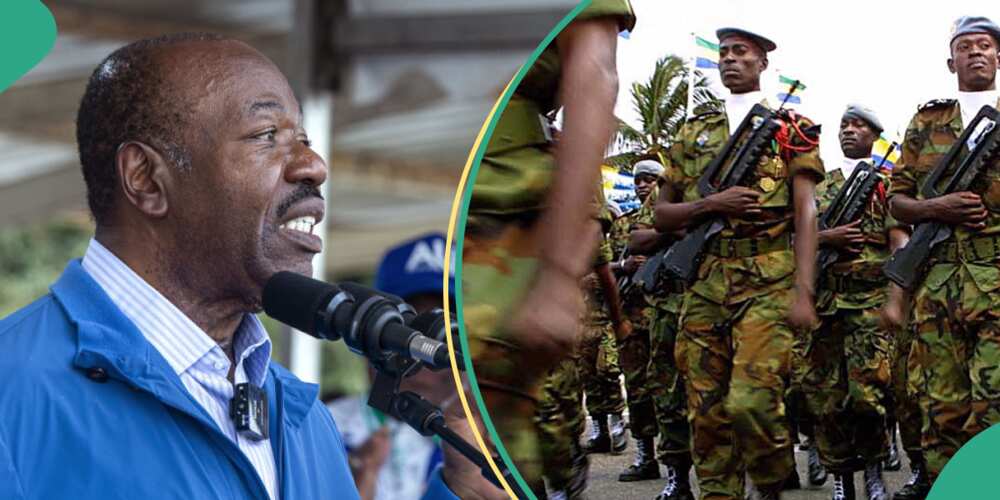
West Africa has witnessed a surge of coups and attempted coups in recent years, raising concerns about the state of democracy and security in the sub region. Since 2010, there have been over 20 coups and coups attempt in West Africa and the Sahel, with seven occurring since 2019. Most of these coups have taken place in former French colonies, such as Mali, Guinea, Burkina Faso and Niger and recently Gabon. These coups have disrupted the democratic process, undermined the rule of law, and eroded citizens’ trust in political institutions. They have also created an atmosphere of uncertainty, hindering sustainable socio-economic development and regional integration.

What are the causes of these incessant coups? There are both inward-looking and outward-looking factors that contribute to the instability and vulnerability of West African states. Inward-looking factors include governance deficits, non-fulfilment of the entitlements of citizenship, frustrated masses (most of whom are young) and growing insecurity. Outward-looking factors include global dynamics that have significant impact on governance and security on the continent, such as the role of external actors, the effects of climate change, and the challenges of transnational terrorism and organized crime.

Governance deficits refer to the lack of effective, accountable and inclusive institutions that can deliver public goods and services, ensure respect for human rights and the rule of law, and manage social diversity and conflicts. Many West African states suffer from weak governance capacity, corruption, nepotism, patronage, and authoritarian tendencies that undermine democratic principles and practices.

These factors create dissatisfaction and disillusionment among the population, especially the youth, who constitute the majority of the population in most West African countries. The youth face high levels of unemployment, poverty, inequality, and social exclusion, which make them vulnerable to radicalization and recruitment by violent groups or coup plotters.

Non-fulfilment of the entitlements of citizenship refers to the failure of the state to meet the expectations and aspirations of its citizens in terms of political participation, representation, protection, and empowerment. Many West African citizens feel that their voices are not heard or respected by their governments, that their interests are not taken into account or protected by their leaders, and that they have no say or influence over the decisions that affect their lives.

This leads to a loss of trust and confidence in political institutions and processes, and a sense of alienation and frustration among the citizenries. This also creates a legitimacy crisis for the elected governments, which are often perceived as illegitimate, unrepresentative, or incompetent by their opponents or critics.

Growing insecurity refers to the increasing threats and challenges to human security and state stability in West Africa. These include armed conflicts, violent extremism, terrorism, organized crime, human trafficking, drug trafficking, piracy, illegal fishing, cybercrime, environmental degradation, natural disasters, epidemics, food insecurity, and humanitarian crises. These threats pose serious risks to the lives and livelihoods of millions of people in West Africa, as well as to the sovereignty and territorial integrity of West African states. They also undermine the efforts to achieve peace, development, democracy,

Political uncertainty and instability can have negative impacts on the economy in various ways. First, they can deter foreign and domestic investment, as investors may perceive the region as too risky or unpredictable. This can reduce the inflow of capital, technology, and expertise that are essential for economic development. Second, they can disrupt trade and commerce, as political violence, civil unrest, or border closures can hamper the movement of goods and people across the region.

This can affect the competitiveness and productivity of businesses, as well as the availability and affordability of essential goods and services for consumers. Third, they can undermine public institutions and governance, as political instability can erode the legitimacy and effectiveness of state authorities, weaken the rule of law, and foster corruption and impunity. This can affect the delivery and quality of public goods and services, such as infrastructure, education, health, and security, that are vital for economic growth and social welfare.

Therefore, it is imperative that West Africa addresses the root causes and drivers of political uncertainty and instability in order to unleash its economic potential. Some of the possible solutions include strengthening democratic institutions and processes, promoting inclusive and participatory governance, enhancing regional cooperation and integration, fostering social cohesion and dialogue, and addressing structural inequalities and grievances. By doing so, West Africa can create a more conducive environment for economic development, as well as for peace and stability.

NFT Marketplaces: Where to Buy, Sell, and Discover Digital Collectibles

0

NFTs are digital assets that have unique data attached to them, which is stored on a blockchain and used to prove ownership. Over recent years, interest in NFTs has exploded, which has paved the way for countless NFT marketplaces to emerge. These decentralized platforms are the one-stop shop for selling, buying, and discovering NFTs.

OpenSea

OpenSea has been around since December 2017, which makes it the oldest and most known NFT marketplace. There’s an enormous catalog of more than 4 million NFTs listed there, and it has wide support for everything from real estate to in-game assets. The user interface is simple, and the transaction fees are considerably low.

To discover new collections, all you need to do is conduct a filtered search, which lets you split results into the creator, collection, price, rarity, and other attributes. This is particularly useful because rarity is one of the biggest indications of NFT value. To find out more about finding out rarity, simply follow the link and have all your crypto questions answered.

SuperRare

SuperRare is an interesting NFT marketplace that’s committed to listing the most sought-after items. Every digital asset is curated and verified by highly qualified experts, which helps instill trust in the level of quality.

There is a strong creator community using SuperRare, and many NFTs sell for thousands. The platform looks elegant and easy to use, which makes the process of buying an NFT straightforward. As well as this, NFT investors subscribed to SuperRare Pro can get access to collection presales and much more.

Nifty Gateway

Just like SuperRare, Nifty Gateway is committed to listing high-quality artwork and other NFTs. They hold regular live auctions and limited edition NFTs, which shows they know how to build a sense of community exclusivity. Unlike many other NFT marketplaces, Nifty Gateway accepts traditional card payments, which means it’s accessible to absolute beginners.

The true cherry on the cake when it comes to Nifty Gateway is the gem system, allowing users to buy and store NFT tokens, which facilitates future NFT purchases. This makes purchasing NFTs simpler and means there’s more liquidity, which any NFT investor will tell you is good news.

Blur

Blur takes the NFT marketplace space in a different direction to make accessing the NFT landscape easier than ever before. By using Blur, you can browse the native catalog as well as other marketplace listings, and then you can make your purchase through Blur. Essentially, the platform provides an infrastructure that’s similar to trading crypto with immediate liquidity.

Countless tools on Blur allow you to search for new NFTs including a deep search function. As well as this, they have a Tinder-style “Hot or Not” feature, which allows you to swipe left or right on NFTs you do or don’t like.

Rarible

Rarible is a fantastic NFT marketplace that lists everything from digital pets to memes. One of the primary focuses of Rarible is community engagement, which is why they have a strong social feed where you can communicate with creators. If you choose to interact with the Rarible ecosystem, you will receive token rewards, which can then be spent on the platform.

As well as buying NFTs, Rarible makes it easy to mint your own, which means you can get involved in the NFT space as a creator. At the moment, you can mint NFTs onto the Ethereum, Tezos, Immutable X, and Polygon blockchain.

NFT marketplaces are the gateway to buying, selling, and discovering digital assets. However, there are countless obstacles in the way until these become widely used and accepted, but there’s no time like the present to start getting educated.

Western Union Embraces Ripple Blockchain and XRP Token

0
An IMTO

Western Union, one of the world’s leading money transfer services, has announced that it is adopting Ripple’s blockchain technology and XRP token to improve its cross-border payment capabilities. This is a major milestone for both Western Union and Ripple, as they seek to leverage the benefits of distributed ledger technology and digital assets to reduce costs, increase speed and enhance security of money transfers.

Ripple is a global payment network that connects banks, payment providers, digital asset exchanges and corporates via its proprietary blockchain platform, RippleNet. RippleNet enables fast, low-cost and reliable transactions across borders, using a variety of currencies and assets, including XRP, the native cryptocurrency of the network. XRP is designed to be a bridge currency that facilitates the exchange of value between different fiat currencies and other digital assets.

Western Union has been testing Ripple’s technology since 2018 and has been impressed by its performance and potential. According to Western Union’s CEO Hikmet Ersek, Ripple’s technology can help Western Union reduce its settlement times from days to seconds, lower its operational costs by up to 60%, and improve its compliance and security standards. Ersek also said that Western Union is open to using XRP as a bridge currency for some of its transactions, especially in emerging markets where liquidity is scarce and expensive.

Western Union’s adoption of Ripple’s technology and XRP token is a significant endorsement for the blockchain and cryptocurrency industry, as it demonstrates the real-world use cases and benefits of these innovations. Western Union is one of the largest and most trusted money transfer services in the world, with over 550,000 agent locations in more than 200 countries and territories. By integrating Ripple’s technology and XRP token into its platform, Western Union can offer its customers a faster, cheaper and more secure way to send and receive money across borders, while also gaining a competitive edge in the global remittance market.

RippleNet and XRP are two innovative technologies that can offer significant benefits to Western Union, one of the world’s leading money transfer providers. RippleNet is a global network of banks and financial institutions that use Ripple’s blockchain technology to process cross-border payments in real time. RippleNet enables Western Union to access new markets, expand its reach, and reduce operational complexity. By joining RippleNet, Western Union can leverage the network’s standardized rules, governance, and compliance framework, as well as its rich data and analytics capabilities.

XRP is a digital asset that powers RippleNet and acts as a bridge currency between different fiat currencies. XRP can help Western Union lower its liquidity costs, as it eliminates the need for pre-funding accounts in multiple countries. XRP also enables faster and cheaper transactions, as it settles in seconds and has low transaction fees. By using XRP, Western Union can offer its customers more competitive rates and faster delivery times.

Together, RippleNet and XRP can provide Western Union with a competitive edge in the global remittance market, which is expected to grow to $930 billion by 2026. By adopting these technologies, Western Union can enhance its value proposition, increase its market share, and improve its profitability.

No Buyers For Dogecoin (DOGE) And Solana (SOL) As Investors Join Pomerdoge (POMD) For 17x Presale

0

Although the overall crypto market was experiencing stagnation in the first half of 2023, the second half has brought optimism to the industry. Notably, investors are rushing towards a new crypto project, Pomerdoge.

This new project has shown massive growth potential, and has raised more than $1 million during the first few days of its presale launch. Meanwhile, Dogecoin (DOGE) and Solana (SOL) have been losing their momentum.

Summary

  • Dogecoin’s (DOGE) value plummets by 14%.
  • Solana (SOL) has seen an increase in its liquidity, but its price has dropped by 9%.
  • Pomerdoge has raised more than $1 million in the first stage of its presale.

Click Here To Find Out More About The Pomerdoge (POMD) Presale

Dogecoin (DOGE) Is Under heavy Selling Pressure

Dogecoin (DOGE) has become heavily reliant on market speculations and hype for its price revival. For instance, Dogecoin’s (DOGE) recent upward movements on the price chart was caused by the hype surrounding the actions of X, formerly called Twitter, and Elon Musk.

Apart from those sporadic events, Dogecoin (DOGE) has mostly been bearish in recent weeks. The latest data from Coinalyze informs about the heavy selling pressure on Dogecoin (DOGE) investors. Subsequently, the price of Dogecoin (DOGE) has plummeted by 14% in the past seven days.

Dogecoin’s (DOGE) current price hovers at $0.0657.

Solana’s (SOL) Liquidity Increases But Price Falls

The Solana (SOL) ecosystem has witnessed a paradoxical situation lately. While its liquidity has increased in recent weeks, the market value of Solana (SOL) has taken a dip.

In the past 30 days, the market value of Solana (SOL) has declined by 9%. Thus, Solana (SOL) is currently available to trade at $23.07. Earlier, Kaiko, a market research report, had revealed that Solana (SOL) is one of the cryptocurrencies with high liquidity on Coinbase. According to experts, high liquidity often brings price stability, and less volatility for cryptocurrencies. But this has not been the case with Solana (SOL) this time.

Pomerdoge (POMD) Targets Generating Big Wealth For Investors

According to a report by Polaris Market Research, the size of the global blockchain gaming industry can surge to $1,020 billion by 2032. Pomerdoge has developed a state-of-the-art play-to-earn (P2E) meme coin, disrupting the blockchain gaming sector. It will be launching Pomergame, a P2E game, in Q4 2023, which will allow players to play and earn simultaneously.

Three elements have made up the Pomerdoge ecosystem: Pomergame, Pomerplace, and a collection of 7,777 NFTs. Pomergame allows players to build, and enhance their in-game characters. Additionally, Pomerplace enables gamers to trade custom in-game assets. Besides, POMD owners will receive access to the NFT collection of Pomerdoge. Each NFT will have unique value and utility.

POMD will be the native token for the platform. The token holders can also stake their POMD tokens to generate extra income. Pomerdoge’s presale phase is live, and currently in stage one. The project has raised over $1 million, and more than 125 million POMD tokens are sold out. The token’s price has also risen to $0.008 from $0.007.

Furthermore, the market value of POMD tokens can skyrocket by at least 17x before the culmination of the presale round. Pomerdoge has also announced to distribute giveaways worth $150,000, which includes a $50,000 mega Pomer prize.

Find out more about the Pomerdoge (POMD) Presale Today

Website: https://pomerdoge.com/

Telegram Community: https://t.me/pomerdoge