DD
MM
YYYY

PAGES

DD
MM
YYYY

spot_img

PAGES

Home Blog Page 3846

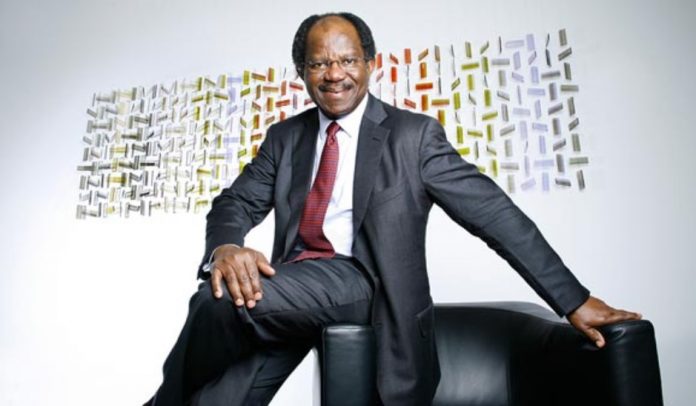
Bayo Ogunlesi: From Sagamu To The Pinnacle of Global Finance

0

He is peerless and one of the world’s finest in investment banking, private equity (PE) and infrastructure financing. Born in Sagamu, Bayo Ogunlesi rose to the pinnacle of global finance at a really fast pace, making and crystalling deals, which have seen his private equity firm, Global Infrastructure Partners (GIP), to become one of the most important PEs in this century.

Now, he wants to take some cash: “BlackRock Inc., the world’s largest money manager, has announced its ambitious acquisition of Global Infrastructure Partners (GIP) for a staggering $12.5 billion, per Bloomberg.”

The GIP acquisition aligns seamlessly with the vision of BlackRock’s CEO, Larry Fink, who aims to position the firm as a major player in the swiftly expanding market for private and alternative assets. With this move, BlackRock is set to enter the top echelons of investors specializing in long-term bets on energy, transportation, and digital infrastructure.

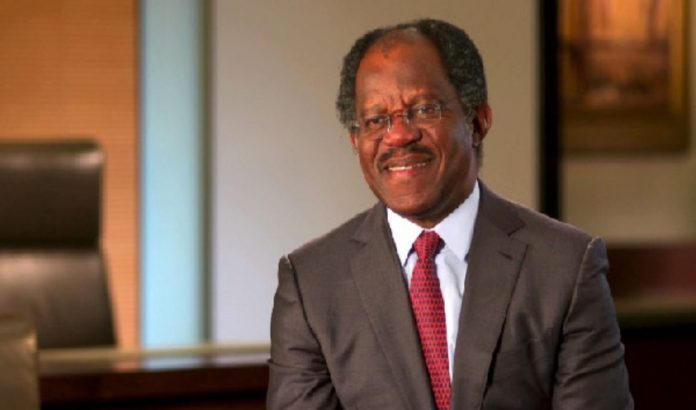
The third-quarter closure of the deal will see 70 year-old Adebayo Ogunlesi, GIP’s esteemed Chairman and CEO and a former executive at Credit Suisse, joining BlackRock’s board and global executive committee. Ogunlesi, currently serving as Goldman Sachs Group Inc.’s lead director, brings a wealth of experience and strategic insight to BlackRock’s leadership.

Congrats Mr. Ogunlesi. You have demonstrated the greatness of America, that a Sagamu kid can come here, and within years, build an empire. We #salute because you inspire. You push us to think more of our character and capabilities over our color, because you have shown that excellence has dates in the palace of greatness.

BlackRock Acquires Adebayo Ogunlesi’s Global Infrastructure Partners (GIP) in $12.5 Billion Mega Deal

BlackRock Acquires Adebayo Ogunlesi’s Global Infrastructure Partners (GIP) in $12.5 Billion Mega Deal

0

BlackRock Inc., the world’s largest money manager, has announced its ambitious acquisition of Global Infrastructure Partners (GIP) for a staggering $12.5 billion, per Bloomberg.

The deal involves a substantial $3 billion in cash and approximately 12 million shares, valued at around $9.5 billion based on Thursday’s closing prices. This landmark acquisition is poised to reshape the financial industry, marking BlackRock’s most significant deal since the acquisition of Barclays Global Investors in 2009.

The GIP acquisition aligns seamlessly with the vision of BlackRock’s CEO, Larry Fink, who aims to position the firm as a major player in the swiftly expanding market for private and alternative assets. With this move, BlackRock is set to enter the top echelons of investors specializing in long-term bets on energy, transportation, and digital infrastructure.

The third-quarter closure of the deal will see 70 year-old Adebayo Ogunlesi, GIP’s esteemed Chairman and CEO and a former executive at Credit Suisse, joining BlackRock’s board and global executive committee. Ogunlesi, currently serving as Goldman Sachs Group Inc.’s lead director, brings a wealth of experience and strategic insight to BlackRock’s leadership.

Ogunlesi founded the firm in 2006 with support from General Electric Co. and Credit Suisse. The portfolio companies associated with Ogunlesi’s firm boast a collective annual revenue surpassing $80 billion, as indicated on its website.

The market response to the announcement was reflected in a slight dip in BlackRock’s shares during early New York trading. However, both Fink and BlackRock President Rob Kapito expressed confidence in the strategic importance of the acquisition. In a memo to employees, they emphasized the unprecedented need for new infrastructure in digital development, logistics enhancement, and efforts toward decarbonization and energy security.

“The unprecedented need for new infrastructure – for digital infrastructure, for upgraded logistics hubs, and for decarbonization and energy security – coupled with record high government deficits means that private capital will be needed like never before. This will be one of the fastest-growing areas of our industry over the next 10 years,” stated Fink and Kapito.

This acquisition marks a pivotal shift for BlackRock, moving away from its traditional focus on index-based investing toward becoming a major player in illiquid funds supporting complex and substantial projects. BlackRock’s assets in illiquid alternatives have shown an impressive 65% increase over the three years leading up to September 2023.

Combining GIP’s extensive $100 billion in assets with BlackRock’s existing infrastructure assets of approximately $50 billion will create a formidable unit, rivaling industry giants like Macquarie Asset Management and Brookfield Asset Management. BlackRock’s involvement in substantial infrastructure investments worldwide, including pipelines in the Middle East, a carbon-capture project in Texas, and a fiber network venture with AT&T Inc., further solidifies its position in this space.

While alternatives currently constitute around 3% of BlackRock’s assets under management, they contribute a significant 10% of the firm’s fees. BlackRock is strategically positioning itself as a comprehensive solution for a broad range of investment options, responding to the growing demand for alternative assets from institutional clients such as pensions, endowments, and sovereign wealth funds.

The infrastructure investments sector has become increasingly lucrative, with McKinsey projecting a substantial $15 trillion spending gap on global infrastructure through the end of the decade. Despite recent declines in other private investment products, infrastructure investments have demonstrated resilience, experiencing increased fundraising in 2022 while private equity and real estate faced setbacks.

Global Infrastructure Partners (GIP), a prominent player in the infrastructure investment space, holds stakes in some of the busiest airports globally, including London’s Gatwick. The firm’s diversified portfolio contributes to a combined annual revenue surpassing $80 billion. In 2019, GIP set a then-record by raising an impressive $22 billion for its flagship fund, Global Infrastructure Partners IV, and is actively raising a fifth fund.

As part of the acquisition, five of GIP’s founding partners will join BlackRock, bringing valuable expertise and industry knowledge. Approximately 30% of the shares involved in the deal will be deferred for about five years. To cover the cash portion of the acquisition, BlackRock has disclosed plans to issue debt. The completion of the deal was advised by Perella Weinberg Partners for BlackRock, with Evercore Inc. serving as the lead adviser for GIP.

The success of this acquisition could mark a new era for BlackRock and set the tone for the financial industry’s future ventures into alternative and private asset investments.

Winning in Nigeria with Startups of the Future | Tekedia Unicorn Hour | Jan 20 at 4pm WAT

0

Please make space on your calendar for next week. The first Tekedia Capital‘s Unicorn Hour for this year will be held on Saturday, Jan 20 2024, at 4pm WAT.  It is a free and open webinar and everyone is invited.  The topic is Winning in Nigeria with Startups of the Future; I will be speaking.

Zoom link will be posted on this page on Friday, Jan 19.

  • Topic: Winning in Nigeria with Startups of the Future
  • Date: Saturday, Jan 20, 2024
  • Time: 4-5pm WAT
  • Speaker: Ndubuisi Ekekwe
  • Venue: Zoom

About Tekedia Capital: Tekedia Capital offers a specialty investment vehicle (or investment syndicate) which makes it possible for citizens, groups and organizations to co-invest in innovative startups and young companies in Africa and around the world. Capital from these investing entities is pooled together and then invested in a specific company or companies.

To learn more about Tekedia Capital, go here.

Past Failures Cast Shadow on Nigeria’s Fresh N35bn Move to Revamp Ajaokuta Steel Plant

0

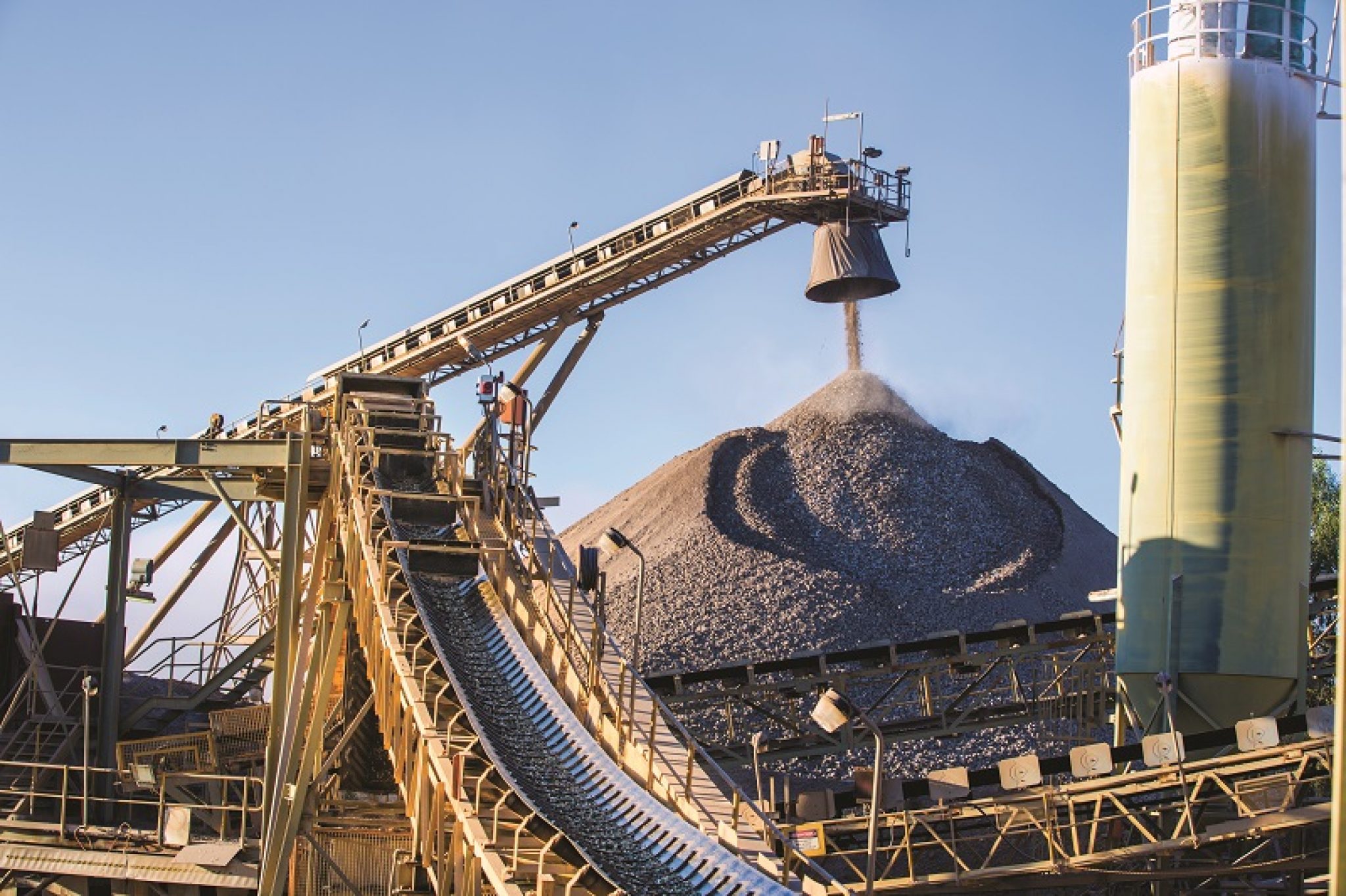
In a fresh bid to revive the long-dormant Ajaokuta Light Steel mill, the Federal Government of Nigeria has set its sights on generating approximately N35 billion through local financial markets, amid mounting concerns over the history of failed investments and mismanagement surrounding the Ajaokuta Steel Company.

The Minister of Steel Development, Mr. Shuaibu Audu, announced the government’s plans after a meeting with President Bola Tinubu in Abuja. Audu outlined that the primary focus of the mill would be on producing iron rods to support the administration’s ambitious road construction initiative, aiming to create thousands of jobs across the country.

“The Minister of Works, Sen. David Umahi, has already written a letter through his ministry, guaranteeing that there will be off-takers in the iron rods that are being produced,” Audu stated.

He said the Minister of Works plans to construct about 30,000 kilometers of roads in Nigeria, requiring an estimated 7 million metric tonnes of iron rods.

“We can produce about 400,000 tonnes of those iron rods in Ajaokuta if we’re able to restart the steel plant. Mr. President gave approval for us to raise money locally,” Audu added.

Discussions with local financiers are actively underway, with finalization expected within the next few weeks to ensure a swift commencement of the project, according to Audu.

Audu also highlighted a joint meeting with the President and the Minister of Defence, Muhammed Badaru, regarding the Ajaokuta Steel plant’s potential role in manufacturing military hardware. A Chinese firm has expressed a commitment to invest $5 billion in the steel sector of the Nigerian economy, as discussed at the G20 summit in India.

However, skepticism looms over the success of this endeavor, given the tumultuous history of the Ajaokuta Steel Company.

To oversee the implementation of this significant investment, a move that is seen as an attempt to allay the concerns, President Bola Tinubu has approved the establishment of a ministerial committee. The committee will include key stakeholders from the government, such as the Ministers of Finance, Trade and Investments, Defence, Solid Minerals, and Steel Development.

A viable project or a wild goose chase?

However, as these endeavors to breathe new life into Ajaokuta Steel Company take shape, questions arise about the feasibility and prudence of such a move, especially considering the troubled history of the plant.

The 2024 budget allocates N4.45 billion to the moribund Ajaokuta Steel Company, with over 90% of the budget earmarked for personnel costs. Maintenance of personnel at the idle steel plant is expected to consume about N4.3 billion, leaving a minimal amount for maintaining power, water, and equipment.

Critics point to the fact that former President Muhammadu Buhari had previously claimed a $400 million investment to “transform” the Ajaokuta Steel Complex. However, this investment has been labeled as another misallocation of public funds, adding to the estimated $8 billion already spent on the idle steel plant over the past 42 years.

The plant’s mismanagement extends to expenditures captured in its annual budgets. Currently, the Transmission Company of Nigeria (TCN) has suspended operations at Ajaokuta Steel Company due to outstanding electricity debts amounting to N33 billion. The TCN order specified that the steel company defaulted on payments to the Nigerian Bulk Electricity Trading PLC (NBET) and service providers.

Economists and experts have expressed shock at the ongoing mismanagement at Ajaokuta, suggesting that unbundling the plant might be necessary.

“There is a need to unbundle Ajaokuta Steel before concession because it is a massive project. Then get the private sector involved, that is, a company with the technical and financial capabilities to manage it. You can decide to concession the power plant, then the machine shop and other segments differently,” Dr. Muda Yusuf, CEO of the Centre for the Promotion of Private Enterprise, said in 2022.

Against the backdrop of its past failures, this fresh attempt to revitalize Ajaokuta Steel Company, and the current economic viability of the project, have been described as a wild goose chase. Only time will tell whether this effort will break the cycle of mismanagement and financial waste that has plagued the steel plant for decades.

Nigeria’s Postmortem Sub-Committee Unearths Controversial Non-Oil Excess Revenue Account Deductions

0

FAAC Urges Refund of N228 Billion Loan Allocated for 2023 General Elections.

In a startling revelation that threatens to undermine public trust in Nigeria’s financial management, the Postmortem Sub-Committee of the Federal Account Allocation Committee (FAAC) has uncovered contentious deductions from the non-oil excess revenue account.

The committee, chaired by Kabir Mashi, a former acting Chairman of the Federal Inland Revenue Service (FIRS) and a Federal Commissioner of the Revenue Mobilization and Fiscal Allocations Commission (RMAFC), recently released a detailed report spanning the period from January 2020 to October 2023.

Unraveling the Intricacies: A Deep Dive into Non-Oil Excess Revenue Account Movements

The genesis of this scrutiny dates back to a FAAC Plenary meeting held in September 2023, during which members expressed concerns about substantial deductions from the Non-Oil Excess Revenue Account. To address these concerns, the Sub-Committee initiated a thorough investigation, soliciting information from the Office of the Accountant-General of the Federation (OAGF).

The report unveils a complex web of financial transactions, with the loan taken for the 2023 general elections standing out as a significant point of contention. The Sub-Committee reveals that this loan accounts for approximately 26% of the total deductions, amounting to a staggering N864.16 billion between January 2020 and October 2023.

Further breakdowns expose the diverse purposes behind these deductions, including an N20 billion refund of gas flared penalty to the Nigerian Midstream and Downstream Petroleum Regulatory Authority (NMDPRA). Other notable deductions include refunds for PAYE to states (N136,571,812,718.58), FCT (N31,311,515,329.52), and a refund for Paris Club Loan Deduction from the SRA of FCTA (N28,608,118,834.81).

The report also sheds light on borrowings by the Federal Government for various purposes. Notable among these are N41,844,164,400.00 for the payment of final settlement of ground rent liabilities, N2,750,000,000.00 for contingencies related to the Office of the National Security Adviser, and a substantial N227,998,501,190.36 earmarked for the funding of the 2023 General Elections.

Sub-committee’s Recommendations

In response to these findings, the Sub-Committee recommends a comprehensive overhaul. Foremost among its recommendations is the call for the Federal Government to refund the entire sum of N864.16 billion deducted for various purposes back to the Non-Oil Excess Revenue Account.

Moreover, the Sub-Committee emphasizes the need for future deductions to adhere strictly to the vertical revenue allocation formula, a move that aims to restore fiscal discipline and ensure equitable distribution of funds among the three tiers of government.

While the report brings to light the complexities surrounding the Non-Oil Excess Revenue Account, there remains a paucity of information regarding the creation of this account. However, its function appears to parallel that of the Excess Crude Account (ECA), established in 2004 to serve as a fiscal buffer during economic downturns.

The Non-Oil Excess Revenue Account likely operates as a reservoir for surplus revenues generated from non-oil sources, ensuring a safeguard against economic uncertainties. Nevertheless, the report highlights the Federal Government’s recurrent deviation from the established vertical revenue allocation formula, indicating a need for more stringent fiscal management protocols.

Efforts to revise the revenue allocation formula have faced consistent resistance. Proposed changes under the previous administration, including a reduction in the Federal Government’s share and an increase for states and local governments, were not approved. The current administration seems content with maintaining the existing distribution, underscoring the challenges in achieving a consensus on equitable revenue sharing.

A Paradigm Shift for Fiscal Governance

The revelations from the sub-committee’s report demand urgent attention and action. Nigeria’s struggle with economic challenges has heightened the call for fiscal responsibility. Experts have called for strengthening financial management protocols, ensuring adherence to allocation formulas, and fostering transparency in the use of non-oil revenues as imperative steps toward securing the nation’s financial future.