DD
MM
YYYY

PAGES

DD
MM
YYYY

spot_img

PAGES

Home Blog Page 3847

“Anthrobots” successfully tested by Biomedical Engineers at Tufts University

0

A breakthrough in the field of biomedical engineering has been achieved by researchers at Tufts University, who have successfully tested a new type of artificial cells that can self-assemble and repair damaged neurons. These cells, dubbed “anthrobots” by the scientists, are made of synthetic DNA and protein molecules that can mimic the functions of natural cells.

The anthrobots can communicate with each other, form complex structures, and respond to external stimuli. They can also sense and repair neuronal damage, which could have implications for treating neurological disorders and injuries.

The study, published in the journal Nature Communications, describes how the anthrobots were able to form functional neural networks in vitro and in vivo, and how they were able to restore the electrical activity of damaged neurons in a mouse model of spinal cord injury.

The anthrobots were able to integrate with the host tissue and form synaptic connections with the native neurons, as well as secrete neurotrophic factors that promote neuronal survival and regeneration.

The researchers say that their work “opens the way to personalized medicine” by creating artificial cells that can adapt to the specific needs of each patient. They envision that the anthrobots could be used to deliver drugs, gene therapies, or stem cells to targeted areas of the brain or spinal cord, or to create biohybrid devices that can interface with the nervous system. They also hope that their work will inspire new ways of thinking about the design and engineering of synthetic life forms.

Some other possible applications of anthrobots include:

  • Creating artificial organs or tissues that can replace or augment the function of damaged or diseased ones.

  • Developing biosensors or biocomputers that can process information and perform tasks using biological logic and memory.

  • Engineering novel biomaterials or biocatalysts that can perform chemical reactions or synthesize molecules with high efficiency and specificity.

  • Exploring the origins and evolution of life by creating synthetic organisms with different properties and behaviors.

“This is a novel approach to creating living machines that can perform complex tasks and interact with their environment in a dynamic and intelligent way,” said Dr. Michael Levin, professor of biology and director of the Allen Discovery Center at Tufts University, and senior author of the study.

“We are not just building machines, we are creating new forms of life that can learn, evolve, and self-organize. This could lead to a revolution in biotechnology and medicine.”

The future of anthrobots is uncertain but promising. The researchers plan to further optimize the performance and functionality of the anthrobots, as well as to explore their potential applications in various fields of biotechnology and medicine.

They also aim to address the ethical and social implications of creating and using artificial life forms that can self-organize and evolve. They hope that their work will contribute to the advancement of science and humanity, as well as to the understanding of life itself.

Renewables Are On Track to Surpass Coal Power in the United States

0

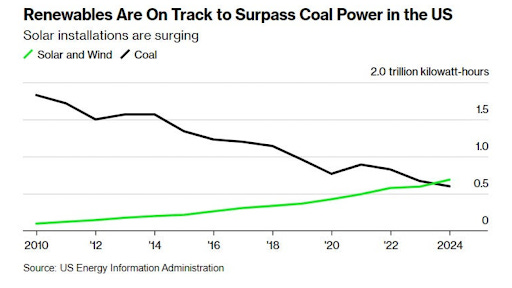
The US energy landscape is undergoing a dramatic transformation. According to the latest report from the US Energy Information Administration (EIA), renewable energy sources such as wind, solar, hydro and biomass are expected to generate more electricity than coal for the first time in 2023. This is a remarkable milestone for the country that has long relied on coal as its dominant source of power.

The EIA projects that renewable energy will account for 24% of the US electricity generation in 2021, up from 20% in 2020. Coal, on the other hand, will see its share drop from 19% in 2020 to 16% in 2021. This means that renewables will surpass coal by 8 percentage points, a significant gap that reflects the changing economics and policies of the power sector.

One of the main drivers is the declining cost of renewable energy technologies, especially wind and solar. The EIA estimates that the levelized cost of electricity (LCOE) for wind and solar photovoltaic (PV) plants entering service in 2025 will be $31 and $36 per megawatt-hour (MWh), respectively, compared to $41 for coal.

The LCOE is a measure of the average cost of producing electricity over the lifetime of a plant, taking into account capital, fuel, operation and maintenance costs.

Another factor is the growing demand for clean energy from consumers, businesses and governments. Many states have set ambitious renewable portfolio standards (RPS) that require utilities to procure a certain percentage of their electricity from renewable sources. For example, California has a target of 60% by 2030 and 100% by 2045.

Similarly, many corporations have pledged to source 100% of their electricity from renewables by a certain date, such as Google, Apple and Walmart. These commitments create a strong market signal for renewable energy development.

A third factor is the regulatory and policy environment at the federal level. The Biden administration has made climate change a top priority and has announced several initiatives to support renewable energy deployment.

For instance, the American Jobs Plan proposes to invest $100 billion in grid modernization and transmission expansion, which are essential for integrating more variable renewables into the system. The plan also proposes to extend and expand tax credits for wind and solar projects, which are set to expire or phase out in the coming years.

The EIA’s projections are based on current laws and regulations, but they could change depending on future policy decisions. For example, if Congress passes a national clean electricity standard (CES) that mandates utilities to achieve a certain percentage of carbon-free electricity by a certain date, such as 80% by 2030 and 100% by 2035, as proposed by President Biden, then renewables could grow even faster than expected.

The transition from coal to renewables is not only beneficial for the environment, but also for the economy and public health. According to a study by Harvard University, replacing coal with renewables could save $1.7 trillion in health and environmental costs by 2050, as well as prevent 3.6 million premature deaths.

Moreover, renewable energy creates more jobs than coal per unit of electricity generated. According to a report by Environmental Entrepreneurs (E2), clean energy jobs outnumbered fossil fuel jobs by nearly three to one in 2019.

The US is not alone in this transition. Many other countries are also moving away from coal and towards renewables, such as China, India and Germany. The global share of renewable energy in electricity generation reached 29% in 2020, according to the International Renewable Energy Agency (IRENA) and is expected to reach 45% by 2030 and 65% by 2050.

Renewable energy is no longer a niche or alternative source of power. It is becoming the mainstream and dominant source of power in many markets around the world. The US is on track to join this trend and surpass coal power with renewables in 2023. This is a historic moment for the country and a positive sign for the future of clean energy.

2024 Will Turn Out To Be Great in Markets, Science, Technology, and Global Prosperity

0

As we approach the end of 2023, many of us are looking forward to the new year with optimism and excitement. 2024 promises to be a great year in many domains, such as markets, science, technology, and global prosperity. I will highlight some of the trends and developments that will make 2024 a remarkable year for humanity.

Markets: The global economy is expected to grow by 4.5% in 2024, according to the International Monetary Fund. This is the highest growth rate since 2011, driven by the recovery from the pandemic, the expansion of trade and investment, and the adoption of digital technologies.

The stock market will also benefit from this positive outlook, as well as from the innovation and disruption in various sectors, such as biotechnology, renewable energy, artificial intelligence, and blockchain. Some of the companies that will lead the market in 2024 are Microsoft, Tesla, Amazon, Pfizer, and Coinbase.

Science: The year 2024 will witness some amazing scientific discoveries and breakthroughs that will advance our knowledge and improve our lives. For example, NASA will launch the James Webb Space Telescope, which will be the most powerful telescope ever built, capable of observing the earliest galaxies and stars in the universe.

Another example is the ITER project, which will achieve its first plasma in 2024, marking a milestone in the quest for nuclear fusion as a clean and abundant source of energy. Moreover, 2024 will see the development of new therapies and vaccines for diseases such as cancer, Alzheimer’s, and HIV/AIDS.

Technology: Technology will continue to transform our world in 2024, creating new possibilities and challenges. Some of the technologies that will dominate 2024 are quantum computing, which will enable unprecedented speed and power for computation; augmented reality and virtual reality, which will create immersive and realistic experiences for entertainment, education, and work.

And 5G networks, which will enable faster and more reliable connectivity for billions of devices. Additionally, 2024 will be the year of social robots, which will interact with humans in natural and empathetic ways.

Global Prosperity: Finally, 2024 will be a year of global prosperity, as more people around the world will enjoy higher standards of living, better education, health care, and opportunities. According to the World Bank, the global poverty rate will fall below 8% in 2024, the lowest level in history.

Furthermore, the United Nations estimates that by 2024, more than half of the world’s population will have access to the internet, opening up new avenues for learning and empowerment. Additionally, 2024 will see more progress in gender equality, environmental sustainability, and human rights.

2024 will be a great year in markets, science, technology, and global prosperity. It will be a year of breakthroughs and opportunities that will shape our future for the better. I hope you are as excited as I am for what lies ahead. Happy New Year in advance!

Banks in Nigeria Now Allowed to facilitate VASPs, BTC and Crypto Transactions; Coinbase to operate Bitcoin and crypto exchange in France

0

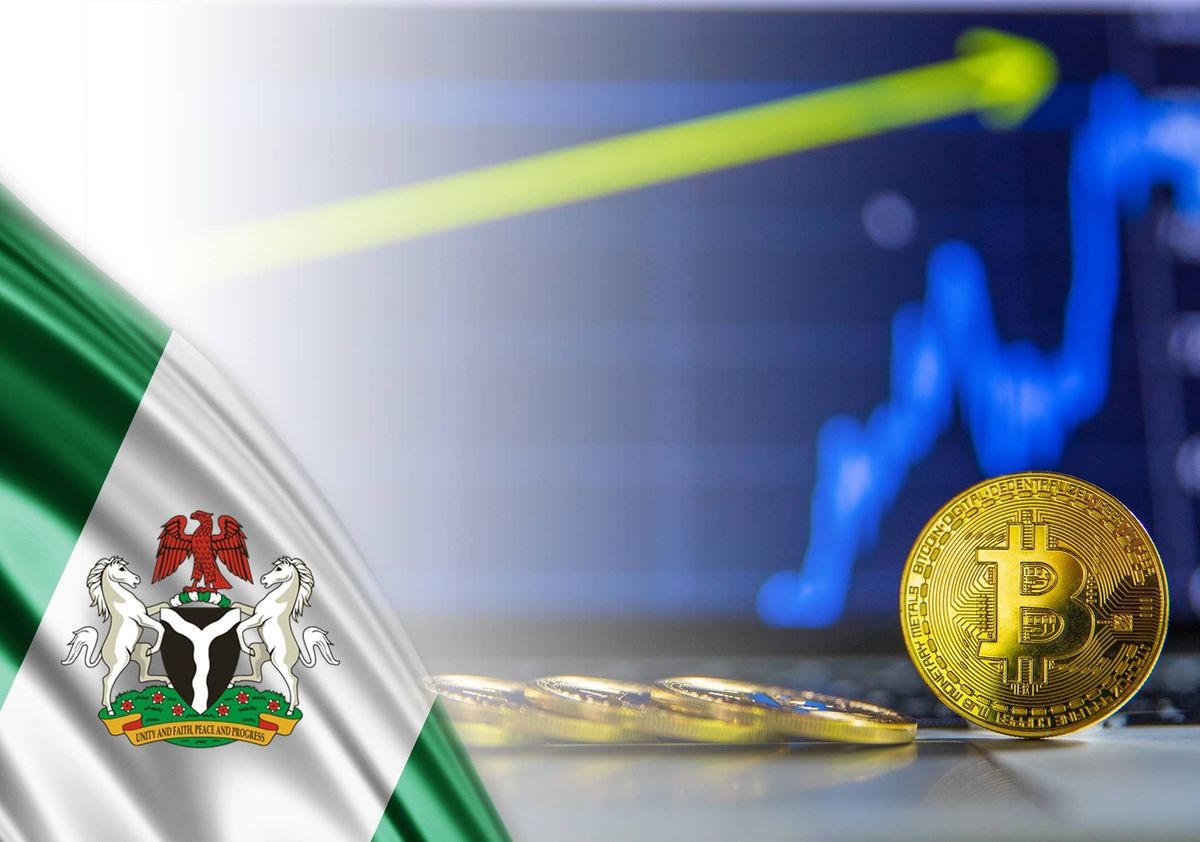
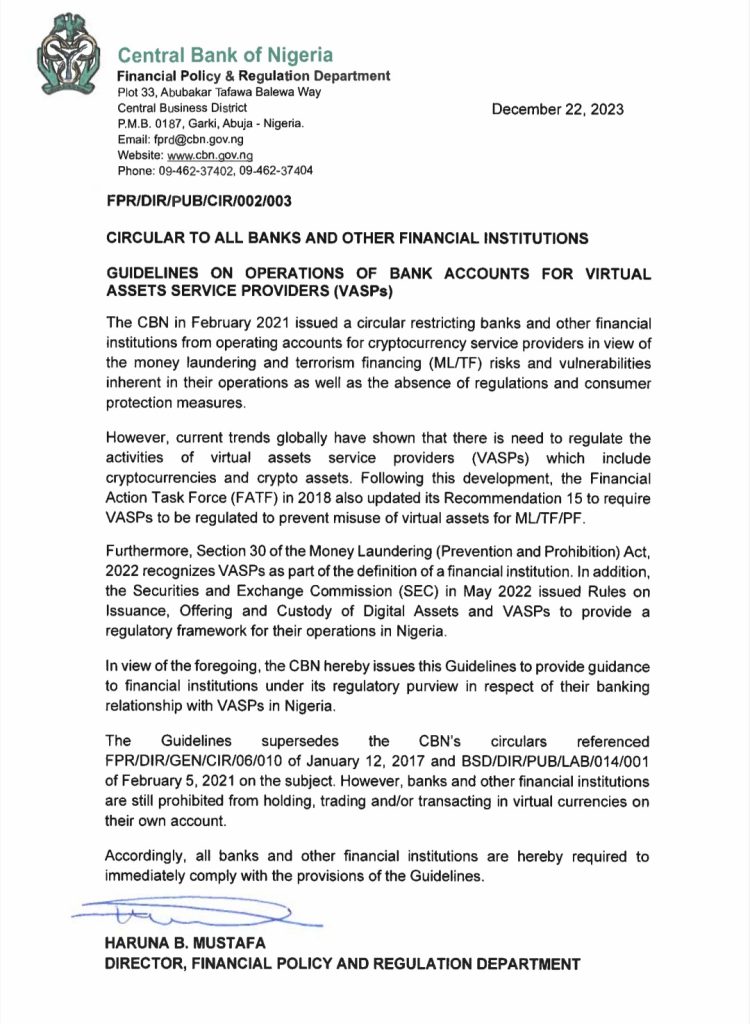
In a major development for the Nigerian crypto industry, the central bank of Nigeria (CBN) has reversed its earlier decision to ban banks and financial institutions from facilitating Bitcoin and other crypto transactions.

The CBN issued a circular on December 22, 2023, stating that it has reviewed its stance on crypto regulation and has decided to allow banks to provide services to crypto exchanges and users, subject to certain guidelines and standards.

The circular noted that the CBN recognizes the potential of crypto assets to enhance financial inclusion, innovation and economic development in Nigeria, as well as the risks and challenges associated with them. Therefore, the CBN has decided to adopt a balanced and pragmatic approach to crypto regulation, rather than a blanket prohibition.

According to the circular, banks that wish to offer crypto-related services must obtain a license from the CBN and comply with the existing anti-money laundering, counter-terrorism financing and consumer protection regulations. Banks must also ensure that they have adequate systems and controls to monitor and report crypto transactions, as well as to safeguard their customers’ funds and data.

The CBN also stated that it will continue to monitor the developments in the global and local crypto markets and will issue further guidance and regulations as necessary. The CBN urged the public to exercise caution and due diligence when dealing with crypto assets, as they are volatile and risky.

The reversal of the CBN’s ban on crypto transactions is a welcome news for the Nigerian crypto community, which has been one of the most active and vibrant in Africa. According to a report by Chainalysis, Nigeria ranked third in the world in terms of crypto adoption in 2021, behind only Vietnam and India. The report also estimated that Nigerians traded over $400 million worth of crypto in 2021, up from $281 million in 2020.

The lifting of the ban is expected to boost the growth and innovation of the Nigerian crypto industry, as well as attract more investors and entrepreneurs to the sector. Some of the leading Nigerian crypto platforms, such as BuyCoins, Bundle, Quidax and Luno, have expressed their optimism and readiness to work with the CBN and the banks to provide safe and reliable crypto services to their customers.

The Nigerian crypto industry has also received support from some influential figures, such as Jack Dorsey, the CEO of Twitter and Square, who visited Nigeria in 2019 and announced his plans to establish a Bitcoin development center in Africa. Dorsey has been a vocal advocate of Bitcoin and has recently launched a new company called Square Crypto, which aims to build an open-source platform for Bitcoin and other decentralized technologies.

The CBN’s decision to allow banks to facilitate crypto transactions is a significant step forward for the Nigerian crypto industry and a positive sign for the future of crypto regulation in Africa. It is hoped that other African countries will follow suit and adopt a more progressive and supportive stance towards crypto assets, which have the potential to transform the continent’s economy and society.

Coinbase to operate Bitcoin and crypto exchange in France

Coinbase, the largest cryptocurrency exchange in the US, has obtained a licence from the French financial regulator to operate as a digital asset service provider in the country. This is a significant milestone for the company, which aims to expand its presence in Europe and offer more services to its customers.

According to CNBC, Coinbase is one of the first platforms to receive the licence from the Autorité des Marchés Financiers (AMF), which oversees the regulation of financial markets and securities in France. The licence allows Coinbase to provide custody, trading and exchange services for cryptocurrencies and other digital assets, such as stablecoins and non-fungible tokens (NFTs).

Coinbase said that the licence will enable it to comply with the European Union’s Fifth Anti-Money Laundering Directive (AMLD5), which sets out rules for preventing money laundering and terrorist financing through crypto transactions. The company also said that it will work closely with the AMF and other regulators to ensure that it meets the highest standards of consumer protection, security and transparency.

“We are proud to be one of the first companies to receive this licence from the AMF, which is a testament to our commitment to compliance and innovation in the crypto space,” said Marcus Hughes, Coinbase’s managing director for Europe, Middle East and Africa, in a statement. “France is a key market for Coinbase and we look forward to offering more products and services to our French customers, as well as supporting the growth of the local crypto ecosystem.”

Coinbase’s licence comes amid a growing interest in cryptocurrencies and digital assets in France and across Europe. According to a recent report by Chainalysis, a blockchain analytics firm, France ranked fifth in terms of crypto adoption among 154 countries in 2021, up from 23rd in 2020. The report also found that Europe accounted for 25% of global crypto transactions in the first half of 2021, second only to Asia.

Coinbase, which went public on the Nasdaq stock exchange in April, has been expanding its operations and offerings in Europe in recent months. In October, the company launched Coinbase NFT, a platform that allows users to create, buy and sell NFTs, which are unique digital tokens that represent ownership of various forms of online content, such as art, music and games. Coinbase said that more than 2 million users have signed up for the waitlist for Coinbase NFT, which will initially support Ethereum-based NFTs.

In November, Coinbase also announced that it will launch a crypto-backed debit card in Europe early next year, which will allow users to spend their crypto balances at millions of merchants worldwide. The card will also offer rewards in cryptocurrencies, such as Bitcoin and Ethereum, for every purchase made. Coinbase said that the card will be available in 10 European countries at launch, including France, Germany, Spain and Italy.

Coinbase’s licence from the AMF is expected to boost its competitive edge in the European market, where it faces competition from other crypto platforms, such as Binance, Kraken and Bitstamp. The company said that it currently serves more than 73 million verified users across over 100 countries, and that it processed more than $462 billion in trading volume in the third quarter of 2023.

Percentage of Global Population Without a Bank Account Down to 24%

0

Financial inclusion is a key indicator of economic development and social welfare. It means that people have access to basic financial services, such as savings, payments, credit and insurance, that enable them to participate in the formal economy and improve their lives.

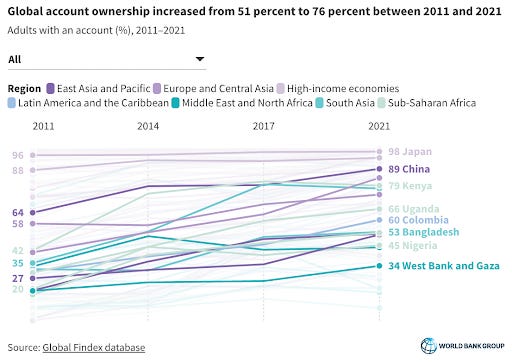
However, according to the latest data from the World Bank, there are still 1.7 billion adults in the world who do not have a bank account or a mobile money provider. This represents 24% of the global population, a significant decrease from 31% in 2014, but still far from the universal access envisioned by the Sustainable Development Goals.

Why does financial inclusion matter? Because it empowers people to make informed choices about their money, to save for emergencies and opportunities, to invest in their education and health, to start and grow businesses, to support their families and communities, and to contribute to the overall economic growth and stability of their countries.

Financial inclusion also reduces poverty and inequality, as it enables the most vulnerable and marginalized groups, such as women, rural dwellers, refugees and migrants, to access formal financial services that are affordable, convenient and secure.

The Sustainable Development Goals (SDGs) are a set of 17 global goals adopted by the United Nations in 2015, as part of the 2030 Agenda for Sustainable Development. They cover various aspects of human and planetary well-being, such as poverty, hunger, health, education, gender equality, clean energy, climate action and peace. One of the targets under the SDG 1 (No Poverty) is to ensure that all men and women have equal access to basic financial services by 2030.

Why does financial inclusion matter? Because it empowers people to make informed choices about their money, to save for emergencies and opportunities, to invest in their education and health, to start and grow businesses, to support their families and communities, and to contribute to the overall economic growth and stability of their countries.

Financial inclusion also reduces poverty and inequality, as it enables the most vulnerable and marginalized groups, such as women, rural dwellers, refugees and migrants, to access formal financial services that are affordable, convenient and secure.

How can we achieve financial inclusion for all? There is no single solution, but rather a combination of factors that need to work together. These include:

  • Developing an enabling regulatory environment that fosters innovation and competition, while protecting consumers and ensuring financial integrity.

  • Leveraging digital technologies, such as mobile phones, biometrics and blockchain, that can lower the cost and increase the reach of financial services, especially in remote and underserved areas.

  • Building inclusive financial infrastructure, such as payment systems, credit bureaus and identification systems, that can facilitate interoperability and data sharing among different providers and platforms.

  • Enhancing financial literacy and capability, through education and awareness campaigns, that can help people understand and use financial services effectively and responsibly.

  • Promoting financial inclusion as a cross-cutting issue, that requires coordination and collaboration among various stakeholders, such as governments, regulators, private sector, civil society, donors and international organizations.

Financial inclusion is not an end in itself, but a means to an end. It is a tool that can help people achieve their potential and aspirations. It is a right that should be accessible to everyone. It is a challenge that we can overcome together.

Why is financial inclusion important? Because it can help people improve their lives and achieve their goals. For example, financial inclusion can help people:

  • Manage their cash flow and cope with unexpected shocks, such as illness, natural disasters, or loss of income.

  • Build assets and invest in education, health, housing, or business opportunities.

  • Reduce their vulnerability and increase their resilience to poverty and inequality.

  • Participate in the formal economy and benefit from the opportunities it offers.

Financial inclusion is not only good for individuals, but also for societies and economies. Financial inclusion can:

  • Support economic growth and development by mobilizing savings, allocating resources efficiently, and facilitating innovation and entrepreneurship.

  • Promote social cohesion and stability by reducing inequality, empowering women and marginalized groups, and enhancing trust and cooperation among people.

  • Strengthen financial systems and institutions by increasing their outreach, diversification, competition, and sustainability.

However, financial inclusion is not a magic bullet that can solve all the problems of the world. Financial inclusion is not an end in itself, but a means to an end. It is a tool that can enable people to achieve their potential and aspirations. But it is not enough by itself. Financial inclusion needs to be complemented by other policies and interventions that address the root causes of poverty, exclusion, and vulnerability.

Therefore, financial inclusion should not be seen as a standalone goal, but as part of a broader agenda of inclusive development. Financial inclusion should be aligned with the Sustainable Development Goals (SDGs), which are a set of 17 global goals that aim to end poverty, protect the planet, and ensure peace and prosperity for all by 2030. Financial inclusion can contribute to many of the SDGs, such as:

  • SDG 1: No Poverty

  • SDG 2: Zero Hunger

  • SDG 3: Good Health and Well-being

  • SDG 4: Quality Education

  • SDG 5: Gender Equality

  • SDG 8: Decent Work and Economic Growth

  • SDG 10: Reduced Inequalities

  • SDG 13: Climate Action

To achieve financial inclusion for all, we need to work together as a global community. We need to involve all stakeholders, such as governments, regulators, financial service providers, civil society organizations, donors, academia, media, and most importantly, the people themselves. We need to foster a culture of innovation, collaboration, learning, and adaptation. We need to leverage the power of technology, data, and digital platforms.