DD
MM
YYYY

PAGES

DD
MM
YYYY

spot_img

PAGES

Home Blog Page 385

Voidify’s Proposal 64 to Bring Tornado Cash-Level Privacy to Solana, as Hyperliquid Airdrops Hypurr NFT

0

Voidify, a decentralized privacy protocol built on Solana, has announced an official partnership with Tornado Cash, the Ethereum-based mixer famous for using zero-knowledge proofs (ZKPs) to obscure transaction details like sender, receiver, and amounts.

This collaboration centers on Proposal 64, a governance initiative in Voidify’s DAO that aims to integrate Tornado Cash’s advanced privacy features directly into the Solana ecosystem, complete with a user-friendly interface (UI).

The proposal leverages ZKPs specifically zk-SNARKs to enable “shielded” transactions on Solana’s high-speed blockchain. Users can deposit fixed-denomination tokens into a privacy pool and withdraw to a new address without traceable links, mimicking Tornado Cash’s core mechanic but optimized for Solana’s low fees and fast finality.

Voidify’s community will vote on and oversee the rollout, ensuring alignment with user needs. Token holders of Voidify’s native Ø can participate as relayers, stakers, or miners, earning rewards while influencing decisions.

Implementation is targeted soon after community approval, potentially launching by late 2025. This addresses Solana’s transparency trade-off—its public ledger exposes whale movements, MEV sniping, and user tracking—making it a game-changer for DeFi privacy, tokenization, and confidential finance.

Solana’s growth in DeFi— $50B+ TVL has outpaced privacy tools, making this a timely boost for users concerned about surveillance. It could attract Ethereum users fleeing high gas fees while retaining Tornado Cash’s credibility.

This reinforces the push for “credible neutrality” in privacy tools, as seen in recent Ethereum innovations like Privacy Pools. On Solana, it aligns with ecosystem goals for modular, high-performance chains.

Market Demand: Privacy solutions have proven lucrative—Tornado Cash handled $7B+ in volume pre-sanctions—suggesting strong potential ffor Voidify and Solana’s privacy narrative.

Voidify positions itself as “the first Tornado Cash on Solana,” but this partnership elevates it to official status, fostering a unified ecosystem. Challenges include regulatory scrutiny Tornado Cash faced U.S. sanctions in 2022, but Solana’s growing institutional adoption could drive momentum.

OG Labs X Page Got Hacked 

0G Labs Twitter Account HackedOn October 5, 2025, the official X (Twitter) account of 0G Labs (@0G_labs )—a Layer 1 blockchain focused on AI infrastructure with $389M in funding— was compromised for about 24 hours.

The hacker posted phishing links promoting a fake “2nd airdrop” scam, alongside rants accusing the team of slashing a promised 12% community airdrop valued at ~$640M at peak to just $10M, labeling the project a “scam” and criticizing lax security like missing 2FA.

The intruder gained control around midnight GMT on Oct 5, likely via social engineering or weak auth no 2FA confirmed. They demanded the “promised airdrop” and mocked the team’s response.

Access to @0G_labs and @0G_Foundation was restored by Oct 6 morning. CEO Michael Heinrich (@michaelh_0g) detailed the incident in a thread, emphasizing quick recovery and community safety. No tokens are live yet, so no direct on-chain losses occurred.

Posts sparked FUD, with some users reporting accounts ironically leading to temp restrictions and others creating meme coins like $FOG on Pump.fun, which pumped then dumped. Calls for transparency on tokenomics, vesting, and a security audit grew.

0G Labs, backed by Hack VC and Samsung NEXT, remains a hot AI-crypto play, but this highlights ongoing risks in social media for crypto projects. The team pledged cross-channel verifications and enhanced security moving forward. DYOR—stick to official site links only.

Hyperliquid’s Hypurr NFT Airdrop: A $300M Milestone for DeFi Loyalty

Hyperliquid, the high-performance Layer-1 blockchain optimized for perpetuals trading, made waves last week with the airdrop of its Hypurr NFT collection.

This cat-themed series—depicting quirky avatars inspired by the community’s “moods, hobbies, tastes, and quirks”—has skyrocketed to a $300 million market cap just days after launch, marking one of the most explosive NFT drops in recent crypto history.

The event underscores Hyperliquid’s strategy of rewarding early adopters while building a “loyalty pass” for future ecosystem perks, blending meme culture with real utility in DeFi.

Out of 4,600 total NFTs, 4,313 went to Genesis Event participants from November 2024 early registrants who opted in. The Hyper Foundation received 144, and 143 were allocated to core contributors like Hyperliquid Labs and NFT artists. This sybil-resistant approach limited one NFT per qualified wallet to prevent farming abuse.

Dropped on September 28, 2025, via HyperEVM Hyperliquid’s EVM-compatible chain, the collection hit an opening floor of ~$50,000 1,458 HYPE tokens. It peaked at $81,000 before settling around $65,700–$68,000 as of October 7.

Total trading volume exceeded $135 million in the first 10 days, with $45 million in the initial 24 hours alone on platforms like OpenSea. Rarities fetched premiums—one early adopter sold Hypurr #21 for $467,000, and two others hit ~$460,000 each. Only ~10% of the supply has been listed, signaling strong holder conviction.

The surge isn’t just speculative froth—it’s tied to Hypurr’s positioning as a “high-signal loyalty credential.” Early fears that claiming the NFT would dilute token airdrops proved unfounded, and now holders view it as an on-chain ticket for ecosystem Airdrops.

Protocols like HyperLend $570M TVL and HypurrFi $150M TVL offer points boosts +5% for holders. Broader HyperEVM projects may follow, with rumors of Season 2 HYPE airdrops gated by Hypurr ownership.

Potential perks include reduced fees, yield multipliers, or governance access, turning it into a retention tool for Hyperliquid’s $5.86B TVL ecosystem. As prices rise, more projects align with Hyperliquid for airdrops, compounding demand.

Community sentiment on X echoes this: “Wealth is not leaving Hyperliquid soon,” with users farming via lending, staking, and trading on HyperEVM. This echoes Hyperliquid’s 2024 HYPE token airdrop 31% supply, $1.2B at TGE, $18B ATH, but Hypurr feels more “earned” due to its Genesis tie-in.

With 42% of HYPE still unclaimed, the chain’s momentum—200K orders/sec, <1s latency—positions it as a DeFi powerhouse amid rivals like Aster gaining ground. Shortly after launch, hackers stole 8 NFTs from compromised wallets, pocketing $400,000.

Sleuth ZachXBT flagged the incident, highlighting wallet security gaps in hyped drops. Broader ecosystem exploits like the $773K HyperDrive hack remind users: DYOR and secure your keys.

Critics also note the team’s unvested 143 NFTs $67M at peak floors, sparking debates on fairness. Hypurr revives NFT hype in a post-2021 bear market, proving utility-driven drops can thrive. It’s the third-largest NFT collection by market cap, outpacing many VC-backed tokens.

For Hyperliquid $45.21 HYPE price, $45B+ FDV, this cements its “all finance on one chain” vision, blending perps, lending, and memes. If utilities stack up, expect more reflexivity; otherwise, it risks a speculative cooldown.

Early birds turned free cats into fortunes, but the real play? Betting on HyperEVM’s growth. With Season 2 whispers and $2.2B L1 TVL, Hyperliquid’s ecosystem is just warming up.


S&P Global Announces Launch of S&P Digital Markets 50 Index

0

S&P Global, through its S&P Dow Jones Indices (S&P DJI) division, announced on October 7, 2025, the upcoming launch of the S&P Digital Markets 50 Index, marking its first hybrid benchmark that combines cryptocurrencies with crypto-related equities.

This move represents a significant step in integrating digital assets with traditional finance, providing investors with diversified exposure to the broader crypto ecosystem in a single, rules-based product.

The index will track 50 assets total, blending: 15 cryptocurrencies selected from S&P’s existing Cryptocurrency Broad Digital Market Index. 35 publicly traded companies involved in digital asset operations, infrastructure, financial services, blockchain applications, and supporting technologies.

Cryptocurrencies must have a minimum market capitalization of $300 million. Equities must have a minimum market cap of $100 million. No single asset can exceed 5% weighting to mitigate volatility and ensure diversification.

The index will follow quarterly rebalancing, similar to other S&P benchmarks, with transparent rules for selection and maintenance. While no exact date has been specified, early indications point to going live later in 2025.

The index was developed in collaboration with Dinari, a provider of tokenized U.S. public securities. Dinari will issue a blockchain-based token that tracks the index’s performance on-chain, enabling seamless access via tokenized instruments.

This hybrid structure leverages blockchain to represent both digital assets and regulated equities, which wouldn’t be feasible in traditional finance without such infrastructure.

This index expands S&P DJI’s suite of digital asset benchmarks, including the S&P Cryptocurrency Indices and S&P Digital Market Indices, which are already used by institutional investors.

As Cameron Drinkwater, Chief Product Officer at S&P DJI, noted: Cryptocurrencies and the broader digital asset industry have moved from the margins into a more established role in global markets.

The launch aligns with Wall Street’s growing embrace of crypto, following milestones like Robinhood’s addition to the S&P 500 in September 2025.

For investors, this could serve as a standardized way to gain exposure to the crypto economy without managing individual assets, potentially attracting more institutional capital and reducing perceived risks through diversification.

The crypto community has welcomed it as validation from a TradFi giant like S&P, which oversees benchmarks like the S&P 500 and Dow Jones Industrial Average.

A hybrid index from a trusted name like S&P Dow Jones Indices signals mainstream acceptance of cryptocurrencies and blockchain-related companies, further validating digital assets as a legitimate asset class.

By combining cryptocurrencies and crypto-related equities in a single index, it creates a unified investment vehicle that bridges volatile digital assets with more stable, regulated equities, appealing to both TradFi and crypto-native investors.

The index’s diversified structure 50 assets, capped at 5% weighting each reduces the risk associated with single-asset volatility, making it more palatable for institutional investors like pension funds, hedge funds, and asset managers.

As a rules-based, transparent index, it provides a reliable benchmark for performance tracking, similar to the S&P 500, enabling institutions to allocate capital to the crypto sector with greater confidence.

The tokenized version of the index on blockchain platforms lowers barriers to entry, allowing institutions to invest in crypto markets using familiar financial instruments without navigating complex custody solutions.

Inclusion in the index could drive demand for the selected 15 cryptocurrencies and 35 equities, potentially increasing their prices and liquidity as funds and investors track the index.

The 5% cap per asset and quarterly rebalancing aim to temper the extreme volatility often associated with cryptocurrencies, creating a more stable investment option.

The index, especially through tokenized instruments, could make crypto investment more accessible to retail investors who are hesitant to directly buy cryptocurrencies or navigate crypto exchanges.

Tokenization on blockchain platforms allows investors worldwide to access the index, bypassing traditional geographic or regulatory barriers in financial markets.

The index’s reliance on regulated equities and transparent selection criteria could set a precedent for how regulators view hybrid crypto products, potentially influencing future policies on digital asset integration.

As a first-of-its-kind hybrid index, it may inspire other index providers to create similar products, fostering standardization and competition in the crypto index space. Despite diversification, cryptocurrencies remain volatile, and the index’s performance could be affected by sharp crypto market downturns or regulatory crackdowns.

Combining crypto and equities in a single index, especially with tokenization, introduces technical and operational challenges, such as blockchain interoperability and custody solutions. While institutional interest is growing, widespread adoption depends on the index’s performance, regulatory developments, and investor education.

Increased capital flow into crypto-related companies could accelerate advancements in blockchain technology, decentralized finance (DeFi), and other digital asset applications.

The S&P Digital Markets 50 Index could act as a catalyst for deeper integration of crypto into mainstream finance, offering diversified exposure, attracting institutional capital, and enhancing market legitimacy.

However, its success will hinge on market conditions, regulatory clarity, and the ability to balance crypto’s volatility with the stability of equities. For investors, it represents a novel way to participate in the crypto economy with reduced risk.

GitHub Begins Full Migration to Microsoft Azure in Major Cloud Overhaul

0

GitHub is preparing for one of the most significant infrastructure transformations in its history — a full migration to Microsoft’s Azure cloud servers over the next two years, according to The Verge.

The move marks a pivotal moment for the world’s largest developer platform as it grapples with mounting data center limitations and surging demand driven by AI-powered services like Copilot.

The migration signals not only a deepening of GitHub’s technical dependence on its parent company, Microsoft, but also a major operational shift within the developer ecosystem. The transition follows a string of capacity issues at GitHub’s primary data centers in Virginia, where space and scalability have become major bottlenecks.

GitHub Chief Technology Officer Vladimir Fedorov laid out the urgency of the shift in an internal announcement, describing the current data constraints as unsustainable.

“We are constrained on data server capacity with limited opportunities to bring more capacity online in the North Virginia region,” Fedorov said.

He emphasized that moving to Azure is “existential for GitHub to have the ability to scale to meet the demands of AI and Copilot.”

Microsoft’s senior leadership, including its CoreAI division, is backing the transition, showing how GitHub’s evolution has become inseparable from Microsoft’s broader artificial intelligence and cloud strategy.

“CoreAI and Azure are mobilizing to get us the capacity and anything else we need to unlock us,” Fedorov noted, suggesting a joint operational framework between the developer platform and Microsoft’s internal infrastructure teams.

The integration builds on a steady consolidation process that began after Microsoft’s $7.5 billion acquisition of GitHub in 2018. The company was later moved under Microsoft’s Developer Division in 2021, bringing it closer to teams working on products like Visual Studio and Azure AI.

Past Setbacks and a New Approach

GitHub’s path to Azure has not been straightforward. Earlier migration efforts, including initiatives like Git in Azure and Azure Sites Automation, encountered delays and technical challenges. Fedorov admitted as much, writing, “I know this is not the first time we said GitHub is moving to Azure. I also know that these types of migrations can drag on, and the longer they drag on, the more likely they are to fail.”

Determined to avoid another drawn-out transition, GitHub’s leadership has reprioritized company-wide efforts, asking teams to delay feature releases and concentrate engineering resources on infrastructure. The internal target is to complete the bulk of migration work within 12 months, with a full switchover to Azure in 24 months.

Scaling for the AI Era

GitHub’s Chief Operating Officer, Kyle Daigle, confirmed the plan in an official statement, highlighting how the surge in developer activity and AI-driven workflows is pushing the company’s existing systems to their limits.

“We need to scale faster to meet the explosive growth in developer activity and AI-powered workflows, and our current infrastructure is hitting its limits,” Daigle said.

By moving to Azure, GitHub expects to gain access to more flexible computing resources, deeper integration with Microsoft’s AI capabilities, and greater global redundancy. The migration will also allow the company to better support Copilot, its AI coding assistant developed with OpenAI, which now powers millions of daily code suggestions and consumes massive amounts of compute capacity.

However, migrating GitHub’s sprawling infrastructure — including complex systems like MySQL clusters, GitHub Actions, and search services — could cause temporary disruptions. The platform has faced several outages in the past year, affecting its automation tools and enterprise import features, underscoring how fragile its backend can be during periods of change.

Analysts note that while moving to Azure may resolve capacity issues, it will also tighten Microsoft’s control over GitHub’s operations. The platform now reports directly into Microsoft’s CoreAI and developer leadership, with no standalone CEO following the recent departure of Thomas Dohmke. This consolidation has already led to organizational changes, such as the replacement of Slack with Microsoft Teams for internal communication.

Internally, employees describe the shift as a cultural and technical convergence with Microsoft. GitHub teams are increasingly using Microsoft’s toolchain, security standards, and deployment systems — part of what executives describe as an effort to “speak the same operational language.”

For Microsoft, GitHub’s migration represents more than just an infrastructure upgrade. The tech giant appears to see it as a symbolic moment in the company’s effort to integrate its developer assets under a unified cloud and AI vision.

However, the migration has presented the challenge of ensuring that this ambitious migration delivers what it promises to the global developer community that relies on GitHub daily: greater scale, stability, and performance — without compromising the reliability and openness that made GitHub the backbone of modern software development.

U.S. Senator Sanders Calls for Robot Tax to Protect Millions of Jobs from AI Threat

0

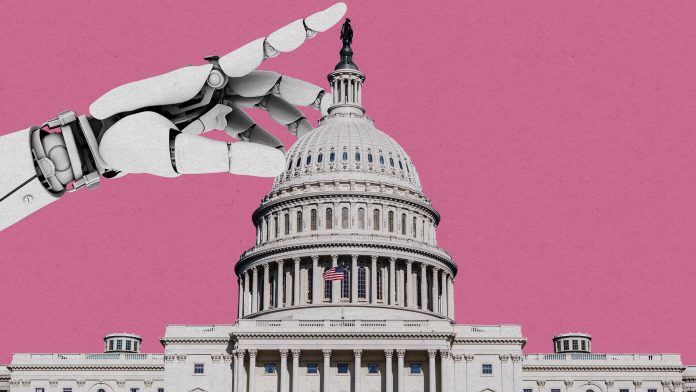
Senator Bernie Sanders has reignited the debate over a “robot tax” as fears mount that artificial intelligence and automation could wipe out tens of millions of American jobs within the next decade.

The Vermont lawmaker, who serves as the ranking member of the Senate Health, Education, Labor, and Pensions Committee, unveiled a new report this week warning that the United States is on the brink of an employment crisis driven by rapid advances in AI. The document projects that AI and automation could eliminate up to 100 million jobs across the country over the next ten years, transforming the labor market faster than any prior technological revolution.

“The agricultural revolution unfolded over thousands of years. The industrial revolution took more than a century,” the report said. “Artificial labor could reshape the economy in less than a decade.”

A Robot Tax to Slow the Corporate Rush Toward Automation

To mitigate what he calls the “human cost of artificial labor,” Sanders proposes introducing a robot tax on large corporations that replace human workers with machines or AI systems. The revenue from this tax, he said, would be directed toward retraining displaced workers, expanding unemployment insurance, and strengthening the social safety net.

The concept of taxing automation is not new, but Sanders’s report marks one of the most comprehensive policy pushes yet from a senior U.S. senator. The proposal also reflects a growing sense of urgency in Washington as AI begins to transform industries ranging from manufacturing and logistics to customer service and software development.

The idea once drew support from Bill Gates, who in 2017 argued that robots performing human work should be taxed at the same rate as people, ensuring that funding for schools, healthcare, and welfare programs doesn’t evaporate as automation spreads. Sanders echoed this view in his 2023 book, It’s OK to Be Angry About Capitalism, where he wrote: “If workers are going to be replaced by robots, as will be the case in many industries, we’re going to need to adapt tax and regulatory policies to assure that the change does not simply become an excuse for race-to-the-bottom profiteering by multinational corporations.”

Beyond Taxation: A Blueprint for a Fairer Future of Work

The report goes further than taxation. It calls for a 32-hour workweek without a reduction in pay, greater worker representation on corporate boards, and stronger pro-union legislation to give employees a voice in how automation is implemented. Sanders argues that these reforms are necessary to ensure that technological progress benefits workers and not just corporate shareholders.

The senator’s report also includes a striking experiment. His staff asked ChatGPT to forecast which professions are most likely to be replaced by AI in the next decade. The model estimated that 89% of fast food and counter workers, 62% of retail salespeople, and 54% of software developers could see their roles automated. Other fields, from call centers to transport and data entry, are also listed among the most vulnerable.

“While this basic analysis reflects all the inherent limitations of ChatGPT, it represents one potential future in which corporations decide to aggressively push forward with artificial labor,” the report cautions.

A Growing Policy Flashpoint

Sanders’s robot tax proposal lands amid intensifying debate in Washington about how to regulate AI’s expansion into the workforce. President Donald Trump’s administration has largely focused on accelerating AI innovation and strengthening U.S. dominance in emerging technologies, while lawmakers like Sanders are warning that unchecked automation could deepen inequality and hollow out the middle class.

Economists remain divided on this issue. Supporters say a robot tax could slow mass layoffs and fund the social transitions needed in an AI-driven economy. Critics, however, warn that it could stifle innovation and drive companies to move automation offshore.

Still, with AI advancing at a pace unseen in previous industrial shifts, Sanders argues that doing nothing is no longer an option.

“We can’t allow corporations to replace millions of American workers with machines without ensuring those workers share in the enormous gains in productivity and wealth that AI will create,” he said.

The senator’s call underscores a widening ideological divide over the future of work—between those racing to automate and those demanding that humanity not be left behind in the process.

Rivian CEO RJ Scaringe Says Electric Vehicles Shouldn’t Be Political Amid Trump-Era Policy Shifts

0

Rivian’s Chief Executive Officer, RJ Scaringe, says electric vehicles should not be associated with any political party — a view that stands out at a time when EVs have become an ideological flashpoint in Washington.

Speaking on The Verge’s Decoder podcast on Monday, Scaringe said that EVs “have become political,” but insisted that “they shouldn’t be.”

His remarks come as President Donald Trump’s administration moves to reverse several of the policies that previously supported the electric vehicle industry. Earlier this year, the Trump administration removed the federal EV tax credit and signed a resolution blocking California’s plan to phase out new gas-powered car sales — decisions that analysts say have slowed industry momentum and forced automakers to rethink their electrification timelines.

“Rivian employs almost 16,000 people domestically and has one of the strongest technology teams, I think, in the United States,” Scaringe said. “We spend a lot of time with the administration on that, and there’s a lot of support and enthusiasm for what we’re creating and building in that regard.”

The national focus on reshoring and domestic manufacturing — central to the Trump administration’s economic agenda — has boosted investment in gas-powered vehicle production, as automakers recalibrate their priorities. In June, General Motors announced a $4 billion investment in U.S. manufacturing plants, including expansions for internal combustion engine vehicles to “meet continued strong demand.”

That marks a sharp contrast from just a few years ago, when major automakers, including GM and Ford, had pledged to phase out combustion engines entirely by the 2030s. Scaringe lamented what he called a “reprioritization of capital towards internal combustion,” warning in August that the shift was “very bad for my kids and their kids, and very bad for the U.S. auto industry.”

While Trump’s policies have broadly applied across the EV sector, he has publicly praised select companies, most notably Tesla, which he has described as a model of American innovation. The president has even purchased one of Tesla’s vehicles himself, calling CEO Elon Musk “a great American success story.”

That endorsement, however, has not extended to the broader EV market. Trump has repeatedly criticized federal subsidies for electric vehicles, arguing they disproportionately benefit wealthy consumers and foreign manufacturers.

Rivian’s Neutral Ground

Scaringe is intent on keeping Rivian above the political fray. Drawing on a line from Michael Jordan’s iconic Nike campaign, he said: “Republicans buy sneakers, too.”

“We have a lot of Republicans who buy our vehicles and love them. We have a lot of Democrats who buy our vehicles and love them. We have people who are in the middle, and we have Independents,” Scaringe said, emphasizing that Rivian’s customer base spans the political spectrum.

He described Rivian’s mission as building a brand that is “as broad as possible,” with a “welcome mat” that invites all Americans — regardless of political affiliation — to embrace sustainable transportation.

“We try very hard not to make what we’re doing political,” Scaringe said. “At the end of the day, our vehicles are about performance, adventure, and innovation — not politics.”

Scaringe’s comments underline a broader tension in the U.S. auto industry as manufacturers navigate the intersection of industrial policy, climate goals, and consumer sentiment. The Trump administration’s rollback of EV incentives has prompted warnings from environmental groups that the U.S. risks falling behind Europe and China, where electric mobility remains a cornerstone of long-term economic and environmental strategy.

Despite the policy uncertainty, Rivian continues to expand its production capabilities and is positioning itself as one of the few independent challengers to Tesla. Scaringe thus appears to be betting that Rivian’s success will hinge less on policy and more on innovation and market appeal.