

DD
MM
YYYY

PAGES

DD
MM
YYYY

spot_img

PAGES

Home Blog Page 3854

CNBC reports spot Bitcoin ETF likely to be approved Wednesday, potentially trading on Thursday or Friday

0

The cryptocurrency world is buzzing with anticipation as the U.S. Securities and Exchange Commission (SEC) is expected to approve the first spot Bitcoin ETF this week, according to CNBC sources. A spot Bitcoin ETF is an exchange-traded fund that tracks the price of the underlying asset, in this case, Bitcoin, rather than relying on futures contracts or other derivatives. This means that investors can gain exposure to the largest and most popular cryptocurrency without having to buy, store, or manage it directly.

The SEC has set a deadline of Wednesday, January 10, 2024, to make a decision on the VanEck Bitcoin Trust, one of the several spot Bitcoin ETF proposals that have been filed with the regulator. VanEck is a well-known asset manager with over $80 billion in assets under management and has been pursuing a Bitcoin ETF since 2017. The firm has partnered with SolidX, a blockchain technology company, to provide custody and insurance for the Bitcoin holdings of the fund.

If approved, the VanEck Bitcoin Trust could start trading as soon as Thursday or Friday on the Cboe BZX Exchange, under the ticker symbol XBTF. This would mark a historic milestone for the crypto industry, as it would be the first time that U.S. investors can access Bitcoin through a regulated and mainstream investment vehicle. The launch of a spot Bitcoin ETF could also boost the demand and liquidity for Bitcoin, as well as increase its adoption and acceptance among institutional and retail investors.

However, the approval of a spot Bitcoin ETF is not a foregone conclusion. The SEC has been notoriously cautious and skeptical about crypto-related products and has rejected or delayed dozens of Bitcoin ETF applications in the past. The main concerns of the regulator are related to the potential for market manipulation, fraud, and lack of investor protection in the crypto space. The SEC has also indicated that it prefers a futures-based Bitcoin ETF over a spot one, as futures markets are more regulated and transparent than spot markets.

Therefore, there is still a possibility that the SEC could deny or postpone the decision on the VanEck Bitcoin Trust or impose strict conditions or limitations on its operation. Moreover, even if the VanEck Bitcoin Trust is approved, it could face competition from other spot Bitcoin ETFs that are waiting for the SEC’s green light, such as those from Valkyrie Investments, NYDIG Asset Management, WisdomTree Investments, and Bitwise Asset Management.

Additionally, there are already several futures-based Bitcoin ETFs that have been launched in the U.S. market since October 2021, such as those from ProShares, Invesco, Valkyrie, and VanEck itself.

Therefore, investors who are interested in gaining exposure to Bitcoin through an ETF should do their due diligence and research before making any decisions. They should also be aware of the risks and volatility involved in investing in crypto assets, as well as the fees and taxes that may apply. A spot Bitcoin ETF may be an attractive and convenient option for some investors, but it is not a guarantee of success or profitability.

A closely-watched decision on Bitcoin is expected on Wednesday as the Securities and Exchange Commission faces a deadline to rule on at least one of the 11 applications for exchange-traded funds that hold the cryptocurrency. It comes after the SEC said late Tuesday that an announcement earlier in the day indicating they had been approved was false. An agency spokesperson said hackers using the SEC’s official X account made the inaccurate claim, but it had yet to make an official decision. Optimism has been building for weeks around a potential SEC approval, with the price of the cryptocurrency more than doublingsince last January.

X late Tuesday confirmed the account was compromised, saying that based on its investigation, an unidentified individual got control of a phone number associated with the account through a third party.
BlackRock and ARK have slashed their Bitcoin ETF fees

0

In a move that could spark a price war among Bitcoin ETF providers, BlackRock and ARK Invest have announced that they are lowering the annual fees for their respective products.

BlackRock, the world’s largest asset manager, said on Monday that it would reduce the expense ratio of its Bitcoin Futures ETF (BTCF) from 0.95% to 0.75%, effective from January 10. The fund, which launched in October 2021, tracks the performance of Bitcoin futures contracts traded on the Chicago Mercantile Exchange (CME).

ARK Invest, the innovation-focused investment firm led by Cathie Wood, followed suit on Tuesday, saying that it would cut the fee for its Bitcoin ETF (ARKB) from 0.95% to 0.65%, effective from January 11. The fund, which debuted in November 2021, invests directly in Bitcoin through a custodian.

Both funds have seen strong demand from investors since their inception, with BTCF and ARKB holding about $1.2 billion and $800 million in assets under management, respectively, as of January 7. However, they also face fierce competition from other Bitcoin ETFs that have lower fees or offer exposure to the spot market.

The spot market is where Bitcoin is bought and sold for immediate delivery, while the futures market is where contracts are traded that promise to deliver Bitcoin at a specified date and price in the future. The spot price reflects the current supply and demand of Bitcoin, while the futures price reflects the market’s expectations of future movements.

Investing in futures or spot Bitcoin has different advantages and disadvantages. Futures contracts can provide leverage, hedging, and arbitrage opportunities, but they also involve higher fees, rollover costs, and basis risk. Spot Bitcoin can offer direct ownership, lower fees, and tax benefits, but it also requires secure storage, reliable custodians, and regulatory compliance.

For instance, the Valkyrie Bitcoin Strategy ETF (BTF), which launched in December 2021 and invests in both futures and spot Bitcoin, charges a fee of 0.5%. The Bitwise Bitcoin ETF (BITO), which also tracks CME futures contracts, has a fee of 0.95%, but it has hinted at lowering it in the future. The VanEck Bitcoin Trust (XBTF), which is expected to launch soon and will be the first U.S.-listed ETF to hold physical Bitcoin, will charge a fee of 0.65%.

The fee reduction by BlackRock and ARK could put pressure on other Bitcoin ETF providers to follow suit or risk losing market share. Lower fees could also attract more investors to the nascent industry, as they would reduce the cost of gaining exposure to the leading cryptocurrency.

However, fees are not the only factor that investors should consider when choosing a Bitcoin ETF. Other aspects, such as liquidity, tracking error, tax implications, and counterparty risk, could also affect the performance and suitability of different products. Moreover, investors should be aware of the volatility and regulatory uncertainty that surround the Bitcoin market, and only invest what they can afford to lose.

A closely-watched decision on Bitcoin is expected on Wednesday as the Securities and Exchange Commission faces a deadline to rule on at least one of the 11 applications for exchange-traded funds that hold the cryptocurrency. It comes after the SEC said late Tuesday that an announcement earlier in the day indicating they had been approved was false. An agency spokesperson said hackers using the SEC’s official X account made the inaccurate claim, but it had yet to make an official decision. Optimism has been building for weeks around a potential SEC approval, with the price of the cryptocurrency more than doublingsince last January.

X late Tuesday confirmed the account was compromised, saying that based on its investigation, an unidentified individual got control of a phone number associated with the account through a third party. (lINKEDIN NEWS)
CNBC reports spot Bitcoin?ETF likely to be approved Wednesday, potentially trading on Thursday or Friday

The cryptocurrency world is buzzing with anticipation as the U.S. Securities and Exchange Commission (SEC) is expected to approve the first spot Bitcoin ETF this week, according to CNBC sources. A spot Bitcoin ETF is an exchange-traded fund that tracks the price of the underlying asset, in this case, Bitcoin, rather than relying on futures contracts or other derivatives. This means that investors can gain exposure to the largest and most popular cryptocurrency without having to buy, store, or manage it directly.

The SEC has set a deadline of Wednesday, January 10, 2024, to make a decision on the VanEck Bitcoin Trust, one of the several spot Bitcoin ETF proposals that have been filed with the regulator. VanEck is a well-known asset manager with over $80 billion in assets under management and has been pursuing a Bitcoin ETF since 2017. The firm has partnered with SolidX, a blockchain technology company, to provide custody and insurance for the Bitcoin holdings of the fund.

If approved, the VanEck Bitcoin Trust could start trading as soon as Thursday or Friday on the Cboe BZX Exchange, under the ticker symbol XBTF. This would mark a historic milestone for the crypto industry, as it would be the first time that U.S. investors can access Bitcoin through a regulated and mainstream investment vehicle. The launch of a spot Bitcoin ETF could also boost the demand and liquidity for Bitcoin, as well as increase its adoption and acceptance among institutional and retail investors.

However, the approval of a spot Bitcoin ETF is not a foregone conclusion. The SEC has been notoriously cautious and skeptical about crypto-related products and has rejected or delayed dozens of Bitcoin ETF applications in the past. The main concerns of the regulator are related to the potential for market manipulation, fraud, and lack of investor protection in the crypto space. The SEC has also indicated that it prefers a futures-based Bitcoin ETF over a spot one, as futures markets are more regulated and transparent than spot markets.

Therefore, there is still a possibility that the SEC could deny or postpone the decision on the VanEck Bitcoin Trust or impose strict conditions or limitations on its operation. Moreover, even if the VanEck Bitcoin Trust is approved, it could face competition from other spot Bitcoin ETFs that are waiting for the SEC’s green light, such as those from Valkyrie Investments, NYDIG Asset Management, WisdomTree Investments, and Bitwise Asset Management.

Additionally, there are already several futures-based Bitcoin ETFs that have been launched in the U.S. market since October 2021, such as those from ProShares, Invesco, Valkyrie, and VanEck itself.

Therefore, investors who are interested in gaining exposure to Bitcoin through an ETF should do their due diligence and research before making any decisions. They should also be aware of the risks and volatility involved in investing in crypto assets, as well as the fees and taxes that may apply. A spot Bitcoin ETF may be an attractive and convenient option for some investors, but it is not a guarantee of success or profitability.

President Tinubu’s Entourage Cuts: Is It Enough to Tackle Nigeria’s High-Cost Governance?

0

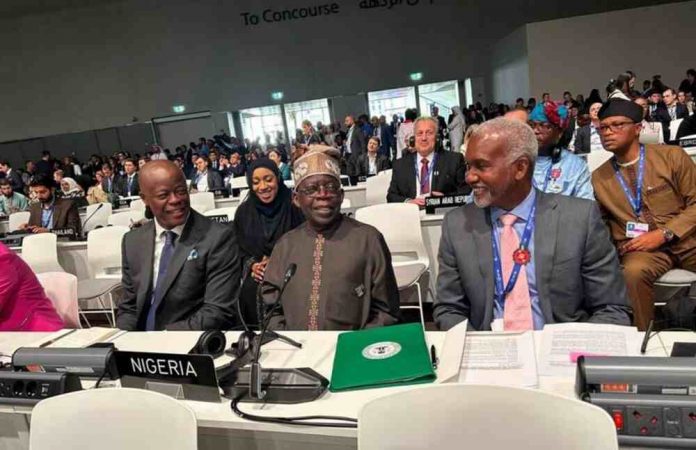
In an effort to streamline governance expenses, President Bola Tinubu has initiated substantial cuts in official entourages for both domestic and international events by a significant 60 percent.

The President’s directive entails a significant reduction in the number of accompanying personnel during official trips. For local engagements, security details will now be sourced from the host state, a move aimed at optimizing resources.

Announced on Tuesday by Ajuri Ngelale, the Special Adviser to the President on Media and Publicity, these measures dictate a marked reduction in the entourage sizes. Previously numbering over 50 individuals, the President will now travel with only 20 officials, while the Vice President’s entourage will be limited to five. Similarly, the First Lady and the wife of the Vice President will each travel with five officials.

For local trips, the entourage limits have been scaled down to 25 for the President, 15 for the Vice President, and 10 each for the First Lady and the Vice President’s spouse.

Ngelale said these changes aim to instill fiscal prudence and accountability in resource management. Ministerial foreign delegations will now comprise a maximum of four officials, while heads of Ministries, Departments, and Agencies (MDAs) will be restricted to a maximum of two officials during international trips.

The President’s directive also includes the reduction of elaborate security entourages during local trips, aiming to curtail excessive duty travel allowance costs.

Ngelale sternly cautioned that any official disregarding these directives would do so at their own risk, underscoring the seriousness of adherence to these cost-saving measures.

A step in the right direction, but is it enough?

President Bola Tinubu’s directive to reduce entourages by a substantial 60% appears as a stride towards curbing extravagant spending. However, while commendable, this measure, taken in isolation, does not effectively address the underlying issue of expensive governance amid Nigeria’s economic predicament. Though in an era where fiscal prudence is the clarion call across nations grappling with economic challenges, the move seems like a step in the right direction.

The ostensible reduction in the number of officials accompanying the President, Vice President, and their spouses on both international and local trips might create an impression of cost-saving. Yet, this singular action, though a start, barely scratches the surface of a larger problem rooted in Nigeria’s governance structure. The reduction in entourage size, while a symbolic gesture, does not significantly dent the expenses incurred by the government machinery in other areas.

Nigeria’s current economic challenges need a more comprehensive approach to cost reduction in governance. While trimming down travel entourages is a visible aspect, there are numerous other avenues where fiscal prudence could yield substantial savings. For instance, the salaries and allowances of political officeholders remain a significant drain on the national coffers. Additionally, there are often redundant or overlapping government agencies that consume substantial resources without yielding commensurate benefits to the populace.

Ministries, Departments, and Agencies (MDAs) have grown significantly over the past decade in the country, creating concerns about government spending amid scarce resources. There have been calls to trim the number of ministers in the nation. Currently, Nigeria has about 48 ministers, and some have intertwined portfolios – gulping millions of naira monthly for recurrent expenditure from the national treasury.

Other countries have set precedents in addressing expensive governance. For instance, Rwanda, in its bid to streamline governance costs, reduced the size of its cabinet and merged several ministries, leading to operational efficiency and considerable cost savings. Similarly, countries like Singapore and New Zealand have actively restructured their public sectors, focusing on merit-based appointments and reorganization to maximize efficiency while reducing unnecessary expenses.

The need for Nigeria to emulate such strategies cannot be overstated. It requires holistic reform across various facets of governance. This includes rationalizing the number of political appointees, merging redundant agencies, and implementing stringent measures to curb excessive spending in all government sectors.

Critics said that while the directive to trim entourages is a positive gesture, it must serve as a stepping stone toward broader, more impactful reforms. Nigeria’s leadership needs to delve deeper, looking beyond mere optics, and address the systemic issues contributing to expensive governance. Experts believe that only through such comprehensive reforms can the nation achieve sustainable cost reduction while enhancing operational efficiency across the government.

MTN And Ericsson Strengthen Partnership to Enhance Mobile Financial Services Across Africa

0

Africa’s largest mobile network operator MTN, has strengthened its partnership with Swedish multinational networking and telecommunications company Ericsson, to enhance mobile financial services and financially empower millions of citizens across Africa.

The agreement was signed during a visit by senior MTN Group executives to Ericsson’s Group Headquarters in Kista, Sweden, where key strategic priorities and collaboration between the two companies were discussed.

MTN and Ericsson partnership will broaden the scope of financial inclusion from first-time users to high-end business applications, utilizing MTN’s Fintech subsidiary Mobile Money (MoMo) service on the Ericsson Wallet Platform. This will provide MTN’s customer base across Africa with access to a world-class mobile connectivity-based financial ecosystem.

Powered by the Ericsson Wallet Platform, MTN Mobile Money will enable individuals and businesses to conduct secure and convenient banking and payment transactions with ease, directly from their mobile devices.

Also, MTN MoMo customers can securely manage funds, pay merchants and utility providers, and access loans and insurance services with ease and affordability, promoting financial freedom and stability.

Speaking on the partnership, Chief Fintech Officer, MTN Group, Serigne Dioum said,

“At MTN, we are not just connecting people, we are unlocking a world of financial possibilities for every African. With 63.5 million active users, our Mobile Money platform is advancing economic empowerment across the continent. MTN Mobile Money offers a spectrum of mobile financial services, encompassing money transfers, payments, savings, and loans for every consumer, actively driving financial inclusion, and advancing economic empowerment across the continent.”

He further added that the strategic collaboration with Ericsson is a significant milestone in the execution of MTN’s Ambition 2025, building the largest and most valuable platform business and creating shared value for its customers in Africa.

Also speaking, Head of Mobile Financial Services, Ericsson, Michael Wallis-Brown said,

Ericsson’s partnership with MTN is a world-leading example of the ability of mobile financial services to financially empower people and businesses by giving the unbanked their first opportunity to control their finances, making it easier for women to access financial services and promoting digital inclusion to enabling more advanced users to access high-end services.

“This model can be applied in any market anywhere in the world to genuinely empower mobile subscribers of all financial standings. Our valued MTN partnership also supports Ericsson’s AfricaInMotion vision to promote a sustainable and connected Africa.”

MTN has built strong core operations, which are underpinned by the largest fixed and mobile network in Africa.

Following the launch of its Fintech subsidiary, MoMo PSB in 2022, the telecoms giant remains committed to enhancing the lives of individuals through innovative and convenient financial solutions.

Its recent partnership extension with Ericsson includes a transition to public cloud deployments and the refinement of the Open API services framework, fostering the acceleration of fintech innovation in Africa.

Seedstars Africa Ventures Receives $30 Million From EIB Global to Support Entrepreneurs in Africa

0

Seedstars Africa Ventures, an early-stage venture capital fund investing in high-growth companies active across Sub-Saharan Africa, has received $30 million from EIB Global, to invest in Entrepreneurs and early-stage startups in Africa.

The fund will be invested in companies developing and implementing digital technologies, particularly those addressing basic needs such as education, healthcare, and utilities, or enhancing goods, services, and efficiency.

Additionally, tech startups will also receive a portion of funding, and innovative brick-and-mortar businesses that get an unfair advantage from digitalization.

The fund also plans to invest up to 50% in Francophone Africa, a region that continues to be an investment destination for emerging VCs owing to lower competition, a massive market opportunity, and high-quality and better-priced deals, in comparison to the more mature Anglophone regions.

Commenting on the investment, EIB head of regional hub for East Africa, Edward Claessen highlighted the importance of backing funds in Africa saying they play an important role in growing and strengthening the continent’s startup ecosystem. He further noted that funds like Seedstars Africa Ventures are invested in the continent and back founders that create jobs and contribute to the growth of economies.

Also speaking on the investment, EIB Vice-President Ambroise Fayolle, said,

Encouraging and promoting innovation and digitalisation is crucial to developing strong and sustainable economies. African entrepreneurs hold the key to the continent’s future, creating jobs, reducing inequality, and improving quality of life. The EIB, as part of Team Europe, is committed to supporting African businesses, and we are proud of the success of Boost Africa and the ACP Trust Fund.”

It is worth noting that the US$30 million EIB Global investment is backed by the EU, through US$20 million from the ACP Trust Fund and US$10 million from the Boost Africa program. With this investment, the EIB has now fully deployed Boost Africa, a program launched in 2016 with the aim of boosting sustainable jobs and prosperity through venture capital for African entrepreneurs.

Boost Africa is a joint initiative of the European Investment Bank and the African Development Bank to enable and enhance entrepreneurship and innovation across Africa, supported by the European Commission and the Organisation of African, Caribbean, and Pacific States.

Under Boost Africa, the companies invested in by Seedstars Africa Ventures 1 will also benefit from technical assistance to develop business skills and expertise, funded by the EU

The EIB pillar of the Boost Africa programme comprises senior and junior tranche investments into venture capital funds in Sub-Saharan Africa and provides guidance and expert advice to both funds and investee companies.