DD
MM
YYYY

PAGES

DD
MM
YYYY

spot_img

PAGES

Home Blog Page 3859

DTCC closes deal to Buy Securrency Amid Fresh Venture Funds for BTC/ETH based projects

0

The Depository Trust & Clearing Corporation (DTCC), a leading provider of post-trade infrastructure and services, announced today that it has completed the acquisition of Securrency, a blockchain-based fintech company that offers a suite of tools for digital asset issuance, compliance, and trading.

The deal, which was first announced in October 2023, marks a significant milestone for the integration of traditional finance and crypto markets, as DTCC aims to leverage Securrency’s technology to enhance its existing offerings and create new solutions for its clients.

Securrency is known for its patented Compliance Aware Token (CAT) framework, which enables the creation of smart securities that can automatically enforce regulatory rules and contractual obligations across different jurisdictions and platforms. Securrency also offers a decentralized exchange (DEX) platform that allows users to trade digital assets with low latency, high liquidity, and minimal fees.

By acquiring Securrency, DTCC hopes to expand its capabilities in the digital asset space and offer more value-added services to its customers, such as tokenization, custody, settlement, and reporting. DTCC also plans to collaborate with Securrency to develop new products and standards for the emerging crypto industry, such as interoperability protocols, identity solutions, and governance models.

“Securrency is a pioneer in the digital asset space, and we are thrilled to welcome them to the DTCC family. This acquisition will enable us to accelerate our innovation agenda and deliver cutting-edge solutions that meet the evolving needs of our clients and the market,” said Michael Bodson, President and CEO of DTCC.

“DTCC is a trusted leader in the global financial system, and we are honored to join forces with them. Together, we will leverage our complementary strengths and expertise to create a more efficient, secure, and inclusive financial ecosystem for the benefit of all stakeholders,” said Dan Doney, Co-Founder and CEO of Securrency.

DTCC’s clients include banks, broker-dealers, asset managers, mutual funds, hedge funds, insurance companies, and other financial institutions that participate in the U.S. and global capital markets. DTCC processes over $2 quadrillion worth of securities transactions annually and provides clearing, settlement, risk management, and data services for various asset classes.

Bitcoin, Ethereum-based projects see fresh venture Funds.

In this week’s funding wrap, we take a look at some of the latest investments in the crypto space, focusing on Bitcoin and Ethereum-based projects. These projects aim to provide innovative solutions for various use cases, such as decentralized finance, gaming, identity, and scalability.

Chainflip, a cross-chain liquidity protocol that enables fast and secure swaps between any blockchain, raised $6 million in a seed round led by Framework Ventures and ParaFi Capital. Other investors include CoinFund, Delphi Digital, Maven 11, and KR1. Chainflip plans to launch its mainnet in Q1 2024 and integrate with Bitcoin, Ethereum, Polkadot, Cosmos, and Avalanche.

Immutable, a layer-2 scaling solution for Ethereum-based NFTs and gaming, raised $60 million in a Series B round led by BITKRAFT Ventures and King River Capital. Other investors include Prosus Ventures, Galaxy Interactive, Fabric Ventures, Alameda Research, and AirTree Ventures. Immutable claims to offer zero gas fees, instant trades, and carbon neutral NFTs.

Magic, a passwordless authentication platform that leverages blockchain technology and decentralized identity standards, raised $27 million in a Series A round led by Northzone. Other investors include Tiger Global, Volt Capital, CoinFund, Digital Currency Group, and Placeholder. Magic aims to provide a seamless and secure login experience for web3 and web2 applications.

StarkWare, a scalability and privacy solution for Ethereum using zero-knowledge proofs, raised $50 million in a Series B round led by Sequoia Capital. Other investors include Paradigm, Founders Fund, Wing Venture Capital, DCVC, Scalar Capital, and Semantic Ventures. StarkWare powers several projects in the DeFi space, such as dYdX, Immutable X, and DeversiFi.

Wintermute, a crypto market maker that provides liquidity for spot and derivatives exchanges, raised $20 million in a Series B round led by Lightspeed Venture Partners. Other investors include Pantera Capital, Sino Global Capital, Kenetic Capital, Rockaway Blockchain Fund, and Hack VC. Wintermute plans to expand its team and product offerings, as well as explore new markets and regions.
M-PESA Partners With Visa to Launch Physical Debit Cards to Its Millions of Customers

0

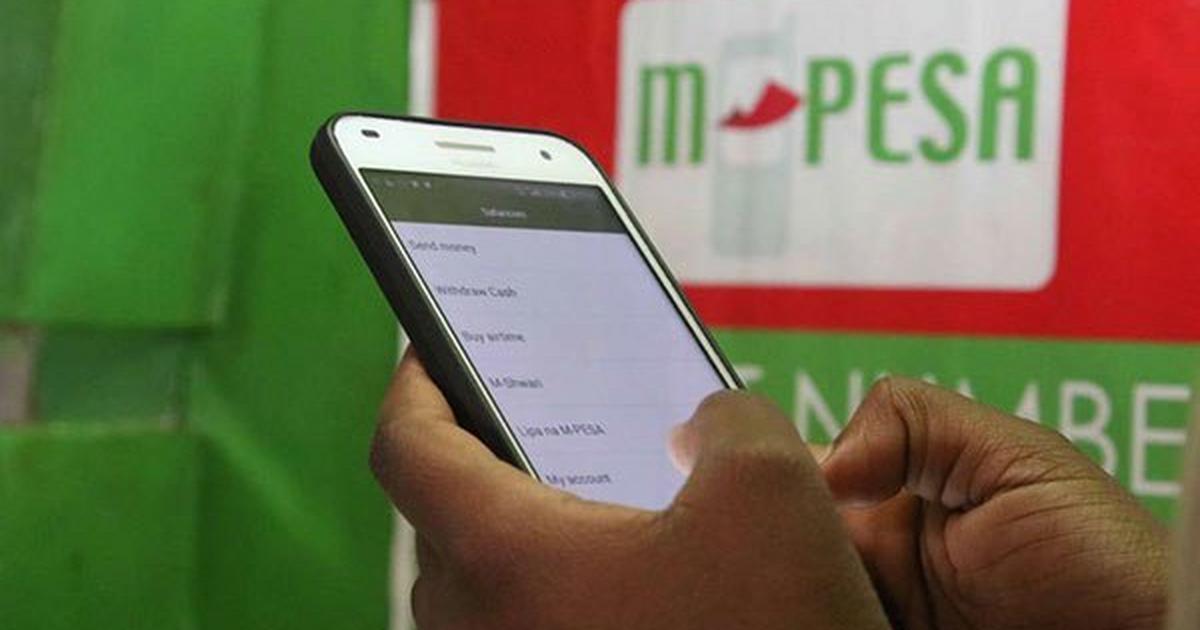
Mobile phone-based payments and money transfer service M-PESA, has partnered with payments processing giant Visa, to issue physical debit cards to its millions of customers.

The physical cards will be operational across the eight countries where M-PESA is available, enhancing the convenience for customers who require reliable payment methods for various subscription services. According to M-PESA, the debit card will be a tap-to-go solution for customers that will also enable merchants to receive payments seamlessly.

Also, the company announced that it will provide tourists with a solution that will enable any visitor to the eight M-PESA markets to pair their Visa card with M-PESA for seamless payments across almost 1 million businesses on the service.

Announcing this recent development, M-PESA wrote on X,

“In line with our purpose of transforming lives, we are innovating our payment solutions to provide customers and businesses with more options and additional convenience. As part of this strategy, Safaricom has achieved PCI DSS compliance, which builds on our strategic partnership with Visa, expanding M-PESA’s payment capabilities to include card issuing and acquisition.

“PCI DSS compliance enables M-PESA to begin offering tap-to-pay card payments for the more than 60 million customers, 5 million businesses and 100,000 developers across our entire ecosystem. This will empower them to receive mobile payments, online and in-person card payments from any customer across the world. M-PESA will also provide tourists with a solution that will enable any visitor to the eight M-PESA markets to pair their Visa card with M-PESA for seamless payments across almost 1 million businesses on the service.

“FinTechs and financial institutions are equally set to leverage our card processing capabilities empowering them to provide end-to-end mobile and card payment solutions. Together with Visa, M-PESA currently offers virtual payment cards to our more than 60 million customers and 925,000 merchants across our markets”.

Until now, M-PESA only provided its customers with a virtual card called GlobalPay, powered by Visa. The virtual card is linked to M-PESA users wallet and enables them to make payments to international online merchants for goods and services using their card details.

Those virtual cards were however limited to only online purchases and could not be used at Kenya’s cash-first retail stores. 

With the roll-out of physical debit cards, M-PESA, which serves over 51 million Kenyans, is set to transform the payment habits in the country where it operates, making it a major player in the global digital payments arena.

This remarkable step is designed to build on the success of M-PESA’s mobile money services and extends its functionality beyond the existing virtual GlobalPay card to include physical retail transactions.

Established on the 6th of March 2007 by Vodafone’s Kenyan associate, Safaricom, M-PESA is Africa’s leading mobile money service with more than 604,000 active agents operating across the Democratic Republic of Congo (DRC), Egypt, Ghana, Kenya, Lesotho, Mozambique and Tanzania.

The Fintech company has been lauded by many, for giving millions of people access to the formal financial system, and for its pivotal role in reducing crime in otherwise largely cash-based societies.

EU Opens Legal Action Against X Over Disinformation Concerns

0

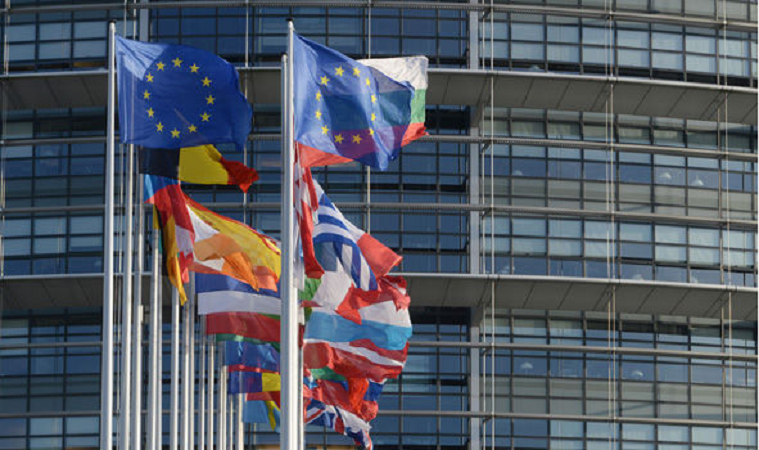
The European Union (EU), has initiated legal actions against X, due to concerns related to disinformation and illegal content.

The EU commissioner for internal market, Thierry Breton said on Monday that the commission opened formal infringement proceedings against X, a move in response to suspected breaches of X’s transparency obligations and duties to counter illegal content and disinformation.

Breton said,

“Today’s opening of formal proceedings against X makes it clear that with the DSA, the time of big online platforms behaving like they are too big to care has come to an end. We invite X to cooperate with us in this investigation”.

The opening of legal proceedings implies that the EU will investigate X’s systems and policies related to certain suspected infringements, to ensure that European citizens are safeguarded online.

In response to the EU’s legal action, X disclosed that it remains committed to complying with the Dififal Services Act, and is cooperating with the regulatory process.

The social network platform added that it is important if the legal action taken can remain free of political influence and doesn’t contradict the law.

X wrote,

“It is important that this process remains free of political influence and follows the law. X is focused on creating a safe and inclusive environment for all users on our platform while protecting freedom of expression, and we will continue to work tirelessly towards this goal”.

The European Commission launched the proceedings under the DSA “on the basis of the preliminary investigation conducted so far, including based on an analysis of the risk assessment report submitted by X in September.

Recall that the commission had earlier sent X a formal request for information in October, several days after Hamas’s attack on Israel, demanding answers on the alleged spread of illegal content and disinformation.

X responded by disclosing that it had already removed numerous accounts associated with Hamas from its platform. The investigation marked the first instance under the EU’s regulations which came into effect in August.

Notably, following the EU’s recent legal action against X, the investigation will also address a suspected deceptive design of the X user interface, notably focusing on the platform’s blue checkmark.

X however disclosed that the blue ticks denote verified accounts that have an active subscription to the X Premium service and meet certain eligibility requirements, such as showing a display name and profile photo, being in active use, and being secure and non-deceptive.

It is worth noting that under the recent EU law, called the Digital Services Act (DSA), platforms with more than 45 million active users are subject to content moderation rules.

Therefore, infringements of the DSA can result in fines, and financial penalties which can be up to 6% of global turnover. In exceptional cases, a penalty might include a temporary shutdown of the company.

US SEC Files Charges Against Tingo Mobile CEO and Affiliates for Alleged Massive Fraud

0

The United States Securities and Exchange Commission (SEC) has taken legal action against Dozy Mmobuosi, the Chief Executive Officer of Tingo Mobile, and three affiliated U.S.-based companies—Tingo Group Inc., Agri-Fintech Holdings Inc., and Tingo International Holdings Inc.—alleging a massive fraud scheme that involved inflating financial performance metrics to deceive global investors.

In a filing dated December 18, 2023, the SEC accused Mmobuosi of orchestrating a multi-year scheme aimed at fabricating financial statements and documents for the mentioned entities and their Nigerian subsidiaries—Tingo Mobile Limited and Tingo Foods PLC. The complaint alleges that these falsified documents were used to mislead investors through press releases, SEC filings and other public statements.

The SEC’s complaint specifically highlights instances of substantial misrepresentations in financial reports.

“For instance, Tingo Group’s fiscal year 2022 Form 10-K filed in March 2023 reported a cash and cash equivalent balance of $461.7 million in its subsidiary Tingo Mobile’s Nigerian bank accounts. In reality, those same bank accounts allegedly had a combined balance of less than $50 as of the end of fiscal year 2022. According to the SEC’s complaint, Defendants also fabricated the customer relationships that formed the basis of their purported businesses,” the SEC stated.

The allegations also delve into the fraudulent creation of customer relationships forming the foundation of their purported businesses. Moreover, it’s alleged that Mmobuosi and the entities under his control obtained significant amounts of money or property through these schemes. Mmobuosi is accused of diverting funds for personal use, including luxury purchases like cars, private jet travel, and even an unsuccessful attempt to acquire an English Football Club Premier League team.

The SEC’s complaint, filed in the U.S. District Court for the Southern District of New York, involves charges of violating federal securities laws’ anti-fraud provisions against all four Defendants. Additional charges include reporting, books and records, and internal control violations against Nasdaq-listed Tingo Group, OTC-traded Agri-Fintech, and Mmobuosi. Furthermore, Mmobuosi faces charges of lying to auditors, insider trading, and failure to disclose millions of Agri-Fintech common stock sales.

The SEC seeks various forms of relief, including permanent injunctive measures, disgorgement of ill-gotten gains, civil penalties, and the return of profits obtained through stock sales. Additionally, it aims to restrain Mmobuosi from holding positions in public companies or participating in penny stock offerings.

In an emergency application, the SEC seeks temporary and preliminary relief, including freezing Mmobuosi’s assets, prohibiting money transfers or share issuances to Mmobuosi from TIH, Agri-Fintech, and Tingo Group, and preventing the disposal of stock holdings. The order also seeks to safeguard records, documents, and repatriation of proceeds pending further legal proceedings.

The SEC’s investigation involves a team from the New York Regional Office and is being led by several key individuals. The SEC acknowledges the support of Nasdaq’s Enforcement Department in this matter.

The US Elections and Geopolitical Flashpoints of 2024

1

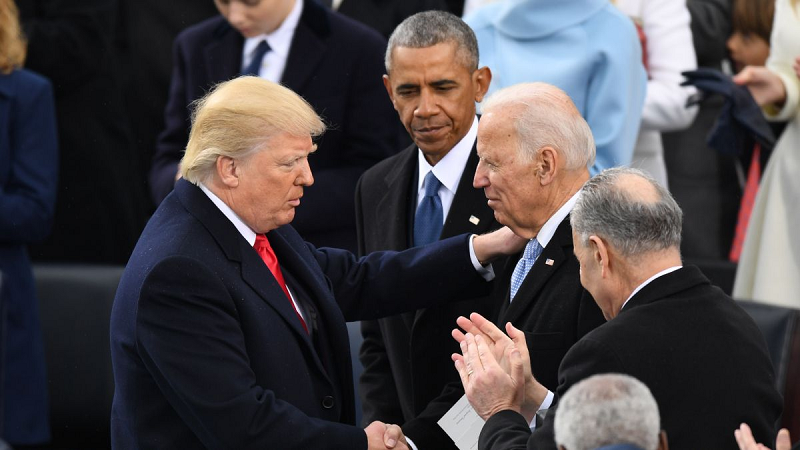
The year 2024 will be a pivotal one for the United States and the world, as the presidential election will determine the direction of the country’s foreign policy and its role in global affairs. The election will also coincide with several geopolitical flashpoints that could escalate into major conflicts or crises, affecting the stability and security of the international system.

China: The US-China rivalry is arguably the most consequential and complex relationship in the world today, as the two powers compete for influence, resources, and leadership in various domains, such as trade, technology, security, human rights, and regional order.

The next US president will have to balance the need to cooperate with China on common challenges, such as climate change, nuclear proliferation, and pandemic prevention, with the need to confront and deter China’s assertive and aggressive behavior in areas such as the South China Sea, Taiwan, Hong Kong, Xinjiang, and cyberspace.

The next US president will also have to decide whether to continue or modify the current strategy of strategic competition and decoupling or pursue a more cooperative or confrontational approach.

Russia: The US-Russia relationship is at its lowest point since the Cold War, as the two countries disagree on a range of issues, such as Ukraine, Syria, Iran, North Korea, NATO expansion, arms control, election interference, human rights, and cyberattacks.

The next US president will have to deal with a resurgent and revisionist Russia that seeks to undermine the US-led international order and assert its interests and influence in its near abroad and beyond. The next US president will also have to decide whether to extend or renegotiate the New START treaty, which expires in 2026, or pursue a new framework for nuclear arms control that includes China.

Iran: The US-Iran relationship is fraught with tension and mistrust, as the two countries clash over Iran’s nuclear program, regional activities, ballistic missile development, and support for proxy groups. The next US president will have to decide whether to rejoin or renegotiate the 2015 nuclear deal (JCPOA), which was abandoned by the Trump administration in 2018 and has been violated by Iran since 2019. The next US president will also have to manage the risk of escalation and conflict with Iran in the Persian Gulf, Iraq, Syria, Yemen, and Lebanon.

North Korea: The US-North Korea relationship is unpredictable and volatile, as the two countries oscillate between dialogue and confrontation over North Korea’s nuclear and missile capabilities.

The next US president will have to decide whether to continue or abandon the diplomatic process that was initiated by the Trump administration in 2018 but has stalled since 2019. The next US president will also have to prepare for the possibility of a provocation or crisis from North Korea, which may seek to test or advance its weapons of mass destruction.

Afghanistan: The US-Afghanistan relationship is uncertain and fragile, as the US plans to withdraw its remaining troops from Afghanistan by May 2021 as part of a peace deal with the Taliban.

However, NATO faces internal divisions and doubts about its unity and resolve, especially after the US withdrawal from Afghanistan in 2021 and the controversial Nord Stream 2 pipeline project between Germany and Russia. The next US president will have to decide how to reassure and strengthen NATO’s collective defense and deterrence against Russia, while engaging in dialogue on issues of common interest such as arms control and counterterrorism.

These are just some of the major challenges that the US will face in 2024 and beyond. The outcome of the elections will depend on many factors, such as the state of the economy, the public health situation, the domestic political climate, and the performance and popularity of the incumbent president.

The candidates’ positions and policies on foreign affairs will also matter, as they will reflect their vision and values for America’s role in the world. The voters’ choice will have significant consequences for global peace and prosperity.