DD
MM
YYYY

PAGES

DD
MM
YYYY

spot_img

PAGES

Home Blog Page 3861

Fintech Startup LemFi Raises $33M in Series A to Simplify Remittance For Immigrants Globally

0

Fintech startup that allows users to send money to Africa in less than 10 minutes free of charge, LemFi, has raised $33 million in Series A Round to simplify remittance payments for immigrants globally.

The funding round was led by Left Lane Capital, with funds from other investors which include Y-Combinator, Zrosk, Global Founders Capital, and Olive Tree.

With the raise of its recent fund, the company said it intends to expand its product offering to the United States, Europe, the Middle East, and Asia, as well as innovate new product offerings according to the needs of its users.

LemFi’s CEO Ridwan Olalere drew from his own experience as an immigrant and said, having lived on three continents and leading a multicultural team, the company’s mission is deeply personal, creating a world where financial services are universally accessible.

“Our product is a game changer for users since traditional banks and other leading neo-banks have always steered clear of less common or more volatile currencies. This has driven immigrants to often use unsafe, informal channels or to stitch together several other services to solve some of their basic financial needs. Until now”, he added.

Speaking on what motivated the investment in LemFi, Principal at Left Lane Capital, Matthew Miller, said,

“LemFi has been very deliberate and strategic in acquiring licenses and building a robust network of financial institution partners to facilitate cross-border payments for immigrants. We’re excited to support LemFi as it expands its product offering to serve more immigrant communities globally.”

LemFi is set to build a platform that empowers the next generation of immigrants. With its product offerings, users can send, receive, hold, and save money in the currencies of their country of origin and residence.

The company understands that the African diaspora has financial service needs that are either unmet or met inefficiently.

Some of these needs range from high and hidden transfer fees for international remittance back to the limited ability to access and manage affordable credit products and bank accounts domiciled in their home country.

Founded in 2020, LemFi launched in Canada where it offered instant international transfer to the African diaspora community in Canada.

From Canada, the startup grew quickly, and by 2021, it had expanded to the UK. At the same time, the company was working to add more African countries where users could send money to or from.  By the end of 2021, it has added 10 new African remittance corridors.

LemFi’s mission is to make life easier for Africans abroad by providing borderless financial services that allow them to truly participate in the global economy wherever they are in the world.

Justice Department Files Lawsuit Against SpaceX, Over Hiring Discrimination Against Asylees

0

In a lawsuit filed on Thursday, U.S. federal prosecutors allege that Elon Musk’s SpaceX engaged in discriminatory practices over an extended period towards refugees and individuals granted political asylum who were seeking employment in the rocket company.

According to the lawsuit, SpaceX systematically discouraged refugees and asylees from applying and refused to hire or consider them due to their citizenship status, thereby contravening the Immigration and Nationality Act. These practices are said to have occurred from at least September 2018 to May 2022.

Fortune noted that in the past, Musk has indicated that SpaceX was restricted from employing foreign nationals unless they possessed a green card, suggesting that this was due to constraints associated with the sharing of information linked to rocket technology, governed by International Traffic in Arms Regulations (ITAR).

“If you’re working on rocket technology, that’s considered an advanced weapons technology. So even a normal work visa isn’t sufficient, unless you get a special permission from the Secretary of Defense or the Secretary of State,” Musk was quoted as saying at a space conference in 2016.

The lawsuit follows the conclusion of a probe by the DOJ into SpaceX’s hiring practices.

As part of its allegations, the U.S. Department of Justice asserted that SpaceX made inaccurate claims in its job postings, stating that it was constrained by federal export control laws to exclusively hire U.S. citizens and green card holders. The agency clarified that these laws do not mandate such limitations on hiring.

The investigation conducted by the Department of Justice was initiated in 2020, prompted by a complaint by an individual who said he was denied employment at SpaceX after disclosing during an interview that he did not possess U.S. citizenship or lawful permanent residency. In June 2021, a federal judge mandated SpaceX to provide its hiring records as a component of the ongoing investigation, per Fortune.

“Our investigation also found that SpaceX recruiters and high-level officials took actions that actively discouraged
asylees and refugees from seeking work opportunities at the company,” Kristen Clarke, the Justice Department’s head of civil rights, said in a statement.

The Justice Department further noted that the authorization for asylees and refugees to reside and work in the United States remains valid indefinitely, placing them on a level playing field with U.S. citizens and lawful permanent residents in accordance with export control laws.

“Under these laws, companies like SpaceX can hire asylees and refugees for the same positions they would hire U.S. citizens and lawful permanent residents,” it said. “And once hired, asylees and refugees can access export-controlled information and materials without additional government approval, just like U.S. citizens and lawful permanent residents.”

Companies under Musk have been accused of racial discrimination among other allegations of impropriety, with some resulting in lawsuits or regulatory probes.

Tesla Inc., the electric vehicle manufacturer led by Musk, has faced allegations from Black employees at its Fremont, California factory, who said that managers turned a blind eye to the frequent use of racial slurs on the assembly line and were sluggish in addressing graffiti with hate symbols such as swastikas that were scribbled in common areas.

In another case, Tesla is currently contesting allegations made by California’s civil rights department, which state that a considerable number of African American workers at its factory were subjected to mistreatment encompassing harassment, unequal compensation, and reprisals.

Separately, SpaceX is entangled in several lawsuits from former employees in recent years, alleging discrimination based on factors like age, race, and disability. Just earlier this month, a former SpaceX technician filed a lawsuit against the company in a California state court, alleging experiences of workplace harassment related to physical disability and subsequent retaliation, according to Fortune.

Other U.S. companies have also been investigated and sued by federal prosecutors over discriminatory job listings.

In September, Walmart Inc., CarMax Inc., Capital One Financial Corp., and Axis Analytics settled with the Justice Department after similar claims over discriminatory job postings against non-US citizens, the agency said. In June, auditing firm KPMG and 15 other employers also settled with the agency over hiring bias in postings on a college career services website. The agency said it collected $1.1 million from the 20 employers in civil penalties.

The lawsuit filed by the Justice Department claims that SpaceX engaged in discrimination against asylum seekers and refugees due to their citizenship status across various stages of the hiring process.

For instance, in 2020, a SpaceX engineer shared a job posting on a chat forum during a college career fair at the Georgia Institute of Technology. The posting specified that applicants must be “a US citizen,” even though the role did not necessitate U.S. citizenship, according to the allegations made in the complaint.

In the lawsuit against SpaceX filed on Thursday, U.S. federal prosecutors are requesting the court to grant retroactive wages and unspecified civil fines for asylum seekers and refugees who, according to the complaint, were purportedly refused employment opportunities at SpaceX.

The current state of crypto taxation in South Korea

0

South Korea is one of the most active and innovative countries in the crypto space. The government has been supportive of the development and adoption of blockchain technology and digital assets, and has implemented various regulations and policies to foster a healthy and vibrant crypto ecosystem.

However, one of the major challenges that crypto investors and businesses face in South Korea is taxation. The current tax regime is complex, ambiguous and inconsistent, and creates a lot of uncertainty and confusion for the crypto community.

According to the current tax laws in South Korea, crypto assets are not recognized as legal tender or financial assets, but as intangible assets. This means that they are subject to capital gains tax, which is calculated based on the difference between the acquisition price and the disposal price of the crypto assets.

However, there are several problems with this approach. First of all, there is no clear definition or guidance on what constitutes acquisition and disposal of crypto assets, and how to determine their fair market value. For example, is exchanging one crypto asset for another considered a taxable event? How about using crypto assets to pay for goods or services? How about receiving crypto assets as income or rewards? How about holding crypto assets in a wallet or a custodial service?

Secondly, there is no uniform tax rate or threshold for capital gains tax on crypto assets. Depending on the type and amount of income, different tax rates and exemptions may apply. For example, if the income from crypto assets is classified as miscellaneous income, it is subject to a flat tax rate of 20%, with a 2.5 million won ($2,100) exemption per year. However, if the income from crypto assets is classified as other income, it is subject to a progressive tax rate ranging from 6% to 42%, with no exemption.

Thirdly, there is no clear distinction or coordination between the national tax authority and the local tax authorities on how to collect and report taxes on crypto assets. The national tax authority has the jurisdiction over income taxes, while the local tax authorities have the jurisdiction over property taxes. However, since crypto assets are considered both income and property, there is a risk of double taxation or conflicting claims.

To address these issues and challenges, there are several possible solutions that can be implemented by the government and the crypto community. One solution is to adopt a more clear and consistent definition and classification of crypto assets, and provide more guidance and examples on how to calculate and report taxes on them. This would reduce the ambiguity and confusion for both taxpayers and tax authorities, and ensure a fair and transparent taxation system.

Another solution is to harmonize the tax rates and thresholds for capital gains tax on crypto assets, and align them with those of other financial assets or income sources. This would eliminate the discrepancies and inequalities among different types of income, and create a more level playing field for crypto investors and businesses.

A third solution is to coordinate and cooperate between the national tax authority and the local tax authorities on how to collect and report taxes on crypto assets and avoid double taxation or conflicting claims. This would enhance the efficiency and effectiveness of tax administration and reduce the burden and hassle for taxpayers.

Crypto taxation is one of the most important and urgent issues that need to be addressed in South Korea. The current tax regime is complex, ambiguous and inconsistent, and creates a lot of uncertainty and confusion for the crypto community. By adopting more clear and consistent definitions, harmonizing tax rates and thresholds, and coordinating between national and local tax authorities, South Korea can improve its crypto taxation system, and foster a more conducive environment for the development and adoption of blockchain technology and digital assets.

Application of AI in Insider Threats

0

This is a continuation of last week’s post where I talked about how AI can help cybersecurity to better detect and mitigate attacks, and to protect data. We are taking the conversation after from external cybersecurity threats to insider threats.

AI can play a crucial role in preventing insider threats by continuously monitoring and analysing user behaviour and activities. Insider threats occur when individuals with authorized access to an organization’s systems, data, or information misuse their privileges for malicious purposes. AI-driven technologies can detect suspicious behaviours even within an organisation, identify patterns indicative of potential threats, and respond proactively to mitigate risks.

Here are some ways AI can do this:

1. Anomaly Detection: AI-powered systems can establish a baseline of normal behavior for each user or staff based on historical usage data. Any deviations from this baseline can be flagged as anomalies. For example, if an employee suddenly accesses an unusual amount of sensitive data or attempts to access data outside their usual working hours, the AI system can trigger an alert, prompting further investigations, and in essence, preventing any harm.

2. Behavioral Analytics: AI can perform continuous behavioural analysis by looking for patterns that indicate risky or suspicious behaviour. This may include analysing staffs’ login patterns, file access patterns, data movement, and application usage. By identifying unusual behavior in real-time, AI can detect potential insider threats before they escalate or cause any major damage.

3. Contextual Analysis: AI systems can also analyze user actions in the context of their role, job responsibilities, and the sensitivity of the data they are accessing. For instance, if an employee in the finance department starts accessing HR records, the AI system can flag this as unusual behavior and raise an alert.

4. Privileged User Monitoring: Monitoring the activities of privileged users, such as system administrators or IT personnel, is crucial to detect any unauthorized or abnormal actions. AI can monitor these users’ activities closely, ensuring that they are not abusing their elevated access privileges. This is a way to place checks even on the administrators.

5. Data Access Controls: AI can be used to implement dynamic data access controls. Access rights can be adjusted based on user behaviour, roles, and responsibilities. If the AI system detects suspicious activity, it can automatically restrict access or require additional authentication measures.

6. User Behaviour Profiling: AI can create detailed user behaviour profiles, taking into account factors such as typical work patterns, geographical locations, and application usage. By understanding what constitutes “normal” behavior for each user, the AI system can better detect deviations indicative of insider threats and flag/stop them.

7. Real-time Alerts and Response: When AI identifies potential insider threats, it can issue real-time alerts to security teams or administrators. This enables immediate investigation and proactive action to prevent any further malicious activities.

8. Machine Learning and Continuous Improvement: AI systems can continuously learn and adapt to evolving insider threat patterns. This is more than human-based security systems can do for you. Machine learning algorithms can identify new trends and behaviours, allowing the system to refine its detection capabilities over time.

It is almost impossible to think that one can summarise the capabilities of AI in any article. AI is nascent, so much so that it would not be easy to predict definitively how it will be used to protect against insider threats. There’s a lot more that AI can do.

By leveraging AI’s capabilities for anomaly detection, behavioural analytics, and context-aware monitoring, organizations can significantly enhance their ability to detect and prevent insider threats. Combining AI with human expertise and well-defined security policies can create a robust defence against the potential risks posed by insiders with malicious intent.

Connection Between Emotional Intelligence And Entrepreneurial Spirit

0
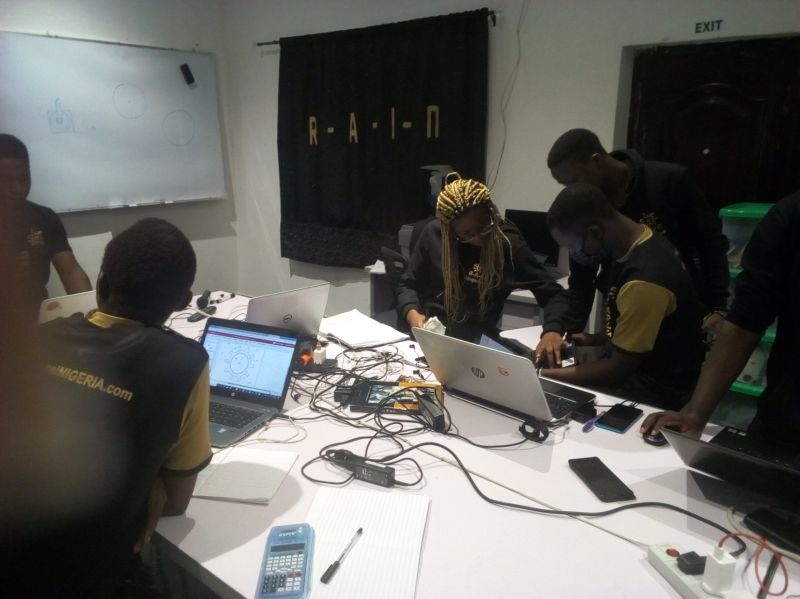
Students, learning one of Robotics and Artificial Intelligence courses in Ibadan

There was a multiple forwarded message on WhatsApp sometime ago, that talked about the types of Intelligence. The summary of that message was that Social intelligence and Emotional intelligence matters more to a person’s success in life, while Adversity Quotient is a great determinant of how a person can make a comeback from life challenges. This writeup is not an attempt to compare the four kinds of intelligence, but to look at what roles Emotional Quotient can play in the success of an entrepreneur.

What do the stats say?

While there are no official figures on issues like this, general surveys show that an entrepreneurs’ ability to manage his emotions can play a huge role in the success of the business ventures. In the dynamic and unpredictable world of business, the ability to understand and manage emotions plays a vital role in driving innovation, building strong relationships, and making effective decisions. Sadly, this is not something that is being prioritized by entrepreneurs or intending entrepreneurs.

Emotional Intelligence and Leadership Skills

Emotional intelligence is the cornerstone of effective leadership in entrepreneurship. Entrepreneurs who possess high Emotional intelligence can inspire and motivate their teams, and foster a positive and collaborative work environment. This is more than what you can simply hope to achieve by hiring competent people into HR positions. It comes down to the entrepreneur.

Entrepreneurs who demonstrate empathy, understand the emotions and perspectives of team members, and effectively address their needs and concerns go a lot farther in keeping their best hands on the team. You must have heard it said before that people don’t leave bad jobs, they leave bad bosses.

Leaders with Emotional intelligence also exhibit self-awareness, recognizing their strengths and limitations, and proactively seeking self-improvement. This self-awareness helps them lead by example, promoting a workplace culture of continuous learning and personal growth within their organizations.

Emotional intelligence in Decision-Making

Entrepreneurial ventures often require quick and critical decision-making. Emotional intelligence enhances an entrepreneur’s ability to make informed choices amid uncertainty and ambiguity, and with a great sense of calm. Emotional intelligence enables entrepreneurs to assess situations objectively, set aside emotional biases, and consider various perspectives before arriving at well-balanced decisions. If it is time to pivot or revisit product development, they can make and execute the decision immediately. Importantly, they can do this without raising dust, and getting every other person into a panic.

Also, entrepreneurs with high Emotional intelligence can manage stress effectively, maintaining a calm and composed demeanor during challenging situations. This emotional resilience enables them to tackle setbacks and failures with grace, rebounding stronger and wiser from adversities. In the end, this might be a key difference between the leaders of successful teams and leaders of average teams.

Emotional intelligence and Relationship-Building

This is what most people would call networking. Entrepreneurs need to forge strong and meaningful connections with stakeholders, including customers, partners, investors, and employees. Emotional intelligence empowers entrepreneurs to build trust and rapport with others, fostering long-term relationships based on understanding and mutual respect.

Entrepreneurs with high Emotional intelligence are attentive listeners, valuing the input of others and promoting a collaborative atmosphere. They excel in effective communication, conveying their ideas with clarity and empathy, which helps align stakeholders toward a shared vision.

Emotional intelligence and Conflict Resolution

In the high-pressure world of entrepreneurship, conflicts can arise between team members, customers, partners, or investors. Emotional intelligence equips entrepreneurs with conflict resolution skills, enabling them to navigate disagreements tactfully and find win-win solutions. Just make a mental picture of that leader that can handle a customer crisis so smoothly that the customer leaves very satisfied, and ready to spread the brands gospel.

Entrepreneurs with high Emotional intelligence can diffuse tense situations, deescalate emotions, and facilitate open and constructive dialogue. Their ability to manage conflicts positively strengthens team cohesion and prevents potential disruptions to business operations.

What is my conclusion on this?

Emotional intelligence plays a pivotal role in shaping successful entrepreneurs and the ventures they lead. From fostering effective leadership and decision-making to building meaningful relationships and resolving conflicts, Emotional intelligence is a key attribute that drives entrepreneurial excellence.

Entrepreneurs who cultivate emotional intelligence not only benefit themselves but also create positive work cultures that attract and retain top talent. By leveraging emotional intelligence in entrepreneurship, visionary leaders can navigate the challenges of the business landscape with resilience, empathy, and a profound understanding of the human dimension.

Ultimately, Emotional intelligence is not just a great personal skill but an essential factor that contributes to the sustainable growth and impact of entrepreneurial endeavors.

Question of the day

“The Role of Emotional Intelligence in Entrepreneurship” – Discuss the significance of emotional intelligence in entrepreneurship and how it can positively impact leadership, decision-making, and relationship-building skills.