DD
MM
YYYY

PAGES

DD
MM
YYYY

spot_img

PAGES

Home Blog Page 3878

Let’s re-engineer your downstream oil and gas business with better technologies [video]

0

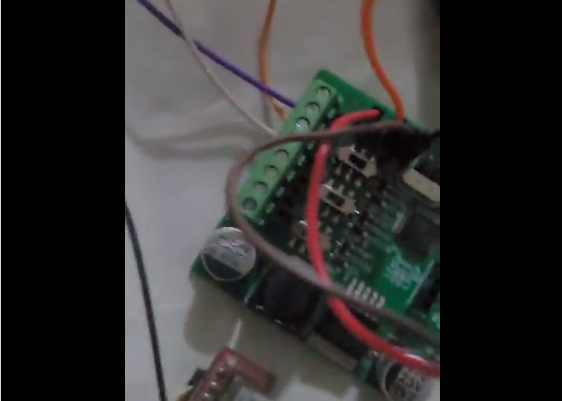
It worked. We will reduce capex cost for metering automation by 55% while improving performance by 2x of the traditional systems, benchmarking on speed, reconciliation and in-payment integration. That data on the screen is liquid-fuel data being piped into the cloud where computational systems are analyzing and processing all at scale. The system is designed to be brand agnostic, making it possible to work in more than 99% of brands in the market. Next step: packaging.

The age of intelligent sensors is here. Uniting those sensors with AI, supply chain across markets, geographies, etc can happen at national, state and local levels more intelligently. Indeed, you can design an integrated supply chain framework which saves you energy cost while delivering maximally for whatever the job is.

Africa’s energy strategy requires intelligent systems, at the heart of its architecture, so that energy needs and supplies are integrated and sync’d like a great orchestra. Data powers smart policy: intelligent sensors make the data possible!

Whatever your needs are in the downstream oil & gas sector, we have technologies which have helped many organizations, and we continue to innovate and build next generation sensors to help. What are your needs? We deliver at a better cost model and higher quality. Let’s re-engineer your downstream oil and gas business with better technologies; no more leakage of cash or hydrocarbons!

Learn more about FuelFact fuelfact.com and Tekedia Capital capital.tekedia.com

Regulatory Requirements For The Change Of Food and Feed Formulations In Nigeria

0

Effective from the 30th of March,2023, the NAFDAC issued a set of guidelines for the interest of the general public and in particular, manufacturers of local and imported food and feed products.

By virtue of these guidelines, it is necessary to emphasize that, no regulated food and feed product shall be manufactured, in accordance with the provisions of the NAFDAC act, other related Legislations and the accompanying Guidelines.

A change in formulation or food reformulation is the process of altering the processing or composition of a food or beverage product;

  1. to improve its nutritional profile and, 
  2. to increase, reduce, remove or replace its content of ingredients or nutrients of concern while maintaining taste, flavour and characteristics of the product.

Application

-A written application for Change in Formulation of Food and Feed product(s) should be made on the company’s letter head to the Director-General (NAFDAC).

-An online application form for change in food and feed formulation shall be purchased, completed and submitted online

-A separate application form shall be submitted for each product.

Labelling Information

-Labelling should be informative, accurate and in conformance with the Agency’s Food Labelling Regulations and the International Code of Marketing of Breastmilk Substitutes Regulations (Control of Marketing of Breastmilk Substitutes) and any other relevant Regulations, as applicable.

Step I

Documentation

-The application letter stating the purpose and justification for the Change in formulation (Reformulation).

-Evidence of Business Incorporation.

-Current and proposed Batch formulations

-Evidence of product registration.

-Evidence of payment.

-Contract Manufacturing Agreement (where applicable).

– Evidence of Registration of Brand Name with Trademark Registry in the Ministry of Industry, Trade and Investment. This should be done in the name of the owner of the Trademark/Brand name, as the case may be.

 -Current and proposed Product Labels/artworks.

-Comprehensive Certificates of Analysis for current and proposed formulations.

Step II

Product Approval Meeting

-Upon satisfactory documents review, GMP inspection and laboratory analysis reports, products are presented for Approval Meetings.

-Products not approved at approval meeting are issued compliance directives.

Step III

Issuance of Notification of Approval

-For products approved at the meeting, a notification of product approval is issued to the applicant.

Notes

-Failure to comply with these requirements may result in the disqualification of the application or delay in processing of the application.

– An approval for change in formulation does not automatically confer advertisement permit. A separate application and subsequent approval by the Agency shall be required if the product is to be advertised.

– A failure to respond to compliance directives within 90 working days will automatically lead to the closure of the Application. Please note that the clock stops once compliance directives are issued.

– The time line for processing applications for change in formulation from submissions to approval is ninety (90) working days.

– A change in formulation approval does not in anyway affect the validity of the product license and elapse when the product license expires.

Important Provisions Of The NAFDAC Regulations on Soft Drinks in Nigeria

The National Agency For Food and Drug Administration and Control (NAFDAC) passed in 2021, a set of regulations which apply to all soft drinks that are manufactured, imported, exported, advertised, sold, distributed or used in Nigeria. 

The provisions of these guidelines will form the focus of this article.

Prohibition

– Nobody is allowed to manufacture, import, export, distribute, advertise, display for sale, offer for sale, sell or use soft drinks specified in the schedule to the relevant NAFDAC Regulations, unless such soft drinks have been registered appropriately with NAFDAC.

Labelling

– In addition to compliance with NAFDAC food labeling regulations and any other relevant regulations of the agency, the following shall apply :-

a). Labelling of soft drinks specified in the regulations shall not bear the word “fruit juice”, unless the fruit content is as prescribed in the agency’s fruit juice nectar regulations.

b). Labelling of soft drinks specified in these regulations shall not bear the word “fruit drink” unless the fruit juice content is 5% and above.

c). The package of the soft drink specified in these regulations shall not show any pictures, images, & likeness of fruits unless the fruit juice content is not less than 5%.

d). Every package containing fruit squash, fruit cordial or fruit crush of the standard of composition prescribed by NAFDAC shall bear a label, which shall indicate the nature of the contents and the fruits from which they have been prepared.

e). Every package containing imitation, synthetic or artificial squash, or cordial or crush with their synonymous names or of same composition shall bear a label with the words “flavored” & in close proximity to this and in the same letter & colour type shall bear the words “contain no natural fruit juice”.

Offences & Penalties

– Any individual found guilty of violating these regulations will be sentenced to a jail term of 1 year, a fine of 800 Thousand Naira,or both.

– A body corporate found guilty if violating these regulations will be penalized with a fine of 5 Million Naira and criminal prosecution can be effected against its managers, directors, secretary, trustee or partner except it is proved that the offences were committed without their connivance, consent or knowledge.

Forfeiture After Conviction

-Any person convicted of an offence under the regulations shall forfeit to the Federal Government any asset or property constituting proceeds of the offence as well as any instrumentality.

Enforcement

– The NAFDAC is entrusted with the statutory duty of enforcing compliance with these regulations. 

Freedom, Religion and Social Media in Nigeria: The Case of Tani Olohun

4

In a diverse society like Nigeria, where freedom of expression is cherished and religious beliefs are deeply held, a delicate balance must be struck to ensure that these fundamental rights coexist harmoniously. The recent case of Tani Olohun, and his subsequent imprisonment due to his online statements, highlights the complexities of navigating the fine line between free expression and responsible communication.

Is there a legitimate reason to limit the freedom of expression?

The Nigerian Constitution, in Section 39(1), guarantees the right to freedom of expression. However, this right is not absolute and can be restricted on grounds of public order, morality, and the rights of others. The accusations against Tani Olohun, involving harm to the reputation and well-being of the Emir of Ilorin and Islamic scholars, may be seen as affecting public order and the rights of others. Therefore, there could be a legitimate reason to limit his freedom of expression.

Is the restriction necessary to achieve the legitimate aim?

The Nigerian Constitution requires that any restriction on the right to freedom of expression must be necessary to achieve the legitimate aim. The court’s decision to sentence Olohun to imprisonment suggests that the judiciary believes this restriction is necessary to prevent further harm to the complainants’ reputations and well-being. The Nigerian Constitution also allows for the limitation of rights when necessary for national security, public order, and the protection of rights of others.

Is the restriction proportionate to the aim pursued?

The severity of the punishment, imprisonment until October 5, 2023, suggests that the court considers the accusations to be significant. However, without more information about the nature of Olohun’s words and actions, it’s difficult to determine whether the severity of the restriction is proportionate to the harm caused. A more detailed understanding of the context and the specific content of Olohun’s statements would be needed to assess the proportionality of the restriction.

Religious Responsibility in the Digital Age

 While freedom of expression is a cornerstone of democracy, it comes with a responsibility to use it judiciously, especially in the digital age where information spreads rapidly and widely. Religious leaders and their supporters hold a significant influence over their followers, and thus, they have a duty to exercise this influence responsibly. Social media, a powerful tool for connectivity, can also become a breeding ground for misinformation, sensationalism, and even religious tensions.

In a multicultural nation like Nigeria, where religious diversity is a reality, religious leaders should recognize their role as mediators of harmony and understanding. They must engage in dialogue that fosters tolerance, respect, and peaceful coexistence among their followers.

Desisting from Creating Content that Incites Conflict

As Tani Olohun remains in custody, it is an opportune moment for religious leaders and their supporters to reflect on their social media conduct. Creating content that could potentially lead to religious crisis goes against the principles of religious teachings that often emphasize peace, compassion, and empathy.

Religious leaders should utilize social media platforms as avenues for education, dialogue, and collaboration. Instead of sensationalizing differences, they can promote interfaith understanding and bridge gaps by sharing stories of cooperation and mutual respect. By adopting a responsible and inclusive approach to online communication, religious leaders can contribute significantly to a more peaceful and united society.

How Social Media are churning out the latest Millionaires in Nigeria

0

Social media is recently churning out Nigeria’s latest fast millionaires. Content creation is the new gold. It used to be tech but now content creation can arguably be placed side by side with tech as to what brings the quick huge bucks.

Most times when I see influencers, skit makers or content creators post the latest cars or houses they just purchased most of the comments from their followers are always accusations, accusing them that they are fraudsters using skits, content creation or influencing as a front to launder their illegally obtained money and to cover up their fraudulent activities. Some people do not believe that a content creator, influencer or skit maker can be making so much money to be buying such expensive houses and cars.

Truth be told that most of the content creators, influencers and skit makers also engage in fraud aka “yahoo yahoo” and other illegal fast money-making schemes too; some of them have even been arrested by the anti-graft agencies but there are few genuine ones whom I know for a fact that whatever they purchase they paid for it through the money they made legitimately from content creation and brand influencing.

For those of you still wondering how they make all their money; this is how it works;

Due to the fact that they have amassed hundreds of thousands and millions of followers and fans, brands do reach out to them and engage them to run an advert, promote and influence the brands on their page. An A list skit maker or content creator like Sabinus or Broda Shaggi can charge up to five million Naira per advert post and they can get up to two to three of such posts per week. Now do the math.

For brand endorsement or brand ambassadorial deals, they can charge as much as 50-100 million Naira for a one year endorsement deal.

Those advert contents they already got paid by the brands that engaged them, they still post it on their Facebook, Tiktok and YouTube pages and each of those individual pages still do pay them for those posts. The pay on these platforms is determined by the number of views or engagement such posts gather on the platform. Twitter has also started paying influencers too. When you gather all the money they earn you can see why some of them can legitimately live large.

Well, this is not always the case across board amongst content creators or influencers, I used the A-listers to draw examples to make a point, but what is certain is that once a content creator or skit maker becomes famous he will always get influencing gigs from brands, it might not be a huge gig or a regular one but he must always get jobs because there are brands out there looking for influencers to market their products for them on social media.

Now you see why content creation or influencing is the new gold. Those skit-maker guys, especially the popular ones, are swimming in money, you can quote me anywhere.

Maybe you should as well consider becoming a content creator too, it pays better than the regular 9-5. All you need to do is to get a camera or a good phone with a high-quality camera and come up with good content that people will be interested in then I promise you that you are on your way to becoming a fast millionaire.

A Long Term Occupant Can Become The Owner

0

I recently read of an incident in Kaduna state where an occupant of a house is claiming ownership of the house due to the fact that he has been in possession of the house for over two decades and it appears that the original owners of the house are deceased or still alive but has abandoned the house due to the religious and tribal crisis that has been plaguing Kaduna state.

From the story, it is common knowledge amongst the members of the community that have resided long in that neighbourhood that the person posing around as the owner of the property and now intending to sell the property to a third party is not the owner and does not have the documents to the property, he only resided in the property for a long period of time, uninterrupted and undisturbed by the rightful owners of the property.

The legal question that an incident like this poses is whether the occupant of a property who has been in possession of the property can claim legal ownership of the property in the absence of the original owner of the property. Secondly, can the occupant of the property give the right root of title to the subsequent purchaser of the property?

The general rule to this effect is that long possession or long occupancy of a property without the intervention of the alleged true owner is a legal ground for the declaration of title. A person who has occupied the property for decades uninterrupted can give out a good root of title to a subsequent buyer of the property whenever he wants to sell.

If a family or an owner of a property has abandoned the property for over two decades it is presumed that the owner or owners of that property no longer need the property or they have left it for the current occupants to have it.

Secondly, an owner of a property who abandoned the property for a long period of time in the possession of another person can be estopped from subsequently commencing an action in court for the recovery of the property. He will be statute barred from commencing an action and this is called statutory estoppel.

If you have an abandoned property and you still have an intention to take possession of that property later on, the best thing to do is to notify the occupants timely of your intention to take over the possession of the property in subsequent time. If you did notify the occupants, you can always evict them because they will only be presumed in law as squatters or at best your tenants.

Be it as it may, an owner of a property who had abandoned the property for a long period of time can always go back to the property to recover possession, all the owner needs to do is to establish that the people in possession of the property are merely trespassers or squatters for it has been decided in a plethora of cases that a trespass no matter how long he takes place can never be converted to title.