DD
MM
YYYY

PAGES

DD
MM
YYYY

spot_img

PAGES

Home Blog Page 3881

Nigerian Government Removes VAT and Customs Duty on Cooking Gas Imports to Reduce Costs

0

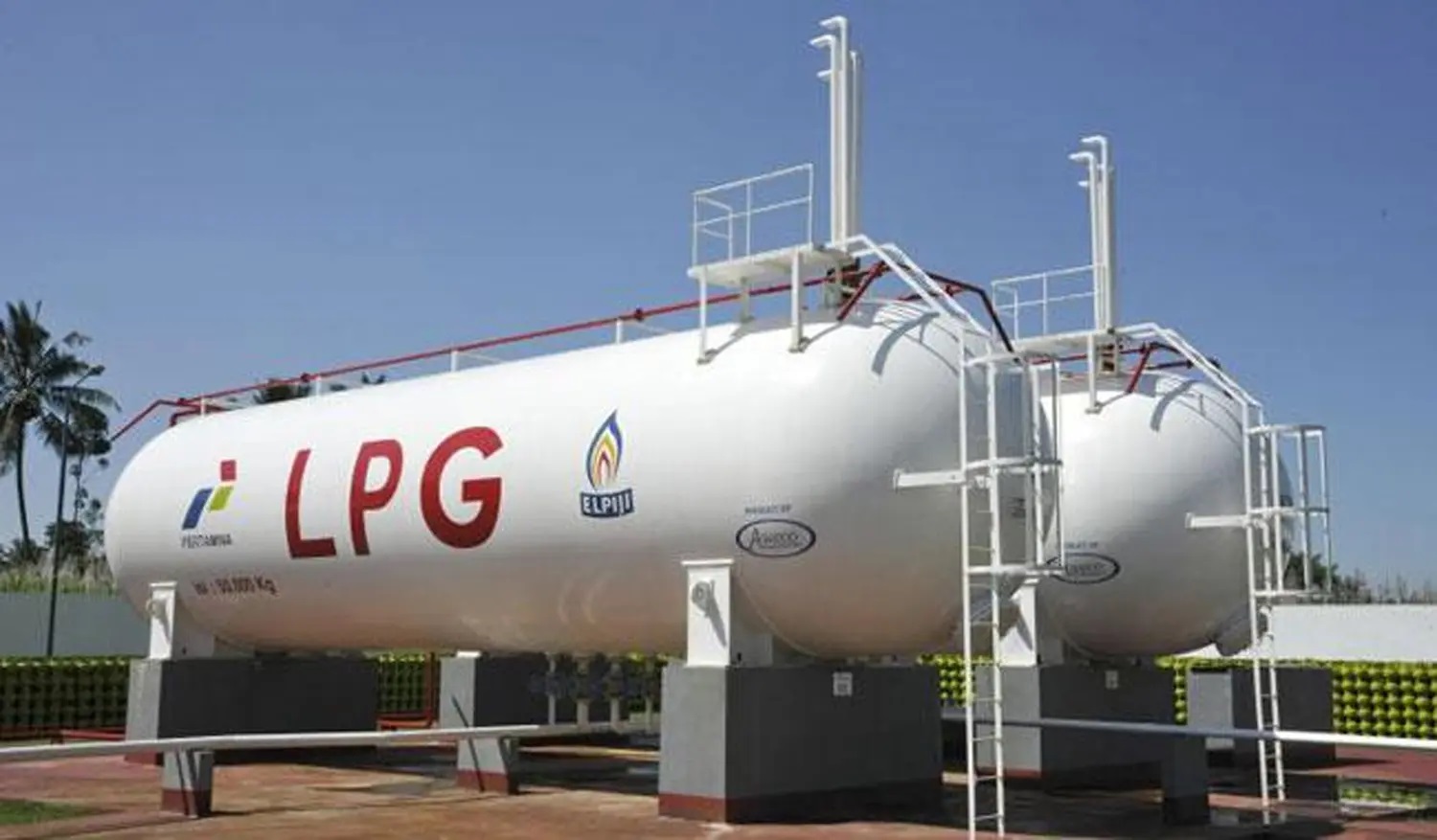
In a bid to reduce the cost of cooking gas in the country, the Federal Government of Nigeria has announced the removal of customs duty and value-added tax (VAT) on the importation of liquefied petroleum gas (LPG), commonly known as cooking gas, and its associated equipment.

The decision was conveyed in a letter dated November 28, 2023, signed by Wale Edun, the Minister of Finance and Coordinating Minister of the Economy.

The letter, addressed to key officials including the Special Adviser to the President on Energy, the Comptroller-General of the Nigeria Customs Service (NCS), and the Chairman of the Federal Inland Revenue Service (FIRS), affirms President Bola Tinubu’s commitment to improving the investment climate, increasing LPG supply to meet local demand, reducing market prices, and promoting clean cooking practices.

“In line with His Excellency, President Bola Tinubu’s commitment to improving the investment climate in Nigeria, increasing the supply of LPG to meet local demand, reducing market prices and promoting clean cooking practices, I hereby affirm Presidential directive dated July 29, 2022, with reference number PRES/88/MPR/99,” the letter reads.

The directive exempts the importation of LPG, utilizing specific HS codes, from import duty and VAT. Effective immediately, the importation of LPG will incur a 0% duty rate and 0% VAT rate.

“Accordingly, the importation of LPG utilizing HS Codes 2711.12.00.00, 2711.13.00.00 and 2711.19.00.00 is exempt from Import Duty and Value-Added Tax. Consequently, the Importation of LPG shall incur a 0% duty rate and 0% VAT rate, effective immediately,” the letter added.

The ministry has also directed the Nigerian Customs Service to comply with the presidential directive and withdraw debit notes issued to petroleum marketers who have imported LPG within a specified timeframe.

Additionally, the letter outlines other items exempted from VAT and duty payments, including LPG cylinders, LPG cascades, gas leak detectors, steel pipes, steel valves and fittings, LPG dispensers, gas generators, and LPG trucks, among others.

This move follows recent concerns raised by the Minister for Petroleum Resources (Gas), Ekperikpe Ekpo, about the rising cost of cooking gas in Nigeria. He emphasized the need for government intervention to ensure sufficient domestic supply and affordability. The government aims to address these challenges promptly through strategic measures and collaboration with industry stakeholders.

The Ministry of Finance also directed the Nigerian Customs Service to comply with the presidential directive and withdraw all debit notes issued to petroleum marketers who have imported LPG using specific codes from August 26, 2019, to the present date.

This decision comes in response to concerns raised by Nigerians over the rising cost of gas. A 12.5 kg cooking gas costs about N13,000 in Lagos. The Nigerian Bureau of Statistics (NBS) highlighted in its October Consumer Price Index (CPI) report that the average retail price for refilling a 5kg cylinder of cooking gas surged by 8.89 percent month-on-month. This increase took the price from N4,189.96 in September 2023 to N4,562.51 in October 2023, marking a 14 percent rise.

The decision to remove VAT and customs duty on cooking gas imports is expected to contribute to lowering the cost of cooking gas and making it more accessible to the Nigerian populace.


What Does the Forbes Most Influential Award Mean for African Women?

0

Forbes, the global media company that focuses on business, investing, technology, entrepreneurship, leadership, and lifestyle, has recently announced its list of the 100 most influential women in the world for 2023. Among them, there are 10 African women who have made remarkable achievements in various fields such as politics, business, education, health, media, and social activism. These women are:

  • Ngozi Okonjo-Iweala, the director-general of the World Trade Organization and former finance minister of Nigeria.
  • Tsitsi Dangarembga, the Zimbabwean novelist, filmmaker, and activist who was shortlisted for the Booker Prize in 2020.
  • Amina J. Mohammed, the deputy secretary-general of the United Nations and former environment minister of Nigeria.
  • Ellen Johnson Sirleaf, the former president of Liberia and Nobel Peace Prize laureate.
  • Chimamanda Ngozi Adichie, the Nigerian writer and feminist icon whose books have been translated into over 30 languages.
  • Fatou Bensouda, the chief prosecutor of the International Criminal Court and former justice minister of The Gambia.
  • Sahle-Work Zewde, the president of Ethiopia and the only female head of state in Africa.
  • Phumzile Mlambo-Ngcuka, the executive director of UN Women and former deputy president of South Africa.
  • Yvonne Aki-Sawyerr, the mayor of Freetown, Sierra Leone and a champion of urban resilience and sustainability.
  • Oby Ezekwesili, the co-founder of Bring Back Our Girls and former education minister of Nigeria.

These women represent the diversity, strength, and potential of African women who are shaping the continent and the world with their vision, leadership, and courage. They are role models for millions of young girls and women who aspire to follow their footsteps and make a difference in their communities and beyond.

The Forbes most influential award is not only a recognition of their individual achievements but also a celebration of their collective impact. It is a testament to the fact that African women are no longer invisible or marginalized in the global arena. They are at the forefront of tackling some of the most pressing challenges facing humanity such as poverty, inequality, climate change, conflict, and human rights. They are also contributing to the economic growth, social development, and cultural diversity of their countries and regions.

The Forbes most influential award is also a reminder of the challenges and barriers that African women still face in their daily lives. Despite their remarkable accomplishments, they often have to overcome discrimination, violence, harassment, and stereotypes that limit their opportunities and choices. They also have to balance multiple roles and responsibilities as mothers, wives, daughters, sisters, workers, leaders, and citizens. They have to deal with the lack of resources, infrastructure, education, health care, and security that affect their well-being and potential.

The Forbes most influential award is therefore a call for action to support and empower African women in all spheres of life. It is a call for governments, businesses, civil society, media, and individuals to recognize their rights, respect their dignity, value their contributions, and invest in their futures. It is a call for African women themselves to continue to pursue their dreams, passions, and goals with confidence and determination. It is a call for all of us to join forces and work together for a more inclusive, equitable, and sustainable world.

China Vs USA Crypto Supremacy

0

The global landscape of cryptocurrencies is changing rapidly, as two of the world’s most powerful nations compete for dominance in this emerging field. China and the USA have different approaches, goals and strategies when it comes to crypto, and their actions have significant implications for the rest of the world. We will compare and contrast the main aspects of China’s and USA’s crypto policies and discuss the potential outcomes and challenges for both countries and the global crypto community.

China: Centralized control and innovation

China has been a pioneer in the development and adoption of cryptocurrencies, especially in the areas of blockchain technology, digital payments and mining. China is home to some of the largest and most influential crypto companies, such as Binance, Huobi, OKEx, Ant Group and Bitmain. China also has a huge market of crypto users, with millions of people using digital wallets and platforms to trade, invest and transact with cryptocurrencies.

However, China’s crypto landscape is also characterized by a high degree of centralization and regulation. The Chinese government has a tight grip on the crypto industry, imposing strict rules and bans on various aspects of crypto activities. For example, China has banned initial coin offerings (ICOs), crypto exchanges, foreign platforms and mining operations in certain regions. China has also cracked down on illegal or fraudulent crypto schemes, such as Ponzi schemes, money laundering and tax evasion.

One of the main reasons for China’s strict regulation of crypto is its ambition to launch its own digital currency, the digital yuan or e-CNY. The digital yuan is a central bank digital currency (CBDC) that is issued and controlled by the People’s Bank of China (PBOC). The digital yuan is designed to be a legal tender that can be used for payments, settlements and transfers within China and abroad. The digital yuan is also intended to enhance China’s financial sovereignty, security and efficiency, as well as to challenge the dominance of the US dollar in the global financial system.

The digital yuan is currently in the testing phase, with several pilot projects running in various cities and regions across China. The PBOC has also partnered with several domestic and foreign institutions, such as banks, payment platforms, retailers and telecom operators, to facilitate the adoption and use of the digital yuan. The PBOC has not announced a specific timeline for the official launch of the digital yuan, but some experts expect it to happen before the 2024 Winter Olympics in Paris.

USA: Decentralized innovation and regulation

The USA is another major player in the global crypto scene, with a vibrant and diverse ecosystem of crypto companies, investors, developers and users. The USA is home to some of the most popular and influential crypto platforms, such as Coinbase, Kraken, Gemini, PayPal and Square. The USA also has a large and active market of crypto users, with millions of people buying, selling and holding cryptocurrencies.

However, unlike China, the USA does not have a clear or consistent policy or regulation on crypto. Instead, the USA has a decentralized and fragmented approach to crypto regulation, with different federal agencies, states and courts having different views and jurisdictions on various aspects of crypto activities. For example,

  • The Securities and Exchange Commission (SEC) treats some cryptocurrencies as securities that are subject to registration and disclosure requirements.

  • The Commodity Futures Trading Commission (CFTC) treats some cryptocurrencies as commodities that are subject to derivatives regulation.

  • The Internal Revenue Service (IRS) treats cryptocurrencies as property that are subject to taxation.

  • The Financial Crimes Enforcement Network (FinCEN) treats cryptocurrencies as money that are subject to anti-money laundering (AML) and counter-terrorism financing (CTF) rules.

  • The Office of the Comptroller of the Currency (OCC) treats cryptocurrencies as assets that can be held by banks.

  • The Federal Reserve (Fed) treats cryptocurrencies as payment systems that can be integrated with traditional financial infrastructure.

These different regulatory frameworks create uncertainty, complexity and inconsistency for crypto companies and users in the USA. They also create challenges for innovation and competition in the crypto industry, as some crypto companies face barriers or restrictions to operate or expand in certain states or markets. Moreover, they create risks for compliance and enforcement, as some crypto companies or users may violate or evade existing laws or regulations.

One of the main challenges for the USA’s crypto policy is its lack of a national digital currency or CBDC. Unlike China, the USA does not have a clear or urgent need or plan to launch its own digital currency. The US dollar is still the dominant reserve currency in the world, and the existing financial system is still relatively stable and efficient. However, some experts argue that the USA should consider developing its own CBDC to keep up with the global trend of digitalization and innovation in finance. A US CBDC could potentially enhance the US financial sovereignty, security and efficiency, as well as to counter the threat of China’s digital yuan.

Is Erik Ten Hang Regressing Man Utd towards Oblivion

0
Manchester United's English striker Marcus Rashford celebrates scoring the opening goal during the English Premier League football match between Manchester United and Leicester City at Old Trafford in Manchester, north west England, on February 19, 2023. - RESTRICTED TO EDITORIAL USE. No use with unauthorized audio, video, data, fixture lists, club/league logos or 'live' services. Online in-match use limited to 120 images. An additional 40 images may be used in extra time. No video emulation. Social media in-match use limited to 120 images. An additional 40 images may be used in extra time. No use in betting publications, games or single club/league/player publications. (Photo by Oli SCARFF / AFP) / RESTRICTED TO EDITORIAL USE. No use with unauthorized audio, video, data, fixture lists, club/league logos or 'live' services. Online in-match use limited to 120 images. An additional 40 images may be used in extra time. No video emulation. Social media in-match use limited to 120 images. An additional 40 images may be used in extra time. No use in betting publications, games or single club/league/player publications. / RESTRICTED TO EDITORIAL USE. No use with unauthorized audio, video, data, fixture lists, club/league logos or 'live' services. Online in-match use limited to 120 images. An additional 40 images may be used in extra time. No video emulation. Social media in-match use limited to 120 images. An additional 40 images may be used in extra time. No use in betting publications, games or single club/league/player publications. (Photo by OLI SCARFF/AFP via Getty Images)

Manchester United fans were left stunned and disappointed after their team suffered a humiliating 3-0 defeat at the hands of Bournemouth on Saturday. The result marked the third consecutive loss for the Red Devils in the Premier League, leaving them in 6th place, 10 points behind leaders Liverpool.

Erik Ten Hang Performance as Man UTD manager

Erik Ten Hang is the new manager of Manchester United, one of the most prestigious and successful clubs in the world. He took over from Ole Gunnar Solskjaer, who was sacked after a poor start to the season. Ten Hang has a reputation for playing attractive, attacking football, and he has proven his credentials at Ajax, where he won four domestic titles and reached the Champions League semi-finals in 2019. But how has he performed so far at Man UTD?

Ten Hang’s first game in charge was a 3-0 win over Crystal Palace at Old Trafford. He made some bold changes to the starting line-up, dropping Cristiano Ronaldo and Paul Pogba to the bench, and giving chances to youngsters like Mason Greenwood and Anthony Elanga. The team played with more intensity, pressing and passing with purpose, and scored three goals in the first half. The fans were delighted with the performance and the result and gave Ten Hang a standing ovation at the end.

Ten Hang’s second game was a tougher test, as he faced his former club Ajax in the Champions’ League group stage. He received a warm welcome from the Ajax fans and players, who appreciated his achievements at the club. The game was a thrilling contest, with both teams creating chances and playing with flair. Ten Hang showed his tactical flexibility, switching from a 4-3-3 to a 3-4-3 formation during the game, and making effective substitutions. Man, UTD came from behind twice to earn a 2-2 draw, thanks to goals from Bruno Fernandes and Marcus Rashford. Ten Hang praised both teams for their quality and spirit, and said he was proud of his players.

Ten Hang’s third game was a derby against Manchester City, the reigning champions and fierce rivals of Man UTD. The game was billed as a clash of styles, between Ten Hang’s offensive philosophy and Pep Guardiola’s possession-based approach. The game lived up to the hype, as both teams played with high tempo and intensity, creating chances and scoring goals.

Man, UTD took the lead through Ronaldo, who came off the bench to score a stunning volley. City equalized through Kevin De Bruyne, who curled in a brilliant shot from outside the box. The game was decided in the last minute, when Edinson Cavani scored a header from a corner to give Man UTD a 2-1 win. Ten Hang celebrated wildly with his players and staff, while the fans chanted his name.

Ten Hang has made an impressive start to his tenure as Man UTD manager, winning two games and drawing one, scoring seven goals and conceding three. He has shown his ability to motivate his players, adapt his tactics, and entertain the fans. He has also shown respect for his opponents and humility in his interviews. He has earned the trust and admiration of the Man UTD faithful, who are optimistic about the future under his guidance.

Many supporters have blamed manager Erik Ten Hang for the poor performance, accusing him of failing to motivate the players, implement a clear tactical system, and make effective substitutions. Some have even called for his resignation, claiming that he is regressing the club towards oblivion.

But is Ten Hang really the main culprit for Man Utd’s woes? Or are there other factors that are contributing to their decline?

But is Ten Hang really the main culprit for Man Utd’s woes? Or are there other factors that are contributing to their decline?

This is the question that many fans and pundits are asking after another disappointing result for the Red Devils, who lost to Bournemouth on Saturday. The defeat left them in sixth place in the Premier League, 10 points behind leaders Liverpool and six points off the top four.

Ten Hang, who replaced Ole Gunnar Solskjaer as manager has been under fire for his tactics, team selection and handling of star players. Some have accused him of being too rigid, too defensive and too reliant on individual brilliance. Others have questioned his ability to motivate and inspire his squad, especially after reports of dressing room unrest and player dissatisfaction.

But is it fair to blame Ten Hang for all of Man Utd’s problems? Or are there deeper issues that go beyond the manager’s control? In this blog post, we will explore some of the possible factors that have led to Man Utd’s decline, such as:

  • The lack of a clear vision and strategy from the club’s owners and board.

  • The failure to invest in quality players and address key weaknesses in the squad.

  • The impact of injuries, fatigue and Covid-19 on the team’s performance and morale.

  • The rise of stronger and more consistent rivals in the Premier League and Europe.

The reality and urgency of climate change

0

The reality and urgency of climate change are undeniable. The question is: how will we respond?

Climate change is not a distant threat, but a present and growing danger that affects every aspect of our lives. The scientific evidence is overwhelming and undeniable: the Earth is warming at an unprecedented rate, mainly due to human activities that emit greenhouse gases into the atmosphere.

The consequences of this warming are already visible and devastating melting ice caps and glaciers, rising sea levels, more frequent and intense heat waves, droughts, floods, storms, wildfires, and epidemics. These impacts threaten the health, security, and well-being of millions of people around the world, especially the most vulnerable and marginalized communities.

We cannot afford to ignore or delay action on climate change any longer. The window of opportunity to avoid the worst effects of global warming is rapidly closing. According to the Intergovernmental Panel on Climate Change (IPCC), the world needs to cut its emissions by 45% by 2030 and reach net zero by 2050 to limit the temperature rise to 1.5°C above pre-industrial levels.

This is the level that scientists consider safe and compatible with sustainable development. Beyond this threshold, the risks and costs of climate change will become unbearable and irreversible.

To achieve this ambitious goal, we need a radical transformation of our society and economy. We need to shift from fossil fuels to renewable energy sources, from wasteful consumption to circular economy, from carbon-intensive agriculture to sustainable land use, from individual transport to public and active mobility, from deforestation to reforestation, and from apathy to action. We need to embrace a green and just transition that ensures a fair distribution of the benefits and burdens of climate action, respects human rights and dignity, and leaves no one behind.

We also need to recognize that climate change is not only an environmental issue, but a social and political one. It is a symptom of a deeper crisis of our current system that prioritizes profit over people and planet. It is a result of the unequal power relations that exploit nature and oppress people. It is a driver of conflict and violence that fuels injustice and instability.

Therefore, we need to challenge the root causes of climate change and address the structural inequalities that perpetuate it. We need to demand accountability and transparency from our governments and corporations that are responsible for the bulk of emissions. We need to support and amplify the voices of those who are most affected by climate change and least responsible for it. We need to join forces with other movements that share our vision of a more democratic, inclusive, and peaceful world.

We have the knowledge, the technology, and the resources to tackle climate change. What we lack is the political will and the collective action. That is why we need to act now, together, as citizens of this planet. We need to raise awareness, educate ourselves and others, mobilize our communities, pressure our leaders, advocate for change, and participate in decision-making processes. We need to show that we care about our future and that we are ready to fight for it.

Climate change is not a hopeless situation, but a historic opportunity. It is an opportunity to reimagine and rebuild our society in a way that respects nature and human rights. It is an opportunity to create a more equitable and resilient world that can cope with current and future challenges. It is an opportunity to unleash our creativity and solidarity as agents of change.