DD
MM
YYYY

PAGES

DD
MM
YYYY

spot_img

PAGES

Home Blog Page 3886

As Abia Looks for a New Aba with the Establishment of “Greater Aba Development Authority (GADA)”

2

When you read the history of Nigeria’s independence, you will likely read about men and men. Yes, they attended conferences here and there. But one thing no one would tell you is this: Nigerian women were the first people who got “independence” for Nigeria when Aba women challenged the colonists over direct taxation. Men had largely agreed to pay, but the women said NOT here. 

The women won a mindset battle, and that was a clear validation that the British could be “challenged”. Quickly, the men picked up that signal, and via the early newspapers started writing with boldness, triggering events which culminated with Nigeria’s political independence from the colonists.

Then, Aba was a seat of commerce. Men left with nothing and returned back to villages with wealth. In Abia’s state coat of arms, that “prosperity through enterprise” is talking of the spirit of Aba. Because Aba meant opportunities through entrepreneurial capitalism.

Suddenly Aba began to fade and had lost many decades. I am here to announce that Aba will be back:“Abia State Governor Alex Otti has signed into law the Greater Aba Development Authority (GADA) bill recently passed by the State House of Assembly.” The goal of GADA is to have a laser-focused attention on Aba  as a commercial  and industrial hub. 

Abians, let’s transform the “God’s Own State”. 

GOV OTTI SIGNS FIRST BILL, GREATER ABA DEVELOPMENT AUTHORITY, INTO LAW

Abia State Governor, Dr Alex Otti, OFR, has signed the Greater Aba Development Authority (GADA) Bill, recently passed by the State House of Assembly, into law.

Governor Otti, speaking Monday after assenting to the bill, his first since assuming office May 29, 2023, said the establishment of the Greater Aba Development Authority was to give Aba, the commercial hub of Abia, indeed South East Nigeria, a special focus in terms of development.

“Everyone who had followed the process of the campaigns and elections would have remembered that we had said that we needed a special focus on Aba which is a commercial nerve centre of the State,” Governor Otti said in a tone filled with reassurance.

According to the Governor, Aba, beyond being a trading zone, is also an industrial base, where all kinds of light and heavy manufacturing; micro small and medium scale businesses are conducted.

“Virtually every street in Aba is a market, eventhough we are working at organising them, but it is a strength that we recognise,” he said, adding, “when we invest heavily in infrastructural renewal in Aba, it is because we recognise the potentials that Aba has and we believe that if we improve on ease of doing business, we attract a lot of businesses.”

He congratulated the Speaker of the State House of Assembly, Rt Hon Emmanuel Emeruwa; Deputy Speaker, Hon Austin Okezie Meregini; the leadership of the House and other members; and Members of the State Executive Council on the passage of the executive bill.

He stated that with the law now in place, Aba rejuvenation has got a legal backing to bring about the needed development in the commercial capital.

Earlier, while presenting the Bill to the Governor for assent, the Attorney General and Commissioner for Justice, Barr. Ikechukwu Uwanna, noted that the executive bill was passed into law by the State House of Assembly on 8th December, 2023.

Uwanna said that the Greater Aba Development Authority is now the first bill Governor Otti was signing into law and congratulated the Governor on achieving that feat.

Giving insight on the newly signed law, the Director General of the Greater Aba Development Authority, Mr. Uche Ukeje, described the law as a special vehicle that would drive the development of Aba to realise the Governor’s vision about the Enyimba City.

Ukeje, an architect of many years repute, described GADA as an integrator, that would coordinate all the efforts of the Ministries, Departments and Agencies of government in a bid to bring the needed development in Aba.

The Secretary to the State Government (SSG), Prof. Kenneth Kalu; Commissioner for Digital Economy and SME, Dr. Matthew Ekwuribe; Commissioner for Power and Public Utilities, Engr Ikechukwu Monday; and Senior Special Assistant on Legislative Matters, Hon. Luke Ukara Onyeani, among other senior aides of the Governor witnessed the bill signing ceremony.

KAZIE UKO
Chief Press Secretary to the Governor
Abia State
December 11, 2023

USA inflation falls to 3.1% in December 2023

0

The latest data from the Bureau of Labor Statistics shows that the annual inflation rate in the United States dropped to 3.1% in December 2023, down from 4.2% in November. This is the lowest level since June 2021, when inflation was 2.9%. The decline in inflation was mainly driven by lower prices for energy, transportation, and food, which offset the increases in housing, medical care, and education. The core inflation rate, which excludes volatile food and energy prices, also fell to 2.7% in December, from 3.0% in November.

The decrease in inflation is a welcome sign for the US economy, which has been struggling with the effects of the COVID-19 pandemic, supply chain disruptions, labor shortages, and rising consumer demand. The Federal Reserve has been trying to balance its dual mandate of maintaining price stability and full employment, while also supporting the economic recovery.

The Fed has signaled that it will start tapering its monthly bond purchases in early 2024 and may raise its benchmark interest rate later that year, depending on the inflation outlook and the labor market conditions.

The lower inflation rate may also ease some of the pressure on consumers, who have been facing higher costs for many goods and services. However, some analysts warn that inflation may not be over yet, as there are still some factors that could push prices higher in the coming months.

These include the ongoing supply chain issues, the new Omicron variant of the coronavirus, the expiration of some pandemic relief programs, and the potential fiscal stimulus from the Biden administration and Congress. Therefore, consumers and businesses should remain vigilant and prepared for possible changes in the inflation environment.

What caused this sharp decline in inflation? There are several possible explanations, but two main factors stand out: the Federal Reserve’s interest rate hikes and the falling energy prices.

The Federal Reserve, which is the central bank of the US, has the dual mandate of maintaining price stability and maximum employment. To achieve these goals, it uses various tools, such as setting the federal funds rate, which is the interest rate that banks charge each other for overnight loans. The federal funds rate affects other interest rates in the economy, such as mortgages, credit cards, and loans, as well as the money supply and inflation expectations.

In response to the rising inflation and strong economic recovery from the pandemic-induced recession, the Federal Reserve started to tighten its monetary policy in late 2022. It announced four interest rate hikes in 2022, raising the federal funds rate from 0.25% to 1.25%. It also signaled that it would continue to raise rates in 2023, with three more hikes expected by June. The Federal Reserve’s actions have had the desired effect of cooling down the inflationary pressures and reducing the demand for goods and services.

Another major factor that contributed to the lower inflation in December was the decline in energy prices. Energy is one of the main components of the CPI basket, accounting for about 7% of its weight. Energy prices are volatile and depend on various factors, such as supply and demand, geopolitics, weather, and technology. In December 2023, energy prices fell by 6.8%, driven by a drop in gasoline prices of 11.9%. This was partly due to the release of strategic oil reserves by several countries, including the US, in November 2023, which increased the global oil supply and lowered its price.

The lower energy prices also had a spillover effect on other categories of the CPI basket, such as transportation and food. Transportation costs fell by 1.9% in December, mainly due to lower airfares and car rental fees. Food costs rose by only 0.2%, compared to 0.9% in November, as lower energy costs reduced the costs of production and transportation of food items.

The fall in inflation in December was welcome news for consumers and businesses, who have been struggling with higher costs and lower incomes for months. However, it is too early to celebrate or relax. Inflation is still above the Federal Reserve’s target of 2%, and there are still many uncertainties and risks that could push it higher again. For example, the new Omicron variant of Covid-19 could disrupt global supply chains and demand patterns; labor shortages and wage pressures could increase production costs; geopolitical tensions could affect oil markets; and inflation expectations could become unanchored.

Therefore, it is important to monitor inflation closely and be prepared for possible changes in its direction and magnitude. Inflation can have significant impacts on economic growth, income distribution, financial stability, and social welfare. Understanding its causes and effects can help consumers and businesses make better decisions and plan ahead.

Binance’s Changpeng Zhao must stay in US until Sentencing

0

Changpeng Zhao, the founder and Ex CEO of Binance, the world’s largest cryptocurrency exchange, has been ordered by a US court to remain in the country until his sentencing on charges of money laundering and tax evasion.

Zhao was arrested in Los Angeles on December 10, 2023, after a joint investigation by the US Department of Justice, the Internal Revenue Service and the Securities and Exchange Commission. He is accused of operating an unregistered and illegal crypto trading platform that facilitated the laundering of over $1 billion in proceeds from criminal activities, as well as evading taxes on his personal income and assets. Zhao faces up to 20 years in prison and a fine of up to $250 million if convicted.

On November 21, 2023, CZ and Binance reached a settlement with the DOJ and the CFTC, pleading guilty to criminal charges and agreeing to pay a whopping $4.3 billion in fines. CZ also announced that he would step down as the CEO of Binance and appoint a new leader who would comply with all regulatory requirements.

CZ pleaded guilty to the charges in a Seattle federal court on November 21, 2023. He also resigned as the CEO of Binance, effective immediately. His sentencing is scheduled for February 23, 2024. He faces up to 10 years in prison and a $250 million personal fine. He was released from custody after posting a $175 million personal recognizance bond.

Binance also pleaded guilty to the charges and agreed to pay $4.3 billion in fines, which is the largest penalty ever imposed on a crypto-related company. Binance also agreed to cooperate with the DOJ and the CFTC in their ongoing investigations and to implement a comprehensive compliance program that would ensure its adherence to all applicable laws and regulations.

In a statement, CZ said that he regretted his actions and apologized to his customers, employees and partners. He said that he was proud of what he had built with Binance, but that he realized that he had made mistakes along the way. He said that he hoped that his settlement would serve as a lesson for the crypto industry and that he would support the new leadership of Binance in their efforts to comply with regulators.

The settlement marks a dramatic end to CZ’s reign as one of the most influential figures in the crypto space. CZ founded Binance in 2017 and quickly turned it into a global powerhouse, offering a wide range of services such as spot trading, futures trading, margin trading, lending, staking, mining, token launchpad, decentralized exchange, charity foundation and more. CZ was known for his aggressive expansion strategy, his charismatic personality and his motto “Don’t trust, verify.”

However, CZ’s ambition also attracted the attention of regulators who were concerned about the lack of oversight and transparency of Binance’s operations. Binance faced multiple legal challenges from authorities in countries such as China, Japan, Singapore, Germany, Italy, UK, Canada, Brazil, Thailand, Cayman Islands and more. Binance tried to evade regulation by moving its headquarters from one jurisdiction to another, claiming that it had no single office or location.

Zhao’s ordeal has sent shockwaves through the crypto industry and the markets, as Binance is the dominant player in the global crypto space, with over 40% of the trading volume and over 100 million users. Binance offers a wide range of services, including spot and futures trading, peer-to-peer lending, decentralized finance, token launchpad and more.

The exchange also operates its own blockchain network, Binance Smart Chain, which hosts many popular decentralized applications and tokens. Binance has been under regulatory scrutiny in several countries, including the UK, Japan, Germany, Singapore and Canada, for allegedly violating securities laws and consumer protection regulations.

The US authorities have claimed that Zhao and his associates used complex and sophisticated methods to conceal the origin and destination of the illicit funds that flowed through Binance. They also allege that Zhao failed to report his income and assets to the IRS, despite being a US citizen since 2018. Zhao has denied the charges and pleaded not guilty.

He has also claimed that he was not involved in the day-to-day operations of Binance and that he had delegated his responsibilities to other executives. He has requested bail and a speedy trial, but the judge has denied both requests, citing flight risk and public safety concerns.

Zhao’s legal team has argued that Binance is a legitimate and compliant business that follows all applicable laws and regulations in every jurisdiction where it operates. They have also challenged the jurisdiction and authority of the US courts to prosecute Zhao, as Binance is registered in the Cayman Islands and does not have a physical presence or employees in the US. They have also claimed that Zhao is a victim of political persecution, and that the US government is trying to stifle innovation and competition in the crypto industry.

The case against Zhao is expected to be a landmark one for the crypto sector, as it will test the legal boundaries and implications of operating a global and decentralized platform that deals with digital assets. It will also have significant ramifications for the future of Binance and its users, as well as for the overall development and adoption of cryptocurrencies. The trial date has been set for March 15, 2024.

The settlement with the U.S. authorities is expected to have a significant impact on Binance’s business and reputation. Binance will have to undergo major changes in its structure, governance and culture to comply with the regulatory standards. Binance will also have to face competition from other crypto exchanges that have been more compliant and cooperative with regulators.

The settlement also raises questions about the future of CZ and his role in the crypto industry. CZ has been one of the most vocal advocates for crypto innovation and adoption. He has also been one of the most generous donors to various crypto causes and initiatives. He has amassed a loyal fan base of millions of followers on social media platforms such as Twitter and Telegram.

Will CZ be able to continue his involvement in crypto after his sentencing? Will he be able to regain his reputation and influence after his guilty plea? Will he be able to launch new projects or ventures in the crypto space?

I’d shut Crypto Down, JPMorgan’s Jamie Dimon notes, as Senator Elizabeth Warren Sees Risk in Crypto

0
JP Morgan Chase puts contents through its CEO account, it goes viral. But the same content via JPMC account, no one cares (WSJ)

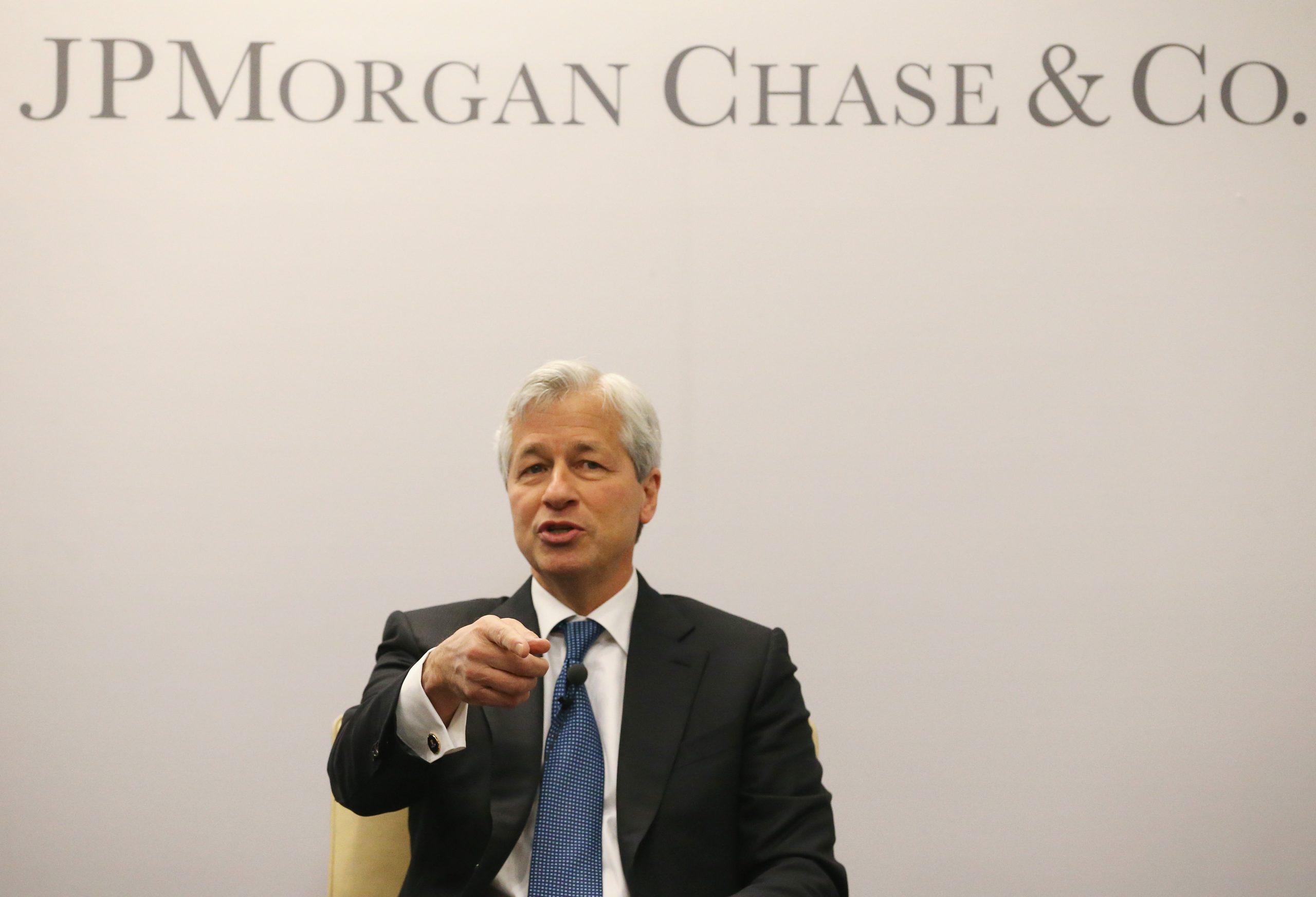
JPMorgan Chase CEO Jamie Dimon has made his stance on cryptocurrencies clear: he is not a fan. In a recent interview with CNBC, Dimon said that he would shut down crypto if he could, because he thinks it is a threat to the stability of the financial system.

Dimon argued that crypto is not backed by anything, and that it is subject to fraud, manipulation, and cyberattacks. He also said that crypto is used for illicit activities, such as money laundering and terrorism financing. He claimed that crypto is worse than fiat money, because it has no intrinsic value or legal status.

Dimon’s comments are not surprising, given that he has been a vocal critic of crypto for years. In 2017, he famously called Bitcoin a “fraud” and said that he would fire any JPMorgan employee who traded it. He later softened his tone, saying that he regretted his words and that he was open to blockchain technology.

However, Dimon’s latest remarks show that he is still skeptical of crypto’s potential and viability. He said that he does not care about the price of Bitcoin or other cryptocurrencies, and that he does not think they will ever replace traditional currencies or assets.

Dimon’s views are in contrast with some of his peers in the banking industry, who have embraced crypto as an opportunity rather than a threat. For example, Goldman Sachs, Morgan Stanley, and Bank of New York Mellon have all launched or announced plans to launch crypto-related services for their clients. Some other prominent figures, such as Elon Musk, Jack Dorsey, and Michael Saylor, have also expressed their support for crypto and invested in it.

While Dimon may have the power to ban crypto within his own company, he cannot shut it down completely. Crypto is decentralized and distributed, meaning that no one person or entity can control it or stop it. Crypto also has a loyal and growing community of users, developers, investors, and enthusiasts, who believe in its value and potential.

Crypto is not perfect, but neither is fiat money. This is the main argument that many crypto enthusiasts use to defend their preference for digital currencies over traditional ones. But what does it mean to say that crypto is not perfect? And what are the flaws of fiat money that make crypto a better alternative? In this blog post, we will explore these questions and try to provide some balanced insights into the pros and cons of both systems.

Crypto, or cryptocurrency, is a form of money that is created and stored digitally, using encryption techniques to secure transactions and control the creation of new units. Crypto is decentralized, meaning that it is not issued or controlled by any central authority, such as a government or a bank. Instead, it relies on a network of computers, called nodes, that validate transactions and maintain a shared ledger, called a blockchain, that records the history of all transactions.

Fiat money, on the other hand, is a form of money that is issued and regulated by a central authority, such as a government or a central bank. Fiat money derives its value from the trust and confidence that people have in the issuing authority and its ability to maintain the stability and purchasing power of the currency. Fiat money is usually backed by legal tender laws, meaning that it must be accepted as a means of payment within a certain jurisdiction.

One of the main advantages of crypto over fiat money is that it offers more freedom and privacy to its users. Crypto transactions are pseudonymous, meaning that they do not reveal the identity of the parties involved, only their public addresses. Crypto transactions are also irreversible, meaning that once they are confirmed by the network, they cannot be reversed or canceled by anyone, not even by the sender or the receiver. This reduces the risk of fraud, chargebacks, and censorship.

Another advantage of crypto over fiat money is that it has a limited supply, meaning that there is a predetermined number of units that can ever be created. For example, Bitcoin, the most popular and widely used cryptocurrency, has a maximum supply of 21 million bitcoins.

This makes crypto immune to inflation, which is the loss of value of a currency due to an increase in its supply. Fiat money, on the other hand, can be printed or created at will by the issuing authority, which can lead to inflation or hyperinflation if done excessively.

However, crypto is not perfect, and it also has some drawbacks compared to fiat money. One of the main disadvantages of crypto is that it is highly volatile, meaning that its price can fluctuate significantly in short periods of time. This makes crypto risky and unpredictable as a store of value and as a medium of exchange. For example, Bitcoin reached an all-time high of nearly $65,000 in April 2021, but then dropped to less than $30,000 in July 2021. Such swings can make it difficult for users to plan their finances and budget their expenses.

Another disadvantage of crypto is that it is not widely accepted or recognized as a legal form of money in most countries. This means that users may face legal or regulatory challenges when trying to use crypto for everyday transactions or for cross-border payments.

For example, some countries have banned or restricted the use or trade of crypto, while others have imposed taxes or reporting requirements on crypto transactions. Moreover, some merchants or service providers may not accept crypto as a valid form of payment or may charge higher fees or commissions for doing so.

Crypto is not perfect, but neither is fiat money. Crypto is still evolving and improving, and it may take time for it to reach mass adoption and acceptance. Crypto may not be for everyone, but it should not be dismissed or banned by anyone either.

More so, Senator Elizabeth Warren, a prominent critic of the cryptocurrency industry, has recently warned that “there is a new threat out there, and it’s crypto”. In a blog post published on her official website, Warren argued that crypto poses a danger to the financial stability, consumer protection, and environmental sustainability of the US and the world.

According to Warren, crypto is a highly volatile and speculative asset class that is prone to manipulation, fraud, and hacking. She cited several examples of crypto-related scams, thefts, and ransomware attacks that have harmed millions of investors and users. She also claimed that crypto is undermining the authority and effectiveness of central banks and regulators, who are responsible for ensuring the safety and soundness of the monetary system.

She cited examples of how crypto markets have crashed due to hacking, technical glitches, or rumors, and how these events have wiped out billions of dollars of value and harmed investors and consumers. She also warned that crypto could undermine the effectiveness of monetary policy and fiscal stimulus, as well as the role of the US dollar as the global reserve currency.

Warren also claimed that crypto is a danger to consumer protection, because it lacks the safeguards and guarantees that traditional financial products and services offer. She pointed out that crypto users have no recourse if they lose their private keys, get scammed, or face technical issues.

She also noted that crypto transactions are often irreversible, anonymous, and untraceable, which makes them attractive for criminals, terrorists, and tax evaders. She argued that crypto enables illicit activities such as money laundering, ransomware attacks, and human trafficking, and that it poses a challenge for law enforcement and national security.

Finally, Warren asserted that crypto is a threat to environmental sustainability, because it consumes enormous amounts of energy and generates massive carbon emissions. She referred to studies that estimate that Bitcoin alone uses more electricity than some countries, and that its annual carbon footprint is comparable to that of New Zealand.

She criticized the wastefulness and inefficiency of crypto mining, which relies on solving complex mathematical puzzles that have no intrinsic value or purpose. She also questioned the claims of some crypto proponents that they are moving towards greener alternatives, such as renewable energy sources or less energy-intensive consensus mechanisms.

Warren concluded her speech by calling for more regulation and oversight of the crypto industry, both at the national and international levels. She urged Congress to pass legislation that would give more authority and resources to agencies such as the Securities and Exchange Commission (SEC), the Commodity Futures Trading Commission (CFTC), the Federal Trade Commission (FTC), and the Consumer Financial Protection Bureau (CFPB) to monitor and enforce the rules of the crypto market.

She also advocated for more coordination and cooperation among regulators, lawmakers, central banks, and other stakeholders around the world to address the global challenges posed by crypto.

Warren’s blog post has sparked a heated debate among crypto enthusiasts, supporters, and critics. Some have praised her for raising awareness and calling for action on the risks and challenges posed by crypto. Others have accused her of being misinformed, biased, and hostile towards innovation and freedom.

Nigeria’s Corporate Affairs Commission to Delist Over 91,000 Companies for Failure to File Annual Returns

0
CAC

In a resolute move to combat tax evasion and enforce regulatory compliance, the Corporate Affairs Commission (CAC) of Nigeria is poised to delist a staggering 91,843 companies from its register for neglecting to submit their annual returns.

This stern action by the government agency reflects a commitment to holding businesses accountable and curbing tax irregularities.

A tax return is a crucial document filed with a tax authority, detailing income, expenses, and other pertinent tax information. It enables taxpayers to compute their tax liability, schedule payments, or seek refunds for overpaid taxes. In many jurisdictions, individuals and businesses with reportable income, encompassing wages, interest, dividends, capital gains, or other profits, must annually file tax returns.

The CAC, in a list published on its website, unveiled the names of the companies slated for delisting. The figure of 91,843 is marginally lower than the initial count of 94,581 released in August. Notably, this reduction is also beneath the previously announced 100,000 companies earmarked for removal, underscoring the stringent approach adopted by the CAC.

Garba Abubakar, the Registrar-General and CEO of the CAC, had declared in July that the commission would expunge 100,000 registered businesses from its database due to their failure to file annual returns. Abubakar emphasized adherence to section 692 of the Companies and Allied Matters Act (CAMA) of 2020, noting that affected companies would receive notices before any action was taken.

“Further to its earlier notice of the commencement of striking off the names of Companies from the Register of Companies and published on August 2, 2023, the Commission hereby notifies the General Public that the list of Companies that have failed to comply with the provisions of the Companies and Allied Matters Act 2020, to file up to date annual returns is now ready for publication in accordance with the provisions of Section 692 of the Act,” he said.

In an update on December 5, the CAC reiterated its intent to strike off companies that did not comply with the CAMA 2020 provisions regarding annual returns. The commission urged companies that had submitted complete annual returns in response to the earlier publication to verify their removal from the delisting list. The updated list is available on the commission’s website.

The CAC also outlined a process for businesses erroneously included in the list to rectify the situation. Companies that had filed full annual returns but remained on the list were instructed to email compliance@cac.gov.ng within 30 days, providing proof of filing. Additionally, the CAC emphasized that companies removed from the register cannot engage in business activities until the Federal High Court orders their reinstatement.

The taxable year in Nigeria aligns with the fiscal year, spanning from January 1 to December 31. The CAC requires the submission of tax returns to the relevant tax authority within 90 days of the fiscal year’s conclusion.

Businesses with an income of NGN 30,000 or less are exempt from mandatory tax return filing. Moreover, every employer is obligated to submit a return of all emoluments paid to employees by January 31 each year, covering the preceding year’s employment.