DD
MM
YYYY

PAGES

DD
MM
YYYY

spot_img

PAGES

Home Blog Page 389

Top 3 Cryptos to Watch in 2025: Ozak AI, Solana, and Ethereum

0

Crypto markets in 2025 are shaping up to be more dynamic than ever, with investors turning toward projects that offer both innovation and long-term potential. Amid the noise of meme coins and speculative tokens, three standout names—Ozak AI, Solana, and Ethereum—have captured market attention for their strong fundamentals, cutting-edge use cases, and impressive growth outlooks.

Ozak AI (OZ)

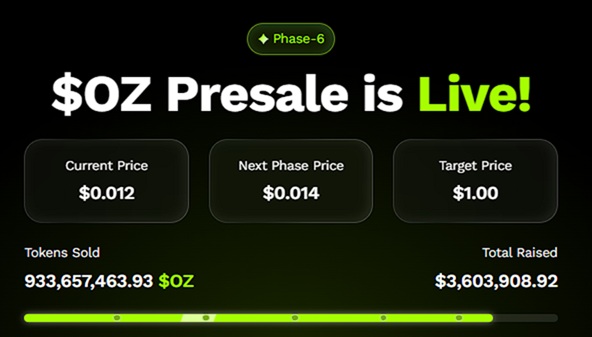
Ozak AI is quickly emerging as one of the most promising tokens in the AI-driven blockchain segment. Currently priced at $0.012 in its 6th presale stage, Ozak AI has already raised over $3.5 million, with more than 930 million tokens sold—a clear indicator of strong investor confidence. What sets Ozak AI apart is its seamless integration of artificial intelligence with blockchain infrastructure.

The project’s partnerships with major tech networks like Perceptron Network and SINT highlight its deep-rooted vision for AI autonomy and real-world utility. Through Perceptron’s 700,000+ active nodes, Ozak AI aims to power decentralized prediction agents capable of delivering real-time market insights and trust-based AI decisions. Its partnership with SINT, which provides AI agents, SDK tools, and voice interfaces, further expands Ozak AI’s ecosystem into voice-activated data interactions and multi-chain communication.
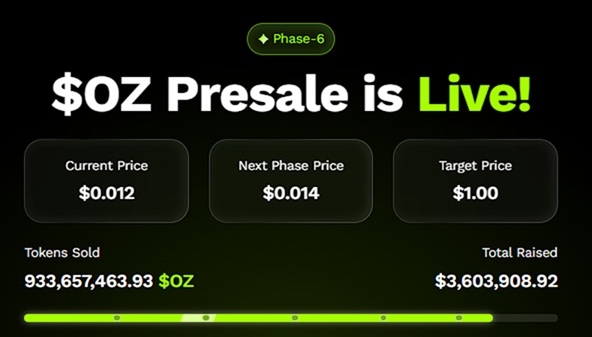
Ozak AI’s roadmap is equally ambitious. By 2029, the project targets 100 million users, supported by its growing community and integrations with HIVE’s blockchain data API for 30ms market signal updates. With listings already on CoinGecko and CoinMarketCap, and a CertiK audit completed, Ozak AI is showing both transparency and credibility—rare traits in the early stages of crypto ventures.

Price-wise, analysts project that once Ozak AI transitions from OZ presale to public trading, the token could witness a substantial surge, potentially reaching $0.50 to $1 within its first major bullish cycle. If AI adoption in crypto continues to accelerate, Ozak AI could become one of 2025’s biggest breakout stories.

Solana (SOL)

After the network challenges in preceding years, Solana (SOL) has re-emerged as a top performer in 2025’s altcoin cycle. Its community improvements have extensively improved scalability and uptime, making Solana one of the fastest blockchains with minimal transaction costs. SOL’s environment continues to develop unexpectedly, hosting thousands of dApps, NFTs, and DeFi protocols that pressure strong community activity.

At present trading stages near $180, Solana faces resistance at $240, $260, and $280, at the same time as support holds around $160, $145, and $120. Analysts accept as true with that a breakout above the $240 area could set the level for a rally toward $300, aligning with bullish momentum visible throughout the market.
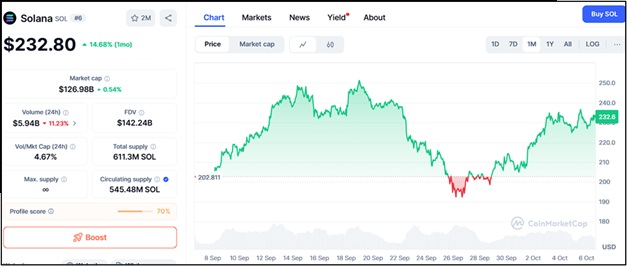
Solana’s long-term increase is likewise being supported via institutional interest and cross-chain adoption. Its energy-efficient Proof-of-History mechanism and seamless developer equipment have made it the desired platform for next-gen blockchain applications—from GameFi initiatives to on-chain AI models. As 2025 progresses, Solana’s mixture of speed, scalability, and active development could make it one of the year’s top-performing Layer 1 property.

Ethereum (ETH)

No listing of main cryptocurrencies would be complete without Ethereum (ETH), the backbone of the decentralized net. Ethereum continues to evolve post-merge, transferring in the direction of an extremely efficient proof-of-stake model at the same time as it specializes in scalability through Layer 2 networks consisting of Arbitrum, Optimism, and Base.

ETH currently trades near $3,200, going through resistance at $3,500, $3,850, and $4,200, with support levels at $2,950, $2,700, and $2,400. Market analysts are expecting that Ethereum could reach as high as $6,000 to $8,000 inside the next bull run if institutional adoption continues and DeFi 2.0 protocols increase their on-chain liquidity.

Moreover, Ethereum’s ecosystem remains unrivaled in terms of innovation. From tokenized real-global assets to business enterprise-grade smart contracts, ETH continues to anchor the Web3 revolution. Its deep liquidity, developer community, and dominance in decentralized finance make it no longer just a safe wager but an essential pillar of crypto’s long-term destiny.
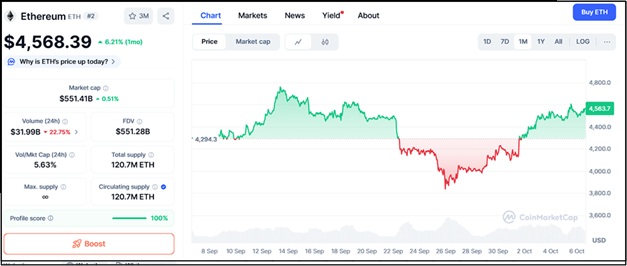
While Solana and Ethereum retain their proof of dominance with speed and scalability, Ozak AI often is the revolutionary wildcard that might reshape how AI and crypto engage. Each of those 3 initiatives brings something particular to the table: Ethereum gives stability and a sizable environment, Solana gives efficiency and performance, and Ozak AI introduces intelligence and autonomy to blockchain structures. As 2025 unfolds, these three cryptos constitute not simply funding possibilities but glimpses into the evolving structure of the following digital generation.


About Ozak AI

Ozak AI is a blockchain-based crypto project that provides a technology platform that specializes in predictive AI and advanced data analytics for financial markets. Through machine learning algorithms and decentralized network technologies, Ozak AI enables real-time, accurate, and actionable insights to help crypto enthusiasts and businesses make the correct decisions.


For more, visit:

Website: https://ozak.ai/

Telegram: https://t.me/OzakAGI

Twitter: https://x.com/ozakagi

XRP Surges Toward $5, Yet Ozak AI’s $0.012 Entry Draws Smarter Money In

0

Crypto investors are watching XRP’s bullish climb closely as the token continues its steady ascent toward the long-awaited $5 mark. Renewed institutional demand, Ripple’s global payment integrations, and rising investor confidence have made XRP one of the top-performing altcoins of 2025.

But while major holders anticipate XRP’s breakout, a growing number of savvy investors are turning to a different opportunity — Ozak AI (OZ). Priced at just $0.012 in its Stage 6 presale, Ozak AI has already raised over $3.5 million and sold more than 930 million tokens, with analysts calling it the next high-growth AI crypto capable of delivering 100x returns once listed.

XRP Surges Toward $5 on Institutional Optimism

XRP’s resurgence has been one of the most exciting stories of the year. Once burdened by regulatory uncertainty, Ripple’s legal victory and expanding network of banking partnerships have reignited enthusiasm around the token. As global remittance systems increasingly adopt blockchain solutions, XRP’s role as a bridge currency for cross-border payments continues to gain traction.

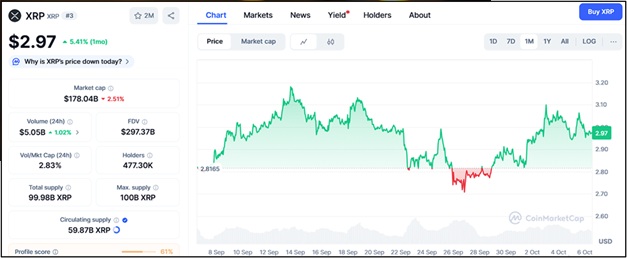
Currently trading around $3.10, XRP faces resistance at $3.50, $4.20, and $5.00, while finding support near $2.80, $2.40, and $2.00. Breaking above $4 would likely open the door to a strong rally, especially if Ripple secures more institutional liquidity partnerships.

However, even with growing real-world utility, XRP’s large market capitalization naturally limits its potential upside. Analysts expect it to 2x–3x in 2025 — impressive, but nowhere near the 100x projections that early-stage tokens like Ozak AI could deliver.

Ozak AI’s $0.012 Entry Draws Smarter Money

While XRP attracts institutional traders seeking stability, Ozak AI has become the go-to project for investors looking for high-risk, high-reward opportunities backed by real technology. Ozak AI merges artificial intelligence and blockchain analytics to offer predictive insights, real-time data processing, and autonomous trading through its innovative Prediction Agents.

The platform’s architecture integrates Arbitrum Orbit for scalability, EigenLayer AVS for decentralized validation, and the Ozak Stream Network (OSN) — a system designed to process vast streams of crypto data with millisecond precision. These features enable traders, institutions, and developers to analyze market conditions and forecast movements before they occur.

At its core, Ozak AI aims to democratize access to hedge fund-level intelligence, making advanced predictive analytics accessible to everyday crypto traders. This real-world utility sets Ozak AI apart from typical presales that rely solely on hype rather than tangible innovation.

$3.5M Raised and Growing Investor Confidence

Ozak AI’s presale momentum has been nothing short of remarkable. The project has already raised more than $3.5 million and sold 930 million tokens, signaling overwhelming investor confidence. Its Stage 6 OZ presale at $0.012 continues to attract both retail and institutional participants seeking early exposure before exchange listings.

Unlike many speculative tokens, Ozak AI has also undergone thorough CertiK and internal audits, ensuring transparency and smart contract security. It is officially listed on CoinMarketCap and CoinGecko, providing verified price tracking and visibility. These milestones demonstrate that Ozak AI is not just another hyped-up presale — it’s a well-structured, auditable, and fast-growing ecosystem backed by real fundamentals.

OZ’s Strategic Partnerships Accelerate Growth

Ozak AI’s rise is further supported by a growing list of partnerships. Collaborations with Dex3, Hive Intel, and SINT enhance its AI and automation capabilities, enabling seamless data flow between networks. Meanwhile, alliances with Manta Network, Coin Kami, Forum Crypto Indonesia, Block Bali Com, and Bitcoin Addict Thailand have helped expand its reach within Asia’s rapidly growing blockchain market.

The project has also gained visibility through key appearances at Coinfest Asia 2025, hosting exclusive events like Sundown Signals and The Ozak AI Roadshow, where investors, developers, and crypto enthusiasts got firsthand insight into its potential. This proactive approach has positioned Ozak AI as one of the most networked and promising AI projects in the space.

Why Ozak AI Appeals to Smarter Investors

Investors chasing the next big opportunity are beginning to view Ozak AI as a strategic long-term play rather than a short-term speculation. While XRP offers established infrastructure and adoption, Ozak AI provides exponential upside — the same kind of early-stage asymmetry that defined Solana, Polygon, and Chainlink in their infancy.

Its combination of AI-driven intelligence, blockchain validation, and verified transparency offers a balance of credibility and innovation rarely seen in presales. Moreover, as the AI narrative gains strength across the crypto landscape, Ozak AI’s positioning at the heart of predictive analytics gives it a clear advantage over competing altcoins.

As XRP surges toward $5, it continues to prove its strength as a pillar of institutional crypto adoption. Yet, for investors seeking more than incremental growth, Ozak AI’s $0.012 entry presents one of the most compelling opportunities of 2025.

With $3.5 million raised, 930 million tokens sold, strategic partnerships, and audited transparency, Ozak AI represents a rare fusion of innovation and investment potential. While XRP captures headlines, Ozak AI is quietly capturing the attention of smarter money — the kind that recognizes that the biggest winners in crypto are born before the hype, not after it.


About Ozak AI

Ozak AI is a blockchain-based crypto project that provides a technology platform that specializes in predictive AI and advanced data analytics for financial markets. Through machine learning algorithms and decentralized network technologies, Ozak AI enables real-time, accurate, and actionable insights to help crypto enthusiasts and businesses make the correct decisions.


For more, visit:

Website: https://ozak.ai/

Telegram: https://t.me/OzakAGI

Twitter: https://x.com/ozakagi
Sahara Group Targets 350,000 Barrels per Day as It Ramps Up Upstream Expansion Across Africa

0
Sahara Group, a top African energy and infrastructure conglomerate, has unveiled a plan to increase its upstream crude oil output to 350,000 barrels per day (bpd) over the next five years — a substantial addition to its portfolio as Nigeria works to restore full oil production and attract new investment.
The group aims to achieve this target by expanding exploration and production, supported by acquiring seven additional oil rigs and modernizing infrastructure in Nigeria and other African locations.
Leste Aihevba, Chief Technical Officer of Asharami Energy, Sahara Group’s upstream subsidiary, shared these details during an investor meeting at Africa Energy Week in Cape Town. He stated Sahara’s investments reflect its wider commitment to driving Africa’s energy transformation through collaboration and sustainable practices.
“The journey towards a secure and sustainable energy future for Africa cannot be travelled in silos,” Aihevba said. “Every refinery upgrade, every gas commercialization project, every power reform and community wealth accretion initiative must be part of a broader continental blueprint.”
Aihevba explained that Sahara’s infrastructure drive is already transforming its operations, enhancing efficiency and competitiveness across the energy value chain — from upstream to midstream and power.
“At Sahara Group, we continue to invest in the infrastructure needed to responsibly unlock Africa’s resources across our upstream, midstream, power, and infrastructure businesses,” he said.
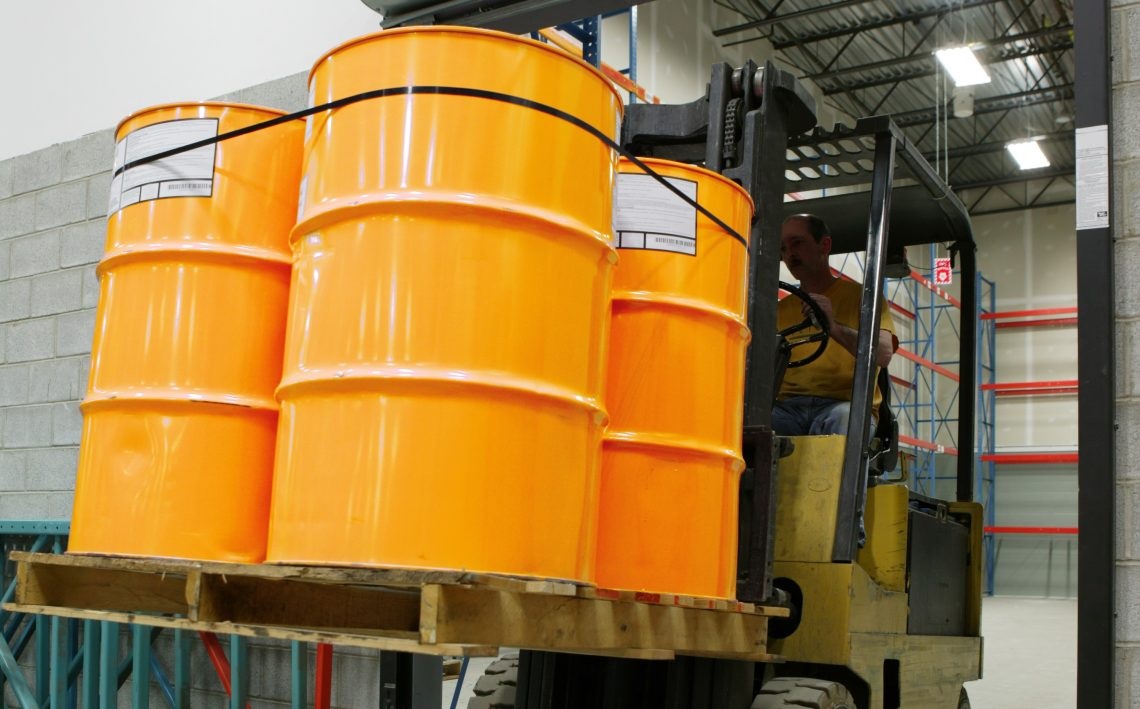
The company confirmed that it has already taken delivery of two of the seven new rigs, with two more expected before the end of the year. The rigs are being deployed across Sahara’s fields in Nigeria to accelerate drilling and production timelines. The group’s goal is to raise output to 350,000 bpd of oil and 1 billion standard cubic feet (MMScf/d) of gas within five years.
One of the newly acquired rigs — a 2000-horsepower land rig named L-Buba — has already spudded a gas development well, while another is being mobilised for oil development drilling. The rigs will be managed by Arahas Global Oilfield Services, another Sahara Group subsidiary.
“This bold and strategic drive complements our efforts geared towards accelerating the pace from exploration to production, enhancing local content participation, and ensuring Africa efficiently develops the reserves that will power the continent’s growth and energy future,” Aihevba said.
He emphasized that Sahara’s upstream expansion is built on a “shared prosperity approach” that sees host communities and governments as partners in development.
“By matching our investments in infrastructure with the deployment of exceptional human capital, technology adoption, and cross-border partnerships, we are contributing meaningfully to Africa’s energy transition while ensuring no community is left behind,” he said.
The move comes amid improving crude production figures in Nigeria. According to data from the Nigerian Upstream Petroleum Regulatory Commission (NUPRC), the country’s output rose by 5.5% year-on-year in August 2025, averaging 1.43 million barrels per day, representing about 96% of its OPEC quota of 1.5 million bpd.
Sahara’s aggressive production target also aligns with Nigeria’s national objective to boost oil output and reduce its dependence on imports as global demand gradually recovers. The company has been diversifying its energy footprint, with its Afam 2 Power Plant in Rivers State now generating 160 megawatts (MW) into the national grid — a sign of its growing influence across multiple energy segments.
Energy analysts note that Sahara’s investment push underscores a new phase in Africa’s upstream resurgence, driven by indigenous companies seeking to fill the investment gap left by international oil majors that have scaled back exploration projects in the region.
With seven new rigs, expanded technical capacity, and a growing regional footprint, Sahara appears to be positioning itself not just as a Nigerian energy player, but as a continental force capable of redefining Africa’s upstream future.

Eli Lilly’s Bets $1B India as U.S. Tech Investment Slows Under Tariff Pressure

0

Eli Lilly has announced plans to invest more than $1 billion in India over the next several years — a move that signals not just the pharmaceutical giant’s global expansion, but also a strategic shift at a time when U.S. trade policies and tariffs are reshaping the direction of foreign investment.

The American drugmaker said the investment would boost manufacturing and supply through collaborations with Indian drug producers, targeting increased availability of its major treatments for obesity, diabetes, Alzheimer’s, cancer, and autoimmune conditions.

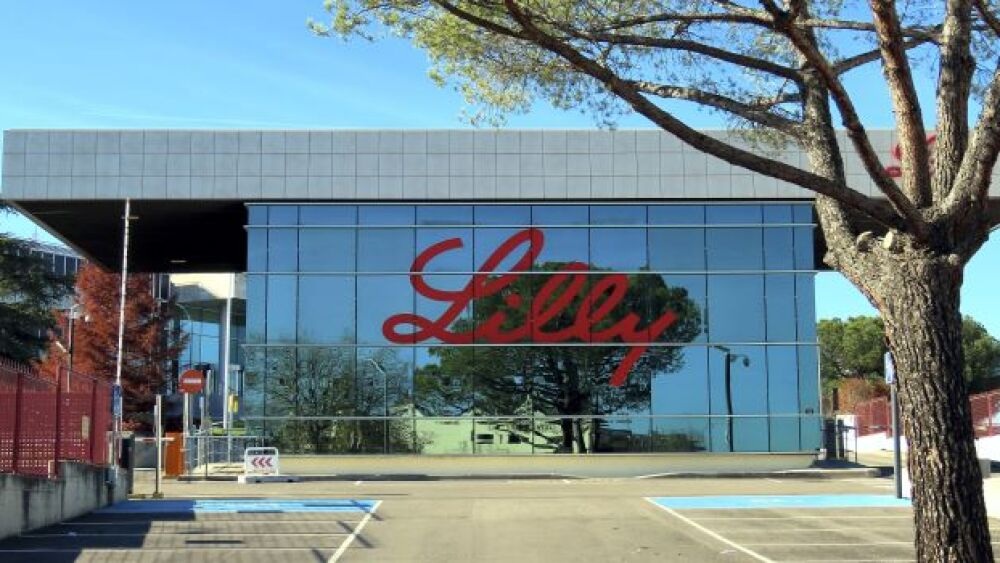
Lilly, which launched its blockbuster weight-loss drug Mounjaro in India this year, currently has no manufacturing facility in the country. The company said it is actively engaging with contract manufacturers and will set up a new manufacturing and quality control facility in Hyderabad to expand its local footprint. Recruitment has already begun for engineers, chemists, and quality assurance experts to manage its contract manufacturing operations.

The company’s president of international operations, Patrik Jonsson, said India has become “a hub for capability building” within its global network. He emphasized that Lilly is making “significant investments to increase manufacturing and medicine supply capacity around the world.” The move is part of a broader strategy to strengthen supply resilience amid geopolitical uncertainty, particularly as trade friction between Washington and major trading partners deepens.

The timing of Lilly’s expansion into India is noteworthy. It comes as the Trump administration’s new tariff regime reshapes global trade dynamics and prompts multinational corporations to reassess their overseas investment strategies.

On October 1, the United States imposed a 100 percent tariff on imported branded and patented drugs, a move that has triggered a rush among pharmaceutical firms to expand domestic production while seeking alternative supply chains abroad. The new rules have also affected India, which faces steep tariff barriers on a range of exports to the U.S., including pharmaceutical ingredients, machinery, and auto components.

The administration’s trade office described the tariffs as a “reciprocal fairness” measure aimed at rebalancing deficits with trading partners. But Indian officials have denounced the move as “unjustified protectionism,” warning that the duties could affect up to 87 percent of India’s exports to the U.S. and lead to significant disruptions in cross-border supply. Analysts say the tariffs are creating uncertainty that could dampen new foreign investment in both directions.

Yet Eli Lilly’s billion-dollar commitment suggests a different calculation. By producing in India, the company can hedge against tariff shocks, lower production costs, and tap into a pool of skilled pharmaceutical labor that has helped India become a manufacturing powerhouse for global drugmakers. India already serves as a contract manufacturing base for companies such as Pfizer, Novartis, and GSK, producing injectables and complex biologics at scale. Lilly’s entry into this network could deepen its access to local expertise while ensuring greater control over its supply chain.

The move also comes as other U.S. industries—particularly technology—are slowing their pace of expansion in India in response to tariff uncertainty and shifting regulatory priorities. The Trump administration’s trade agenda has led major firms to take a more cautious approach. While some, such as Apple, have continued to expand their Indian manufacturing operations, others are delaying investment until tariff frameworks stabilize.

Apple’s experience provides an instructive parallel. The company, through its manufacturing partner Foxconn, has steadily increased iPhone exports from India to the U.S., accounting for about 97 percent of total Indian iPhone exports between March and May 2025. This marks a dramatic rise from just over 50 percent a year earlier. Apple’s expansion reflects a broader strategic effort to reduce dependence on China as trade tensions escalate. Analysts say Eli Lilly’s India push serves a similar purpose — diversifying production away from high-tariff zones while leveraging India’s capacity for advanced manufacturing.

Globally, Lilly has been on a massive investment drive. In September, it announced a $5 billion investment in a new facility in Virginia, part of a broader $27 billion expansion to build four new U.S. plants over the next five years. The dual approach — investing heavily both in the United States and abroad — reflects how multinationals are repositioning themselves for an era of volatile trade policies and supply chain nationalism.

In India, meanwhile, Lilly’s ambitions coincide with a growing market for weight-loss and diabetes drugs. The launch of Mounjaro has sparked significant consumer interest, doubling sales within months of its introduction. The market is becoming increasingly competitive, with Danish rival Novo Nordisk’s Wegovy also gaining traction. Some analysts say India could become one of the world’s most important markets for obesity treatments, with the country projected to have the second-largest obese population by 2050.

However, Indian generic drugmakers are already preparing to launch cheaper versions of Wegovy once its main ingredient, semaglutide, goes off patent next year — a development that could reshape market dynamics and pricing structures. For Eli Lilly, establishing a strong local manufacturing presence could be a crucial step in staying ahead of that curve.

In the broader picture, the company’s billion-dollar bet on India represents more than a search for growth — it is believed to be a strategic adaptation to the new global order.

Spartans Crypto Betting Platform Highlights 300% Bonus as Stake.com Deals Stir Debate and bet365 Expands Bundesliga Ties

0

Stake.com, bet365, and Spartans remain central to discussions about the global betting industry, each moving in different directions but competing for user attention. Stake.com’s high-profile sponsorship with streamer Mizkif reignited debate around gambling promotion, while bet365’s latest Bundesliga partnership demonstrates its steady push into European football. Spartans, meanwhile, focuses on scale and speed, leveraging a 300% welcome bonus alongside its crypto-first system to establish itself among the top gambling sites.

The growing overlap between sports partnerships, influencer marketing, and crypto betting has intensified competition. While some brands lean on visibility through major sports teams or high-profile personalities, Spartans differentiates itself with streamlined access, rapid crypto payments, and an all-in-one platform designed for both casino gaming and sports betting.

Stake.com and Mizkif Sponsorship Controversy

Mizkif’s decision to partner with Stake.com marks a dramatic reversal from his earlier criticism of gambling on Twitch. In 2022, he publicly supported efforts to ban unlicensed casino streams, even threatening a creator boycott if the platform didn’t act. Twitch eventually restricted content tied to crypto casinos like Stake.com, prohibiting referral links and streaming of specific games such as slots and roulette.

Now, Mizkif promotes Stake.com via Instagram, staying within Twitch’s rules while tapping into sponsorship revenue. The move highlights a broader tension for creators: balancing authenticity and community trust with the financial appeal of sponsorship deals. His comment that he’d “rather have gambling than ads” underscores frustrations many streamers share with Twitch’s aggressive ad model, which some argue damages the viewer experience.

The backlash from fans, who quickly resurfaced clips of Mizkif’s past anti-gambling stance, shows the reputational risks tied to casino sponsorships. Yet, it also reinforces Stake.com’s ongoing strategy of reaching audiences through influencers outside traditional streaming platforms, securing exposure even where restrictions apply.

bet365 Expands Bundesliga Presence

While Stake.com leans on influencer partnerships, bet365 continues to invest heavily in European football. Its deal with VfB Stuttgart makes it the club’s official team partner for the 2025–26 Bundesliga season, further solidifying its profile among top gambling sites in Germany. The partnership includes LED branding, stadium advertising, and social media activations, reflecting how bet365 integrates itself into both live and digital football culture.

This isn’t an isolated move. In 2024, bet365 became the first betting brand to sponsor the UEFA Champions League globally, positioning itself as a long-term partner in top-tier football. For VfB Stuttgart, the agreement offers both financial stability and alignment with a brand recognized for regulatory compliance and responsible gambling initiatives.

Industry analysts view the Stuttgart agreement as part of bet365’s broader European strategy, targeting visibility not just among fans but also regulators. By emphasizing player protection and responsible gaming, bet365 seeks to distinguish itself in a crowded marketplace where sponsorships are increasingly scrutinized.

Spartans’ Crypto-First Betting with a 300% Welcome Bonus

Spartans takes a different route, focusing on functionality and rewards rather than visibility through sponsorships. The platform blends casino gaming and sports betting under one system, enabling players to move seamlessly between slots, blackjack, roulette, and live sports wagers without juggling multiple accounts or apps.

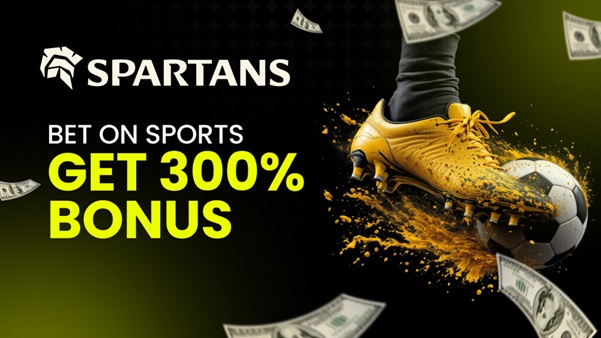
A major selling point is its 300% sports welcome bonus, one of the highest in the industry. With just a $5 minimum deposit, new users can claim up to $200 in bonus funds. The offer comes with a 10x wagering requirement, applicable to football, basketball, UFC, cricket, and more, giving bettors a meaningful balance to test the platform. Unlike traditional gambling sites, Spartans ties these offers to crypto deposits, ensuring rapid transactions and fewer restrictions.

Beyond promotions, Spartans emphasizes speed and convenience. Withdrawals are processed directly to users’ crypto wallets, bypassing bank delays and card declines. Whether using Bitcoin, Ethereum, or stablecoins like USDT and USDC, payments typically process in minutes, a clear advantage over fiat-based rivals.

The platform also appeals to global users by combining accessibility with simplicity. Sign-up requires only an email, username, and wallet connection—no lengthy verification or paperwork. Once registered, players can access thousands of slot titles, immersive live dealer games, and real-time sports betting markets with integrated live trackers and quick betslip functionality.

Closing Analysis

Stake.com, bet365, and Spartans illustrate three distinct approaches within the betting industry. Stake.com leans on influencer sponsorships, courting attention but also controversy. bet365 continues to build credibility and visibility through regulated football partnerships. Spartans, meanwhile, prioritizes crypto-driven functionality and high-value promotions, positioning itself as a challenger among the top gambling sites.

The competition between these platforms reflects how user expectations are changing. For some, trusted sports sponsorships matter most; for others, the appeal lies in fast, frictionless crypto payments and generous bonuses. With its 300% welcome offer and streamlined system, Spartans crypto betting places itself firmly in the conversation alongside established giants.

Find Out More About Spartans:

Website: https://spartans.com/

Instagram: https://www.instagram.com/spartans/

Twitter/X: https://x.com/SpartansBet

YouTube: https://www.youtube.com/@SpartansBet