DD
MM
YYYY

PAGES

DD
MM
YYYY

spot_img

PAGES

Home Blog Page 3890

The Hypocrisy in Oshiomhole’s “Tinubu Inherited Terrible Economy” Statement

0

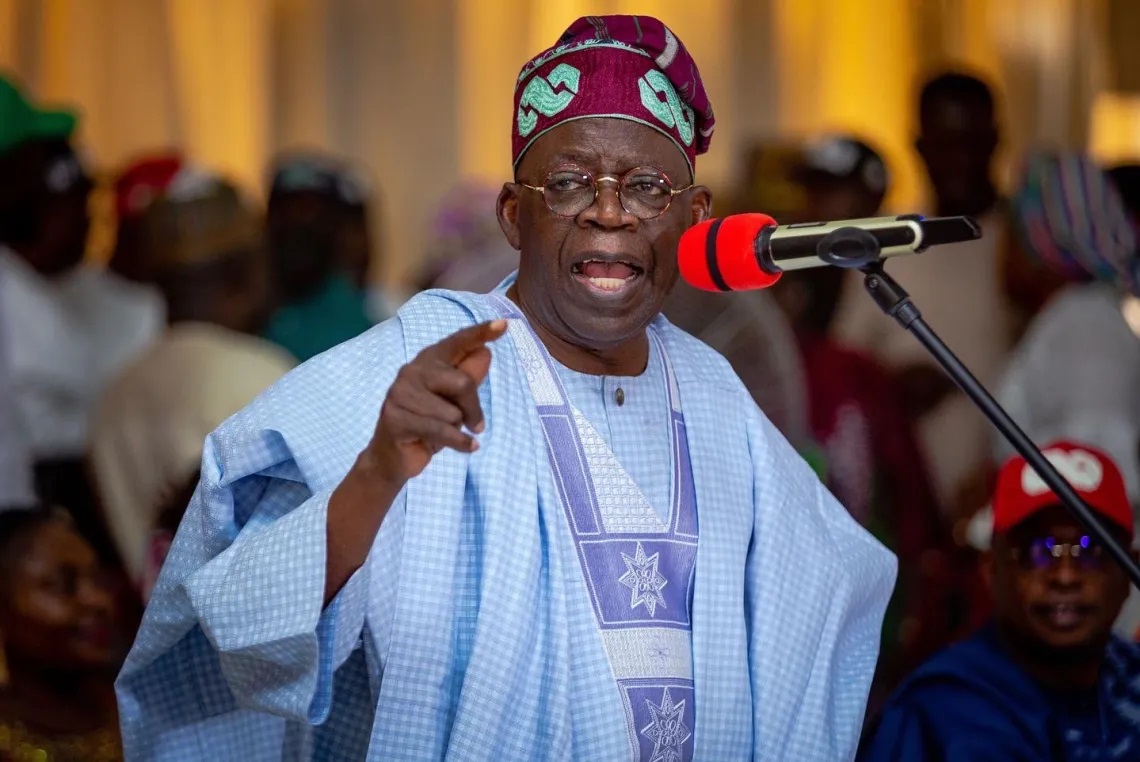
The former Chairman of the All Progressive Congress (APC) Adams Oshiomhole has attributed Nigeria’s current economic crisis to the past administration led by President Muhammadu Buhari.

Oshiomhole, who now represents the Edo North Senatorial District, said on Monday that President Bola Tinubu inherited a terrible economic situation from the past administration.

The former Edo State governor, who spoke during an interview with journalists shortly after he met with the Vice President, Senator Kashim Shettima, behind closed doors at the Presidential Villa, Abuja on Tuesday, added that some of the decisions taken by President Tinubu’s administration were the first steps towards revamping the economy.

“The government inherited a terrible economic situation, everybody knows it. The government inherited an economy in which the total national revenue was barely enough to service our debt burden. Spending 96 percent; which is to say every one hundred naira Nigeria earns, ninety-six kobo is to pay debt,” he said.

The APC-led government is said to have a reputation for pushing blame and not taking responsibility for its failings. Oshiomhole, who was partly the APC Chairman during Buhari’s eight-year leadership, was a staunch defender of the former president’s policies – which experts said plunged Nigeria into its present economic predicament.

“I speak on my honor that the federal government is broke and that they are borrowing huge in trillions of naira to pay salaries,” Oshiomhole said in 2015 about Goodluck Jonathan’s administration.

“The finance of the federal government under the past administration was in a worst shape. Over the past 9 months, the federal government could not pay salaries from her legitimate income, what she has been doing which states couldn’t do was to borrow, using the structure of the CBN, through various instruments; bonds, security, etc,” he added.

In his eight years in office, Buhari shot Nigeria’s debt profile up to more than N80 trillion, leaving the country grappling with debt servicing which is currently gulping 96% of its revenue. Oshiomhole and other APC bigwigs, including Tinubu, never for once criticized the former president, rather they praised him.

“The party has done very well, we didn’t promise miracle, there are no miracles in the life of a nation.

“What took several years to be destroyed cannot be fixed in two years. Yes, we have less than two years to go, but I believe that a couple of things have changed; in fact many things have changed,” Oshiomhole said in an interview on Channels television in 2017.

In the same vein, the Senator who has been called out over his hypocrisy is heaping praise on the steps Tinubu so far. In his interview with journalists on Tuesday, Oshiomhole expressed confidence that the issues arising from the removal of fuel subsidy will be quickly resolved between the Federal Government and organized labor.

He said Tinubu recognizes the impact the withdrawal of fuel subsidy is having on Nigerians and is determined to take immediate action to cushion it.

“This president recognizes that the effect of the withdrawal is already here, people are already going through some level of discomfort and therefore there has to be an immediate solution to it.

“Now that immediate solution is what we discussed and the fact that we are meeting on Tuesday again shows that clearly, we realize that this is not one of those things you want to buy time because it has a real negative impact, on particularly, the most vulnerable group.

“But we have a solution to it because you are going to make savings, so take from that savings or even if it is borrowing.

“So, whatever it is, you can leverage some revenue and improve wages to cushion the cost of living, I think it is legitimate, I think it is doable, it is not something that you want to spend two to three months negotiating,” he said.
NNPCL Secures Emergency $3bn Loan From Afreximbank to Boost the Naira

0

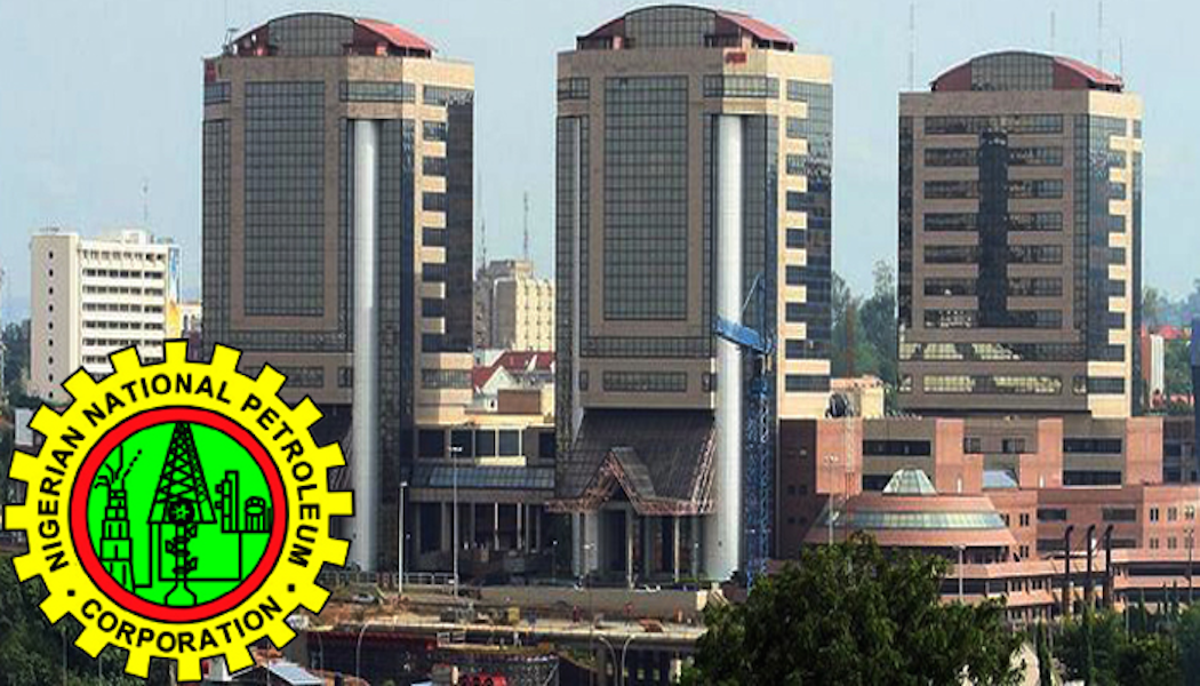
The Nigerian National Petroleum Company Limited (NNPCL) has announced that it has jointly signed a commitment letter and Termsheet with the Trade Finance Bank for Africa, Afreximbank, for an emergency $3 billion crude oil repayment loan.

The company said the move, which took place today (Wednesday) at the bank’s headquarters in Cairo, Egypt, “will provide some immediate disbursement that will enable the NNPC Ltd. to support the Federal Government in its ongoing fiscal and monetary policy reforms aimed at stabilizing the exchange rate market.”

O’tega Ogra, Special Adviser to the President, explained that the agreement between the NNPCL and Afreximbank “is not a crude-for-refined products swap but an upfront cash loan against proceeds from a limited amount of future crude oil production.”

He said the loan will assist NNPC Ltd. in settling taxes and royalties in advance and also equip the Federal Government with the necessary dollar liquidity to stabilize the Naira, with limited risk.

The move follows the push by President Bola Tinubu to stabilize the naira, which has been falling woefully in the foreign exchange market – compounding Nigeria’s harsh economic situation. 

The acting governor of the Central Bank of Nigeria (CBN), Folashodun Shonubi, announced yesterday that the apex bank has the approval of the president to implement new measures that will stabilize the fluctuating forex market.

The naira has dropped significantly in the FX market, trading as low as N950 per dollar. The currency’s free fall has bolstered the nation’s inflation rate – which stood at 24.08% as of July.

One of the most significant impacts of the naira’s poor form is on the cost of petrol, which has risen to N588 and N617 per liter across the country. 

On Monday, the Independent Petroleum Marketers Association of Nigeria (IPMAN) said that pump prices are expected to rise to N688 and N720 per liter due to the influence of dollar illiquidity on Nigeria’s oil market.

“It is simple mathematics, once the dollar is going up, have it in mind that the prices of petroleum products would definitely increase because the products are dollar-driven,” Chief Chinedu Ukadike, the PRO of the association said.

In response to this, the NNPCL issued a statement assuring Nigerians that there will be no further increase in the cost of petrol. The statement stoked a belief that the federal government is planning to introduce temporary subsidy, to stabilize petrol prices. 

But the government said Tuesday it has no plan to reintroduce fuel subsidy of any kind.

However, looking at the statement from the CBN governor and the NNPCL’s emergency $3 billion crude oil repayment loan, it has become clear that the government’s plan to sustain the prices of petrol is tied to boosting the naira’s performance at the FX market.

The naira received further shocks last week after an audit of the central bank reveals that it owes $13.8 billion in liabilities to American banks, JP Morgan and Goldman Sachs in the 2022 financial year.

“The Group entered into a securities lending agreement with Goldman Sachs and J. P. Morgan and as part of the agreement, the Group pledged its holdings on foreign securities in return for cash. The cash received from Goldman Sachs is N0.23 trillion ($500 million), 2021: N0.22 trillion ($500 million), and JP Morgan N3.23 trillion ($7 billion), 2021: N3.05 trillion ($7 billion) is recognized in other foreign securities,” a statement posted on the CBN website said.

This revelation means that the real value of Nigeria’s foreign reserve, which is currently pegged around $30 billion, according to the CBN, is actually around $17 billion. 

Investors believe it is the reason Nigeria has been unable to offset many of its financial obligations – including the repatriation of funds belonging to multinational companies.

With the free fall of the naira exacerbating Nigeria’s economic crisis, the government appears to be seeking a fast way to boost dollar liquidity. With the drop in oil output stymieing the country’s foreign exchange earnings – a strategic loan appears viable.

Ogra said the loan will be repaid against a fraction of proceeds from future crude oil production. 

“It’s a strategic move that ensures a balance between our current economic needs and future production capabilities,” he said.

Jumia Lost One Million Active Customers in the Last 12 Months, With 37% Drop in Orders

0

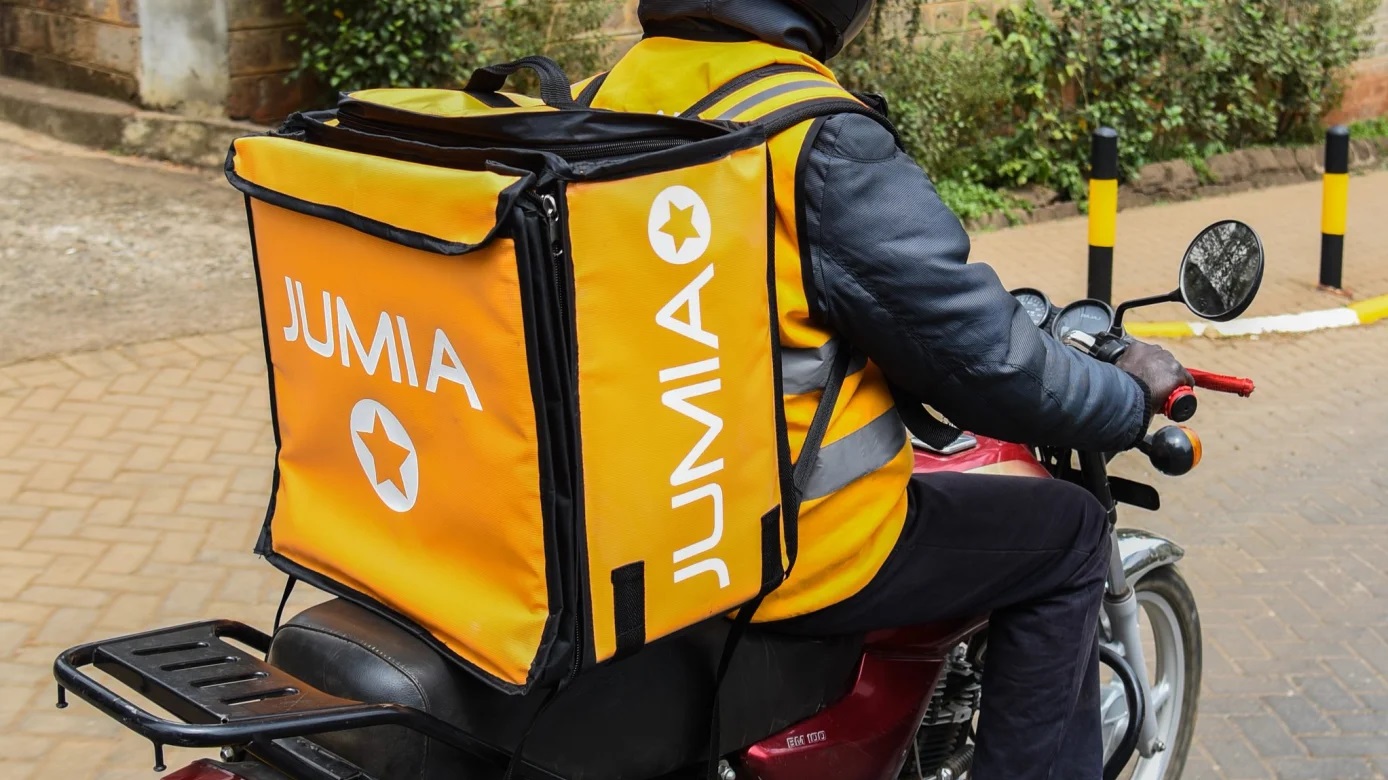
Two reports explain Jumia’s last quarter:

First Report

 “Although JMIA has done a stellar job shrinking EBITDA loss in Q2, there are a few very worrisome metrics in this Earnings Call Presentation. Orders are down 37% compared to Q2 2022, and active customers are down 28%. Those are big drops!

It is likely the large drops in order volume and active customers resulted from JMIA’s massive slash to sales and marketing efforts. One slide showed sales and marketing expenses dropping to an insignificant portion of overall SG&A. Sales and marketing cost per order dropped from $2.20 per order to $.90 per order.

Letting the business shrink down to a profitable core might be the best bet for survival. JMIA is doing everything possible to bring EBITDA losses down or even to a green number, but despite the company’s efforts, EBITDA is still negative. A struggle for survival for sure.”

Second Report

“Notable declines in fundamentals caused investors to bail from Jumia Technologies  stock on Tuesday. Following its release of quarterly results, the online retailer’s shares fell by more than 17% in price. That was far steeper than the 1.2% drop of the bellwether S&P 500 index.

In its second quarter, Jumia reported revenue of $48.5 million, which was down 15% from the same period of 2022. Gross merchandise value (GMV) fell at a steeper rate, declining at a 25% clip to $202 million. At least the retailer managed to mop up some of the red ink; its comprehensive net loss was $38.1 million against the nearly $71 million shortfall in the year-ago quarter.

In its earnings release, Jumia placed the blame for its declines on the broader macroeconomy. It quoted CEO Francis Dufay as saying that “Usage performance continued to be affected by the difficult operating environment with record levels of inflation impacting consumers’ spend as well as sellers’ ability to source goods.”

Jumia plans to face this challenge by making “fundamental enhancements” to its online platform. It aims to improve its supply and its pricing while becoming a more convenient option for the site’s users and merchants.”

Conclusion: B2C ecommerce is extremely challenging in Nigeria. From the CEO of the company:

“We continue to deliver strongly on our overriding objective of loss reduction and progress towards profitability. In the second quarter of 2023, both Adjusted EBITDA and Operating losses decreased by 66% year-over-year, reaching the lowest loss levels in over 4 years. 

Considering this strong progress, we are updating our Adjusted EBITDA loss guidance for the full year 2023 to $90-100 million, compared to $100-120 million previously.

“We are navigating challenging macro conditions with discipline and focus, doubling down on our efficiency efforts. Compared to the second quarter of 2022, FulfillmentSales & Advertising expenses were down 50% and 74%, respectively. 

We are also starting to reap the benefits of our actions on overhead costs with G&A excluding share-based compensation decreasing by a third year-over-year, reaching a 4-year low at $17.7 million.” 

“Usage performance continued to be affected by the difficult operating environment with record levels of inflation impacting consumers’ spend as well as sellers’ ability to source goods. In this context, we continue making fundamental enhancements to our platform to secure better supply and pricing while offering a more convenient experience to consumers and sellers.

“We remain confident in the long-term growth potential of our markets and our ability to capture this opportunity in a profitable manner,” he said. 

Nigeria lost one million active customers in a year, dropping from 3.4 million recorded in Q2 2022 to 2.4 million in Q2 2023.

PancakeSwap Price Dips to New Year-Low, Pomerdoge To Introduce Rare 7,777 NFT Collection

0

PancakeSwap (CAKE) price has witnessed a major dip, reaching a new year-low and causing panic among investors. Given its recent dip, can PancakeSwap bounce back? In other news, the crypto space is abuzz as Pomerdoge (POMD), a P2E game, wants to launch a rare collection consisting of 7,777 NFTs.

Click Here To Find Out More About The Pomerdoge (POMD) Presale

PancakeSwap (CAKE) Price Dips to New Year-Low, Can CAKE Bounce Back?

Since the beginning of 2023, the price of PancakeSwap (CAKE) has undergone a huge decline of 52.4%. This took CAKE to a one-year low of $1.3083. Looking at the daily chart, the asset has been moving sideways since July 6th. An initial drop below the $2.56 support level caused CAKE to lose a significant portion of its gains.

Presently, it hovers near the $1.66 resistance level after finding crucial support at $1.43. Currently, the price of CAKE stands at $1.47, a 1.07% decrease in price within the last 24 hours. Additionally, PancakeSwap’s trading volume has been on a steep fall.

According to CoinMarketCap, PancakeSwap’s trading volume has dipped 8.90% in the last 24 hours. Moreover, CAKE is currently trading below its 50-day and 200-day SMA, a sign of bearish pressure. Furthermore, the Moving Average Convergence/Divergence (MACD) is positioned below its signal line.

It is accompanied by faint histogram bars, signaling a notable sell pressure within PancakeSwap’s market. Nevertheless, CAKE might experience a retracement in the coming days if the bulls regain control of the market.

Pomerdoge (POMD) To Introduce Rare 7,777 NFT Collection

According to MarketsandMarkets, the blockchain gaming sector’s value is projected to surge from $4.6 billion in 2022 to $65.7 billion by 2027. As a result, platforms capturing just a small percentage of this thriving market could yield great returns for investors. The Pomerdoge (POMD) team has responded to the projection.

They are currently working towards introducing an innovative P2E crypto game that will ride on this exponential growth.  This platform aims to unite players globally, fostering competition and offering them rewards in the process. Pomerdoge plans to launch a marketplace and battle arena called Pomerplace.

Here, players will be able to trade, trading, purchase, and sell in-game items, assets, and prizes. Simultaneously, it is important to highlight that Pomerdoge stands out as one of the most secure platforms in the market.

Renowned auditors such as SOLIDProof and Cyberscope have evaluated the project, endorsing it as safe for users. Fortunately, Pomerdoge’s native token is currently available at just $0.008 per token.

Acquiring these tokens will grant you exclusive access to Pomerdoge’s upcoming 7,777 NFT collection. The project will release the NFT collection between August and September. Furthermore, those who purchase the POMD token will also hold a stake in the revenue generated on the Pomergame platform, solidifying a promising investment opportunity.

Find out more about the Pomerdoge (POMD) Presale Today:

Website: https://pomerdoge.com/

Telegram Community: https://t.me/pomerdoge

A Review of Jagun Jagun (The Warrior), a NETFLIX Blockbuster

10

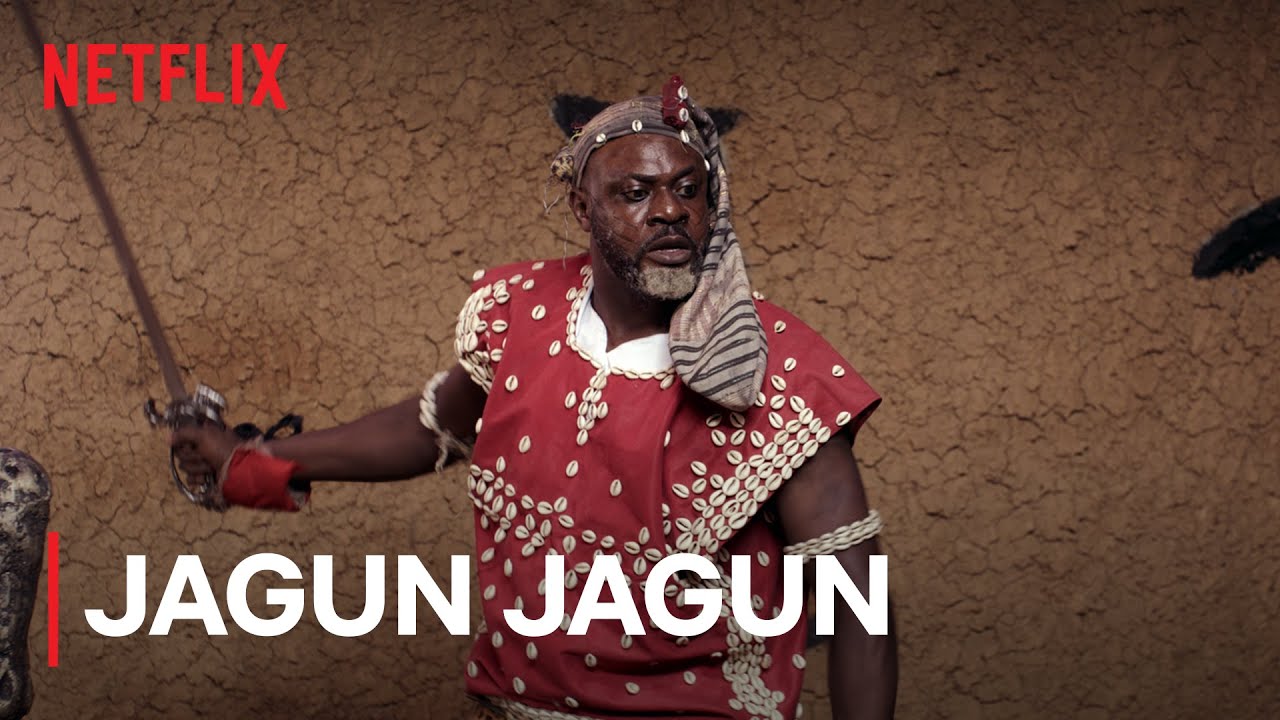
NETFLIX’s Yoruba-Nollywood film, Jagun Jagun (The Warrior), is the rave of the moment and the crux and icebreaker of most discussions in town. Femi Adebayo, Nigerian veteran actor and film producer, pulled a rabbit out of a hat on this one. The curious thing is that Femi Adebayo was able to attain this great fit in less than fifteen months after he delivered Agesinkole (King of Thieves) which reportedly surpassed its targets at the Nigerian Cinemas in about three weeks. Femi Adebayo is certainly not a diminutive artist and film maker in Yoruba Nollywood, and his Jagun Jagun is not a mere case of Nigerians knowing how to hype their things.

Jagun Jagun premiered on NETFLIX on Thursday, August 10, 2023. Within 48 hours of its release, the movie reportedly trended in the top 10 chart of more than 18 countries worldwide, including UK, US, UAE, South Africa and Nigeria. However, I have come across a couple of critics who think the movie is overrated. I observed in high disbelief how the movie’s misanthropists superfluously tender their paltry analysis on the social media. On the contrary, I think Jagun Jagun is a well cooked meal, deftly served in a fine dish.

Plot Summary

Gbotija the son of Lagbayi sets out with admirable bravery and sanguinity to learn the Art of war at the feet of Ogundiji, a great warlord. Gbotija’s motivation is revenge. He wants to avenge his father’s death during the invasion of his hometown, Iwon Kingdom, by some unidentified soldiers. Lagbayi is able to hide his teenage son inside the Isi tree before he’s killed by a gunshot in the middle of the raid. Strong-willed Gbotija discovers his master, Ogundiji, masterminded the invasion of his hometown which led to his father’s death several years ago. The student stabs his master multiple times to death, dedicating each piercing of the dagger into him to every victim of his atrocities.

Analysis and Commentary

The dominant idea of the movie is ‘’the destructive nature of war.’’ This idea is deftly conveyed and buttressed through the multiple subplots that developed in the storyline. The central characters are Gbotija who is the protagonist and Ogundiji who is the super villain.

Gbotija became an orphan and lost many significant persons in his life as a result of war. Against his own will, Gbotija became a beast and an instrument of mass destruction wielded by Ogundiji. When Ogundiji noticed Gbotija was becoming too powerful under his watch, he subjected his apprentice to a series of acid tests with the hope he would not survive them. Gbotija was forced to kill his father-figure, Gbogunmi and his lover, Ogunkitan, masqueraded as Agemo. Gbotija’s dilemma and empathy were demonstrated at the verge of executing his destructive mission in the Alaje Kingdom where the villagers were currently performing the Aje festival, a celebration of wealth and prosperity.

The King sends one on an errand; the tide on the way is high and lethal. It is not possible to go against the king’s orders as much as it is ill-advised to dive into the tide.

In spite of its apparent bitterness, war is often thought of as a necessary evil in some contexts. The interpretation of war and warfare as a necessary evil is common among the elite and the political class who invariably profits from fanning the embers of discord among the masses. The elite use the instrumentality of their wealth and statuses for personal aggrandizement rather than the social good. And when there is a clash of interest among the elites, they excite and sponsor the ordinary men to go into war on their behalf.

The foregoing revelation in the story will probably resonate mostly with many Nigerians since it mirrors the nation’s political landscape and socio-political realities. In the story, Ogundiji is the grand assassin hired by the elite and the political class to execute their biddings of forcefully taking over power while they circumvent due processes with impunity. Ogundiji’s personal prowess and popularity among the elite contribute to his image as a highly dreaded warlord.

The story also recalls the political history and evolution of the political economy of the Yoruba people. Oyo became the capital of the Yoruba nation and dominated many parts of the Sub-Saharan African region partly due to its Military strength. The rise and fall of the Oyo Empire was driven by many intra and inter regional wars such as the Dahomie, kiriji, modakeke, Nupe, Assante and Mahi wars etc. Oyo’s consolidation and reign as a super power in West Africa started in the 15th century and lasted through early 19th century when the polity became highly fragmented and its army was consequently subjugated by the Fulani Jihadist in 1825.