DD
MM
YYYY

PAGES

DD
MM
YYYY

spot_img

PAGES

Home Blog Page 3904

The Central Bank of Nigeria’s Fudge Factors to Destroy Nigeria’s Economy

0

In engineering, there is what they call a fudge factor (“a figure included in a calculation to account for some unquantified but significant phenomenon or to ensure a desired result”). And the factors are bad things across many domains of designs. It turns out that the financial engineering in the Central Bank of Nigeria (CBN) had many fudge factors.

Yes, I wrote here that many things the CBN was doing did not make sense. And it was surprising because it was largely the same team which stabilized the Naira around 2013 to early 2015. So, how could they have lost the exchange rate gravitational pull which was pulling Naira down?

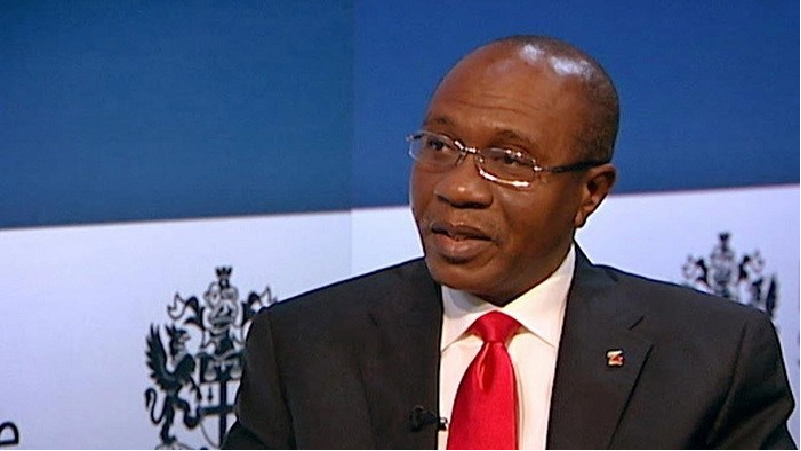
Now, it seems that we have an answer: in the financial engineering of the Nigerian economy and the apex bank, the leaders introduced many fudge factors: “The report, titled ‘Report of the Special Investigation on CBN and Related Entities (Chargeable offences)’, delivered to President Tinubu on December 9, has exposed a labyrinth of financial misconduct allegedly perpetrated during the tenure of former CBN Governor, Godwin Emefiele.”

Those were part of the things which did not allow the Naira and the economy to balance. The pain here was the desired result was to destroy the economy of Nigeria and using those fudge factors, they executed the mission.

Good People, this is still early as Emefiele and the CBN did not operate alone. As I have said, the Nigerian economy does not obey the economic “laws” of Adam Smith and AO Lawal (he wrote a great secondary school economics textbook), and the reason that remains the case is that in our finance-first economy, we have many fudge factors structured to destroy Nigeria, by those tasked to lead and manage.

Comment on Feed

Comment: Ndubuisi Ekekwe You were a banker and now financial expert. We both worked in Diamond Bank. I cannot remember a time when an audit report was submitted to the management in respect of a person, team or business unit without the input of the entity concerned. How many of the personalities involved in this matter were invited for interrogation before a verdict was passed? How competent is the investigator in this matter? What was the basis for this investigation?

While not holding forth for the previous managers of the CBN (all government institutions in Nigeria are collectively a basket case) the fact, in my view, that the report did not give the people being interrogated/investigated the opportunity to defend themselves makes it incomplete.

As you have rightly pointed out, Nigeria economy does not respect even the simplest rule of economics and that is only because the mangers made it so. So far, the management of the Nigeria economy, nay the whole of its affairs, has been nothing short of brigandage.

My Response: unfortunately, there is no history of Nigeria and its central bank operating the way the private sector works. In EFCC, they arrest the person and then ask the person to give them the info to destroy the person. For this one though, the simple thing is always to refuse via a press release. Nigeria does not have a history of asking the accused for response because this is a political theater. Those accused can respond because that is how Nigeria operates, unfortunately.


Alleged Financial Mismanagement Rocks Nigeria’s Central Bank as Investigator’s Report Exposes High-Level Fraud

Will all securities be on Blockchains?

0

The question of whether all securities will be on blockchains is not a simple one to answer. There are many factors that influence the adoption of blockchain technology in the securities industry, such as regulation, cost, efficiency, security, interoperability, and scalability.

Blockchains are distributed ledgers that store transactions in a secure and transparent way. They can enable faster and cheaper settlement of securities, as well as reduce operational risks and fraud. Blockchains can also facilitate the creation and trading of new types of securities, such as tokenized assets, smart contracts, and decentralized autonomous organizations (DAOs). These innovations can potentially democratize access to capital markets and create new opportunities for investors and issuers.

Securities are traded in markets, where buyers and sellers agree on a price and execute transactions. The transactions are then settled, meaning that the ownership or debt claims are transferred from the seller to the buyer. The settlement process can involve intermediaries, such as brokers, custodians, clearing houses, or central securities depositories, who facilitate the exchange of securities and money.

What are the benefits and challenges of using blockchains for securities?

Blockchains could offer several benefits for securities trading and settlement, such as:

  • Faster and cheaper transactions: Blockchains could reduce the need for intermediaries and enable peer-to-peer transactions, which could lower the costs and risks associated with trading and settlement. Blockchains could also enable real-time or near-real-time settlement, which could improve liquidity and efficiency in the markets.

  • Enhanced security and transparency: Blockchains could provide a tamper-proof and auditable record of transactions, which could increase trust and confidence among market participants. Blockchains could also enable greater visibility and access to information, which could improve market surveillance and compliance.

  • Increased innovation and inclusion: Blockchains could enable new forms of securities and markets, such as tokenized assets or decentralized exchanges. Blockchains could also lower the barriers to entry and participation in the markets, by allowing more people to access financial services and opportunities.

However, blockchains are not a panacea for the securities industry. There are still many technical and regulatory hurdles that need to be overcome before blockchains can become mainstream. For instance, blockchains may face scalability issues, as they need to process large volumes of transactions in a timely manner.

Blockchains may also pose governance challenges, as they require consensus among multiple parties with different interests and incentives. Moreover, blockchains may raise legal and compliance questions, such as who is responsible for enforcing the rules and regulations of the securities market, and how to ensure the protection of investors’ rights and interests.

Therefore, it is unlikely that all securities will be on blockchains in the near future. Rather, we may see a hybrid model, where some securities are issued and traded on blockchains, while others remain on traditional platforms. The adoption of blockchains for securities will depend on the specific use cases, benefits, and risks involved. Ultimately, the market will decide which securities are best suited for blockchains, and which ones are better off without them.

Will all securities be on blockchains?

The answer to this question is not clear-cut or definitive. Blockchains have the potential to transform securities trading and settlement, but they also face significant hurdles and uncertainties. The adoption of blockchains for securities will depend on various factors, such as technological innovation, market demand, regulatory support, industry collaboration, etc.

It is likely that blockchains will coexist with traditional systems for some time, and that different types of securities will have different degrees of blockchain integration. Some securities may be fully tokenized on blockchains, while others may use hybrid solutions that combine blockchain-based components with conventional ones.

Ultimately, the future of securities on blockchains will be shaped by the needs and preferences of market participants, as well as by the evolution and convergence of technology, regulation, and governance.

Angola Quits OPEC Over Output Dispute, Exposing the Rift in the Oil Cartel

0

The Republic of Angola’s abrupt departure from the Organization of the Petroleum Exporting Countries (OPEC) marks a decisive turn in the group’s unity, raising concerns and signaling a growing rift within the coalition of oil-producing nations.

The move announced following a cabinet meeting on Thursday, lays bare a deepening conflict between Angola and OPEC, exposing underlying tensions over output limits that failed to accommodate Angola’s diminishing oil production capacities.

Minister of Mineral Resources, Diamantino Azevedo, voiced Angola’s disillusionment with OPEC, stating, “Our role in the organization was not deemed relevant… it no longer makes sense for us to remain in the organization.”

This rupture evolved from a deal in June, which allocated a higher production target to the United Arab Emirates, compelling Angola to accept a reduced output limit for 2024, per Bloomberg.

Angola’s oil capacity has plummeted by nearly 40% over eight years to approximately 1.14 million barrels a day, accentuated by insufficient investments in aging, deepwater oil fields, according to data from Bloomberg. However, the quota debacle intensified when OPEC, following a delayed ministerial meeting, imposed an even more stringent production cap of 1.1 million barrels a day, exacerbating the already strained relations between Angola and the organization, Bloomberg reported.

This situation significantly reduced the country’s production below the target agreed with its OPEC counterparts, contributing largely to the dispute.

While Angola’s decision to exceed the imposed quota may be symbolic due to its dwindling output, it underscores the breakdown in relations between the country and OPEC. Industry analysts speculate that this move might not significantly impact global oil supplies since Angola was already operating near full capacity, disregarding OPEC+ quotas.

There’s “no impact on supply forecasts as Angola is already producing at full capacity rather than limiting output due to OPEC+ quotas,” said Richard Bronze, head of geopolitics at consultant Energy Aspects Ltd. It “doesn’t directly impact quotas or production plans for other OPEC+ countries.”

This dissent, previously expressed in private by other members, indicates a growing discord within the cartel’s leadership, potentially posing future challenges.

However, Javier Blas, a Bloomberg analyst said while Angola’s exit mirrors the limited impact of previous departures – Indonesia, Qatar, and Ecuador, it signals some troubling developments for OPEC.

“The announcement, with the government in Luanda openly expressing its frustration with the cartel, sheds some light on an open secret: Lots of OPEC member countries are less than happy about the direction the group has taken over the last few years under the leadership of Saudi Arabia,” he said.

Blas noted that the bone of contention, which has been expressed always in private by other members of the oil cartel, is that Riyadh is trying to keep oil prices too high, close to $100-a-barrel, which is propping up rivals, notably the US shale industry.

If OPEC continues doing so, he said, sooner or later it would have to cut production even more, ceding more market share. Other OPEC members would be happy with oil prices lower, in the $60-to-$70 range, he added.

This complaint is accompanied by another one: Riyadh, under its Energy Minister Prince Abdulaziz bin Salman, appears unresponsive to the concerns raised by others and is seemingly attempting to coerce dissenting views into submission.

“The departure of Angola makes it more likely that Riyadh will have to let the UAE to produce, over time, even more oil. The risks for OPEC start in Luanda — but ultimately end more dangerously in Abu Dhabi,” Blas noted.

As tensions escalate, Angola’s departure could foreshadow a more tumultuous path ahead for OPEC, triggering uncertainties in the global oil market.

Nigerian On-Demand Logistics Startup DropX Shutdown Operation

1

DropX, a Nigerian on-demand logistics startup that uses an app to facilitate deliveries for businesses, has shut down after two years of operation.

In a lengthy post on LinkedIn titled “CLOSURE- We Threw in the Towel”, the startup Co-founder Praise Alli-Johnson divulged the struggles that led to the shutdown of DropX.

Disclosing the factors that led to the closure of the company, Mr. Praise, started by stating that at the initial stage, DropX set out to build a hyperlocal delivery platform, connecting businesses and individuals needing to deliver any item with independent delivery agents, which without any challenge.

He noted that the company’s user growth was smooth because businesses in need of delivery services are abundant. The company implored a strategy of offering free delivery on the first 3 orders which saw it easily onboarded 2,000 users.

However, trouble started looming for the company when there was a challenge in trying to find the balance between driver pay expectations and what users were willing to pay.

To address this, he noted that the company aligned its prices with those of Bolt and catered exclusively to high-value customers dealing with bulk food deliveries, cakes, luxury goods, etc.

Here is an overview of several other challenges that led to the shutdown of DropX, as disclosed by the company’s Co-founder Praise Alli Johnson;

Hyperlocal and Ubiquitous was a lofty ambition:

According to him, he stated that it quickly became apparent that users were scattered across Abuja, from Wuse 2 to Kubwa, from Apo to Gwagwalada. Users outside of Wuse 2, Maitama, Asokoro, and environs weren’t getting responses as they were too far apart. The company worked on getting more users in town (Wuse 2, Maitama, Asokoro, and environs, and around the Garki area), and hired corp members, all hitting the street, and the problem was solved.

• High demand:

Mr.Praise disclosed that since DropX drivers also worked for other ride-hailing platforms like Bolt and Uber, the company found itself competing for time and pricing. Demand surged from 2 PM in the City of Abuja, leading to increased delivery requests on the DropX platform.

There was an attempt to fix this by implementing a surge model like Bolt and Uber, but users disliked it, often canceling their requests. A second attempt, making surges visible to drivers only, was met with mixed success. The company ended up paying the difference just to keep orders going, meanwhile, the problem was only solved partially.

As the company’s user base expanded, he disclosed that he realized the car driver model couldn’t accommodate all user segments; as there was need for more bikes. DropX hit the street and got independent delivery bike drivers onboarded. Despite onboarding independent delivery bike drivers, the company learned they couldn’t serve their high-value clients adequately.

• The problem of options:

With both bikes and cars on the platform, everyone wanted cheaper deliveries. Requests for bikes skyrocketed, and requests for cars dropped, even the high-value clients that started using DropX because the company was using cars.

At this point, bikes weren’t enough, so we are back to the problem of high demand and failed requests. After calling to beg users to try the car option when they can’t find a bike, we decided to find a solution while we threw money at the problem again — we paid drivers the difference”, he noted

• People problem:

According to him, some users engaged in off-app deals with drivers, taking cash off the app. The company later got to a point of funding deliveries from salaries, thus not generating income.

The CEO noted that while navigating these challenges, the company continued funding delivery differences just to stay afloat. It found itself relieved on days with low delivery requests.

Founded in 2021 by Praise Alli-Johnson and Oluwatope Liasu, DropX entered the logistics scene with an ambitious goal to transform local deliveries in Abuja by connecting businesses and individuals with swift, reliable services.

UK Supreme Court Denies AI Recognition as Inventor, Raising Questions on Patent Law Evolution

0

In a groundbreaking decision, the UK’s Supreme Court delivered a verdict reiterating the non-recognition of AI algorithms as inventors, marking a pivotal moment in patent law. The case revolved around US computer scientist Stephen Thaler’s pursuit of patent registration for inventions attributed to his AI creation, DABUS.

Thaler’s endeavor to secure patent rights for DABUS-generated innovations, such as a novel food container and a flashing light beacon devised in 2019, faced initial rejection from the UK’s Intellectual Property Office (IPO). The IPO’s stance rested on the premise that patents could only be attributed to human individuals or corporate entities, not AI systems.

The recent Supreme Court ruling unequivocally upheld the denial of Thaler’s appeal. Judge David Kitchin emphasized that while the case didn’t delve into the patentability of AI-generated technical advancements; patents inherently demand a “natural person” as the inventor for enforcement purposes.

He said “technical advances generated by machines acting autonomously and powered by AI should be patentable,” but patents can only be assigned to human creators, and the inventor must be a “natural person” for a patent to be effectively enforced.

This ruling aligns with a precedent set by the US Supreme Court, reinforcing that AI lacks the legal status to be recognized as an inventor. Intellectual property expert Rajvinder Jagdev underscored similar decisions across European courts and Australia, all underscoring the fundamental principle that inventors must be human individuals.

Thaler’s legal representatives voiced apprehensions about the ruling’s adverse effects on industry growth and AI integration. Conversely, the Supreme Court acknowledged the existing inadequacies of patent laws in safeguarding AI “inventions.” An IPO spokesperson embraced the ruling, saying it clarifies the current state of patenting related to “artificial intelligence machines.”

However, the decision prompts pertinent inquiries into the adaptation of patent systems to accommodate AI-generated creations. Giles Parsons, an IP lawyer, deemed the Supreme Court’s decision as “unsurprising” and anticipated minimal immediate impact on the patent framework. Parsons reiterated that AI algorithms remain classified as tools, not independent agents, within legal contexts.

The IPO emphasized the ongoing necessity for discussions on reshaping patent systems and intellectual property frameworks to effectively navigate the complexities arising from AI-generated innovations. It acknowledged that the current paradigm might not comprehensively address the multifaceted nature of AI-based inventions.

The ruling underscores the many issues facing the evolving AI industry – ranging from its perceived threat to civilization to the need for regulation. From the UK to the US, the authorities are still grappling with the exigencies of AI, making efforts to create unique rules for the industry complicated.