DD
MM
YYYY

PAGES

DD
MM
YYYY

spot_img

PAGES

Home Blog Page 3906

The Basics of Machine Learning, and AI in Business

0

Few innovations have captured the world’s imagination like Machine Learning (ML). This subset of Artificial Intelligence (AI) is transforming industries and reshaping the way we approach complex problems. But what exactly is machine learning, and how do algorithms learn and improve?

Intro to Machine Learning:

At its core, machine learning is the art and science of training computers to learn from data. Instead of being explicitly programmed to perform a task, machines are provided with data and algorithms that enable them to learn patterns and relationships within the data. Through this process, machines can make predictions, decisions, and identify insights that are often difficult for traditional rule-based systems to uncover.

Now if I tell you 2+2, you will reply 4. If I ask you 3+3, you will reply 6. If I ask 4+4, you will reply 8. Why do you think you know that? It’s because you have it in your memory.

That is what we call label builders. Those are structural labels that you already have in your head based on things you have learned in the past.

Now, let’s change it. if I tell you 1+1 = 3, 2+2 = 5, and then I ask you 5+5, what will you tell me? You will likely tell me 11. This is because you have studied the pattern.

So what happens is no magic. Machine learning learns through some structural data you have in the database or that you learn by possible access to data. The same way you study the trend and pattern to answer the question, that is what machine learning does. It is a subset of Artificial intelligence that mimicks the way the brain works.

The Building Blocks of Machine learning include:

Data: The foundation of machine learning is data. Quality data is essential for training algorithms effectively. This data can be structured (like tables in a database) or unstructured (like images, text, and videos). This data is what the AI learns and detects patterns and trends to reach future decisions.

Features: Features are the attributes or characteristics extracted from the data that the algorithm uses to make predictions. For instance, in an email spam detection system, features might include the frequency of certain words or the length of the email.

Model: The model is the heart of machine learning. It’s a mathematical representation that learns patterns and relationships from the provided data. Think of it as a set of rules that the algorithm refines as it processes more data. It is like trying to model real life situations, and giving the algorithm a set of rules on what to do when that happens.

Algorithm: Algorithms are the instructions that guide the learning process. They determine how the model is adjusted based on the provided data. Different algorithms are suited for different types of problems.

Here are some very interesting types of machine learning;

Supervised Learning: One of the most common types of machine learning is supervised learning. In this approach, the algorithm is trained on labeled data, meaning the input data is paired with the correct output. The algorithm learns the relationship between inputs and outputs, allowing it to make predictions on new, unseen data. A classic example is email spam detection, where the algorithm learns to distinguish between spam and legitimate emails.

Unsupervised Learning: Unsupervised learning involves training algorithms on data without labeled outputs. The goal is to discover hidden patterns, structures, or relationships within the data. Clustering and dimensionality reduction are common tasks in unsupervised learning. For example, clustering can group similar customers together for targeted marketing strategies.

Reinforcement Learning: This one takes inspiration from behavioral psychology. Algorithms learn to make a sequence of decisions to maximize a reward signal. It’s like training a dog to perform tricks by providing treats for desired behavior. Reinforcement learning powers applications like game-playing agents and autonomous robots.

What you should know

Machine learning is not a one-time process, not at all. It is a continuous learning loop. As new data becomes available, the algorithms adapt and update their models to improve accuracy and relevance. This process allows algorithms to handle changing patterns and ensure their predictions remain current. More interesting is that this happens at a pace that humans would ordinarily not be able to do, on their own.

There are countless ways to apply machine learning in business, across different sectors. And we will see more of that in the coming weeks.

AI in Business -Personalized and Engaging Customer Experience

In an era defined by rapid technological advancements, the intersection of artificial intelligence (AI) and customer experience has emerged as a game-changer for businesses across industries. AI-powered solutions, such as chatbots, virtual assistants, and recommendation engines, are revolutionizing the way companies interact with customers. But now, there is the question of whether AI will be capable of delivering highly personalized and engaging experiences tailored to individual customers?

The answer to the question is Yes. And here is how it works:

The Rise of AI-Powered Customer Interactions

AI-driven technologies have transcended their initial stages of development to become integral tools for enhancing customer interactions. It has gone way beyond the time of automated and monotone messages that bore customers. Chatbots and virtual assistants, often integrated into websites, applications, and messaging platforms, have evolved from scripted, rule-based systems to become intelligent entities capable of natural language processing and machine learning.

AI-powered chatbots excel in handling routine customer inquiries promptly and efficiently, giving humans room to attend to other things. They provide round-the-clock support, addressing customer concerns instantaneously without requiring human intervention. This is cheaper because not every business can afford to keep a staff on standby for 24 hours, every day of the year. With this, businesses can ensure consistent service delivery and immediate responses, ultimately leading to improved customer satisfaction and loyalty. After all, no customer wants to ask a question at 1am, and wait till 8am to receive a response.

Personalization at Scale: Tailoring Customer Experiences

One of the most significant contributions of AI to customer experience lies in its ability to deliver personalized interactions at scale. Traditional marketing and customer service approaches often struggle to tailor experiences to the unique preferences of each individual. This is understandable because there is only so much a human can do. AI changes this paradigm by analyzing vast amounts of data – from customer behavior and purchase history to browsing patterns and demographic information – to create detailed customer profiles.

Recommendation engines, powered by AI algorithms, leverage these profiles to suggest products, services, and content that align with customers’ interests. This personalization not only enhances engagement but also drives sales and conversions. For instance, platforms like Netflix and Amazon use recommendation engines to curate content and products, respectively, resulting in increased user engagement and customer satisfaction. In this way, if you have been recently searching for tips to keep your shoes looking new, you may get product recommendations ranging from shoe brush, to polish etc. If a human customer experience officer were to manually analyse a customers interest and make recommendations, it would take a sickening amount of time even if it were possible.

Seamless Customer Journeys with AI-Powered Insights

AI not only drives personalization but also aids in creating seamless customer journeys. By analyzing customer data and behavior, businesses can identify pain points and areas for improvement in their processes. This insight enables companies to optimize their customer journeys, ensuring a smooth transition from one touchpoint to another.

With AI-powered analytics, businesses can predict customer behavior and preferences, and proactively address their needs. For instance, e-commerce platforms can use AI to forecast inventory requirements based on historical purchasing patterns, ensuring that popular products are always in stock and ready to be delivered.

The Human-AI Collaboration

While AI enhances customer experiences, it’s important to note that successful implementation requires a delicate balance between automation and the human touch. AI is adept at handling routine queries and transactions, freeing up human agents to focus on complex issues that require empathy, creativity, and critical thinking.

By automating routine tasks, businesses can allocate their human resources more strategically. This combination of AI and human expertise results in a dynamic synergy that optimizes customer interactions across the board.

There is room for Continuous Innovation

The evolution of AI in customer experience may be impressive so far, but it is far from over. As technology advances, we can anticipate even more sophisticated applications of AI to enhance engagement and personalization. To be fair, there is no predicting just how far AI can go. What we can say for sure is that within the next decade, the natural language processing will have become more refined, enabling chatbots to understand context and sentiment better. Virtual assistants will integrate seamlessly into users’ lives, offering proactive suggestions and assistance based on user behavior and preferences.

Moreover, AI will continue to blur the lines between online and offline experiences. Facial recognition and customer sentiment analysis can even transform in-person interactions, allowing businesses to tailor services and offers in real time.

As AI technology continues to advance, businesses that embrace these innovations stand to gain a competitive edge, forging stronger connections with customers and driving long-term loyalty. The future of customer experience lies in the seamless integration of AI and human expertise, creating a harmonious blend that will elevate engagement and personalization to new heights.

Embracing Authenticity of Life

0

In today’s fast-paced world, it’s easy to fall into the trap of comparing our journey to that of others. We often regard life as a race, believing that our pursuits must align with the material and non-material values of those around us. However, this mindset leads us down a path of chasing someone else’s agenda, ultimately hindering our own growth and fulfillment.

Imagine life as a grand journey, with each individual following a unique and distinct path. When we begin to chase after objectives that mirror those of others, we inadvertently forsake our own aspirations and purpose. At first, this pursuit might seem innocuous, but over time, it becomes clear that we’re draining the value from our own experiences and potential.

Consider this: when we and another person reach the final destination of a shared journey simultaneously, we both find ourselves at a crossroads of realization. The mirage of success fades, revealing that we’ve invested precious time and energy in a pursuit that wasn’t genuinely aligned with our true selves. This is where the harm of pursuing another’s agenda becomes evident.

The solution lies in recognizing the significance of individuality. Our journeys are not meant to be standardized races; they’re unique growth routes that cater to our passions, strengths, and aspirations. By embracing our own purpose and nurturing it, we gain a sense of direction that aligns with our authentic selves. This personal alignment doesn’t just ensure our well-being but also contributes positively to the world around us.

Embracing your own purpose requires a conscious effort to steer away from the pathways of others. It’s easy to fall into the pattern of imitation, to conform at the cost of our authenticity. However, true growth and fulfillment emerge when we focus on our personal trajectory, regardless of how different it may be from those around us.

In a society that often emphasizes comparison and conformity, breaking free from the mold can be challenging. It requires a shift in perspective, acknowledging that the richness of life lies in diversity and individuality. This shift empowers us to honor our uniqueness, celebrating the fact that our path is uniquely our own.

So, as you stand at the crossroads of pursuing someone else’s objectives or following your own purpose, choose the latter. Choose the path that resonates with your inner self, the path that may not align with everyone else’s, but is a genuine reflection of who you are and what you aspire to become.

Let us cease the race to match the values and pursuits of others. Instead, let us embrace our own growth route and nurture our unique purpose. By doing so, we not only avoid the exhaustion of chasing someone else’s dreams but also contribute our authentic selves to the tapestry of life’s journey.

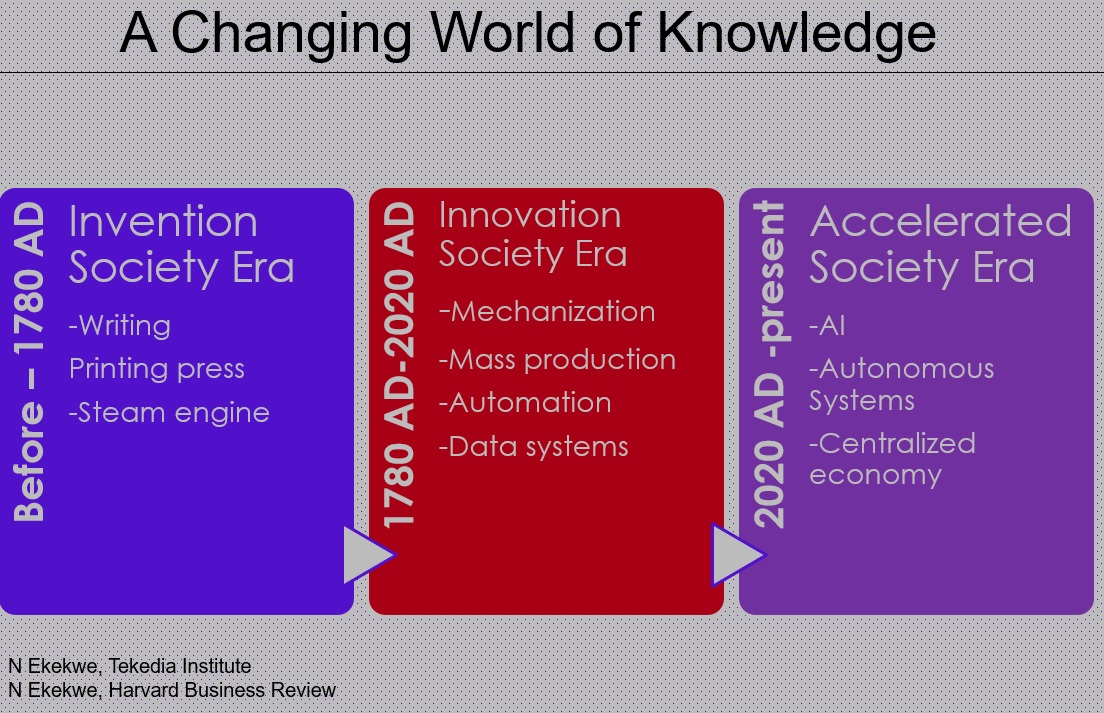
The Eras In Our World – Invention, Innovation and Accelerated Society Eras [video]

0

Listen to me three times weekly here . This is the Accelerated Society Era. That is what I have called it. Meet in class.


Understanding zkRollups, Optimistic Rollups and Validium

0

Layer 2 scaling solutions are protocols that run on top of the Ethereum layer 1 (L1) blockchain, but do not require every node to validate every transaction. Instead, they use various techniques to compress transactions, aggregate them into batches, and periodically submit them to the L1 as proofs or fraud proofs. This way, they can increase the throughput and lower the cost of transactions, while still inheriting the security and finality of the L1. These solutions aim to reduce the congestion and high fees on the Ethereum network by moving transactions off-chain, while still maintaining security and decentralization.

zkRollups are a type of layer 2 scaling solution that use zero-knowledge proofs (ZKPs) to verify the validity of transactions off-chain. ZKPs are cryptographic tools that allow one party to prove to another that a statement is true, without revealing any information about the statement itself. For example, Alice can prove to Bob that she knows the password to a website, without revealing the password or the website.

In zkRollups, transactions are executed and validated by a network of relayers, who generate ZKPs for each batch of transactions and submit them to the L1 as validity proofs. These proofs are very succinct and can be verified by anyone in a few milliseconds, without requiring the full data of the transactions. Therefore, zkRollups can achieve high scalability and low latency, while preserving the privacy of users.

However, zkRollups also have some drawbacks. First, generating ZKPs is computationally intensive and requires specialized hardware and software. This limits the number of players who can participate in the network and increases the centralization risk. Second, ZKPs are not compatible with all types of smart contracts, especially those that involve complex logic or external data sources (oracles). Therefore, zkRollups are more suitable for simple and standardized transactions, such as token transfers or decentralized exchanges.

Optimistic Rollups are another type of layer 2 scaling solution that uses a different approach to verify the validity of transactions off-chain. Instead of using ZKPs, they use a game-theoretic mechanism called optimistic execution. In this mechanism, transactions are executed and validated by a single operator, who submits them to the L1 as fraud proofs. These proofs are not verified by default, but rather assumed to be valid unless someone challenges them within a certain time period. If a challenge is successful, the operator is slashed, and the transaction is reverted.

By using optimistic execution, Optimistic Rollups can achieve higher scalability and lower cost than zkRollups, since they do not require generating ZKPs. They can also support any type of smart contract that can run on Ethereum, since they use the same virtual machine (EVM) as the L1. Therefore, Optimistic Rollups are more flexible and general-purpose than zkRollups.

However, Optimistic Rollups also have some drawbacks. First, they rely on the assumption that there are enough honest participants who can monitor and challenge fraudulent transactions. This introduces a security risk if the operator colludes with other parties or bribes them to stay silent. Second, they require a long withdrawal period (typically one or two weeks) for users to exit from layer 2 to layer 1. This is because users need to wait for the challenge period to expire before they can claim their funds on the L1. Therefore, Optimistic Rollups sacrifice some usability and liquidity for scalability.

Validium is a hybrid between zkRollups and Optimistic Rollups that combines their advantages and disadvantages. In Validium, transactions are executed and validated by relayers who generate ZKPs for each batch of transactions and submit them to the L1 as validity proofs. However, unlike zkRollups, these proofs do not include the full data of the transactions, but only their hashes. The full data is stored off-chain by data availability providers (DAPs), who are incentivized to keep it available for anyone who requests it.

By using this design, Validium can achieve higher scalability than both zkRollups and Optimistic Rollups, since it reduces the amount of data that needs to be submitted to the L1. It can also support any type of smart contract that can run on Ethereum, since it uses ZKPs instead of optimistic execution. Therefore, Validium is more efficient and versatile than both zkRollups and Optimistic Rollups.

However, Validium also has some drawbacks. First, it relies on the assumption that there are enough DAPs who can store and serve the full data of the transactions off-chain. This introduces a data availability risk if the DAPs collude, censor, or go offline. Second, it requires users to trust the relayers and the DAPs to provide them with the correct data of the transactions, since they cannot verify it by themselves. Therefore, Validium sacrifices some security and decentralization for scalability.

Nigeria’s GDP Grew by 2.51 Percent in Q2 2023 – NBS

0

Nigeria’s Gross Domestic Product (GDP) experienced a 2.51 percent year-on-year growth in real terms during the second quarter of 2023. This figure is below the 3.54 percent recorded in the second quarter of 2022, as stated in a report published by the National Bureau of Statistics (NBS) on Friday.

The NBS has linked the 2.51 percent growth to the difficult economic circumstances currently being faced in the country.

As indicated by the report, the total Gross Domestic Product (GDP) for the quarter under review amounted to N52.103 million in nominal terms. This figure shows an increase when compared to the second quarter of 2022, during which the aggregate GDP was N45 million, and the preceding quarter, which saw a total GDP of N51,242,151.21 million.

The sectors that drove the growth

Highlights of the report show that the GDP’s performance during the analyzed period was primarily propelled by the Services sector, which achieved a growth of 4.42 percent. This sector also made a significant contribution of 58.42 percent to the overall aggregate GDP.

“The agriculture sector grew by 1.50 percent, an improvement from the growth of 1.20 percent recorded in the second quarter of 2022. The growth of the industry sector was -1.94 percent relative to -2.30 percent recorded in the second quarter of 2022.

“In terms of share to the GDP, agriculture, and the industry sectors contributed less to the aggregate GDP in the second quarter of 2023 compared to the second quarter of 2022.” It stated.

A more detailed examination of the report reveals that the industry sector experienced a growth rate of -1.94 percent, a slight improvement from the -2.30 percent registered in the second quarter of 2022. In terms of their contribution to the overall GDP, both the agriculture and industry sectors played a reduced role in the aggregate GDP during the second quarter of 2023 compared to the same period in 2022.

The report highlights that within the second quarter of 2023, the nation achieved an average daily oil production of 1.22 million barrels per day (mbpd), marking a decrease of 0.22 mbpd in contrast to the daily average of 1.43 mbpd achieved in the same quarter of 2022, as well as a decline of 0.29 mbpd from the production volume of 1.51 mbpd in the first quarter of 2023.

The actual growth rate of the oil sector was -13.43 percent (year-on-year) in Q2 2023. This represents a reduction of 1.66 percent points in comparison to the corresponding quarter of 2022 (-11.77 percent). Furthermore, there was a decline of 9.22 percent points when contrasted with Q1 2023, which recorded a growth rate of -4.2 percent.

On a quarter-on-quarter basis, the oil sector encountered a decline of -14.12 percent in Q2 2023. In terms of its contribution to the real GDP, the oil sector’s share was 5.34 percent in Q2 2023, a decrease from the figures reported during the corresponding period of 2022 and the preceding quarter, where it contributed 6.33 percent and 6.21 percent, respectively.

On the contrary, the non-oil sector experienced a real growth rate of 3.58 percent during the period. This figure is marginally lower by 1.19 percent in comparison to the rate recorded in the same quarter of 2022, and it is also 0.81 percent points higher than the first quarter of 2023.

The growth in the non-oil sector during the second quarter of 2023 was predominantly driven by Information and Communication (Telecommunication), Financial and Insurance (Financial Institutions), Trade, Agriculture (Crop production), Manufacturing (Food, Beverage & Tobacco), Construction, and Real Estate. These sectors collectively contributed to positive GDP growth.

In terms of the real GDP contribution, the non-oil sector accounted for 94.66 percent in the second quarter of 2023. This is a rise from the share reported in the same period of 2022, which was 93.67 percent, and an increase from the first quarter of 2023, which was documented as 93.79 percent.

Adeyemi Adeniran, the Statistician-General of the federation, attributed the positive economic performance of the non-oil sector to the growth achieved in certain economic activities. These included crop production in the Agriculture sector, trade, telecommunications, real estate within the Services sector, as well as crude petroleum in the Mining and Quarrying sector.

In his assessment, the notable contributing economic activities in real terms during the analyzed quarter are crop production at 20.66 percent, trade at 16.80 percent, telecommunications at 16.06 percent, crude petroleum at 5.34 percent, and real estate at 5.29 percent.

According to Adeniran, the economic activity in real terms for the second quarter of 2023 amounted to N17,719,335.38 million. This figure is slightly lower than the rates reported in the first quarter of 2023 (N17,750,060.97 million) but higher than the second quarter of 2022, which stood at N17,285,882.91 million.

“This highlighted the shortfall in production level in the quarter under review when compared with the previous quarters of Q1 2023 but higher than the corresponding quarter of Q2 2022.

“In nominal terms (current price), aggregate GDP stood at N52, 103,927.13 in Q2 2023, indicating a year-on-year nominal growth rate of 15.77 percent. This is higher than the value of N45, 004,520.89 million in Q2 2022 and N51, 242,151.21 million in the preceding quarter,” he said.