DD
MM
YYYY

PAGES

DD
MM
YYYY

spot_img

PAGES

Home Blog Page 3906

London Court Quashes $11 Billion P&ID’s Claim Against Nigeria Over Corrupt Gas Deal

0

In a landmark decision that reverberates through international business circles, a London court has nullified the $11 billion damages sought by Process & Industrial Developments (P&ID) Limited against Nigeria. The ruling comes as a culmination of a protracted legal battle over a failed gas processing project in Cross River, Nigeria.

Judge Robin Knowles, presiding over the case, delivered a damning judgment, pointing to the procurement of the gas processing project through bribery involving Nigeria’s oil ministry officials. The court found that P&ID had failed to disclose these corrupt practices during the arbitration against Nigeria.

“Today’s judgment unequivocally declares the damages null and void without delay,” emphasized Judge Robin Knowles, rejecting P&ID’s plea to revert the case to arbitration.

This decision follows a prior ruling in October, where the High Court deemed the contract obtained by P&ID as a product of bribery and fraud. Judge Knowles, in a separate judgment earlier this month, ordered P&ID to pay £20 million in damages and compensation to the Nigerian government.

P&ID’s attempts to revive their claims against Nigeria through fresh arbitration hit a roadblock as the court insisted that proceedings couldn’t proceed with the 2023 judgment standing firm.

The crux of the matter lies in the allegations that P&ID had paid bribes to Nigerian officials involved in drafting the gas supply and processing agreement (GSPA) back in 2010. This revelation has cast a shadow of doubt over the legitimacy of the entire agreement.

The long-drawn legal battle traces its origins to a 2017 tribunal ruling that demanded Nigeria to compensate P&ID with $6.6 billion in damages, along with substantial interest rates. Subsequently, in September 2020, Judge Ross Cranston approved this application.

However, Nigeria’s legal representatives countered these claims, alleging P&ID’s involvement in bribery to secure the contract. P&ID vehemently denied these accusations, countering them as baseless conspiracy theories.

Throughout the legal proceedings, Nigeria consistently argued that the contract was procured through deceitful means, including bribery and perjury. They contended that the ballooning arbitration award, now reaching $11 billion due to accrued interest, should be invalidated.

Judge Robin Knowles sided with Nigeria, delivering a resounding victory in court by affirming the invalidation of the claimed damages.

“I have not accepted all of Nigeria’s allegations,” the judge said. “However, the arbitration awards were obtained by fraud and the awards were, and the way in which they were procured was, contrary to public policy”.


Why comparing Blockchains by transaction metrics is a fishing expedition

0

Transactions are signed messages recorded on blockchains. Every block has a limited amount of storage space.

Not all blocks get completed in the same time. Not all transactions require the same amount of data, and depending on the blockchain, those that keep it running – Miners or Validators – can place criteria, such as the transaction size, or the fee available, on which transactions they will agree to process.

The average of all of these variables leads to a rating, called ‘Transactions Per Second’ (TPS) – for blockchains, or other ‘crypto-architectures’. Web 3 journalists and content creators are sometimes obsessed with this variable, and over stress its significance compared to security.

‘Scaling’ is a term generally in business that means to do the same thing faster (and possibly cheaper). One method of approaching this with blockchains, is to use other ‘crypto-architectures’ on top of them. These split the transaction into two unequal parts. They mimic the node functions of the blockchain, and ‘mint’ the larger part onto their ‘off chain’ network, sending only a small piece of ‘meta data’ on to the blockchain itself.

Since the meta data is only a fraction of the transaction size, a lot more transactions can be accommodated on the block.

At the moment, there are a lot of rumours of renewed building on these other ‘crypto-architectures’ , and about plans to build new ones.

There is also talk about an imminent ‘bull run’ in Web 3, though this is mostly affected by a recent surge in the value of Bitcoin compared to the $USD. The popularity of Bitcoin as a store of value has more to do with world events, and lack of confidence in other instruments.

This does not necessarily stimulate the market in supporting the minting of other types of assets to ‘crypto-architectures’. If indeed, new building is going on, it is important to understand building is an indicator of renewed investment risk taking, not evidence of sales.

But when, instead of full transactions, meta data is being added to blocks, we are not always being given data that represents consumer confidence, coin/token exchange or crypto-asset purchases.

When we see data comparing different blockchains, we need to look at what specific information is being shared about transaction types, in order to make fair comparisons.

The person holding a fishing rod, the rod, the reel, the line, the hook and the bait, are all fishing transactions if they move, but movement in itself, does not mean there is a fish on the line.

Some blockchain transactions really do mean a fish is reaching somebody’s plate. Many of them can be ‘just fishing’.

9ja Cosmos is here…

Get your .9jacom and .9javerse Web 3 domains  for $2 at:

.9jacom Domains

.9javerse Domains

Visit 9ja Cosmos LinkedIn Page

Visit 9ja Cosmos Website

Preview our Sino Amazon/Sinosignia releases

The BEST New Resolution Is Making Sure It’s Not Necessary!

1

I do not believe in new year resolutions. Yes, it is an illusion to think that switching of a digit from 2023 to 2024 will deliver a new outcome, when you have not investigated, and resolved, to fix and deepen what matters: processes. One of the greatest victories in life is the victory over time, and that time is allocated to all of us, equally (24 hours in a day). Time, even in its limitless form, is the most scarce resource out there. Until you can win over it, via your processes, you cannot resolve your future.

Leave new year resolutions, focus on resolving your daily and weekly non-optimal processes. Buy an exercise book. Every Sunday night, take 10 minutes to list important things you want to get done in that week. Then every night before you go to bed, or if you prefer, early in the morning, list important tasks for the day. As the days go and the week passes, cross-out the completed ones. Keep optimizing those processes, keep improving on how you execute the tasks, and track these two indicators: quality and speed.

In most things in the professional domain, those who can deliver high quality outcomes at the shortest time thrive. So, you must keep improving your processes while reducing the time required to execute tasks.

If you blog, how can you take 30 minutes to put that content over 2 hours without loss of quality? If you send a management report, how can you beat the deadline with high quality results, and demonstrate that you are ready for more responsibilities? Those simple resolutions will make the mountain-size new year resolutions irrelevant.

Happy new year ahead, and make new year resolutions unnecessary by constantly resolving your processes.

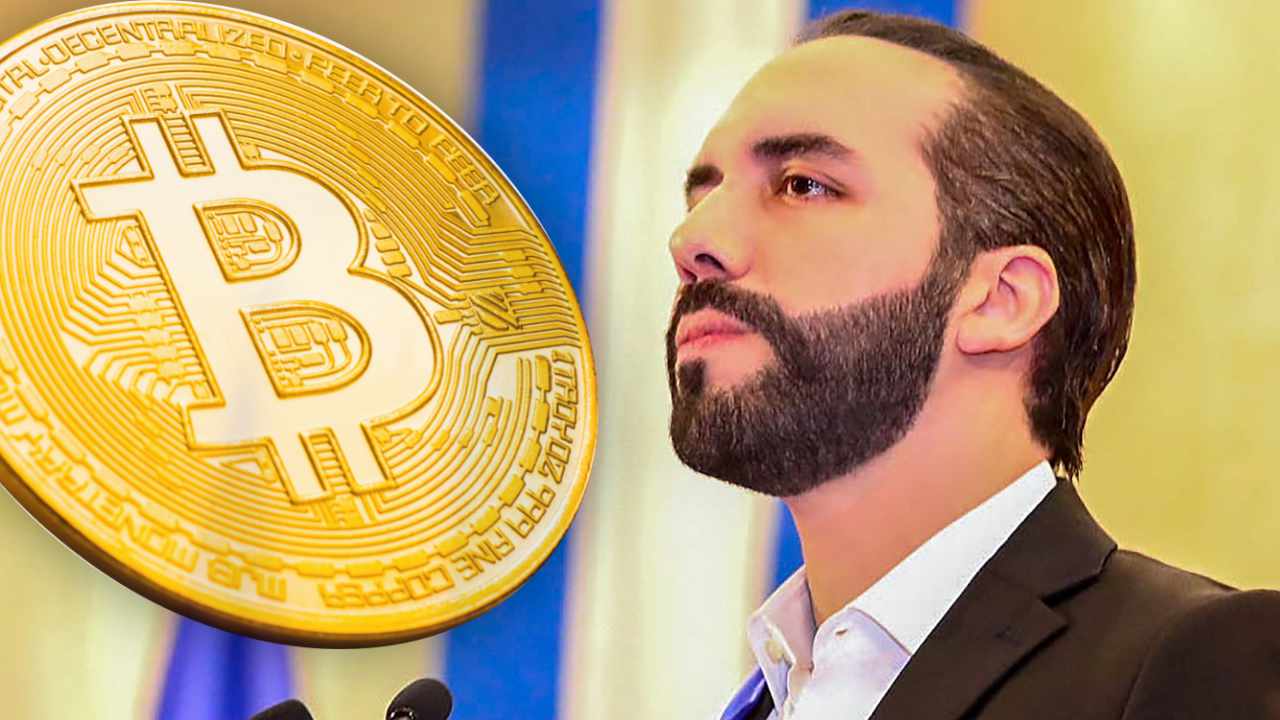
El Salvador Retains Top Spot in Bitcoin’s Interest by Region

0

In recent data from Google Trends, Central American country El Salvador has retained the top spot in Bitcoin’s interest by region, as the country intensifies investment in the crypto asset.

El Salvador is followed closely by Brazil and Nigeria, occupying the top three positions of countries with the most interest in Bitcoin.

El Salvador’s dominance as the top country with Bitcoin interest is largely attributed to the country’s solidification of Bitcoin investments, into its economic framework.

A notable stride to the country’s Bitcoin investment can be seen when the government under the leadership of Bukele Nayib, on December 8, 2023, introduced a citizenship-by-investment program as part of its digital economy expansion drive.

The El Salvador government, in partnership with stablecoin issuer Tether, launched the Freedom Visa-a citizenship-by-donation program that grants residency and a pathway to citizenship for 1,000 people willing to put down a $1 million Bitcoin (BTC) or Tether (USDT) donation toward the country development.

Announcing the launch of a freedom visa, the country wrote on its official site,

Experience Freedom, Security, and a Bitcoin lifestyle by adopting El Salvador as your home. El Salvador has been reborn as the land of economic liberty. But this is just the beginning. Come help us build the future you want to see. The Freedom Visa has the technological support of Tether UsDT 0.0%, my current employer. The fees of the program can be paid in BTC or the stablecoin USDT”.

The country’s adoption of a visa program announced in collaboration with stablecoin issuer Tether, aims to grant citizenship to wealthy foreign investors. To be eligible, participants must commit $1 million in Bitcoin or USDT investment with an additional $999 non-refundable deposit counting toward the total investment.

El Salvador intends to push this innovative approach to using cryptocurrency investments to attract investors seeking citizenship and rebuild the country’s economy. The expected gain for the citizenship-by-investment program is predicted to generate up to $1 billion if fully subscribed, and will also transform El Salvador into a critical revenue stream comparable to other countries with similar initiatives.

Despite the high costs of its citizenship-by-investment programs, the Central American country is an attractive market for crypto investors due to its pro-Bitcoin initiatives. Recall that the country’s President Nayib Bukele made headlines after he announced Bitcoin as a legal tender and provided tax breaks on income and capital gains for tech firms that invest in the country over the next 15 years.

After Bitcoin hit a new all-time high of $41,000 this year, President Bukele revealed that the country’s investment in Bitcoin is currently in profit.

He further disclosed that with the current Bitcoin market price, if the country is to sell its Bitcoin investments, it would not only recover 100% of its investment but also make a profit of $ 3,620 277.13 USD. He however noted that there is no intention to resell, as it has never been the objective.

Meanwhile, Bukele’s stance on holding Bitcoin as part of a long-term strategy is consistent with the country’s leadership vision to integrate cryptocurrencies into its economy. The Central Africa Republic (CAR) is the only country that has so far followed El Salvador’s footsteps in adopting Bitcoin as a legal tender.

Re-Commerce Marketplace Soum Raises $18 Million in Series A Funding to Scale Operations in MENA Region

0

Saudi Arabia-based Re-commerce marketplace that specializes in second-hand products, Soum, has raised $18 million in series A funding as it plans to scale its business in the Middle East and North Africa (MENA) region. (Recommerce is the selling of previously owned items through online marketplaces to buyers who reuse, recycle or resell them)

The funding round was led by Jahez, with participation from Isometry Capital along with existing investors, which include Khwarizmi Ventures, Alrajhi partners, and Outliers venture capital.

According to the company, the latest funding will accelerate its expansion regionally, as well as beyond its core vertical of secondhand electronics in which it enjoys market leadership in Saudi Arabia where it is based.

Also, with the addition of high-value categories of secondhand products, Soum will enable users to sell products ranging from collectibles to automobiles, tapping a combined $40 billion market.

Speaking on the funding round, Co-Founder and CEO of Soum Fahad Al Hassan said,

“The success of this funding round is a testament to the dedication of our entire team. With the backing of the region’s leading investors, we are excited to kick off our next stage of growth, while continuing our mission to transform how customers buy and sell online.

“We are expanding into different geographies and are looking at the whole MENA region. We have also started testing new categories to fulfill our vision of being a place where you can sell everything from phones to automobiles. We want to make buying and selling easier and accessible to everyone”.

It is worth noting that the global secondhand market is growing rapidly. Secondhand electronics, in particular, is growing at more than 10% annually, driven by an increasing consumer price sensitivity and longer hardware lifespan. Yet despite the global trends, the user experience for buying and selling a secondhand product remains challenging for MENA users.

With the Series A funding, Soum is poised to tackle customer pain points and offer a solution that is an order of magnitude better than any other substitute.

Founded in 2021, Soum is a platform connecting millions of customers with a diverse collective of individual and small business sellers offering convenient and trustworthy access to over 14,000 listings from 150+ cities in the MENA region.

The startup emerged from stealth in March 2022, with $4 million in seed funding led by Outliers Venture Capital and Mazen Aljubeir. Eight months after its launch, Soum was already processing millions of dollars of annualized sales.

Sound is on a mission to reimagine commerce in the MENA region, with the building of the most convenient, trustworthy, and transparent re-commence marketplace, starting with consumer electronics in Saudi Arabia.