DD
MM
YYYY

PAGES

DD
MM
YYYY

spot_img

PAGES

Home Blog Page 3907

Is Everlodge (ELDG) the Next Big Thing? Tron (TRX) and Apecoin (APE) Investors Think So

0

Everlodge (ELDG) has surged by 170% as investors flock to grab discounted tokens during an ongoing presale event. Such an incredible surge in value leads many to speculate that Everlodge (ELDG) could be the next project to 100x in value. Interestingly, holders of Tron (TRX) and Apecoin (APE) are swapping out their holdings for ELDG before the next price rise. Let’s take a closer look at this up-and-coming DeFi project.

Everlodge (ELDG): Forecasting 3,000% Gains

Described as “where Airbnb meets Web3,” Everlodge is set to disrupt the real estate market by offering fractional vacation home ownership via advanced NFT technology. Just $100 can give you a slice of the booming $82 billion global vacation property market.

This approach opens up a new world of possibilities for those who wish to invest in real estate but can’t afford its high costs. With Everlodge, the investment is decentralized, transparent, and accessible to anyone with an internet connection. The best part is that you can even receive passive income as a return on your investment.

Another talking point of the Everlodge platform is the Launchpad feature. Here, developers get access to a pool of investors looking to fund new real estate projects, while investors get exclusive deals. This creates a win-win situation for all parties.

The ELDG token is the fuel that powers the platform, and it’s currently being offered at a discounted rate of $0.027 during the eighth presale phase. This price is set to rise at the end of each phase, so the earlier you invest, the better your potential gains.

Holders of the ELDG token enjoy discounts on property purchases, lower transaction fees, reduced maintenance costs, and staking rewards. Additionally, they receive rewards such as complimentary stays at Everlodge properties, which they can use or monetize.

The $280 trillion global real estate industry faces high entry barriers, a lack of liquidity, and limited investment opportunities. This has led analysts to believe that the innovative approach offered by Everlodge could potentially disrupt this market, with 3,000% gains expected on launch day.

Visit Everlodge

Does Tron (TRX) Have a Future?

Tron has climbed from $0.065 this spring to a peak of $0.1127 in November as the crypto market awakes from its slumber. While the current price of $0.099 represents a small correction in the last month, it is still a 100% gain since 2023 began.

However, while the recent price performance is encouraging, Tron is still below the 2018 high of $0.30. Plus, the current market cap of $8.80 billion leaves little upside room compared to other popular cryptos tackling real-world problems.

This limited growth potential and no high for six years has caused some Tron holders to jump into the Everlodge presale for greater potential gains. Everlodge has a current market of $21.60 million, which is a tiny fraction of the $280 trillion market it is targeting.

Technical analysis shows that the $0.11 level is the next resistance to break if Tron is to continue its recent upward trend. Should a move occur, the 2021 peak of $1.80 looks like the most obvious target to aim for.

Apecoin (APE): Understanding Its 96% Price Fall

ApeCoin was temporarily the talk of the town in 2022 amid the sharp rise in the Bored Ape Yacht Club (BAYC) NFT collection. However, with the bear market taking its toll on the NFT market, ApeCoin’s price has fallen 96% to the current price of $1.61.

The ApeCoin token was designed to have high utility within a thriving ecosystem. However, this utility has yet to take fruition, and the hype around the BAYC brand has waned to new lows. In fact, the floor price for the NFTs has fallen below 26 ETH from a high of 152 ETH.

Technical analysis of the ApeCoin chart shows that the strong resistance sits at $2 and $4, while the support levels lie at $1.50 and $1. The current price of $1.61 represents a 60% gain since the October low.

ApeCoin holders are taking this opportunity to sell their tokens and diversify into other projects with more potential for growth. Everlodge is one of the top choices for these investors, as it has rallied 170% in recent months and will keep rising until the presale event is over and launches on exchanges.
The Toshiba Lesson As It Gets Delisted After 74 Years

1

On Wednesday, Toshiba, one of Japan’s most prominent companies, was delisted from  the Tokyo exchange, after 74 years. Three things dislocated Toshiba: accounting malpractices, corporate governance and bad luck. Yet, when I look at Toshiba, I look at GE.

When GE sold GE Capital, I wrote that it was a very strategic mistake because GE Capital was a double play which powered the whole group, and by selling the financing arm, GE imperiled the capacity of its one oasis to return value to the business: “The summary here is that GE did not know that GE Capital was its double play for shipping those hardware solutions. Even if it was not making money via GE Capital, GE Capital was critical for most monies GE Power, GE Healthcare and other units were making. “ 

For Toshiba, it was the bankruptcy of Westinghouse Electric when the planned construction of a nuclear power plant vaporized. To remain in business after that episode, Toshiba sold off its multi-play businesses like mobile phones, medical systems, large appliances and broad white goods.

But with the plays gone, where do you expect the profits? No place. And over time, Toshiba faded.  Nonetheless, it may not be over for Toshiba: “Earlier this year, the company confirmed it would be taken over by a group of Japanese investors led by state-backed Japan Investment Corp (JIC) for $14bn. It’s not clear how the new owners plan to turn around Toshiba but its outgoing chairman has said high-margin digital services will be a focus.”

From Nokia to Toshiba and everything, markets do not respect brands blindly. Only great products or services do customers respect. If you do not deliver them despite any prior heritage, you will struggle. That is what has happened here. And if we go back to GE, it is back to that old heritage, helping customers buy its products, and it is doing better again. And you will wonder: why did it even leave what was working? Leadership! It defines everything in companies and nations – and we must learn from it.

Now, it seems GE is coming back to that root: help customers buy things by making solutions more affordable. Yes, Access Bank and GE are partnering to help institutions acquire GE Healthcare solutions in Nigeria: “Access Bank and GE Healthcare  are to provide sustainable healthcare equipment financing to private healthcare providers”. GE must have negotiated better interest rates for these customers which none could have gotten directly with Access Bank.

The summary: we must innovate if we hope to thrive in markets, and as that innovation happens, we must measure to know what works, and does not work, so that we do not in the name of restructuring kill the heart of our business.

Future of Palestinian society is at a Crossroads

0

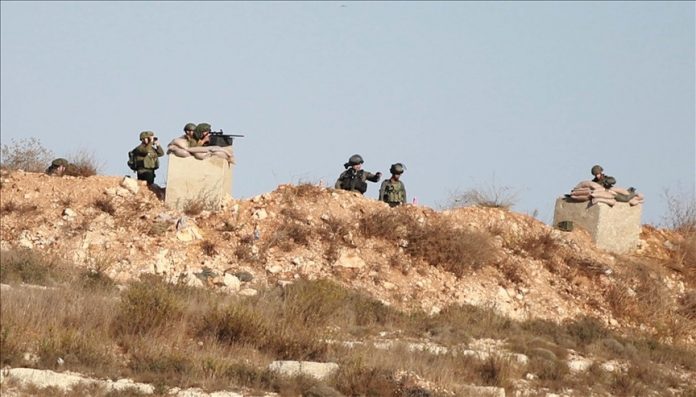
The ongoing occupation, the internal divisions, the lack of a clear political vision and the challenges posed by the regional and global context have created a sense of frustration, despair and hopelessness among many Palestinians. Yet, there are also signs of resilience, creativity and determination to overcome the obstacles and achieve the long-awaited goal of self-determination and statehood.

I will explore some of the key issues that shape the future of Palestinian society, leadership and aspirations for statehood. I will also offer some suggestions on how to address these issues and move forward in a constructive and realistic way.

The first issue is the question of national unity and reconciliation. The split between Fatah and Hamas, which has lasted for more than a decade, has weakened the Palestinian national movement and undermined its legitimacy and credibility.

The repeated attempts to reach a reconciliation agreement have failed due to mutual mistrust, external interference and conflicting interests. The recent postponement of the Palestinian elections, which were supposed to be a step towards ending the division, has further deepened the crisis and increased the public discontent.

The second issue is the question of political representation and participation. The Palestinian Authority (PA), which was established as a result of the Oslo Accords in 1993, has become increasingly authoritarian, corrupt and dysfunctional.

The PA has lost its popular support and legitimacy, as it has failed to deliver on its promises of state-building, economic development and human rights. The PA has also become dependent on foreign aid and security coordination with Israel, which have limited its sovereignty and ability to challenge the occupation.

The Palestinian Liberation Organization (PLO), which is supposed to be the sole legitimate representative of the Palestinian people, has become marginalized and irrelevant, as it has not been reformed or revitalized since its inception in 1964.

The third issue is the question of political strategy and vision. The Palestinian leadership has not been able to articulate a clear and coherent political strategy and vision that can mobilize the Palestinian people and gain the support of the international community.

The two-state solution, which has been the official goal of the Palestinian leadership since 1988, has become unrealistic and unfeasible, as Israel has continued to expand its settlements, annex its territory and deny the rights of the Palestinians. The alternative visions, such as the one-state solution, the bi-national state or the confederation, have not been sufficiently developed or debated among the Palestinians or with their counterparts.

The fourth issue is the question of social cohesion and development. Palestinian society is facing multiple social challenges, such as poverty, unemployment, inequality, illiteracy, violence, drug abuse and gender discrimination. These challenges are exacerbated by the occupation, which restricts the movement, access and resources of the Palestinians.

The occupation also deprives them of their dignity, identity and sense of belonging. The Palestinian civil society, which has played a vital role in resisting the occupation and promoting social change, has also suffered from repression, fragmentation and co-optation by the PA or external actors.

The fifth issue is the question of regional and global dynamics. The Palestinian cause has lost its centrality and priority in the Arab world, as many Arab states have normalized their relations with Israel or pursued their own interests at the expense of the Palestinians.

The Arab Spring, which initially raised hopes for democratic change and solidarity among the Arab peoples, has turned into a nightmare of chaos, violence and sectarianism. The Islamic movements, which have been allies of Hamas and supporters of the Palestinian resistance, have also faced setbacks and challenges in their own countries.

The international community, especially the United States and Europe, has not exerted enough pressure on Israel to end its occupation or respect its obligations under international law. The international community has also not provided enough support to the Palestinians to achieve their rights or meet their needs.

These are some of the major issues that affect the future of Palestinian society, leadership and aspirations for statehood. They are complex and interrelated issues that require serious analysis, dialogue and action from all stakeholders. They also require a new approach that is based on realism, pragmatism and creativity.

Here are some possible steps that can be taken to address these issues:

  • To develop a political strategy and vision, there is a need for a national conference that can review the past experiences, assess the current realities and explore the future options of the Palestinian struggle. This conference should involve all segments of Palestinian society, as well as experts, academics and activists from inside and outside Palestine. It should also engage with the Israeli and international actors who are willing to support a just and lasting solution to the conflict.

  • To promote social cohesion and development, there is a need for a national plan that can address the social challenges and needs of the Palestinian people. This plan should prioritize the sectors of education, health, economy, culture and environment. It should also empower the civil society organizations and initiatives that work in these fields and support their coordination and cooperation.

  • To cope with the regional and global dynamics, there is a need for a proactive diplomacy that can strengthen the relations with the Arab and Islamic countries, as well as with the emerging powers and actors in the world. This diplomacy should seek to mobilize political, financial and moral support for the Palestinian cause and to expose and counter the Israeli violations and propaganda.

These are some of the possible steps that can be taken to shape the future of Palestinian society, leadership and aspirations for statehood. They are not easy or simple steps, but they are necessary and feasible steps. They require courage, wisdom and commitment from all parties involved. They also require a sense of hope, optimism and vision that can inspire and motivate the Palestinian people to continue their struggle for freedom, justice and peace.

The Untapped Wealth of Nations, and How Nigeria Remains A Nation of Money Instead of Capital

2

Until Nigerian policymakers focus on creating systems for Capital development and evolution over our fixation on Money, we will continue to struggle. When I read our policies on land, agriculture, etc, I see policies geared towards Money, when what we should focus on is how to stimulate Capital, even as we pursue the scaling of money.

Money is a subset of Capital, and companies and nations which allow Money to rule over them underperform. In Nigeria, we’re pursuing so much money, with limited efforts designed to advance Capital, triggering a system where there are many farmlands but no capital market product for farmlands. And without Capital, we scale poverty. When South Africa’s stock (capital) market has close to $1 trillion value, and Nigeria’s is hovering around $50 billion, you can see that we have a lot of money in Nigeria, but limited Capital. That must change.

In the five factors of production – land, labour, Capital, entrepreneur and knowledge – there is no Money listed. Capital represents assets (physical and non-physical encapsulating skills, education, knowledge systems, etc) which are used to make goods and services during the transmutation process of turning ideas, and raw materials, into finished goods. Money does one thing: means to exchange goods and services. In short, the unit of Capital is money (i.e capital is measured in monetary terms).

Nigeria’s policy making avoids risks because for us, entrepreneurial capitalism is about making money. Unfortunately, that is our biggest problem because we see success from the lens of money. But should we change that policy viewpoint, trumpeting Capital which feeds entrepreneurial capitalism (not entrepreneurial moneyism), we can enable engines for risk taking, opportunity and job creation, in the nation.

In a simpler way: how can Nigeria push companies to extend beyond accumulating Money in their balance sheets to scaling Capital through risk taking and opportunity acceleration, for shared prosperity. Remember this:

Mr. A has N20 million in his bank account but zero credit.

Mr. B has N5 million in his bank account but has access to assets that can unlock a credit of N100 million.

Between these two people, Mr. B is well loaded as a modern business person.

In my private client services, when industralists come to me, on how they can thrive more in Lagos, PHC, Abuja, and other major cities, I tell them besides everything, they need to deepen their Capital, and not necessarily money they have in their bank accounts.

Yes, to be successful as an industrialist  in Lagos, PHC, Aba, Abuja, etc it is advisable that you have property. With that house in your name, banks can lend you money and magically, you can tap resources (via credits) to keep growing your company, even though you do not have tons of cash in the bank. 

 (Now you know why some Nigerian business people like to buy land and build houses wherever they are: they’re trying to accumulate capital which can qualify them before banks in their businesses. Banks speak the language of capital, not just money).

Yes, till tomorrow, I tell my kinsmen in Lagos, Abuja, Aba, PHC, etc to buy land and build houses because within 5 years, they have capital to move to another level in their companies. Banks LOVE capital, and people with capital get credits.

Nigeria is a nation of money instead of capital, and that is self-evident when you see that we have not done anything to deepen our property rights on land and other assets. When you do not do such, it simply means you are all about money with no interest in the accumulation and development of capital. Unfortunately, no nation develops on Money; Capital rules the world!

Comment on Feed

Comment #1: Capital and money are related economic concepts, but they have distinct meanings.

  1. Money:

– Money refers to a medium of exchange that is widely accepted in transactions for goods, services, or settlement of debts.
– It can exist in various forms, such as coins, banknotes, or digital currency.
– The primary function of money is to facilitate trade and act as a unit of account.

  1. Capital:

– Capital, in an economic context, generally refers to financial assets or resources that are invested in a business with the expectation of generating income or profit.
– It can take various forms, including financial capital (money), physical capital (machinery, buildings), and human capital (skills, knowledge).
– Capital is often used to create wealth through investment and production.

In summary, money is a specific form of capital, specifically financial capital. Capital, on the other hand, encompasses a broader range of assets and resources that can be used to create wealth and facilitate economic activities.

Thank you Prof. for bringing us back to economics, one of the best subjects in secondary school to build an entrepreneurial foundation.

Comment #2: Since Governors have the sole right to deepen this property right(land), why do you think they are neglecting it? Also there’s this potential of increasing state’s IGR through property tax and yet Governors are not investing in deepening property right in their states.

My Response: Ok – the problem in Nigeria is the Land Use Act which makes it impossible to “own” land in perpetuity by the citizens. In other words, I can buy land in your village and in 10 years, if the government needs that, it can take that land. With that mindset, investing in farmland is seen as risky because the absolute rights may not be given to the citizens. 

Contrast that with the US where people like Bill Gates can buy as much land as they want, knowing that those are investments and no one can repurpose them. Under that system, you can buy the land and then decide to trade them in the capital market. I am not sure you can do that in Nigeria since  that “land” can be taken over by the state.

Of course, changing that system will also mean that if I own a land and I find oil/gold in it, that oil/gold belongs to me, and not the government. That radical approach is the US model which means if the state wants to tap into that oil, it has to pay the land owner the rights. That is the zenith of property rights because you ABSOLUTELY own that property. In Nigeria, we do not have the full law and there is nothing even a state government can do. Remember, even a state cannot control its oil and gas deposits; the federal does. So, no governor can do much unless the federal unwinds. But do not expect that since it will destroy the common pocket of sharing revenue

How Nigeria Can Become Richer

 Why Hyping Pumping or Ramping the Handshake Coin (native cryptocurrency) doesn’t help us.

1

Having referred to Handshake, (the resident blockchain that 9ja Cosmos builds off) a few times recently, we’ve had some novel DMs asking us why we are trying to pump this coin?

This perception couldn’t be further from reality and the truth, here’s why!

The initial post only came because some calm needed to be injected into the euphoria about Bitcoin in a five day stretch a few weeks back. Japan introduced new taxation measures hitting US bond ownership. Japan started dumping bonds, and being the worlds largest holder of US debt by some $300 billion over the next nearest (China), this meant the $USD would not be a rational benchmark on which to perceive Bitcoin value for the period.

It seemed measuring Bitcoin against Handshake Coin (BTC v HNS) made far more sense, since the design of each blockchain is almost identical.

Yes, a horse race must have horses, not a mixture of horses, greyhounds, camels unicorns and assorted madness.

More recently, I did a ‘history lesson’ type post on Founders, just to show that these folk been in major development stuff (Like the Lightning Network) since the early 2010s.

However, as we have always said, we are here ultimately to provide value for youth of the ‘Global South’. Our vehicle is to create/assemble blockchain related products, not speculate.

HNS was released in 2020 and reached an all time high of 85 cents USD in early 2021. It hit its all time low a few months ago at 1.1 cents, and is now at 3 cents.

While in the last few months it outpaced Bitcoin, at the current price and typical trade levels, a speculator would find it really difficult to actually realize gains.

This is because for someone to sell a cryptocurrency, someone has to buy it. In thin trading, relatively small deals can abruptly alter the rates. In a big market cap like Bitcoin, a single trade of $50,000 wouldn’t even make a dent.

A speculator would probably not succeed in selling a $50k holding of HNS at a specific price. The exchange would have to match it with much smaller buy requests on the fly. With daily volume averaging $45-75k, the $50k sell request is going to constantly mark down the price. This same problem will happen in reverse if attempting to buy $50k worth of HNS affordably.

People who have traded equities before on AIM UK Market or Nigeria’s ASeM, may be familiar with this phenomenon.

Even though the value of HNS has almost tripled in about two months, it would have been almost impossible to buy and sell in the window, at sufficient scale to realize a worthwhile profit easily.

Handshake has a strong but diffuse Creator, Product Owner, and Dev. Community. We know a lot of the OG product owning ‘whales’ with huge holdings and can easily get an ‘atomic’ swap done at a fixed price. These people do not like speculators and only help those working towards making the product creation side of the ecosystem more dynamic.

We’d like to see the coin recover to around $0.20 to incentivize miners, but in actual fact a consistently low HNS value vs. $USD makes it much cheaper to get things done in the ecosystem.

If the Handshake coin price recovered to around 30 cents, that would be a rough inflection point at which speculative trades could be done more easily. This would add volatility to the cost of getting things done, and that’s not in 9ja Cosmos interest.

We have only bought HNS a few times, between May and October 2022, at an average price of 2.2 cents, and haven’t bought it since. We don’t need to.

We raise revenue from our activities in HNS and also pay for things in HNS, so it is a closed trading system for us. Up to all the drama about BTC on the rise, we weren’t regularly looking at what HNS is worth in other instruments.

It’s a little bit like someone that japa from Nigeria to US. When they land first, they are mentally converting prices from $ to Naira to gauge spending. But after a while, they ditch the Naira comparisons and get a sense for dollars, because that’s what they earn in, and what they spend in.

They will only ever think of Naira again, if they want to travel, or need to send funds to get something done back in Nigeria.

The Handshake Blockchain is a very secure blockchain, being almost identical in design to Bitcoin. It is a PoW blockchain owned by nobody. Security is a big selling point, and mentioning it is useful as part of promoting 9ja Cosmos, because it distinguishes what we do from products minted to EVM Compatibles which keep suffering exploits and hacks at alarming rates.

But we do not advocate buying HNS unless intending to purchase assets or services from providers on the network, or develop on it.

It’s actually counterproductive for us to promote investment in the HNS coin, in of itself! As always, DYOR!

9ja Cosmos is here…

Get your .9jacom and .9javerse Web 3 domains  for $2 at:

.9jacom Domains

.9javerse Domains

Visit 9ja Cosmos LinkedIn Page

Visit 9ja Cosmos Website

Preview our Sino Amazon/Sinosignia releases: