DD
MM
YYYY

PAGES

DD
MM
YYYY

spot_img

PAGES

Home Blog Page 3914

Presidential Tax Committee Moves to Stop Nigerian Customs, other MDAs from Collecting Revenue

0

The era of revenue collection by ministries and other federal government agencies will soon be in the past as the newly-inaugurated Presidential Committee on Tax Policy and Fiscal Reforms said it is moving to unify the process.

The committee, headed by former PriceWaterhouseCoopers (PwC) fiscal and tax policy chief, Taiwo Oyedele, said the new approach will mean that the Nigeria Customs Service and 62 other Ministries, Departments, and Agencies (MDAs) of the government will have to eventually stop their direct revenue collection responsibilities.

Oyedele, who disclosed this during an interview on Channels Television Sunrise Daily Breakfast programme on Wednesday, said the collection of taxes from different agencies has contributed to the deficiencies in Nigeria’s tax revenue, which he described as among the lowest globally.

“Ironically, our cost of collection is one of the highest. And the reason for that is that we’ve got all manners of agencies. The Federal Government alone, we have 63 MDAs that were given revenue targets last year; no, actually in the 2023 budget,” Oyedele pointed out. Among the many challenges of having multiple agencies collecting revenue noted by Oyedele is the cost of operation. But he also pointed out two other major challenges.

“On one hand, these agencies are being distracted from doing their primary function which is to facilitate the economy. Number two, they were not set up to collect revenue, so, they won’t be able to collect revenue efficiently,” he said.

The solution he proposed entails assigning the exclusive role of revenue collection for these MDAs to the Federal Inland Revenue Service (FIRS). Oyedele said moving those revenue collection functions to the FIRS comes with two-fold benefits.

“The cost of collection and efficiency will improve, these guys will focus on their work, and the economy will benefit as a result,” he said.

The tax fiscal policy expert explained that by relocating the revenue collection duties to the FIRS, the committee can tackle the issues head-on. It means these institutions can return to focusing on their core tasks, ultimately leading to a healthier economy.

“If you are Customs, focus on trade facilitation, border protection, and if you are NCC (Nigerian Communications Commission), just regulate telecommunications. You are not set up to collect revenue,” he said.

“It can be your revenue, and someone else can collect it for you. There will be more transparency because you will see what is being collected and what is being accounted for properly. It is also a way of holding ourselves to account as to how we spend the money we collect from the people.”

Nigeria’s tax revenue generation has been characterized by shortfalls that Oyedele said are estimated in the region of N20 trillion.

He said that a lot of people are not (tax) compliant, particularly the middle class and the elite. “Some of them are in the tax net with one or two fingers, you pay a thousand naira as tax when you should have paid N10m,” he said, adding that there is a need to focus more on the few major taxes – Value Added Tax, Corporate Income Tax, Personal Income Tax.

However, Oyedele acknowledged the anticipated pushback from stakeholders who presently gain from the current system. Nonetheless, he emphasized that the committee’s central aim is not to deprive anyone of their legitimate earnings, but rather to guarantee the precise and efficient collection of government revenue.

In addition to centralizing the collection of taxes, the head of the tax committee said it end the issue of excessive bank charges, which has added to the many burdens placed on businesses in Nigeria. Oyedele noted with disappointment that Nigerian businesses have around 70 levies and taxes placed on them, which the committee intends to reduce to at least 10.

“In fact, we plan to repeal many of the taxes that currently make doing business difficult without introducing new ones and yet collect more,” he said.

APT Surges on Alleged Link to Microsoft-Aptos Labs Cooperation, Fantom Considers Interoperability with Ethereum

0

The price of APT, a cryptocurrency that claims to be backed by real estate assets, has soared by more than 14% in the last week, following a rumor that Microsoft is in talks with Aptos Labs, a blockchain startup that uses APT as its native token. According to an anonymous source, Microsoft is interested in partnering with Aptos Labs to leverage its technology for creating decentralized applications (Dapps) that can run on the Azure cloud platform. The source also claimed that Microsoft is considering investing in Aptos Labs or acquiring it outright.

Aptos Labs is a relatively new player in the blockchain space, having launched its mainnet in June 2021. The startup claims to have developed a novel consensus mechanism that combines proof-of-stake (PoS) and proof-of-space (PoS), which allows users to stake their disk space as well as their APT tokens to secure the network.

The startup also claims to have a unique value proposition for its APT token, which it says is backed by real estate assets around the world. According to its website, Aptos Labs has partnered with several real estate developers and brokers to tokenize their properties and offer them as collateral for APT holders.

The rumor of Microsoft’s involvement with Aptos Labs has sparked a frenzy among APT investors, who have been buying up the token in anticipation of a possible announcement. The price of APT surged from $6.80 on August 2 to 14 % increase on August 9, reaching an all-time high of $7.92 on August 8, according to CoinMarketCap.

However, neither Microsoft nor Aptos Labs have confirmed or denied the rumor, and some analysts have expressed skepticism about its validity. Some have pointed out that the source of the rumor is unverified and could be part of a pump-and-dump scheme. Others have questioned the legitimacy of Aptos Labs and its APT token, noting that there is little evidence of its real estate backing and that its technology is unproven and potentially vulnerable to attacks.

One of the challenges that Aptos Labs faces is the competition from other blockchain startups that are also aiming to disrupt the real estate industry with their own tokens and platforms. Some of the notable competitors include:

Propy, which allows users to buy and sell properties using cryptocurrencies and smart contracts.

RealT, which issues tokenized shares of real estate properties that generate passive income for investors.

EstateCoin, which creates fractional ownership of real estate assets through non-fungible tokens (NFTs).

These competitors have different approaches and advantages over Aptos Labs, such as having more established partnerships, more diverse portfolios, and more innovative features. Therefore, Aptos Labs will need to prove its value proposition and differentiate itself from its rivals if it wants to succeed in the crowded and competitive market.

As such, investors should exercise caution when dealing with APT and other cryptocurrencies that are based on rumors and speculation. While there is a possibility that the rumor could turn out to be true, there is also a high risk that it could be false or exaggerated, leading to a sharp drop in the price of APT and other related tokens.

In a similar shift, the Animal Age, a leading platform for animal rights activism and education, has announced a strategic partnership with zkSync, a layer-2 scaling solution for Ethereum. This partnership will enable The Animal Age to leverage zkSync’s technology to create fast, cheap and secure transactions for its users, donors and partners.

The Animal Age is a global network of animal lovers who are committed to raising awareness and taking action for the welfare of all animals. The platform offers various features such as petitions, campaigns, events, courses, forums and more. The Animal Age aims to empower its community to make a positive impact on the world and to create a more compassionate and sustainable future for all living beings.

zkSync is a trustless protocol that uses zero-knowledge proofs to scale Ethereum transactions without compromising on security or decentralization. zkSync can process thousands of transactions per second at a fraction of the cost of the mainnet, while preserving the same level of security guarantees as Ethereum. zkSync also supports smart contracts, enabling developers to build complex applications on top of it.

By integrating zkSync, The Animal Age will be able to offer its users a seamless and user-friendly experience when interacting with its platform. Users will be able to sign transactions with their existing wallets, without having to install any additional software or extensions. Users will also benefit from lower fees and faster confirmation times, making it easier and more affordable to support their favorite causes and projects.

The partnership will also open up new possibilities for The Animal Age to expand its reach and impact. With zkSync’s smart contract capabilities, The Animal Age will be able to create new features and functionalities that will enhance its platform and services. For example, The Animal Age could create a tokenized reward system that incentivizes users to participate in its activities and campaigns, or a decentralized governance system that allows users to have a say in the direction and vision of the platform.

The Animal Age and zkSync share a common vision of using technology for social good and creating a fairer and more inclusive world. Through this partnership, they hope to inspire and empower more people to join the movement for animal rights and to make a difference for all animals.

Fantom Considers Adding Optimistic Rollups to Connect with Ethereum

Fantom, a fast and scalable blockchain platform, is exploring the possibility of implementing optimistic rollups to enable seamless interoperability with Ethereum. Optimistic rollups are a layer-2 scaling solution that allow smart contracts to run on a sidechain with lower fees and higher throughput, while still benefiting from the security and decentralization of the main Ethereum network.

Optimistic rollups are one of the most promising technologies for scaling Ethereum, as they can support complex applications such as decentralized exchanges, gaming, and DeFi. However, they also pose some challenges, such as the need for fraud proofs, data availability, and cross-chain communication. Fantom aims to overcome these challenges by leveraging its own unique features, such as its asynchronous Byzantine fault tolerant (aBFT) consensus mechanism, its fast finality, and its compatibility with the Ethereum Virtual Machine (EVM).

Cronje confirmed that if Fantom were to adopt Optimistic rollups, providing a full transaction history on Ethereum, it would need to pay transaction fees to write these snapshots to the Ethereum network. Michael Kong, CEO of the Fantom Foundation, added that deploying Layer 2 technology in this manner would enable the Fantom network to aces more liquidity from the Ethereum ecosystem. Andre Cronje prefers to consider the Layer 2 network as aside chain, viewing the Optimistic rollups technology as a bridge between them.

By adding optimistic rollups to its platform, Fantom hopes to attract more developers and users who want to build and use applications that require both speed and security. Fantom also believes that this will enhance its value proposition as a bridge between different blockchains, especially in the context of the upcoming Ethereum 2.0 upgrade, which will introduce sharding and proof-of-stake.

Fantom’s team is currently conducting research and development on optimistic rollups and plans to launch a TestNet in the near future. The team is also collaborating with other projects in the blockchain space, such as Polygon and Arbitrum, to learn from their experiences and best practices. Fantom’s vision is to create a scalable and interoperable ecosystem that can support the growth and innovation of the blockchain industry.

Interestingly, over 100 million wallet addresses now hold non-zero amount of Ethereum, according to data analytics firm Glassnode, this development underscores the growing interest and adoption of Ethereum in the digital currency market. The increase in the number of addresses may also point to the potential expansion of decentralized finance DEFI applications and the rise of non-fungible tokens both of which have Ethereum as their bedrock.

Beyond France and Macron; Mali, Niger, etc Must Develop Endogenous Economic FUTUREs

1

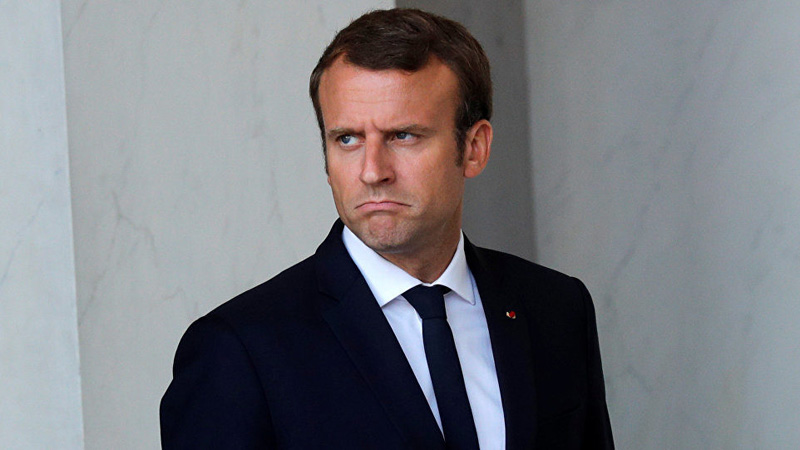
Leaders build nations, and never underestimate the power of vision. Today, France is alleged to look “small” in Central and Western Africa. Yes,  94 French senators wrote in a newspaper, Le Figaro, thus “Today Niger, yesterday Mali, CAR, Burkina Faso rejected France, French forces and French enterprises…The French Africa of yesterday is being replaced by a military Russian Africa, an economic Chinese Africa, and a diplomatic American Africa. Africa, a friendly continent, no longer understands France and is increasingly challenging its role and presence”. Simply, it does seem like a guilty man running away from his shadows. 

This alarm is misguided because the senators were not fair to Macron who might just want to modernize his diplomacy, using soft power.  Do not think the senators are correct; they are confusing everyone in sub-Saharan Africa to think that France’s influence is diminishing. Nothing like that: the toothpicks, cereal, tea, etc which will be consumed in Cameroon, Niger, etc tomorrow are likely exclusively produced in France. Yes, France is fine and noise by a military junta does not change the equation that they need processed foods and items in Paris to power their economies. 

In the Igbo Nation, the elders will say  “nnunu nke si n’ala fepu ma noro n’elu ikwubo ka nokwa n’ala”  [a bird that flew from the ground only to perch on an ant-hill is still very much on the ground]. Indeed, young Africans must not rejoice because China, Russia, etc are replacing France.  

Period, Africa must focus on absolute and total economic liberation so that we can rise as a people. The problem is not France. The problem is not China. The problem is not America. The  problem is not Russia. The problem is what We Africans want for our shared destiny. Dropping France to sign up with Russia, China, etc is not liberation!

Why are people cheering that? Cheering that you’re handing your future and economy to another global power when you should focus on internal economic evolution?

People, we cannot become small to not see the big picture. The population we have in Africa will blow up if we do not have a plan for the young people. So, the idea that people are cheering that Mali, Niger, etc are handing their futures from one global to a possibly new preferred one, is unfortunate. That mindset must change immediately because we need to have emancipation, and that means we need to advance from within, endogenously.

Yes, France has nothing to lose in Africa because it never has any right to Africa. We’re the ones losing and can fix that misalignment.

Comment on Feed

Comment 1: Prof Ndubuisi Ekekwe whilst I agree with your well-reasoned opinion I like to highlight the eureka moment this largely signifies. Breaking the slavish (oft-brutish) hold of the French on those African states signifies that the people yearn to be liberated. That message reverberates all the way to China and Russia. The Yorubas will say that ‘pasan t’a fi na’yale n’be l’ori ‘ko’ [the whip used to flog the eldest wife remains hung by the wall]…

Comment 2: Africans not cheering because Russia or China is any much better.

They’re rejoicing because for the first time, Africa seems to have an alternative.

Without the presence of Russia and China, France and US would have been using their military might to force their puppet on Africa in their insincere democracy.

Comment 3: I love this write up. God will continue to give you wisdom. You are still a slave until you are economically, politically, socially, religiously and environmentally free. Africans should build their own empire in their own way but should ensure that their fellow human beings are treated fairly.

Comment 4: I do not believe that the Africans are celebrating to replace France with Russia or China. I think they celebrate that they can now be free to choose their own friends and partners with whom they can interact for development in mutually beneficial and respectful arrangements.

Understanding Bitcoin Spot and Futures ETFs

0

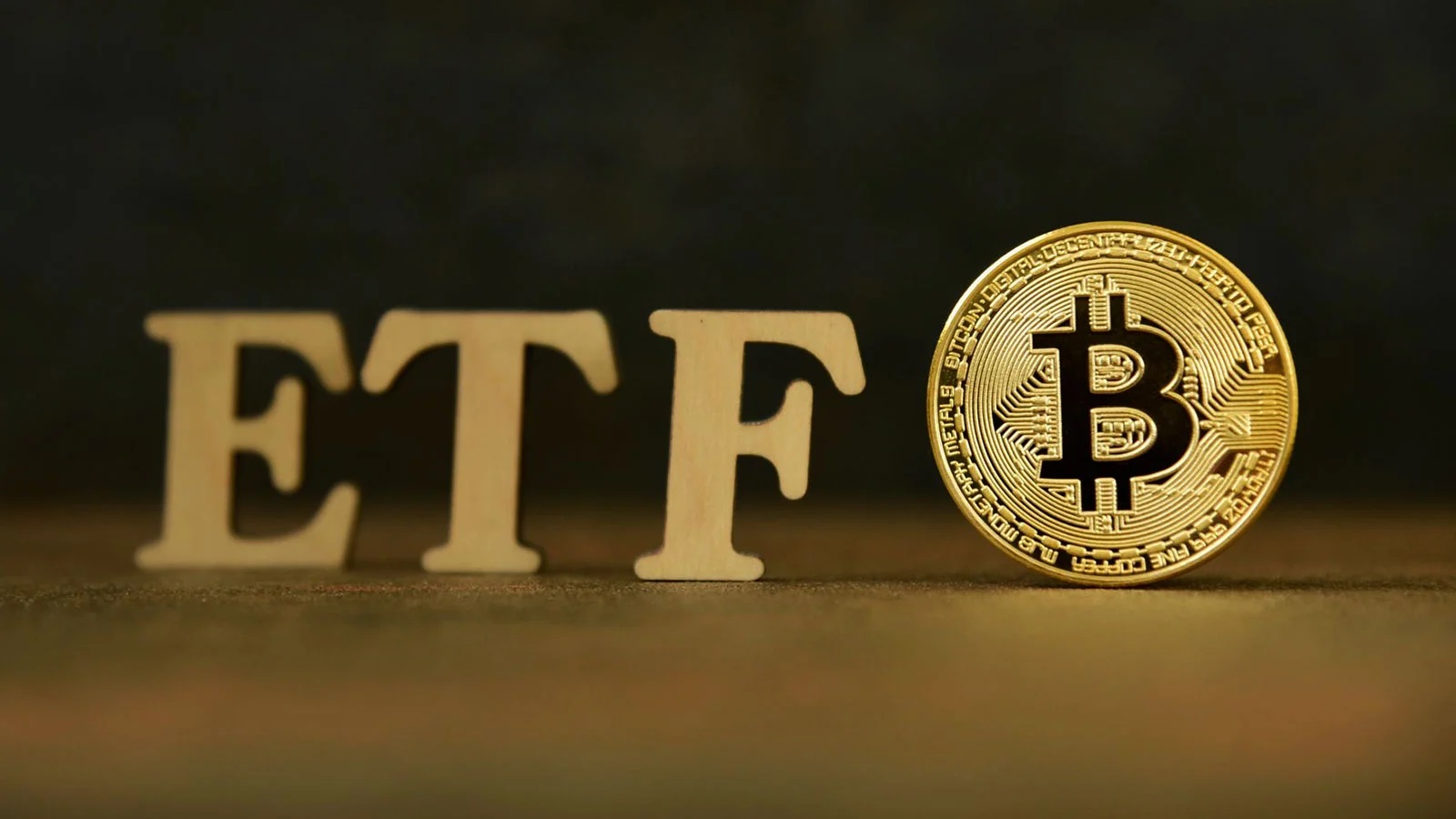
Bitcoin ETFs are exchange-traded funds that track the price of bitcoin and trade on traditional stock exchanges. They allow investors to gain exposure to bitcoin without having to buy, store, or manage the cryptocurrency directly. There are two main types of bitcoin ETFs: spot and futures.

A spot bitcoin exchange-traded fund (ETF) is a type of investment product that tracks the price of bitcoin on the spot market, where bitcoins are bought and sold for immediate delivery. Unlike futures-based bitcoin ETFs, which use contracts that expire at a certain date and price, spot bitcoin ETFs aim to reflect the current market value of bitcoin as closely as possible.

Spot bitcoin ETFs are designed to provide investors with exposure to bitcoin without the need to buy, store, or secure the cryptocurrency themselves. By buying shares of a spot bitcoin ETF, investors can benefit from the price movements of bitcoin without having to deal with the technical and operational challenges of owning and transferring bitcoins. Spot bitcoin ETFs also offer advantages such as liquidity, transparency, and regulatory oversight.

However, spot bitcoin ETFs also face some challenges and risks. One of the main challenges is the lack of a uniform and reliable source of bitcoin prices across different platforms and jurisdictions. This can lead to discrepancies and arbitrage opportunities between the spot market and the ETF market, which can affect the accuracy and efficiency of the ETF.

Another challenge is the security and custody of the underlying bitcoins that back the ETF. The ETF provider has to ensure that the bitcoins are stored safely and securely, and that they can be redeemed by the shareholders if needed. Additionally, spot bitcoin ETFs are subject to regulatory uncertainty and volatility in the cryptocurrency market, which can affect their performance and availability.

Spot bitcoin ETFs are a novel and innovative way to invest in bitcoin without having to own or manage the cryptocurrency directly. They offer benefits such as convenience, diversification, and compliance, but they also entail challenges such as price discrepancies, security issues, and regulatory hurdles. Investors who are interested in spot bitcoin ETFs should do their own research and due diligence before investing in this emerging asset class.

Futures bitcoin exchange-traded fund (ETF) is a type of investment that tracks the price of bitcoin futures contracts, which are agreements to buy or sell bitcoin at a predetermined price and date in the future. A futures bitcoin ETF does not hold actual bitcoin, but rather buys and sells bitcoin futures contracts on a regulated exchange.

A futures bitcoin ETF can offer investors exposure to the price movements of bitcoin without the need to buy, store, or secure actual bitcoin. This can reduce some of the risks and challenges associated with investing in bitcoin directly, such as hacking, theft, or loss of private keys. A futures bitcoin ETF can also provide more liquidity and transparency than some other types of bitcoin products, such as trusts or funds that trade over the counter.

However, a futures bitcoin ETF also has some drawbacks and limitations. For one thing, a futures bitcoin ETF may not track the spot price of bitcoin accurately, due to factors such as contango and backwardation, which are situations where the futures price differs from the spot price. Contango occurs when the futures price is higher than the spot price, which means that the ETF has to pay more to roll over its contracts and may incur a negative roll yield. Backwardation occurs when the futures price is lower than the spot price, which means that the ETF can profit from rolling over its contracts and may earn a positive roll yield. These situations can affect the performance and returns of the ETF compared to the underlying asset.

Another drawback of a futures bitcoin ETF is that it may incur higher fees and expenses than a physical bitcoin ETF, which would hold actual bitcoin. A futures bitcoin ETF has to pay for the costs of trading and rolling over its contracts, as well as management fees and other expenses. These fees can eat into the returns of the ETF and make it less efficient than a physical bitcoin ETF.

A futures bitcoin ETF is also subject to regulatory and legal uncertainties, as the rules and regulations governing bitcoin and its derivatives are still evolving and may change in the future. A futures bitcoin ETF may face regulatory hurdles or challenges from authorities or competitors, which could affect its operations and viability. For example, in October 2021, the U.S. Securities and Exchange Commission (SEC) approved the first futures bitcoin ETF in the U.S., but also issued a warning to investors about the risks and volatility of investing in such products.

Futures bitcoin ETF is a type of investment that offers investors exposure to the price movements of bitcoin through futures contracts, without holding actual bitcoin. A futures bitcoin ETF has some advantages over investing in bitcoin directly, such as reducing some of the risks and challenges associated with buying, storing, or securing bitcoin. However, a futures bitcoin ETF also has some disadvantages and limitations, such as potential tracking errors, higher fees and expenses, and regulatory and legal uncertainties. Investors should weigh the pros and cons of investing in a futures bitcoin ETF before making a decision.

Futures bitcoin ETFs do not hold bitcoins, but rather trade bitcoin futures contracts on regulated commodity exchanges. They reflect the future price of bitcoin based on market expectations and demand. Futures bitcoin ETFs have the advantage of being more accessible, flexible, and compliant than spot bitcoin ETFs. However, they also suffer from more volatility, tracking error, and fees than spot bitcoin ETFs.

Both types of bitcoin ETFs offer investors a convenient way to participate in the growing bitcoin market, but they also have different trade-offs and risks. Investors should carefully weigh the pros and cons of each type of bitcoin ETF before making a decision.

Fantom Considers Adding Optimistic Rollups to Connect with Ethereum

Meanwhile, Fantom, a fast and scalable blockchain platform, is exploring the possibility of implementing optimistic rollups to enable seamless interoperability with Ethereum. Optimistic rollups are a layer-2 scaling solution that allow smart contracts to run on a sidechain with lower fees and higher throughput, while still benefiting from the security and decentralization of the main Ethereum network.

Optimistic rollups are one of the most promising technologies for scaling Ethereum, as they can support complex applications such as decentralized exchanges, gaming, and DeFi. However, they also pose some challenges, such as the need for fraud proofs, data availability, and cross-chain communication. Fantom aims to overcome these challenges by leveraging its own unique features, such as its asynchronous Byzantine fault tolerant (aBFT) consensus mechanism, its fast finality, and its compatibility with the Ethereum Virtual Machine (EVM).

Cronje confirmed that if Fantom were to adopt Optimistic rollups, providing a full transaction history on Ethereum, it would need to pay transaction fees to write these snapshots to the Ethereum network. Michael Kong, CEO of the Fantom Foundation, added that deploying Layer 2 technology in this manner would enable the Fantom network to access more liquidity from the Ethereum ecosystem. Andre Cronje prefers to consider the Layer 2 network as a side chain, viewing the Optimistic rollups technology as a bridge between them.

By adding optimistic rollups to its platform, Fantom hopes to attract more developers and users who want to build and use applications that require both speed and security. Fantom also believes that this will enhance its value proposition as a bridge between different blockchains, especially in the context of the upcoming Ethereum 2.0 upgrade, which will introduce sharding and proof-of-stake.

Fantom’s team is currently conducting research and development on optimistic rollups and plans to launch a TestNet in the near future. The team is also collaborating with other projects in the blockchain space, such as Polygon and Arbitrum, to learn from their experiences and best practices. Fantom’s vision is to create a scalable and interoperable ecosystem that can support the growth and innovation of the blockchain industry.

Interestingly, over 100 million wallet addresses now hold a non-zero amount of Ethereum, according to data analytics firm Glassnode, this development underscores the growing interest and adoption of Ethereum in the digital currency market. The increase in the number of addresses may also point to the potential expansion of decentralized finance DEFI applications and the rise of non-fungible tokens, both of which have Ethereum as their bedrock.

Top VC Firms Face Lawsuit Over Alleged Support of FTX

0

A group of investors has filed a lawsuit against some of the top venture capital firms in the crypto space, accusing them of supporting and profiting from a fraudulent scheme orchestrated by FTX, a popular derivatives exchange. FTX is one of the leading cryptocurrency exchanges in the world, offering a wide range of products and services to traders and investors. However, in recent weeks, the exchange has faced a series of challenges that have shaken its reputation and market value.

According to the complaint, FTX and its founder Sam Bankman-Fried (SBF) engaged in market manipulation, insider trading, and deceptive practices to inflate the price of FTX’s native token, FTT, and defraud investors of millions of dollars. The lawsuit names Andreessen Horowitz, Paradigm, Ribbit Capital, and Alameda Research as defendants, alleging that they invested in FTX knowing about its illegal activities and helped SBF cover up his tracks. The plaintiffs claim that the defendants violated the Securities Act of 1933, the Securities Exchange Act of 1934, and various state laws.

One of the main issues that FTX has encountered is a bank run, which is a situation where a large number of customers withdraw their funds from a financial institution at the same time, causing liquidity problems and potential insolvency. The bank run on FTX was triggered by a series of events, such as:

The announcement of the US Securities and Exchange Commission (SEC) that it would sue Coinbase, another major cryptocurrency exchange over its lending program which raised concerns about the regulatory risks for FTX and other platforms that offer similar products.

The hacking of Poly Network, a cross-chain protocol that facilitates interoperability between different blockchains, which resulted in the theft of over $600 million worth of cryptocurrencies, some of which were traced to FTX wallets.

These events caused panic and uncertainty among FTX users, who decided to withdraw their funds from the exchange in large numbers. According to data from CryptoQuant, the net outflow of stablecoins from FTX reached over $1 billion in August, indicating a significant loss of liquidity and customer confidence.

The bank run on FTX also had a negative impact on the price of its native token, FTT, which is used for various purposes on the platform, such as paying fees, staking, governance, and accessing exclusive features. FTT reached an all-time high of $84.18 on September 9th 2021, but since then it has dropped by more than 98%, trading at around $1.19 at the time of writing.

The decline of FTT reflects the loss of market share and competitive advantage that FTX has suffered due to the bank run and other factors. According to CoinGecko, FTX’s daily trading volume has decreased by more than 50% since August, falling from over $10 billion to less than $5 billion. FTX’s ranking among cryptocurrency exchanges has also dropped from 4th to 7th place in terms of adjusted volume.

FTX is facing a critical moment in its history, as it tries to restore its credibility and stability in the face of a bank run and a decline of its token. The exchange has taken some measures to address the situation, such as: Increasing its security measures and cooperating with law enforcement agencies to recover the funds stolen from Poly Network. Improving its network capacity and scalability to handle the increased demand for Solana and other tokens. Launching new products and features to attract and retain customers, such as NFT marketplace, sports betting platform, and decentralized exchange Serum.

However, these actions may not be enough to reverse the trend and regain the trust and loyalty of its users. FTX will have to face the challenges posed by the regulatory environment, the competition from other exchanges, and the volatility of the cryptocurrency market. FTX will have to prove that it can overcome this crisis and emerge stronger than ever.

The plaintiffs are seeking damages, restitution, and injunctive relief to prevent further harm to the crypto market and investors. They also demand a jury trial to hold the defendants accountable for their actions. The lawsuit is the latest in a series of legal troubles for FTX, which has been under scrutiny by regulators and lawmakers for offering unregistered securities and derivatives products to US customers. FTX has also been accused of using wash trading, spoofing, and other manipulative tactics to boost its trading volume and market share.

FTX and the defendants have not yet responded to the allegations. However, SBF has previously denied any wrongdoing and claimed that FTX operates with the highest standards of compliance and transparency.