
DD
MM
YYYY

PAGES

DD
MM
YYYY

spot_img

PAGES

Home Blog Page 3918

Miscellaneous Provisions of CAMA 2020 Nigeria on Meetings and Proceedings

0

 Relevant Provisions of The Companies & Allied Matters Act (CAMA) 2020 regarding miscellaneous matters relating to meetings and proceedings.

This article focuses on miscellaneous requirements regarding company meetings and proceedings as stipulated under the Companies and Allied Matters Act 2020.

What does the act say on adjournments?

The act provides that:-

-The chairman may, with the consent of any meeting at which a quorum is present (and shall if so directed by the meeting), adjourn the meeting from time to time and place to place, but no business shall be transacted at any adjourned meeting other than the business left unfinished at the meeting from which the adjournment took place.

-When a meeting is adjourned for 30 days or more, notice of the adjourned meeting and the business to be transacted shall be given as in the case of an original meeting, but if otherwise it shall not be necessary to give any notice of an adjournment or of the business to be transacted at an adjourned meeting.

-If within one hour from the time appointed for the meeting a quorum is not present, the meeting if convened upon the requisition of members shall be dissolved, but in any other case, it shall stand adjourned to the same day in the next week, at the same time and place or to such other day and at such other time and place as the chairman, and in his absence the directors, may direct.

What are the powers and duties of the chairman of the general meeting?

The duties and powers of the chairman includes a duty to-

(a) preserve order and power to take such measures as are reasonably necessary to do so ;

(b) see that proceedings are conducted in a regular manner ;

(c) ensure that the true intention of the meeting is carried out in resolving any issue that arises before it ;

(d) ensure that all questions that arise are promptly decided ; and

(e) act in the interest of the company.

What are the provisions of the act on minutes of proceedings and their effect?

The act provides that :-

-With the exception of a company having a single member, every company shall cause minutes of all proceedings-

(a) of general meetings,

(b) at meetings of its directors, and

(c) at meetings of its managers, to be entered in books kept for that purpose

-Any such minute if purported to be signed by the chairman of the meeting at which the proceedings were held, or by the chairman of the next succeeding meeting, is prima facie evidence of the proceedings.

-Where minutes have been made, in accordance with the provisions of this section, of the proceedings at any general meeting of the company, meeting of directors or managers, then, until the contrary is proved, the meeting is deemed to have been duly held and convened, and all proceedings had at the meeting to have been duly had, and all appointments of directors, managers or liquidators are deemed to be valid.

-In the case of a company that has only one member- 

(a) where that single member takes any decision that- 

(i) may be taken by the company in general meetings, and 

(ii) has effect as if agreed by the company in general meeting, he shall provide the board with details of that decision ; and 

(b) if a person fails to comply with this section he commits an offence and is liable to a penalty for each day the default continues in such amount as the Commission shall specify in its regulations, and failure to comply with this section does not affect the validity of any decision taken by that single member.

What are the provisions of CAMA 2020 regarding the inspection of minute books and copies?

The act provides that :- 

-The books containing the minutes of proceedings of any general meeting of a company held on or after the commencement of this Act, shall be kept at the registered office of the company, and shall during business hours (subject to such reasonable restrictions as the company may by its articles or in general meeting impose, but so that at least six hours in each day be allowed for inspection) be open to inspection by members without charge.

-Any member is entitled to be furnished within seven days after receipt of his request on behalf of the company, with a copy of any such minutes certified by the secretary at a charge not exceeding N100 for every page.

-If any inspection required under this section is refused or if any copy required under this section is not sent within required time, the company and every officer of the company are liable in respect of each default to a penalty in such amount as the Commission shall specify in its regulations.

-In the case of any such refusal or default, the Court may by order compel an immediate inspection of the books in respect of all proceedings of general meetings, or direct that the copies required be sent to the person requiring them.
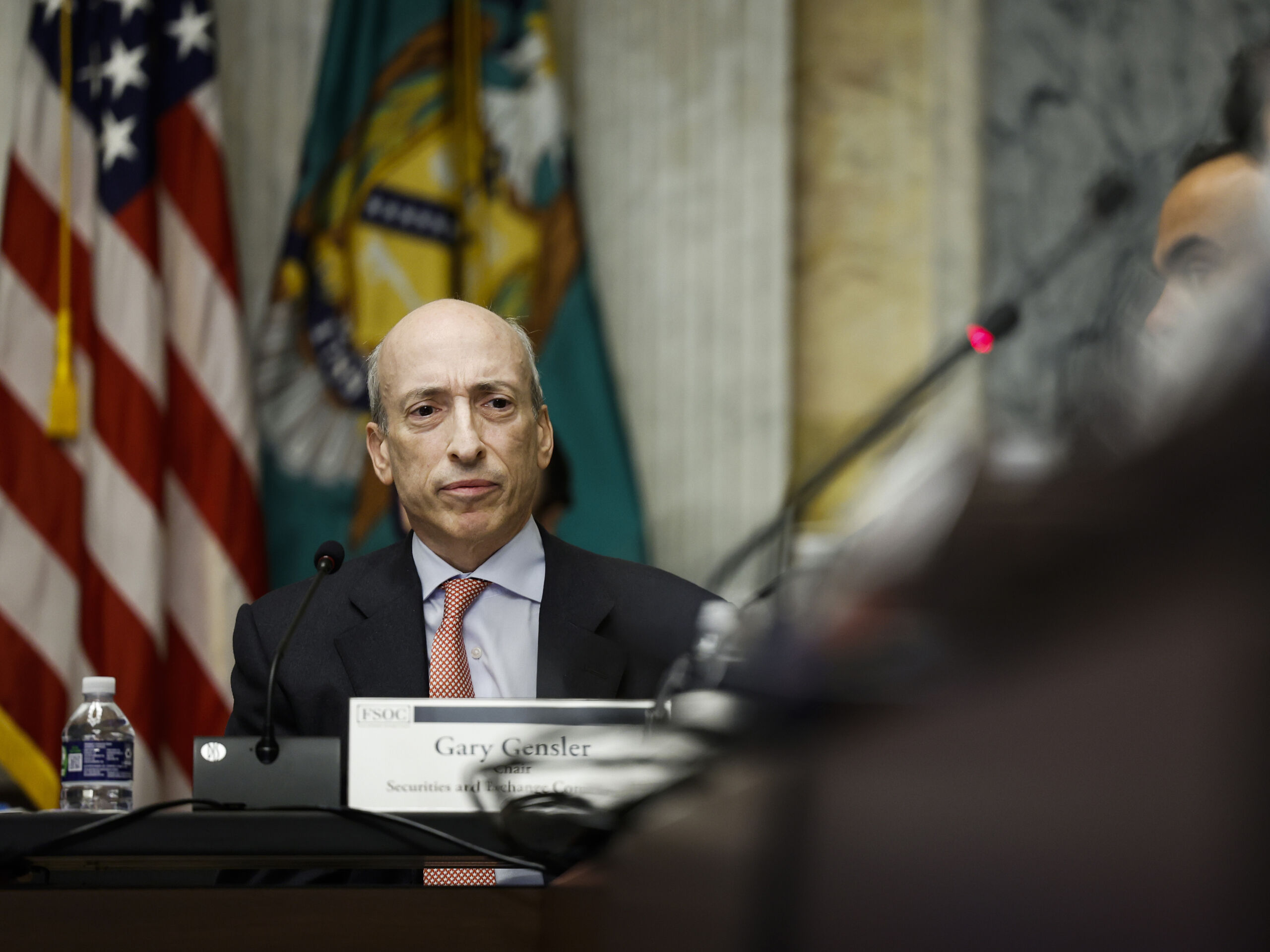

US SEC Chairman Warns AI Technology could Contribute to Future Financial Crises

0
WASHINGTON, DC - OCTOBER 03: Securities and Exchange Commission (SEC) Chair Gary Gensler listens during a meeting with the Treasury Department's Financial Stability Oversight Council at the U.S. Treasury Department on October 03, 2022 in Washington, DC. The council held the meeting to discuss a range of topics including climate-related financial risk and the recent Treasury report on the adoption of cloud services in the financial sector. (Photo by Anna Moneymaker/Getty Images)

In a recent speech at the Brookings Institution, the chairman of the US Securities and Exchange Commission (SEC), Gary Gensler, warned that artificial intelligence (AI) technology could pose significant risks to the stability and fairness of the financial system. He argued that AI could amplify existing market inefficiencies, create new sources of systemic risk and undermine investor protection and market integrity.

Gensler highlighted three main areas of concern regarding AI in finance: data quality and governance, algorithmic bias and discrimination, and accountability and transparency. He said that data is the fuel of AI, but also its Achilles’ heel. He stressed the need for robust data quality standards and governance mechanisms to ensure that AI models are fed with accurate, reliable, and representative data. He also cautioned that AI could inherit or exacerbate human biases and prejudices, leading to unfair or discriminatory outcomes for investors and consumers. He called for rigorous testing and monitoring of AI systems to detect and mitigate potential harms.

Artificial intelligence (AI) is a powerful tool that can enhance human capabilities and improve efficiency in various domains. However, AI also poses significant risks and challenges, especially in the financial sector. One of the main ways that AI could cause financial instability is by creating feedback loops and amplifying market volatility.

For example, AI algorithms that are used for trading, risk management, or credit scoring could react to market signals or data inputs in a similar or correlated way, leading to herd behavior, contagion, or systemic risk. Moreover, AI systems could also generate false or misleading signals, such as fake news, deepfakes, or cyberattacks, that could manipulate market participants or disrupt financial infrastructure.

Another potential source of financial instability from AI is the lack of transparency and accountability of AI systems. AI models are often complex, opaque, and dynamic, making it difficult to understand how they work, why they make certain decisions, and who is responsible for their outcomes. This could create information asymmetry, moral hazard, or adverse selection problems in the financial market, as well as undermine trust and confidence in financial institutions and regulators. Furthermore, AI systems could also be subject to biases, errors, or failures that could result in unfair or inaccurate outcomes for consumers, investors, or borrowers.

To address these risks and challenges, it is essential for the SEC to develop and implement appropriate governance frameworks and ethical principles for AI in the financial sector. These could include:

Establishing clear and consistent standards and regulations for AI development, deployment, and oversight across jurisdictions and sectors.

Enhancing the transparency and explainability of AI systems and their decisions, as well as the accountability and liability of their developers, users, and supervisors.

Ensuring the robustness and reliability of AI systems and their data sources, as well as the resilience and security of financial infrastructure against AI-related threats.

Promoting the fairness and inclusiveness of AI systems and their outcomes, as well as the protection of privacy and human rights of individuals and groups affected by AI.

AI technology has the potential to bring great benefits to the financial sector and society at large. However, it also entails significant risks and challenges that need to be carefully managed and monitored. By adopting a proactive and collaborative approach to AI governance and ethics, we can harness the power of AI while minimizing its pitfalls.

Moreover, Gensler emphasized the challenge of ensuring accountability and transparency in the use of AI. He noted that AI systems are often complex, opaque, and dynamic, making it difficult to understand how they work and why they make certain decisions. He warned that this could create a “black box” problem, where investors and regulators are unable to assess the risks and performance of AI-driven products and services. He urged for more disclosure and explainability of AI models, as well as clear allocation of responsibilities and liabilities among the various actors involved in the design, development, deployment, and oversight of AI.

Gensler concluded his speech by stating that the SEC is committed to fostering innovation in the financial sector, but also to protecting investors and markets from potential harms caused by AI. He said that the SEC is actively engaging with industry stakeholders, academic experts, and other regulators to develop a comprehensive and balanced regulatory framework for AI in finance. He also encouraged public input and feedback on this important issue.

Who Cares About Your Shares

0

In an era defined by digital connectivity, the role of social media platforms has transcended mere networking tools. They have metamorphosed into dynamic landscapes where relationships are cultivated, nurtured, and sustained through a myriad of features meticulously crafted by platform developers. The notion of “Who Cares About Your Shares” delves deep into the intricacies of these virtual connections and underscores the profound impact they have on our lives.

The Evolution of Social Media: Beyond Friendships

Social media’s evolution from a means of connecting with friends to a potent tool for fostering lasting relationships is nothing short of remarkable. These platforms, once regarded as a fad, now serve as hubs for both personal and professional interactions. With features like instant messaging, video calls, and even virtual events, they have shattered geographical boundaries, enabling us to stay connected with loved ones across the globe. The development of these features underscores a shift from mere online acquaintances to genuine companionships.

Creating and Nurturing Connections

Social media platforms have proven invaluable in creating new friendships and maintaining existing ones. The ease of sharing updates, photos, and thoughts enables us to weave a digital narrative of our lives. Each post or update serves as a brushstroke in the canvas of our relationships.Whether it’s celebrating milestones or offering support during trying times, these digital interactions contribute to the emotional tapestry that defines our connections.

A Two-Way Street: Reciprocity in Digital Relationships

The adage “what you give is what you get” holds true even in the realm of social media. The engagement and attention we invest in our friends’ shares reflect our commitment to the relationship. A simple like, heartfelt comment, or shared article can go a long way in reinforcing the bond. Reciprocity isn’t just about numbers; it’s about acknowledging and appreciating the effort that goes into sharing one’s life in the digital space.

Sustaining Long-Term Relationships

Sustaining relationships, whether online or offline, requires effort, empathy, and understanding. Social media, in all its dynamic glory, provides tools that aid us in this endeavor. From reminiscing through Timehop-like features to celebrating friendship anniversaries, these platforms act as our digital memory banks, reminding us of the journeys we’ve undertaken together. They also offer private spaces for meaningful conversations, allowing us to bridge distances and create moments of intimacy even when oceans apart.

The Cautionary Tale of Authenticity

Amid the glittering array of features, there’s an underlying caution. As we curate our lives for public consumption, authenticity can become a casualty. The pressure to present a picture-perfect life may overshadow genuine interactions. However, the heart of any relationship, digital or otherwise, lies in authenticity. Sharing vulnerabilities, expressing opinions, and engaging in open dialogue enrich the relationship tapestry, making it resilient against the pressures of pretense.

In a world increasingly shaped by screens, the question “Who Cares About Your Shares?” finds its answer in the countless individuals who value the glimpses of your life you choose to share. These digital tokens of connection transcend the virtual realm, influencing the quality of our relationships in the tangible world. By embracing authenticity, nurturing reciprocity, and investing in meaningful engagement, we can transform our digital interactions into lasting bonds that enrich our lives in ways unimaginable a mere decade ago.

Musk Offers to Foot Legal Bills For Employees Being “Unfairly Treated” Over Their Activities on X

0

Elon Musk has extended an offer to financially support the legal expenses of individuals who are users of his social network, X, facing maltreatment or discrimination from their employers due to their activities on the platform.

The move is understood to have come from his pledge to make Twitter a reliable source of information, where people are allowed to express themselves without being censored.

Since Musk acquired Twitter, now X, last October, he has brought in a lot of controversial changes, pitting him against users and advertisers. Among the newly-introduced changes is freedom of expression beyond what was obtainable under former Twitter leadership, when users’ opinions about a series of issues were highly censored.

The world’s richest man reinstated accounts such as former US President Donald Trump, retired kickboxer champion Andrew Tate, and some others who were permanently blocked on Twitter over their tweets.

Musk had been critical of the level of censorship on Twitter, which he attributed to wokeness. The entrepreneur has accused the Left of forcing social media platforms to censor contents that they do not like. Now he is taking further steps (after reviewing policies that enabled the censorship) to protect the platform’s users.

“If you were unfairly treated by your employer due to posting or liking something on this platform, we will fund your legal bill,” Musk said on Sunday, adding that there is “no limit” and urging users found in that situation to “please let us know.” He said that X Corp. will “go after the boards of directors of the companies too.” 

The move is coming against the backdrop of ad revenue decline on the platform, following the mass exodus of advertisers on X due to disagreement with Musk’s changes to content moderation. 

More than 90 percent of X’s revenue came from advertisers but has dropped by more than half since Musk’s $44 billion acquisition of the platform.

Last week, X filed a suit against the Center for Countering Digital Hate (CCDH), a nonprofit group that has criticized the company’s handling of hate speech. 

The legal complaint, lodged on Monday in the federal court of San Francisco, alleges that CCDH intentionally sought to diminish advertiser interest in X, the social network, by releasing critical reports regarding the platform’s handling of offensive content.

The lawsuit specifically asserts that CCDH violated both Twitter’s terms of service and federal laws related to hacking. This was done through data scraping from Twitter’s platform and by enlisting an unnamed individual to inappropriately gather information concerning Twitter, which had been provided to a third-party brand monitoring entity.

The filing further contends that CCDH made an extensive effort to stifle users on Twitter’s platform by drawing attention to the viewpoints they express on social media. 

It is not clear what impact the lawsuit will have on the already dented relationship between advertisers and X, which Musk hired the self-styled “free speech absolutist” former NBCUniversal ad executive Linda Yaccarino as CEO in May to help repair. 

But Musk also has been known for his limited tolerance of criticism. Former personnel from his other ventures, SpaceX and Tesla Inc., have alleged that they were dismissed as a reprisal for expressing critical opinions about him as the CEO of both enterprises.

CCDH’s CEO Imran Ahmed told CNN that Musk opened Twitter up, following his takeover, to hate speech – making the lawsuit “sounds a bit like a conspiracy theory to me.”

“The truth is that he’s [Elon Musk] been casting around for a reason to blame us for his own failings as a CEO,” Ahmed said, “because we all know that when he took over, he put up the bat signal to racists and misogynists, to homophobes, to antisemites, saying ‘Twitter is now a free-speech platform.’ … And now he’s surprised when people are able to quantify that there has been a resulting increase in hate and disinformation.”

Neuralink, Co-founded by Elon Musk, Raises $280 Million in Series D Funding Round

0

Elon Musk’s brain chip company, Neuralink, has raised $280 million in a series D funding round from investors, to further develop its brain implant technology.

The funding round was led by Founders Fund, a San Francisco-based venture capital firm, that invests in companies building revolutionary technologies.

Following the funds raised, Neuralink took to Twitter to announce it, while expressing excitement about the next chapter.

Also, a partner at Founders Fund, Scott Nolan, took to Twitter, to announce via a tweet the company’s investment in Nueralink.

The tweet reads,

“Excited to support Neuralink’s next chapter of helping human patients in need. The team has been working for seven years to make this possible, pulling off technical breakthroughs that feel like science fiction. The chance to work with world-class teams accelerating a positive future is why I’m an investor, and even in that category Neuralink is special”.

Although, Neuralink did not specify what it intends to use the funds for, however, the brain chip firm, aims to help people with paralysis or other neurological conditions regain independence by controlling computers and mobile devices using their brain activity.

Founded by Elon Musk in 2016, Neuralink Corporation is a neurotechnology company, with a goal to develop implantable brain-computer interface (BCI) technologies that could enable direct communication between the human brain and external devices such as computers and other digital systems.

The idea behind Neuralink is to create devices that can effectively merge the human brain with artificial intelligence and other technologies.

The company develops an implant called the N1 that comes in at about the size of a coin. Remotely rechargeable, the implant goes along with electrode-laced threads that go further into the brain. Neuralink also has an R1 robot meant to be programmed to implant the BCI system while avoiding vasculature.

One of the primary motivations behind Neuralink’s research is to address neurological disorders and conditions such as paralysis, Alzheimer’s disease, and various forms of brain injuries.

By establishing a direct link between the brain and external devices, it is theorized that these conditions could be treated or managed more effectively.

The development of such technology, however, comes with significant challenges and ethical considerations. Implanting electrodes into the brain raises concerns about the potential risks of surgery, as well as issues related to privacy, security, and the potential for misuse of the technology.

Neuralink has however been the subject of some controversies around testing of its technology on animals.

In 2022, Neuralink and the University of California, Davis, faced accusations of “egregious violations of the Animal Welfare Act by the Physicians Committee for Responsible Medicine (PCRM).

They cited documents obtained through a public records lawsuit. The allegations claimed that Neuralink caused extreme suffering in monkeys.

In May, U.S. Representatives Adam Schiff and Earl Blumenauer co-authored a letter to the U.S. Department of Agriculture demanding an investigation into the panel responsible for overseeing animal testing at Neuralink, citing a conflict of interest.

“The Institutional Animal Care and Use Committee (IACUC) appears to be composed almost exclusively of company employees with significant financial stakes in the very animal studies they are required to evaluate under the Animal Welfare Act,” the letter read.

Neuralink’s primary goal is to develop advanced brain-computer interface (BCD) technology to enable direct communication between the human brain and external devices.

The company envisions a future where these BCIs can be used to address various neurological disorders, enhance cognitive capabilities and facilitate seamless interaction between humans and technology.