DD
MM
YYYY

PAGES

DD
MM
YYYY

spot_img

PAGES

Home Blog Page 3924

Fuel Subsidy Removal: Oyo State Government Unveils Palliative Measures for Oyo Residents

0

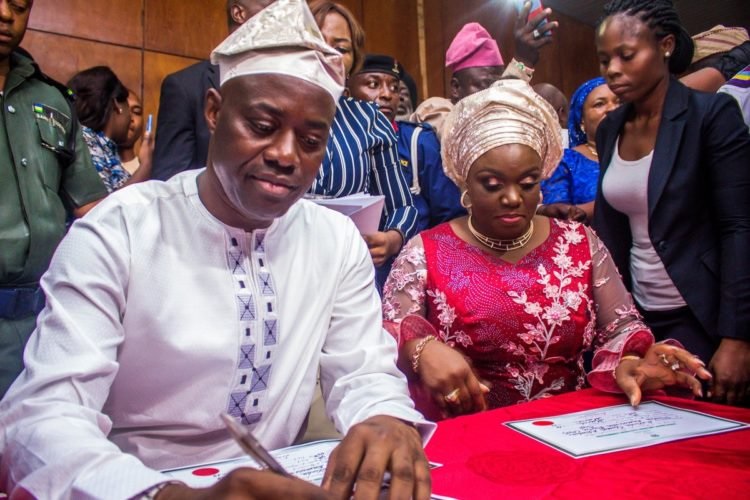
Governor Seyi Makinde of Oyo State has unveiled palliative measures to cushion the effects of the removal of fuel subsidy on the residents of the state.

Addressing the people of Oyo state in a statewide broadcast on Saturday night, the Governor disclosed a set of short-term programmes targeted at ameliorating the economic hardships and pains on the people of the state due to the nationwide removal of fuel subsidy.

According to Governor Makinde, after wide consultations have been made, the government decided to implement its plan tagged “Sustainable Action for Economic Recovery, SAfER, which was said would significantly benefit the people of the state.

His words: “The Oyo state government has resolved to take the following actions tagged sustainable actions for economic recovery (SAfER).

“Our SAfER package will ensure a softer landing for the poorest of the poor and the most vulnerable in our society.

“It will also address the need for food security through direct intervention to our farmers. Additionally, we shall be making provisions that will ease the transportation pains of our civil servants and other residents of Oyo State.”

Governor Makinde revealed the government has updated the social register of the state to include 200,000 of the “poorest of the poor” who would be given immediate food relief packages and over 100,000 vulnerable households are being targeted in the health insurance scheme of the SAfER program.

The governor stated further that the Omitutun Buses will be emboldened to have a wider scope in the state, providing transportation services to the Oyo residents at regulated prices.

“We will be providing health insurance for 100,000 of our most vulnerable households. We will be paying their one-year health insurance premium under the Oyo State Health Insurance Agency (OYSHIA) scheme so that they have access to quality healthcare without paying out of pocket.

“The Omituntun bus service will be extended to cover inter-city routes from Ibadan to all other zones of Oyo state. So, we will have the buses going from Ibadan to Ibarapa, Ibadan to Ogbomoso, Ibadan to Oke-Ogun and Ibadan to Oyo.

“The fares will be kept at low rates, while our senior citizens and students will board the buses at half price,” Governor Makinde said.

The governor also disclosed 10,000 farmers will be getting inputs from the Oyo government and an additional support under the World Bank-assisted OYS-CARES programme, adding that youth agropreneurs who have been trained under the state’s youth entrepreneurship in agribusiness project (YEAP) and have established businesses, will receive enterprise support under the SAfER package.

“We have committed N500 million for this purpose. The beneficiaries will get further directives on this from the relevant agencies.

“We have committed a further N500 million to assist small businesses to stay afloat through low-interest-rate loans. Our traders, artisans and other small business operators can apply for these loans through designated microfinance banks,” Governor Makinde said.

The Governor’s full speech is below


Being His Excellency Seyi Makinde’s Broadcast, the Executive Governor of Oyo State, to the People of Oyo State on Saturday, August 5, 2023.

My Dear Good People of Oyo State,

I am addressing you today to share our short-term plans, which will play a huge role in alleviating the effects of the removal of fuel subsidy and the resultant economic difficulties being faced by our people. You will recall that on June 9, 2023, following the removal of fuel subsidy, we announced measures to be taken to cushion the effect of the removal.

We gave directives that the number of Omituntun Buses on various routes in Ibadan should be increased and that commuters must pay a reduced fare on these buses. Additionally, our senior citizens and students should board the buses at half price. We have received feedback that this immediate action has benefited our people.

We promised that more would be done. Our plan has always been to roll out sustainable actions in keeping with our promise of sustainable development under Omituntun 2.0. Having been in government for the first four years, we know it is easier to make promises than to keep them.

After wide consultations, we have arrived at decisions that we believe will be of the most benefit to the good people of Oyo State. In reaching these decisions, we considered the importance of using these economic packages to stimulate our economy and bring about sustainable development.

Therefore, the Oyo State Government has resolved to take the following actions tagged Sustainable Actions for Economic Recovery (SAfER). Our SAfER package will ensure a softer landing for the poorest of the poor and the most vulnerable in our society. It will also address the need for food security through direct intervention to our farmers. Additionally, we shall be making provisions that will ease the transportation pains of our civil servants and other residents of Oyo State.

Let me now share details of our SAfER package.

  1. Following the pattern of our actions during the COVID-19 pandemic, we are updating our social register to include two hundred thousand (200,000) of the poorest of the poor. These vulnerable persons will be provided with immediate food relief packages. As usual, we will ensure transparency in the registration process so that only those who qualify will get this immediate relief.
  2. We will be providing health insurance for 100,000 of our most vulnerable households. We will be paying their one-year health insurance premium under the Oyo State Health Insurance Agency (OYSHIA) scheme, so that they have access to quality healthcare without paying out of pocket.
  3. The Omituntun Bus service will be extended to cover inter-city routes from Ibadan to all other zones of Oyo State. Details of their routes will be released in the coming weeks. So, we will have the buses going from Ibadan to Ibarapa, Ibadan to Ogbomoso, Ibadan to Oke-Ogun and Ibadan to Oyo. The fares will be kept at low rates, while our senior citizens and students will board the buses at half price.
  4. Our farmers have not been left out. To ensure food security, we will be distributing additional inputs to 10,000 farmers. This is in addition to the inputs support being provided under the World Bank-assisted OYS-CARES programme. Further details of this will be released through the relevant agencies in the coming weeks.
  5. Our youth agropreneurs who were trained under the Youth Entrepreneurship in Agribusiness Project (YEAP) and have established businesses, will also have an opportunity to contribute to food security and sustainable development as they will receive enterprise support under the SAfER package. We have committed five hundred million naira (N500,000,000) for this purpose. The beneficiaries will get further directives on this from the relevant agencies.
  6. We have committed a further five hundred million naira (N500,000,000) to assist small businesses to stay afloat through low-interest-rate loans. Our traders, artisans and other small business operators can apply for these loans through designated micro-finance banks. Details of how they may enroll for and access these loans will be announced by the relevant agencies.
  7. We have also resolved that students of tertiary institutions in Oyo State will board the Omituntun Buses at half price upon showing their school identity card. We will also be meeting with their student leaders to agree on further measures which will be added to the SAfER package for students.

Before I announce the next part of our SAfER package, it is imperative that I make the following observations. In the last week, the Oyo State leadership of the Nigeria Labour Congress (NLC) and the Trade Union Congress (TUC) have made it impossible for Oyo State Civil Servants to resume work at the State Secretariat. As a government, we believe individuals and groups have a fundamental right to protest. However, we also believe in the axiom, “Your right ends where the right of others begins.” Therefore, while the leadership of the unions may choose to continue with their protest, they do not have the right to restrict Oyo State Civil Servants from accessing the secretariat to carry out their duties as usual.

With the Oyo State economy being fragile, any acts that disrupt the economic wheels of the State is economic sabotage.

I have therefore directed the State security apparatus to ensure that Oyo State Civil Servants regain access to the secretariat starting this Monday, August 7, 2023. I am also by this, directing all civil servants to resume at their duty posts on Monday, August 7, 2023.

As a government, we remain open to parleying with labour to ensure that the rights of the workers of Oyo State are protected. We encourage the union leaders to return to the negotiating table to discuss any increases in salary or possible harmonisation of pension payments.

Let me also state that the Oyo State Government remains one of the most favourably committed to workers’ welfare in the entire federation. Since May 2019, we have paid all civil servants’ salaries and pensions on or before the 25th of every month without fail. And since January 2020, we have paid the minimum wage and consequential adjustments to all cadres of civil servants every month without fail. Presently, the civil servants’ wage bill stands at N7.2 billion monthly. We have continued to pay this despite having a monthly revenue of just below N10 billion. It is, therefore, clear to understand why any increase in salaries or pensions may not be possible at this time.

However, as part of the SAfER package, the Oyo State Government has resolved to:

  1. Increase the number of buses made available for civil servants to commute to and from work from 9 to 12. This will ensure that more routes are covered and lessen the transportation burden of our dear workers.
  2. The two-month cooperatives deductions being owed to Oyo State Civil Servants will be paid along with their August 2023 salaries on the GSM Date. Going forward, the workers who choose to continue making cooperative contributions will work directly with their cooperatives as the Oyo State Government will no longer be making any deductions at source for these cooperatives.
  3. We will pay the health insurance premium for all pensioners under the Oyo State Health Insurance Agency (OYSHIA) scheme. Any pensioner who has already made payment will be refunded. We remain committed to caring for our dear pensioners who served our state in their youth by ensuring that they continue to receive their pensions promptly along with other workers on the GSM Date.
  4. We will resume the monthly payment of gratuities to our pensioners to continue to clear the backlog of gratuity payments inherited by our administration.

We are sure that with the implementation of the SAfER package in the coming weeks, the Oyo State economy will continue to be strengthened, and the pains being experienced by our people will be lightened.

Also, with the appointment of commissioners for the various ministries, we will begin to implement the Oyo State Roadmap for Sustainable Development 2023-2027 for the benefit of the good people of Oyo State.

Long live Oyo State.

Long live the Federal Republic of Nigeria.

Seyi Makinde

August 5, 2023

English Law Commission proposes new legal approach for Digital Assets

0

The English Law Commission, an independent body that reviews and recommends reforms to the law of England and Wales, has recently published a consultation paper on the legal treatment of digital assets. Digital assets are broadly defined as any intangible asset that exists in electronic form, such as cryptocurrencies, tokens, smart contracts, and digital art. The paper explores the current legal uncertainties and challenges posed by digital assets and proposes a new legal framework that would recognize and regulate them as property.

The paper argues that the existing law of property is ill-equipped to deal with the novel features and functions of digital assets, such as their intangibility, divisibility, transferability, and programmability. For instance, it is unclear whether digital assets can be owned, possessed, or transferred in the same way as physical or intellectual property.

It is also unclear how digital assets can be secured, enforced, or recovered in case of theft, fraud, or insolvency. Moreover, the paper notes that the current law does not adequately address the role and responsibility of intermediaries, such as platforms, exchanges, and custodians, that facilitate the creation, storage, and transfer of digital assets.

The paper proposes a new legal approach that would recognize digital assets as a new category of property, distinct from personal and real property. The paper suggests that this would provide clarity and certainty to the users and providers of digital assets, as well as to the courts and regulators.

The paper also proposes a set of principles and rules that would govern the creation, ownership, possession, transfer, security, and enforcement of digital assets. The paper further proposes a statutory definition of digital assets that would capture their essential characteristics and functions.

Some of the current legal uncertainties include:

Whether digital assets can be owned, possessed, or transferred in the same way as physical or intellectual property.

Whether digital assets can be secured, enforced, or recovered in case of theft, fraud, or insolvency.

Whether digital assets can be subject to taxation, inheritance, or succession laws.

Whether digital assets can be used as evidence or proof in legal proceedings.

How digital assets can be valued or appraised.

What are the rights and obligations of the intermediaries, such as platforms, exchanges, and custodians, that facilitate the creation, storage, and transfer of digital assets.

The paper proposes a new legal approach that would recognize digital assets as a new category of property, distinct from personal and real property. The paper suggests that this would provide clarity and certainty to the users and providers of digital assets, as well as to the courts and regulators. The paper invites responses from stakeholders and interested parties on its proposals and questions by 30 September 2023.

The paper states that the aim of the consultation is to gather views and evidence that would inform the development of a draft bill on digital assets. The paper also states that the law commission intends to work closely with other jurisdictions, such as Scotland and Northern Ireland, as well as with international organizations and initiatives, such as UNCITRAL and ELI-UNIDROIT, to ensure coherence and compatibility of the proposed reforms.

The paper is part of a wider project on smart contracts that the law commission launched in 2020. The project aims to examine the legal implications and challenges of smart contracts, which are self-executing agreements that are written in code and run on distributed ledger technology (DLT), such as blockchain. The project also aims to propose reforms that would facilitate the use and adoption of smart contracts in England and Wales.

The UK aims to adopt a balanced and proportionate approach to digital asset regulation, that supports innovation and competition while mitigating the risks and harms associated with digital assets. Some of the potential benefits and challenges of this approach are, Benefits: By providing clarity and certainty on the legal status and treatment of different types of digital assets, the UK can foster a conducive environment for innovation and growth in the digital asset sector.

By applying existing rules where appropriate and introducing new rules where necessary, the UK can ensure that consumers and investors are protected from fraud, scams, market abuse, and operational failures. By adopting a flexible and adaptive regulatory framework, the UK can respond to the evolving nature and diversity of digital assets and maintain its position as a leading global financial center.

By applying a case-by-case approach to digital asset regulation, the UK may face difficulties in defining and categorizing different types of digital assets, especially those that have hybrid or novel features or functions. By having multiple regulators involved in overseeing different aspects of digital assets, the UK may create overlaps or gaps in regulation, or inconsistencies or conflicts in regulatory objectives or standards. By trying to balance innovation and risk management, the UK may face trade-offs between fostering growth and ensuring stability in the digital asset sector.

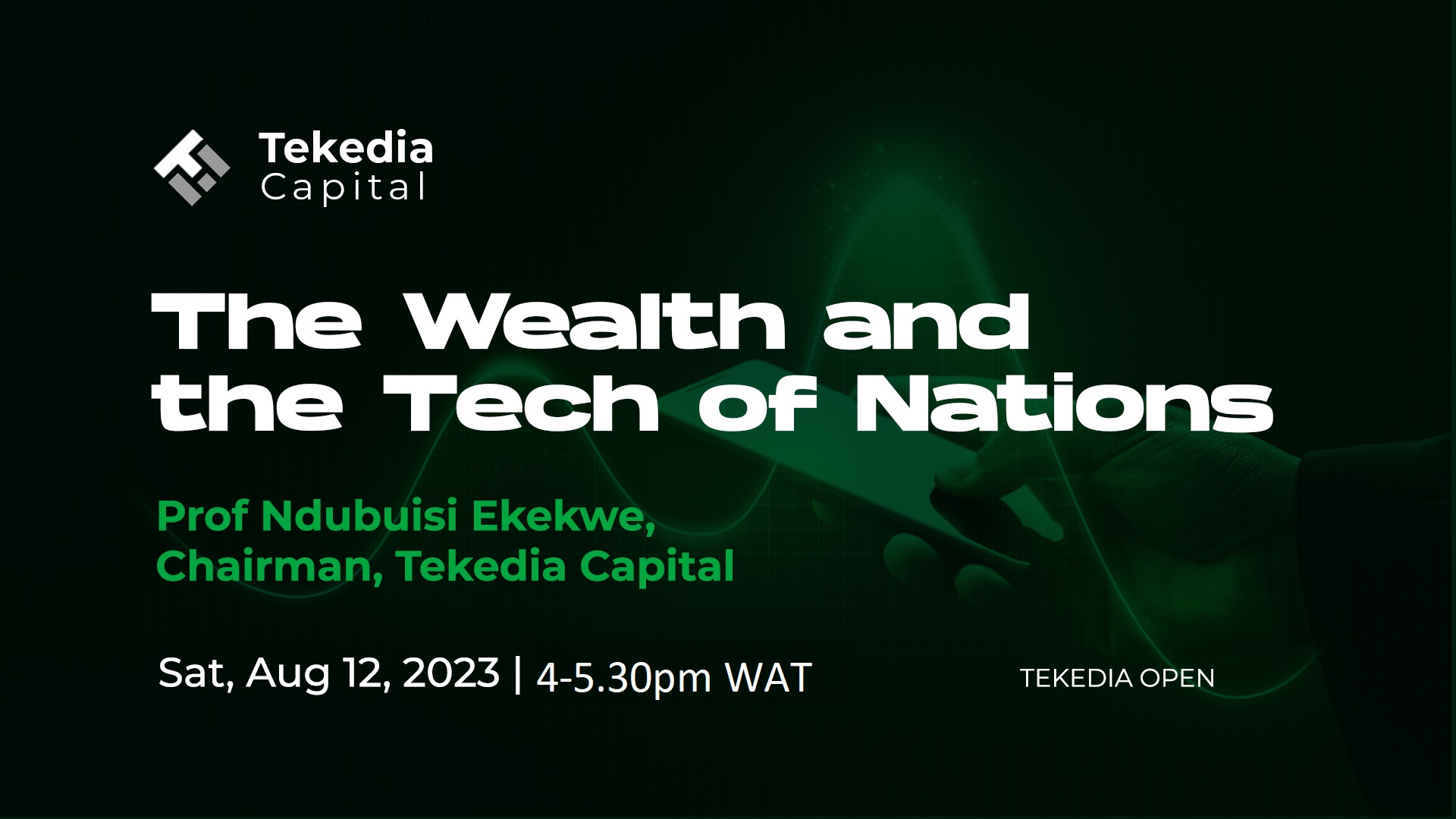
The Wealth and the Tech of Nations – Tekedia Capital [video]

0

The recorded video of the event

If you want to become a member of Tekedia Capital Syndicate, to co-invest  in leading African operating startups, please go here.

Every ten years, something great happens in the Nigerian/African economy. In the 1990s, the new generation banks were established, and they used technology to create competitive advantages in markets. In the 2000s,  the voice telephony era came at scale, led by MTN.  The 2010s provided the mobile internet era as mobile phones connected to the internet, enabling new vistas of opportunities. 

Right now, in this decade of the 2020s, we’re in the application utility era where the power of cloud computing, mobile internet and software will redesign market sectors across territories in Africa.

This is the cambrian moment of Africa’s entrepreneurial capitalism and technologies are powering it. New business models will be invented and new ordinance in markets will evolve. The technology of nations is the wealth of nations!

On Saturday, join me on Tekedia OPEN, a public event by Tekedia Capital, our early stage investment vehicle where we’re making it easier for citizens, groups, investment clubs, companies, organizations, etc to own a piece of early-stage, high-growth technology startups operating across Africa. 

  • Topic: The Wealth and the Tech of Nations
  • Presenter: Ndubuisi Ekekwe
  • Date: Saturday, August 12, 2023
  • Time: 4-5.30pm WAT
  • Zoom link : click here 

This is a public and an open event, and it is completely free. Share with your friends, associates, and all.

Awareness and Observation are Antennas into the Minds of Customers, And Great Skills of Great Achievers

0

Awareness and observation are antennas into the minds of customers. And the greatest entrepreneurs are those who demonstrate uncommon abilities to understand evolving patterns and customer preferences, before those become evident . Yes,  they build for that unborn future, and become category-pioneers and -kings. They’re aware!

What do you think will be the stable state of Naira and dollar in Nigeria? Today, it is hovering around N850/$ which seems very out of order. Many experts modeled N650/$. What are you observing? Are you paying attention because these shifts would be catalytic in the grand scheme of things.

A case here: Nigeria brings in via oil sales, remittances, non-oil sales, etc about $100 billion yearly. Officially, Nigeria’s annual import is less than $60 billion. In the real sense we should be fine (let me spare you of them). But we are not due to many factors.

Meanwhile, the half-year roll call of the most valuable publicly traded companies in Nigeria is out, according to Nairametrics. Dangote Cement  leads at $7.9 billion followed by MTN Nigeria ($7.05 billion). Others at the top are Airtel Africa, BUA Cement, BUA Foods, GTCo, Zenith Bank, Seplat Energies, Nestle Nigeria, and Stanbic IBTC. GTbank’s GTCO is back, overtaking Zenith Bank, as the nation’s most valued lender. That noted, Stanbic IBTC is just around the corner and could pick the trophy in 2024.

  • Dangote Cement – N5.99 trillion ($7.9 billion)
  • MTN Nigeria – N5.33 trillion ($7.05 billion)
  • Airtel Africa – N4.96 trillion ($6.55 billion)
  • BUA Cement – N3.35 trillion ($4.43 billion)
  • BUA Foods – N2.44 trillion ($3.23 billion)
  • GTCo – N1.08 trillion
  • Zenith Bank – N1.06 trillion
  • Seplat – N996.6 billion
  • Nestle Nigeria – N931.4 billion
  • Stanbic IBTC – N900.5 billion

Tether CTO Announces Completion of JavaScript Library Work for Mining Hardware

1

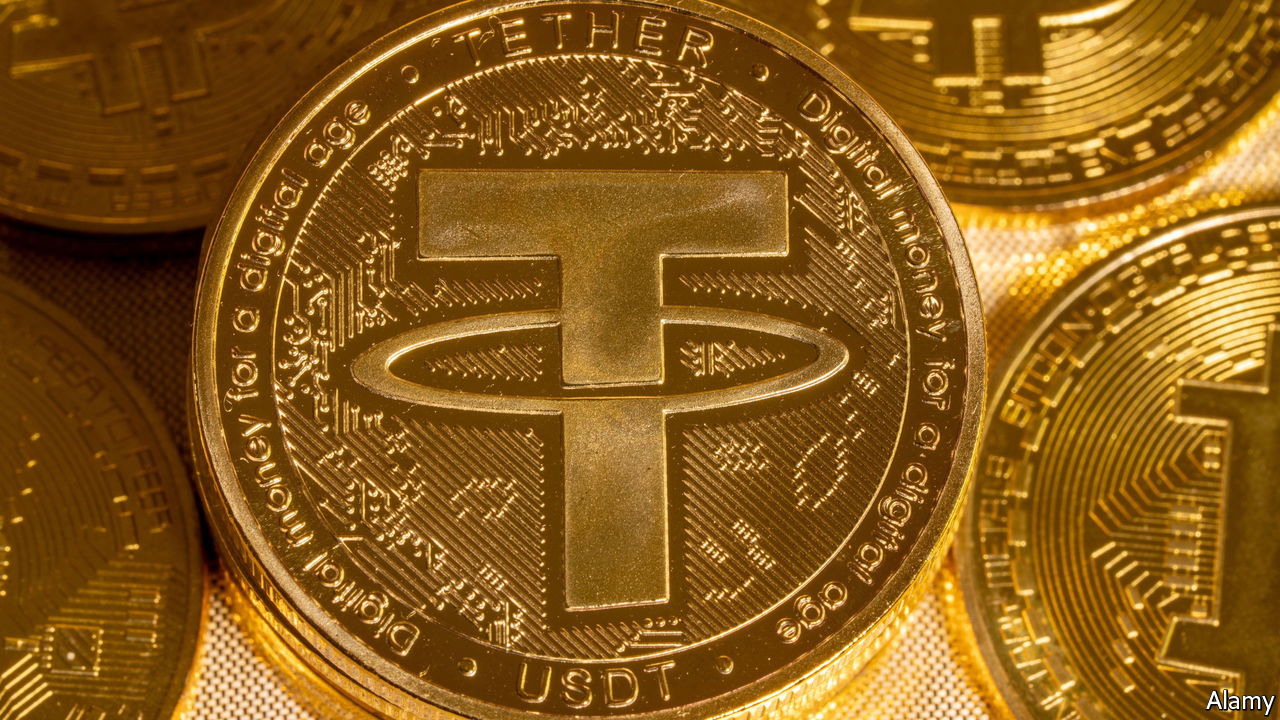
Tether, the company behind the popular stablecoin USDT, has announced that its chief technology officer (CTO), Paolo Ardoino, has completed the work on a JavaScript library that will enable developers to integrate Tether mining hardware into their web applications. The library, called TetherJS, is a wrapper for the Tether API that allows web developers to access the functionality of Tether mining devices, such as the Tether Miner and the Tether Node. The library also provides methods for creating and managing Tether wallets, sending and receiving USDT transactions, and querying the Tether blockchain.

Tether is a cryptocurrency that aims to provide a stable and transparent alternative to traditional fiat currencies. Tether tokens are backed by a reserve of assets, such as US dollars, euros, or gold, and can be exchanged for these assets at any time. Tether tokens are also compatible with multiple blockchains, such as Bitcoin, Ethereum, and Tron, making them easy to use across different platforms and applications. In this blog post, we will explore the history, features, and benefits of Tether, as well as some of the challenges and controversies that it faces.

Tether was launched in 2014 by a company called Tether Limited, which is owned by iFinex Inc., the same company that operates the Bitfinex cryptocurrency exchange. The original idea behind Tether was to create a token that could bridge the gap between the traditional and digital worlds, allowing users to transact with fiat currencies on the blockchain without the volatility and complexity of other cryptocurrencies.

Tether was initially issued on the Bitcoin blockchain using the Omni Layer Protocol, but later expanded to other blockchains such as Ethereum, EOS, and Tron. Tether tokens are denoted by the symbol ? and have different currency codes depending on the underlying asset, such as USD? for US dollars, EUR? for euros, and XAU? for gold.

One of the main advantages of Tether is that it offers stability and transparency in the cryptocurrency market. Tether tokens are pegged to their respective assets at a 1-to-1 ratio, meaning that one USD is always worth one US dollar, one EUR is always worth one euro, and so on. This reduces the risk of price fluctuations and enables users to hedge against volatility in other cryptocurrencies.

Tether also claims to maintain a full reserve of assets to back up its tokens and publishes a daily record of its current total assets and reserves on its website. Additionally, Tether tokens are widely adopted and traded across major exchanges, wallets, and applications, making them highly liquid and accessible.

However, Tether also faces some challenges and controversies that cast doubt on its credibility and legitimacy. One of the most prominent issues is the lack of independent audits that verify Tether’s reserves and compliance with regulatory standards. Tether has been accused of inflating its supply of tokens without sufficient backing, manipulating the price of Bitcoin and other cryptocurrencies, and engaging in fraudulent activities with Bitfinex and other entities.

In 2019, Tether was sued by the New York Attorney General for allegedly covering up an $850 million loss of customer funds by Bitfinex. In 2020, Tether was fined by the Commodity Futures Trading Commission for making false claims about its reserves. These incidents have raised questions about Tether’s trustworthiness and solvency.

Ardoino said that the TetherJS library was developed to make it easier for web developers to leverage the power of Tether mining hardware and create innovative applications that use USDT as a payment method or a reward system. He also said that the library was designed to be compatible with various web frameworks, such as React, Angular, and Vue.

“We are very excited to announce the completion of TetherJS, which is a major milestone for our company and our community. TetherJS will enable web developers to tap into the potential of Tether mining hardware and create amazing web applications that use USDT as a native currency. We believe that this will open up new possibilities for innovation and adoption of USDT in the web space,” Ardoino said in a press release.

TetherJS is available on GitHub and npm, and it comes with documentation and examples. Ardoino said that he welcomes feedback and contributions from the developer community, and that he plans to add more features and improvements to the library in the future. According to CoinMarketCap, USDT is the third-largest cryptocurrency by market capitalization, with over $62 billion in circulation as of August 6, 2023.

USDT differs from other cryptocurrencies in several ways. First, USDT is backed by reserves of US dollars held by Tether in bank accounts or other assets. This means that USDT holders can redeem their tokens for US dollars at any time. Second, USDT is designed to maintain a stable value relative to the US dollar, unlike other cryptocurrencies that are subject to volatility and price fluctuations. Third, USDT is compatible with multiple blockchain platforms, such as Bitcoin, Ethereum, Tron, and EOS. This makes USDT more accessible and interoperable than other cryptocurrencies that are limited to one blockchain.