DD
MM
YYYY

PAGES

DD
MM
YYYY

spot_img

PAGES

Home Blog Page 3926

Political and Economic Uncertainties Trail Foreign Direct Investments Across Nations

0

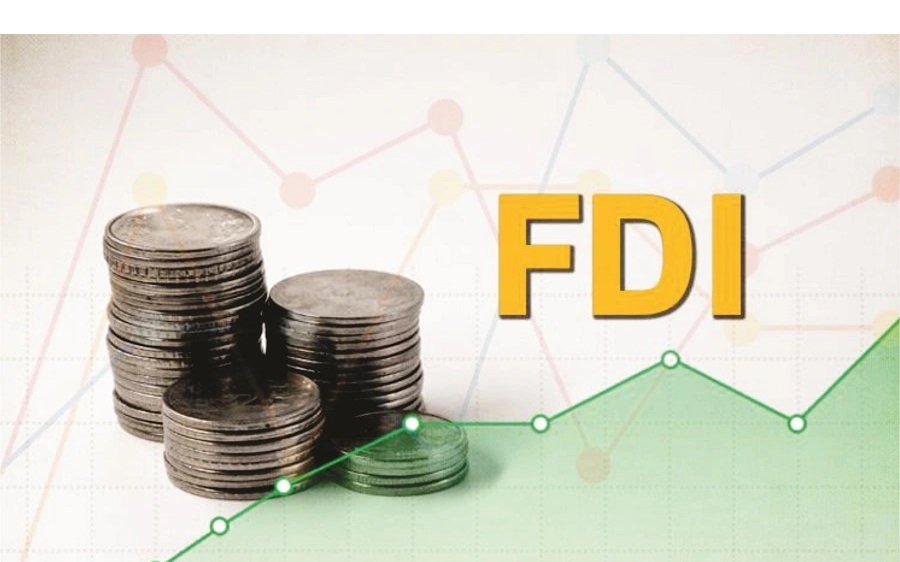
The world is facing unprecedented challenges in the wake of the COVID-19 pandemic, which has disrupted the global economy and trade. One of the most affected sectors is foreign direct investment (FDI), which refers to the cross-border flow of capital from one country to another for the purpose of establishing, acquiring, or expanding a business. FDI is a key driver of economic growth, innovation, and job creation, especially in developing and emerging markets.

However, FDI has been severely hit by the political and economic uncertainties that have trailed the pandemic, as well as other factors such as trade tensions, geopolitical risks, and regulatory changes.

The world is facing unprecedented challenges in the wake of the COVID-19 pandemic, which has disrupted global trade, supply chains, and investment flows. One of the most visible impacts of the crisis has been the decline in foreign direct investment (FDI), which is a key driver of economic growth, innovation, and development.

According to the latest report by the United Nations Conference on Trade and Development (UNCTAD), global FDI flows fell by 35% in 2023, reaching their lowest level since 2005. The decline was more pronounced in developed countries, where FDI plunged by 58%, while developing countries saw a smaller drop of 8%. However, the outlook for FDI recovery remains uncertain, as many factors continue to weigh on investor confidence and decision-making.

One of the main factors affecting FDI is the political and economic uncertainty that prevails in many regions and countries. Political uncertainty refers to the unpredictability of government policies, regulations, and institutions that affect the business environment and the protection of investors’ rights. Economic uncertainty refers to the volatility of macroeconomic indicators, such as growth, inflation, exchange rates, and fiscal balances, that affect the profitability and risk of investments.

Political and economic uncertainties can have both direct and indirect effects on FDI. Direct effects occur when uncertainties deter or delay investors from entering or expanding their operations in a host country, or when they prompt investors to exit or divest from a host country. Indirect effects occur when uncertainties affect the overall economic performance and stability of a host country, which in turn affects its attractiveness for FDI.

Some examples of political and economic uncertainties that have affected FDI in recent years are:

  • The trade tensions and disputes between major economies, such as the US-China trade war, which have increased tariffs, non-tariff barriers, and geopolitical risks for cross-border investments.

  • The Brexit process and its implications for the future relationship between the UK and the EU, which have created legal and regulatory uncertainties for investors operating in or through these markets.

  • The social unrest and political instability in several countries, such as Hong Kong, Chile, Lebanon, Belarus, Myanmar, and Ethiopia, which have disrupted economic activity and raised security concerns for investors.

  • The debt crisis and fiscal challenges in some emerging markets, such as Argentina, Turkey, South Africa, and Zambia, which have increased the risk of default, currency depreciation, and inflation for investors.

  • The environmental and climate change issues that pose physical and transition risks for investors in sectors such as energy, mining, agriculture, and tourism.

These uncertainties have not only reduced the volume of FDI flows, but also changed their composition and direction. For instance, UNCTAD reports that greenfield investment projects, which involve the creation of new productive assets and jobs, declined by 42% in 2020, while cross-border mergers and acquisitions (M&As), which involve the transfer of existing assets and ownership, increased by 10%. This suggests that investors are more interested in acquiring existing assets at lower prices than in undertaking new investments with higher risks.

However, FDI is also subject to various risks and uncertainties, especially in times of crisis. Political and economic uncertainties can deter investors from committing their resources to long-term projects in foreign markets. Some of the factors that can influence FDI decisions are:

Political stability and security: Investors prefer to operate in countries that have stable and predictable political systems, respect for the rule of law, and protection of property rights. Political instability, violence, corruption, and policy changes can increase the costs and risks of doing business abroad.

Economic performance and outlook: Investors are attracted by countries that have strong and resilient economies, with high growth potential, low inflation, and sound fiscal and monetary policies. Economic downturns, recessions, currency fluctuations, and debt crises can reduce the profitability and viability of FDI projects.

Trade and investment policies: Investors seek to benefit from favorable trade and investment regimes that facilitate market access, reduce tariffs and non-tariff barriers, and provide incentives and guarantees for FDI. Trade and investment disputes, protectionism, sanctions, and regulatory changes can hamper FDI flows and create uncertainty for investors.

Global and regional dynamics: Investors are influenced by the trends and developments in the global and regional markets, as well as by the actions and reactions of other actors. Global shocks, such as pandemics, natural disasters, wars, or terrorist attacks, can disrupt FDI flows and supply chains. Regional integration or disintegration, such as Brexit or the US-China trade war, can create opportunities or challenges for FDI.

Given these factors, it is not surprising that FDI has been severely affected by the COVID-19 pandemic. According to the United Nations Conference on Trade and Development (UNCTAD), global FDI flows declined by 35% in 2020, reaching their lowest level since 2005. The decline was more pronounced in developed countries (-58%) than in developing countries (-8%), reflecting the uneven impact of the pandemic across regions. The sectors that suffered the most were tourism, hospitality, transport, and manufacturing.

The outlook for FDI recovery remains uncertain and depends on several factors, such as the pace and effectiveness of vaccination campaigns, the extent and duration of lockdown measures, the availability and distribution of fiscal stimulus packages, the evolution of trade tensions and geopolitical conflicts, and the adoption of digital technologies and green transitions. UNCTAD projects that global FDI flows will increase by 10-15% in 2021 but will still remain well below their pre-pandemic levels.

In this context, it is crucial for policymakers to adopt measures that can enhance the attractiveness and resilience of their countries for FDI. Some of the possible actions are:

Strengthening political stability and security: Policymakers should foster dialogue and cooperation among different stakeholders, including governments, businesses, civil society, and international organizations. They should also address the root causes of conflict and violence, such as poverty, inequality, discrimination, and human rights violations.

Improving economic performance and outlook: Policymakers should implement policies that can boost economic growth and development, such as investing in infrastructure, education, health care, and innovation. They should also pursue sound fiscal and monetary policies that can maintain macroeconomic stability and sustainability.

Enhancing trade and investment policies: Policymakers should promote trade liberalization and integration through multilateral or regional agreements that can expand market access and reduce barriers for FDI. They should also provide incentives and guarantees for FDI that are transparent, consistent, and non-discriminatory.

Leveraging global and regional dynamics: Policymakers should monitor and anticipate the trends and developments in the global and regional markets, as well as the actions and reactions of other actors. They should also seek to cooperate and coordinate with other countries on issues of common interest, such as pandemic response, climate change, cybersecurity, and human rights. By taking these measures, policymakers can create a more conducive environment for FDI, which can contribute to economic recovery and development in the post-pandemic era.
How Does A Country Accumulate Debt?

0

Debt is a common phenomenon in the world of economics. It refers to the amount of money that one party owes to another party. In this blog post, we will explore how a country accumulates debts and what are the implications of having high levels of debt.

A country can accumulate debts in two ways: by borrowing from domestic sources or from foreign sources. Domestic borrowing means that the government issues bonds or securities that are bought by its own citizens, banks, or institutions. Foreign borrowing means that the government obtains loans or grants from other countries, international organizations, or private lenders.

Why does a country borrow money? There are several reasons why a country may need to borrow money. Some of the common ones are:

  • To finance public spending on goods and services, such as education, health, infrastructure, defense, etc.
  • To stimulate economic growth and development, especially during recessions or crises.
  • To maintain a stable exchange rate or currency value, especially for countries with fixed or pegged exchange rate regimes.
  • To repay previous debts or interest payments, especially when the revenues are insufficient to cover the obligations.

What are the consequences of having debts? Having debts is not necessarily a bad thing, as long as the country can manage them effectively and use them productively. However, having too much debt can pose serious challenges and risks for a country. Some of the potential problems are:

Debt burden: The debt burden measures the ratio of debt to GDP or income. A high debt burden means that the country has to allocate a large portion of its resources to service its debts, leaving less room for other priorities.

Debt sustainability: The debt sustainability measures the ability of a country to repay its debts in the long run. A low debt sustainability means that the country may face difficulties in meeting its future obligations, especially if the interest rates rise or the growth prospects decline.

Debt crisis: A debt crisis occurs when a country defaults or fails to repay its debts on time. A debt crisis can trigger a loss of confidence, a collapse of the exchange rate, a rise in inflation, a contraction of economic activity, and social and political instability.

How can a country reduce its debts? There are several strategies that a country can adopt to reduce its debts and improve its fiscal position. Some of the common ones are:

Fiscal consolidation: Fiscal consolidation means that the government reduces its spending or increases its revenues to achieve a primary surplus (the difference between revenues and non-interest expenditures). A primary surplus helps to lower the debt burden and increase the debt sustainability.

Debt restructuring: Debt restructuring means that the government negotiates with its creditors to modify the terms and conditions of its debts, such as extending the maturity, lowering the interest rate, or reducing the principal amount. Debt restructuring helps to ease the debt service and enhance the debt sustainability.

Debt relief: Debt relief means that the government obtains partial or total forgiveness of its debts from its creditors, usually in exchange for some reforms or concessions. Debt relief helps to eliminate or reduce the debt stock and improve the debt sustainability.

Debt is an important tool for economic management, but it also entails significant challenges and risks. A country should borrow wisely and responsibly and adopt appropriate policies to ensure that its debts are sustainable and productive.

EtherRock and Boogle sell for 150 ETH and 3069 SOL, Ordinal sells 10.6 BTC

0

One of the most expensive NFTs in the world has just been sold for a staggering amount of cryptocurrency. EtherRock, a digital collectible that represents a virtual rock, was purchased for 150 ETH, or about $600,000 at the time of writing. This is the second-highest sale price for an EtherRock, following a record-breaking deal of 400 ETH in August.

EtherRock is one of the oldest NFT projects on the Ethereum blockchain, launched in 2017. There are only 100 EtherRocks in existence, and each one is unique in its shape and color. The scarcity and the historical significance of these digital rocks have made them highly sought-after by collectors and investors.

The buyer of the 150 ETH EtherRock is a mysterious entity known as “0x6f”. According to their Twitter profile, they are “a collector of rare digital art and NFTs”. They also own several other valuable NFTs, such as CryptoPunks, Bored Ape Yacht Club, and Art Blocks. They have not revealed their motivation for acquiring the EtherRock, but some speculate that they are either a fan of the project or a savvy investor who sees potential for future appreciation.

EtherRock is not the only NFT project that features rocks as its theme. There are also CryptoRocks, MoonRocks, and EtherStones, among others. However, EtherRock is widely regarded as the original and the most prestigious one. The creator of EtherRock, who goes by the pseudonym “Snowfro”, has said that he was inspired by the Pet Rock craze of the 1970s, when people bought ordinary rocks as pets.

The sale of the 150 ETH EtherRock is another example of how NFTs have revolutionized the digital art and collectibles market. NFTs are unique tokens that can represent any form of digital content, such as images, videos, music, or games. They can be verified and traded on a blockchain, ensuring their authenticity and ownership. NFTs have created new opportunities for artists and collectors to express themselves and to monetize their creations.

Boogle #046 sells for 3069 SOLANA.

Boogle #046 is one of the most sought-after NFTs in the Solana ecosystem. It features a cute and colorful creature with a unique combination of traits, such as a rainbow mohawk, a monocle, and a bow tie. Boogle #046 is part of the Boogle collection, which consists of 10,000 randomly generated pixel art images stored on the Solana blockchain. Each Boogle has its own personality and rarity and can be used as a digital collectible or a gaming avatar.

The Boogle collection was launched in October 2023, and sold out in less than an hour. The initial minting price was 1 SOL per Boogle, but the secondary market prices have skyrocketed since then. According to SolAnalysis, the average sale price of a Boogle is currently 125 SOL, with some rare ones fetching over 1000 SOL.

Boogle #046 is one of the rarest and most valuable Boogles in existence. It belongs to the legendary tier, which has only 100 Boogles in total. It also has a special background color that is exclusive to Boogle #046. According to the official Boogle website, the background color represents the “spirit of adventure and exploration”. Boogle #046 is also the only Boogle that has a rainbow mohawk, which adds to its uniqueness and appeal.

Boogle #046 was recently sold for a record-breaking price of 3069 SOL on SolSea, the leading NFT marketplace on Solana. The buyer was an anonymous collector who goes by the name of “SolSurfer”. The seller was “BoogleFan”, who had acquired Boogle #046 from the original minting event. The transaction was verified by SolanaScan, the blockchain explorer for Solana.

The sale of Boogle #046 is a testament to the popularity and potential of NFTs on Solana. Solana is a fast, scalable, and low-cost blockchain platform that enables innovative and creative projects like Boogle to thrive. Solana also has a vibrant and supportive community of developers, artists, collectors, and enthusiasts who are passionate about NFTs and the future of digital art.

Ordinal inscription #8 sells for 10.6 BTC approximately $460,000

A rare piece of digital art history was auctioned off today for a staggering amount of cryptocurrency. The ordinal inscription #8, one of the earliest examples of non-fungible tokens (NFTs) CryptoPunk, fetched 10.6 bitcoins, which is equivalent to about $460,000 at the current exchange rate.

The ordinal inscription #8 is a unique digital artwork that consists of a series of numbers and letters engraved on a black background. The inscription represents the hexadecimal code of the NFT, which is stored on the Ethereum blockchain and can be verified by anyone. The Lava Labs, who is also the creator of the popular CryptoPunks collection, made only 10 ordinal inscriptions in 2017, making them extremely scarce and valuable.

The auction was held on the online platform OpenSea, which specializes in NFTs and other digital collectibles. The bidding started at 1 bitcoin and quickly escalated as several collectors competed for the rare item. The final bid was placed by an anonymous buyer with the username “OrdinalFan8”, who now owns the eighth ordinal inscription ever made.

One way to measure Bitcoin’s market performance is to use ordinal inscriptions, which are numerical labels that rank items according to some criterion. For example, one can use ordinal inscriptions to rank the top 10 cryptocurrencies by market capitalization, or the top 10 countries by Bitcoin adoption. Ordinal inscriptions can provide a simple and intuitive way to compare and contrast different aspects of Bitcoin’s market performance, as well as to identify trends and patterns over time.

However, ordinal inscriptions also have some limitations and challenges. For one thing, ordinal inscriptions do not reflect the magnitude or the direction of the differences between the items. For example, if Bitcoin is ranked first by market capitalization, it does not tell us how much larger it is than the second-ranked cryptocurrency, or whether its market share is increasing or decreasing.

Moreover, ordinal inscriptions can be sensitive to the choice of criterion and the method of ranking. For example, if we rank cryptocurrencies by market capitalization, we may get a different result than if we rank them by trading volume or price. Similarly, if we use different sources of data or different time frames, we may get different ordinal inscriptions for the same items.

Therefore, ordinal inscriptions are useful tools to measure Bitcoin’s market performance, but they should be used with caution and context. They should not be taken as absolute or definitive indicators of Bitcoin’s value or potential, but rather as relative and descriptive measures that can help us understand and analyze Bitcoin’s market performance from different perspectives.

The sale of the ordinal inscription #8 is a testament to the growing popularity and demand for NFTs, which are digital assets that can be authenticated and owned by their holders. NFTs have been used to create and sell various forms of digital art, such as images, videos, music, games, and even tweets.

Some of the most notable NFT sales include Beeple’s “Everydays: The First 5000 Days”, which sold for $69 million, Jack Dorsey’s first tweet, which sold for $2.9 million, and CryptoPunks #3100 and #7804, which sold for $7.6 million each.

Defection – Constitutional Way of Losing A Political Seat in Nigeria

0

On Monday, the 11th of December 2023, 27 River State House of Assembly members who were elected under the platform of the Peoples Democratic Party (PDP) defected to All Progressive Congress (APC) due to the leadership tussle between the immediate past governor and the current Federal Capital Territory minister, Mr Nyesom Wike and the state governor, Mr Siminalayi Fubara. 

Whenever defections of this nature occur either at the state or the federal level, the constitutional cum political question it poses is what then happens to the defectors; will they lose their seats or will they retain their seats. 

Section 109 (1) of the 1999 Constitution has literally covered this scenario as it provides in paragraph (g) thus; “A member of a House of Assembly shall vacate his seat in the House if being a person whose election to the House of Assembly was sponsored by a political Party, he becomes a member of another political party before the expiration of the period for which that House was elected: Provided that his membership of the latter political party is not as a result of a division in the political party of which he was previously a member or of a merger of two or more political parties or factions by one of which he was previously sponsored; ….”. 

By the implication of proviso in section 109(1)(g) it is clear that if there is a division in the party upon which the member came to the house in question, the person has the right to move to another political party but if there is no division and a member moves or defects to another party he or she stands to lose his seat. Therefore, Once you defect from the political party from which you won the election, to another political party before the expiration of the political tenure upon which you were elected, you automatically lose that seat. 

By reason of the above Constitutional provision in section 109 and the plethora of court decisions in this matter, its clear interpretation by the Supreme Court, the 27 defected members of the Rivers State House of Assembly have vacated, lost their seats and ceases to be recognized as members of the Rivers State House of Assembly with immediate effect. 

Just last year, The Federal High Court sitting in Abuja sacked the then Ebonyi State Governor, Mr David Umahi, his deputy, Mr Kelechi Igwe, and 15 members of the Ebonyi state House of Assembly over their defection from the People’s Democratic Party (PDP) to the All Progressives Congress (APC).

In sacking the governor and his deputy, the court held that the votes polled by a political party could not be transferred to or utilized for the benefit of another political party or member of another political party and once an elected politician defects from the political party under which he was elected, he stands to lose the seat he was elected for. 

In 2014, the Supreme Court fully buttressed the constitutional provision of section 109(1)(g) in the case of Hon. Ifedayo Sunday Abegunde v. Ondo State House of Assembly (2014) LPELR 23683. The apex Court declared the appellant’s seat vacant after the appellant a member of the House of Representatives decamped from the Labour Party (LP) to the Action Congress of Nigeria (ACN) on the basis of fractionalization of the party at the State level; the court ruled that only a division that makes it impossible for a party to function can provide the basis for a legislator’s defection hence, the Appellant loses his seat. 

South African E-commerce Startup TUNL Secures $1 Million in Pre-Seed Fund to Solve E-commerce Exports For African Businesses

0

Tech-enabled courier platform that enables seamless and affordable parcel exports from Africa, TUNL, has secured $1 million in pre-seed funds to solve e-commerce exports for African businesses.

The pre-seed round comprised several investors which include, Founders Factory Africa, Digital Africa Ventures, E4E Africa, and Jozi Angels.

TUNL announced that the funding will fuel its expansion in its primary market, South Africa, and lay the groundwork for its launch in other key African and emerging markets.

Co-founder & CEO of TUNL Matthew Davey said the company will now focus on using its seed funding to improve sales and the onboarding process for new merchants. Notably, the company has streamlined the onboarding experience, primarily relying on customer support assistance to a more self-service approach.

The startup wants to ensure that every business, large or small, can have an equal chance to convert overseas sales by reducing the cost of shipping as much as possible.

TUNL offers affordable and seamless parcel shipping from South Africa to the US, EU, UK, and Australia. It charges 50% less than express courier rates, with full tracking and insurance, and a delivery time of 7-10 days. The startup consolidates e-commerce orders at origin and injects them into optimal final-mile carrier networks in destination countries.

On the TUNL platform, merchants offer customers various shipping options during checkout. This includes an “economy” courier option with the shipping cost starting as low as $10 from South Africa to the USA with a slightly longer delivery time (around 10 to 14 days). 

Alternatively, customers can opt for faster shipping options within a week, with either FedEx or UPS at a much more reasonable cost than they can get individually. These options enhance flexibility and potentially improve conversion rates (the exact prices vary based on destination and weight, according to the CEO.

Currently, barriers to exporting are costing African businesses $50 billion annually in missed opportunities. Cross-border shipping from Africa is expensive, slow, and largely undigitised.

In a bid to address these challenges, TUNL is passionate about bringing world-class South African products to customers worldwide and providing exceptional service to make international shipping seamless for all.

The company has experienced impressive growth, with a 35% month-on-month increase since its launch. Over 700 merchants are now part of its “shipping club,” and the platform has facilitated the shipment of over 8,000 international parcels in 2023.

TUNL’s vision is to turn African businesses into global businesses through better export logistics, and empower merchants to tap into larger consumer markets overseas.