DD
MM
YYYY

PAGES

DD
MM
YYYY

spot_img

PAGES

Home Blog Page 3943

Intel Unveils Gaudi3 AI Chip to Compete with Nvidia and AMD in AI Market

0

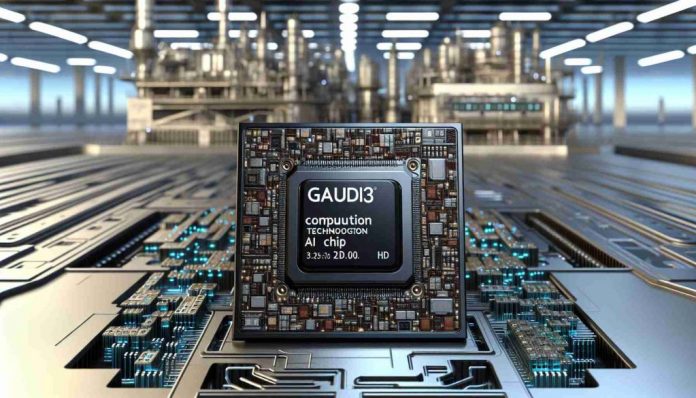
Intel Corporation made a significant stride in the competitive artificial intelligence (AI) market on Thursday with the unveiling of its latest computer chips, including the Gaudi3 — an AI chip designed for generative AI software.

The move is seen as a direct challenge to Nvidia and AMD, the current leaders in the market for chips powering large and power-hungry AI models.

Gaudi3, set to launch next year, is expected to compete directly with Nvidia’s H100 and AMD’s upcoming MI300X. The announcement comes as part of Intel’s broader strategy to diversify its offerings and attract AI companies away from Nvidia’s dominant position. Intel shares responded positively, rising by 1% on Thursday.

Intel CEO Pat Gelsinger expressed enthusiasm for the potential of generative AI, stating, “We’ve been seeing the excitement with generative AI, the star of the show for 2023. We think the AI PC will be the star of the show for the upcoming year.”

Gaudi3, developed in 2019 following Intel’s acquisition of chip developer Habana Labs, aims to position itself as a formidable contender in the AI chip market.

However, the competition is expected to be fierce, as Nvidia’s GPUs currently power prominent AI models like OpenAI’s ChatGPT. Nvidia’s stock has surged nearly 230% year-to-date, highlighting its stronghold in the industry. In contrast, Intel shares have seen a more modest rise of 68%.

To complement its foray into AI, Intel also introduced Core Ultra chips and new fifth-generation Xeon server chips. Both include a specialized AI component called a Neural Processing Unit (NPU) to enhance the performance of AI programs.

The Core Ultra chips, designed for Windows laptops and PCs, leverage a 7-nanometer manufacturing process for increased power efficiency and improved gaming capabilities.

Gelsinger’s strategic vision includes catching up to Taiwan Semiconductor Manufacturing Co. (TSMC) in chip manufacturing prowess by 2026, and the 7-nanometer Core Ultra chips reflect progress in that direction. The new chips also promise to run programs like Adobe Premier more than 40% faster, showcasing their versatility beyond AI applications.

Additionally, Intel’s fifth-generation Xeon processors, commonly used in servers deployed by large organizations and cloud companies, were highlighted for their prowess in inferencing—the less power-hungry phase of deploying AI models. Although pricing details for the new Xeon processors were not disclosed, the previous iterations were known to cost thousands of dollars.

Intel’s latest product announcements signal a broader industry trend, with traditional processor manufacturers like AMD and Qualcomm also aligning their product lines with the growing demand for AI capabilities.

The tech industry anticipates a new phase of AI-powered growth, and Intel’s strategic entry positions itself for engaging competition in the realm of artificial intelligence hardware. The unveiling of Gaudi3 is seen as a giant leap by Intel that is poised to reshape the market’s dynamics in the coming years.

Blockchain and Artificial Intelligence Among The Most Disruptive and Important Technologies of Recent Time

0

Blockchain and artificial intelligence are two of the most disruptive technologies of the 21st century. They have the potential to revolutionize various industries, from finance and healthcare to education and entertainment. But what are the differences and similarities between these two innovations? How can they complement or compete with each other? And what are the challenges and opportunities for their future development and integration?

Blockchain is a distributed ledger technology that enables secure and transparent transactions without the need for intermediaries. It uses cryptography and consensus mechanisms to ensure the validity and immutability of the data stored on the network. Blockchain can facilitate peer-to-peer exchange of value, such as cryptocurrencies, smart contracts, digital assets, and identity verification.

Artificial intelligence is a branch of computer science that aims to create machines or systems that can perform tasks that normally require human intelligence, such as reasoning, learning, decision making, and natural language processing. Artificial intelligence can leverage data and algorithms to optimize processes, enhance customer experience, generate insights, and create new products or services.

Blockchain is a system of storing and transferring data in a decentralized, distributed, and secure way. It is based on a network of computers (nodes) that communicate and validate transactions using cryptography and consensus algorithms.

Each transaction is recorded in a block of data, which is linked to the previous block, forming a chain of blocks (hence the name blockchain). The blockchain is immutable, meaning that once a block is added, it cannot be altered or deleted. This ensures the integrity and transparency of the data.

Blockchain has many applications and use cases, such as:

Cryptocurrencies: Blockchain is the underlying technology behind digital currencies like Bitcoin, Ethereum, and others. These currencies enable peer-to-peer transactions without intermediaries or central authorities.

Smart contracts: Blockchain can also enable the execution of self-enforcing agreements based on predefined rules and conditions. These contracts can automate processes and transactions in various domains, such as finance, law, supply chain, insurance, etc.

Decentralized applications (DApps): Blockchain can also support the development of applications that run on the network without a central server or authority. These applications can offer various services and functions, such as social media, gaming, e-commerce, etc.

Identity management: Blockchain can also provide a secure and verifiable way of managing digital identities and credentials. This can enhance privacy, security, and trust in online interactions and transactions.

Asset tokenization: Blockchain can also enable the representation of physical or digital assets as tokens on the network. This can facilitate the ownership, transfer, and exchange of these assets in a more efficient and transparent way.

Blockchain is not without challenges and limitations, however. Some of the main ones are:

– Scalability: Blockchain faces a trade-off between security and performance. As the network grows in size and complexity, it becomes more difficult to process transactions quickly and cheaply.

– Interoperability: Blockchain also faces a challenge of compatibility and communication between different platforms and protocols. There is a need for standards and frameworks that can enable cross-chain interactions and integrations.

– Regulation: Blockchain also faces a challenge of legal and regulatory uncertainty and complexity. There is a need for clear and consistent rules and guidelines that can address the issues of governance, compliance, taxation, privacy, etc.

Blockchain is a revolutionary technology that has the potential to disrupt and improve various aspects of our society and economy. It offers new possibilities for innovation, efficiency, transparency, and inclusion. However, it also poses significant challenges and risks that need to be addressed and overcome. Therefore, it is important to understand blockchain’s potential and limitations, as well as its implications for various stakeholders.

Blockchain and artificial intelligence have some common features, such as:

  • They are both data-driven technologies that rely on large amounts of information to function effectively.

  • They are both decentralized and distributed, meaning that they do not depend on a single authority or entity to operate or control them.

  • They are both scalable and adaptable, meaning that they can handle increasing demand and complexity without compromising performance or quality.

  • They are both innovative and disruptive, meaning that they can create new value propositions and challenge existing paradigms and business models.

However, blockchain and artificial intelligence also have some significant differences, such as:

Blockchain is based on transparency and trust, while artificial intelligence is based on opacity and uncertainty. Blockchain makes all the transactions and data visible and verifiable by anyone on the network, while artificial intelligence often operates in a black box manner, where the inputs and outputs are not always clear or explainable.

Blockchain is deterministic and rule-based, while artificial intelligence is probabilistic and data-based. Blockchain follows predefined protocols and logic to execute transactions and validate data, while artificial intelligence learns from data and adapts to changing situations and environments.

Blockchain is slow and energy-intensive, while artificial intelligence is fast and efficient. Blockchain requires a lot of computational power and time to reach consensus and secure the network, while artificial intelligence can process large amounts of data and perform complex tasks in a fraction of time and cost.

Therefore, blockchain and artificial intelligence have both synergies and trade-offs that need to be considered when applying them to various domains and use cases. Some of the possible scenarios are:

Blockchain can enhance artificial intelligence by providing data provenance, security, privacy, and auditability. For example, blockchain can enable traceability and accountability of the data sources and models used by artificial intelligence systems, as well as protect the data owners’ rights and interests.

Artificial intelligence can enhance blockchain by providing data analysis, optimization, automation, and interoperability. For example, artificial intelligence can help blockchain networks to improve their performance, scalability, governance, and compatibility with other systems and platforms.

Blockchain can compete with artificial intelligence by offering alternative solutions or services. For example, blockchain can enable decentralized applications (DApps) that can perform functions similar to those of artificial intelligence systems, such as prediction markets, reputation systems, or decentralized autonomous organizations (DAOs).

Artificial intelligence can compete with blockchain by offering superior solutions or services. For example, artificial intelligence can provide more accurate, efficient, or personalized outcomes than blockchain-based solutions, such as fraud detection, risk management, or recommendation systems.

Blockchain and artificial intelligence are both powerful technologies that can transform various aspects of our society and economy. However, they are not mutually exclusive or incompatible. Rather, they can coexist and cooperate in a symbiotic way that can create more value than either of them alone. The key is to understand their strengths and weaknesses, as well as their potential impacts and implications for different stakeholders and sectors.

The Power of #Believe Even for Nigerians

1

As you close the year 2023 which has been challenging for many Nigerians, I want to drop this word: BELIEVE. By believing, Carlos Slim, the Mexican billionaire, bought everything on his path during the ruins in his nation. The Mexican currency, the peso, was imperiled but he believed. By believing, he is today one of the richest men in the world.

Templeton on that same #believe bought stocks when others were selling as markets crashed during the second world war.  He later became the stock picker of the 20th century.

After the Biafran War,  some Nigerians despite losing their children at war, homeland destroyed and bank accounts frozen, came together to establish secondary schools, hospitals, etc via community development unions. That spirit that Tomorrow has a promise overcame despair and ruins, as they contributed money to rebuild communities, one by one.

Here is the deal: Nigeria would not disappear because nations rarely kaput. And when you remember that the greatest business in Nigeria has not been started you can believe. I am building something huge in New York and I am excited because that is linked directly with Nigeria.

As an economic prophet, I challenge young people to rise unto the promise of tomorrow.  Thou will find pasture, and will leave any miry clay behind because thou liveth in the best era to be a youth! Make 2024 a dream year! 

Coinbase Adds Support for BONK, KuCoin Leaves New York, Everlodge Presale Selling Out

0

It has been an eventful week in the crypto landscape. From Bonk’s (BONK) listing on Coinbase to KuCoin agreeing to block New York users and pay $22 million in settlement fees, it is shaping up to be a week to remember. Meanwhile, the Everlodge (ELDG) presale recently entered its eighth stage and is selling out fast. Poised for a 50x rally after launch, it is one of the altcoins to watch.

This post will cover the recent developments in Bonk and KuCoin. Further, it will discuss why Everlodge is the best new crypto to invest in. Let’s begin.

Bonk (BONK): Coinbase Listing Result in Excitement and Price Rally

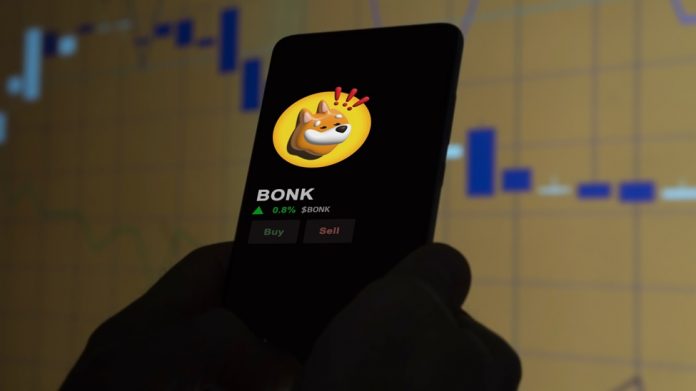
Coinbase, one of the world’s largest crypto exchanges, announced the listing of Bonk (BONK) via X (formerly Twitter) on December 13th. The exchange added support for the memecoin on the Solana network, with trading starting on December 14. Undoubtedly, this Bonk news was met with excitement, with the token rallying alongside.

This development has been anticipated for a while. After all, it is the most popular memecoin on Solana. At the moment, the Bonk price is soaring, rising by over 50% in the past 24 hours.

With this price gain, Bonk Crypto has further cemented its status as the third-biggest memecoin, surpassing Pepe. With optimism and excitement on the rise, its rally will likely persist for a while.

KuCoin (KCS): Closing New York Market

In recent KuCoin news, the exchange agreed to block New York users from its platform. Further, the company will be paying $22 million to settle the lawsuit. It is to be recalled that in March, the platform was accused of failing to register with the state before allowing the trading of cryptocurrencies.

According to Attorney General Letitia James, crypto companies must play by the same rules as other financial institutions. However, this development has yet to have any impact on the price of the KuCoin token.

At the time of writing, the KuCoin price is in an uptrend. The price is currently above $13, and its traction doesn’t appear to be slowing down.

Everlodge (ELDG): Why is it selling out?

Everlodge (ELDG) is the most promising narrative in the crypto landscape at the moment. It stands at the intersection of the traditional real estate sector and the novel blockchain industry. By utilizing the power of blockchain technology, it will transform the vacation home industry, making it accessible to investors.

Historically, the property market has been reserved—unfairly—for the wealthy. Despite shelter being a fundamental human need, a large portion of the human population is unable to own or invest in real estate. This is because of the ridiculously high entry barrier, which is mostly financial.

However, that is about to change with Everlodge. It will establish the first property marketplace on the blockchain, allowing investors to co-own and fractionally invest in luxury properties. This novel platform will employ a fractional investment model and NFTs, which will drastically lower entry barriers.

With as little as $100, investors can co-own a multimillion-dollar property in Las Vegas. As co-owners, they will earn passive income through rentals and appreciation of properties.

Given the above, it comes as little surprise that the presale is selling out fast. This crypto ICO is currently in the eighth stage, and a token costs only $0.027. According to experts, its price will rally by 50x after launch, making it one of the best coins to invest in.

Summary

KuCoin closing its services to New Yorkers might be seen as a continuous crackdown on crypto in the US. Nevertheless, it has yet to affect the token’s rally. A more exciting development is the listing of Bonk on Coinbase, a US-based exchange. Meanwhile, investors have shifted their focus to Everlodge, a unique project. Its presale is selling out fast, and it is aiming for a 50x rally after launch.

Visit Everlodge

Messi’s World Cup Jerseys Fetch Record $7.8 Million in Sotheby’s Auction

0

In a landmark auction at Sotheby’s, six jerseys donned by soccer maestro Lionel Messi during Argentina’s triumphant World Cup run in 2022 fetched an astounding $7.8 million, marking a watershed moment in sports memorabilia sales.

The shirts, each worn by Messi during the first half of Argentina’s games at the 2022 FIFA World Cup in Qatar, soared to become this year’s highest-priced sports memorabilia items, as revealed by the prestigious auction house.

“These historic shirts are not only a tangible reminder of one of the most important moments in the history of sports, but are principally connected to the pinnacle moment in the career of the most decorated football player in history,” Brahm Wachter, Sotheby’s head of modern collectibles, said in a statement.

Comprising six out of the seven jerseys Messi sported during the first halves of Argentina’s World Cup matches, the collection holds immense historical significance. Notably absent are the first-half jersey from Argentina’s final group stage match against Poland and the second-half jerseys, presumably exchanged with rival players, clarified Sotheby’s.

Argentina’s triumph in the World Cup, culminating in a scintillating victory against France in a penalty shootout following a 3-3 draw, marked Messi’s pivotal role. Scoring two of Argentina’s three goals, the win represented a crowning achievement for the football luminary.

Throughout the two-week online auction, the jerseys were exhibited at Sotheby’s New York headquarters, culminating in Thursday’s highly anticipated closure. The identity of the successful bidder remains undisclosed.

Sotheby’s announced a notable allocation of auction proceeds to the UNICAS Project, an initiative led by Sant Joan de Déu Barcelona Children’s Hospital and supported by the Leo Messi Foundation, aimed at aiding children afflicted by rare diseases.

Despite high expectations, the Messi shirts fell short of setting a new auction record for game-worn sports memorabilia. The reigning title still rests with Michael Jordan’s 1998 NBA Finals jersey, which commanded a staggering $10.1 million in last year’s Sotheby’s auction.

Diego Maradona’s iconic “Hand of God” goal jersey, worn during the 1986 World Cup, previously clinched the second most valuable jersey sold at auction, amassing $9.28 million in May 2022.

For Messi aficionados, this auction stands as a testament to his growing legacy. Previously, the most expensive Messi auctioned item was a jersey worn during Barcelona’s 2017 match against Real Madrid, according to ESPN.

At 36, Lionel Messi currently plies his trade with Inter Miami in the MLS, having enjoyed a stellar 17-year career at Barcelona, securing eight Ballon d’Or titles, the highest accolade bestowed upon football’s top player annually.