DD
MM
YYYY

PAGES

DD
MM
YYYY

spot_img

PAGES

Home Blog Page 3948

Tekedia Capital signed a term sheet to invest in a revolutionary AI-native startup i

0

This week, Tekedia Capital signed a term sheet to invest in a revolutionary AI-native startup in the domain of enterprise- and design-security. We joined hands with Y Combinator!

Next month, our Tekedia Capital Syndicate members will partake in this dance. We’re very confident that this company is part of the future as AI will transform digital security.

Tekedia Capital is building the foundation of the next Africa through entrepreneurial capitalism. To learn more and how to join our Syndicate just in time for the next investment cycle, go here.

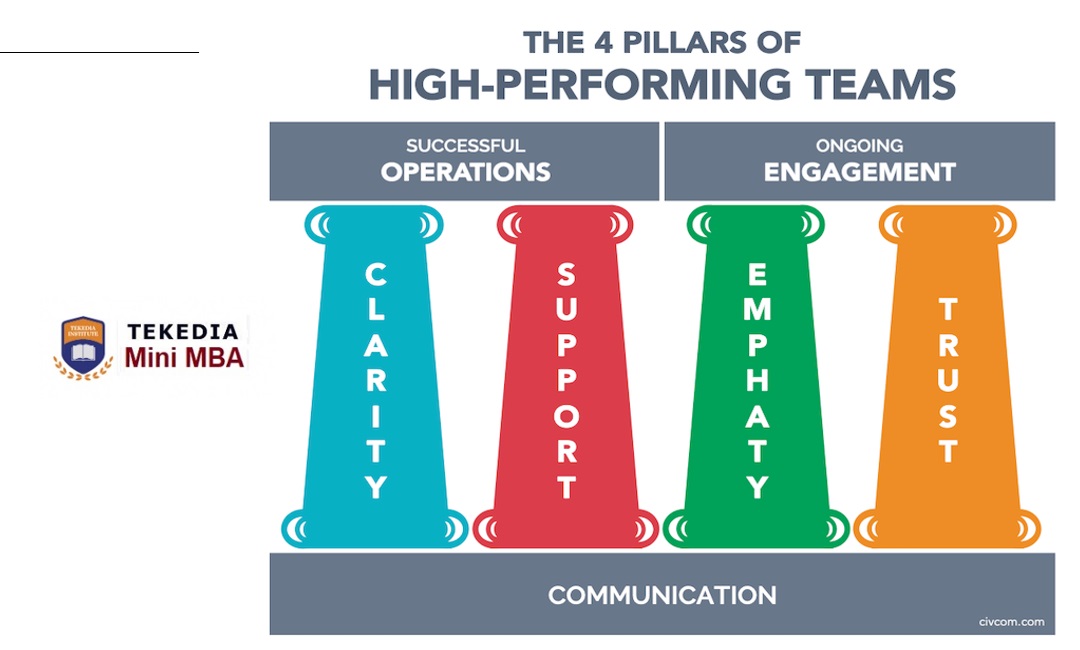
Build a high-performing team and win your market! [video]

0

Build a high-performing team and win your market! When high-performing People operate on great Processes using the best Tools, glory comes in revenue, market share and profit. #teamwork #tekediaMiniMBA


Fintech Startup LemFi Raises $33M in Series A to Simplify Remittance For Immigrants Globally

0

Fintech startup that allows users to send money to Africa in less than 10 minutes free of charge, LemFi, has raised $33 million in Series A Round to simplify remittance payments for immigrants globally.

The funding round was led by Left Lane Capital, with funds from other investors which include Y-Combinator, Zrosk, Global Founders Capital, and Olive Tree.

With the raise of its recent fund, the company said it intends to expand its product offering to the United States, Europe, the Middle East, and Asia, as well as innovate new product offerings according to the needs of its users.

LemFi’s CEO Ridwan Olalere drew from his own experience as an immigrant and said, having lived on three continents and leading a multicultural team, the company’s mission is deeply personal, creating a world where financial services are universally accessible.

“Our product is a game changer for users since traditional banks and other leading neo-banks have always steered clear of less common or more volatile currencies. This has driven immigrants to often use unsafe, informal channels or to stitch together several other services to solve some of their basic financial needs. Until now”, he added.

Speaking on what motivated the investment in LemFi, Principal at Left Lane Capital, Matthew Miller, said,

“LemFi has been very deliberate and strategic in acquiring licenses and building a robust network of financial institution partners to facilitate cross-border payments for immigrants. We’re excited to support LemFi as it expands its product offering to serve more immigrant communities globally.”

LemFi is set to build a platform that empowers the next generation of immigrants. With its product offerings, users can send, receive, hold, and save money in the currencies of their country of origin and residence.

The company understands that the African diaspora has financial service needs that are either unmet or met inefficiently.

Some of these needs range from high and hidden transfer fees for international remittance back to the limited ability to access and manage affordable credit products and bank accounts domiciled in their home country.

Founded in 2020, LemFi launched in Canada where it offered instant international transfer to the African diaspora community in Canada.

From Canada, the startup grew quickly, and by 2021, it had expanded to the UK. At the same time, the company was working to add more African countries where users could send money to or from.  By the end of 2021, it has added 10 new African remittance corridors.

LemFi’s mission is to make life easier for Africans abroad by providing borderless financial services that allow them to truly participate in the global economy wherever they are in the world.

Justice Department Files Lawsuit Against SpaceX, Over Hiring Discrimination Against Asylees

0

In a lawsuit filed on Thursday, U.S. federal prosecutors allege that Elon Musk’s SpaceX engaged in discriminatory practices over an extended period towards refugees and individuals granted political asylum who were seeking employment in the rocket company.

According to the lawsuit, SpaceX systematically discouraged refugees and asylees from applying and refused to hire or consider them due to their citizenship status, thereby contravening the Immigration and Nationality Act. These practices are said to have occurred from at least September 2018 to May 2022.

Fortune noted that in the past, Musk has indicated that SpaceX was restricted from employing foreign nationals unless they possessed a green card, suggesting that this was due to constraints associated with the sharing of information linked to rocket technology, governed by International Traffic in Arms Regulations (ITAR).

“If you’re working on rocket technology, that’s considered an advanced weapons technology. So even a normal work visa isn’t sufficient, unless you get a special permission from the Secretary of Defense or the Secretary of State,” Musk was quoted as saying at a space conference in 2016.

The lawsuit follows the conclusion of a probe by the DOJ into SpaceX’s hiring practices.

As part of its allegations, the U.S. Department of Justice asserted that SpaceX made inaccurate claims in its job postings, stating that it was constrained by federal export control laws to exclusively hire U.S. citizens and green card holders. The agency clarified that these laws do not mandate such limitations on hiring.

The investigation conducted by the Department of Justice was initiated in 2020, prompted by a complaint by an individual who said he was denied employment at SpaceX after disclosing during an interview that he did not possess U.S. citizenship or lawful permanent residency. In June 2021, a federal judge mandated SpaceX to provide its hiring records as a component of the ongoing investigation, per Fortune.

“Our investigation also found that SpaceX recruiters and high-level officials took actions that actively discouraged
asylees and refugees from seeking work opportunities at the company,” Kristen Clarke, the Justice Department’s head of civil rights, said in a statement.

The Justice Department further noted that the authorization for asylees and refugees to reside and work in the United States remains valid indefinitely, placing them on a level playing field with U.S. citizens and lawful permanent residents in accordance with export control laws.

“Under these laws, companies like SpaceX can hire asylees and refugees for the same positions they would hire U.S. citizens and lawful permanent residents,” it said. “And once hired, asylees and refugees can access export-controlled information and materials without additional government approval, just like U.S. citizens and lawful permanent residents.”

Companies under Musk have been accused of racial discrimination among other allegations of impropriety, with some resulting in lawsuits or regulatory probes.

Tesla Inc., the electric vehicle manufacturer led by Musk, has faced allegations from Black employees at its Fremont, California factory, who said that managers turned a blind eye to the frequent use of racial slurs on the assembly line and were sluggish in addressing graffiti with hate symbols such as swastikas that were scribbled in common areas.

In another case, Tesla is currently contesting allegations made by California’s civil rights department, which state that a considerable number of African American workers at its factory were subjected to mistreatment encompassing harassment, unequal compensation, and reprisals.

Separately, SpaceX is entangled in several lawsuits from former employees in recent years, alleging discrimination based on factors like age, race, and disability. Just earlier this month, a former SpaceX technician filed a lawsuit against the company in a California state court, alleging experiences of workplace harassment related to physical disability and subsequent retaliation, according to Fortune.

Other U.S. companies have also been investigated and sued by federal prosecutors over discriminatory job listings.

In September, Walmart Inc., CarMax Inc., Capital One Financial Corp., and Axis Analytics settled with the Justice Department after similar claims over discriminatory job postings against non-US citizens, the agency said. In June, auditing firm KPMG and 15 other employers also settled with the agency over hiring bias in postings on a college career services website. The agency said it collected $1.1 million from the 20 employers in civil penalties.

The lawsuit filed by the Justice Department claims that SpaceX engaged in discrimination against asylum seekers and refugees due to their citizenship status across various stages of the hiring process.

For instance, in 2020, a SpaceX engineer shared a job posting on a chat forum during a college career fair at the Georgia Institute of Technology. The posting specified that applicants must be “a US citizen,” even though the role did not necessitate U.S. citizenship, according to the allegations made in the complaint.

In the lawsuit against SpaceX filed on Thursday, U.S. federal prosecutors are requesting the court to grant retroactive wages and unspecified civil fines for asylum seekers and refugees who, according to the complaint, were purportedly refused employment opportunities at SpaceX.

The current state of crypto taxation in South Korea

0

South Korea is one of the most active and innovative countries in the crypto space. The government has been supportive of the development and adoption of blockchain technology and digital assets, and has implemented various regulations and policies to foster a healthy and vibrant crypto ecosystem.

However, one of the major challenges that crypto investors and businesses face in South Korea is taxation. The current tax regime is complex, ambiguous and inconsistent, and creates a lot of uncertainty and confusion for the crypto community.

According to the current tax laws in South Korea, crypto assets are not recognized as legal tender or financial assets, but as intangible assets. This means that they are subject to capital gains tax, which is calculated based on the difference between the acquisition price and the disposal price of the crypto assets.

However, there are several problems with this approach. First of all, there is no clear definition or guidance on what constitutes acquisition and disposal of crypto assets, and how to determine their fair market value. For example, is exchanging one crypto asset for another considered a taxable event? How about using crypto assets to pay for goods or services? How about receiving crypto assets as income or rewards? How about holding crypto assets in a wallet or a custodial service?

Secondly, there is no uniform tax rate or threshold for capital gains tax on crypto assets. Depending on the type and amount of income, different tax rates and exemptions may apply. For example, if the income from crypto assets is classified as miscellaneous income, it is subject to a flat tax rate of 20%, with a 2.5 million won ($2,100) exemption per year. However, if the income from crypto assets is classified as other income, it is subject to a progressive tax rate ranging from 6% to 42%, with no exemption.

Thirdly, there is no clear distinction or coordination between the national tax authority and the local tax authorities on how to collect and report taxes on crypto assets. The national tax authority has the jurisdiction over income taxes, while the local tax authorities have the jurisdiction over property taxes. However, since crypto assets are considered both income and property, there is a risk of double taxation or conflicting claims.

To address these issues and challenges, there are several possible solutions that can be implemented by the government and the crypto community. One solution is to adopt a more clear and consistent definition and classification of crypto assets, and provide more guidance and examples on how to calculate and report taxes on them. This would reduce the ambiguity and confusion for both taxpayers and tax authorities, and ensure a fair and transparent taxation system.

Another solution is to harmonize the tax rates and thresholds for capital gains tax on crypto assets, and align them with those of other financial assets or income sources. This would eliminate the discrepancies and inequalities among different types of income, and create a more level playing field for crypto investors and businesses.

A third solution is to coordinate and cooperate between the national tax authority and the local tax authorities on how to collect and report taxes on crypto assets and avoid double taxation or conflicting claims. This would enhance the efficiency and effectiveness of tax administration and reduce the burden and hassle for taxpayers.

Crypto taxation is one of the most important and urgent issues that need to be addressed in South Korea. The current tax regime is complex, ambiguous and inconsistent, and creates a lot of uncertainty and confusion for the crypto community. By adopting more clear and consistent definitions, harmonizing tax rates and thresholds, and coordinating between national and local tax authorities, South Korea can improve its crypto taxation system, and foster a more conducive environment for the development and adoption of blockchain technology and digital assets.