DD
MM
YYYY

PAGES

DD
MM
YYYY

spot_img

PAGES

Home Blog Page 3952

Exploring The Success Of Wall Street Memes, Signuptoken.com, And Ecoterra- The Top Presale Crypto

0

The world of cryptocurrencies has been buzzing with excitement as presale tokens emerge as a promising trend. Among the top presale crypto are Wall Street Memes (WSM) and Ecoterra, both of which have achieved remarkable presale success. In this article, we’ll discuss the triumphs of these two tokens and shed light on the potential game-changer, Signuptoken.com (SIGN), poised to reshape the presale market.

Wall Street Memes: A Crowdsourced Success

Wall Street Memes (WSM) stormed into the crypto scene, leveraging the power of humor and social media to drive its presale success. Backed by a robust community of meme enthusiasts, WSM capitalizes on viral content to attract attention. As of today, Wall Street Memes boasts a total circulating supply of 1 Trillion WSM, a market capitalization of $786,582, and a presale price of $0.0334 per token.

WSM’s unique approach has not only piqued the interest of investors but also captivated the wider public, positioning it as a testament to the evolving nature of crypto investments.

Ecoterra: Merging Crypto And Environmental Responsibility

Ecoterra takes a distinct approach by intertwining the world of cryptocurrencies with environmental consciousness. This dual-purpose token not only promises potential returns to its investors but also contributes a portion of its proceeds to ecological initiatives.

The presale campaign for Ecoterra has achieved substantial momentum, with a market capitalization of $2,446,586 and a presale price of $0.00229 per token at present. The success of Ecoterra highlights the growing demand for socially responsible investments within the crypto landscape.

The Top Presale Crypto

Presale cryptocurrencies have emerged as a dominant trend, reflecting the evolving nature of the crypto market. These tokens offer early investors the chance to acquire assets before they hit mainstream exchanges, potentially leading to significant gains.

Signuptoken.com, Wall Street Memes, and Ecoterra exemplify the diverse strategies that can drive presale success, from community-driven approaches to socially conscious initiatives.

Signuptoken.com: Redefining The Presale Landscape

Amidst this dynamic environment, Signuptoken.com has emerged as a standout contender among the top presale cryptos promising a profit of up to 72X its presale price. This platform promises a unique blend of features and strengths that set it apart from the competition.

With a clear focus to top the chart of cryptos with a successful presale, SIGN aims to empower a broader range of investors. Its presale price currently stands at $0.01, and while it has sold over 17 million tokens already, its vision for inclusivity and innovation holds immense promise.

Signuptoken.com is a beacon of promise in the world of presale investments. With a visionary outlook, it’s rewriting the rulebook, ensuring access for all is universal and democratized.

What sets it apart? A user-first approach, transparent dealings, and an all-welcome atmosphere. Imagine the thrill as investors, crypto aficionados, financial wizards, and tech enthusiasts unite in the quest for new horizons. Brace for a revolution—the future of presale investments is getting a makeover!

SIGN has the potential to carve out a significant niche for itself. It’s time to take a step forward and be a part of this exciting journey.

Final Thought

As we seek to discover the top presale cryptos, Wall Street Memes, and Ecoterra stand as shining examples of successful execution. These tokens embody the evolving nature of investments in the digital age. Amidst this success, Signuptoken.com emerges as a promising player with a vision to revolutionize the presale market. Its unique features and commitment to inclusivity position it as a contender worthy of attention. 

For more information on Signuptoken.com:


Website: https://www.signuptoken.com

Twitter: https://twitter.com/_SignUpToken_

Telegram: https://t.me/SignUpToken

As Verizon Sunsets BlueJeans, Check if Your Product Has Durable Value Proposition

0

During the pandemic,  many business models evolved. But while some of those were pandemic-fit, most out of those models were not normal state-fit. In other words, that those businesses were doing well during the pandemic does not mean they have a chance post-pandemic.

One of those domains we witnessed was video calling service. Yes, when Zoom rose to the mountaintop, companies went and began shopping for clones where they were unable to develop such in-house. Verizon bought BlueJeans for $400 million. Today, BlueJeans has been frozen, and done. It was relevant during the pandemic, but has only limited value today because of competitions from Zoom, Microsoft Teams, Google Meet and others.

Verizon is officially shutting down its video calling service BlueJeans, just three years after acquiring the platform for $400 million. BlueJeans recently introduced free trials and a Basic plan in an attempt to better compete with rivals like Zoom, but a “changing market landscape” led Verizon to sunset the product, TechCrunch reports. Verizon bought BlueJeans at the peak of the pandemic, when widespread remote work fueled skyrocketing demand for virtual collaboration tools. That demand has since drastically waned as in-person work continues to pick up.

Here is the lesson: when you look at the long-term value of a product, you must check if that product has value, beyond any effervescence at the moment. In other words, can it transmute if customer preferences suddenly change.

Meanwhile, Google and Universal Music are exploring a way to license artists’ melodies and voices for AI-generated songs, notes LinkedIn News.

Google and Universal Music are discussing a potential deal to license artists’ melodies and voices for AI-generated songs, anonymous sources tell the Financial Times. Generative AI has already produced a wave of “deepfake” songs that mimic the voices of real artists, making it sound like, for example, Johnny Cash is singing “Barbie Girl.”The deepfakes are often made without the permission of the original artist; the Google-Universal deal would allow fans to create the songs legitimately, after paying the copyright owners for their use. Artists would be able to choose whether to opt in.Artist reaction to the use of AI has been mixed: rapper Drake recently called a song that mimicked his voice “the final straw,” while electronic dance artist Grimes offered to let creators use her voice and split the royalties. Warner Music is also reportedly in talks with Google to develop a similar product.

Give Primacy to Dialogue and Diplomacy in Resolving Niger Crisis – Peter Obi

0

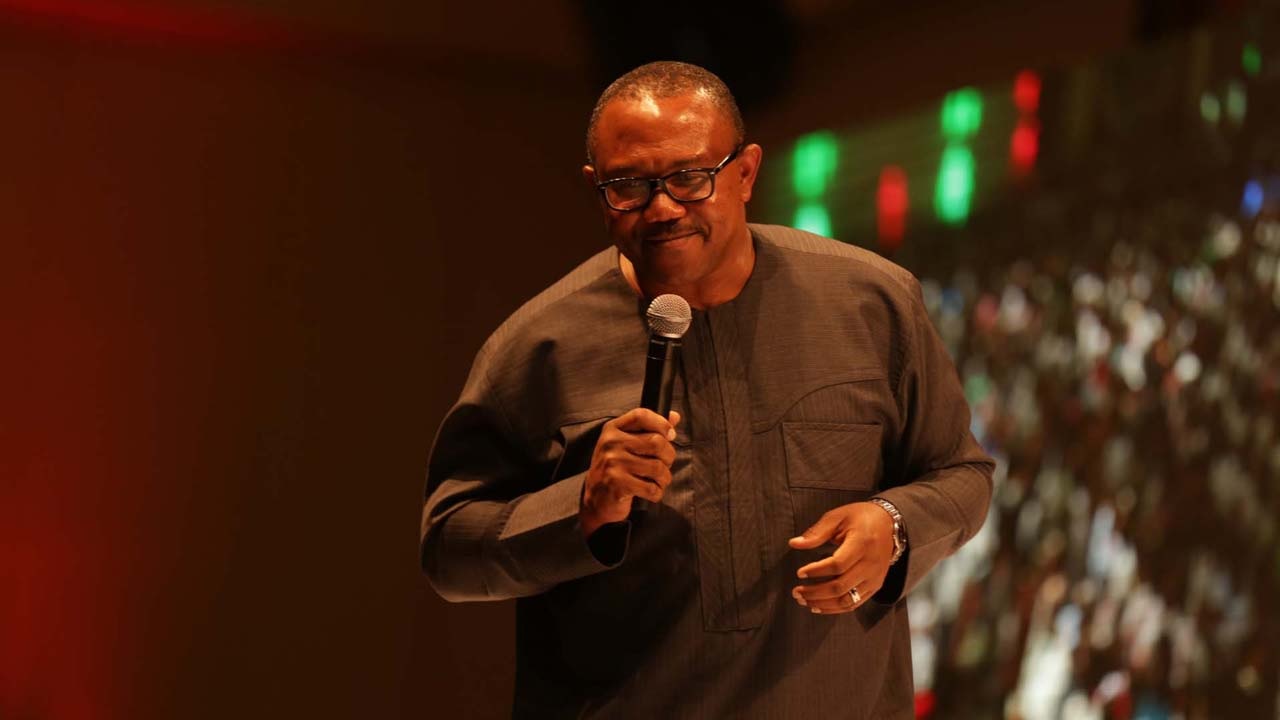
The Labour Party (LP) presidential candidate in Nigeria’s last general elections, Peter Obi, has finally weighed in on the coup crisis in Niger Republic.

The two-term former governor of Anambra State issued a statement on Twitter on Sunday, expressing his thoughts on the matter and proffering solutions. Like many other well-meaning Nigerians who have spoken on the crisis in Niger, Obi called for “a total diplomatic solution.”

He said regardless of “the positions taken by various parties” that have “direct or tangential interests in Niger”, primacy must be given to “dialogue and diplomacy” towards a resolution with minimal disruptive impact on Nigeria and the West African sub-region.

The Economic Community of West African States (ECOWAS), in the wake of the July 26 coup, had issued a seven-day ultimatum to the Niger military junta to restore the deposed president, Mohamed Bazoum to power or face sanctions and possible military response.

Following the expiration of the ultimatum, ECOWAS leaders made a move to activate the military intervention by ordering the deployment of their standby troops amid growing calls for dialogue.

Obi, who described Niger as “a hot-button issue for ECOWAS, as well as various international interlocutors,” noted that the diplomatic resolution must take into consideration the realpolitik of the West African sub-region.

He said it is important that the people of Niger are allowed via their national institutions the opportunity to revert quickly to a representative democratic government.

Read his full statement below:

“Recent developments in the neighboring Niger Republic have become the subject of international attention. For Nigeria, this development is a matter of dire and urgent national interest and security.

“Inevitably, Niger is a hot-button issue for ECOWAS, as well as various international interlocutors. Regardless of the positions taken by various parties that have direct or tangential interests in Niger, primacy must be given to dialogue and diplomacy towards a resolution with minimal disruptive impact on Nigeria and the West African sub-region.

“A total diplomatic resolution must take into consideration the realpolitik of the West African sub-region. I applaud the respective mediatory efforts by Gen. Abdulsalami Abubakar, His Eminence Muhammadu Sa’ad Abubakar, the Sultan of Sokoto, and His Royal Highness Sanusi Lamido Sanusi.

“Whereas ECOWAS authorities have indicated that they remain open to various conflict resolution options, diplomacy must remain the overarching imperative in resolving the present crisis.

“I join the many well-meaning Nigerians who have advocated that any intervention in the crisis, should be pre-eminently through diplomatic dialogue among all strategic interests in the crisis.

“It is therefore important that the people of Niger are allowed via their national institutions, the opportunity to revert quickly to a representative democratic government.

“All national, regional, and international assistance should be extended to the people of Niger to return their country to normalcy.

“While ECOWAS must seek to discourage the spread of military dictatorships in West Africa, the recourse to armed deterrence must be retrained by multilateral diplomatic mechanisms.

“What the situation in Niger urgently calls for is a concerted multilateral coalition of Nigeria, ECOWAS, the AU, and the UN towards a programmed return to a democratic constitutional order. In this process, Nigeria’s leadership role must not be in any doubt.”

Niger Republic Military Junta Opens Way for Dialogue

0

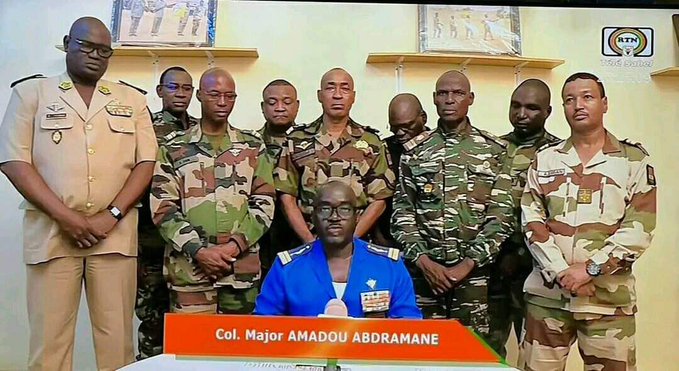
In the latest turn of events in Niger Republic, the military junta, which deposed President Mohamed Bazoum in a July 26 coup, has agreed to embrace dialogue in resolving the resulting crisis in the West African country.

Following a meeting with the Intervention Team of Nigerian Islamic leaders, General Abdourahmane Tchiani, the head of the Niger military junta, has consented to engage in diplomatic discussions with the Economic Community of West African States (ECOWAS).

The Islamic scholars were led by Bala Lau, national chairman of Jamatul Izalatu Bida Waikamatu Sunnah, and met with Tchiani for several hours in Niger’s capital, Niamey.

The new development follows a series of failed attempts by ECOWAS leaders headed by Nigerian President Bola Tinubu to resolve the crisis through diplomacy, prompting the regional group to opt for military intervention.

Ali Mahamane Lamine Zeine, the Prime Minister of Niger Republic, stated that General Tchiani had approved the initiation of discussions with ECOWAS and expressed hope that the diplomatic discussions would take place in the coming days.

As stated in a Sunday release signed by Lau, the coup leader and Islamic scholars engaged in deliberations encompassing various matters, including the request from ECOWAS leaders for the reinstatement of former President Bazoum.

“We have agreed and the leader of our country has given the green light for dialogue. They will now go back and inform the Nigerian President what they have heard from us…. we hope in the coming days, they (ECOWAS) will come here to meet us to discuss how the sanctions imposed against us will be lifted,’’ Zeine said.

Though the ECOWAS had resolved to use military action to restore Bazoum to power, the bloc, which has ordered the deployment of its standby troops, is holding back due to overwhelming antiwar calls. The Nigerian Senate and the majority of ECOWAS Parliament members have rejected the move for military intervention, calling for a diplomatic approach.

Given the situation, Islamic clerics, northern elites, and traditional rulers have moved to initiate discussions with the junta in a bid to open the way for diplomatic discussion.

Lau explained that the religious leaders, acting on behalf of President Bola Tinubu, arrived in Niger to fulfill their request for intervention. He noted that their purpose was to initiate a meaningful conversation, aiming to persuade the junta leader and other military figures involved in the coup to opt for a peaceful resolution of the crisis rather than resorting to conflict.

The delegation reportedly spent several hours with Tchiani in Niger’s capital Niamey, deliberating on all the issues, including the demand by ECOWAS leaders that former President Bazoum be reinstated.

Following the discussion, Tchiani was said to have apologized for shutting the door to dialogue earlier on. Nonetheless, he expressed his disappointment over ECOWAS leaders’ failure to listen to their perspective before issuing an ultimatum for their resignation.

He contended that the coup was undertaken with good intentions, asserting that their actions were aimed at averting an impending threat that could have impacted both Niger Republic and Nigeria.

Furthermore, he extended an apology for not affording the team led by former Head of State General Abdulsalami Abubakar (rtd), which was dispatched by President Tinubu, the requisite attention. He attributed this oversight to their discontent over the ECOWAS ultimatum.

The leader of the junta said their doors are now open to explore diplomacy and peace in resolving the matter.

The Path of Ghanaian Cedi And Lessons for Nigeria’s Naira

4
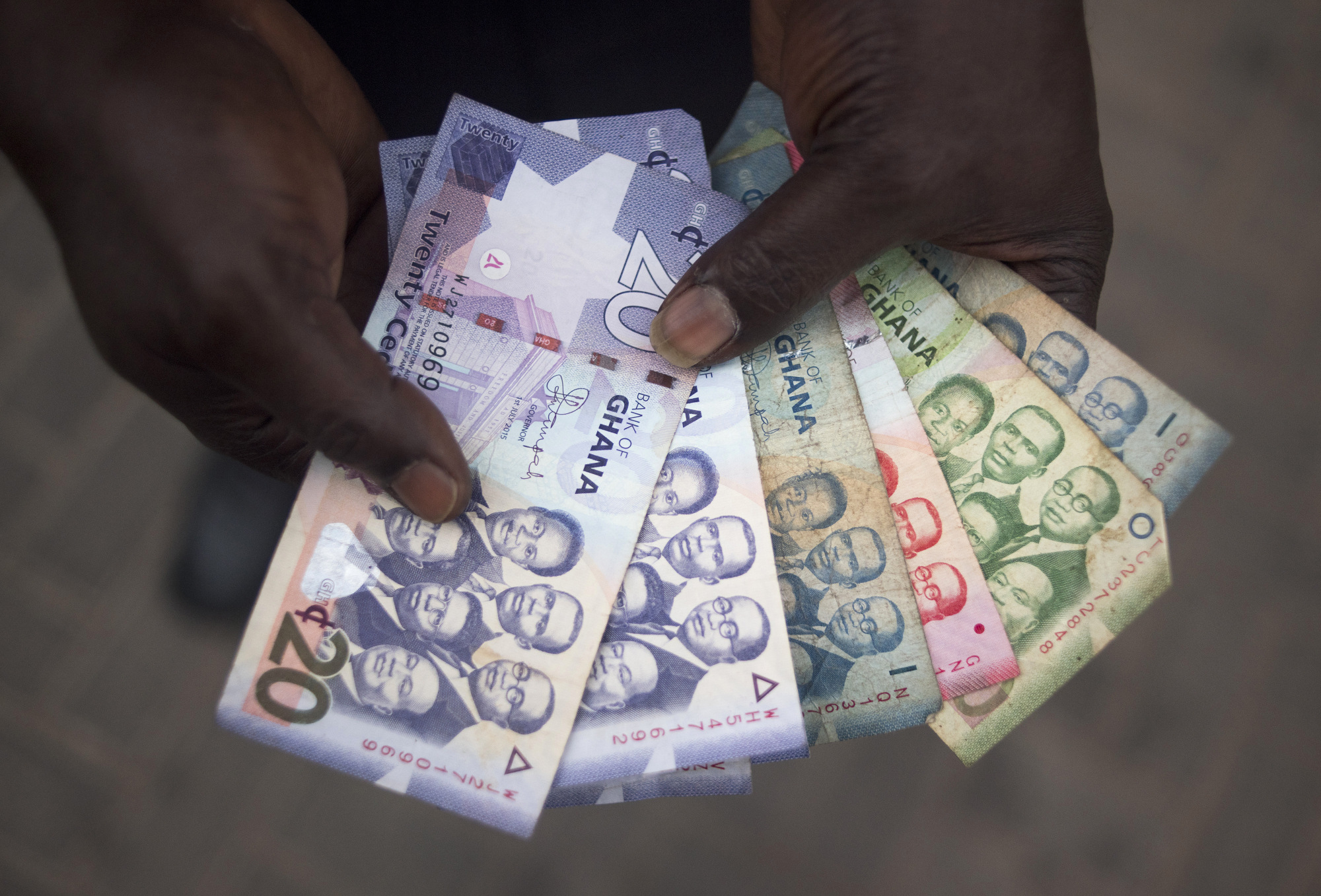
A man holds Ghanian currency in his hands on September 20, 2016 in Accra, Ghana. Ty Wright/Bloomberg News

Poor Ghana: it made 1 Cedi = 1 USD in 2007 hoping that abracadabra magical algebra makes sense in global economics/currency (it was about 1 USD = 10,000 Cedi before the redenomination). But it is not just Ghana. Some Nigerian politicians promised to make 1 Naira = 1 USD. Thankfully, that hopeless policy was abandoned. Yes, since the Tang dynasty invented paper money in 7th century China, some countries have seen the value of money on the number printed on the paper. But the best among nations, think beyond that.

In June 2007, a redenomination of the cedi by the Bank of Ghana, led to the initiation of the new Ghana cedi. The value of the cedi relative to the dollar before the redenomination was in the range of ¢9,300 to ¢10,000. It became ¢0.93 – ¢1 to 1USD after the redenomination.

In the African Union, many have postulated that once Africa has one currency that all our problems will disappear. But look at the CFA Franc area and how it is being rattled. That is also a strong indication that currency union will not save Africa until we begin to win on innovation and productivity. You have no national positioning under a supranational central banking ordinance in a currency union within a heterogeneous market system. Indeed, if Africa goes ahead on a single currency and does nothing on economic output, welfare losses will be huge. 

I have made that point before the African Union Congress – and I remain hopeful that we do not adopt the EU/euro playbook without considering that the EU’s economy is very homogenous, and shocks are relatively more manageable.

Back to Ghana: 1USD = 11 Cedi today. Sure, that old magic achieved something, if not 1 USD  will be about 100,000 Cedi today. So, the magic saved people time from writing long digits. More so, it has reduced greenhouse emissions since cheque books, bank forms, etc may not need to be longer. How do you write $10,000,000 if 1 USD would have been 100,000 Cedi. On that, you commend the genius in Ghana.

People, Nigeria needs to have a national emergency on its currency. Do not tell me that it would stabilize without explaining how. Ghana promised the same… and that illusion continues to scale.

The strength of Nigerian Naira comes from warehouses and factories, and not from the Central Bank of Nigeria (CBN) headquarters. Those warehouses and factories include the old (the traditional firms like Innoson Motors, Dangote Cement) and the modern  ones (like Paystack, Tomato Jos). Until the CBN can use its monetary tools to elevate them, it cannot win the fight for Naira.

As this election season begins, if you want to strengthen the Naira, vote for visionaries who understand the multifaceted global economic system, with defined roles on where Nigeria can play.

Anyone who tells you that he will make N1 = $1, via fiat, is a liar by default; only the factories have the real powers to determine those. So, the question is really: who can help us create better factories, the old and the modern?

People, Naira needs help right now.

Roadmap to the future

I wrote a lead paper for the African Union Congress as a banker and banking/finance doctoral student, and I disputed many of the illusions on the required prior convergence of our currencies before we could intra-trade, agnostic of currencies. Years later, I dropped  this challenge: “build a truly pan-African digital remittance/transfer banking product which is agnostic of location or currency in Africa.”

 In other words, you do not need a single currency to achieve this since technology can hide all the “regulations” and still achieve the same outcome. As Mr. President noted, it is time. Even the US dollars will benefit from it because Africa will grow to buy more from it.

(Update: on video is President of Kenya)

Comment on Feed

Comment 1: Yes, zeros were removed, but if you look at the PP of the Cedi over the period between 2007 and now compared to the Naira, you find that with or without removing even the zeros, the Naira was not and is still not anywhere near where what the Cedi could and can buy from a basket of composites.

The history of the performance of the Cedi and Naira is still there to compare. That’s the difference. It’s not just a simple matter of removing zeros to make the currency look okay.

The fundamentals of the economy at the time Ghana undertook that project, supported that action. And, it’s no gainsaying that Ghana’s economic footings have always been on the better side, no matter the bleaks.

So, let not Nigeria attempt what Ghana did and survived; its economy will crash, because the existing trajectory points to an entirely unique imbalances from many angles. The malaise in the structure of the Nigerian economy, as you know is great.

Inspite of the managers of Ghana’s economy doing a bad job now, you’d agree with me that it’s a wrong choice to cite to make a case for Nigeria wanting or not wanting to do same; mind you, the Cedi still has better buying power than Naira; ask why.

My Response: Please I hope this piece is not creating tension. There was no intention to make people feel bad. But yet, if I have to take you up, your data is not factual. In 2007, US$1 = N130. At that time, $1 = 10,000 Cedi which was forced to 1 Cedi. Today, $1 = 11Cedi which is  a factor of 11. For what you said to be true, Nigeria has to be 130*11 = 1430. The Naira is about there but not yet there since it is about N930/$ today. So, your argument that Cedi could buy more is not supported by data.

Comment 1R: Ndubuisi Ekekwe, not at all, Prof. No tension created and no pun intended, too??. But, for the learning, I sought to point out some facts premised solely on PP of the two currencies underpined by the two countries’ economic dynamics over the period.

And, this was in response to some commentators who had taken your piece on its surface to propose a flawed position not backed by any fact.

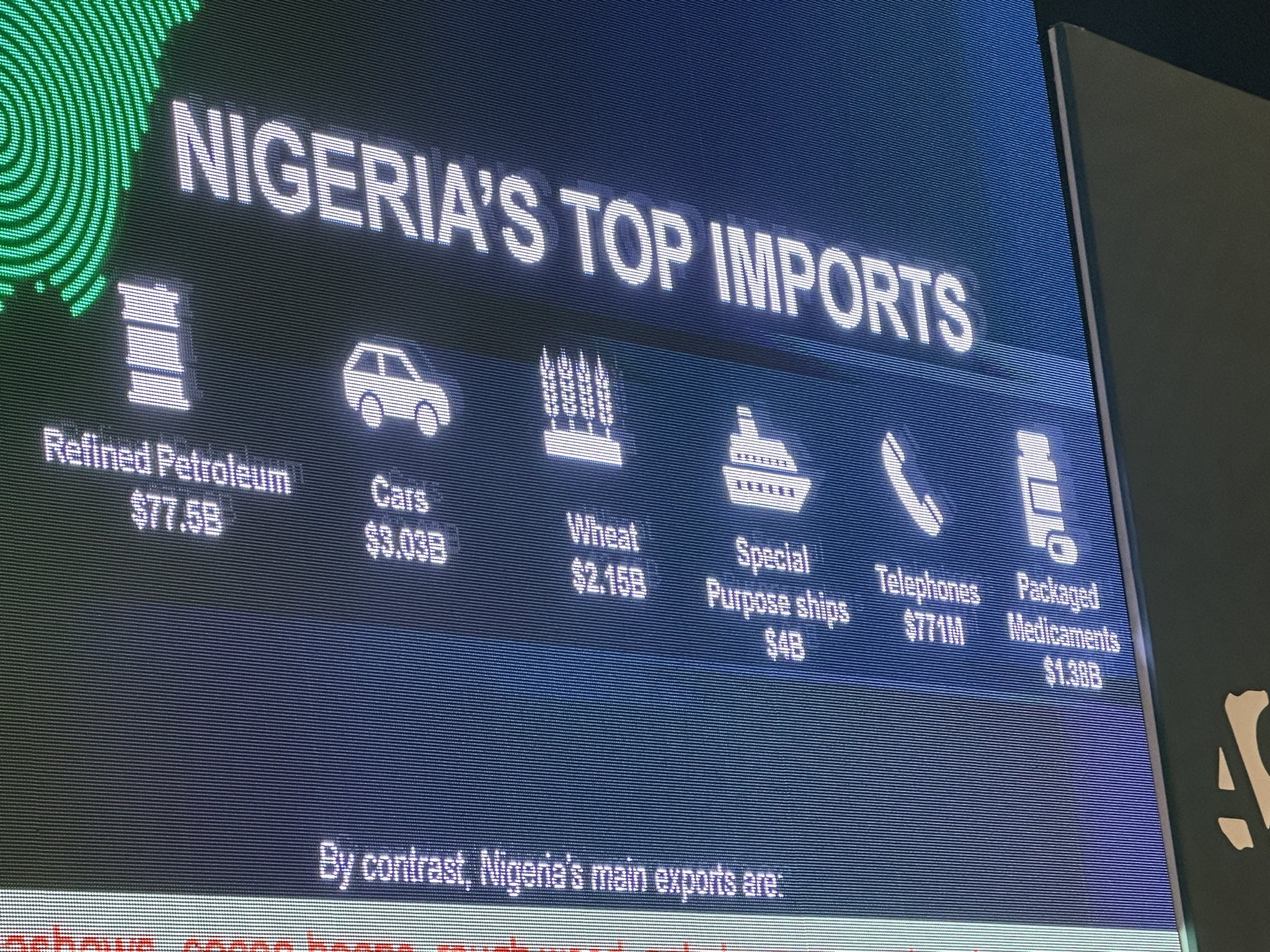
Nigeria’s top imports