DD
MM
YYYY

PAGES

DD
MM
YYYY

spot_img

PAGES

Home Blog Page 3962

MicroStrategy Purchases Additional 16,130 Bitcoin for $593.3M, as NP-Hard Ventures Secures €12M Funding

0

MicroStrategy, a leading business intelligence and cloud computing company, has announced that it has acquired 16,130 more Bitcoin in the fourth quarter of 2023, worth about $593.3 million at the time of purchase. This brings the company’s total Bitcoin holdings to 181,000, which it claims to be the largest corporate Bitcoin treasury in the world.

The company’s CEO, Michael Saylor, has been a vocal advocate of Bitcoin as a store of value and a hedge against inflation. He has repeatedly stated that he believes Bitcoin is superior to gold and other traditional assets, and that he intends to hold it for the long term. He has also encouraged other companies and institutions to follow his example and adopt Bitcoin as part of their balance sheet strategy.

MicroStrategy’s latest purchase comes amid a bullish market sentiment for Bitcoin, which has surged to new all-time highs in November 2023, reaching over $40,000 per coin. The cryptocurrency has also gained more mainstream recognition and adoption, with several countries, banks, and corporations embracing it as a legal tender, a payment option, or an investment vehicle.

MicroStrategy’s move is likely to boost the confidence and demand for Bitcoin among other investors and potential adopters, as it demonstrates the company’s commitment and conviction in the future of the digital asset. It also shows that MicroStrategy is not deterred by the volatility and regulatory uncertainty that still surround Bitcoin, and that it is willing to take advantage of the dips and accumulate more coins at lower prices.

The company’s stock price (MSTR) has also benefited from its Bitcoin strategy, as it has outperformed the S&P 500 index by over 300% since it started buying Bitcoin in August 2020. The company has also issued several convertible bonds and senior notes to raise funds for its Bitcoin purchases, indicating that it has a strong cash flow and credit rating.

MicroStrategy’s bold and visionary approach to Bitcoin has earned it the respect and admiration of many in the crypto community, as well as the attention and scrutiny of regulators and critics. The company has faced some legal challenges and investigations from the Securities and Exchange Commission (SEC) and other authorities over its Bitcoin disclosures and accounting practices, but it has maintained its compliance and transparency throughout.

MicroStrategy’s example may inspire more companies and institutions to follow suit and allocate some of their capital to Bitcoin, as they seek to preserve their wealth and enhance their returns in an uncertain and inflationary economic environment. MicroStrategy has proven that Bitcoin is not only a viable but a profitable and strategic asset class for the modern era.

NP-Hard Ventures has secured €12M funding and Tritemius Fund I

NP-Hard Ventures, a venture capital firm focused on investing in deep tech startups, has closed its first fund at €12 million, exceeding its initial target of €10 million. This is a remarkable achievement for our team, who have been working hard to identify and support the most innovative and impactful companies in the fields of artificial intelligence, quantum computing, biotechnology, and more.

Our fund was launched in 2021 with the vision of backing entrepreneurs who are solving some of the most challenging and important problems in the world, using cutting-edge technologies that are often considered NP-hard. NP-hard problems are those that cannot be solved efficiently by any known algorithm, and require a combination of creativity, expertise, and perseverance. We believe that these problems represent huge opportunities for creating value and positive change for society.

We are grateful to our limited partners, who have shown their trust and confidence in our strategy and portfolio. Our investors include leading institutions, family offices, and angel investors from Europe and beyond. With their support, we have been able to invest in 15 startups so far, across various stages and sectors. Some of our portfolio companies include:

Qubitica: A quantum computing platform that enables developers to build and deploy quantum applications in the cloud.

Biofy: A biotechnology company that uses synthetic biology and machine learning to engineer novel enzymes for industrial applications.

Zephyr: A software company that leverages artificial intelligence and natural language processing to automate legal document analysis and contract management.

Tritemius Fund I: A New Seed Fund for Internet 3.0 and Blockchain Startups

Tritemius Fund I, a €50M seed fund will focus on investing in early-stage startups that are building the next generation of internet and blockchain technology.

Internet 3.0 is the vision of a decentralized, open and user-centric web, where users have more control over their data, identity and digital assets. Blockchain technology is one of the key enablers of this vision, as it provides a secure, transparent and trustless infrastructure for peer-to-peer transactions and interactions.

At Tritemius, we believe that internet 3.0 and blockchain technology have the potential to transform various industries and sectors, such as finance, media, gaming, social networking, e-commerce, health care and more. We also believe that Europe is a fertile ground for innovation and talent in this space, and we want to support the best entrepreneurs who are creating impactful solutions for the future of the web.

Our fund will invest in pre-seed and seed-stage startups that are developing innovative products and platforms based on internet 3.0 and blockchain technology. We are looking for teams that have a clear vision, a strong technical expertise, a product-market fit and a scalable business model. We are also looking for startups that share our values of openness, collaboration and social impact.

As investors, we aim to be more than just capital providers. We want to be partners and mentors for our portfolio companies and help them grow and succeed in their journey. We will leverage our network of experts, advisors and industry partners to provide our startups with access to relevant resources, insights and opportunities. We will also foster a community of like-minded founders who can learn from each other and collaborate on common challenges and goals, the company wrote.

If you are a founder or a team working on internet 3.0 or blockchain technology, and you are looking for seed funding and support, we would love to hear from you. Please visit our website to learn more about our fund and our investment criteria, and to submit your application. We look forward to connecting with you soon.


Bolt Sacks 5000 Drivers in Kenya

0

Bolt, the ride-hailing company formerly known as Taxify, has announced that it has terminated the contracts of 5000 drivers in Kenya due to low ratings and poor performance. The company said that the decision was made after a thorough review of the drivers’ feedback and quality metrics, and that it was necessary to ensure a high standard of service for its customers.

Bolt’s country manager, Ola Akinnusi, said that the move was part of the company’s efforts to improve customer satisfaction and safety. He said that Bolt had introduced a new rating system that allowed customers to rate their drivers on a scale of one to five stars, and that drivers who consistently received low ratings or violated the company’s policies would be removed from the platform.

The ride-hailing industry in Kenya has been growing rapidly in recent years, offering convenient, affordable, and efficient transportation options for millions of commuters. According to Statista, the revenue in the ride-hailing market in Kenya is projected to reach US$47.05 billion in 2023, with a user penetration of 13.4%. However, the market is also highly competitive and dynamic, featuring a multitude of players that are constantly innovating and expanding their services.

1. Bolt

Bolt (formerly Taxify) is one of the most popular ride-hailing platforms in Kenya, operating in Nairobi, Mombasa, Kisumu, Nakuru, Eldoret, and Thika. Bolt offers a variety of services, including Bolt Go (low-cost rides), Bolt Lite (standard rides), Bolt Protect (rides with protective shields), Bolt Boda (motorcycle rides), and Bolt Business (corporate rides). Bolt also allows users to pay with cash, card, or M-Pesa. According to its website, Bolt has over 10,000 drivers and 500,000 riders in Kenya.

2. Yego

Yego is a local ride-hailing company that was launched in 2017. Yego operates in Nairobi and its environs, offering car rides, motorcycle rides, and delivery services. Yego claims to have over 15,000 drivers and 300,000 users on its platform. Yego also boasts of having the lowest commission rate for drivers (10%) and the lowest fares for riders. Yego accepts cash and M-Pesa payments.

3. Hava

Hava is another homegrown ride-hailing company that was launched in 2019. Hava operates in Nairobi and its surrounding areas, offering car rides and motorcycle rides. Hava claims to have over 5,000 drivers and 100,000 users on its platform. Hava also prides itself on having a transparent pricing model that does not include surge pricing or hidden fees. Hava accepts cash and M-Pesa payments.

4. A Nisa Taxi

A Nisa Taxi is a unique ride-hailing company that caters exclusively to women. A Nisa Taxi was founded in 2017 by Mehnaz Sarwar, a Kenyan woman who wanted to create a safe and comfortable transportation option for women. An Nisa Taxi operates in Nairobi and its suburbs, offering car rides with female drivers and female passengers only. A Nisa Taxi also provides free sanitary pads and Wi-Fi to its customers. A Nisa Taxi accepts cash and M-Pesa payments.

5. Farasi Cabs

Farasi Cabs is a relatively new entrant in the ride-hailing market in Kenya, having launched in 2020. Farasi Cabs operates in Nairobi and its neighboring counties, offering car rides and motorcycle rides. Farasi Cabs claims to have over 2,000 drivers and 50,000 users on its platform. Farasi Cabs also promises to have competitive fares and reliable service. Farasi Cabs accepts cash and M-Pesa payments.

These are some of the leading ride-hailing companies in Kenya that are competing with Uber, Little and SWVL for a share of the lucrative mobility market. Each of these companies has its own strengths and weaknesses, as well as opportunities and challenges. As the demand for ride-hailing services continues to grow in Kenya, we can expect to see more innovation and competition among these players.

“We have been monitoring the performance of our drivers and we have noticed that some of them have not been meeting our expectations. We have decided to expel 5000 drivers who have either received poor ratings from our customers or have been involved in incidents that compromise the safety and security of our riders,” Akinnusi said.

He added that Bolt was committed to providing reliable and affordable transportation options for its customers, and that it would continue to invest in training and incentives for its drivers. He also urged customers to always rate their drivers after each trip, and to report any issues or complaints through the app or the customer support channels.

Bolt is one of the leading ride-hailing companies in Kenya, competing with Uber, Little and SWVL. The company claims to have over 50,000 drivers and 1.5 million customers in the country. It operates in Nairobi, Mombasa, Kisumu, Nakuru, Eldoret and Thika.

AI and the $3 Trillion Industry that will be in the Metaverse by 2030 (per a McKinsey report)

0

The metaverse is a term that describes a shared virtual reality where people can interact, create, and consume digital content. It is often seen as the next frontier of the internet, where immersive and social experiences will redefine how we work, play, and communicate.

One of the key drivers of the metaverse is artificial intelligence (A.I), which enables the creation and management of complex and dynamic virtual worlds. A.I can also enhance the user experience by providing personalized recommendations, natural language processing, computer vision, and more.

According to a recent report by McKinsey, the metaverse could generate up to $3 trillion in annual economic value by 2030, accounting for 6% of global GDP. The report identifies four main sources of value:

Content creation and consumption: The metaverse will enable new forms of digital media and entertainment, such as interactive games, live events, virtual concerts, and social media. Users will be able to create and monetize their own content, as well as access a vast library of existing content.

Commerce and advertising: The metaverse will offer new opportunities for online shopping and marketing, such as virtual showrooms, product demonstrations, and immersive ads. Users will be able to buy and sell digital goods and services, as well as physical products that can be delivered in the real world.

Productivity and collaboration: The metaverse will enable new ways of working and learning, such as remote meetings, virtual classrooms, and online training. Users will be able to collaborate across distances and time zones, as well as access specialized tools and resources.

Infrastructure and platforms: The metaverse will require a robust and scalable infrastructure that can support high-quality graphics, audio, and interactivity. This includes cloud computing, edge computing, 5G networks, blockchain, and more. The report also highlights the role of platforms that can provide access to the metaverse, such as social networks, gaming consoles, VR headsets, and smartphones.

The report also outlines some of the challenges and risks that the metaverse poses, such as privacy, security, regulation, ethics, and social impact. It suggests that stakeholders from different sectors and regions should collaborate to ensure that the metaverse is inclusive, sustainable, and beneficial for all.

The metaverse is not a distant future, but a present reality that is evolving rapidly. A.I is one of the key technologies that will shape its development and growth. As the report concludes: “The metaverse is coming. Are you ready?”

Coinbase tells some customers it received subpoena related to Bybit

Coinbase, one of the largest cryptocurrency exchanges in the world, has sent an email to some of its customers informing them that it received a subpoena from the U.S. Commodity Futures Trading Commission (CFTC) related to their trading activity on Bybit, another crypto platform.

The email, which was shared by some users on social media, states that Coinbase is required to produce certain records and information about the customers who have used Bybit, a Singapore-based exchange that offers derivatives trading and is not registered with the CFTC.

The email does not specify the reason for the subpoena or the scope of the investigation, but it advises the customers to consult with their own legal counsel if they have any questions or concerns. Coinbase also assures its customers that it is not a target of the investigation and that it is cooperating with the CFTC as required by law.

“We take our legal obligations seriously and are committed to protecting your privacy and security. We appreciate your understanding and cooperation in this matter,” the email reads.

Bybit is one of the most popular crypto platforms for derivatives trading, which involves betting on the future price movements of cryptocurrencies. However, derivatives trading is subject to strict regulations in the U.S. and other jurisdictions, and many platforms like Bybit do not comply with them.

The CFTC has been cracking down on unregistered crypto platforms that offer derivatives trading to U.S. customers, alleging that they are violating the Commodity Exchange Act and exposing investors to fraud and manipulation risks.

In October, the CFTC announced that it had reached a settlement with BitMEX, another major crypto derivatives platform, which agreed to pay $100 million in civil penalties and to cease offering services to U.S. customers. It is unclear how many Coinbase customers have used Bybit or how much they have traded on the platform. Coinbase did not respond to a request for comment at the time of writing.

The subpoena from the CFTC is another sign of the increasing regulatory scrutiny that the crypto industry is facing in the U.S. and around the world. Coinbase itself has been involved in several disputes with regulators, including the Securities and Exchange Commission (SEC) and the Internal Revenue Service (IRS).

Coinbase’s CEO Brian Armstrong has been vocal about his frustration with the lack of clarity and consistency in the crypto regulations and has called for more dialogue and collaboration between the industry and the authorities. However, some experts have argued that Coinbase and other crypto platforms need to do more to comply with the existing rules and to protect their customers from potential legal risks.

Notable Provisions of The Upstream Unitization Regulations of Nigeria

0

This article is the first in a series of articles on the upstream Nigerian Oil and Gas sector, with a focus on the Nigerian Upstream Petroleum Regulatory Commission (NUPRC) Regulations on unitization, specifically its :-

– Objectives

– Application Scope

– Hydrocarbon Discovery Notifications

– Joint Development Agreements

– Determination of Straddling Reserves.

What are the objectives of the regulations?

– The regulations are to establish rules, principles and procedures for the implementation of initiation of oil and gas from a petroleum reservoir that extends beyond the boundaries of a license or lease area to which another license or lease relates.

What is the application scope of these regulations?

– The regulations apply to licenses and leases granted under the Petroleum Industry Act, whose petroleum reservoir extends beyond the boundaries of its license or lease area, to which a different person is the licensee or lessee and a declaration of commercial discovery has been made.

What are the preliminary activities to oil discovery under the regulations?

– A licensee or lessee may in carrying out geophysical activities involving the acquisition of geophysical data within its license or lease boundary, stretch across the boundary, into any adjourning license or lease area to a distance of not more than 2 kilometers.

– The acquisition of geological data pursuant to these regulations shall be with prior approval of the NUPRC and notification to the licensee or lessee of the adjoining license or lease area.

– A licensee or lessee shall process and interpret any geophysical, geotechnical and geological data acquired pursuant to this regulation and may make available to a licensee or lessee of adjourning license or lease area the processed data or any interpretation of the data.

– A licensee or lessee shall map all geological traps in its license or lease area considered to straddle one or more adjourning license or lease boundaries with the knowledge of any other party.

What are the provisions of the regulations on notification of hydrocarbon discoveries?

– A licensee or lessee who identifies a petroleum reservoir in a geological trap in its license or lease area, which appears to straddle one or more adjoining licenses or leases, shall notify the NUPRC of such discovery within  2 weeks of well suspension or abandonment.

– The notification referred to above shall be followed by a full report within 60 days, stating certain required information for each straddling petroleum reservoir.

– Where a petroleum reservoir referred to above extends into an area which is part of a license or a lease issued to a different licensee or lessee, the licensee or lessee shall notify such other licensee or lessee in writing of the extension.

– The NUPRC shall, in writing, notify the licensees or lessees of the adjoining licensee or lessees identified in the report that the reservoir extends to their license or lease area.

What do the regulations say on the determination of straddling reserves?

– The NUPRC shall require a licensee or lessee into whose license or lease area a reservoir extends to confirm if the reservoir straddles.

– A licensee or lessee may provide confirmation required by –

a). carrying out exploratory activities, including drilling a confirmatory well , or 

b). providing a rebuttal based on existing information available to the licensee or lessee. 

– Where the licensee or lessee carry out exploratory activities, including drilling a confirmatory well and the result does not confirm that the reservoir straddles, the NUPRC shall declare the reservoir as not straddling.

– Where the result confirms that the reservoir straddles, the NUPRC shall direct the parties to enter into a unitisation agreement.

What do the regulations say on joint development agreements?

– Where NUPRC directs the joint development of a reservoir pursuant to these regulations , the NUPRC shall require the licensee or lessee to do the following –

a). enter into a pre-unitisation agreement (PUA) prior to executing a unitisation agreement, and

b). execute a unitisation agreement for the joint development of the reservoir.

– Notwithstanding the provisions of subregulation (a) above, the parties may execute a unitisation & unit operating agreement (UUOA) where the straddling reservoir is a Brown-Brown.

– The agreements under this regulation shall be subject to the approval of the NUPRC before the execution of the agreement by the parties.

Section II

This article will be looking at the provisions of the NUPRC regulations on unitization regarding the topics of :-

– Extension to areas not covered by a license or lease

– Time-frames for the execution of joint development agreements

–  Petroleum production before the execution of a pre-unitisation agreement

– The appointment of independent consultants.

What are the provisions of the regulations extending to areas not covered by a license or lease?

– Where a petroleum reservoir extends beyond the boundary of a license or lease into an adjacent area which is not covered by a license or lease and the licensee or lessee has made a declaration of a commercial discovery in relation to such reservoir,the NUPRC may –

a). require the licensee or lessee to make an application for the extension to cover the license or lease area and the commission may approve the application, where the applicant fulfills conditions prescribed by the NUPRC, or

b). conduct a bold exercise pursuant to the Petroleum Industry Act for the area not covered by a license or lease that the reservoir straddles.

What do the regulations say on declarations pursuant to a pre-unitisation agreement?

– The parties to a joint appraisal programme under a pre-unitisation agreement may make a declaration of commercial discovery pursuant to Section 78(8) of the Petroleum Industry Act.

– Where the declaration mentioned above is made, the parties may apply to the NUPRC for approval that a unit agreement is not required and submit proposals for separate field development plans.

What is the timeframe for the execution of joint development agreements?

– The parties to a pre-unitisation agreement, shall have a minimum period of 12 months to conclude and execute the agreement from the time the NUPRC directs the parties to jointly develop the reservoir as a unit.

– The initiation agreement shall have a minimum period of 12 months to conclude and execute the unitisation and unit operating agreement from the time NUPRC directs.

What do the regulations say on petroleum production before the execution of a pre-unitisation agreement?

– Where one or more parties to a pre-unitisation agreement are engaged in independent production of petroleum from their respective area before the decision to unitise the reservoirs from the area, the parties shall continue producing from their respective areas until the execution of pre-unitisation agreement.

– Notwithstanding the above, the NUPRC may order the termination of such operations until there is a pre-unitisation agreement where the commission is of the opinion that the operations may negatively affect the optimal recovery of petroleum reservoirs or the rights of other licensees or lessees.

What do the regulations say on the appointment of independent consultants?

– The NUPRC may issue a directive in writing to the licensees or lessees to jointly appoint an independent consultant to develop terms and conditions of the unit agreement, where the licensees or lessees are unable to reach an agreement within the time prescribed in these regulations.

– The terms and conditions for the appointment of consultants shall be as may be determined by NUPRC.

What are the provisions of the regulations on the modification of unit agreements?

– The parties to a unit agreement may modify the agreement, subject to the approval of the NUPRC.

Fixing Nigeria’s Illusion And Making It A Real Giant [video]

2

Statistically, if you are supporting 5 children on a salary of $1,000 per month, you will struggle to provide them better support than someone who  supports three children on a monthly salary of $10,000. In other words, despite how prudent you could be on that $1,000 salary, there is a ceiling on that financial management efficiency.

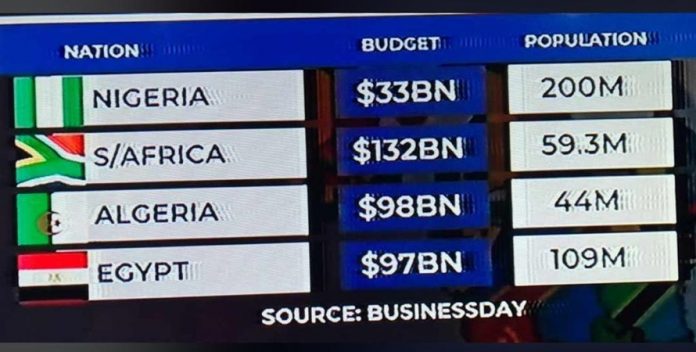
That takes me to Nigeria where despite having 3x the population of South Africa, South Africa spends close to $100 billion more than Nigeria. To be honest,  even if Nigeria judiciously manages the $33 billion, it will struggle to catch up to deliver decent services to what South Africa does. Of course, with SUVs, yachts, etc as priorities, the “little” $33 billion does not even get into the right things. And that is the national tragedy.

Of course, this is not to say that $33b is not a lot. My point remains that Nigeria needs “effective growth” so that it can have resources to advance its citizens. Why that word “effective” before “growth”? I am not talking of just GDP growth which tracks the aggregate of production activities for finished goods, I am talking about formalizing the economy.

Nigeria does not have effective growth and that is why even though our GDP could be higher than South Africa’s, they have resources to spend more than we. Their market capitalization as a share of GDP is about 280% while Nigeria is below 30%. With that, the market cap of one South African bank can buy all the major banks in the Nigerian stock  exchange, and one South African company can use less than 50% of its value to buy every company listed in Nigeria’s stock exchange!

How do we get Nigeria back? I have shared some ideas here.

Merit-based system – no nation has advanced better than its ability to inspire, motivate and reward via merit. Without a nationally transparent merit-based system, Nigeria cannot progress.

Pragmatic Innovation – focus on what works, over the purity of scoring political goals. The implication is that we have to seek and execute the best ideas irrespective of where they may be coming. I gave an example of how the same team of Central Bank leaders who kept our exchange rate stable for years, within 2012 to 2015, blew it up later. Yes, we must allow data to work and follow the best ideas.

Honest Leadership – the citizens are smarter and can only take cues from their leaders. People willingly pay taxes when taxes work in their lives, they say. If we preach one thing and do another thing, you lose the citizens.

Integrate Rural and Urban Nigeria – we need to have a functioning postal service, to bridge the huge gap between rural and urban Nigeria. I explained how years ago, secondary school kids used to have American and European pen pals, relying 100% on NIPOST. A reliable postal service will unlock massive latent opportunities across Nigeria, from agro to arts to entertainment, in this globalizing world.

Put Rural Wealth in Nigeria’s Balance Sheet /Property Rights – those lands (subject to the land use act), houses, etc should be digitized and recorded so that even those in rural Nigeria can enter the formal economy. It is unfortunate that a man with 100 hectares is considered poor because he has no papers to share with banks, to access credits to train his kids and support his family. Simply, Nigeria must advance its property rights governance, not just in land and physical properties but also intellectual properties.

Comment on Feed

Comment 1: While what you posit is evidently true. How does a nation achieve effective growth, economic-wise? If the nation refuses to allocate the scarce resources it has in the direction of the desired growth, can she grow?

Growth believe is a two-way factor. In agriculture, water and sunlight is needed for plants to grow, but in the desert where you have abundant sunlight, lavishly allocated, plants find it difficult to grow. To grow plants in the desert, it would require a higher level of thinking to develop a controlled environment where the abundance of the sun doesn’t hinder the growth of the crop.

Nigeria’s problem is not lack of resource to engineer growth. I think we have too much. Probably more than we the citizens are aware of. That can be the only reason why our leaders will prefer to buy yachts and SUVs rather than invest in the critical sectors of the economy for tomorrow’s growth.

Comment 2: To put the gap in better context, Nigeria’s 2024 budget per capital is $165, while that of South Africa is $2,225 using Prof’s posted figures. Now you see how huge the gap is. Not adding the fact that Nigeria’s budget is hardly 70% implemented.

What I Told The Senator!