DD
MM
YYYY

PAGES

DD
MM
YYYY

spot_img

PAGES

Home Blog Page 3964

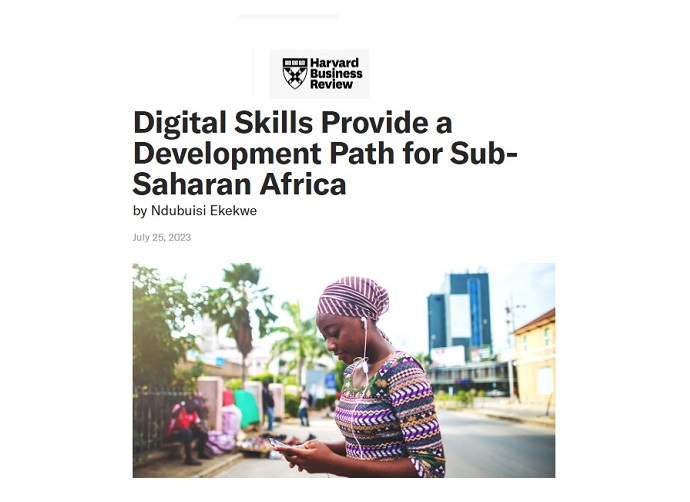
Digital Skills Provide a Development Path for Sub-Saharan Africa – Ndubuisi Ekekwe – Harvard Business Review

0

In Harvard Business Review today, I posit how Africa’s development could emerge since we’re urbanizing without industrialization: “Sub-Saharan Africa is urbanizing with massive rural-urban migration. But unlike the urbanization of the Western world, Sub-Saharan Africa is missing a critical component: industrialized urban cities. Because of this, these urban areas have become overcrowded with substandard housing and severely inadequate infrastructure to cope with unplanned population growth.

“Fortunately, a new development playbook to solve this problem is already evolving, and it is anchored on the young people equipped with advanced digital skills in Sub-Saharan Africa. These young workers are digitally savvy, creative, and can lead a massive transformation — if they’re equipped and supported to unlock their potential. They can export digital skills to Western Europe, United States, and Asia through the unbounded and unconstrained opportunities the internet has provided through “digital jobs” from music to software development to prompt engineering.

But to scale this and make it a success, changes must be taken into consideration at both the policy level and in implementation in the areas of quality digital education, tax treaties and harmonization, and outsourcing-focused startups.” Read here at Harvard.

  • Ndubuisi Ekekwe

Comment on Feed

Comment 1:  Well thought-out ariticle based on real life experience Prof. What is the taxation you referred to in the article? Do you mean the foreign companies hiring in Africa should be taxed or there should be fair tax policies for the tax over there?

My Response: The tax should be shared because the guy is in Lagos (Nigeria) working for a company in Germany. Typically, Germany keeps most of the taxes withheld by that firm. I think it needs to change as Nigeria needs to have some funds to ensure it can provide services to the worker who is actually living physically in Nigeria. This is about fairness because two countries are involved and one cannot pocked the personal income tax, etc.

Comment 2: Very insightful article Prof. Just as we discussed in one of our co-learning sessions at the Tekedia Institute. My proposal to emerging entrepreneurs interested in tapping into this rich industry, is to build more ‘bridges’ just as ANDELA did. Asides software development, we can focus on other highly valuable and needed digital skills, work with the various embassies or engage with private foreign outsourcing firms.. upskill our young work force and outsource this skill abroad…it’s a WIN-WIN solution….A greater Africa would truly rise.

My Response: ” Asides software development, we can focus on other highly valuable and needed digital skills, work with the various embassies or engage with private foreign outsourcing firms” – yes indeed. There are many other latent opportunities.

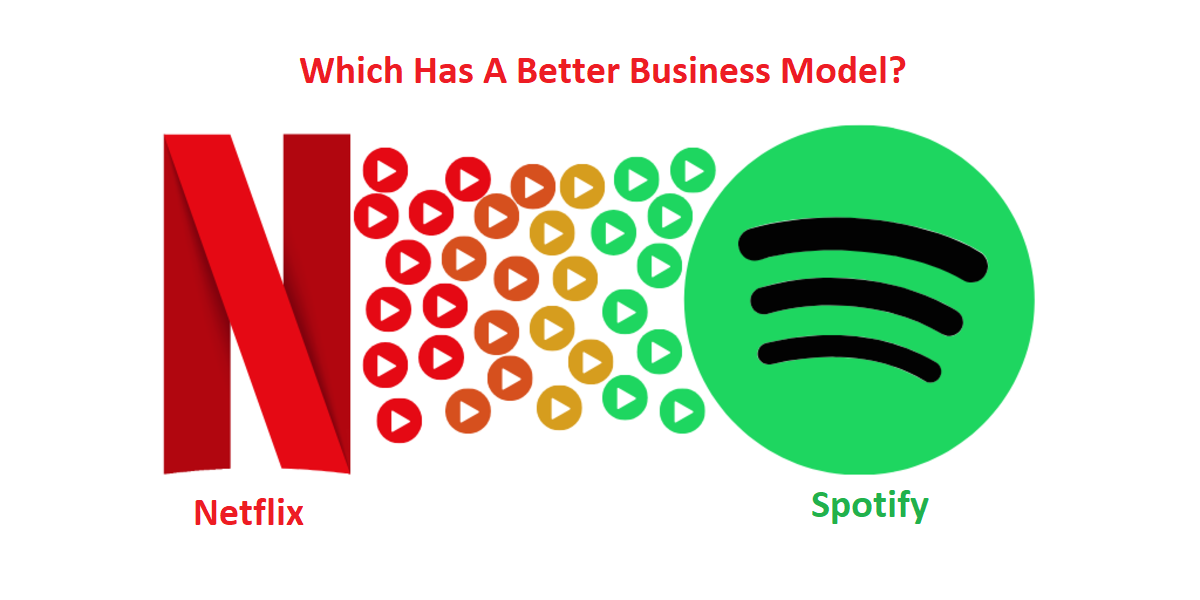
Between Netflix and Spotify, Which One Is Better?

0

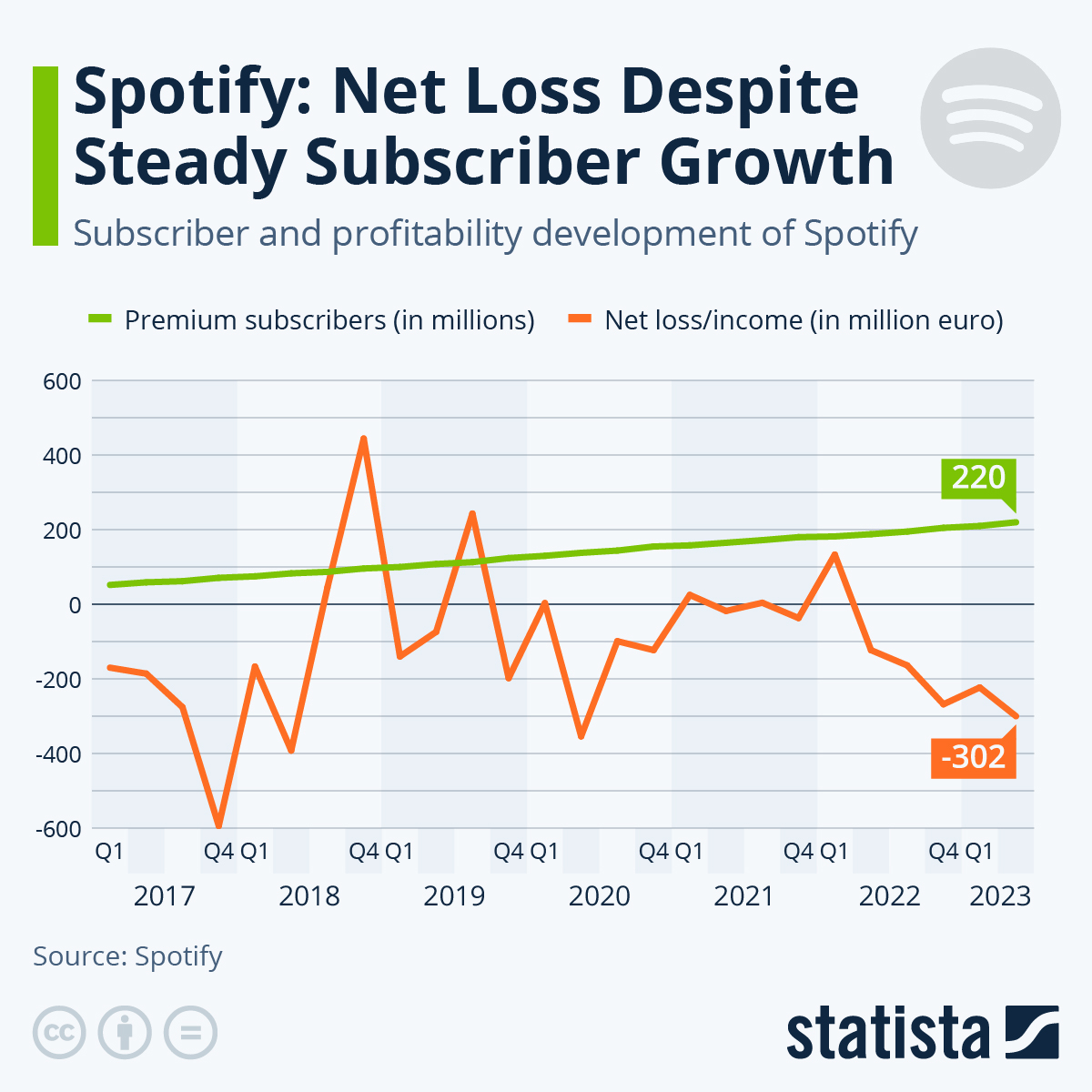
Netflix acquires shows and movies, and retails them via subscriptions. Spotify does not necessarily acquire the music streamed on its portal, rather, it licenses the music, and then pays royalty in perpetuity to the copyright owners when streamers pay for it.  Which one is a better business model?

Netflix Inc. is a media company offering streaming entertainment subscriptions. Its digital platform allows subscribers to stream TV series, documentaries, and feature films on demand. The company also offers a range of mobile games. Though most consumers access the most popular Netflix content online, the company still offers its original DVD-by-mail service in the U.S.

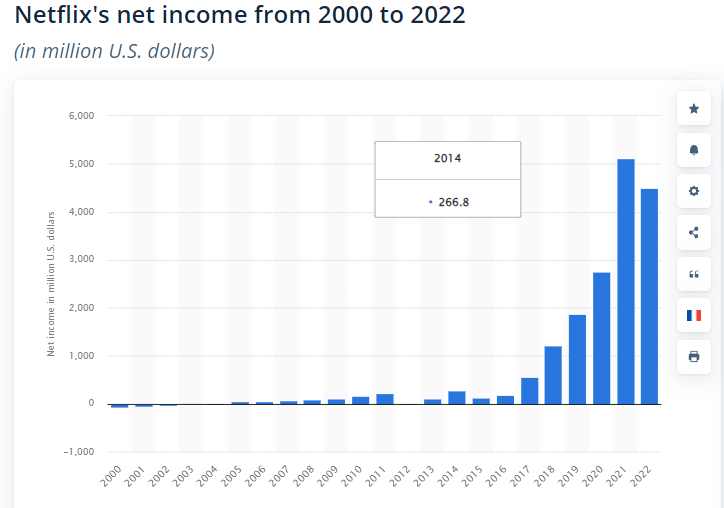
While the start-up cost of Netflix will be high, that business model gives one room to capture more value as profit, while Spotify is always tethered to royalty-percentages. Sure, Netflix has to be great on picking the shows and movies, to avoid wasting money, while Spotify may not necessarily care since it does not lose anything for dud music.

Spotify Technology S.A. is an audio-streaming subscription service legally domiciled in Luxembourg, but whose operational headquarters are located in Stockholm, Sweden, where the company was first launched.1 Its streaming services are monetized through both premium subscriptions and advertising, officially designated as its Premium Services segment and Ad-Supported Services segment, respectively.2

Which one works for you – and why? Let’s discuss business models!

Comment on Feed

Comment 1: There are way more music in the world than movies and movies are way longer. Netflix does not have a tremendous amount of movies produced but they still manage to retain customers because people come to watch movies and it takes longer for one movie to finish. I would think that if Spotify were to go the Netflix route, they would not have as much music on their platform as they currently have and music listeners come to platforms to listen to music hoping they would be able to listen to any music they want to listen to. The cost of acquiring every music in the world “outright” makes a Netflix of music an unlikely business model

My Response: So, in your analysis, everyone is doing and running the best possible model for movies and music.

Comment 1R: Ndubuisi Ekekwe, I definitely think so. I cannot imagine Spotify running around trying to purchase rights to multiple music been produced worldwide. Would present quite a challenge. Same applies to Netflix and trying to license multiple movies owned by competitors. Moreover as Netflix have come to realize now that they have lost a lot of movies they held licenses to in the past to competitors like Disney and co, millions of people can be entertained with a Database of just 40,000 movies, if they want more, they can find another platform for more.

If you have a database of just 40,000 music and people are constantly not finding the particular song they want to stream on your platform(because of course music are soo short), people would leave and unlikely to be back.

There is a reason why a cinema where people can go and watch newly released music videos one after another could never become a business.

Comment 2: The Spotify business model is perfect for startups with limited funds venturing into very volatile business environment.

I also belive it is a great model for established businesses expanding or going into new frontiers,
especially with the ever blurring industry boundaries in today’s business environment.

My take, The Spotify business model is great for today’s business environment.

Comment 3: The content types and target market also need to be factored. What Spotify does is relatively cheap, it neither calls for big innovation nor bidding wars, a modest business model. Not really capitalist inclined, more like a community thing.

For Netflix, it cannot guarantee great movies and shows if it goes by Spotify model, producers cannot make expensive movies when there is no form of exclusivity or some assurance for RoI. Movies are made with time frame of recovering the investment in mind, it cannot rely on getting royalty payments that trickle in at intervals, the next big movie will not be ready on if it plies that route.

The preferred business models pick themselves, I will ask both to remain in their respective lanes.

Comment 4: This is a case of low margin high volume versus high margin low volume models. Each have their advantages. One needs a deeper insights into the products being offered as well as LTV of the acquired customers. Also the customer acquisition costs is another important consideration as well as the scalability of the different models. To me, both of them seem to be a good fit for the type of product and target markets.

Comment 5: Music has a much higher replay value than movies, so the respective business models make sense to me. Even as a music artist, it is probably not wise to sell your album to a platform as it can he challenging to estimate the NPV of your art. With movies, the replay value is low, and because of the high initial capital that goes into making one, it makes sense that a movie studio may want to recoup those costs quickly via acquisition.

Comment 6: From another perspectives, you only need to watch a movie once and you are fine. But for Music, you stream and listen repeatedly.

For every new movie that is produced has a lifeline say 2-3 months. But music more like evergreen. You are more likely to still listen to music of the 80’ and 90’ but you can’t say that for movie.

So, both models works fine given the dynamics and percularities aforementioned

Learning The Law Series; Who is Your Neighbour in Law?

0

On today’s Learning The Law series, we would be taking a look at the Neighborhood principle; who is regarded as your neighbour in law. We would be analyzing the case of Donoghue v Stevenson which is the locus classicus for this famous legal principle and upon which the foundation of the modern tort of negligence was built upon.

Donoghue v Stevenson is a famous case in English law which was instrumental in shaping the law of tort and In particular, the doctrine of negligence. This case established the ‘neighbour principle’ which postulates that to establish a duty of care, a defendant owes a duty of care to their neighbours. Your neighbour, therefore, is someone so closely and directly affected by your act that you ought reasonably to have them in your contemplation as being affected when you are directing your mind to the acts.

The sub-principles propagated by this case are that negligence is distinct and separate in tort; secondly, there does not need to be a contractual relationship between parties before a duty of care will be established; thirdly, manufacturers owe a duty of care to the consumers who they intend to use or consume their products.

Here is the summary of the case:

On August 26 1928, Mrs Donoghue’s friend bought her a ginger beer from a  Café in Paisley, a small town in Scotland. She consumed about half of the bottle when she noticed an unfamiliar substance inside the beer and decided to pour out the remainder of the contents into a cup. When the remainder of the ginger beer was poured into a cup, a decomposed snail was seen floating inside.

Mrs Stevenson, having consumed a substantial amount of the beer, fell sick as a result of it. She decided to sue for damages but she was not able to make a claim through breach of warranty of contract since she was not a party to any contract.

She, therefore, commenced an action against Stevenson, the manufacturer of the ginger beer. The case made its way up to the House of Lords.

The issue for determination before the House of Lords was if Mr Stevenson, the manufacturer of the ginger beer owed Mrs Donoghue a duty of care in the absence of contractual relations contrary to established case law.

The House of Lords held that Mr Stevenson, the manufacturer, owed a duty of care to Mrs Donogue, a duty which was breached because it was reasonably foreseeable that failure to ensure the product’s safety would pose a health risk to consumers. There was also a sufficiently proximate relationship between consumers and product manufacturers.

Therefore, the consumers of products are neighbours to the manufacturers and the manufacturers must exercise a duty of care to them to make sure that they do not get harm from using or consuming the products.

Donoghue v Stevenson [1932] AC 562 

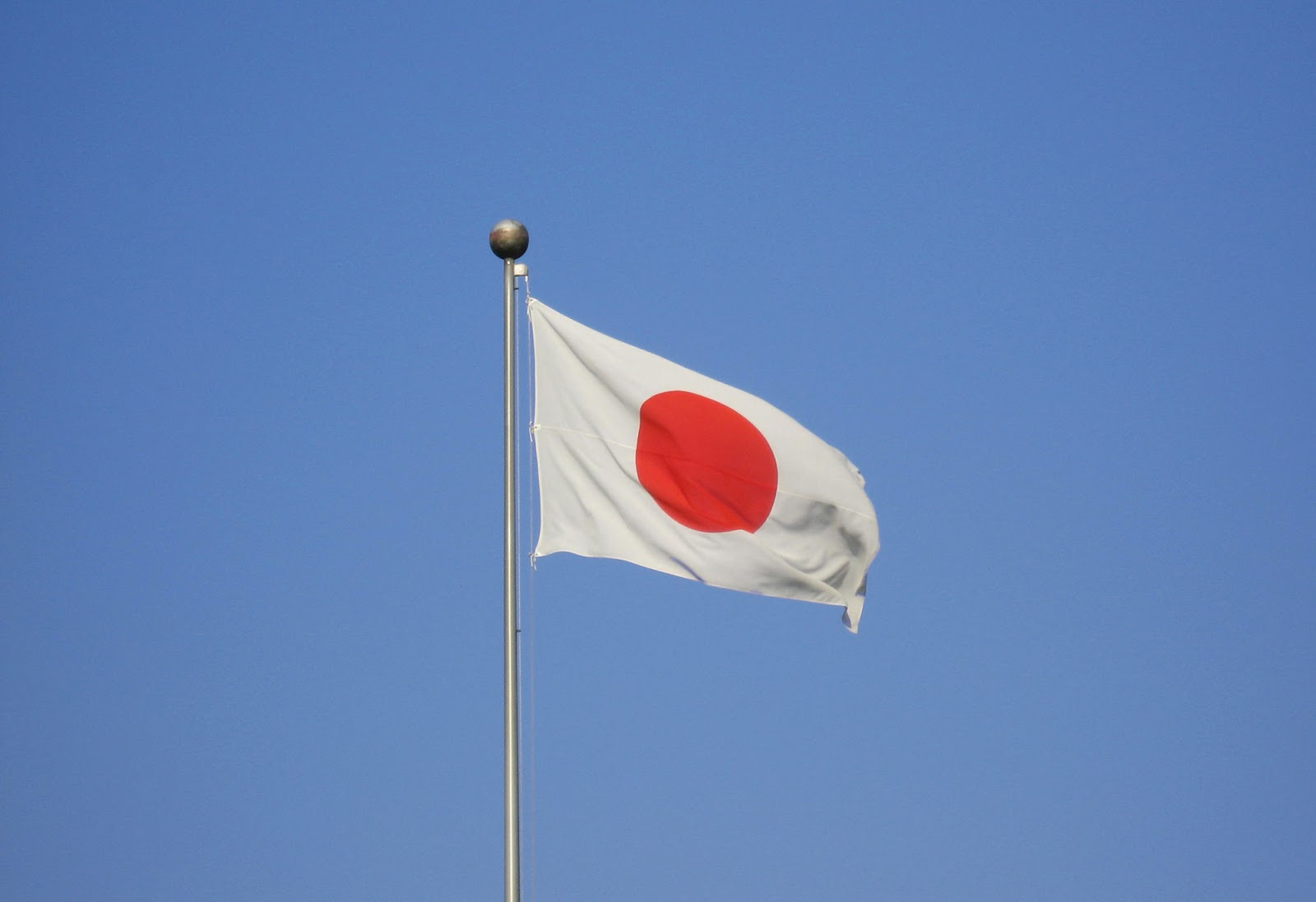
Japan Signals more Web3 Promotion Policies are to come

0

Web3, the decentralized web that aims to give users more control over their data and identity, has been gaining momentum in recent years. The emergence of blockchain, cryptocurrencies, decentralized applications (dApps), and non-fungible tokens (NFTs) has created new possibilities for innovation, creativity, and social impact.

Japan, as one of the leading countries in technology and innovation, has been paying close attention to the development of web3. The government has been supportive of the web3 ecosystem, recognizing its potential to foster economic growth, social inclusion, and digital sovereignty.

In fact, Japan has been one of the first countries to introduce a legal framework for cryptocurrencies and digital assets, as well as to establish a self-regulatory organization for the industry. The government has also been actively engaging with the web3 community, hosting events, supporting research projects, and launching initiatives to promote web3 adoption and education.

Policy 1: The Blockchain Strategy

In March 2020, the Japanese Cabinet approved the Blockchain Strategy, a comprehensive policy document that outlines the vision, goals, and actions for promoting blockchain technology in Japan. The Blockchain Strategy aims to make Japan a global leader in blockchain innovation, by fostering a conducive environment for blockchain research, development, and adoption. The Blockchain Strategy has four main pillars:

Enhancing the competitiveness of Japan’s blockchain industry.

Developing human resources and fostering collaboration.

Creating social value and solving social issues with blockchain.

Establishing a sound legal and regulatory framework for blockchain.

Some of the specific actions under the Blockchain Strategy include:

Supporting the establishment of a self-regulatory organization for blockchain service providers.

Promoting the use of blockchain in public services, such as digital identity, voting, and social security.

Encouraging the development of blockchain standards and interoperability.

Supporting the creation of blockchain hubs and innovation centers.

Providing tax incentives and subsidies for blockchain projects.

Facilitating international cooperation and dialogue on blockchain issues.

Policy 2: The Crypto Asset Business Act

In May 2020, the Japanese Diet enacted the Crypto Asset Business Act, a revised version of the Payment Services Act that regulates crypto asset service providers in Japan. The Crypto Asset Business Act aims to protect users, prevent money laundering, and promote innovation in the crypto asset industry.

The Crypto Asset Business Act defines crypto assets as “property values that can be used for payment or exchange on electronic data processing systems”, and crypto asset service providers as entities that engage in any of the following activities:

Exchanging crypto assets with legal tender or other crypto assets.

Managing users’ crypto assets or providing intermediary services for crypto asset transactions.

Providing information on crypto asset transactions or issuing tokens through initial coin offerings (ICOs) or security token offerings (STOs).

The Crypto Asset Business Act requires crypto asset service providers to register with the Financial Services Agency (FSA), the financial regulator in Japan, and comply with various rules and obligations, such as:

Implementing security measures and risk management systems for crypto asset custody and transactions.

Conducting customer identification and verification procedures (KYC) and reporting suspicious transactions (AML/CFT).

Disclosing information on fees, risks, and dispute resolution mechanisms to users.

Segregating users’ crypto assets from their own assets and entrusting them to a third-party custodian.

Maintaining sufficient financial resources and capital adequacy ratios.

Submitting periodic reports and undergoing audits by the FSA.

The Crypto Asset Business Act also introduces a new category of crypto assets called “Type II Crypto Assets”, which are tokens that have utility or functionality within a specific platform or network, such as Ethereum or Filecoin. Type II Crypto Assets are subject to lighter regulation than “Type I Crypto Assets”, which are tokens that have monetary value or can be used as payment or exchange, such as Bitcoin or Ripple.

Policy 3: The Decentralized Autonomous Organization (DAO) Bill

In June 2021, a group of lawmakers from the ruling Liberal Democratic Party (LDP) submitted a draft bill to the Diet that proposes to recognize decentralized autonomous organizations (DAOs) as legal entities in Japan. DAOs are organizations that are governed by smart contracts on a blockchain, without centralized authority or intermediaries. DAOs can enable collective decision-making, resource allocation, and coordination among members, based on predefined rules and incentives.

The DAO Bill aims to provide a legal framework for DAOs in Japan, by defining them as “organizations that operate autonomously based on rules recorded on distributed ledgers”, and granting them some of the rights and obligations of corporations, such as:

Entering into contracts and owning property.

Suing and being sued.

Paying taxes and fees.

Registering with the government and disclosing information.

The DAO Bill also stipulates some conditions and limitations for DAOs in Japan, such as: Having at least one representative who is a resident of Japan; Having a clear purpose and scope of activities; Having a mechanism for resolving disputes among members; Not engaging in illegal or harmful activities.

The DAO Bill is currently under deliberation in the Diet and is expected to be passed by the end of 2021. If enacted, the DAO Bill will make Japan the first country in the world to legally recognize DAOs as entities and pave the way for more innovation and experimentation in the Web3 space.

One of the most recent examples of Japan’s web3 promotion policies is the announcement of the Web3 Innovation Fund, a 10-billion-yen ($88 million) fund that will invest in web3 startups and projects in Japan and abroad. The fund is a joint effort between the Ministry of Economy, Trade and Industry (METI) and the New Energy and Industrial Technology Development Organization (NEDO), a public research and development agency.

The Web3 Innovation Fund aims to support the development of web3 technologies and applications that can contribute to Japan’s digital transformation and global competitiveness. The fund will focus on four areas: blockchain infrastructure, decentralized identity, decentralized finance (DeFi), and NFTs. The fund will also seek to foster collaboration between web3 startups and established companies, as well as to create a web3 talent pool in Japan.

The Web3 Innovation Fund is expected to launch in early 2022 and will accept applications from both domestic and foreign web3 startups and projects. The fund will provide equity financing, grants, loans, and technical assistance to the selected applicants. The fund will also leverage the network and resources of METI and NEDO, as well as other partners from the public and private sectors.

The announcement of the Web3 Innovation Fund is a clear signal that Japan is committed to supporting the web3 ecosystem and becoming a leader in the decentralized web. Japan’s web3 promotion policies are not only beneficial for the local web3 community, but also for the global web3 movement. By creating a favorable environment for web3 innovation, Japan can help accelerate the adoption and development of web3 technologies and applications that can empower users, enhance social welfare, and create new value.

Nigeria’s Healthcare Startup Clafiya Announces A Raise of $610,000 in Pre-Seed Round

0

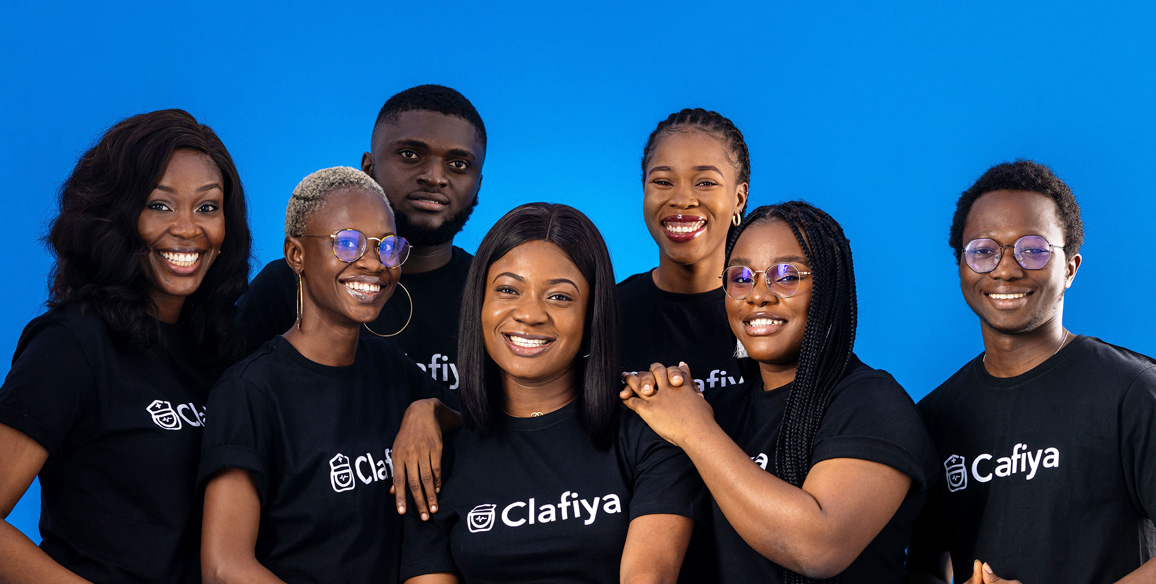
Nigerian Digital Primary Healthcare startup that connects individuals and businesses to health practitioners, Clafiya, has announced the raise of $610,000 in a pre-seed round.

The pre-seed round saw participation from Angel Investors, Grants, VC funds, and contributions from other investors such as Norrsken Accelerator, Hustle Fund, Voltron Capital, Acquired Wisdom Fund (AWF), Microtraction, Ajim Capital, HoaQ, Bold Angel Fund, Shivdasani family.

Clafiya intends to use the funds secured to introduce a business platform that allows well-meaning businesses to purchase health plans for their employees to keep their productivity levels high. Also, it wants to expand its reach and partnerships, as well as hire great minds and talent.

Speaking on Microtraction’s early investment in Clafiya, Dayo Koleowo, a partner at Microtarction said,

“Clafiya’s mission to provide seamless access to primary healthcare for Africans and the approach to tackling the existing underperforming alternatives was interesting to us at Microtraction. We wasted no time in being their first institutional investor because we were simply impressed by the team’s experience, their go-to-market strategy, and the huge market opportunity identified”.

Also commenting on the recent funds raised by Clafiya, Google’s startup Fund Manager, Olufemi Omoniyi said,

“We are excited to see Clafiya raise this funding, and we are inspired by the team’s commitment to using technology to address a pressing need in Africa. As part of the Google for Startups Black Founders Fund 2022 cohort, Clafiya demonstrated immense potential and dedication in addressing the healthcare challenges faced by individuals and businesses”.

In some parts of the African continent, it is still hard to access healthcare either because of the lack of healthcare personnel or their distance to health centers. Clafiya seeks to eliminate these challenges, by allowing individuals access to affordable healthcare in Nigeria. It connects patients in rural and peri-urban areas to community health workers.

Founded in 2020 by Itoro Inoyo and Jennie Nwokoye, Clafiya is on a mission to connect Nigerians in need of medical attention, to vetted primary healthcare providers who could bring the care services to their homes.

The healthcare startup eliminates the hassle people face in juggling multiple healthcare services and bills, through its comprehensive health plan that gives them access to top-notch care, including specialists, diagnostics, and medication delivery.

As internet connection is not always available in the areas targeted by Clafiya founders, the platform is accessible via a USSD code (*347*58#). Users can then dial the code, register by providing a set of information, and booking primary care anytime they want.

Clarify also eliminates the issue of missing files or misplaced folders, by allowing customers to access and download all their health records, pre-schedule appointments, time and place all on one dashboard.

Starting from Enugu, the startup has offered affordable and quality healthcare services to Nigerians and since then expanded to other cities such as Lagos and Abuja. Similarly, it has grown its team to 24 talented people working to reimagine what healthcare service delivery could look like in Nigeria.

The two-year-old startup makes money from the services they provide to customers (individuals and businesses) and shared profit from its operational partners and HMO. With these, the startup has grown its revenue by 15% month-on-month while increasing its patient’s life expectancy by a similar margin.

The startup partners with Google, Norrsken, The World Bank, Novartis, and several others to give users an amazing experience.