DD
MM
YYYY

PAGES

DD
MM
YYYY

spot_img

PAGES

Home Blog Page 3971

Soramitsu to Develop Cross-Border Payment System, As Nexus Mutual Partners with INShare

0

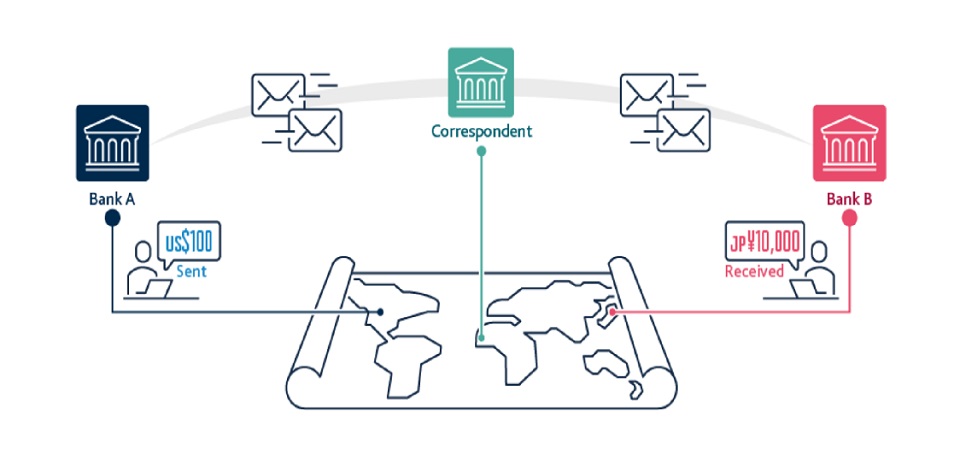
Soramitsu, a Japanese fintech company, has announced that it will develop a cross border payment system using central bank digital currencies (CBDCs) and stablecoin in Asia. The project, which is funded by the Japan International Cooperation Agency (JICA), aims to facilitate low-cost and secure remittances between Japan, Cambodia, Myanmar, and other countries in the region.

Soramitsu is the developer of Hyperledger Iroha, a blockchain platform that supports the creation and management of digital assets. The company has been involved in several CBDC initiatives, such as the Bakong project in Cambodia, which is the first retail CBDC in the world. Soramitsu also partnered with the National Bank of Cambodia to launch a stablecoin pegged to the Cambodian riel.

The cross-border payment system will leverage Soramitsu’s expertise in CBDCs and stablecoin to enable faster and cheaper transactions across borders. The system will also comply with the regulatory and legal frameworks of each country, as well as the international standards for anti-money laundering (AML) and counter-terrorism financing (CTF).

Soramitsu’s CEO, Makoto Takemiya, said that the project will contribute to the economic development and financial inclusion of Asia. He added that Soramitsu is honored to work with JICA and other partners to realize the vision of a digital economy powered by blockchain technology. The project is expected to start in October 2023 and last for two years. Soramitsu will collaborate with local stakeholders, such as central banks, commercial banks, remittance service providers, and non-governmental organizations (NGOs), to design and implement the cross-border payment system.

Nexus Mutual Partners with INShare to offer Decentralized Insurance to UK Shopkeepers

Nexus Mutual, the leading decentralized insurance platform, has announced a partnership with INShare, a UK-based insurance company that specializes in providing coverage for small and medium-sized businesses. The partnership will enable Nexus Mutual to offer its innovative and transparent insurance products to UK shopkeepers, who are often underserved by traditional insurers.

Nexus Mutual is a community-owned and operated platform that leverages blockchain technology to create a more efficient and fair insurance market. Nexus Mutual members can pool their funds and share risk with each other, without intermediaries or centralized authorities. Members can also vote on claims, governance, and risk assessment, ensuring that the platform is aligned with their interests and values.

INShare is a new entrant in the UK insurance market, with a mission to provide affordable and accessible insurance solutions for small businesses. INShare offers flexible and customized policies that cater to the specific needs and risks of different sectors, such as retail, hospitality, and e-commerce. INShare also leverages blockchain technology to streamline its operations and reduce costs.

The partnership between Nexus Mutual and INShare will allow UK shopkeepers to access Nexus Mutual’s smart contract cover, which protects them from losses due to bugs or hacks in smart contracts. Smart contracts are self-executing agreements that run on blockchain networks, such as Ethereum. They enable various decentralized applications and services, such as lending, trading, gaming, and more. However, smart contracts are also vulnerable to errors or malicious attacks, which can result in significant losses for users.

By purchasing smart contract cover from Nexus Mutual through INShare, UK shopkeepers can safeguard their funds and assets that are stored or transacted on smart contracts. For example, a shopkeeper who accepts payments in cryptocurrency can use smart contract cover to protect their wallet from being hacked or drained. Similarly, a shopkeeper who uses decentralized platforms for inventory management or supply chain can use smart contract cover to ensure that their transactions are executed correctly and securely.

The partnership will also enable UK shopkeepers to access Nexus Mutual’s discretionary cover, which is a more general form of insurance that covers any type of risk that is not covered by traditional insurers. Discretionary cover allows members to propose and vote on any type of claim, as long as it is within the legal and ethical boundaries of the platform. For example, a shopkeeper who suffers from a fire or flood damage can submit a claim for discretionary cover and receive compensation from the Nexus Mutual pool if the claim is approved by the members.

The partnership between Nexus Mutual and INShare is a milestone for the decentralized insurance industry, as it demonstrates the potential and value of combining blockchain technology with traditional insurance models. By offering decentralized insurance products to UK shopkeepers, Nexus Mutual and INShare aim to provide more choice, transparency, and fairness to the insurance market, and empower small businesses to thrive in the digital economy.

Adoption Process In Nigeria

0
a young west african girl smiling happily

The primary act which provides for and regulates the process of adoption of a child in Nigeria is the Child Right Act of 2003. The Chief Justice of the Federation also has the power to make subsequent rules and orders pertaining to child adoption. 

The Child’s Right Act of 2003 provides that every state in Nigeria shall establish and maintain services designed to cater to and facilitate the process of adopting a child. As a matter of fact, it is a statutory requirement for every state in Nigeria to establish and maintain child adoption services.

The process of adopting a child in Nigeria involves the person interested in adopting any child making an application to the court, applying for the adoption of the child. Both the magistrate court and the state high court have jurisdiction over child adoption; so, the application can either be made to the magistrate court or the state high court.

The applicant shall accompany his or her application with the following documents as provided in section 126 of the Child Right Act, 2003;

(a)marriage certificate or a declaration of marriage if the applicant(s) is married 

(b) the birth certificate or sworn declaration of the age of each applicant;

(C) two passport photographs of each applicant

(d) a medical certificate certifying the medical fitness of the applicant from a Government hospital and 

(e) such other documents, requirements and information as the court may require for the purposes of the adoption. 

After the court has received the application for the adoption with the accompanying documents, the court shall order a child development officer, a supervisor or any other person the court may appoint to vet the submitted documents and assess the suitability of the applicant(s). The child development officer or the appointed supervisor will then submit their professional opinion to the court as to whether the applicant is suitable and qualified to adopt a child.

The decision of the court will be made subject to the opinion of the appointed supervisor or the child development officer. The court will also consider the opinion or seek the consent of the parents of the child to be adopted or the guardians where the parents are deceased and as well seek the consent of the child to be adopted.  If the court is satisfied that the applicant is suitable to adopt the child and the consent of the child or his parents or guardians has been obtained, the court may make an adoption order i.e. issue the adoption certificate.

The court may make an interim adoption order where the court in its discretion postpones the determination of the application. The purpose of the interim adoption order is to grant the custody of the child to the applicant for a period not exceeding two years on such terms and conditions as the court thinks fit as regards provision for the maintenance, education and supervision of the welfare of the child and otherwise pending when the substantive adoption application is determined by the court.

While under this two year period, the child shall be under the constant supervision of a child development officer or any other person appointed by the court and the child should never be taken out of the state without the consent of the court.

If an applicant feels that his or her application was not fairly treated, the applicant has the right to appeal the unfair decision of the court. 

The following set of persons are persons who may be qualified to apply for the adoption of a child as provided in section 129 of the Child Right Act 2003; 

(a) a married couple where; 

(i) Each of them has attained the age of twenty-five years, and

(ii) there is an order authorizing them jointly to adopt a child

(b) a married person, if he or she has obtained the consent of his or her spouse 

(c) a single person, if he or she has attained the age of thirty-five years, provided that the child to be adopted is of the same sex as the person adopting. 

Here are some other things the court takes into consideration in determining if an applicant is suitable or not as provided in section 131 of the Child Right Act, 2003;

(a) One of the applicants in the case of a joint application must not be less than twenty-five years old at the time of the application and should be at least twenty-one years older than the child to be adopted. 

(b) the applicant, or one of the applicants (in the case of a joint application) should reside in the state where the child to be adopted is a resident of 

(c) the applicant has been a resident or, in the case of a joint application, both of them have been residents in the State in which the application is made for a period of at least, five years

(d) One of the applicants is a citizen or, in the case of a joint application, both applicants are citizens of Nigeria. 

(e) the child has been in the care of the applicant for a period of at least three consecutive months 

(f) the applicant has, at least twelve months before the making of the order, informed the social welfare officer of his intention to adopt the child.

Against all these, it is important to note that before a child is given out to an applicant, the court must be satisfied that the applicant must be able to cater for the needs and welfare of the child and if the court is ever in doubt that the applicant will not do a good job in the upbringing of the child the court will decline to grant the adoption order even when every condition have been met by the applicant(s).

Kyle Davies Considers Acquiring FTX and Restarting the Platform

0

In a surprising move, Kyle Davies, the co-founder of Three Arrows Capital, has expressed interest in acquiring FTX, the leading cryptocurrency derivatives exchange. Davies revealed his intentions in a tweet on Tuesday, saying that he believes FTX has a lot of potential and that he would like to restart the platform with a new vision and strategy.

FTX was founded in 2019 by Sam Bankman-Fried, a former Wall Street trader and crypto billionaire. The exchange quickly rose to prominence by offering innovative products such as leveraged tokens, prediction markets, and tokenized stocks. FTX also gained a reputation for its social responsibility, donating millions of dollars to various causes and becoming carbon neutral.

Three Arrows Capital is a leading hedge fund that specializes in crypto assets and decentralized finance. Founded in 2012 by Su Zhu and Kyle Davies, the fund has been at the forefront of innovation and adoption in the blockchain space. Three Arrows Capital has invested in some of the most prominent projects and platforms in the industry, such as Compound, Aave, Uniswap, MakerDAO, Chainlink, and many more. The fund also holds a significant stake in Grayscale Bitcoin Trust, the largest publicly traded bitcoin investment vehicle.

The vision of Three Arrows Capital is to create a more open, fair, and efficient financial system that empowers individuals and communities around the world. The fund believes that crypto assets and decentralized finance are the key drivers of this transformation, as they enable new forms of value creation, exchange, and governance. By investing in and supporting the best teams and technologies in the space, Three Arrows Capital aims to accelerate the adoption and development of this new paradigm.

However, FTX has faced some challenges and controversies in recent months. The exchange was sued by the Securities and Exchange Commission (SEC) for allegedly violating securities laws by offering unregistered securities in the form of tokenized stocks. FTX also faced backlash from some users and regulators for its high leverage and risk exposure. Additionally, some analysts have questioned the sustainability and profitability of FTX’s business model, especially in light of the increasing competition and regulation in the crypto space.

Davies did not disclose the details of his proposed acquisition, such as the price, timeline, or terms. He also did not specify what changes he would make to FTX if he were to take over. However, he hinted that he would focus on improving the user experience, expanding the product offerings, and enhancing the security and compliance of the platform.

Davies is not a stranger to the crypto industry. He co-founded Three Arrows Capital in 2012 with Su Zhu, another former Wall Street trader. Three Arrows Capital is one of the largest and most influential crypto hedge funds in the world, with over $10 billion in assets under management.

Davies’ announcement has sparked mixed reactions from the crypto community. Some users welcomed his interest in FTX, saying that he could bring more innovation and growth to the exchange. Others expressed skepticism and concern, saying that Davies could ruin FTX’s reputation and culture. Some users also wondered how Bankman-Fried would respond to Davies’ offer and whether he would be willing to sell his stake in FTX.

FTX has been one of the most successful and fastest-growing crypto platforms, having raised $900 million in a funding round that valued it at $18 billion. The exchange offers a variety of products and services, including futures, options, leveraged tokens, and NFTs. Bankman-Fried explained that FTX has multiple entities around the world, each serving different regions and markets, and that having a Cayman parent company was no longer necessary or beneficial.

He said that the liquidation will not affect the operations or services of FTX, and that all customer funds and assets are safe and secure. He said that FTX will continue to operate under its other entities, such as FTX.US, FTX.AU, and FTX Trading Ltd. He also said that FTX is working closely with regulators in various jurisdictions to comply with local laws and regulations, and that FTX is committed to being a responsible and transparent player in the crypto space.

At the time of writing, neither FTX nor Bankman-Fried have commented on Davies’ tweet. It remains to be seen whether Davies’ proposal will materialize into a formal deal and whether it will benefit or harm FTX and its users.

Binance gets EL Salvador’s green light, Becomes first fully Licensed Crypto Exchange

0

Binance, the world’s largest cryptocurrency exchange by trading volume, has received approval from El Salvador’s government to operate as a licensed crypto exchange in the country, receiving both a Bitcoin Service Provider (BSP) license from the Central Reserve Bank and the first non-provisional Digital Assets Services Provider (DASP) license from the National Commission of Digital Assets, this makes Binance the first crypto exchange to obtain such a license in El Salvador, which became the first country to adopt Bitcoin as legal tender.

The license, granted by the Superintendency of Financial System (SSF), allows Binance to offer crypto trading, custody, and payment services to Salvadoran customers, as well as to participate in the development of the country’s digital economy. Binance will also comply with the local regulations and anti-money laundering (AML) standards, as well as support the government’s efforts to educate the public about crypto and blockchain technology.

Binance CEO Changpeng Zhao (CZ) expressed his gratitude to the Salvadoran authorities for their trust and support and said that Binance is committed to providing safe and reliable crypto services to the people of El Salvador. He also praised President Nayib Bukele for his visionary leadership and courage to embrace innovation and financial inclusion.

“We are honored and excited to be the first licensed crypto exchange in El Salvador, a country that has made history by adopting Bitcoin as legal tender. We share President Bukele’s vision of empowering Salvadorans with more economic opportunities and freedom through crypto, and we look forward to working closely with his administration and the SSF to make this a reality,” CZ said.

President Bukele also welcomed Binance’s arrival in El Salvador and said that he hopes that more crypto companies will follow suit and contribute to the country’s growth and prosperity. El Salvador became the first country to recognize Bitcoin as legal tender in 2021 and subsequently approved a law regulating the issuance of other digital assets by both the state and private entities.

“Binance is a global leader in the crypto industry, and we are delighted that they have chosen El Salvador as their new home. We believe that crypto is the future of money, and that it can help us achieve our goals of financial inclusion, social development, and economic innovation. We invite all crypto enthusiasts and entrepreneurs to join us in building this new reality,” Bukele said.

Min Lin, Binance Head of Latin America, expressed the company’s commitment to working with regulators to support global crypto and blockchain industry standards. Daniel Acosta, Binance General Manager for Colombia, Central America and the Caribbean, highlighted the licenses’ potential to expand products and services tailored to El Salvador’s customers, foster financial inclusion and ensure customer protection.

Binance’s entry into El Salvador is expected to boost the adoption and usage of crypto in the country, especially among the unbanked and underbanked population, who can now access a range of financial services through Binance’s platform. Binance will also leverage its global network and resources to support local entrepreneurs, startups, and social projects that are using crypto and blockchain to create positive impact in El Salvador.

Binance’s license in El Salvador is part of its global expansion strategy, which aims to establish a strong presence in key markets and regions around the world. Binance has recently obtained licenses or approvals from regulators in Singapore, Germany, UK, Japan, and South Africa, among others, demonstrating its commitment to compliance and regulatory cooperation.

Nigerian Startups Opay And Kuda, Make CNBC Top 200 Global Fintech Companies

0

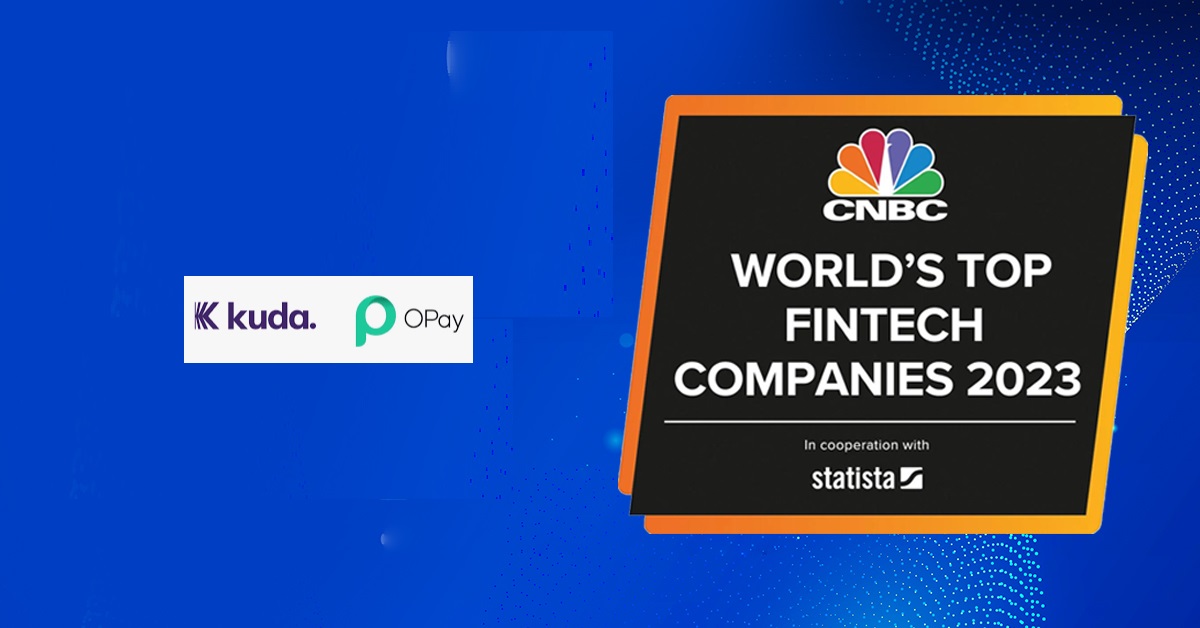
Two Nigerian fintech startups, Opay and Kuda, made a debut on CNBC’s list of top 200 global fintech companies. Together, CNBC and independent market research firm, Statista, partnered to compile a comprehensive list of companies building innovative, tech-enabled, and finance-related products and services.

Both companies collaborated to list out the top fintech companies, using a clearly defined methodology identifying how various companies performed against a set of key performance indicators, including the total number of users, volumes, and revenues.

To help with the research, CNBC issued a public call for nominations in March, giving eligible fintech the chance to share more information on their business model, revenue, transaction volumes, and other key data.

Statista developed a scoring model for the companies by calculating the aggregated scores on how firms performed versus their respective KPIs revenues and revenue per employee.  For example, along with a separate score on how the companies performed against specific KPIs within their respective market segments.

Between five and 40 companies were selected for each market FI segment. To decide which ones should make the cut, Statista broke down the scoring model into a 40% weighting for general KPIs, and 60% for segment-specific KPIs.

The companies with the highest score within their market segment made the list, and the number of companies awarded per market segment varied depending on the size of the respective market segment.

The selected companies were classified into nine categories which include: Neobanking, Digital Payments, Digital Assets, Digital financial planning, Digital Wealth Management, Alternate Financing, Alternate Lending, Digital banking solutions, and digital business solutions.

Nigerian Fintech company that offers mobile banking services, Kuda debuted in the Neobanking category, alongside several other Fintech companies.

Founded in 2019, Kuda allows users to manage their finances, make payments, save money, and perform various banking activities through a mobile app. The company’s goal is to provide easy and accessible banking services to individuals who might not have access to traditional banking or prefer digital solutions.

This startup cemented its status as the seventh most valuable bank within Nigeria’s financial landscape. Distinguishing itself as a licensed microfinance bank, Kuda empowers its user base by facilitating seamless, fee-free savings.

The all-in-one business app seamlessly amalgamates savings, payment, and credit services, catering to both retail and business clientele.

Kuda services include features such as;

  1. Mobile Banking: Users can open an account, receive a debit card, and perform transactions directly from the Kuda mobile app.
  2. Budgeting and Spending Insight: The app provides tools to track spending, set budgets, and manage personal finances.
  3. Instant Notifications: Users receive real-time notifications for their transactions, helping them stay aware of their financial activities.
  4. No Fees: Kuda’s model includes no monthly fees or charges for basic banking services.
  5. Saving: The app supports savings goals, allowing users to set aside funds for specific purposes.
  6. Security: Kuda uses security features such as biometric authentication and encryption to protect user data and transactions.

In July 2023, the Fintech company celebrated a significant milestone after surpassing six million customers within Nigeria, just 4 years after its launch.

With its innovative approach and unwavering commitment to customer-centric solutions, this Nigerian fintech company continues to redefine the contours of the fintech landscape.

Also, Nigerian one-stop mobile-based platform for payments, transfers, loans, savings, and other essential services, Opay, debuted on CNBC’s digital payments category.

Founded in 2018, Opay aims to provide users with a convenient and integrated platform for various financial activities and services. The startup currently boasts over 35+ million registered app users and 500,000 agents in Nigeria.

Aiming to bridge the financial gap in Nigeria, Opay has strategically positioned itself as a pivotal conduit for fostering financial inclusion in the country and across the continent.

Some of the services and features offered by OPay include:

  1. Mobile Money Transfer: Users can send and receive money to and from others within Nigeria using the app.
  2. Bill Payment: OPay allows users to pay bills such as utilities, airtime, cable TV subscriptions, and more directly through the app.
  3. Ride-Hailing and Delivery: The app offers ride-hailing and delivery services through its partnership with companies like Ride and Express, allowing users to request rides and order deliveries.
  4. E-commerce: OPay also provides a platform for users to stop for products online, making it a sort of digital marketplace.
  5. Investment Opportunities: Some versions of the app include features that allow users to invest in certain financial products.
  6. Loan Services: OPay offers access to microloans and personal loans through its app, which can be beneficial for users looking for short-term financial assistance.

With a passionate team, a sophisticated mobile platform, and a fast-growing community of users, Opay is making financial services more efficient for millions of users, and it starts with the ability to pay and have access to the right opportunities at the right time.

On a global scale, the digital payments industry is currently estimated to be worth over $54 trillion, according to data from JP Morgan, and that is only set to grow as more of the world starts to see digital adoption.