DD
MM
YYYY

PAGES

DD
MM
YYYY

spot_img

PAGES

Home Blog Page 3974

Mozilla Acquires Fakespot, Visa Launches Global AI Advisory, Sen. Ted Cruz Accepts Bitcoin Donations to Fund Campaign

0

Mozilla, the company behind the popular Firefox web browser, has announced that it has acquired Fakespot, a startup that uses artificial intelligence to detect and flag fake reviews on e-commerce platforms. The deal, which was not disclosed, will allow Mozilla to integrate Fakespot’s technology into its browser, giving users a way to verify the authenticity and quality of online reviews.

Fakespot was founded in 2016 by Saoud Khalifah, who was frustrated by the prevalence of fake reviews on sites like Amazon, Yelp, and TripAdvisor. He developed an algorithm that analyzes reviews based on various factors, such as the reviewer’s profile, language, sentiment, and history, and assigns them a trustworthiness score. Fakespot claims that it can detect up to 90% of fake reviews on some platforms, and that it has analyzed over 10 billion reviews to date.

Mozilla said that it was impressed by Fakespot’s mission and vision, and that it shares its values of promoting transparency and trust on the internet. “We believe that Fakespot can help us empower our users to make informed decisions online and protect them from malicious actors who seek to manipulate their opinions and behavior,” said Mitchell Baker, CEO of Mozilla. “We are excited to welcome Fakespot to the Mozilla family, and to work together to create a more trustworthy web.”

According to Mozilla, Fakespot will continue to operate as an independent entity within Mozilla and will retain its brand and team. The integration of Fakespot’s technology into Firefox will be done gradually, starting with a browser extension that will be available in the coming months. The extension will allow users to see Fakespot’s ratings and analysis of reviews on various e-commerce sites, as well as access other features such as price comparisons and coupons.

Fakespot’s founder and CEO Khalifah said that he was thrilled to join Mozilla, and that he believes that the acquisition will help Fakespot reach a wider audience and have a bigger impact. “Mozilla is a pioneer and a leader in the open web, and we share their vision of making the internet a better place for everyone,” he said. “We are confident that by joining forces with Mozilla, we can take Fakespot to the next level, and provide users with the tools they need to shop online with confidence.”

Visa launches global AI advisory practice to empower clients

Visa, the global leader in digital payments, has announced the launch of a new AI advisory practice to help its clients leverage the power of artificial intelligence and machine learning in their business. The practice, which is part of Visa Consulting and Analytics (VCA), will provide end-to-end support for clients who want to implement AI solutions, from strategy and design to execution and optimization.

The AI advisory practice will focus on three key areas: customer experience, risk management and operational efficiency. By using AI, clients can enhance their customer interactions, improve their fraud detection and prevention capabilities, and optimize their processes and workflows. The practice will also help clients navigate the ethical and regulatory challenges of using AI, ensuring that their solutions are fair, transparent and accountable.

Visa’s AI advisory practice is led by a team of experts with deep domain knowledge and experience in AI, data science, payments and consulting. The team will leverage Visa’s global network of data, insights and best practices to deliver customized solutions for clients across different regions and industries. The practice will also collaborate with Visa’s innovation centers and studios, where clients can co-create and test new AI applications in a live environment.

“AI is transforming every aspect of the payments industry, from enhancing customer experiences to enabling new business models and driving operational excellence,” said Kevin Phalen, global head of Visa Business Solutions. “With our AI advisory practice, we aim to empower our clients with the tools and guidance they need to harness the potential of AI and accelerate their digital transformation journeys.”

Cardano and Polkadot partnership, Sen. Ted Cruz Accepts Bitcoin Donations to Fund Campaign

Cardano and Polkadot have announced a strategic partnership that will enable interoperability and cross-chain communication between their respective blockchains. This is a major milestone for the decentralized web, as it will allow users and developers to access the best features and services of both platforms.

Cardano is a proof-of-stake blockchain that aims to deliver scalability, security, and sustainability for a variety of applications, such as identity management, governance, and finance. Polkadot is a multi-chain network that connects different blockchains and allows them to exchange data and value. Together, they form a powerful ecosystem that can support the next generation of decentralized applications (DApps).

The partnership will leverage the strengths of both platforms and create new opportunities for innovation and collaboration. For example, Cardano users will be able to access Polkadot’s parachains, which are specialized blockchains that offer specific functionalities, such as decentralized exchanges, gaming, oracles, and more. Polkadot users will be able to benefit from Cardano’s smart contract platform, Plutus, which enables the creation of secure and scalable DApps using functional programming.

The partnership will also enhance the security and resilience of both networks, as they will be able to share validators and relay nodes. Moreover, the partnership will foster cross-chain governance and social coordination, as both communities will be able to participate in decision-making processes and collective actions.

The partnership is expected to launch in the first quarter of 2024, after both platforms complete their respective upgrades and integrations. The partnership will be facilitated by a bridge protocol that will enable the transfer of tokens and data between Cardano and Polkadot. The bridge protocol will be developed by a joint team of researchers and engineers from both projects, as well as external partners.

The announcement of the partnership has been met with enthusiasm and support from both communities, as well as from other stakeholders in the crypto space. The partnership is seen as a positive step towards achieving the vision of a decentralized web, where users have more choice, control, and freedom over their digital lives.

US Senator Ted Cruz starts accepting Bitcoin Donations

In a surprising move, US Senator Ted Cruz announced on Tuesday that he will start accepting campaign donations in Bitcoin, the most popular cryptocurrency. Cruz, who is running for re-election in 2024, said that he wants to embrace innovation and give his supporters more options to contribute to his campaign.

Cruz is not the first politician to accept Bitcoin donations, but he is the most prominent one so far. In 2018, Andrew Yang, a former Democratic presidential candidate, became the first to do so. Since then, several other candidates and organizations have followed suit, including the Libertarian Party and the Chamber of Digital Commerce.

Cruz said that he decided to accept Bitcoin donations after seeing the growing interest and adoption of cryptocurrencies among Americans. He also said that he believes that Bitcoin represents freedom and decentralization, values that he shares and defends.

“I’m proud to be the first US Senator to accept Bitcoin donations for my campaign. Bitcoin is a revolutionary technology that empowers individuals and protects their privacy. It also fosters innovation and entrepreneurship, which are essential for America’s prosperity and leadership,” Cruz said in a press release.

Cruz’s campaign website now features a QR code and a link that allow donors to send Bitcoin directly to his campaign’s wallet. The website also provides instructions on how to obtain and use Bitcoin, as well as information on the legal and tax implications of donating in cryptocurrency.

Cruz’s announcement was met with mixed reactions from the public and the media. Some praised him for being forward-thinking and embracing new technologies, while others criticized him for being opportunistic and pandering to his base. Some also questioned the legality and transparency of accepting Bitcoin donations, which are harder to track and regulate than traditional donations.

Cruz said that he is confident that his campaign is complying with all the relevant laws and regulations regarding campaign finance. He also said that he is willing to disclose his campaign’s Bitcoin transactions and holdings if required by law or requested by the public.

“I have nothing to hide. I’m accepting Bitcoin donations because I believe in its potential and its benefits for America. I’m not doing it to evade any rules or hide any money. I’m doing it to give my supporters more freedom and choice in how they support me,” Cruz said.
The United Nations’ Agenda 2030

0

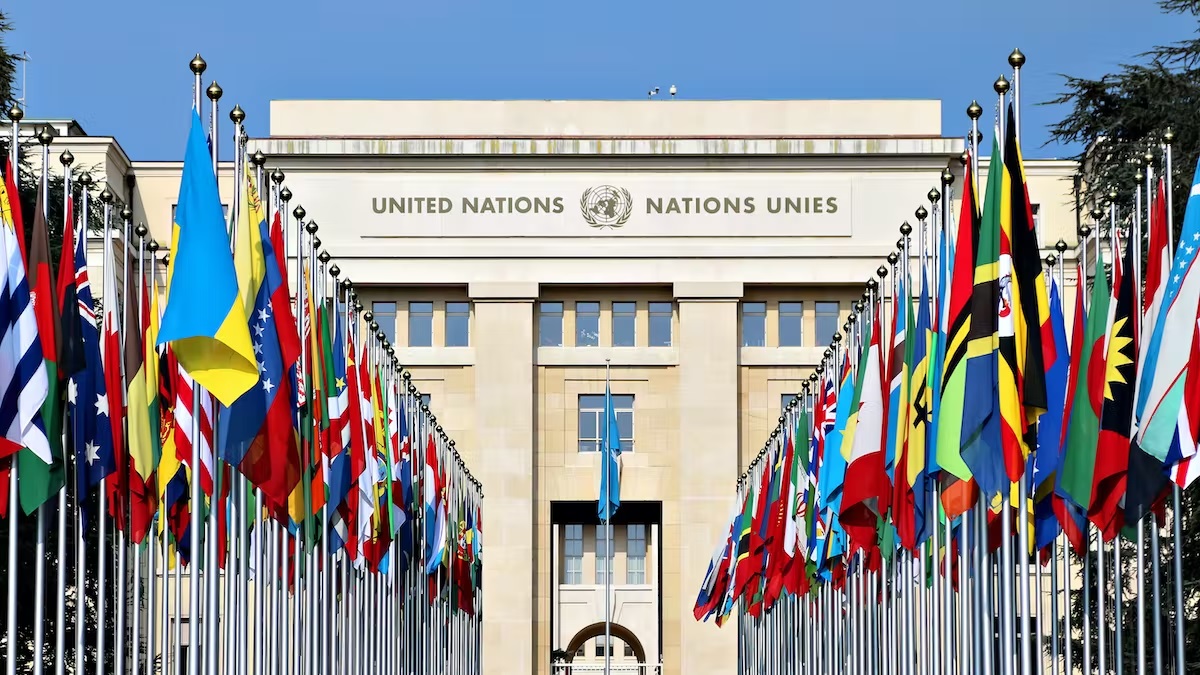
The United Nations’ Agenda 2030 is a global plan of action for sustainable development that aims to end poverty, protect the planet and ensure peace and prosperity for all. It consists of 17 goals and 169 targets that cover a wide range of social, economic and environmental issues, such as health, education, gender equality, climate change, biodiversity and human rights.

The Agenda 2030 was adopted by all 193 member states of the United Nations in September 2015, after a process of extensive consultations and negotiations. It is a universal, integrated and transformative vision that recognizes the interdependence of the three dimensions of sustainable development: economic, social and environmental. It also emphasizes the importance of partnerships, cooperation and solidarity among all stakeholders, including governments, civil society, private sector, academia and media.

Some goals of UN 2030 Agenda are:

No Poverty: End poverty in all its forms everywhere. Zero Hunger: End hunger, achieve food security and improved nutrition and promote sustainable agriculture.

Good Health and Well-being: Ensure healthy lives and promote well-being for all at all ages. Quality Education: Ensure inclusive and equitable quality education and promote lifelong learning opportunities for all.

Gender Equality: Achieve gender equality and empower all women and girls. Clean Water and Sanitation: Ensure availability and sustainable management of water and sanitation for all.

Affordable and Clean Energy: Ensure access to affordable, reliable, sustainable and modern energy for all. Decent Work and Economic Growth: Promote sustained, inclusive and sustainable economic growth, full and productive employment and decent work for all.

Industry, Innovation and Infrastructure: Build resilient infrastructure, promote inclusive and sustainable industrialization and foster innovation. Reduced Inequalities: Reduce income inequality within and among countries.

Sustainable Cities and Communities: Make cities and human settlements inclusive, safe, resilient and sustainable. Responsible Consumption and Production: Ensure sustainable consumption and production patterns.

Climate Action: Take urgent action to combat climate change and its impacts. Life Below Water: Conserve and sustainably use the oceans, seas and marine resources for sustainable development.

Life on Land: Protect, restore and promote sustainable use of terrestrial ecosystems, sustainably manage forests, combat desertification, halt and reverse land degradation and halt biodiversity loss.

Peace, Justice and Strong Institutions: Promote peaceful and inclusive societies for sustainable development, provide access to justice for all and build effective, accountable and inclusive institutions at all levels.

Partnerships for the Goals: Strengthen the means of implementation and revitalize the global partnership for sustainable development.

The Agenda 2030 is not a legally binding document, but a political commitment and a moral obligation for the international community. It requires a collective effort and a shared responsibility to achieve its ambitious goals and targets. It also calls for a follow-up and review mechanism to monitor progress, identify challenges and gaps, and ensure accountability and transparency.

One of the UN’s main goals is to achieve sustainable development, which means meeting the needs of the present without compromising the ability of future generations to meet their own needs.

Sustainable development has three dimensions: economic, social and environmental. The UN has adopted a set of 17 Sustainable Development Goals (SDGs) that cover a wide range of issues, such as poverty, hunger, health, education, gender equality, clean energy, climate change, biodiversity, peace and justice. The SDGs are interconnected and indivisible, meaning that progress in one area affects and depends on progress in another.

The UN and its partners are working to implement the SDGs by 2030, through a global partnership that involves governments, civil society, private sector, academia and individuals. The SDGs are not only a moral obligation, but also a smart investment for a more prosperous, resilient and inclusive world. By achieving the SDGs, we can end poverty, protect the planet and ensure peace and prosperity for all.

The Agenda 2030 is a historic opportunity to shape a better future for humanity and the planet. It is also a challenge that demands innovation, creativity and courage. It is up to us to make it happen.

Notable Provisions of Gas Flaring, Gas Trading & Settlement Regulations in Nigeria

0

Notable Provisions Of The Midstream Gas Flaring Regulations Of Nigeria

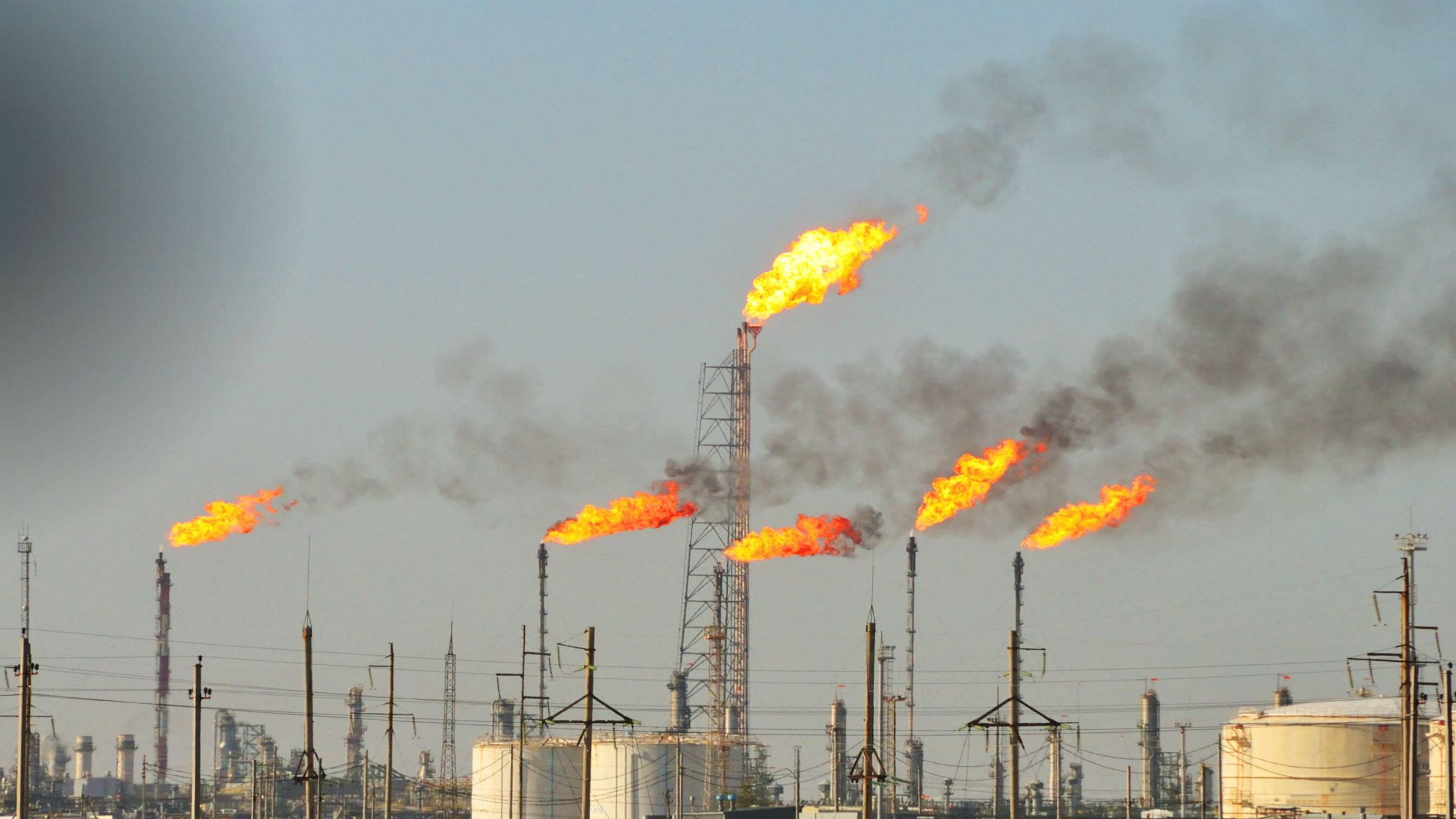
Gas flaring is an issue in the Nigerian Oil & Gas sector serious enough to be heavily regulated, moreso at the Midstream level by the Nigerian Midstream Downstream Petroleum Regulatory Authority (NMDPRA) through its recent Gas Flaring regulations which will be the focus of this article.

What are the objectives of the Gas flaring regulations?

– Reduction of the environmental and social impact caused by excessive flaring and venting of flare gas.

– Protection of the environment.

– Prevention of waste of natural resources.

– To set criteria for gas flaring in Midstream petroleum operations for safety purposes, which includes emergency shutdown with depressurization.

What is the applicability scope of the gas flaring regulations?

– These regulations shall apply to flaring and venting of flare gas in Midstream petroleum operations.

What are the categories of Midstream flaring as identified by these regulations?

– Flaring in Midstream petroleum operations may occur in the categories of –

a). Safety Flaring –

(i). Initial start-up flaring during commission and start-up phases of a plant or process unit.

(ii). Pilot gas, and

(iii). Relief devices

b). Continuous flaring when the plant or process unit is in operation.

c). Non-continuous operational flaring on a planned or unplanned basis for scheduled maintenance, equipment shutdown & mechanical equipment failures.

What are the provisions of the regulations regarding access to flare gas?

– The NMDPRA shall have the right to take, free of charge or any payment, natural gas at the flare in Midstream petroleum operations.

– The NMDPRA may, upon application by a licensee or permit holder to repurpose flare gas from Midstream petroleum operations, grant a permit to access flare gas subject to terms and conditions as the NMDPRA may determine.

– A permit to access flare gas shall be valid for a term of one calendar year and renewable for a further term of One year.

– The NMDPRA may, upon application by a 3rd party to repurpose flare gas from Midstream petroleum operations grant a permit to access such flare gas subject to payment of prescribed fees and service charges, and the submission of an investment proposal by the 3rd party.

What are the provisions of the Regulations regarding the revocation of access to flare gas?

– The NMDPRA shall revoke any permit to access flare gas where the :-

a). Permit holder fails to comply with the terms and conditionsofthe permit.

b). Permit holder intentionally provides inaccurate information in connection with the issuance of the permit.

c). Permit holder is dissolved or enters into bankruptcy proceedings.

d). Purposes for which the permit was obtained would negatively impact health, safety, environment or public interest.

– A revocation of a permit to access flat gas shall not release the permit holder from any obligation arising from these regulations.

What are the provisions of the regulations concerning assignments?

– A permit holder may assign or transfer its interest or rights under the permit provided that the :- 

a). Transferee satisfies the minimum technical and financial requirements necessary to become a permit holder.

b). Transferee complies with the provisions of the assignment or transfer of license and permit regulations and other relevant NMDPRA regulations.

What are the provisions of the regulations concerning venting and executive flaring of flare gas?

– A person engaged in Midstream petroleum operations shall not flare or vent flare gas beyond limits set by the NMDPRA.

– A licensee or permit holder shall, prior to the issuance of a license to operate, engage with the NMDPRA to determine the maximum number of major flaring events and quantity of gas flared.

– The quantity of gas flared and number of major flaring events mentioned above, shall include all planned maintenance, facility start-up or strategic operational reasons including testing.

– The NMDPRA may exempt a license or permit holder who vents flare gas during a declared nationalities emergency from the payment of penalties.

What is the provision of the regulations on conflicts with other regulations on gas flaring?

– Where there is a conflict it inconsistency between the provisions of these regulations and provisions of any other regulation in relation to the flaring of gas in Midstream petroleum operations, the provisions of these regulations shall take precedence and supercede any other regulation to the extent of the conflict or inconsistency.

What is the provision of the regulations regarding offences and penalties?

– The Regulations prescribe a fine of not more than $100,000.00(with a 20% surcharge penalty for each day of non-compliance where it is not paid within 14 days of the date of the penalty demand order by the NMDPRA) as well as license suspension, cancellation or termination for violations of its provisions contained therein.

Notable Provisions of the Midstream & Downstream Gas Trading & Settlement Regulations of Nigeria

This article is focused on the provisions of the Regulations on Gas Trading & Settlement as released by the Nigerian Midstream & Downstream Petroleum Regulatory Authority (NMDPRA) , particularly its objectives, applicability, and gas exchanges.

What are the objectives of the regulations?

– The objectives of these regulations are to :-

a). Regulate the establishment and operations of gas trading & settlement exchange platforms.

b). Establish the principles for the secure, reliable and efficient trading and settlement of natural gas and other gas commodities.

c). To promote & sustain the  efficient and robust gas trading, exchange and settlement of natural gas and other gas commodities.

What is the applicability scope of the regulations?

– These regulations shall apply to activities connected to the establishment of secure, reliable and efficient trading and settlement systems for natural gas commodities on exchange platforms regulated by the NMDPRA.

Who are the persons qualified to participate in gas trading & settlement exchanges as identified by the regulations?

– Exchange operators

– Natural gas & transmission line operators

– Gas producers

– Gas aggregators

– Gas shippers

– Wholesale gas suppliers, gas distributors, gas retailers & wholesale gas consumers

– Network operators

– Clearing houses

– Participants of the exchange

– Members of clearing houses

– Gas transporters

– Gas storage providers

– Gas exporters

– Potential exchange participants

Is there any provision on the extension of the applicability of these regulations?

– The NMDPRA may extend applicability of these regulations,with or without modifications, to derivatives, forward & future contracts in respect of such commodities and services and such type of contracts as specified in the regulations.

What is the provision of the regulations concerning Gas exchange contracts denominations?

– Subject to compliance with applicable laws, the NMDPRA may allow contracts at the gas exchange denominated in foreign or local currencies.

What are the provisions of the Regulations on the approval or suspension of contracts by the NMDPRA?

– The NMDPRA shall approve new contracts introduced by the gas exchange in these regulations.

– For the approval of new contracts, the NMDPRA may be examine the following and other parameters of the new contracts as may be considered appropriate – 

a). Type of contract such as intra-day, day-ahead, term-ahead contracts and other like contracts.

b). Price discovery methodology and proposed matching rules.

c). Transaction period.

d). Risk Management mechanism.

e). Margin mechanism.

f). Final price settlement mechanism.

g). Gas delivery mechanism.

h). Delivery duration.

i). Penalty for contractual deviation.

The NMDPRA, after granting the gas exchange an opportunity of being heard, may by order, suspend or withdraw transactions on any contract from the gas exchanges and issue any consequential directive as deemed necessary.

What are the category of members of gas exchanges under the regulations?

– The NMDPRA shall, after due diligence, approve qualification requirements for membership and participation in a gas exchange.

– The categories of participants or members on an exchange are :-

a). Trading members

b). Clearing members

c). Trading and clearing members

d). Proprietary members

e). Transportation, transmission and storage providers.

This is provided that the NMDPRA may authorise the introduction of new membership categories to perform other functions as may be required.

Notable Provisions of The Midstream & Downstream 3rd Party Access/Open Access Regulations of Nigeria

This article will be looking at the regulations governing 3rd party access & open access regarding existing infrastructure, facilities and services in the Midstream & Downstream Petroleum Industry as outlined by the Nigerian Midstream & Downstream Petroleum Regulatory Authority (NMDPRA).

What are the objectives of the regulations?

– To foster a competitive environment in the Midstream & Downstream petroleum sector by ensuring equitable and non-discriminatory access to facilities, infrastructure and services for 3rd parties.

– To optimize the utilization of existing petroleum infrastructure, minimise duplication of investments and facilitate the efficient movement of petroleum products within the supply chain.

– To facilitate the availability of affordable and diverse petroleum products to consumers by reducing transportation costs and promoting market driven pricing.

What is the applicability scope of these regulations?

– These regulations shall apply to activities relating to 3rd party access to facilities, infrastructure and services in the Nigerian Midstream & Downstream petroleum industry as well as the movement of Petroleum products within the supply chain.

What are the provisions of the regulations regarding the obligation to provide 3rd party access?

– A licensee with significant market power in the Nigerian Midstream & Downstream petroleum industry shall be obligated to :-

a). Provide 3rd party access to its facilities, subject to the provisions of the NMDPRA regulations and any guidelines that may be used by the Authority.

b). Adhere to the open access Provisions of the Petroleum Industry Act, ensuring 3rd party access to its facilities and services in a non-discriminatory and transparent manner.

What do the regulations say regarding applications for 3rd party Access?

– A 3rd party seeking access to the facility of a licensee shall submit a written application to the NMDPRA, providing details which include :-

a). Relevant information about the facility to be accessed.

b). The type of services required.

c). The intended purpose of access.

– Upon receipt of a complete application form the 3rd party, the NMDPRA shall within 30 days afterwards through a written notice, cause the licensee & the 3rd party to engage in a transparent & good faith negotiation to determine the terms and conditions of access.

– The negotiations between the licensee and 3rd party shall cover matters which include :-

a). Technical specifications

b). Operational procedures

c). Safety standards

d). The financial term of the access

– The parties shall finalize the access agreement not later than 60days upon receipt of the notice to commence negotiations from the NMDPRA.

What is the tariff for 3rd party access?

– A licensee with significant market power in the Midstream & Downstream petroleum industry, shall within a time period of not later than 60 days after the commencement of these regulations, submit to the NMDPRA its proposed tariffs for 3rd party access for review and approval.

– The tariffs shall  :-

a). Be cost-effective

b). Take into account legitimate costs

c). Ensure reasonable returns on investment for the licensee

d). Be transparent, fair, reasonable

e). Promote market competition

What are the provisions of the regulations regarding dispute resolution?

– A dispute between the parties shall  be expected to be subjected to an amicable dispute resolution process which will be escalated to the NMDPRA where it fails.

What are the provisions of the regulations regarding offences and penalties?

– Any violation of these regulations through any means including disregard of a requirement or submitting false information to the NMDPRA as the authority charged with their enforcement will be subject to a daily fine of 250,000.00 Naira.

Reviewing The New MacBook Pro: How M3 Chips Outperform Intel Chips

0

Apple has recently unveiled its new MacBook Pro models, featuring a redesigned chassis, a mini-LED display, and a range of ports that were missing from the previous generation. But the most impressive feature of the new laptops is the M3 chip family, which includes the M3, M3 Pro, and M3 Max processors. These chips are based on Apple’s own ARM architecture, and they promise to deliver a significant boost in speed, efficiency, and battery life compared to the Intel-based Macs.

We will review the new MacBook Pro and evaluate how the M3 chips perform in various tasks, such as web browsing, video editing, gaming, and machine learning. I will also compare the different models and configurations of the M3 chips, and help you decide which one is best for your needs. The M3 chip family is composed of three variants: the M3, M3 Pro, and M3 Max. They all share some common features, such as:

A 5-nanometer process technology, which allows for more transistors and lower power consumption. An integrated system-on-a-chip (SoC) design, which eliminates the need for separate components such as RAM, GPU, and I/O controllers. A unified memory architecture (UMA), which enables faster data transfer between the CPU and GPU cores. A 16-core Neural Engine, which accelerates machine learning tasks such as image recognition and natural language processing.

However, there are also some differences between the three chips, mainly in terms of core count, cache size, memory bandwidth, and GPU performance. Here is a summary of the main specifications of each chip:

| Chip | CPU cores | GPU cores | Cache size | Memory bandwidth | Max power |

|——|———–|———–|————|——————|———–|

| M3 | 8 (4 performance + 4 efficiency) | 8 | 12 MB | 200 GB/s | 35 W |

| M3 Pro | 10 (6 performance + 4 efficiency) | 14 | 16 MB | 200 GB/s | 45 W |

| M3 Max | 10 (6 performance + 4 efficiency) | 32 | 32 MB | 400 GB/s | 60 W |

As you can see, the M3 Pro and M3 Max have more CPU and GPU cores than the M3, which means they can handle more demanding workloads. The M3 Max also has twice the cache size and memory bandwidth of the other two chips, which means it can access data faster and support more RAM. The trade-off is that the M3 Pro and M3 Max consume more power than the M3, which may affect battery life and thermal management.

The main difference between the M3 and Intel chip families is that the M3 chips are optimized for Apple’s software and hardware ecosystem, while the Intel chips are designed for a wider range of devices and operating systems. This means that the M3 chips can take advantage of features such as Metal (Apple’s graphics framework), Core ML (Apple’s machine learning framework), and Rosetta 2 (Apple’s emulation software for running Intel-based apps). The Intel chips, however, may have better compatibility with some third-party apps and peripherals that are not optimized for Apple’s platform.

The new MacBook Pro: How does it look and feel?

The new MacBook Pro models come in two sizes: 14-inch and 16-inch. They both have a similar design language, with flat edges, rounded corners, and an aluminum body. The most noticeable change from the previous generation is the display, which uses a mini-LED technology called Liquid Retina XDR.

This display offers higher brightness, contrast, color accuracy, and resolution than the standard LCD screens. The 14-inch model has a resolution of 3024 x 1964 pixels, while the 16-inch model has a resolution of 3456 x 2234 pixels. Both models support ProMotion technology, which adjusts the refresh rate up to 120 Hz depending on the content.

Another major change is the return of some ports that were absent from the previous generation. The new MacBook Pro models have three Thunderbolt 4 ports (two on the left side and one on the right side), an HDMI port (on the right side), an SD card slot (on the right side), and a MagSafe 3 port (on the left side).

The MagSafe 3 port is used for charging the laptop with a magnetic connector that can detach easily if someone trips over the cable. The Thunderbolt 4 ports support data transfer up to 40 Gbps, as well as charging and video output. The HDMI port supports up to 4K resolution at 60 Hz or up to 8K resolution at 30 Hz.

How the M3 chips outperform the Intel chips

Apple’s M3 chips are the latest generation of its custom-designed processors that power its MacBooks, iPads, and iPhones. These chips are based on the ARM architecture, which is different from the x86 architecture used by Intel and AMD. The M3 chips offer several advantages over the Intel chips, such as:

Higher performance: The M3 chips have more cores, higher clock speeds, and better integrated graphics than the Intel chips. They also have a unified memory architecture, which means that the CPU and GPU share the same memory pool, reducing latency and increasing bandwidth. The M3 chips can run both native ARM apps and x86 apps through emulation, with minimal performance loss. According to Apple, the M3 chips can deliver up to 2x faster performance than the Intel Core i7 chips in some tasks.

Lower power consumption: The M3 chips are more energy-efficient than the Intel chips, thanks to their 5-nanometer process technology and their heterogeneous design. The M3 chips have a mix of high-performance and high-efficiency cores, which can switch between different tasks depending on the workload. The M3 chips also have a neural engine, which can handle machine learning tasks with lower power consumption. According to Apple, the M3 chips can offer up to 21 hours of battery life on a single charge for some models.

Better security: The M3 chips have a secure enclave, which is a dedicated hardware component that stores sensitive data such as passwords, encryption keys, and biometric information. The secure enclave is isolated from the rest of the system and can only be accessed by authorized apps. The M3 chips also have a hardware-based encryption engine, which can encrypt and decrypt data without affecting performance. The M3 chips also support features such as Touch ID, Face ID, and Apple Pay, which enhance user security and convenience.

Nigeria’s Supplementary Budget Shows Insensitive to the Suffering of the Majority – Peter Obi

0

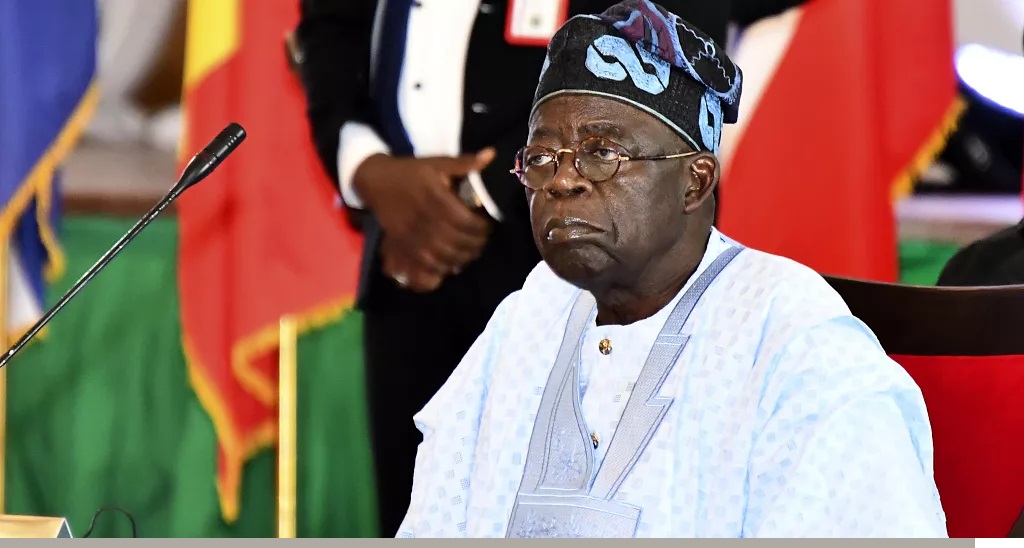
Labour Party’s presidential candidate in Nigeria’s last general election, Peter Obi, has commented on the Supplementary Budget signed on Monday by President Bola Tinubu, saying it does not reflect mostly urgent items of national welfare.

In a post on X titled: “Observations on the Supplementary Budget”, Obi said the budget, which has drawn a lot of controversies, including the N5bn yacht allocated for the president and the N1.5 billion allocated for cars for the Office of the First Lady, does not feature the nation’s most pressing needs.

Obi said the concept of a supplementary budget is created to address important national welfare needs that were not initially accounted for in the main budget or lack sufficient funding.

Though he acknowledged that certain items in the current budget may not have been considered the priorities of a new administration, Obi argued that a supplementary budget introduced late in the financial year should primarily focus on urgent national welfare concerns.

The former Anambra State governor expressed disappointment that the recently announced supplementary budget by the government does not adequately address the most pressing national needs and emergencies.

He cited a warning from organizations like the United Nations and World Food Programme, stating that up to 6.5 million Nigerians are at risk of hunger next year, particularly in states like Sokoto, Adamawa, Borno, Yobe, and Zamfara. He said that a caring government should allocate funds in the supplementary budget to address this impending crisis.

Obi contends that the government’s overall attitude suggests a lack of awareness regarding the significant crisis facing the country, and a failure to empathize with the struggles of the population.

“The government’s overall attitude does not indicate that it is aware that the country is in a huge crisis, nor is the government in tune with the plight of the generality of our people,” he said.

He also expressed concern about the fact that a substantial portion of the funding for these extravagant expenses will likely come from borrowing. He said that, given the current challenging circumstances, Nigerians expect the government to demonstrate empathy and practicality rather than indulging in lavish expenditures.

Read the full text below:

A supplementary budget is a budget made for very important national welfare needs of the people which were not captured originally in the main budget or do not have adequate funding.

Admittedly, some items in the current budget may not have taken into consideration the needs of a new administration, but it is expected that a supplementary budget this late in the financial year should reflect mostly urgent items of national welfare.

Sadly, the most pressing national needs and emergencies have not featured in the supplementary budget that was just announced by the government. For example, the United Nations and World Food Programme have recently warned that up to 6.5 million Nigerians will go hungry next year. This number is largely from among citizens in Sokoto, Adamawa, Borno, Yobe, and Zamfara States. A caring Government in order to plan for the mitigation of such pending catastrophe can request supplementary budget provisions to cushion those under threat.

No item of urgent social welfare has yet featured in the supplementary budget being orchestrated by this government. Instead, the items being made to dominate public discourse on the budget include a mysterious Presidential Yacht, Presidential Jets, the furnishing of already lavishly furnished presidential quarters and offices, fleets of luxury SUVs etc. This portrays a Government that is totally uncaring and insensitive to the suffering of the majority, and indifferent to the mood of the nation.

The government’s overall attitude does not indicate that it is aware that the country is in a huge crisis, nor is the government in tune with the plight of the generality of our people.

Even worse is the fact that most of the funding for these profligate expenditures will be largely borrowed.

The least that Nigerians expect from the government at this difficult moment is empathy and realism, not lavish indulgence.