DD
MM
YYYY

PAGES

DD
MM
YYYY

spot_img

PAGES

Home Blog Page 3975

Why Are There So Many Unoccupied Houses In Abuja?

0
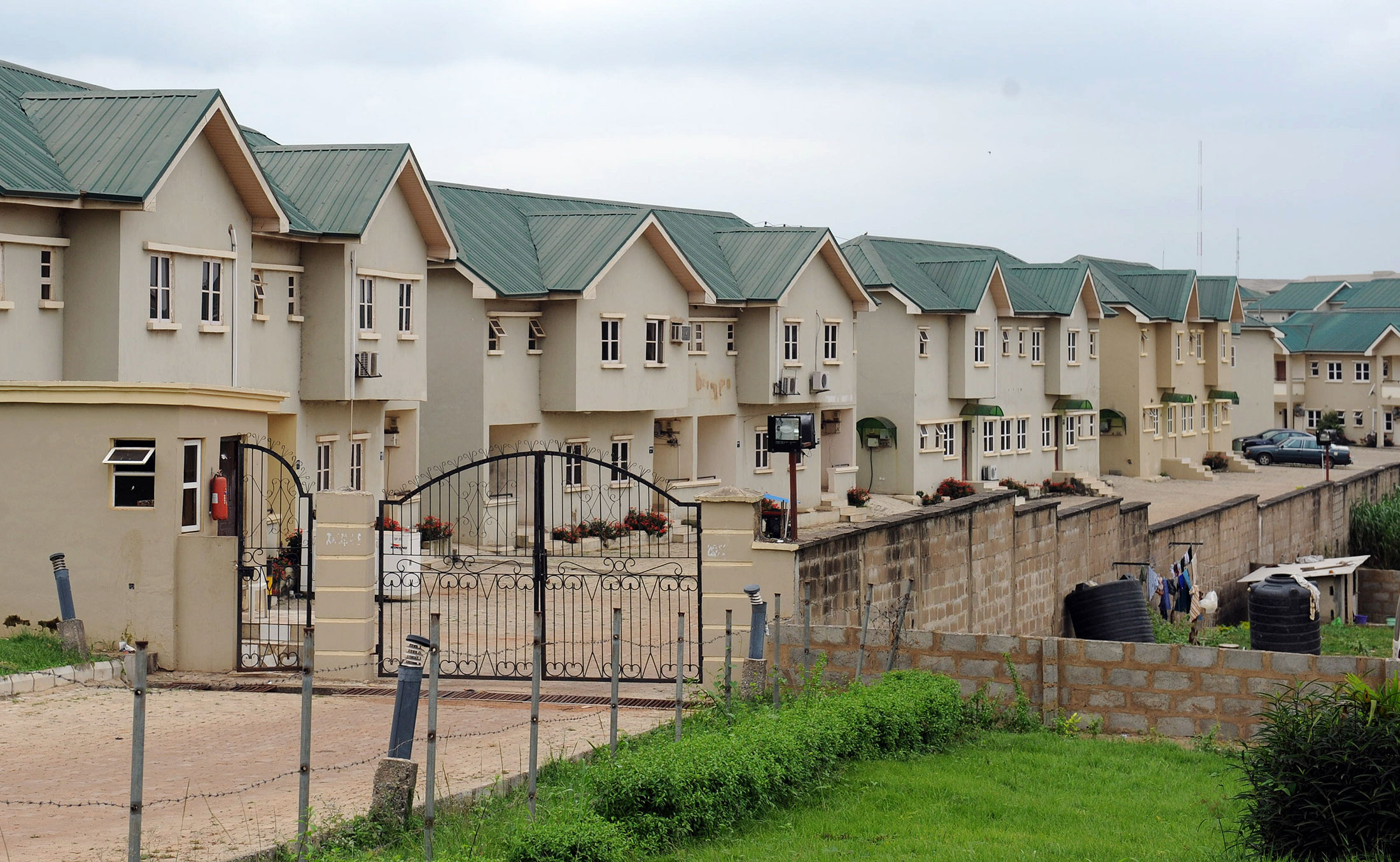
A detached three-bedroom apartments are pictured at Haggai Estate, Redeption Camp on Lagos Ibadan highway in Ogun State, southwest Nigeria on August, 30, 2012. The high cost of living and the massive urbanization of Lagos, the largest city and the economic capital of Nigeria, has engineered a migration of residents mostly middle class and the poor to neighbouring towns in Ogun State, both in southwest part of the country in search of cheap accommodations. Estate developers are quick in exploiting the high cost and scarcity of accommodation leading to emerging new towns, modern estates to accommodate the spillover in Lagos. AFP PHOTO/PIUS UTOMI EKPEI (Photo credit should read PIUS UTOMI EKPEI/AFP/GettyImages)

Sometimes when I drive around my estate I get amazed by the number of houses that are unoccupied. I live in a mini estate with about 500 houses altogether but 50% (if not more) of these houses have been unoccupied for years, some are occupied by just the gatekeepers who just clean around the houses while some nobody lives in it for years, grasses are already taking over the entrance gate. 

More intriguing is the fact that the owners of these unoccupied houses are not willing to rent them out to tenants or sell them out even when there are multiple persons ready to rent them or buy them from the owners at a good price.

This is actually a common thing in Abuja. It’s rare to see a street, an estate or a close within the Abuja municipality with all the houses occupied. There must be some houses that have been under lock and key for years. I’m not talking about houses that are locked up by court order or houses that are under investigation by law enforcement agencies, I mean houses that the owners relocated somewhere and abandoned, and some were since it was built nobody ever lived in it. Not that the owners are positioning it for sale, they are not willing to sell or put it out for rent. 

The irony is that there is currently a housing problem in the city centre. There is a huge demand for houses around the city centre, the demand which had exceeded the supply thereby contributing to the high price of houses in the capital city. If you have ever done house hunting in Abuja you can fully relate to how much there are no houses for the ever-increasing population of Abuja but most of these houses that the owners or the agents claimed it is not vacant have been unoccupied for years in fact most of the owners of the houses no longer reside in Nigeria and are not ready to come back soon.

There is this estate along Katampe- Maitama Expressway, by the same side of  Katampe Extension, the estate is just before AA Rano filling station (I intentionally do not want to mention the estate’s name) but if you are conversant with Abuja you will definitely know the place): if you are driving past there at night you must notice it due to the lightning coming out of the estate. That estate currently has some of the best houses in Abuja but to the best of my knowledge it’s been years after it was built and it is still unoccupied. Whenever I try to inquire about this estate and why it is unoccupied I always come to a dead end.

There are other numerous estates at life camp, airport road, Lugbe, Dawaki, Guzape, etc have been built and most if not all of the houses are not occupied for years. It is not a secret, residents of Abuja are aware of this. The reasons behind this constantly elude me, I heard that some of the estates are used to launder money, well, it’s just a rumour and I can not talk much on that until there is concrete evidence pointing me towards that direction. 

What erks me the most is that cost of houses in Abuja are getting high every day by day and there are a lot of homeless persons who have been living in hotels and serviced apartment, they have the money to pay for good apartments around the city centre but they are told there is no vacant house in those choice areas but there are a lot of unoccupied houses.

Maybe the FCT minister needs to set up a task force to investigate this or maybe someone should be kind enough to educate me and others who are curious why there are so many fully built but unoccupied houses around Abuja city centre.

Students’ Loan Act: 5 Ways Nigerian Tertiary Institutions Must Innovate to Enhance Employability of Graduates

0

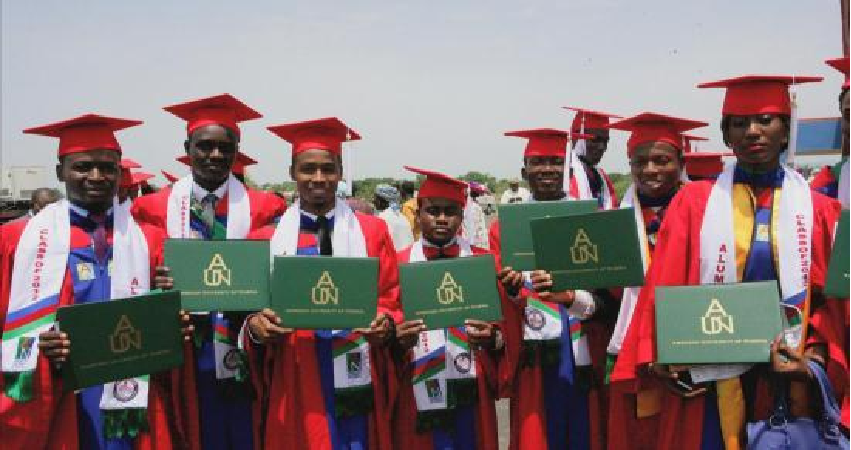
On the 12th of June, 2023, a bill that would change the face of education in Nigeria was signed into law by the just inaugurated administration of President Bola Ahmed Tinubu. The law, popularly called the Students’ Loan Act, is a significant development aimed at providing opportunities for indigent Nigerian students to have access to tertiary education by applying for loan to offset their tuition fees. It also implies that the subsidy on tertiary education has been removed giving public owned institutions the freedom to charge tuitions fees commensurate with the education services offered to students. Previously, the subsidized education offered by the government has been criticized by many because of many problems associated with it.

These problems ranged from incessant strike actions embarked upon by both the academic and non-academic unions in the institutions to the employability question placed on the competence or qualifications of the students who passed through the largely government sponsored tertiary education. Many have also averred that the large number of unemployed graduates that litter the streets across the country is due to government’s incapacitation to fund quality education that would make graduates possess skills that could match the current demands of the industry.

So, this move is seen by many as a way to wean tertiary education in Nigeria off the feeding bottle of huge governmental sponsorship and its attendant perennial issues.  While this legislative step is indeed commendable, it is critical to note that the new law has placed a huge burden on the shoulders of education service providers especially the public ones. This calls for innovation on their part in their curriculum development and implementation. Essentially, Nigerian institutions need to change their playbook as to ensure that students emerge from their educational journey better equipped and more employable in both national and global competitive job markets. The institutions must be ready to set up a mechanism that would equip students with relevant skills, knowledge, and practical experiences. Therefore, the focus of this piece is to suggest ways for our institutions to prioritize innovation and adaptability as the new payment system unfolds. Here are some of the suggestions.

Addressing Skills Mismatch

One of the critical challenges facing graduates in Nigeria is the wide gap between the skills they possess and the skills demanded by the job market. Tertiary institutions must take the lead in bridging this skills mismatch. Through innovative curricula and teaching methodologies, institutions can align their programs with industry requirements. Regular industry-academia collaborations, supervised internships, and practical training opportunities could enable students to develop real-world skills, making them more attractive to potential employers. It is one innovation that must happen in the years ahead as students pay more. They must get value for the money paid.

Promoting Entrepreneurship and Innovation

As Nigeria seeks to diversify its economy and foster entrepreneurship, tertiary institutions have a crucial role to play in cultivating an entrepreneurial mindset among students. Encouraging innovation, creativity, and problem-solving abilities can empower students to become job creators rather than job seekers. By integrating entrepreneurship courses, incubation centers, and mentorship programmes, institutions can nurture the next generation of business leaders and innovators, bolstering economic growth and reducing reliance on traditional employment avenues. To aid this, the recent introduction of the Core Curriculum Minimum Academic Standards (CCMAS) by the National Universities Commission is a point of reference. The new curriculum under consideration has made innovation and venture management compulsory courses for all the 17 faculties to be run by Nigerian universities.

How well-delivered these courses are will determine how better the students would do after graduation. With this, students should be equipped with business management skills, pitch development and general knowledge about running Small and Medium Scale Enterprises. These could be further enhanced by the establishment of innovation hubs. Efforts of organisations like Opolo Global Innovation Hubs helping universities establish and run innovation hubs across the country could also a long way to address the gap in entrepreneurship and innovation.  The Tertiary Education Trust Fund’s (TETFUND) intervention to build innovation hubs in universities, polytechnics and colleges of education across the country could help this drive. TETFUND, which is starting with six universities in the geo-political zones of the country, said the innovation hubs would provide an opportunity for students, academics and researchers to ideate, incubate and develop both business and research ideas into market-driven solutions and development.

Enhancing Digital Literacy and Technological Proficiency

In today’s digitally driven world, it is imperative for Nigerian graduates to possess strong digital literacy skills and technological proficiency. Tertiary institutions must invest in state-of-the-art technology infrastructure and provide students with access to cutting-edge tools and resources. Incorporating courses on emerging technologies, such as artificial intelligence, data analytics, and blockchain, can equip students with the skills required to thrive in the digital era. By embracing technology-enabled learning methods, institutions can ensure that students are well-prepared for the digital workplace of the future. This not only make them well-placed for opportunities, but also enhance their abilities to pay back the loans after graduation. Values must be given for value. Co-working place services provided by organisations such as Opolo across her hub locations could assist students to uptake remote work and be empowered to repay their loans
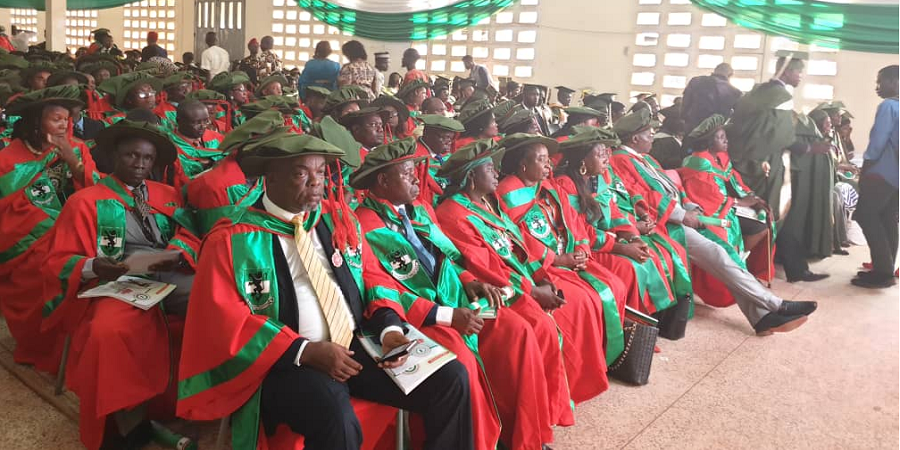
Encouraging Practical Experience and Industry Exposure

The gap between academic learning and industry realities can be effectively addressed through increased practical experience and industry exposure. Tertiary institutions should establish robust internship programs, cooperative education opportunities, and industry partnerships that allow students to apply their theoretical knowledge in practical settings. Engaging guest lecturers, organizing industry visits, and facilitating networking events can provide students with valuable insights into the professional world and foster essential connections for future employment. Tertiary institutions should have industry partners with whom they jointly train the students for fitness into the world of work. With this playbook, students should be well-grounded in both the theoretical and practical components of their training.

Promoting Soft Skills Development

While technical skills are essential, soft skills are equally crucial for students to thrive in their professional lives. Tertiary institutions must emphasize the development of critical soft skills, including communication, teamwork, problem-solving, adaptability, and leadership. Through interactive workshops, group projects, and extracurricular activities, students can enhance their interpersonal skills and develop a well-rounded personality, making them more attractive to employers.

In concluding this piece, the recent law signed by President Bola Ahmed Tinubu, enabling Nigerian students to access loans for tertiary education, marks a significant step towards expanding educational opportunities in the country. However, it is imperative for these institutions to restructure their system to ensure that students graduate with the skills and capabilities necessary to succeed in the Nigerian and global job markets. This could be facilitated by addressing issues surrounding skills, entrepreneurship and innovation, digital literacy, practical experience, and soft skills development. By putting these in place, tertiary institutions can contribute significantly to reducing unemployment rates, and driving economic growth in Nigeria. Through collaborative efforts between educational institutions, industry, and policymakers, Nigeria can foster a future workforce that is highly skilled, employable, and equipped to contribute meaningfully to the nation’s development.

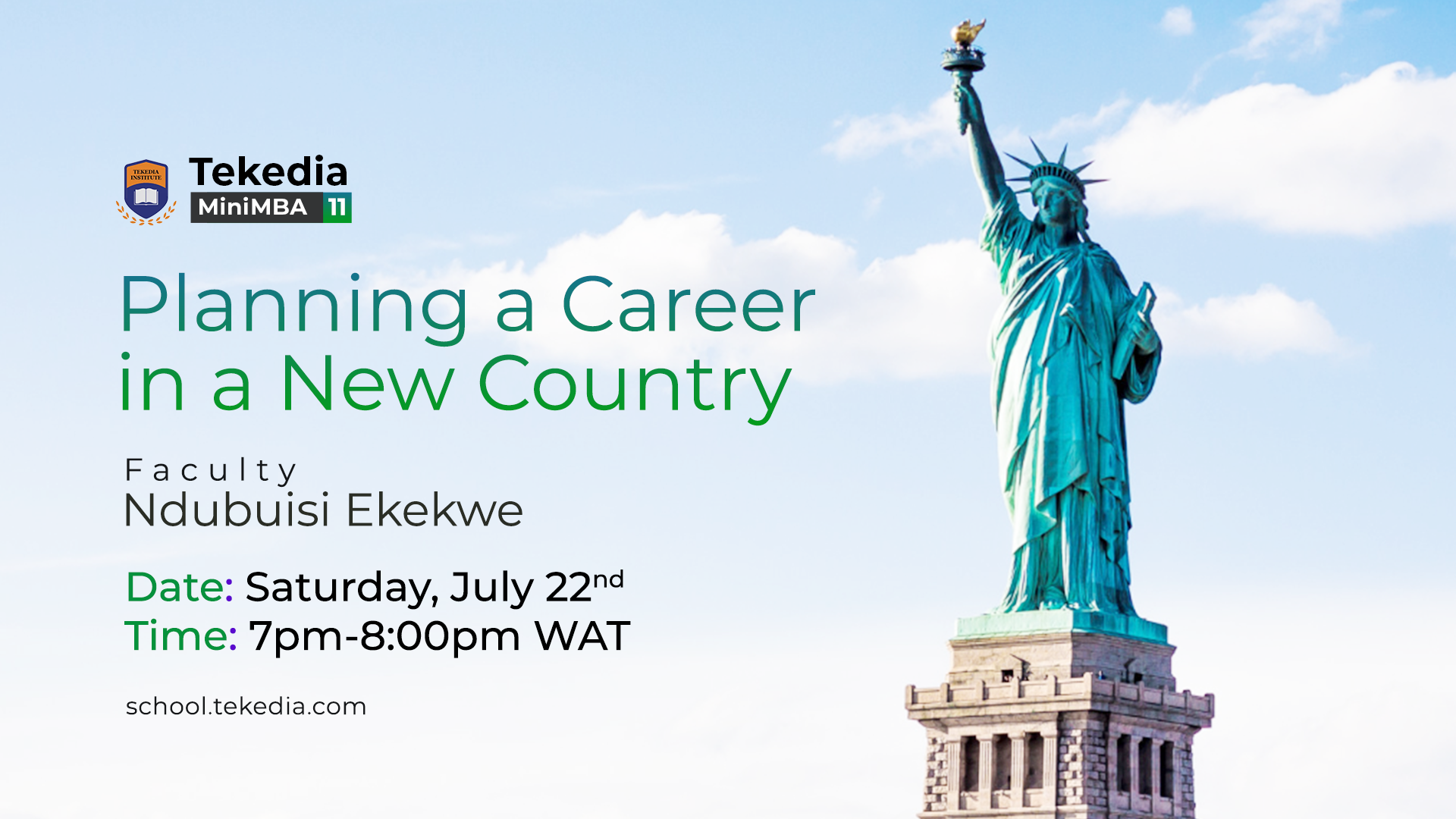
Planning A Career in a Foreign Land – How To Prepare

0

At Tekedia Mini-MBA, we provide a business education which teaches with manuals, over just theories and constructs. Part of the process is to help young people with insights and perspectives to plan their careers, more strategically.

Join us later today for this session on career in a foreign land.  There are many phases in that transition: before you leave native country, when you just arrived in the new country, and at maturity in that new country. We explain many things including warehousing your academic transcripts to WES before you leave Africa!

People, America can work for you if you’re moving from Kenya. The USA can work for you if you’re moving from the UK. The UK can work for you if the move is from Mali. But you need to understand certain things.

One secret: a good credit score will make you “rich” even if you have no cash in the developed world! I have a FICO score, hovering around 835 – 840 (out of a maximum of 850, see here  ). With that score, instead of getting credits at 21%, I do get offers at 3%.

How do you position yourself to win in a foreign land? Meet in class.  Meanwhile, we have opened registrations for the next edition here.

Tekedia Mini-MBA>> uncommon business education.

The Lesson from US Lack of Factory Technical Workers for TSMC

1

One of the things I have learnt investing in startups is this: everything is easy until you are asked to do it. Largely, most challenges in markets appear simple, until you begin to find ways to solve those problems. Where am I going? There is nothing like cutting corners in building nations. The US has some of the finest workplace systems in the world, but over decades, it did not invest in the “base level” of its manufacturing sector, preferring to outsource to Asia. Now, it wants those Asian firms to come to invest, but the problem is that these companies cannot find the talent required to run the new plants.

In the semiconductor industry, I was a global lead ASIC designer. My job was to lead in designing microprocessors. And immediately we finished the design in Boston, everything was sent to Asia where they do the physical translation of those extracted CAD files into real devices. A few weeks later, they will send the samples back to Boston for testing. What they do in Asia is theory for most of our base engineers!

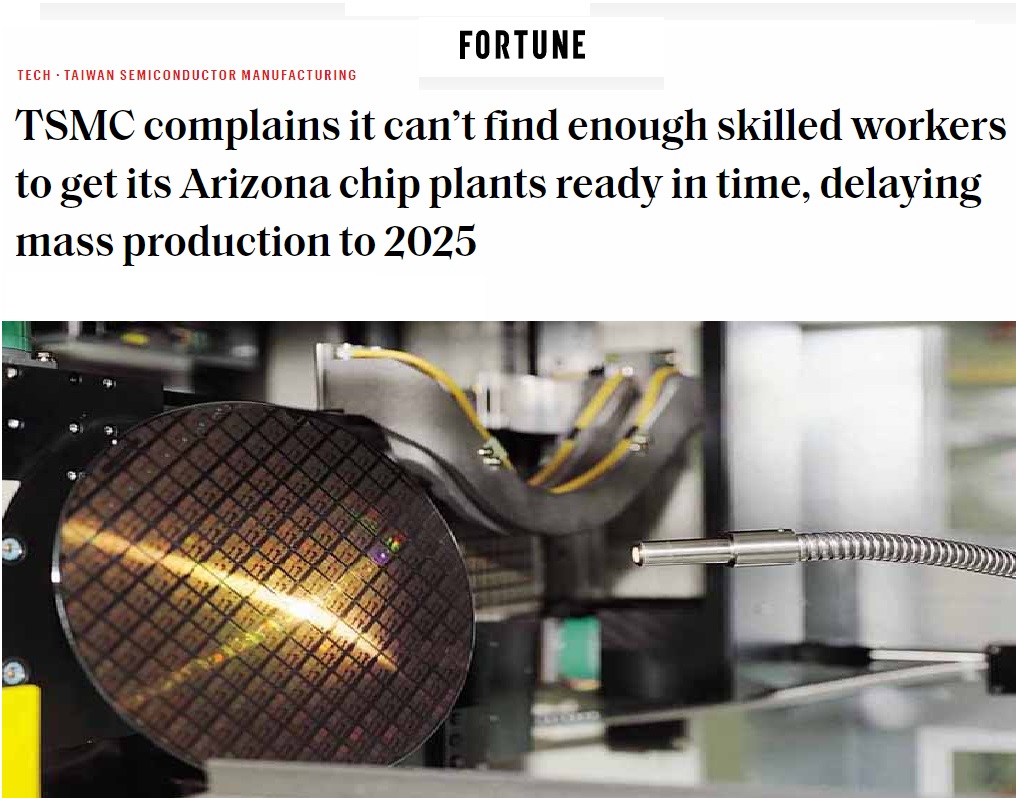
That model is causing problems now; in Arizona, a big project cannot happen because the US does not have the technical talent for running advanced foundries:

“TSMC, the world’s biggest semiconductor manufacturer by revenue, has announced delays in making its big new Arizona plant operational. As Fortune’s Nicholas Gordon reports, the big reason is TSMC’s inability to find enough skilled technical workers, though high building costs are also a problem. The company is trying to send more Taiwanese workers to Arizona to get the fab up and running.”

This is the summary: whether in Nigeria, Japan or the US, if you do not create a future, that future will not come. Here, the US did not create that technical pipeline, and it has none of it. Of course, the US is lucky since this is just a small component of its economy. Imagine nations which do not even try in any phase. Indeed, building a nation is not done by wishful imagination; you must create a future in order to predict it

ChatGPT Analyzes the Future of Polygon, Monero, and Tradecurve, Here Are the Results

0

AI-driven chatbots like ChatGPT are used to analyze the value of cryptocurrencies such as Polygon (MATIC), Monero (XMR), and Tradecurve (TCRV).

As the crypto space continues to captivate investors and traders globally, investors focus on price analysis and predictions that can provide valuable insights through AI. In this article, we ask ChatGPT about the future of each altcoin to see how far they can climb.

Summary

  • Polygon increased by 29% in the last week alone
  • Monero jumped by 20.5% during the previous month
  • Tradecurve experienced a spike in value by 80%

>Register For The Tradecurve Presale<<

ChatGPT’s Polygon Price Outlook

The Polygon (MATIC) cryptocurrency traded at $0.801712 on July 15, 2023. In the last seven days, the Polygon price was at a low point of $0.672783, with a high point of $0.872724. During the last 30 days, Polygon increased in value by 29%. In the last week alone, Polygon is up by 18.1%.

When we asked ChatGPT about its future price outlook, it responded that the value could be affected by numerous factors, from the market demand for the solution to the community engagement and overall adoption of the MATIC token.

The maximum price point that Polygon can reach by the end of 2023 is $0.96, according to a ChatGPT Polygon price prediction.

>Register For The Tradecurve Presale<<

What ChatGPT Thinks About the Future Monero Price

The Monero (XMR) cryptocurrency, on the other hand, traded at $159.29 on July 15, 2023. During the past week, the Monero price had its high point at $157.45, with its low point at $168.74. In the last month, the overall price increase for Monero was by 20.5%.

We also asked ChatGPT about the future of Monero. According to the AI-driven chatbot, Monero appeals to those who seek privacy. The more market demand that rises for privacy and anonymity, the higher Monero can climb.

By the end of 2023, Monero can climb to a maximum point of $214.41, according to a ChatGPT Monero price prediction.

>Register For The Tradecurve Presale<<

Why Tradecurve Can Surge in Value by 100x According to ChatGPT

Tradecurve (TCRV) has been on a bull run in the past 30 days. In that time frame, TCRV jumped in value by 80% and set a new all-time high at $0.018.

Still maintaining this bullish momentum, analysts predict that the cryptocurrency can hit $0.025 per token during the upcoming week.

ChatGPT predicts a climb in value for TCRV by 100x when it launches and gets listed on Tier-1 exchanges and the Uniswap DEX.

<blockquote class=”twitter-tweet”><p lang=”en” dir=”ltr”>Join the TradeCurve Ecosystem and unlock amazing benefits with <a href=”https://twitter.com/search?q=%24TCRV&amp;src=ctag&amp;ref_src=twsrc%5Etfw”>$TCRV</a> <br><br>? Get an edge with Automated Trading &amp; AI<br>? Enroll in the Metaverse Trading Academy<br>? Compete in Trading Contests<br>? Embrace Social Trading<br><br>Don&#39;t miss out on the <a href=”https://twitter.com/hashtag/TCRV?src=hash&amp;ref_src=twsrc%5Etfw”>#TCRV</a> presale<br><br>?<a href=”https://t.co/uXZ4W6G6RE”>https://t.co/uXZ4W6G6RE</a> <a href=”https://t.co/fMEdagtbFt”>pic.twitter.com/fMEdagtbFt</a></p>&mdash; Tradecurve (@Tradecurveapp) <a href=”https://twitter.com/Tradecurveapp/status/1681232803634061312?ref_src=twsrc%5Etfw”>July 18, 2023</a></blockquote> <script async src=”https://platform.twitter.com/widgets.js” charset=”utf-8″></script>

Which Altcoin Is Best to Invest in According to ChatGPT?

The unique features on offer by Tradecurve fuel the cryptocurrency’s bullish momentum. It is building the first hybrid exchange that lets users utilize crypto as leverage and can trade more than just crypto.

Anyone can access numerous financial markets, such as forex, options, ETFs, commodities, and CFDs. All of these aspects make it a top choice for 2023 and beyond.

Tradecurve Can Revolutionize Trading Through Bringing Elements of DEXs and CEXs Together

According to the official roadmap, an official Trading App will be developed for iOS and Android, and TCRV will get listed on CoinMarketCap and CoinGecko for better tracking as-well.

Tradecurve also offers unparalleled real-world utility to the DeFi space. It’s a platform that enables both crypto and derivatives trading, in a truly borderless, permissionless way. Anyone globally can now trade in the $753.2 billion foreign exchange market, alongside the $632 trillion OTC market. Even if Tradecurve gets 1% of this market, it will be worth millions.

For more information about the Tradecurve presale:

Website: https://tradecurve.io/

Buy presale: https://app.tradecurve.io/sign-up

Twitter: https://twitter.com/Tradecurveapp

Telegram: https://t.me/tradecurve_official