DD
MM
YYYY

PAGES

DD
MM
YYYY

spot_img

PAGES

Home Blog Page 3987

Nigerian Government Orders Review of ‘N8,000 Cash Transfer to Poor Nigerians’ Plan

0

President Bola Tinubu has ordered the review of his plan to disburse N500 billion by N8,000 each to 12 million Nigerian households as palliative to mitigate the impact of subsidy removal, following backlash from Nigerians.

Tinubu on Tuesday, ordered that the N8,000 conditional cash transfer
programme be reviewed immediately, according to a statement issued by Dele Alake Special Adviser to the President on Special Duties, Communications and Strategy.

The statement said the president directed immediate release of fertilizers and grains to approximately 50 million farmers and households respectively in all the 36 states and the FCT.

The earlier plan to disburse N8,000 to 12 million households, covering 60 million Nigerians was heavily criticized. Nigerians said, given the increasing prices of petrol – which has shot up the cost of living, that money is a mockery of their plights.

According to the statement, the move is said to be part of “the whole gamut of relief package”, which is designed by the federal government to ameliorate the effects of the subsidy removal.

The statement reads:
You will agree with me that it has become part of the culture of President Bola Ahmed Tinubu’s administration to constantly dialogue with Nigerians who voted him into office. The President covenanted with Nigerians that their welfare and security will be topmost in the Renewed Hope Agenda of his government.

In the last few days, the conventional and new media platforms have become awash with stories of the government intending to embark on conditional cash transfers to vulnerable households mostly affected by the painful but necessary decision to remove subsidy from petrol.

The story has been widely reported that the Federal Government is proposing to give 12 million households from the poorest of the poor N8,000 monthly for a period of six months as a government palliative to reduce the discomfort being experienced by Nigerians consequent upon subsidy removal.

A lot of ill-informed imputations have been read into the programme by not a few naysayers. The administration believes in the maxim that when there is prohibition, there must be provision. Since subsidy, the hydra-headed monster threatening to kill the economy has been stopped, the government has emplaced a broad spectrum of reliefs to bring help to Nigerians.

While it should be noted that the cash programme is not the only item in the whole gamut of relief package of President Bola Ahmed Tinubu, as a listening leader who has vowed to always put Nigerians at the heart of his policy and programme, the President has directed as follows:-

1. That the N8,000 conditional cash transfer programme envisaged to bring succor to most vulnerable households be reviewed immediately. This is in deference to the views expressed by Nigerians against it.

2. That the whole gamut of a palliative package of government be unveiled to Nigerians.

3. Immediate release of fertilizers and grains to approximately 50 million farmers and households respectively in all the 36 states and the FCT.

The President further assures Nigerians that the N500 billion approved by parliament to cushion the pain occasioned by the end of subsidy regime will be judiciously utilized. The beneficiaries of the reliefs shall be Nigerians, irrespective of their ethnic, religious or political affiliation.

President Bola Tinubu has promised to always prioritize the well-being of Nigerians, and he is irrevocably committed to the vow. A number of decisions taken so far by this Administration have buttressed this stance.

You will recall that the president took a similar decision after listening to complaints from the business community/stakeholders about burdensome taxes, particularly multiplicity of taxes they are made to experience. This warranted the signing of four (4) Executive Orders cancelling some classes of taxes while suspending the implementation dates of others.

In addition, the president has also set up a Tax Reform/Fiscal Policy Committee to bring up recommendations that will engender a wholesome fiscal environment for the country and remove anti-business barriers.

I wish to assure Nigerians that President Tinubu will continue to be a listening leader whose ears will not be dull to the views expressed by the citizenry. The President believes government exists to cater for the interest of the people, and he has demonstrated this so clearly.

Thank you all.

Dele Alake
Special Adviser to the President
(Special Duties, Communications and Strategy)
July 18, 2023
Experts and Law Makers Call for Health and Safety Measures as Nigeria Records the First Case of Anthrax Disease

0

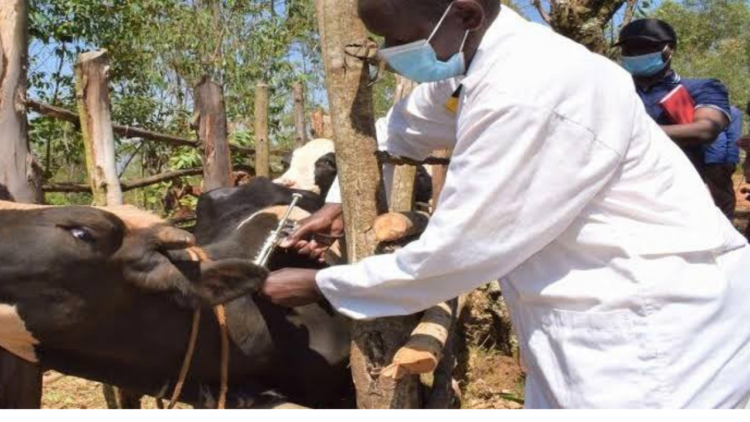
The Nigerian Government has been nudged to take urgent action against the outbreak of anthrax disease in the country. The bacterial infection common in livestock was reported to have been discovered in a farm at Gajiri Village, Niger State.

During plenary on Tuesday, members of the House of Representatives discussed the outbreak of the disease, calling on relevant department and agencies including the Federal Ministry of Agriculture and Rural Development (FMARD) and the National Center for Disease Control (NCDC) as well as other relevant stakeholders to take critical urgent measures to control the disease.

In a motion of urgent public importance entitled “Need to curtain the Outbreak of Anthrax discovered in a farm at Gajiri Village, Suleja, Niger State” discussed at the house, it was gathered humans are vulnerable to the disease through direct contact with affected animals or exposure to contaminated products which could be in the form of ingesting, inhaling, spores or wounds.

Hon. Adamu Tanko who moved the motion disclosed the laboratory test conducted on the collected samples by the National Veterinary Research Institute confirmed the first reported case at a livestock farm located in Gajiri village.

The legislator demands a quick-witted and holistic action by the government and other relevant stakeholders towards making resources available for the containment of the disease as well as providing support to affected communities and compensating for loses recorded due to the outbreak.

According to the Vanguard, Hon. Adamu noted that similar cases of the diseases were confirmed in Northern Ghana, Burkina Faso and Togo with symptoms, including sudden death and blood oozing from natural body openings (nose, ear, mouth, and anal region) and spread through affected livestock, bush meat, and contaminated environments, Concerned over the potential spread of the disease to other livestock farms in the country and its possible impact on public health,

“Adamu called for the urgent need for proactive measures to prevent the spread of Anthrax in Nigeria and protect the health and livelihood of citizens by placing public health precautions in place such 8 strict surveillance and monitoring of livestock farms, as well as proper disposal of infected animals and contaminated materials.

“He however, acknowledges the efforts of the Federal Ministry of Agriculture and Rural Development in promptly addressing the issue by implementing necessary measures to contain the spread of Anthrax and protect both livestock and human health.
“The House after adopting the motion, referred the matter to it’s Committee on Health when constituted to ensure compliance,”the Vanguard reported.

Speaking with TVC news on Tuesday, Yahya Disu, Head of Communication, NCDC, said the agency is already working in sync with FMARD to control the crisis. He also advised Nigerians to be very conscious of their hygiene at this time, stating that meat or animal products that have strange colour or smell should be avoided in the market.

South Korea’s Shinhan Bank Tests Stablecoin Payments on Hedera Network

0

South Korea’s Shinhan Bank, one of the largest banks in the country, has announced that it is testing a new payment system based on stablecoins and the Hedera network. The bank aims to provide faster, cheaper and more secure cross-border transactions for its customers.

Stablecoins are digital assets that are pegged to a fiat currency or a basket of assets and are designed to maintain a stable value. They are often used as a medium of exchange or a store of value in the crypto space, as they offer lower volatility and higher liquidity than other cryptocurrencies.

Hedera is a public distributed ledger platform that uses a novel consensus mechanism called Hashgraph, which claims to offer higher scalability, security and efficiency than traditional blockchain systems. Hedera also supports smart contracts, tokenization and decentralized applications.

According to a press release, Shinhan Bank has partnered with Hexlant, a blockchain technology company, and Bitgo, a digital asset custody provider to develop and test the stablecoin payment system. The system will use the Korean won-backed stablecoin Terra KRW (KRT) as the payment medium and the Hedera network as the underlying infrastructure.

The bank said that the system will enable real-time settlement of cross-border transactions, as well as lower fees and enhanced transparency. The bank also said that the system will comply with the relevant regulations and standards, such as anti-money laundering (AML) and know-your-customer (KYC) policies.

Shinhan Bank is not the only financial institution that is exploring the potential of stablecoins and Hedera. In September 2020, Standard Bank Group, Africa’s largest bank by assets, announced that it was joining the Hedera Governing Council, a group of organizations that oversee the governance and development of the Hedera network. Standard Bank also said that it was developing a cross-border payment solution using stablecoins on Hedera.

The stablecoin payment system is part of Shinhan Bank’s broader digital transformation strategy, which aims to leverage emerging technologies such as blockchain, artificial intelligence and cloud computing to improve its products and services. The bank has also invested in various blockchain-related projects and startups, such as Ground X, the blockchain arm of Kakao Corp., and Blocko, a blockchain platform provider.

The bank said that the system will enable real-time cross-border payments, as well as domestic payments for e-commerce and other online services. The bank also said that the system will reduce transaction costs and risks, as well as enhance transparency and compliance.

Shinhan Bank is not the only financial institution that is exploring the potential of stablecoins and Hedera. In June, Standard Bank Group, Africa’s largest bank by assets, announced that it was developing a cross-border payment solution using Hedera and ZARt, a South African rand-backed stablecoin. In September, FIS Global, a leading provider of financial technology solutions, joined the Hedera Governing Council, a group of organizations that oversee the governance and development of the Hedera network.

The stablecoin payment system is part of Shinhan Bank’s broader digital transformation strategy, which aims to leverage emerging technologies such as blockchain, artificial intelligence and cloud computing to improve its products and services. The bank said that it will continue to collaborate with various partners to create innovative solutions for its customers.

Petrol Pump Price Rises to N650 Per Litre in Nigeria

0

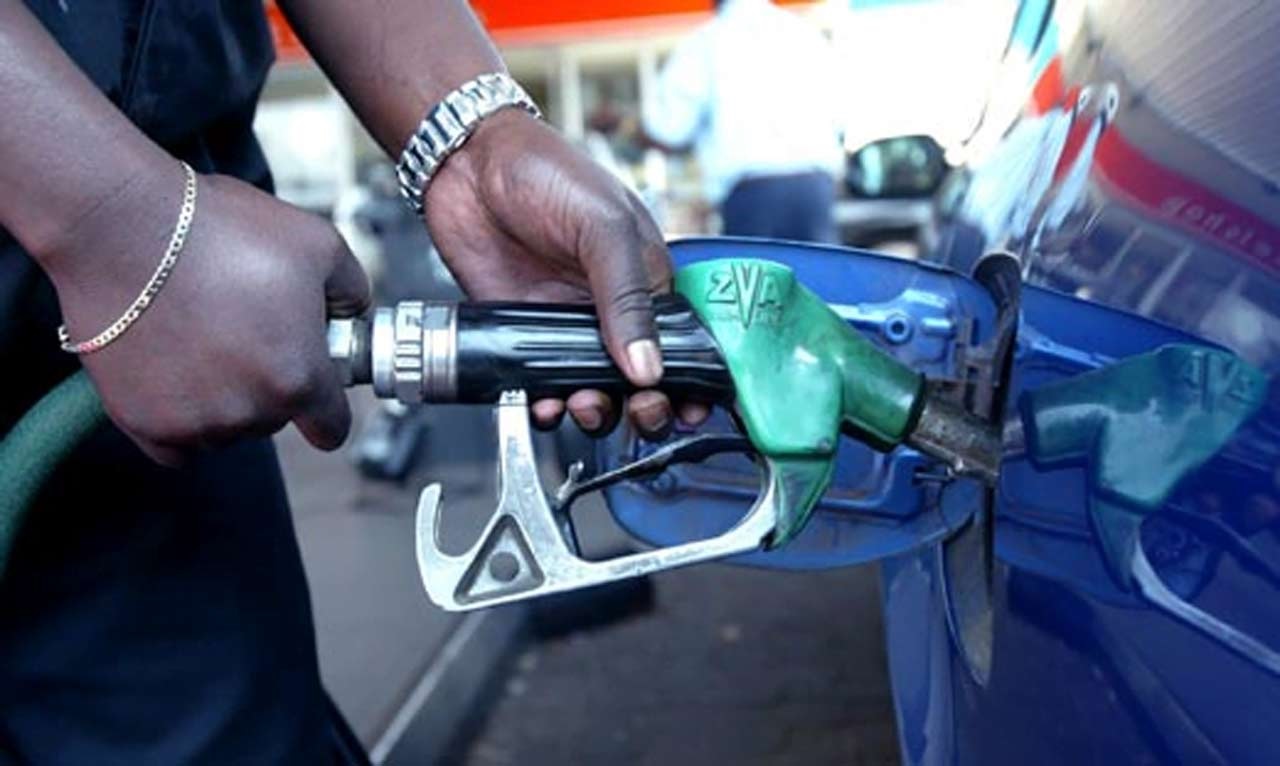
The cost of Premium Motor Spirit (PMS) has risen as much as N650 in some parts of Nigeria, following a jump in the price of crude oil in the international market and the poor performance of the naira in the forex market.

This is coming weeks after President Bola Tinubu announced the removal of fuel subsidy, and the central bank’s decision to float the FX market.

Petrol stations have begun to adjust their pump prices to reflect the changes in the markets. In June, the National Controller Operations, Independent Petroleum Marketers Association of Nigeria, Mike Osatuyi, warned that PMS prices will likely rise in July, as market fundamentals become the major determinant of the prices.

“What I am seeing is around N600 and above, depending on the exchange rate, the current crude price at the international market, and the landing cost. Those in Lagos will pay around N600, those outside Lagos around N600 plus, while those in the north would be paying anything from N700 and above,” he said.

Though the Independent Petroleum Marketers Association of Nigeria (IPMAN) debunked the report, saying the association has no plans to increase pump prices for now, the jump in fuel costs has proved Osatuyi right.

In Lagos and the Federal Capital Territory (FCT) Abuja, the price rose to N617 and N640, while in Ondo and Kano states; it sells for N650 and N620 per liter.

The prices are expected to go up in northern states like Sokoto and Maiduguri because of higher transportation costs emanating from moving the products from Lagos to the far north.

Mele Kyari, the group chief executive officer of the Nigerian National Petroleum Company Limited (NNPCL), said on Tuesday that the increase was determined by market forces.

Besides Brent crude price rising to $78.86 per barrel, naira’s performance in the forex market contributed immensely to the current price of fuel. The naira has slumped below N800/$1 in the Investor and Exporter, forcing an increase in the price of goods and services. This also means that the price of petroleum products will rise accordingly.

Marketers had in June explained that Nigerians were able to buy fuel below N600 per liter because they were still loading petroleum products at a government price of N496.50 per liter. But with the old stock out and new products arriving at higher landing costs based on current forex realities; it’s realistic to expect an increase in pump prices.

While Dangote Refinery is yet to begin operation as expected this month, consumers are counting on competition to drive the price down.

Ahmed Farouk, Chief Executive Officer of the Nigerian Midstream and Downstream Petroleum Regulatory Authority (NMDPRA), said the agency plans to issue more licenses to petrol importers. According to Farouk, more than 56 companies applied for import licenses to bring in petrol, but only 10 of them showed a commitment to import. Among these, Emadeb Energy, A.Y Shafa, and Prudent Energy successfully imported petrol into the country.

However, the increase in fuel prices means that Nigeria’s inflation is going to see a further spike as the cost of living soars. The Nigerian Bureau of Statistics announced on Monday that inflation rose to 22.79% in June, driven by the rise in the cost of goods and services that includes fuel.

The impact of this on businesses, which rely largely on generators for electricity supply, is expected to be severe. Many businesses are expected to shut down if the government does not act fast to mitigate the impact of fuel subsidy removal.

Meanwhile, the total fuel consumed in Nigeria has since dropped, post the removal of fuel subsidy.

He added that this represents a 35% reduction when compared with the 65 million litres per day, prior to subsidy removal, citing that, the daily average truck out after the announcement of the subsidy removal on May 29, dropped to 46.38 million litres per day.  The fuel regulator chief, said this is a significant reduction when compared to previous months saying: 

“The current daily consumption has drastically reduced as against 65 million litres which had been the daily consumption before subsidy removal. 

“In January, it was 62 million litres per day; February, 62 million litres per day; March, 71.4 million litres per day; April, 67.7 million litres per day; May 66.6 million litres per day; June, 49. 5 million litres per day and July, 46.3 million litres per day,”.


PwN Secures $2 Million in VC Fundings, As Coinfund set to back Early Crypto Startups with $158 Million

0

The decentralized finance (DeFi) sector is booming and one of the most promising startups in this space is PWN, a platform that allows users to borrow and lend crypto assets using smart contracts. pwn has recently announced that it has raised $2 million in a seed funding round led by some of the most prominent investors in the crypto industry, such as Coinbase Ventures, Pantera Capital, and Polychain Capital.

PWN aims to disrupt the traditional mortgage industry by offering a more transparent, efficient, and accessible way of financing real estate. Users can use their crypto assets as collateral to borrow stablecoins, which they can then use to pay for their property. Alternatively, users can also lend their stablecoins to other borrowers and earn interest. PWN leverages blockchain technology to ensure that the transactions are secure, fast, and verifiable.

PWN’s founder and CEO, Alice Smith, said that the funding will help the startup to scale its platform and reach more users across the globe. She also said that PWN has a vision of creating a more inclusive and fair financial system that empowers people to own their homes without intermediaries or barriers.

“We are thrilled to have the support of such reputable investors who share our vision of democratizing access to real estate financing. With PWN, anyone can use their crypto assets to get a mortgage or earn passive income by lending. We believe that this is the future of finance, and we are excited to be part of it,” Smith said.

PWN is currently in beta testing and plans to launch its mainnet in Q4 2023. The platform supports various crypto assets, such as Bitcoin, Ethereum, USDC, DAI, and more. PWN also has a native token, PWN, which is used for governance and incentives. Users can stake PWN to participate in the platform’s decision-making process and earn rewards.

PWN is one of the first DeFi platforms to focus on the mortgage market, which is estimated to be worth over $30 trillion globally. By leveraging the power of DeFi, PWN hopes to create a more open and efficient way of financing real estate that benefits both borrowers and lenders.

Coinfund to back Early Crypto Startups with with fresh $158 million

CoinFund, a leading crypto asset investment firm, announced today that it has raised $158 million for its third fund, which will focus on early-stage startups in the blockchain and decentralized web space. The fund, dubbed CoinFund III, was oversubscribed and attracted institutional investors, family offices, and high-net-worth individuals from around the world.

CoinFund was founded in 2015 by Jake Brukhman, a former software engineer and tech entrepreneur, who saw the potential of crypto assets as a new asset class that could enable novel business models and social coordination mechanisms. CoinFund has since invested in over 100 projects across various sectors, such as decentralized finance (DeFi), non-fungible tokens (NFTs), gaming, social media, infrastructure, and more.

Some of the notable portfolio companies of CoinFund include Rarible, a leading NFT marketplace; The Graph, a decentralized protocol for indexing and querying blockchain data; Livepeer, a decentralized video streaming network; and Audius, a decentralized music streaming platform.

CoinFund III will continue to support innovative and visionary founders who are building the next generation of decentralized applications and platforms. The fund will also leverage CoinFund’s extensive network and expertise in the crypto space to provide strategic guidance and operational support to its portfolio companies.

Brukhman said in a press release: “We are incredibly grateful to our investors for their support and trust in our team and vision. CoinFund III is a testament to our conviction in the long-term potential of crypto assets and the decentralized web. We believe that this technology will have a profound impact on the future of the internet and society at large, and we are excited to partner with the best entrepreneurs who are driving this transformation.”