DD
MM
YYYY

PAGES

DD
MM
YYYY

spot_img

PAGES

Home Blog Page 3988

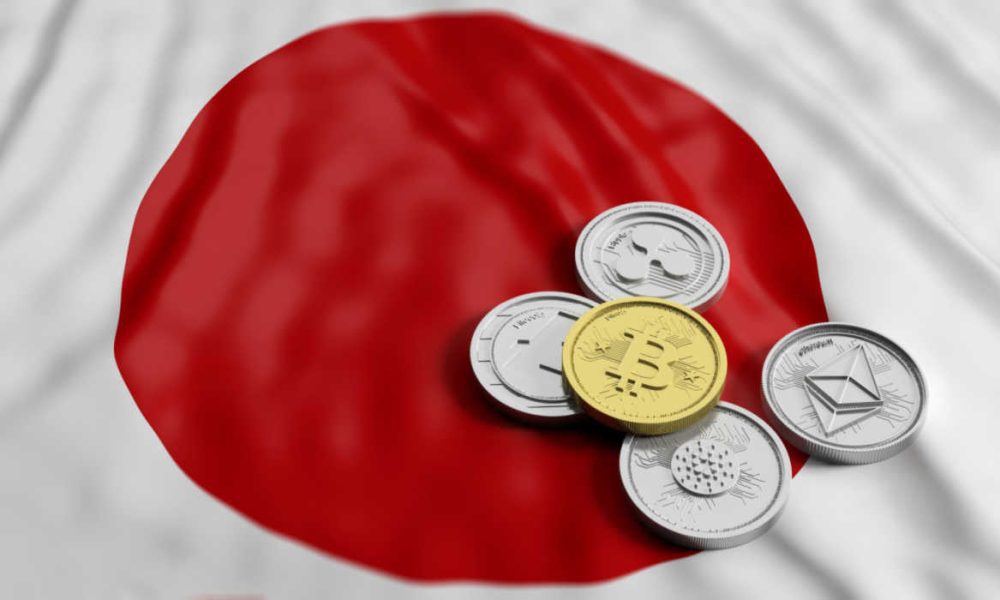
Japan Blockchain Association demands Tax cuts for Crypto

0

The Japan Blockchain Association (JBA) has issued a statement calling for the government to reduce the tax burden on cryptocurrency transactions and profits. The JBA argues that the current tax system is hindering the development and innovation of the blockchain industry in Japan, and that lower taxes would encourage more people to adopt and use crypto assets.

According to the JBA, the current tax rate for crypto transactions ranges from 15% to 55%, depending on the income bracket of the taxpayer. This means that crypto investors have to pay a higher tax rate than stock or forex traders, who are taxed at a flat rate of 20%. The JBA claims that this is unfair and discourages people from investing in crypto, especially in the long term.

The JBA also points out that the tax reporting process for crypto transactions is complicated and burdensome, as taxpayers have to keep track of every transaction they make, including the price and exchange rate at the time of the transaction. The JBA says that this creates a lot of confusion and errors, and that many taxpayers end up paying more taxes than they should.

The JBA proposes that the government should adopt a simpler and more favorable tax system for crypto transactions, such as:

Applying a flat tax rate of 20% or lower for all crypto transactions, regardless of the income bracket of the taxpayer.

Allowing taxpayers to deduct their losses from their gains, as well as their expenses related to crypto transactions, such as fees and commissions.

Exempting small transactions below a certain threshold from taxation, such as 100,000 yen per year.

Providing clear and consistent guidelines on how to calculate and report taxes for crypto transactions.

The JBA believes that these measures would stimulate the growth and innovation of the blockchain industry in Japan, as well as attract more foreign investors and businesses to the country. The JBA says that Japan has the potential to become a global leader in blockchain technology, but that it needs to create a more conducive environment for crypto adoption and use.

Crypto staking rewards are taxable once received

If you are participating in a crypto staking program, you may be wondering how to report your earnings to the tax authorities. Crypto staking rewards are a form of income that you receive for locking up your coins in a validator node and helping to secure the network. The IRS has not issued any specific guidance on crypto staking rewards, but based on the existing tax principles, they are likely to be treated as ordinary income.

This means that you have to pay taxes on your crypto staking rewards as soon as you receive them, regardless of whether you sell them or not. The taxable amount is the fair market value of the rewards at the time of receipt, which can be determined by using a reputable exchange rate or price index. You should keep track of the date and amount of each reward, as well as the cost basis of the coins you staked.

The tax rate that applies to your crypto staking rewards depends on your marginal tax bracket and how long you hold the rewards before selling them. If you sell them within a year of receiving them, they are subject to short-term capital gains tax, which is the same as your ordinary income tax rate. If you sell them after a year of receiving them, they are subject to long-term capital gains tax, which is usually lower than your ordinary income tax rate.

Crypto staking rewards are a new and evolving area of taxation, and there may be changes or clarifications in the future. It is advisable to consult a tax professional who is familiar with crypto taxation before filing your tax return. You should also keep accurate and detailed records of your crypto staking activities and transactions, as you may need to provide them to the IRS in case of an audit.


Senior Military Officers Arrested in Sierra Leone Over Coup Allegations

0

In Sierra Leone, several senior military officers have been arrested on allegations that they’re planning to overthrow the newly-reelected government, The Sierra Leone Telegraph reports.

The development follows a wave of coups that have usurped leadership in six African countries recently.

The police said on Sunday that the senior military officers were among several people arrested and detained by the police, suspected of plotting to use a planned public protest next week “to launch violent attacks on state institutions and citizens”, according to the report.

The development is tied to Sierra Leone’s political instability, which has escalated following the June 24 2023 general elections that saw President Julius Maada Bio reelected.

“Preliminary investigations have revealed that these individuals planned to use purported peaceful protests between 7th and 10th August 2023, as a guise to unleash violent attacks against state institutions and peaceful citizens,” the police said in a statement at their headquarters on Monday but did not disclose the names of those arrested and the number of officers involved.

Like in other African countries where coups have been successfully carried out, the situation in Sierra Leone has been attributed to bad governance, corruption, and blatant rigging of elections.

The Telegraph reported about the strained relations between the State House and senior military officers in Sierra Leone. These officers are said to be expressing serious concern about the ongoing political crisis in the country, which was sparked by what international and local election observers deem as “rigged election results” announced by the Electoral Commission.

‘Per the report, President Bio was declared the winner of the presidential elections in June, but the actual disaggregated polling station results have been withheld from the public by the Chief Electoral Commissioner, Mohamed Konneh, leading to accusations of electoral fraud.

The main opposition APC party and the international community are urging for the release of all polling station results to ensure transparency and verify the legitimacy of the Bio-led government.

Sierra Leone is divided regionally and tribally, with these divisions permeating all aspects of public life, including the military and police. Senior officers are believed to be deeply dissatisfied with the political impasse resulting from the election fallout between the ruling SLPP, whose stronghold is in the southeast, and the main opposition APC from the northwest of the country.

The country’s economy is facing serious challenges, with a 49% inflation rate and youth unemployment rising year after year without any effective government response.

Foreign investors are becoming hesitant about investing in the country, following President Bio’s harsh measures against protesters, leading to over one hundred casualties.

Elected members of parliament, local councilors, and mayors representing the main opposition All People’s Congress (APC) party are boycotting all political involvement and engagement with the government, including abstaining from the country’s parliament, until all polling station results are published or a new chief electoral officer leads a re-run of the elections.’

The situation has culminated into paranoia, believed to have inspired coup premonition for President Bio. He was absent at the last ECOWAS leaders meeting held in Abuja last week, due to security concerns.

Niger is the latest African country whose leadership has been usurped by a military junta. Others include Mali, Chad, Guinea, Burkina Faso, and Sudan. Nearly all the coupists are citing the same things – bad leadership, corruption, and rigging of elections as reasons for their actions.

With most African countries having a system of governance tainted by the above-mentioned traits, more coups are expected in the continent. The supportive response of the citizens to military takeovers is believed to be an indication of a desperate wish for alternate leadership.

Many believe that the rigging, maiming, and killing that follow elections in Africa is in no way different from a coup, and democratic leadership in the continent has not yielded better results than military rule.

Which AI Productivity Tools Are Best for Entrepreneurs?

0

Every entrepreneur desires to expand efficiency with the accessible assets they have.

Before, raising an organization’s productivity would mean spending more on tools and additional workers.

Be that as it may, in these artificial intelligence (AI) times, so many tasks can be made by some AI tools; some are free, while others are very affordable.

Here are some of these AI tools that will reform your work:

1. Jasper: Lift your composing abilities with Jasper’s high-level language models and create charming substance easily.

2. WriteSonic: Express farewell to a creative slump. WriteSonic assists you with producing drawings and convincing duplicates in practically no time.

3. Descript: Interpret, alter, and team up flawlessly with Descript on sound and video documents. It’s a distinct advantage for content makers and groups.

4. Surfer Web optimization: Supercharge your Search engine optimization methodologies with Surfer Search engine optimization. Upgrade your substance, break down contenders, and improve your site’s permeability.

5. ChatGPT: Experience the force of conversational AI with ChatGPT. It’s your solid remote helper, from noting client questions to conceptualizing thoughts.

6. Midjourney: Improve client encounters with Midjourney’s AI-controlled investigation stage. Acquire significant experiences and drive development for your business.

7. Pictory AI: Change your photographs into dazzling show-stoppers easily. Pictory simulated intelligence utilizes profound learning calculations to make interesting visual works of art.

8. Scalenut: Gain admittance to a mother lode of content thoughts and upgrade your showcasing efforts with Scalenut’s AI-driven platform.

9. Alli AI: Amplify your online business deals with Alli artificial intelligence’s customized item suggestions and intelligent focus on capacities.

10. Grammarly: Take your composition to a higher level with Grammarly’s AI-controlled composing partner. Dispose of language and spelling botches easily.

11. Lovo AI: Raise your sound and video happy with Lovo AI’s sensible voiceovers and discourse amalgamation innovation.

12. Rank Math Pro: Improve your site’s Website design enhancement like a master with Rank Math Pro. It offers progressed highlights for prevalent web search tool rankings.

13. Pro Rank Tracker: Track your site’s presentation and watchword rankings with Master Rank Tracker. Remain in front of the opposition with exact information.

14. Quillbot: Improve your creative cycle and upgrade clarity with Quillbot’s summarizing and language structure remedy highlights.

15. Originality.ai: Guarantee your unique and literary theft-free substance with Originality.ai. It’s a priority device for journalists and specialists.

16. Support Board: Furnish excellent client assistance with Help Load up’s AI-fueled chatbot and tagging framework. Smooth out your help processes.

17. GitHub Copilot: Code like a master with GitHub Copilot, an AI-controlled code fruition instrument. Support your coding pace and productivity.

18. Play. ht: Transform your composed substance into a similar sound with Play. ht Draw in your crowd with proficient portrayals.

19. Freshworks Freddy AI: Upgrade client assistance activities with Freshworks Freddy artificial intelligence. Computerize dreary undertakings and convey customized encounters.

20. Ocoya: Remain coordinated and aligned with Ocoya’s artificial intelligence-powered project management platform. Express farewell to disarray.

21. Retention Science: Open the force of information-driven promoting with Maintenance Science. Streamline client maintenance and drive income development.

22. Pencil: Improve your plan interaction with Pencil’s AI-helped plan platform. Make shocking visuals easily.

23. Synthesia: Break language obstructions with Synthesia’s AI-driven video interpretation and restriction stage. Contact a worldwide audience effortlessly.

24. Looka: Plan proficient logos with Looka’s artificial intelligence-fueled logo creator in minutes. Grandstand your image character with style.

25. AskYourPDF: Concentrate on important experiences from your PDF records with AskYourPDF. Save time and open secret information.

26. Enchantment Studio: Rejuvenate your thoughts with Sorcery Studio’s AI-driven enhanced visualizations and liveliness apparatuses. Release your innovativeness!

27. Resume.io: Art the ideal resume with Resume.io’s simulated intelligence-fueled continue manufacturer. Stand apart from the group and land a truly amazing job.

28. Adzooma: Streamline your web-based publicizing efforts with Adzooma’s AI-controlled stage. Drive more changes and lift return for capital invested.

29. Fliki: Find moving substance thoughts and improve your web-based entertainment methodology with Fliki’s AI-fueled content advertising stage.

30. Illustroke: Change your hand-drawn outlines into computerized works of art with Illustroke’s artificial intelligence-helped delineation apparatus. Release your imaginative potential.

31. Otter AI: At no point we ever miss significant data in the future. Otter AI gives precise record administrations to gatherings and meetings; from there, the sky is the limit.

32. CodeWP: Accelerate your WordPress advancement process with CodeWP’s AI-assisted code generation. Construct sites quicker than at any other time.

33. 10Web: Work on-site administration with 10Web’s AI-controlled platform. Appreciate bother-free facilitating, advancement, and support.

These AI tools will help you boost productivity while saving time and cost at the same time.

Fitch Downgrades the United States’ Credit Rating

0

The United States’ top credit rating was on Tuesday downgraded by rating agency Fitch, stirring a ripple across markets and instigating circumspection response from investors.

Fitch downgraded the US credit rating from AAA to AA+, two months after the government resolved the debt ceiling. The rating agency cited anticipated fiscal decline over the next three years and recurring last-minute debt ceiling negotiations that jeopardize the government’s capacity to meet its financial obligations.

Credit ratings serve as a tool for investors to evaluate the risk level associated with companies and governments when they seek funding in the debt capital markets. Typically, the lower a borrower’s rating, the greater their borrowing expenses tend to be.

The White House has expressed disappointment over the rating, saying it “strongly disagrees with this decision”.

“It defies reality to downgrade the United States at a moment when President Biden has delivered the strongest recovery of any major economy in the world,” said White House press secretary Karine Jean-Pierre.

In a statement, U.S. Treasury Secretary Janet Yellen expressed her disagreement with Fitch’s downgrade, the second major credit rating agency to lower the United States’ triple-A credit rating after Standard & Poor. Yellen called the downgrade “unjustified and founded on outdated information.”

The downgrade is believed to be a repercussion of incessant faceoffs between Republican lawmakers and President Joe Biden reaching a debt ceiling agreement. The last agreement in June, which lifted the government’s $31.4 trillion borrowing limit, was reached following months of political brinkmanship.

Fitch said repeated political standoffs and last-minute resolutions over the debt limit have eroded confidence in fiscal management.

“In Fitch’s view, there has been a steady deterioration in standards of governance over the last 20 years, including on fiscal and debt matters, notwithstanding the June bipartisan agreement to suspend the debt limit until January 2025,” the rating agency said in a statement.

Fitch initially raised concerns about a potential downgrade in May, and despite the resolution of the debt ceiling crisis in June, it reaffirmed this stance. The agency indicated its intention to conclude the review during the third quarter of this year.

In the immediate aftermath of the downgrade, traders have responded by shifting towards safe-haven assets, moving away from stocks, and redirecting their investments into government bonds and the dollar.

Some analysts quoted by Reuters agreed with Fitch that the continuous standoffs over the debt ceiling have constituted a problem for the US credit rating, while others find fault with the timing.

“This basically tells you the U.S. government’s spending is a problem,” said Steven Ricchiuto, U.S. chief economist at Mizuho Securities USA.

“I don’t understand how they (Fitch) have worse information now than before the debt ceiling crisis was resolved,” said Wendy Edelberg, director of The Hamilton Project At The Brookings Institution in Washington D.C.

According to Michael Schulman, chief investment officer at Running Point Capital Advisors, the “U.S. overall will be seen as strong but I think it’s a little chink in our armor.”

“It is a dent against the U.S. reputation and standing,” he said.

Fitch Ratings has cut the U.S.’ long-term credit rating from AAA to AA+, citing “an erosion of governance” over the past 20 years and recurring debt limit skirmishes as contributing factors in its decision. The agency additionally warns of an “expected fiscal deterioration over the next three years.” The move, though perplexing to some experts, comes after Fitch put the U.S. on negative watch in May during the most recent debt ceiling standoff, which was ultimately resolved. The downgrade puts the U.S. in the company of New Zealand and Canada, and below AAA countries, such as Denmark and Germany.

Fitch’s ratings, along with Moody’s and S&P’s, are “closely watched by market participants and economists around the world,” notes the Financial Times. The U.S. still has a AAA rating from Moody’s; S&P’s U.S. rating is AA+. (Linkedin News)

Nigeria, Africa Must Build New Economic Tools To Advance The Citizens

1

David Meek Jah dropped these lines from Sierra Leone: “What is happening to Nigeria and every other country is what we have said before. Virtually, all African countries are caught off guard by the challenges of the digital economy. We did not build the required infrastructure to thrive in it and the economists we have are not willing to gather new knowledge to play catch-up. Africa is growing so fast that its manual system cannot deal with the new challenges of a new context. We hope all African countries will wake up to this reality and build the required digital infrastructure to manage and thrive in a new context “

I agree with David. Why? As Nigeria is looking for foreign direct investment to cushion the scarcity of US dollars in the nation, the truth is that Nigeria is actually raising tons of money, via its startups. But there is a problem: that money is not making it to Nigerian banks via the Central Bank of Nigeria. What happens is that investors wire funds into US (or rarely British) bank accounts. Those millions of US dollars stay there, and are now imported into Nigeria, piece by piece, as needed.

As I noted in Boston University Law School, during a presentation there last year, that is the biggest risk Africa faces in fixing its broken economy. Yes, digital systems are masking (yes, masking) many components of market systems from the typical economic indicators. The CBN will not see any funds, even when startups have access to hundreds of millions warehoused outside the nation. In the past, that fund would have been in Nigeria. Not anymore because via the web, whether you have the funds in Lagos or New York, you are most likely going to operate the account using the web!

And of course, all these companies are foreign companies and pay taxes abroad even though they do all their activities in Africa. As that redesign scales, you are going to see a massive disintermediation at scale. I hinted that in a post why Nigeria needs to review for new global tax treaties if it wants to have an economic future.

In my readiness document – a document I prepared in case the call comes one day – I have 13 factors which digital tech has distorted, rebalancing the national economic planning equilibrium. Besides the warehousing of raised capital abroad, Nigeria has lost a generation on its stock exchange (the companies to anchor the next wealth). Indeed, most of the leading startups and fintech companies in Nigeria are due for public listing, if you follow what happened in early 1990s when the new generation banks began.

GTBank was born in 1990 and went public in 1996, implying that most of these big startups in Nigeria are overdue for public listing in Nigeria. But that will not happen because most are not legally Nigerian or African.

So, unless the government rethinks and begins to apply modern tools, it cannot understand what is happening. That lack of understanding is the reason we’re not pushing policies which are impactful across Africa. Some do not make sense when you look at what is happening.

So, unless the government rethinks and begins to apply modern tools, it cannot understand what is happening. Respectfully, Africa needs a generation of new leaders who can make sense of the emerging economic architectures. London, New York, etc have disintermediated our capacity to influence our future economies because of digital tech. If all the funds raised by Nigerian startups are kept in Nigerian banks, we will not have forex crises! (But do not quote me…lol)

Comment on Feed

Comment 1: Is it possible to have a requirement that for any start up that wants to operate in Nigeria, any seed fund or DFI raised for such start ups should be domiciled in Nigeria?

My Response: You cannot do that because it is a FREE market. You can only create a better environment to make it better and those founders will come to Nigeria. Money cannot be caged and great policies provide directions to money.

Comment 2: I don’t think that it is New York, London or other developed cities that have disintermediated Nigeria rather Nigerian government has been asleep for more than 8 years. The startup’s keep their capitals outside Nigeria because our justice system and our financial services regulators cannot be trusted. The fact remains that it is not too late for Nigeria or Africa to start playing catch up but do government officials know how far off the tangent the country is?

Comment 3: Insightful! We must also address the low traffic of indigenous investors who would rather invest in foreign-owned company rather than local start-ups. I can tell you there are plenty of African investors putting their money on foreign-based corporations. To reverse the trend, local investors should first, find the act of investing in home-grown enterprises, not only as a good business, but a patriotic move.

My Response: “I can tell you there are plenty of African investors putting their money on foreign-based corporations.” – Great point. It comes down to confidence in local governments.