DD
MM
YYYY

PAGES

DD
MM
YYYY

spot_img

PAGES

Home Blog Page 3991

Scorpion Casino Token, Solana, and Avalanche: Technological Innovations and an Exciting New Crypto Presale!

0

In the world of blockchain, technological innovations often are key drivers of success and growth for various projects. Recognized for their remarkable advancements, Scorpion Casino Token (SCORP), Solana, and Avalanche have garnered acclaim, reshaping their respective sectors and influencing market performance. For crypto-minded investors seeking out the next groundbreaking opportunity, comprehending the advantages, distinctive features, and potential market impact of SCORP Token is crucial.

Scorpion Casino Token – A Game-Changer in the Making

Scorpion Casino Token is a new project that offers more than just the thrill of betting; it presents an opportunity to earn up to $10,000 in daily passive income, even during the presale frenzy!

With its deflationary token model, SCORP ensures that every transaction or profitable moment triggers an automatic burn, creating scarcity that could make your wallet happier than a high roller on a winning streak. In addition, SCORP has enlisted the support of industry powerhouses like BetRadar and CoinsPaid, promising a gambling experience that’s as sleek as a polished poker table.

Solana – Powering the Future of Decentralized Applications 

Solana is a high-performance blockchain platform designed to support decentralized applications (dApps) and cryptocurrencies. Its architecture combines unique features like Proof-of-History (PoH) and a scalable consensus algorithm, making it one of the fastest and most efficient blockchains in the market.

Solana’s innovative technology revolves around its PoH, which timestamps transactions before they are included in a block, ensuring chronological order and preventing any manipulation of the sequence. This feature significantly improves scalability, making Solana capable of processing up to 65,000 transactions per second, far surpassing Ethereum and other major competitors.

Furthermore, Solana’s consensus algorithm allows validators to agree on the state of the blockchain without having to communicate directly, further boosting the network’s speed and efficiency.

Avalanche – Redefining Scalability and Interoperability

Avalanche is widely considered a formidable force in the blockchain space, distinguished by its exceptional scalability and interoperability. Powered by the impressive Avalanche consensus protocol, this decentralized platform achieves lightning-fast confirmations and an envy-inducing throughput. Furthermore, Avalanche’s seamless compatibility with the Ethereum Virtual Machine (EVM) beckons developers to seamlessly migrate their Ethereum-based dApps into a realm of unmatched interoperability.

The stage is set for Avalanche’s remarkable performance, attracting the attention of visionary developers and ambitious projects in search of scalability and cross-chain capabilities for their DApps. With the ability to handle a significant volume of transactions per second while maintaining remarkably low fees, AVAX has solidified its position as a heavyweight contender within the competitive blockchain landscape!

The technological innovations introduced by Scorpion Casino Token, Solana, and Avalanche have significantly enhanced their respective platforms and influenced their market performance.

SCORP token’s burning mechanism has drawn the attention of crypto-minded investors looking for exponential returns in the gambling and crypto industry. Solana’s speed and efficiency have positioned it as a top choice for developers, while Avalanche’s scalability and interoperability have attracted a diverse range of investors.


Follow the Links For More information on Scorpion Casino Token (SCORP):

Presale: https://presale.scorpion.casino/

Twitter: https://twitter.com/ScorpionCasino

Telegram: https://t.me/scorpioncasino_official

The Sustainability of Nigerian Media Businesses

0

In today’s rapidly changing world, the sustainability of media businesses is a topic of paramount importance. The term “sustainability” itself is multifaceted and open to interpretation, leaving room for various viewpoints on its application to media organizations. While some may argue that media sustainability is solely about survival irrespective of content, there exists a more compelling perspective that focuses on the sustenance of quality journalism and media content.

In this piece, our analyst delves into the challenges facing Nigerian media businesses and explores how nurturing quality journalism, driven by ample resources and experienced experts, is the key to ensuring their sustainability.

The Evolving Landscape of Nigerian Media

The Nigerian media landscape has witnessed significant transformations in recent years. Technological advancements, especially the widespread adoption of the internet and social media, have revolutionized the way news is consumed and shared. The barriers to entry have been lowered, giving rise to numerous digital platforms, blogs, and citizen journalism, altering the traditional media dynamics.

While this digital revolution provides unprecedented opportunities for disseminating information, it also presents formidable challenges. The oversaturation of content, spread of misinformation, and declining revenues from traditional advertising models have put tremendous strain on the financial viability of media organizations. To remain relevant and sustainable, Nigerian media businesses must adapt to this changing landscape while upholding the highest standards of journalism.

Allocating Resources for Sustainable Quality Journalism

Financial Investment: Sustainable media organizations need to secure financial stability by diversifying revenue streams. While advertising remains essential, exploring alternative sources like subscriptions, partnerships, and grants can reduce dependence on volatile advertising revenues.

Talent and Expertise: Attracting and retaining skilled journalists is pivotal to maintaining quality content. Experienced experts, especially investigative reporters, are instrumental in revealing untold stories, unearthing corruption, and driving positive change in society. Investing in their development and supporting their ethical endeavors strengthens media sustainability.

Technological Advancements: Embracing technology is essential for media organizations to remain competitive and adapt to the digital age. By leveraging data analytics, AI-powered content curation, and interactive storytelling, media businesses can enhance user engagement and relevance.

Audience Engagement: Building a loyal and engaged audience is integral to media sustainability. By understanding their preferences, concerns, and feedback, media organizations can tailor content that resonates, forging lasting connections with their audience.

Preserving Independence and Editorial Integrity

The sustainability of Nigerian media businesses also hinges on safeguarding their independence and editorial integrity. Succumbing to external pressures, be it political, corporate, or ideological, compromises the essence of quality journalism. Emphasizing editorial autonomy ensures that media organizations maintain their credibility, trustworthiness, and relevance in the eyes of the public.

Collaboration and Partnerships

In an interconnected world, collaboration and partnerships between media organizations can foster sustainability. Pooling resources, sharing expertise, and engaging in cross-border investigative journalism projects amplify the impact of quality content. Moreover, forging alliances with civil society organizations and academia can promote transparency, accountability, and social responsibility.

While financial viability is undoubtedly crucial, the focus must extend beyond mere survival. By investing in resources, attracting experienced experts, embracing technology, engaging audiences, preserving editorial independence, and fostering collaborations, media organizations can flourish in the digital era while upholding the vital role of journalism in society.As stakeholders, it is our collective responsibility to support and champion sustainable media practices that enrich our democracy and empower our society.

Nigerian Banks Will Evolve, More Capital Required!

1

Many second-tier banks in Nigeria will raise capital. Among other things, they need funds to cushion potential loan losses as the economy tanks due to myriads of things happening right now. The chief among those things is that manufacturing production output will drop since the cost of fuel will take some small players out of the game. This will trigger some loan defaults. Also, these second-tier banks will need funds to invest in tech.

Good People, expect some public offers / right issues later in the year as the season of AGMs begin where approvals would be sought and given. 

That said, Nigerian banking is solid: it continues to rain there. So, the new capital is not done out of panic, but a need to have better defense.

The floating of Naira is looking like a poison pill in the banking sector for second-tier banks, at least in the short-term. Yes, for banks with foreign currency denominated investments, they will see huge “profits”. But as that happens, with the re-positioning of the exchange rate, the second-tier banks could look “weaker”. To deal with that paralysis, many of those banks will need to raise new capital.

For investors who have joined the parties for the expectant huge dividends which are coming on profits, a critical thing to watch will be how these banks will approach the capital raise. Would they go super dilutive or otherwise? A non-dilutive raise certainly works better for investors.

That said, these banks will not be raising capital to the extent that ownerships will change hands. These raises will be marginal to a large extent. Some look small due to the valuation when examined in US dollar terms. Also, if the economy tanks due to many changes from fuel subsidy removal and the new FX regime, there could be risks of bad loans. So, more capital will be required to  cushion the effects by banks.

I expect a hybrid of public offer and right issue, as one of the playbooks to be explored by most banks. Nothing like Warren Buffett-Goldman Sachs model of 2018 great recession which happened a few days after the collapse of Lehman Brothers, is expected: give loads of cash with understanding that you cannot lose money irrespective of what happens in the market, and as that happens, you also get paid interest on that investment, even as you take equity!

FBN Holdings, the parent of First Bank of Nigeria, is going to raise more capital and will formally seek that approval in the next annual general meeting. Others will follow….

That the Rights Issue referred to in Resolution may be underwritten on such terms as may be determined by the Directors, subject to obtaining the approvals of the relevant regulatory authorities. That the shareholders, under Resolution, will waive their preemptive rights to any unsubscribed shares under the Rights Issue in the event of an under-subscription.?

That the Directors be authorized to appoint such professional parties and advisers and to perform all such other acts and do all such other things as may be necessary to give effect to the above resolutions, including without limitation, complying with the directives of any regulatory authority.?

That Clause 6 of the Memorandum of Association of the Company be amended to reflect the newly issued share capital of 22.435 billion by the creation of 8.974 billion Ordinary shares of 50 Kobo each”.?

“That the Directors’ fees for the financial year ending December 31, 2023, and for succeeding years, until reviewed by the Annual General Meeting, be fixed at N50 million for each Director and N63.7 million for the Board Chairman That the Company’s Issued Share Capital be increased from N17.948 billion made up of 35.895 billion Ordinary shares of 50 Kobo each to N22.434 billion by the creation of 8.974 billion Ordinary shares of 50 Kobo each”.?

Comment on Feed: What is loan loss?

My Response: If you have 10 companies which take loans from banks to run their operations. If due to energy costs, they reduce production or decide to shut down, those loans are now at risk since they cannot service them. Here, even the principal and interest could be lost. This is very likely as not many plants can absorb a 4x cost of fuel. In the simplest term, a loan loss is “a loss made by a bank when money it has lent is not paid back”

Update: US banks are on the same path already. Hopefully, our investment syndicate could participate very soon in injecting these funds, not just in Nigeria and Africa, but globally.

Federal regulators are seeking to reinforce and add to lending and capital rules on big banks and midsize lenders. The plan, made public on Thursday by the Federal Reserve, Federal Deposit Insurance Corp. and the Office of the Comptroller of the Currency, could stir debate around whether actively increasing public confidence in the stability of the nation’s financial system reduces the competitiveness (and profitability) of banks, Bloomberg writes. Medium-sized lenders such as Regions, KeyCorp and Huntington would have to increase their capital on hand by up to 16% on average, while the nation’s eight biggest banks would confront an increase of 19%. Wall Street has been girding for a tightening of capital rules for some time, both in response to evolving international standards and the recent banking crisis, per CNBC. Banks would have until 2028 to meet the proposed rule changes.

Twitter Will Remain Global Town Square, CEO Yaccarino Writes Staff Following Transition to X

0

Following the rebranding of Twitter to X on Monday, the company’s CEO Linda Yaccarino has sent a letter to staff, applauding them for their hard work while outlining what is expected from the change.

An email obtained by CNBC quoted Ms. Yaccarino as describing X as a company with “an inventor mindset” which enjoys “moving at the speed of light.”

The transition to X has been a longtime dream of Twitter owner Elon Musk, who said last year that his $44 billion acquisition of the social media platform is an accelerant to X, an “everything app” idea he developed in 1999.

In her letter, Yaccarino noted that going forward; X will be devoted to crafting enriching user experiences in video, audio, messaging, banking, and payments, all to delight its users. She expressed her commitment to collaborating with Musk across all teams to ensure the entire community stays informed and engaged.

She encouraged everyone not to underestimate the significance of this moment, as they are actively shaping history, and the potential for transformation knows no bounds. Furthermore, she extended an open invitation to anyone who wishes to be a part of building X alongside them.

“Please don’t take this moment for granted,” Yaccarino wrote. “You’re writing history, and there’s no limit to our transformation. And everyone is invited to build X with us.”

She assured the staff that the motive behind the rebranding isn’t to erase what Twitter stands but to uphold it. With X we will go even further to transform the global town square — and impress the world all over again, she said.

Read the letter below:

Hi team,

What a momentous weekend. As I said yesterday, it’s extremely rare, whether it’s in life or in business, that you have the opportunity to make another big impression. That’s what we’re experiencing together, in real time. Take a moment to put it all into perspective.

17 years ago, Twitter made a lasting imprint on the world. The platform changed the speed at which people accessed information. It created a new dynamic for how people communicated, debated, and responded to things happening in the world. Twitter introduced a new way for people, public figures, and brands to build long lasting relationships. In one way or another, everyone here is a driving force in that change. But equally all our users and partners constantly challenged us to dream bigger, to innovate faster, and to fulfill our great potential.

With X we will go even further to transform the global town square — and impress the world all over again.

Our company uniquely has the drive to make this possible. Many companies say they want to move fast — but we enjoy moving at the speed of light, and when we do, that’s X. At our core, we have an inventor mindset — constantly learning, testing out new approaches, changing to get it right and ultimately succeeding.

With X, we serve our entire community of users and customers by working tirelessly to preserve free expression and choice, create limitless interactivity, and create a marketplace that enables the economic success of all its participants.

The best news is we’re well underway. Everyone should be proud of the pace of innovation over the last nine months — from long form content, to creator monetization, and tremendous advancements in brand safety protections. Our usage is at an all time high and we’ll continue to delight our entire community with new experiences in audio, video, messaging, payments, banking — creating a global marketplace for ideas, goods, services, and opportunities.

Please don’t take this moment for granted. You’re writing history, and there’s no limit to our transformation. And everyone, is invited to build X with us.

Elon and I will be working across every team and partner to bring X to the world. That includes keeping our entire community up to date, ensuring that we all have the information we need to move forward.

Now, let’s go make that next big impression on the world, together.

Linda

Twitter’s Rebrand to X Poses Fresh Challenge to Its Ad Revenue – Analysts

0

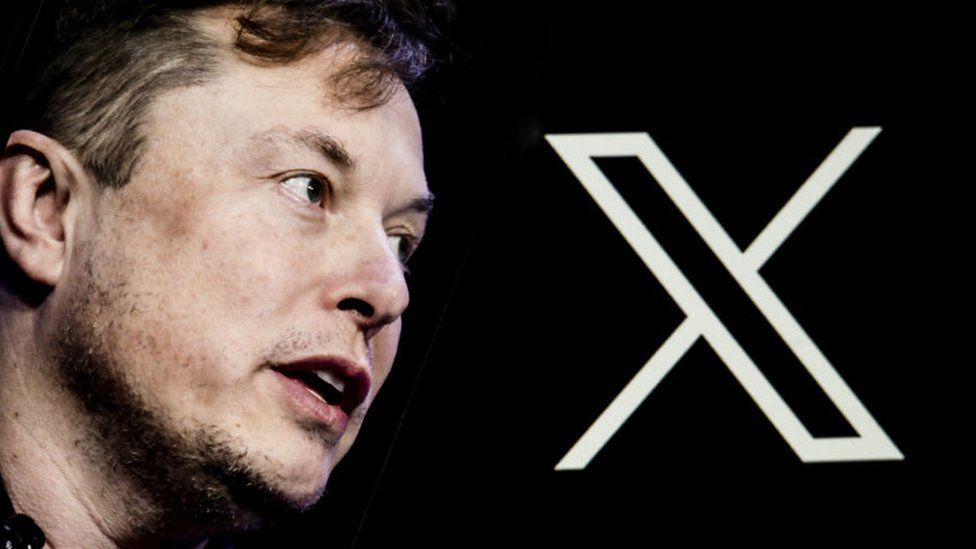
Elon Musk’s obsession with the letter X has captured the Twitter brand, ending the 17-year-old legacy that has endeared millions of people from around the world.

Musk acquired Twitter for $44 billion last year but has replaced the bluebird logo that has identified the text-based app for nearly three decades now with X. The move is understood to be part of his efforts to turn Twitter into something that is originally his idea.

The X idea is to create an “everything app” that mirrors China’s WeChat, a super app that offers a wide range of services, including payments. However, analysts believe that the move could further exacerbate the damaged relationship that exists between Musk and advertisers.

The decision to rebrand follows months of erratic behavior exhibited by the world’s wealthiest man, which resulted in a significant loss of users and the further departure of advertisers. This tumultuous period has left Twitter in a precarious financial state and made it increasingly susceptible to competition.

Killing an iconic internet brand is “extremely risky” at a time when rival apps such as the new Instagram Threads and smaller upstarts such as Bluesky are luring users, CNBC quoted Mike Proulx, an analyst at Forrester, as saying.

Musk has “singlehandedly wiped out over fifteen years of a brand name that has secured its place in our cultural lexicon,” Proulx said in an email.

Musk appears to be betting he can get rid of Twitter altogether. Over the weekend, he introduced the new X logo and said in a tweet that “soon we shall bid adieu to the Twitter brand and, gradually, all the birds.”

Unlike Twitter, X offers a lot of services under its “everything app” umbrella.

Linda Yaccarino, who Musk hired as CEO in May, said in an email to employees Monday that the company will “continue to delight our entire community with new experiences in audio, video, messaging, payments, banking – creating a global marketplace for ideas, goods, services, and opportunities.”

Where the challenge lies per CNBC

According to Proulx, Musk’s ambition to transform X into a super app demands substantial resources, including time, money, and a skilled workforce, which Twitter currently lacks. Musk himself disclosed that the platform experienced a significant 50% drop in advertising revenue and needs to achieve positive cash flow before considering any other initiatives.

The concerns raised by some advertisers stem from the platform’s association with hate speech, racist content, and offensive comments, as documented by civil rights groups and researchers. Musk attempted to offset the advertising decline through a premium subscription service, but the $8 monthly fee would require a massive number of subscribers to make up for the losses.

With the rebrand, Twitter’s familiar “tweets” will be replaced with a new terminology, as the company attempts to navigate its path forward. However, advertisers seem hesitant to increase their spending on the platform, as noted in a recent survey by William Blair. Despite this, there are indications of improvement in the overall digital ad market, as reported by the same survey.

The name change signals a major shift in Twitter’s identity, leading some to view it as a somber day for both users and advertisers. Analyst Jasmine Enberg considers the rebrand a clear sign that the Twitter of the past 17 years is gone and that Musk, rather than any other app, has always been the most likely “Twitter killer.”

In summary, the rebranding effort reflects Twitter’s endeavor to address its challenges under Musk’s leadership, but it also underscores the uncertainties and hurdles the platform faces in winning back advertisers and revitalizing its position in the digital advertising landscape.

Update: 7/28/23

Twitter’s rebranding looks to be complete, for now. The company’s official handle @X has replaced the old Twitter handle, which is now inactive. As part of the changes, the Twitter Blue subscription service is now @XBlue, and support- and API-related handles have also been tweaked. At the same time, X has slashed some ad rates by 50% to win back clients after Elon Musk’s tumultuous acquisition and CEO tenure. Some marketers have criticized renaming the social media site, saying it amounts to throwing away “15 years of brand value.” The original owner of @X wasn’t forewarned or compensated, but he received a letter that offered merchandise and a tour of X’s headquarters as a “reflection of our appreciation.” (LinkedIn News)