
DD
MM
YYYY

PAGES

DD
MM
YYYY

spot_img

PAGES

Home Blog Page 4

Private Technology Giants Prepare to Reshape Public Markets with Trillion Dollar IPO

0

The global financial landscape is entering a historic phase as private technology giants prepare to reshape public markets. According to research from Binance, three trillion-dollar initial public offerings (IPOs) are expected to emerge in 2026, an unprecedented development in modern financial history.

Until now, only one company — Saudi Aramco — had achieved such a valuation during its 2019 public listing. The prospect of multiple trillion-dollar IPOs within a single year signals not only the explosive growth of artificial intelligence and advanced technology firms, but also a profound transformation in how investors value innovation, data, and future economic dominance.

Among the companies leading this extraordinary wave are SpaceX, Anthropic, and OpenAI. These firms have reportedly appreciated by an average of 88% in secondary markets during 2026 alone. Such rapid appreciation reflects intense investor demand for exposure to companies operating at the center of the AI revolution, space technology expansion, and next-generation digital infrastructure.

SpaceX is targeting a $1.75T valuation, potentially raising $50-75B. This would dwarf previous records like Saudi Aramco; $29B raised. It has reportedly filed confidentially, with a possible June 2026 listing. Analysts highlight its Starlink revenue growth, space dominance, and Elon Musk’s track record. Free float could be 25-30%, leading to massive tradable value on day one.

OpenAI’s pre-IPO valuations hitting $1T in secondary and pre-IPO token trading; on-chain SPVs via platforms linked to Binance. It’s a leader in generative AI with massive compute and revenue traction. Anthropic is also reaching ~$1T implied valuations in pre-IPO markets. Positioned as a key AI competitor.

The rise of these firms highlights a major shift away from traditional industrial giants toward companies driven primarily by intellectual property, machine learning capabilities, and computational power. In previous decades, trillion-dollar valuations were associated with massive oil reserves, industrial production, or dominant consumer platforms. Today, investors increasingly believe that artificial intelligence and advanced automation will define the next era of global economic productivity.

As a result, firms building foundational AI systems or critical technological infrastructure are commanding unprecedented valuations before even entering public markets. OpenAI has become symbolic of this transformation. The company’s rapid advancements in generative AI models have fueled expectations that AI could become as essential as electricity or the internet itself.

Investors see AI systems not merely as software products, but as foundational economic engines capable of transforming healthcare, finance, education, manufacturing, and national defense. This perception has dramatically increased demand for ownership stakes in leading AI firms. Similarly, Anthropic has gained significant traction due to its focus on AI safety and enterprise-grade models.

As governments and corporations race to integrate AI into critical operations, companies that can provide scalable and trustworthy AI systems are becoming strategic assets. Meanwhile, SpaceX continues to redefine the commercial space industry through satellite networks, reusable rockets, and ambitions for interplanetary exploration. Investors increasingly view space infrastructure as a future trillion-dollar market tied to communications, defense, and global connectivity.

The emergence of multiple trillion-dollar IPOs also reveals the growing influence of secondary markets. Private investors now gain exposure to high-growth companies years before public listings occur, driving valuations higher long before IPO launches. This trend has blurred the distinction between private and public market wealth creation, concentrating enormous gains among institutional investors and venture capital firms.

The expectation of three trillion-dollar IPOs in 2026 reflects more than financial optimism. It signals a broader transition toward an economy increasingly powered by artificial intelligence, advanced computation, and frontier technologies. If these listings succeed, they may mark the beginning of a new financial era in which technology companies rival entire national economies in size, influence, and strategic importance.

Bitcoin Reclaims $82,000 then Drops Amid US-Iran Tensions as Markets Brace For Inflation Data

0

Bitcoin climbed back above the $82,000 mark after renewed geopolitical tensions between the United States and Iran triggered sharp volatility across global financial markets, including cryptocurrencies and oil. It has since dropped to about $80,000.

The rally followed comments from Donald Trump, who reportedly rejected Iran’s latest proposal aimed at ending the ongoing conflict. According to reports, Tehran had requested access to frozen financial assets and compensation related to war damages as part of the negotiations.

At the same time, Israeli Prime Minister Benjamin Netanyahu stated that military operations would continue until Iran’s uranium facilities are dismantled, further reducing hopes for a near-term resolution.

The escalating geopolitical uncertainty initially boosted Bitcoin, with investors turning to the digital asset as a potential safe-haven alternative while traditional markets reacted to fears of a prolonged conflict. Bitcoin surged as high as $82,473 before losing momentum and retreating toward the $80,000 level as traders began locking in profits and consolidating positions.

According to Markus Thielen, Bitcoin’s ability to maintain strength around the $80,000 range could depend on two major developments expected in the United States this week.

The first is a Senate vote scheduled for Monday regarding the confirmation of Kevin Warsh as the next Federal Reserve chair. The second is the Senate Banking Committee’s markup session on the CLARITY Act on Thursday, a proposed crypto regulatory bill that many industry participants consider one of the most important pieces of digital asset legislation in years.

Thielen noted that while Warsh is generally viewed as more hawkish on inflation than current Federal Reserve Chair Jerome Powell, his confirmation could remove uncertainty surrounding future monetary policy leadership.

He also described the CLARITY Act as a potential turning point for the crypto industry, arguing that clearer regulation could reduce institutional barriers and encourage broader participation in digital assets.

Despite the ongoing conflict, Bitcoin has reportedly gained nearly 30% since tensions between the US and Iran escalated on February 28. The cryptocurrency began May on a bullish note, breaking key resistance levels and briefly trading near $78,872 earlier in the month.

Market analysts noted that Bitcoin has outperformed both gold and the S&P 500 during the recent geopolitical crisis, recovering part of the losses recorded after its previous peak around $126,080.

However, traders remain cautious ahead of the release of fresh US inflation data. The April Consumer Price Index (CPI) report, expected on Tuesday, is anticipated to provide further insight into how rising oil prices and geopolitical instability are affecting the broader economy.

Crypto trader Killa warned that markets may already have priced in expectations surrounding the inflation data, noting that Bitcoin rallied after the previous two CPI releases. However, he suggested that larger investors could begin reducing risk exposure ahead of the announcement if concerns over inflation intensify.

Analysts are also monitoring key support zones, including the $78,000 and $74,000 levels. If inflation comes in hotter than expected, traders fear Bitcoin could face renewed selling pressure, potentially dragging prices back toward the $70,000 range should panic selling accelerate.

Outlook

Bitcoin’s short-term direction is likely to remain heavily influenced by macroeconomic and geopolitical developments. Regulatory optimism in the United States and expectations of greater institutional clarity may continue supporting bullish momentum, particularly if the CLARITY Act advances smoothly through Congress.

However, inflation concerns, Federal Reserve uncertainty, and escalating tensions in the Middle East could increase volatility across crypto markets in the coming days. Traders will closely watch whether Bitcoin can maintain support above the $80,000 psychological level while attempting another push toward the $84,000 resistance zone.

A sustained breakout above that range could strengthen bullish sentiment and open the door for further upside, while failure to hold support may trigger a broader correction across the crypto market.

U.S. Slaps New Iran Sanctions on Chinese, UAE Firms Even as Peace Talks Advance, Signaling War May Drag On

0

The U.S. Department of State has imposed a fresh round of sanctions targeting companies and individuals in China, the United Arab Emirates, Belarus, and Iran, a move that underscores how fragile and uncertain diplomatic efforts to end the U.S.-Iran war remain.

While Washington and Tehran are publicly discussing ceasefire proposals and possible frameworks for renewed nuclear negotiations, the latest sanctions suggest the White House is simultaneously preparing for a prolonged confrontation rather than a quick breakthrough.

The measures, announced late Friday, target 11 entities and three individuals accused of helping Iran sustain its military operations, particularly through weapons procurement, satellite support, and supplies linked to missile and drone programs.

The sanctions are especially significant because they come at a moment when officials from both sides have indicated that negotiations are still underway through Pakistani mediators. Analysts say the timing reveals deep mistrust between Washington and Tehran and indicates that even if diplomacy progresses, the path toward a durable agreement remains highly uncertain.

Experts have warned that further attacks could only embolden Iran.

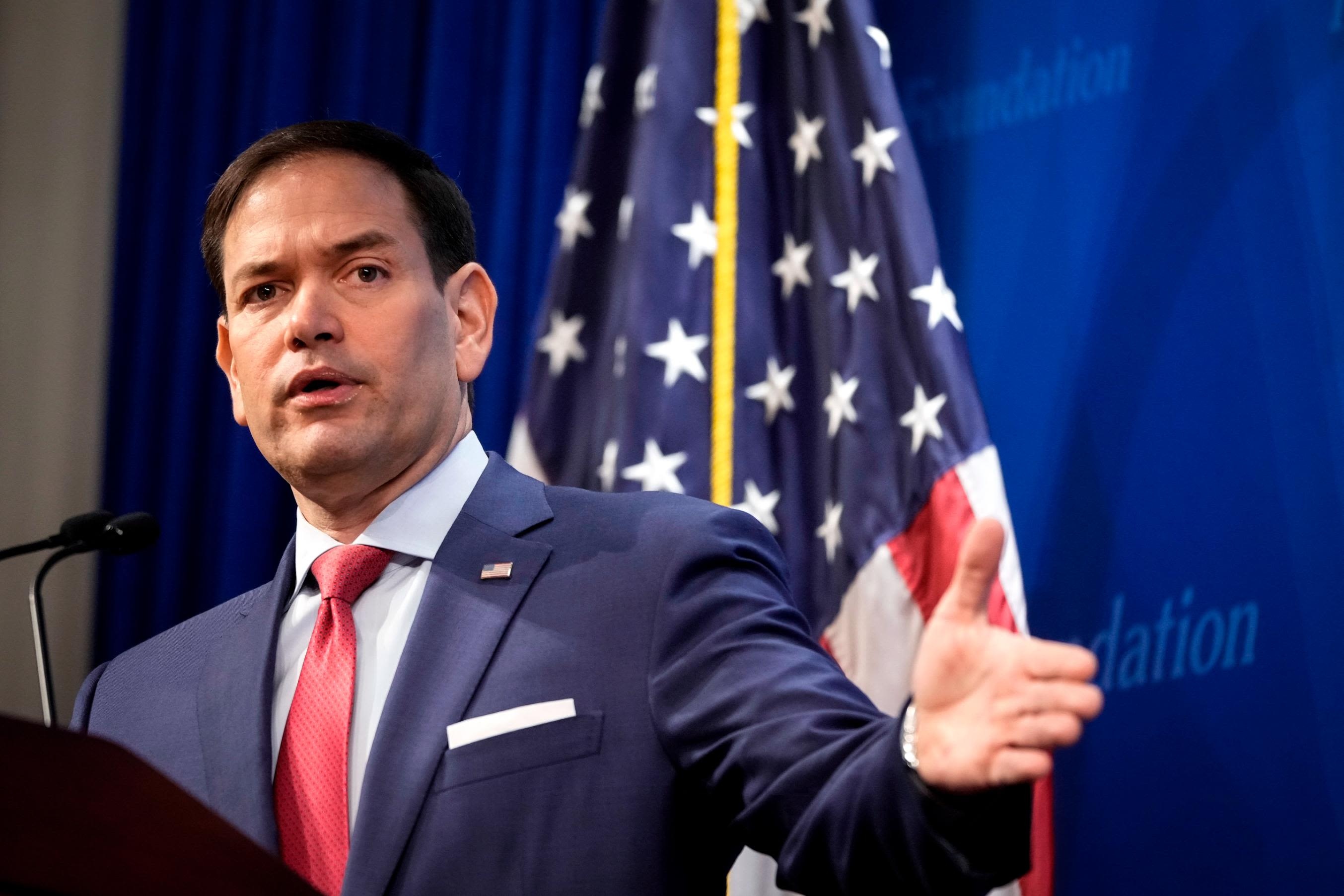
Secretary of State Marco Rubio said the sanctions specifically target networks allegedly assisting Iran’s military capabilities.

“Included in today’s actions are several China-based entities providing satellite imagery to enable Iran’s military strikes against U.S. forces in the Middle East,” Rubio said.

“Additionally, we are designating entities and individuals enabling efforts by Iran’s military to secure weapons, as well as raw materials with applications in Iran’s ballistic missile and unmanned aerial vehicle (UAV) programs,” he added.

The inclusion of Chinese firms is likely to intensify already strained relations between Washington and Beijing, particularly as the United States increasingly accuses Chinese companies of indirectly supporting geopolitical rivals through technology transfers, industrial supply chains, and satellite infrastructure.

The sanctions also send a broader signal to global markets that the United States does not expect tensions to ease quickly, even as negotiations continue behind the scenes. Historically, sanctions imposed during active diplomatic engagement often indicate either a lack of confidence in negotiations or an attempt to gain leverage before any agreement is finalized.

That appears to be the case here.

Rubio acknowledged Friday that Washington was still waiting for Iran’s formal response to the U.S. proposal aimed at ending the war. Iranian state media reported Thursday that Tehran was reviewing messages delivered through Pakistani intermediaries but had not yet reached a conclusion.

According to multiple reports earlier this week, the United States and Iran were discussing a 14-point memorandum of understanding designed to halt the conflict and restart negotiations over Iran’s nuclear program. But the continuing exchange of accusations and military activity around the Strait of Hormuz has cast doubt on whether a near-term agreement is realistic.

Confusion over the ceasefire itself illustrates the instability of the situation. Although President Donald Trump insisted Thursday that the ceasefire remained in effect, U.S. and Iranian forces have continued accusing each other of hostile actions in the Gulf.

Trump attempted to downplay recent exchanges, calling the strikes “just a love tap,” while also insisting that “the Iranians wanted to ‘make a deal very much.’”

Rubio, however, struck a noticeably tougher tone.

“We’ve seen a report overnight that Iran has established, or trying to establish, some agency that’s going to control traffic in the straits. That would be [a] problem. That would actually be unacceptable,” Rubio said Friday.

That warning points to what may be the single biggest obstacle to peace talks: control of the Strait of Hormuz. The narrow waterway carries roughly one-fifth of global oil supplies, making it one of the most strategically important maritime chokepoints in the world.

Iran’s tightening grip over shipping movements in the strait has already triggered a global energy shock, sending oil prices sharply higher and reviving fears of a second inflation wave across major economies.

The International Energy Agency has reportedly described the crisis as “the biggest energy security threat in history.” The economic implications now extend far beyond the Gulf.

Higher oil prices are beginning to ripple through shipping, manufacturing, aviation, and consumer goods sectors worldwide. Global shipping companies have already warned of surging fuel costs and worsening supply-chain disruptions, while central banks are increasingly concerned that sustained energy inflation could derail fragile economic recoveries.

The sanctions also demonstrate how modern economic warfare increasingly targets technological infrastructure rather than only conventional military supply chains. Satellite imagery firms, electronics suppliers, logistics operators, and industrial materials companies are becoming central targets because advanced warfare now relies heavily on integrated digital and surveillance systems.

For Tehran, the latest measures add to mounting pressure on an economy already battered by years of sanctions, currency weakness, and constrained oil exports. Yet Iran still possesses enormous strategic leverage because of its location and its ability to disrupt global energy flows.

That leverage appears to be shaping Tehran’s negotiating posture. Iranian officials are reportedly demanding guarantees of non-aggression, sanctions relief, the release of frozen assets, compensation payments and changes to regional security arrangements before any broader agreement can move forward.

The contradiction at the center of the crisis is now becoming more pronounced. Even while discussing peace frameworks and ceasefire proposals, both sides continue escalating economic pressure, military positioning, and strategic warnings. That dual-track approach suggests neither Washington nor Tehran fully trusts the other’s intentions, making the prospect of a quick diplomatic resolution increasingly doubtful.

The Next Major Resource Maybe Compute Power, Larry Fink Says 

0

The modern global economy has always been built around scarce and valuable resources. In the industrial era, oil became the defining commodity that powered nations, industries, and geopolitical influence. In the digital age, data emerged as a strategic asset that reshaped finance, advertising, and technology.

Now, according to Larry Fink, the next major resource may be compute power itself. The BlackRock CEO strongly believes that the explosion of artificial intelligence demand is so large that a completely new asset class could emerge around the buying and selling of compute futures. This idea reflects a broader transformation occurring within the technology industry.

Artificial intelligence systems are becoming increasingly dependent on vast amounts of computational power. Training large language models, running advanced simulations, powering robotics, and operating autonomous systems all require enormous data center infrastructure and specialized chips. As AI adoption accelerates globally, demand for compute is beginning to resemble demand for electricity or energy infrastructure rather than traditional software services.

Fink’s argument suggests that compute may evolve into a tradable commodity similar to oil, natural gas, or electricity futures. In commodity markets, futures contracts allow companies and investors to lock in prices for resources they expect to need later. Airlines hedge jet fuel prices, manufacturers hedge metals, and utilities hedge electricity costs.

If AI becomes embedded into every sector of the economy, corporations may eventually need to hedge access to compute capacity in the same way. The logic behind this emerging market is straightforward. Today, the world’s leading AI companies compete aggressively for access to high-performance chips, cloud infrastructure, and data center capacity.

Shortages of advanced semiconductors have already demonstrated how constrained supply can disrupt technological growth. Companies developing AI systems cannot afford interruptions in compute availability because training delays could mean losing competitive advantage in trillion-dollar markets.

As a result, compute is increasingly being viewed not simply as infrastructure, but as economic capital. The firms controlling compute resources may occupy positions similar to energy producers in previous decades. Cloud providers, semiconductor manufacturers, and AI infrastructure companies are becoming central pillars of global economic power.

This explains why investors are pouring billions into data centers, energy grids, and AI chip production facilities across the United States, Europe, the Middle East, and Asia. A compute futures market could fundamentally change financial markets as well. Investors might speculate on future compute demand, hedge against rising AI costs, or gain exposure to technological growth through entirely new financial instruments.

Hedge funds, pension funds, and sovereign wealth funds could eventually allocate capital to compute contracts alongside commodities, equities, and bonds. Such a development would signal that AI infrastructure has matured into a foundational component of the global economy. However, this future also raises important questions. If compute becomes concentrated among a handful of corporations or nations, economic inequality and geopolitical tensions could intensify.

Countries with access to abundant energy, semiconductor manufacturing, and advanced data centers may gain disproportionate influence over the AI economy. Smaller nations or companies without compute access could struggle to compete in a world increasingly driven by machine intelligence. Larry Fink’s vision reflects a profound shift in how society values technology infrastructure.

Artificial intelligence is no longer viewed merely as software innovation; it is becoming an industrial revolution powered by computation itself. If demand continues to accelerate at its current pace, compute may soon become one of the world’s most strategic and financially significant resources, giving rise to an entirely new asset class built around the future of intelligence.

Crypto Industry is Overcrowded with Ghost Chains and Zombie Coins

0

The cryptocurrency industry was built on the promise of decentralization, financial freedom, and technological innovation. Yet beneath the optimism lies a harsh reality: the market is overcrowded with ghost chains and zombie coins.

Ghost chains are blockchains that technically still exist but have little activity, few developers, almost no users, and negligible economic value. Zombie coins are tokens that continue trading despite losing relevance, utility, or community engagement long ago. Together, they represent one of the biggest structural weaknesses in the digital asset economy.

There are now millions of crypto tokens and thousands of blockchain networks. Every market cycle produces another wave of projects promising to revolutionize finance, gaming, artificial intelligence, supply chains, or social media. Most never deliver meaningful adoption. Many survive only because of speculative trading, automated bots, or lingering liquidity on exchanges. Some projects have not released updates in years, yet their tokens still fluctuate daily as traders chase volatility rather than real innovation.

This situation raises an uncomfortable but necessary question: does anyone seriously believe millions of crypto coins will thrive in the future? History suggests otherwise. Every technological revolution begins with excess experimentation, but eventually consolidation takes place.

During the dot-com bubble, thousands of internet companies emerged, yet only a handful became dominant global platforms. The automobile industry once had hundreds of manufacturers before consolidating into a small number of major players. Crypto is unlikely to escape this economic reality. Network effects make survival even harder. The most successful blockchains attract developers, liquidity, institutions, applications, and users simultaneously.

Once a chain gains enough momentum, competing networks struggle to catch up. This dynamic naturally concentrates capital into a smaller group of ecosystems. Bitcoin dominates digital store-of-value narratives. Ethereum controls much of decentralized finance and tokenization. Other chains compete for specialized niches, but many lack sufficient differentiation to justify long-term survival.

The existence of ghost chains and zombie coins also damages the credibility of the broader industry. New investors entering crypto are overwhelmed by endless tokens with confusing names, unrealistic promises, and inflated valuations. Many retail participants lose money chasing narratives that collapse within months. This fuels skepticism from regulators, institutions, and the public, who increasingly view large portions of the market as speculative noise rather than transformative infrastructure.

However, the failure of millions of projects does not mean crypto itself is failing. On the contrary, periods of excess often clear the path for stronger systems to emerge. The collapse of weak projects forces capital and talent toward networks with genuine utility, security, and adoption. In many ways, the destruction of zombie coins is a necessary cleansing process for the industry.

The future of crypto will likely belong to a far smaller group of assets than many enthusiasts imagine today. Most tokens will disappear, become irrelevant, or remain permanently illiquid. A minority will evolve into durable financial and technological infrastructure.

That is not pessimism; it is simply how markets mature. The crypto economy may survive and even thrive, but millions of coins almost certainly will not. Speculation creates abundance temporarily, but sustainable value eventually demands consolidation