

The U.S. Department of State has imposed a fresh round of sanctions targeting companies and individuals in China, the United Arab Emirates, Belarus, and Iran, a move that underscores how fragile and uncertain diplomatic efforts to end the U.S.-Iran war remain.
While Washington and Tehran are publicly discussing ceasefire proposals and possible frameworks for renewed nuclear negotiations, the latest sanctions suggest the White House is simultaneously preparing for a prolonged confrontation rather than a quick breakthrough.
The measures, announced late Friday, target 11 entities and three individuals accused of helping Iran sustain its military operations, particularly through weapons procurement, satellite support, and supplies linked to missile and drone programs.
Register for the next Tekedia Mini-MBA.
Register for Tekedia AI in Business Masterclass.
Join Tekedia Capital Syndicate and co-invest in great global startups.
The sanctions are especially significant because they come at a moment when officials from both sides have indicated that negotiations are still underway through Pakistani mediators. Analysts say the timing reveals deep mistrust between Washington and Tehran and indicates that even if diplomacy progresses, the path toward a durable agreement remains highly uncertain.
Experts have warned that further attacks could only embolden Iran.
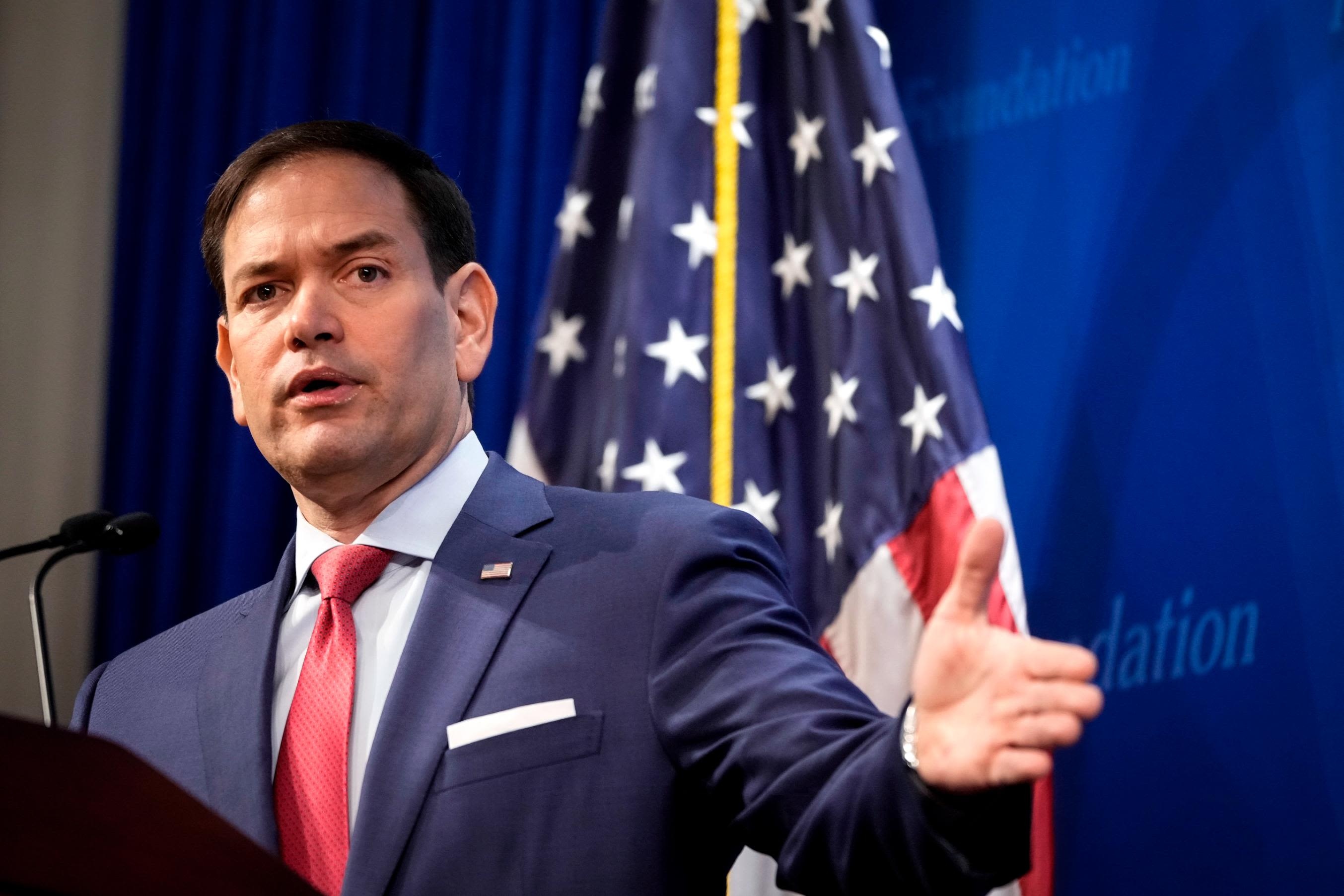
Secretary of State Marco Rubio said the sanctions specifically target networks allegedly assisting Iran’s military capabilities.

“Included in today’s actions are several China-based entities providing satellite imagery to enable Iran’s military strikes against U.S. forces in the Middle East,” Rubio said.
“Additionally, we are designating entities and individuals enabling efforts by Iran’s military to secure weapons, as well as raw materials with applications in Iran’s ballistic missile and unmanned aerial vehicle (UAV) programs,” he added.
The inclusion of Chinese firms is likely to intensify already strained relations between Washington and Beijing, particularly as the United States increasingly accuses Chinese companies of indirectly supporting geopolitical rivals through technology transfers, industrial supply chains, and satellite infrastructure.

The sanctions also send a broader signal to global markets that the United States does not expect tensions to ease quickly, even as negotiations continue behind the scenes. Historically, sanctions imposed during active diplomatic engagement often indicate either a lack of confidence in negotiations or an attempt to gain leverage before any agreement is finalized.
That appears to be the case here.
Rubio acknowledged Friday that Washington was still waiting for Iran’s formal response to the U.S. proposal aimed at ending the war. Iranian state media reported Thursday that Tehran was reviewing messages delivered through Pakistani intermediaries but had not yet reached a conclusion.
According to multiple reports earlier this week, the United States and Iran were discussing a 14-point memorandum of understanding designed to halt the conflict and restart negotiations over Iran’s nuclear program. But the continuing exchange of accusations and military activity around the Strait of Hormuz has cast doubt on whether a near-term agreement is realistic.
Confusion over the ceasefire itself illustrates the instability of the situation. Although President Donald Trump insisted Thursday that the ceasefire remained in effect, U.S. and Iranian forces have continued accusing each other of hostile actions in the Gulf.
Trump attempted to downplay recent exchanges, calling the strikes “just a love tap,” while also insisting that “the Iranians wanted to ‘make a deal very much.’”
Rubio, however, struck a noticeably tougher tone.
“We’ve seen a report overnight that Iran has established, or trying to establish, some agency that’s going to control traffic in the straits. That would be [a] problem. That would actually be unacceptable,” Rubio said Friday.
That warning points to what may be the single biggest obstacle to peace talks: control of the Strait of Hormuz. The narrow waterway carries roughly one-fifth of global oil supplies, making it one of the most strategically important maritime chokepoints in the world.
Iran’s tightening grip over shipping movements in the strait has already triggered a global energy shock, sending oil prices sharply higher and reviving fears of a second inflation wave across major economies.
The International Energy Agency has reportedly described the crisis as “the biggest energy security threat in history.” The economic implications now extend far beyond the Gulf.
Higher oil prices are beginning to ripple through shipping, manufacturing, aviation, and consumer goods sectors worldwide. Global shipping companies have already warned of surging fuel costs and worsening supply-chain disruptions, while central banks are increasingly concerned that sustained energy inflation could derail fragile economic recoveries.
The sanctions also demonstrate how modern economic warfare increasingly targets technological infrastructure rather than only conventional military supply chains. Satellite imagery firms, electronics suppliers, logistics operators, and industrial materials companies are becoming central targets because advanced warfare now relies heavily on integrated digital and surveillance systems.
For Tehran, the latest measures add to mounting pressure on an economy already battered by years of sanctions, currency weakness, and constrained oil exports. Yet Iran still possesses enormous strategic leverage because of its location and its ability to disrupt global energy flows.
That leverage appears to be shaping Tehran’s negotiating posture. Iranian officials are reportedly demanding guarantees of non-aggression, sanctions relief, the release of frozen assets, compensation payments and changes to regional security arrangements before any broader agreement can move forward.
The contradiction at the center of the crisis is now becoming more pronounced. Even while discussing peace frameworks and ceasefire proposals, both sides continue escalating economic pressure, military positioning, and strategic warnings. That dual-track approach suggests neither Washington nor Tehran fully trusts the other’s intentions, making the prospect of a quick diplomatic resolution increasingly doubtful.