DD
MM
YYYY

PAGES

DD
MM
YYYY

spot_img

PAGES

Home Blog Page 4

Kraken Launches Krak Debit Card to Push Crypto Deeper Into Everyday U.S. Spending

0

Kraken is moving further into mainstream consumer finance with the launch of a U.S. cashback debit card that allows customers to spend both traditional currencies and crypto directly, as the cryptocurrency industry increasingly shifts from speculative trading toward financial infrastructure.

The Krak Card, offered through Krak, the fintech app created by Kraken’s parent company, Payward, offers customers up to 2% cashback in either cash or bitcoin. The reward rate increases according to the value of assets a customer holds on the platform, with rewards delivered as money rather than conventional points.

The card is designed to make crypto balances function more like ordinary spending money. Customers can spend from more than 600 currencies and crypto assets, with Krak automatically converting selected balances into dollars when a transaction is made.

Users can determine which assets are spent first and even split a single purchase across multiple balances. That feature gives Krak a broader ambition than a conventional crypto-linked debit card: it is attempting to turn an exchange account into an everyday financial account.

The strategy puts Krak into competition with a growing group of U.S. fintech and payments platforms, including Cash App, Venmo, SoFi, Robinhood and Chime. Those companies have increasingly blurred the boundaries between payments, banking, investing and digital assets as consumers consolidate more of their financial activity within mobile applications.

For Kraken, however, the economics of the card may be less important than the customer relationship it creates. Debit-card transactions generate interchange revenue, but Krak offers the card through a partner bank and is therefore subject to U.S. restrictions on debit-card interchange fees. Those limits constrain the amount of revenue available from each transaction, making a cashback rate of up to 2% difficult to finance through card spending alone.

That indicates that Kraken’s larger objective is to increase the amount of a customer’s financial activity conducted through its ecosystem.

A debit card can encourage users to maintain balances on the platform, spend those assets, receive income or rewards through the service, and potentially use Kraken for additional financial products. In that sense, the card could serve as a customer-retention mechanism as much as a payments product.

This is significant for Kraken because the company has historically been positioned toward experienced crypto users rather than the broader consumer market.

Founded in 2011, Kraken built its reputation as an exchange for crypto-native customers, including institutions, trading firms, professional traders, and active retail traders. Its newer strategy is aimed at expanding that base, including through agentic trading capabilities in its redesigned app.

Krak takes the company into a different part of the financial relationship. Instead of asking consumers to open an app primarily when they want to buy or sell crypto, the card gives them a reason to interact with the platform during ordinary purchases.

As the industry evolves, the next phase of cryptocurrency adoption is being framed around infrastructure rather than simply the trading of digital assets. Tokenized stocks, commodities, dollars, and other financial instruments are emerging alongside traditional cryptocurrencies, while exchanges and fintech companies compete to become the platforms through which consumers access those products.

Kraken appears to be taking a different route from some of its competitors.

Coinbase has been presenting itself as a gateway into crypto, while Robinhood has expanded its position as a broader investing platform. Kraken, by comparison, is retaining a distinctly crypto-native identity and attempting to make that identity useful in everyday financial transactions.

The Krak Card is an expression of that strategy. Rather than hiding the complexity of crypto, the product attempts to make a large number of digital assets spendable without requiring customers to manually sell them before making a purchase.

That could appeal particularly to users who already hold significant crypto balances but do not want to move those assets through a conventional bank before spending them. At the same time, the model introduces familiar risks associated with crypto-linked financial products. The value of assets such as bitcoin can fluctuate sharply, while converting volatile assets at the point of purchase creates a different spending experience from using dollars held in a traditional bank account.

Krak’s ability to support more than 600 currencies and crypto assets also creates a substantial operational and regulatory burden. The company must manage conversions, liquidity, compliance, and transaction processing across a wide range of assets while maintaining a consumer experience that resembles a conventional debit card.

The company is betting that consumers will value that flexibility.

Arjun Sethi, co-CEO of Kraken parent Payward, said consumers have lost trust in traditional financial products because of fees, interest rates and reward structures. The company is positioning the card around that dissatisfaction, arguing that consumers should be able to receive rewards without taking on credit-card debt.

Krak said a survey of more than 2,000 U.S. adults commissioned by the company found that 63% of respondents felt financially behind, while 60% said they would switch to a debit card offering meaningful rewards without requiring them to borrow.

Those findings are being used to frame the card as more than a crypto product. Krak is effectively arguing that consumers should be able to use the assets they already own as part of an integrated spending and payments system.

The broader Kraken ecosystem gives the company several potential advantages if the strategy succeeds. Beyond spot and derivatives trading, Kraken offers institutional custody and tokenized equities. Its banking subsidiary also holds a Wyoming bank charter, while Kraken said earlier this year that it became the first crypto company to secure a Federal Reserve master account, enabling direct access to core U.S. payment infrastructure.

That combination is expected to eventually allow Kraken to connect trading, custody, banking, payments and tokenized assets within one ecosystem.

The strategic opportunity, therefore, extends well beyond debit-card transactions. Kraken is trying to move from being a place where customers trade crypto to a platform where they hold, convert and spend a wider range of financial assets.

However, it is not clear whether consumers will make that transition.

Many believe that the success of the Krak Card will depend less on the novelty of spending crypto and more on whether Kraken can persuade users to make it part of their everyday financial lives. If it succeeds, the card could become an important distribution channel for Kraken’s broader financial services and help turn crypto holdings into a persistent source of customer engagement.


Africa’s gaming studios continue their rise

0

Whether after learning the ropes at major companies in Europe or gaining extensive experience at huge names in the United States of America, Africans everywhere are making their mark in the games industry. In fact, some of them have even returned to the continent of Africa to grow their own businesses and work for some ambitious studios.

From Nigeria to Kenya, there are some exciting gaming studios in this part of the world, all aiming to bring African gaming products to global audiences. There have already been some undoubted success stories, with many African-made games being played alongside other favorites like EA Sports FC 26 and DraftKings online blackjack titles like Spanish 21. However, with teams of talented Africans helping to shape the success of numerous gaming studios, we could see even more African hit releases arriving in the near future.

With Western and East Asian studios beginning to take notice and invest in some of Africa’s brightest gaming studios, plus the talent that makes them so special, below we briefly highlight some of the finest gaming studios in this part of the world. Make no mistake about it, African gaming studios are starting to shake things up and it’s refreshing to see.

Sea Monster

These days, companies away from gaming are using a variety of training simulations to help their employees grow further. Alongside offering branded games, South African giant Sea Monster specializes in offering informative training simulations. These helpful educational tools are enabling South Africa’s workforce to unlock their finest performances in the office and bring workers together. A company with a diverse offering, Sea Monster is an African gaming studio worth keeping tabs on.

Maliyo Games

As far as Nigeria’s major players in this particular space go, Maliyo Games is easily one of the very biggest names. A mobile gaming powerhouse, the extensive collection of games made by the company offer strong African themes. With millions of downloads to Maliyo Games’ name, plus a number of glowing reviews associated with some of the company’s releases, Maliyo Games is certainly doing well. For Africa’s large population of mobile gamers, the array of hit products by Maliyo Games are firmly on the menu.

Leti Arts

When assessing the gaming landscape in Ghana, Leti Arts is almost impossible to ignore. This undeniable inspiration for so many gaming-related professionals on the continent has been on a special journey, with Eyram Tawia, the co-founder and CEO, leading the charge. From Africa’s Legends to The Hottseat, the company is on a mission to bring stories to life in the gaming sphere. Covering a diverse range of genres and bringing African stories to worldwide audiences, Leti Arts is on an admirable mission.

Usiku Games

Usiku Games has already made notable progress thanks to much-loved products like Okoa Simba, but the Kenyan company clearly isn’t stopping there. By offering educational games strongly associated with Africa and African culture, their titles are extremely powerful. With more masterpieces on the horizon, Usiku Games could become even bigger in the near future.

Qene Games

By shining a light on Ethiopian culture and the nation’s rich history, Qene Games is yet another company in the gaming category that is on a special mission. Much-loved releases have been prevalent, although Mana is undoubtedly one of the company’s very best creations. On top of the ancient-themed title, Qene Games has been working on other alluring adventures, highlighting just how far Ethiopia’s gaming scene has come. Of course, there is still more work to be done in the country, but Qene Games is a clear trailblazer.

Tekedia Capital Portfolio Startup, Pocket, Hits $100M ARR

0

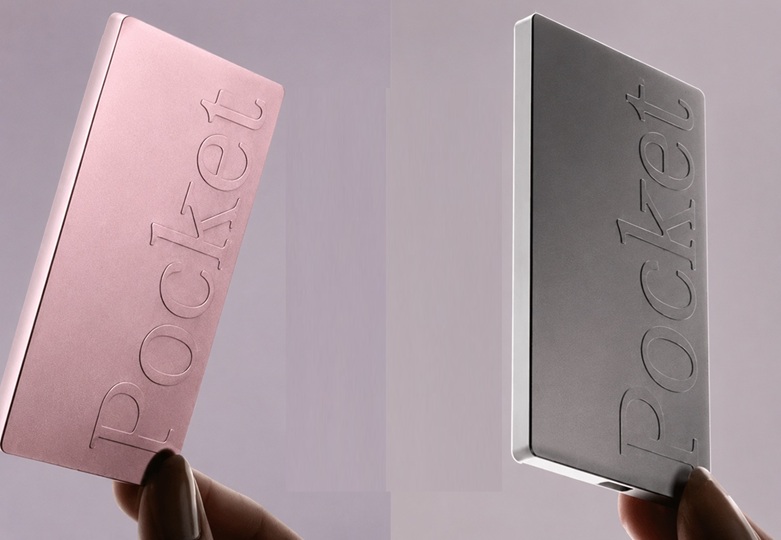
Pocket has crossed $100 million in Annualized Run Rate. Seven months ago, the company was at $1 million. Today, more than 270,000 Pocket devices are in the hands of users around the world. By moving from $1 million to $100 million in Annualized Run Rate within seven months, Pocket has become one of the fastest growing hardware companies in recent records!

This is a remarkable demonstration of the power of entrepreneurial execution. Ideas matter, but markets reward products that solve real problems at scale. Pocket began with a simple but consequential thesis: artificial intelligence should not be confined to screens. It should understand the conversations and contexts of everyday life and transform them into useful intelligence.

That thesis is now becoming a category, and the numbers are validating it.

Tekedia Capital invested in Pocket because we saw a company working at the intersection of AI, hardware and ambient computing. We believed that as AI becomes increasingly embedded in daily life, new devices will emerge to capture context, organize knowledge and augment human capability beyond the traditional computer screen.

From shipping hundreds of thousands of devices to assembling an exceptional team, Pocket has compressed years of growth into months. Yet, despite this extraordinary milestone, the most exciting opportunity remains ahead.

At Tekedia Capital, we celebrate the Pocket team, its customers and everyone who believed in the mission from the beginning. This is what happens when innovation, an invention successfully taken to market, meets disciplined execution.

Congratulations to the entire Pocket team. The promise is evident, the trajectory is compelling, and the future is arriving. Win more markets!

Tekedia Capital >> we’re funding the future.

What Each Status Means in a Crypto Slot Deposit

0
Crypto payment confirmation flow

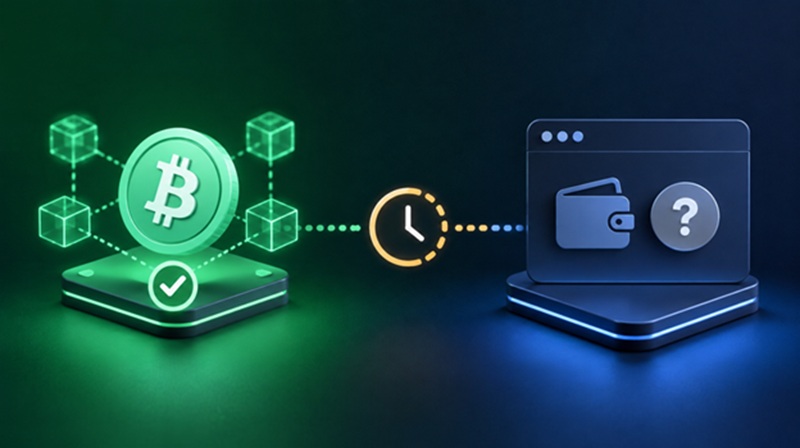
A crypto deposit for playing slots can be confirmed on a blockchain while the receiving account still shows no usable balance. This can happen because the two labels come from different systems. “Confirmed” usually means the network has accepted the transaction into its ledger. “Credited” means the recipient has detected that transfer, matched it to the correct account, and updated an internal balance. The gap between them may be brief, but it is important to understand before you start a game.

What Each Deposit Status Proves

A crypto deposit leaves evidence in several places, rather than producing one universal status. The wallet records what the sender approved, the blockchain records what the network accepted, and the casino’s receiving account records what was detected and credited. These layers may update at different times because each one answers a different operational question. A label such as “pending” or “complete” therefore makes sense only when the reader knows which system produced it. Tracing the deposit stage by stage makes it possible to see what has already happened without assuming that every later record must have changed at the same moment.

A payment request from a casino begins before value moves. Wallet approval shows that the player has authorized a transaction, while broadcast means the signed instruction has been sent to the network. Confirmation then establishes a blockchain state, not the recipient’s internal accounting state. That boundary becomes clearer with the Bitcoin Jiggle deposit flow being explained step by step, showing how the wallet, the transfer network, and the casino’s receiving account each record a separate stage.

Jiggle Wallet can hold Bitcoin and several other assets, but the payment-link rail is currently described as Litecoin-only. The process starts with a request containing the amount, continues through wallet review and approval, and then depends on the network transfer before the destination can recognize it. A blockchain explorer may therefore show a confirmed transaction while the receiving system still needs to detect it, match its reference, and update the intended account. “Confirmed,” “detected,” and “credited” describe successive records controlled by different systems. None proves by itself that a failure has occurred or reveals an unpublished processing time.

Once their account has been credited, players can choose from a whole range of slot games, including ones that offer newer features, such as progressive jackpot slots. Before playing any, it’s worth taking the time to understand how these features work – something made easy by YouTube tutorials. Figuring out how a feature works ensures you’re playing a game you’re likely to enjoy before you spend any crypto on it.

Find the Owner of the Next Status

A useful diagnosis starts with the last state that can be verified, then identifies which system owns the next one.

Status shown What happened System owner Evidence to inspect
Request created Payment details exist Checkout Request screen
Approved or signed Transaction authorized Wallet Wallet history
Broadcast A message was sent to the network Wallet Transaction ID
Confirmed Ledger recorded it Blockchain Explorer record
Detected Recipient recognizes the transfer Destination system Deposit history
Credited Internal balance changed Account ledger Account balance
Wager eligible Game conditions met Game system Game rules


For payment operations and support teams, the practical response is to preserve the identifiers from both sides of the handoff. The transaction ID anchors the blockchain stage. The payment request, email, or account reference anchors the recipient-side matching stage. When those records are available, “pending” can be replaced with a narrower question: Is the transfer awaiting block confirmation, destination detection, account matching, or balance credit? That question directs investigation without assuming that the wallet, network, or merchant is at fault.

When a crypto deposit is confirmed but not credited, start with the owner of the latest verified status. The blockchain may already have finished its part while the destination has not yet recorded its own. Precise status language turns a vague delay into a bounded operational question, and that is the fastest route to understanding what remains unresolved.

If you are having any issues, most casino platforms have fast-acting help departments that will be able to assist you in tracking a payment and figuring out where it has got to. Before you contact them, it’s worth looking at general processing times, both on the crypto pathway you have chosen, and on the site itself. You’ll usually be able to find information about how quickly the funds should move, which can vary depending on the network you have chosen and the number of transfers currently taking place. The casino will also have its own processing estimates, so take a look at these before you get in touch with support.

If you do need to reach out to support, it may help to have the transaction ID of the deposit in question, as this will help them identify the payment on the blockchain network and troubleshoot any problems.

BlockDAG Launches Beta Stablecoin & $0.0000017 Entry, While Dogecoin & Uniswap Navigate Market Volatility

0

Crypto markets are moving fast this week, delivering mixed signals across major tokens. Traders are closely tracking the Dogecoin price today as on-chain indicators hint at a potential bottom, while the Uniswap price struggles under regulatory pressure and fee updates.

At the same time, BlockDAG (BDAG) is making headlines by rolling out its live stablecoin beta, running at 7,000 transactions per second, and seeing over $200 million in casino wagers. Priced at just $0.0000017 per BDAG, BlockDAG is capturing widespread attention from investors hunting for the best crypto to buy now.  

Rare On-Chain Signal Sparks Recovery Hopes for Dogecoin

The Dogecoin price today trades around $0.07, hovering specifically near $0.06990. While recent price action remains modest, an unusual metric has analyst circles talking. Alphractal CEO Joao Wedson noted that DOGE has dropped into a rare CVDD valuation zone, a pattern that historically aligns with major market lows. This indicator measures how long coins sit idle before moving, helping analysts pinpoint potential value zones for long-term holders.

Currently, Dogecoin maintains a market capitalization of roughly $11.95 billion alongside a 24-hour trading volume near $255.58 million. Even with this signal flashing, a price surge is not guaranteed. Traders are keeping a close eye on the $0.06871 support level alongside key resistance at $0.07127. Holding above support and breaking past resistance could confirm a bullish trend, whereas falling below $0.06871 may trigger further downside.

Downward Pressure Pushes Uniswap Toward Critical Support Levels

The Uniswap price faces significant friction, sliding over 20% in a week—specifically 20.2%—down to around $3.25. Uncertainty surrounding potential regulatory actions and protocol fee adjustments has kept buyers on the sidelines despite steady trading volume on the exchange. Technical indicators reflect this heavy selling, with the Relative Strength Index hovering near 36 to signal near-oversold conditions, while volatility sits at 27.06%.

Looking ahead, analysts project the token to fluctuate between $2.7969 and $3.705, assigning a 74% probability to further downside movement. The immediate line in the sand sits at $3.171. If bulls defend this level, UNI might find stability, but a break below could push the asset toward $2.7969. Conversely, overcoming main resistance at $3.4384 is necessary to mount a recovery back toward $3.705.

BlockDAG Rolls Out Beta Testing for Its On-Chain Stablecoin

Rather than waiting on broader market trends, BlockDAG is accelerating its ecosystem development with the official launch of its stablecoin beta. The system allows users to link their wallets, post native BDAG tokens as collateral, and mint BDUSD directly. Every transaction—from collateral deposits and token minting to repayments and withdrawals—is fully verifiable on-chain, with gas fees settled in BDAG.

This milestone complements steady network growth across multiple fronts. The network’s integrated casino and sportsbook operations have already processed over $200 million in total wagers. Meanwhile, the underlying DAG-based technology, built to handle payments and smart contracts side by side, recently received a performance upgrade to 7,000 transactions per second, expanding its capacity to handle concurrent gaming, lending, and stablecoin transactions.

BlockDAG is currently offering tokens at an entry price of $0.0000017 without requiring promo codes or multi-step processes. For context, a $100 allocation secures 5 million tokens, $500 secures 25 million tokens, $1,000 yields 50 million tokens, and $5,000 buys 250 million tokens. With an exchange and a super app planned as the next major releases, analysts forecast a significant price surge.

Final Thoughts!

Evaluating the Dogecoin price today reveals a token holding near key technical bounds between $0.06871 and $0.07127, where historical valuation metrics suggest potential upside if momentum returns. Meanwhile, the Uniswap price struggles with a 74% likelihood of visiting lower levels around $2.7969 unless it holds firmly above $3.171.

In contrast, BlockDAG continues to demonstrate clear operational progress without leaving its trajectory to chance. With BDUSD minting active, throughput reaching 7,000 TPS, and over $200 million in wagers recorded, the network offers tangible proof points while maintaining a $0.0000017 price. As launches for its exchange and super app draw closer, BlockDAG presents an appealing setup for investors identifying the best crypto to buy now before higher demand impacts bulk availability.

Presale: https://purchase.blockdag.network

Website: https://blockdag.network

Telegram: https://t.me/blockDAGnetworkOfficial

Discord: https://discord.gg/Q7BxghMVyu