
DD
MM
YYYY

PAGES

DD
MM
YYYY

spot_img

PAGES

Home Blog Page 4

Kalshi Launches Midterms Hub To Track Election Forecasts As Prediction Market Activity Accelerates

0

Prediction market platform Kalshi has unveiled a new election intelligence platform that combines real-time market forecasts, polling, campaign finance data, and political news, as it deepens its push into U.S. politics ahead of the 2026 midterm elections and seeks to establish prediction markets as a mainstream source of election analysis.

The new Midterms Hub is designed to provide a comprehensive snapshot of how traders believe the battle for control of Congress will unfold, allowing users to monitor every competitive House and Senate race through continuously updated market odds rather than relying solely on traditional opinion polls.

The launch represents another step in Kalshi’s transformation from a prediction market operator into a broader political information platform, targeting not only traders but also journalists, policymakers, campaign strategists, investors, and politically engaged citizens looking for real-time insights into electoral dynamics.

At the heart of the hub is an interactive national map displaying market-implied probabilities for individual congressional races. The platform aggregates contracts across every competitive Senate and House contest, giving users an evolving picture of which party is expected to control each chamber after November’s elections.

Unlike conventional election forecasting models that are updated periodically, prediction markets respond almost instantly to new information. Market prices fluctuate as traders react to campaign developments, fundraising disclosures, candidate debates, economic data, endorsements, legal rulings and geopolitical events, producing a continuously evolving assessment of electoral probabilities.

To help users evaluate those forecasts, Kalshi has integrated polling averages directly into the platform, allowing visitors to compare survey-based projections with market expectations. The side-by-side presentation highlights where prediction markets and opinion polls align and where they diverge, offering a fuller picture of electoral sentiment.

The hub also incorporates the latest Federal Election Commission campaign finance filings, enabling users to track fundraising performance for individual candidates alongside market odds. Because campaign fundraising is widely viewed as an important indicator of organizational strength and advertising capacity, the additional data provides context for shifts in market sentiment.

Curated political reporting and analysis from multiple news organizations further rounds out the platform, allowing users to connect changing market probabilities with the events driving those movements.

Kalshi said the platform is designed as much for observers as for traders.

According to the company, roughly 75% of visitors to its platform do not actively trade contracts but instead use Kalshi to monitor probabilities surrounding elections, economic releases, monetary policy decisions and other major events.

Chief Executive Officer Tarek Mansour said prediction markets offer an increasingly valuable alternative to traditional political analysis because participants have financial incentives to make accurate forecasts rather than simply express political preferences.

“Our prediction markets cut through polarization and show you what the wisdom of the crowds actually believes, backed by real money, not rhetoric,” Mansour said in a statement.

“That kind of clarity is rare right now and that’s what people are getting with the Midterms Hub.”

Mansour, an MIT graduate who previously worked as a trader at Citadel and an analyst at Goldman Sachs, has argued that financial incentives encourage participants to incorporate diverse sources of information into market prices, making prediction markets a useful complement to polling rather than a replacement for it.

The launch builds on Kalshi’s expanding political product lineup. Earlier this year, the company introduced the American Power Index, which it describes as an “S&P 500 for politics.” The index tracks the relative political strength of Democrats and Republicans by aggregating prices across numerous political event contracts, providing a market-based gauge of shifts in political momentum.

The move follows the upcoming battle for congressional control, which is expected to dominate U.S. politics over the coming months, with both parties competing aggressively for House and Senate majorities that will shape President Donald Trump’s legislative agenda during the second half of his term.

Political analysts expect campaign spending to reach record levels as competitive races intensify across multiple battleground states. That environment is likely to drive substantially higher trading activity on election-related contracts as investors, political professionals and retail participants seek to price rapidly changing developments.

The platform is already seeing strong engagement. Kalshi said more than $30 million has been traded on contracts forecasting which party will control the House of Representatives and the Senate following the 2026 elections, months before voters head to the polls.

The growing interest reflects a broader shift in how election forecasting is consumed. While polling remains a cornerstone of political analysis, prediction markets have gained prominence in recent election cycles because they continuously synthesize new information into market prices instead of providing periodic snapshots of voter preferences.

Supporters believe the markets often capture factors that polls may not fully reflect, including candidate quality, fundraising strength, turnout expectations, demographic shifts, macroeconomic conditions and the probability of late-breaking political events. Critics, however, warn that prediction markets can be influenced by liquidity constraints, trader concentration and changing market sentiment, meaning they should be viewed as one forecasting tool among many rather than a definitive predictor of election outcomes.

Kalshi’s latest expansion also underscores the rapidly growing commercial opportunity surrounding event-based prediction markets. Beyond politics, the company offers contracts tied to inflation, Federal Reserve decisions, economic indicators, weather events, sports and other real-world outcomes, positioning itself at the intersection of finance, data analytics and information markets.

Bitcoin Ownership in The U.S Surpasses Gold as More Americans Hold BTC – Report

0

Bitcoin is steadily cementing its place in mainstream American finance, with a growing number of U.S. citizens now choosing the world’s largest cryptocurrency over one of history’s most trusted stores of value.

According to a recent report from River Financial, an estimated 49.6 million American adults hold Bitcoin, representing about 18.6% of the adult population. This surpasses the 28.8 million adults who own gold, or roughly 10.8% of U.S. adults.

The numbers come from data compiled by the Nakamoto Project and Consumer Affairs, highlighting Bitcoin’s rapid rise as a preferred store of value, highlighting a significant shift in how American investors are preserving wealth in the digital age.

Notably, the report comes as a recent Bank of America survey, disclosed that gold has emerged as the most undervalued asset among fund managers for the first time in more than three years.

The findings mark a notable shift in institutional sentiment toward the precious metal amid ongoing economic uncertainties and market volatility. The survey reveals that the net percentage of respondents viewing gold as overvalued has dropped to its lowest level since March 2023.

Bitcoin, which launched in 2009, has achieved in roughly 17 years what gold took thousands of years to accomplish in terms of widespread personal ownership in the world’s largest economy.

The United States alone accounts for a significant portion of global Bitcoin holdings, with Americans controlling around 40% of the total supply in some estimates.

This crossover reflects broader trends in wealth preservation. Younger investors, particularly men aged 31 to 45, have driven much of Bitcoin’s adoption.

Factors such as ease of digital storage, accessibility through apps and exchanges, spot Bitcoin ETFs, and growing institutional interest have lowered barriers that once made cryptocurrency seem complex or risky.

Gold, while still valued for its tangibility and long history as a hedge against inflation, requires more effort in terms of secure storage and physical handling. The implications extend beyond individual portfolios.

With trillions of dollars sitting in U.S. retirement accounts like 401(k)s, even modest allocations toward Bitcoin could create substantial demand. Recent regulatory adjustments by the Department of Labor have also opened the door for more retirement plans to include crypto options, potentially accelerating the trend.

Critics point out Bitcoin’s volatility compared to gold’s relative stability, while supporters highlight its fixed supply cap of 21 million coins and growing utility as a medium of exchange and settlement layer. Regardless of perspective, the ownership data signals that Bitcoin has moved firmly into the mainstream financial conversation in America.

Bitcoin’s growing adoption in the United States is expected to receive another significant boost following the signing of the CLARITY Act, a landmark piece of legislation designed to provide long-awaited regulatory certainty for the digital asset industry.

By establishing clearer rules for cryptocurrencies and the companies that support them, the law is widely expected to strengthen investor confidence, encourage broader institutional participation, and make Bitcoin more accessible to everyday Americans.

As adoption continues, this milestone may encourage further integration of digital assets into traditional finance. For now, it stands as a clear indicator that a new generation is choosing code over metal when building long-term wealth.

Outlook

Bitcoin’s lead over gold in U.S. ownership could widen if regulatory clarity continues to improve and institutional participation deepens.

The implementation of the CLARITY Act, alongside the continued growth of spot Bitcoin ETFs, broader corporate adoption, and the inclusion of digital assets in retirement investment options, is expected to bring millions of new investors into the market over the coming years.

At the same time, Bitcoin’s fixed supply and increasing acceptance as a long-term store of value may continue to strengthen its appeal, particularly among younger investors seeking exposure to digital-native assets.

While price volatility is likely to remain a defining characteristic of the cryptocurrency, many market participants believe that greater regulatory certainty and expanding institutional infrastructure will help reduce barriers to adoption over time

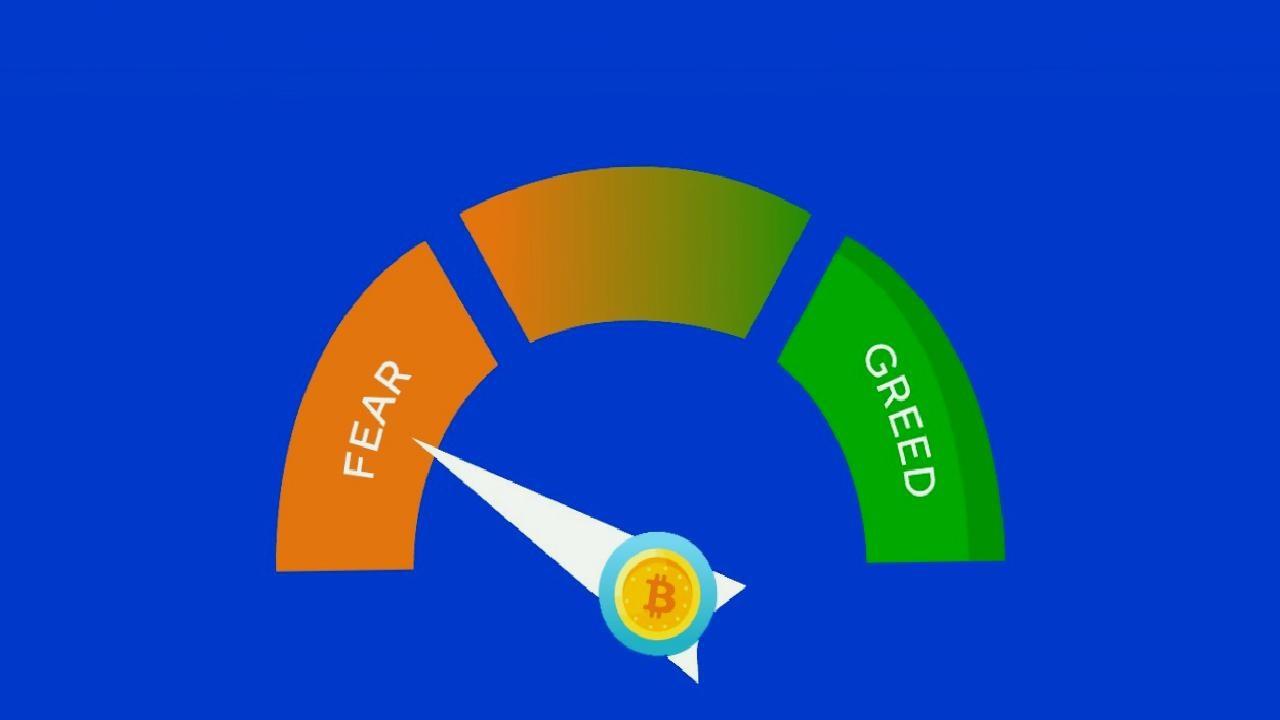
Crypto Fear & Greed Climbs Out of Extreme Fear, Amid Bullish Optimism

0

The cryptocurrency market is showing renewed signs of confidence as the Crypto Fear & Greed Index has climbed out of the “Extreme Fear” zone, reflecting a notable improvement in investor sentiment.

A Cointelegraph report showed that the Crypto Fear and Greed Index has risen to 33, a clear improvement from recent readings. Yesterday and last week, the index stood at 25, while it was 20 the previous month.

Historically, the index has been one of the most accurate predictors of market bottoms or tops. The index, which analyzes multiple factors including market volatility, momentum, social media sentiment, and Bitcoin dominance, now sits firmly in the “Fear” category.

The shift comes amid Bitcoin’s recent price recovery and growing optimism that the broader market could be entering a stronger bullish phase, encouraging traders to increase their risk appetite after weeks of uncertainty.

Earlier this week, Bitcoin reclaimed the $66,000 level, marking a significant milestone in its latest recovery. The crypto asset in the early hours of Tuesday, traded as high as $66,338, rising to a one-month high as risk appetite improves on hopes for a De-escalation in the U.S-Iran conflict.

The market however retraced slightly to $65,970 as of the time of this report. The crypto asset breakout puts the next technical hurdle around $67,400, where the previous swing high sits.

Strategy CEO Michael Saylor, says Bitcoin could be entering a new phase after months of weakness, suggesting that the market may have already found its bottom.

Speaking live on CNBC, Saylor said Bitcoin peaked near $125,000 in October before falling to around $60,000. He now believes the market is entering what he called the “spring phase.”

At the top in October, about 125, I think we bottomed at 60. I think we’re moving into the spring phase. We’ve got decent support here at these levels. I think we’ll rally from here.” He said. Saylor acknowledged that Bitcoin is still facing macroeconomic headwinds but the $60,000 region is providing solid support.

Also, cryptocurrency expert Michael van de Poppe, believes the world’s largest digital asset is setting up for a significant breakout in the coming months.

In a post on X, Poppe shared a bullish outlook for Bitcoin, suggesting that the leading cryptocurrency could rally toward the $80,000 to $85,000 range in the coming weeks. According to his analysis, this move would represent the first significant post-bear market advance and align closely with a key technical level.

The prediction centers on Bitcoin’s interaction with its 50-week moving average. Poppe notes that this indicator has historically served as notable resistance during the initial recovery phase after prolonged downturns.

Several other analysts have made their bullish forecasts recently. Standard Chartered believes that the coin will jump to $100,000, while Bernstein has placed a target of $150,000, representing a big jump from the current level.

Outlook

The Crypto Fear & Greed Index will remain a key gauge of market psychology, but its next move will likely depend on whether Bitcoin can sustain its recovery above key support levels and break through major resistance.

A continued rise in the index toward the neutral zone would suggest improving investor confidence and could attract fresh capital into both Bitcoin and the broader altcoin market

While the index at 33 does not signal euphoria or even neutral conditions, it indicates the market may be finding a bottom or preparing for a more balanced phase.

Investors should continue monitoring key levels, as sudden shifts in volatility or news events can quickly alter the sentiment picture.

For now, the move to 33 offers a modest positive signal in an otherwise cautious environment, reminding participants that sentiment can change rapidly in crypto markets.

The Unhatched Cost of AI Reliance on Engineering

0

Two days ago, I went to the local BDC dealer to exchange 100 dollars to naira. After we had agreed on the exchange rate, I handed him over the 100-dollar bill. The first thing he did was raise it up in the direction of sunlight, then looked at me straight in the eye, then pocketed the note.

I was left wondering if he thought I must have facilitated it through a rogue means because of course, it looked very neat and clean.

This was his own local means of determining the authenticity of a note. It was very easy for him to determine if the note I had given to him was an original or a counterfeit. This is not a one-off event; it is a result of the knowledge accrued from years of interacting with several dollar notes, and as a result he can easily determine if a note is a counterfeit or not.

How do we determine if the output, performance or benchmark set by an AI agent is correct?

There has been a lot of speculations whether software engineers should now read AI generated code to verify its correctness and intent or, if it generally works, then let us hope and pray. I quite do not agree to this philosophy because it only sets a dangerous precedent for the underlying harm which would only take years before it is noticed; but cooperate tech giants doesn’t want you to look pass this direction because it is a win-win for them regardless.

AI has become so good at code generation which is a significant development to how we now write software. Currently, AI can write code as good as a senior engineer can, surprisingly, it can also spot and correct badly written code. This should be the peak of productivity as a software engineer.

But there is one problem which AI still doesn’t seem to understand, context.

The issue of code generation goes far beyond syntax and logic generation. It is in fact the cumulated understanding of the scope of which the business logic lies. This drives us back into the human factor. All software is written for human consumption, even for automated system or machine-to-machine integrations, the final output has to do something which humans desire to achieve, this in par means humans have to write concise specifications on what they intend to achieve in details for the machine to understand.

You see, I’ve decided to scratch the basics of context because context when it comes to engineering requirements slightly differs from that of business requirements. Requirements such as performance, reproducibility, extensibility, integration, several others which serve as a chain to the other for delivering a trustworthy solution.

When Andres Freund discovered a massive nation-state cybersecurity backdoor (later named the xz backdoor) in SSH of a particular linux distribution (which was later discovered to affect all distributions is deployed), this wasn’t any luck or coincidence. This was a result of years of professional experience and understanding of the fundamentals of how the system should look like and work. This includes years of professional development, debugging, benchmarking and finetuning. How would one know these things in today’s software development era?

A 500ms delay which Andres found in xz utils is such an insignificant timespan in most applications of software, and in fact, people almost always dismiss it when I mention a 1sec lag in execution of an event in end-user applications, because they see it as insignificant.

It is a disturbing trend today which leadership of big tech sell you the idea of AI reliance. It is of no doubt that AI is very smart considering the level of knowledge it is trained upon, but total reliance on AI to determine a benchmark, what is attainable, right, and conceived is the foundation to a generational system collapse which they are incubating.

Furthermore, who benefits when everyone becomes bad engineers? I guess you should know where this is heading to now. The very companies which sell you the dependability notion becomes the sole actor in the system who determines what is right, attainable, the terms which these can be achieved, infrastructural cost and lots of unpredictable outcomes.

AI is a very important tool in today’s workspace, it has transformed almost everything we do and given us the abilities to do the things we never thought of achieving, but total reliance on AI agents and systems to determine how our workspaces, ecosystem and future should be is only but a hatching trap we are walking straight into.

Early Investor Turns $1.66M Into $435M After 12-Year BTC Hold

0

The cryptocurrency market has produced many legendary success stories, but few are as remarkable as the recent exit of a Bitcoin early adopter who turned a modest investment into hundreds of millions of dollars.

According to blockchain analytics platform Lookonchain, a long-dormant Bitcoin wallet has finally completed the sale of its remaining 1,000 BTC, closing a twelve-year investment journey that yielded one of the most extraordinary returns in financial history.

The investor originally acquired 5,000 Bitcoin when the digital asset traded at approximately $332 per coin. At the time, the total purchase cost amounted to just $1.66 million, a figure that seemed speculative and risky in Bitcoin’s early years.

The cryptocurrency ecosystem was still in its infancy, with limited institutional interest, uncertain regulations, and widespread skepticism regarding Bitcoin’s long-term viability.

Fast forward to 2026, and the story has become a testament to patience, conviction, and the transformative potential of emerging technologies. The whale began gradually selling portions of its holdings in November 2024, strategically reducing its position over several market cycles.

By the time the final 1,000 BTC were sold, the investor had achieved an average selling price of approximately $87,151 per Bitcoin. In total, the entire 5,000 BTC stack generated roughly $435 million in proceeds, translating into an astonishing profit of around $434 million after accounting for the original investment.

The return represents an incredible 262-fold increase, making it one of the most successful long-term trades ever recorded on-chain. This transaction highlights Bitcoin’s evolution from a niche experiment into a globally recognized financial asset.

Early Bitcoin investors endured multiple market crashes, regulatory fears, exchange collapses, and periods when many questioned whether the cryptocurrency would survive.

The wallet’s owner witnessed Bitcoin rise from a relatively obscure digital currency into an asset embraced by institutional investors, publicly traded companies, sovereign wealth discussions, and exchange-traded funds.

The timing of the final sale is noteworthy. Bitcoin has been experiencing renewed momentum, supported by growing institutional adoption, increasing demand for tokenized financial products, and expanding integration within traditional financial systems.

Selling into a mature market at significantly higher valuations demonstrates a disciplined approach rather than emotional decision-making.

For market participants, this story serves as a reminder that wealth creation in emerging technologies often rewards long-term conviction.

While many traders focus on short-term price movements, some of the largest fortunes in cryptocurrency have been built by investors willing to hold through years of volatility and uncertainty.

The story should not be interpreted as evidence that every cryptocurrency investment will generate similar returns. Bitcoin’s journey has been unique, benefiting from first-mover advantages, network effects, increasing scarcity, and growing global recognition as a store of value. Future investments in digital assets may follow very different trajectories.

The exit of this Bitcoin OG marks the end of an era. It symbolizes the completion of a trade that began when Bitcoin was still considered an experimental technology and concludes at a time when digital assets are increasingly becoming part of mainstream finance.

As blockchain observers continue to track major wallet movements, this historic sale will likely be remembered as one of the greatest examples of patience and conviction in financial markets—a twelve-year bet that transformed $1.66 million into more than $435 million.