DD
MM
YYYY

PAGES

DD
MM
YYYY

spot_img

PAGES

Home Blog Page 4

UK Advances Major Crypto Regulation Overhaul

0

The UK government has announced plans to introduce legislation that will bring cryptocurrencies and cryptoasset services under full regulatory oversight, treating them similarly to traditional financial products like stocks and shares. The new rules are set to come into force in October 2027.

Crypto firms like exchanges, custodians, brokers, and wallet providers serving UK customers will require authorization and ongoing supervision from the Financial Conduct Authority (FCA). They must comply with standards for transparency, consumer protection, operational resilience, and market integrity — aligning with existing rules for traditional finance.

The approach extends the UK’s current financial services framework rather than creating a bespoke system unlike the EU’s MiCA regime, mirroring a “same risk, same regulation” philosophy seen in the US.

Aims to boost investor confidence, reduce fraud, detect suspicious activity more easily, and exclude “dodgy actors” while supporting innovation and growth. Chancellor Rachel Reeves stated that the rules provide “clear rules of the road” and are “a crucial step in securing the UK’s position as a world-leading financial centre in the digital age.”

The government emphasizes proportionate regulation to attract investment and position the UK as a global crypto hub. This builds on earlier 2025 developments, including draft legislation in April and FCA consultations on stablecoins, custody, and trading platforms.

Separate rules for stablecoins overseen by the Bank of England and tax reporting are also progressing. The announcement has been widely reported as a balanced move to enhance protections without stifling the industry.

The UK’s decision to extend existing financial services rules to cryptoassets, under full Financial Conduct Authority (FCA) oversight starting in October 2027, represents a balanced “same risk, same regulation” approach.

This aligns more closely with the US framework than the EU’s bespoke MiCA regime. Crypto services will adhere to standards similar to traditional finance, including transparency, fair treatment under the FCA’s Consumer Duty, and operational resilience.

This addresses current gaps where consumers often lack recourse in scams or firm failures. Enhanced oversight will make it easier to detect suspicious activity, enforce sanctions, and exclude “dodgy actors,” tackling the 55% surge in investment scams many crypto-related reported in recent years.

Rules on disclosures, risk warnings, and market integrity will help investors make informed decisions, potentially boosting retail participation crypto ownership rose from 4% in 2021 to ~12% in 2024.

Higher compliance may lead to fewer platforms serving UK users or increased fees passed on to consumers. Firms serving UK customers including overseas ones for certain activities must obtain FCA approval, moving beyond mere AML registration. This covers exchanges, custodians, brokers, wallet providers, and activities like staking/lending.

FCA building symbolizing new regulatory perimeter for crypto firms need to meet standards for capital adequacy, segregation of assets, conflict management, and market abuse prevention. Transitional period allows preparation. Chancellor Rachel Reeves emphasized “clear rules of the road” to provide certainty, encouraging investment, innovation, and job creation.

The UK aims to attract firms by positioning itself as a competitive global hub. Chancellor Rachel Reeves on positioning the UK as a digital finance leader Truly decentralized activities may remain outside scope, but controlled DeFi front-ends could be regulated. Focus on proportionate rules to avoid stifling growth.

By fostering a “trusted, competitive, and innovative” market, the regime supports the government’s goal of making the UK a top destination for crypto firms, potentially drawing investment away from less regulated jurisdictions.

Integrating crypto reduces systemic risks and bridges digital assets with mainstream markets (e.g., tokenized assets, stablecoins for payments). Collaboration with the US via transatlantic taskforce and divergence from EU MiCA could shape global standards, enhancing the UK’s role in digital finance.

Overall, the regulations are widely viewed as a maturation step for the sector: protecting users without overly restricting innovation. Firms have until 2027 to adapt, with FCA rules finalizing by end-2026. This could mark a pivotal shift toward mainstream crypto adoption in the UK.

Lovable Soars to $6.6bn Valuation as Accel, Khosla Double Down on Europe’s Vibe-Coding Boom

0

Lovable, the Stockholm-based artificial intelligence startup riding the surge of interest in so-called “vibe coding,” has vaulted into the top tier of Europe’s startup ecosystem after a new funding round valued the company at $6.6 billion, according to people familiar with the deal who spoke to CNBC.

The round, which has not yet been formally announced, includes U.S. venture capital firm Accel, a returning investor that has become one of the most influential backers of AI-native software companies. Khosla Ventures is also participating, one of the sources said. Both spoke on condition of anonymity because the transaction is private. Forbes reported in November that Lovable was raising at a valuation of around $6 billion.

If confirmed, the deal marks a dramatic step-up from Lovable’s $1.8 billion valuation in July, when it raised $200 million. The new price tag means Lovable has more than tripled its valuation in a matter of months, making this its third funding round in 2025 and underscoring the intensity of investor demand for fast-growing AI developer platforms.

Founded in 2023, Lovable has become one of the fastest-scaling software companies in Europe. In November, the company disclosed that it had reached $200 million in annual recurring revenue, an extraordinary jump from the $1 million ARR milestone it crossed less than a year earlier. At the time, Lovable said users were creating roughly 100,000 projects per day on its platform, a figure that highlights both strong adoption and heavy daily usage.

Lovable’s core product allows users to build applications and websites through natural language prompts, without needing to write code. The platform relies on large language models from providers such as OpenAI and Anthropic, translating text instructions into functioning software. This approach has resonated with founders, designers, and small teams that want to move quickly, as well as with more experienced developers looking to speed up prototyping and iteration.

The company’s rise places it at the center of a broader shift in how software is created. Investors increasingly believe that AI-assisted development tools can dramatically expand the number of people who are able to build digital products, lowering technical barriers and compressing development timelines. That thesis has already driven eye-catching valuations in the United States, where Anysphere, the maker of coding tool Cursor, raised $2.3 billion at a $29.3 billion valuation in November.

Replit reached a $3 billion valuation after a $250 million round in September, while Vercel closed a $300 million funding round valuing it at $9.3 billion.

Against that backdrop, Lovable’s valuation looks less like an outlier and more like Europe’s answer to a U.S.-dominated category. Accel’s continued backing is notable in that context. The firm has emerged as a key conduit for capital flowing into “vibe coding” startups, having also participated in billion-dollar rounds for Cursor and for Thinking Machines, the AI company founded by former OpenAI executive Mira Murati.

Lovable’s July funding round already drew a mix of prominent European and global names, including Creandum, Klarna founder Sebastian Siemiatkowski, ElevenLabs founder Mati Staniszewski, and Synthesia founder Victor Riparbelli. The fresh capital further strengthens its balance sheet as competition intensifies and as well-funded rivals push aggressively to capture developers and non-technical users alike.

The company is also signaling global ambitions. While headquartered in Stockholm, Lovable is opening offices in Boston and San Francisco, a move that would put it closer to major customers, partners, and talent pools in the U.S. market. That expansion suggests the company sees itself not as a regional champion but as a global contender in AI-powered software creation.

The key question for investors will be whether Lovable can sustain its growth trajectory as the market matures and as large AI model providers continue to move up the stack, offering more end-to-end product-building tools themselves. For now, the latest funding round confirms that capital markets are willing to pay a premium for companies that sit at the intersection of AI infrastructure and everyday productivity.

In doing so, Lovable has become a rare example of a European startup reaching multi-billion-dollar valuation territory at speed, reinforcing the view that the next wave of globally significant AI companies will not be built in Silicon Valley alone.

Netflix Bets Bigger on Video Podcasts With Exclusive iHeartMedia Deal, Escalating Fight With YouTube

0

Netflix is doubling down on the creator economy, announcing a wide-ranging partnership with iHeartMedia that will bring 14 high-profile video podcasts exclusively to the streaming platform beginning in early 2026.

The move sharpens Netflix’s challenge to YouTube and signals that video podcasts are no longer a side experiment for the world’s largest streaming service, but a strategic pillar of its growth plans.

Under the agreement, Netflix will debut new video episodes of the podcasts in the United States, with international expansion planned at a later stage. The deal covers all future episodes and selected catalogue content, giving Netflix a steady pipeline of long-form, personality-driven programming that typically commands loyal, repeat audiences.

iHeartMedia will retain audio-only rights and continue distributing the podcasts across iHeartRadio and other major audio platforms, preserving its traditional listener base. What changes fundamentally is the video layer: Netflix, not YouTube, becomes the exclusive home for watching these shows.

The lineup spans comedy, crime, culture, sports, psychology, and history, reflecting Netflix’s intent to cast a wide net rather than bet on a single genre. Flagship titles include The Breakfast Club with Charlamagne tha God, Dear Chelsea with Chelsea Handler, and My Favorite Murder, one of the most successful true-crime podcasts globally. Other shows such as Behind the Bastards, Stuff You Missed in History Class, and Bobby Bones Presents: The Bobbycast bring established, highly engaged audiences into Netflix’s ecosystem.

The strategic logic is straightforward for Netflix as video podcasts have become one of the most consumed formats on YouTube, often running well over an hour and generating significant advertising revenue. By pulling these shows behind a subscription paywall, Netflix is betting that viewers value convenience, production quality, and a single destination for entertainment enough to follow their favorite creators off free platforms.

That bet, however, carries risks. Many of these podcasts built their followings on YouTube’s open distribution and algorithmic discovery. Removing video versions from YouTube could reduce reach, limit ad income for creators, and frustrate fans who are unwilling to pay to watch content they previously accessed for free. Netflix appears to be banking on scale and global distribution to offset those losses, positioning itself as a premium home for podcasts that have already proven their appeal.

The iHeartMedia partnership builds on Netflix’s earlier deal with Spotify, announced in October, which brought video versions of podcasts from The Ringer, including The Bill Simmons Podcast and The Zach Lowe Show, to the platform. Taken together, the deals show Netflix is systematically assembling a portfolio of creator-led content rather than testing the waters with one-off experiments.

This push comes as Netflix works to broaden its identity beyond scripted series and films. The company has increasingly embraced formats that drive frequent engagement, including live comedy specials, unscripted programming, mobile and TV-based games, and creator collaborations such as its deal with YouTube educator Ms. Rachel. Video podcasts fit neatly into that strategy, offering relatively low production costs, predictable release schedules, and audiences that return weekly.

For iHeartMedia, the deal offers validation of podcasts as premium intellectual property, not just ad-supported audio products. By partnering with Netflix, iHeart elevates its biggest franchises into a global streaming environment while keeping control of audio monetisation, which remains its core business.

More broadly, the agreement highlights an intensifying battle over where the next generation of media consumption will live. YouTube has long dominated creator video and podcasting, but Netflix is now signaling it wants a share of that attention—and is willing to pay for exclusivity to get it.

The shows included in the partnership are:

  • The Breakfast Club
  • Bobby Bones Presents: The Bobbycast
  • My Favorite Murder
  • Dear Chelsea
  • Joe and Jada
  • This Is Important
  • The Psychology of Your 20s
  • Behind the Bastards
  • Stuff They Don’t Want You to Know
  • Stuff You Missed in History Class
  • Stuff to Blow Your Mind
  • New Rory & MAL
  • 3 and Out with John Middlekauff
  • Buried Bones

Netflix’s pivot toward video podcasts reflects a broader recalibration as streaming competition tightens and subscriber growth becomes harder to sustain: growth may come less from blockbuster hits alone, and more from owning the daily habits of audiences who tune in week after week to hear familiar voices talk about the world.

Instagram Reels Makes Big-Screen Debut on Amazon Fire TV, Targeting Shared Viewing

0

Meta has initiated a major strategic push into the living room with the launch of the dedicated Instagram for TV app, which is now in an early testing phase in the U.S. exclusively on Amazon Fire TV streaming devices.

This move transforms the photo-sharing app’s short-form video product, Reels, from a solitary mobile experience into a communal, lean-back viewing activity, directly positioning Instagram to compete with established giants like YouTube and TikTok in the high-value Connected TV (CTV) market.

The Instagram for TV app has been designed from the ground up for the television interface, moving away from simple screen mirroring or mobile app sideloading.

The core experience centers on algorithmic curation. Reels content is organized into personalized channels tailored to the user’s existing interests, covering topics like comedy, music, sports highlights, travel, and trending moments. Users can select a channel, and the Reels will play automatically with sound, creating a continuous, “channel-surfing” feel similar to traditional television but powered by Instagram’s powerful recommendation engine.

The company developed the app based on community feedback that “watching Reels together is more fun.” The design facilitates communal viewing, allowing users to share content with friends who are physically present. The app supports up to five separate Instagram accounts on a single Fire TV device, ensuring each household member receives their own personalized feed. Users can easily like individual Reels and browse comments and reactions, fostering engagement on the big screen.

Given the shift to shared viewing in the living room, content displayed in the app generally adheres to guidelines suitable for broader audiences, aligning with PG-13-rated material. Safeguards for younger users mirror those on the main mobile app, with time spent on the TV app counting toward any existing teen account limits.

The app is currently available in the U.S. on a wide range of compatible Fire TV devices, including the Fire TV Stick HD, 4K Plus, 4K Max, 2-Series, 4-Series, and Omni QLED Series.

Strategic Delay of Monetization for Experience Refinement

Instagram Vice President of Product, Tessa Lyons, explained that the immediate priority for the testing phase is to gather user feedback and refine the experience, particularly learning which features work best for shared viewing on a large screen. Lyons stated that the company will spend 2026 focused on prioritizing a “great experience” before expanding its giant ad business onto TV.

Future feature enhancements being considered include:

  • Phone-as-Remote Functionality: Allowing a user’s smartphone to act as a more intuitive remote control for navigation.
  • Shared Feeds: Introducing channels that combine the interests of friends or family members into a single, collaborative feed, similar to Instagram’s Blend feature.

The strategic decision to delay aggressive monetization acknowledges the need to perfect the user experience first, a challenge that requires significant technical work to adapt vertical content and mobile interaction paradigms to the horizontal, lean-back television format.

The Connected TV Battleground

This launch places Meta squarely in the battle for dominance over the high-growth Connected TV (CTV) market, where advertising rates command a premium. Instagram head Adam Mosseri has publicly acknowledged the platform’s late entry, stating he wished the company had explored a TV app sooner, recognizing the significant advantage held by YouTube, which has long dominated the living room screen.

By successfully migrating its creator-driven Reels content to the big screen, Meta aims to capture older demographics and secure a slice of the lucrative CTV advertising spend, cementing Reels as a staple of home entertainment alongside its main competitors.

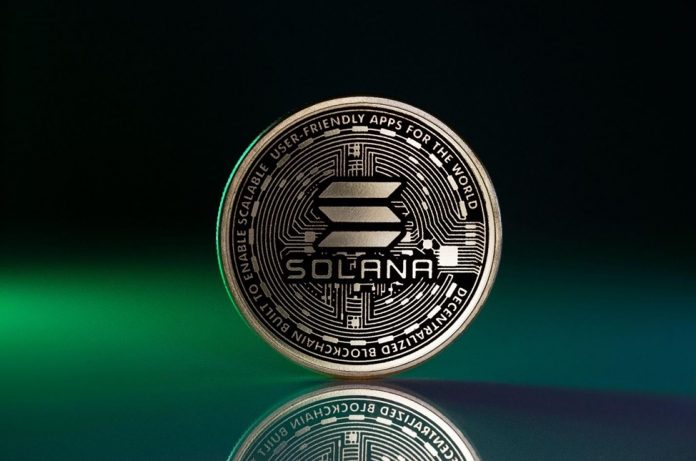
Charles Schwab Adds Solana Futures amid Solana Surviving Massive DDoS Attack

0

Charles Schwab announced platform enhancements, including the addition of 17 new futures products to its thinkorswim trading platform.

Among these are Solana futures (/SOL) and Micro Solana futures (/MSL), joining existing crypto futures like Bitcoin and Ether. This expands crypto exposure options for approved futures accounts on Schwab’s platforms.

Solana futures trade under the symbol /SOL, with micro versions (/MSL) offering smaller contract sizes for more modest positioning amid crypto volatility. The “$11 Trillion” refers to Schwab’s approximate total client assets reported as $11.83 trillion as of November 2025, up 15% year-over-year, highlighting the massive scale of the firm now offering these products.

This move aligns with growing mainstream adoption of crypto derivatives, following earlier additions like Ripple futures and amid strong client interest in digital assets.

Futures trading involves substantial risk, including leverage amplifying losses—trading privileges require approval.

With ~$11.8 trillion in client assets and over 35 million accounts, this exposes Solana derivatives to a massive traditional investor base. Schwab, a conservative retail brokerage giant, adding SOL futures signals strong confidence in Solana as a mature asset class.

It follows CME Group’s launch of SOL futures in March 2025 and Solana spot ETPs trading since October 2025. This validates Solana alongside Bitcoin and Ethereum in regulated derivatives markets, reducing perceived risk for retail and institutional traders.

Approved futures traders on Schwab can now gain leveraged exposure to SOL price movements without holding spot crypto or using unregulated exchanges. Micro contracts (/MSL) lower the barrier for smaller positions, appealing to volatile crypto markets.

Expected to boost trading volume on underlying CME SOL futures, improving price discovery, tightening spreads, and attracting more hedgers/speculators. Community reaction on X has been overwhelmingly positive, with posts highlighting TradFi inflows alongside State Street’s tokenized treasuries and Ondo’s on-chain platforms on Solana.

Positions Solana favorably against competitors; some note SOL’s lower revenue multiple—122x vs. Ethereum’s 616x as undervalued given growing infrastructure trust. Schwab plans direct spot Bitcoin/Ethereum trading in H1 2026, signaling deeper crypto integration.

No massive immediate pump reported, but announcements like this often drive sustained interest rather than instant spikes. More regulated pathways could draw sustained inflows, especially as crypto ETP assets grow, Bitcoin ETPs alone >$150B in 2025.

Accelerates altcoin integration into TradFi, following Bitcoin/Ether dominance. Encourages competitors like Fidelity, Vanguard to expand offerings. Highlights maturing derivatives market: CME crypto volumes surged 140% YoY in Q2 2025.

A traditionally conservative brokerage like Schwab adding SOL derivatives underscores Solana’s evolution into a recognized asset class, placing it on par with Bitcoin futures since 2017 and Ethereum.

Community sentiment on X is highly bullish, viewing it as TradFi committing long-term infrastructure to chains it trusts alongside Ondo and State Street’s tokenized assets on Solana planned for 2026. Approved futures clients can now trade leveraged SOL exposure directly on Schwab’s platforms without needing crypto wallets or offshore exchanges.

Micro contracts lower entry barriers, ideal for managing volatility in smaller increments. This democratizes access for Schwab’s massive user base, potentially channeling significant traditional capital into SOL derivatives.

Expected to drive higher volumes on underlying CME SOL futures, improving price discovery, narrowing spreads, and attracting more professional traders/hedgers.

Part of a maturing crypto derivatives market: CME crypto volumes remain elevated post-2025 surges. Risks remain high—futures are leveraged, volatile, and not suitable for all— Schwab requires approval.

Overall, this is a major win for Solana’s adoption narrative, bridging TradFi and DeFi. It underscores crypto’s shift from speculative fringe to portfolio staple, though volatility persists. Always consider risks; futures trading can amplify losses.

Key Implications of Solana Surviving a Massive DDoS Attack

Solana’s network has been under a sustained distributed denial-of-service (DDoS) attack for over a week, peaking at approximately 6 terabits per second (Tbps).

Multiple sources, including crypto news outlets and community accounts like SolanaFloor and Pipe Network, describe this as the fourth-largest DDoS attack ever recorded across any distributed system or the internet.

Despite the massive scale—equivalent to billions of packets per second—the attack had no measurable impact on Solana’s performance. Sub-second transaction confirmations. Stable slot latency. No downtime or block production delays

This resilience contrasts with a similar recent attack on the Sui network, which caused degraded performance and delays.Solana co-founder Anatoly Yakovenko and others in the community have called this “bullish,” viewing it as real-world proof of the network’s improved engineering and maturity compared to past congestion issues.

Historical largest DDoS attacks have targeted providers like Google Cloud up to 46 Tbps in some reports and Cloudflare— multi-terabit events, but Solana absorbing this volume without disruption highlights its robustness for a public blockchain.

The recent sustained DDoS attack on Solana—peaking at ~6 Tbps and ranking as the fourth-largest ever recorded for any distributed system—had zero measurable impact on the network. This event, ongoing for over a week as of December 16, 2025, serves as a real-world stress test with several important implications.

Proof of Network Maturity and Resilience

Solana maintained sub-second transaction confirmations, stable slot latency, and no downtime or missed blocks throughout the attack.

This contrasts sharply with its history of outages like multiple in 2021-2022 due to spam or bugs and highlights significant engineering improvements, such as enhanced QUIC protocol handling, parallel processing, and robust validator infrastructure.

Co-founder Anatoly Yakovenko and community figures have called it “bullish,” viewing it as evidence that past congestion issues are resolved. The same period saw a similar DDoS attack on Sui, which caused block production delays and degraded performance.

Solana’s unscathed operation underscores a “clear divergence in network resilience under adversarial stress,” as noted in community discussions. This positions Solana favorably against competitors like Sui for high-throughput applications, potentially attracting more developers and users seeking reliable performance.

Real-world proof of handling “industrial-scale” traffic, billions of packets per second without disruption builds trust. It signals readiness for high-frequency trading (HFT), DeFi at scale, and institutional flows.

Sources describe this as placing Solana “alongside hyperscale cloud platforms” like Google Cloud or Cloudflare in terms of enduring massive attacks, reinforcing its reputation for speed and reliability.

The crypto community widely views this as a positive catalyst, with posts emphasizing “years of iteration paying off” and the network being battle-tested.

While SOL’s price saw short-term pressure amid broader market weakness, the event is seen as long-term bullish, potentially driving adoption as markets recognize the tech’s strength over fear-driven dips.

DDoS attacks remain a threat to public networks, but Solana’s defense—leveraging decentralized validators (~830+ active) and traffic filtering—demonstrates that well-engineered Layer 1s can absorb internet-scale assaults.

This sets a benchmark for the industry, especially as blockchains handle more real-world value. Overall, this incident transforms a potential vulnerability into a strength, validating Solana’s architecture in production under extreme conditions.

It’s a milestone showing the network has evolved from “fast but fragile” to “fast and robust.” CoinTelegraph, CryptoNews, Coinpedia, and on-chain metrics shared via Solana community posts. Solana’s official status page shows no incidents reported.