DD
MM
YYYY

PAGES

DD
MM
YYYY

spot_img

PAGES

Home Blog Page 4

When Development Comes Home: Governor Alex Otti’s Visit to Ovim

0

The Ovim Nation, without doubt the greatest community in the world, had the honour of welcoming His Excellency, Governor Alex Otti, OFR, to our community on Thursday.

Earlier in the day, His Excellency graciously gave me the podium to speak during the Third Anniversary Celebration of the Administration. For a village boy from Ovim, it was a truly special and humbling moment.

After the event, the Governor journeyed to my village where our people turned out in large numbers to welcome him and celebrate the commissioning of a newly completed road project. Distinguished sons of Ovim, including General Azubuike Ihejirika (former Nigeria’s Army boss) and General Ike Nwachukwu (former governor of Imo State), joined many others in receiving His Excellency.

During my remarks at the anniversary event, I told the Governor that the road he would later commission was one I used regularly as a young boy on my way to the farm. That road is more than a transportation corridor; it is part of our enterprise network. It connects Ovim to Acha, Ozara, and onward toward Enugu. To see it transformed today is to witness development touching people at the most personal level.

One of the roads was named after Admiral Ndubuisi Kanu (former governor of Lagos and Imo States), a distinguished son of Ovim and a patriot whose contributions to Nigeria and our community remain enduring. Though he has now joined the angels, his legacy continues to inspire future generations.

I thank His Excellency for his leadership and commitment to restoring hope and opportunity across Abia State. Borrowing from the timeless words of Dr. Nnamdi Azikiwe, which inspired the motto of the University of Nigeria, Nsukka, “To Restore the Dignity of Man”, Governor Otti’s administration is demonstrating what it means to restore the dignity of man and woman through purposeful governance.

Good People, Abia is working. And more importantly, Abia is proving that prosperity through enterprise is not merely an aspiration, it is becoming a reality.

Dollar, Energy, Gold, Stocks, & Treasury: The Global Markets as U.S.-Iran Ceasefire Hopes Linger

0

The U.S. dollar steadied against major currencies on Friday but remained on track for a weekly decline as reports of progress toward extending a ceasefire between the United States and Iran reduced safe-haven demand and weighed on oil prices.

Sources familiar with the matter told Reuters that the two sides have largely agreed on terms to extend the truce for another 60 days and reopen the Strait of Hormuz to shipping, while negotiators tackle thornier issues such as Iran’s nuclear program. The deal still requires final approval from President Donald Trump.

This development helped ease some of the geopolitical premium that had supported the dollar earlier in the conflict, when it benefited from its status as the world’s primary safe-haven currency and the relatively limited direct exposure of the U.S. economy to imported energy inflation.

The dollar index, which measures the greenback against a basket of major currencies, was trading in a narrow range near 99, down 0.3% for the week after snapping two consecutive weeks of gains.

Currency Market Movements

The euro held steady at $1.1643, while the pound slipped 0.2% to $1.3418 after Bank of England Governor Andrew Bailey signaled there is no immediate need for rapid rate hikes to combat a recent jump in inflation.

The Australian dollar was little changed at $0.7160, while the New Zealand dollar rose 0.5% to $0.5968, extending a recent rally after the country’s central bank governor indicated earlier and steeper rate hikes were likely.

Kirstine Kundby-Nielsen, senior analyst at Danske Bank, said the near-term path for the dollar appears softer.

“In the near term, you’ll likely see a weaker dollar,” she said.

However, she expects the greenback to strengthen against the euro over the longer term due to divergent growth trajectories, expansionary U.S. fiscal policy, underlying inflationary pressures linked to AI infrastructure buildout, and a still-resilient American labor market.

Oil Prices Ease but Remain Elevated

Brent crude futures fell for a third consecutive day, trading near their lowest level since mid-April. U.S. West Texas Intermediate futures also declined, though both benchmarks remain well above pre-conflict levels. The market has been highly sensitive to headlines, swinging between optimism over potential peace and concern over depleting global inventories as flows through the Strait of Hormuz have slowed to a trickle.

“The optimism of a relatively imminent truce and bearish rhetoric whenever Brent approaches $110 prevents oil prices from rallying significantly higher,” PVM Oil Associates analyst Tamas Varga noted

Bond Yields and Inflation Dynamics

U.S. Treasury yields resumed a modest climb after a brief pause, reflecting persistent concerns about the inflationary impact of elevated energy prices. The 10-year note yield rose to around 4.60%, while longer-dated bonds also edged higher. European government bond yields remained elevated but showed limited movement.

Data released earlier in the week showed U.S. inflation rising at its fastest pace in three years in April, driven largely by higher energy costs tied to the Iran conflict. This has reinforced expectations that the Federal Reserve will keep interest rates unchanged well into 2027, with some pricing in the possibility of further hikes if inflation proves sticky.

Stock Markets Mixed Amid Geopolitical Developments

European stocks rose modestly on Friday as investors assessed the prospects for an extended ceasefire. The pan-European STOXX 600 gained around 0.45%, with most sectors and major bourses in positive territory. Defense stocks extended their recent rally, supported by ongoing geopolitical risks and increased NATO-related spending expectations. Creotech Instruments and Airbus were among the top performers in the sector.

Asian markets closed mostly higher overnight, with South Korea’s KOSPI and Japan’s TOPIX hitting fresh record highs, reflecting continued optimism around technology and AI-related themes despite regional geopolitical concerns.

Gold and Precious Metals

Gold rose for a second straight session on ceasefire hopes, though it remained on track for a monthly decline as broader inflation concerns and higher interest rate expectations continued to weigh on the metal. Spot gold climbed 0.6% to $4,519.64 per ounce. It had fallen to a two-month low of $4,365.76 earlier in the week.

“Gold bounced from a key technical support level, while optimism over the ceasefire extension pushed oil prices and the dollar lower — both supportive for bullion,” Phillip Streible, chief market strategist at Blue Line Futures, said.

However, he noted that the “higher-for-longer” interest rate theme remains largely intact, as disruptions to shipping and energy infrastructure could keep oil prices elevated and the Federal Reserve cautious.

Spot silver fell 0.2% to $75.51 per ounce, platinum steadied near $1,923.55, and palladium gained 0.6% to $1,375.57.

The bottom line: The market’s reaction this week indicates once again that a durable extension of the ceasefire and reopening of the Strait of Hormuz would likely ease some inflationary pressures globally, support risk assets, and potentially allow central banks more flexibility. However, even a temporary deal may not fully resolve underlying supply concerns, meaning energy prices and inflation expectations could remain elevated for some time.

For the dollar, the near-term softening is seen as an indication of reduced safe-haven demand, but longer-term strength drivers, including relative U.S. growth advantages and fiscal dynamics, remain in place.

Foxconn Bets on Trillion-Dollar AI Spending Wave as Taiwan’s Tech Supply Chain Enters a New Growth Era

0

Foxconn says the artificial intelligence boom is reshaping the global electronics industry so profoundly that the traditional seasonal slowdown for technology manufacturers is effectively disappearing.

Speaking at the company’s annual shareholders meeting in New Taipei on Friday, Chairman Young Liu projected strong growth through the second half of the year, citing surging capital expenditure by the world’s largest cloud computing companies and relentless demand for AI infrastructure.

“Unless a highly severe ‘black swan’ event occurs, which I haven’t seen, and there are currently no signs of, based on what we see now, the second half of the year looks very good,” Liu said.

The comments provide one of the clearest signals yet that major manufacturers at the heart of the AI supply chain expect the current spending cycle to intensify rather than cool.

Foxconn, formally known as Hon Hai Precision Industry, occupies a critical position in the global technology ecosystem. The company is the world’s largest contract electronics manufacturer, the leading assembler of Apple’s iPhones, and the biggest server manufacturer for NVIDIA, whose AI chips have become central to the generative AI boom.

That positioning has transformed Foxconn into one of the biggest industrial beneficiaries of the AI arms race underway among hyperscale cloud providers, governments, and enterprises globally.

Liu revealed that capital expenditure by major cloud service providers has already surpassed $700 billion this year and could approach $1 trillion next year.

“Their capital expenditure is our market,” he said, underscoring how deeply Foxconn’s outlook is now tied to AI infrastructure investment.

The spending surge denotes the extraordinary scale of data center expansion underway globally as companies deploy increasingly powerful AI systems requiring massive computational capacity. AI servers, high-bandwidth networking equipment, advanced cooling systems, and memory infrastructure have become among the fastest-growing segments of the technology industry.

Foxconn’s aggressive move is understood to be aimed at capturing that demand. The company said earlier this month that it expects capital expenditure to rise 30% this year from T$174 billion ($5.6 billion) in 2025 as it expands manufacturing capacity for AI servers and related infrastructure.

The upbeat outlook from Foxconn follows a wave of bullish commentary from major AI infrastructure players. Dell Technologies recently projected AI-related revenue of $60 billion next year, while Nvidia CEO Jensen Huang has repeatedly described AI infrastructure spending as being in the early stages of a long-term industrial buildout.

Investors responded strongly to Foxconn’s comments. Shares closed nearly 10% higher on Friday after Dell’s earnings and guidance fueled optimism across AI hardware stocks. Still, Foxconn’s 25% share gain this year has lagged the broader Taiwan stock index, which has surged 55% amid investor enthusiasm surrounding semiconductor and AI-related companies.

Taiwan’s market rally underpins the island’s central role in global AI infrastructure production. Companies such as Taiwan Semiconductor Manufacturing Company, MediaTek, and Delta Electronics have all benefited from growing expectations that AI demand could drive a multiyear investment cycle across chips, networking, power management, and advanced manufacturing.

Backing A Glorious Future for AI

Foxconn’s stance also indicates that AI may be changing long-established patterns in the consumer electronics industry. Historically, hardware manufacturers experienced predictable mid-year slowdowns between product cycles. But Liu indicated that constant AI infrastructure demand from enterprise and cloud customers is helping smooth out those seasonal fluctuations.

The shift highlights how the center of gravity in technology spending is moving away from purely consumer-driven cycles toward continuous enterprise and cloud infrastructure expansion.

Foxconn’s optimism comes even as parts of the semiconductor industry grapple with component shortages and supply constraints. Liu acknowledged that the global shortage of memory chips has affected some high-end customers, though he said the impact remains manageable for now.

“If the high-end market is impacted, the entire world will feel it,” he said. “For us, the current situation is that the impact on our clients through the end of the year is limited.”

The comments have caught the tech industry’s attention because memory chips have emerged as one of the biggest bottlenecks in AI infrastructure deployment. Advanced AI servers require large quantities of high-bandwidth memory, where suppliers such as SK Hynix, Samsung Electronics, and Micron Technology are struggling to keep pace with demand.

That shortage has intensified concerns that AI infrastructure deployment could become constrained by supply chain limitations even as spending accelerates.

Foxconn’s confidence nevertheless signals that manufacturers at the core of the AI ecosystem still see years of expansion ahead. The company’s position as both a consumer electronics assembler and an AI server manufacturer also gives it a unique view into how the global technology industry is evolving. While smartphone and PC markets have matured, AI infrastructure has emerged as a powerful new growth engine capable of offsetting weakness in traditional hardware segments.

With the scale of projected hyperscaler spending, analysts are seeing a broader transformation in global capital allocation. Technology giants are increasingly directing enormous sums toward building AI capacity, effectively creating a new industrial spending cycle centered on semiconductors, data centers, networking systems, and power infrastructure.

Michael Saylor Addresses Growing Speculation about Strategy’s Bitcoin Holdings

0

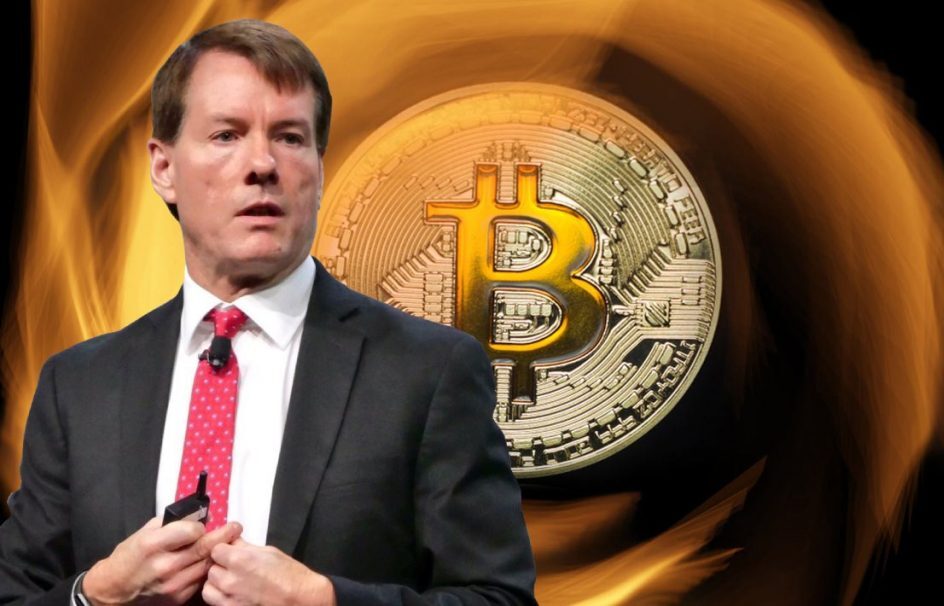
Strategy has moved approximately $30M worth of Bitcoin to Coinbase in a development that has reignited debate over the company’s long-term treasury strategy and liquidity posture. The transfer comes as Michael Saylor addresses growing speculation about whether the firm could eventually be forced or strategically positioned to sell portions of its Bitcoin holdings.

For years Strategy has been one of the most aggressive corporate accumulators of Bitcoin, turning its balance sheet into a leveraged macro bet on digital scarcity. Market observers interpret the movement to Coinbase not necessarily as a liquidation signal but rather as routine custody optimization and liquidity management within institutional trading infrastructure.

Still, the optics of Bitcoin flowing to an exchange have revived sensitivity among traders who associate exchange deposits with potential sell pressure.

In parallel commentary Michael Saylor has reiterated that Strategy’s Bitcoin holdings remain fundamentally long-term assets, though he acknowledged that extreme macro stress scenarios could require partial monetization. Such statements reflect a broader institutional reality where even conviction-driven holders must account for liquidity cycles, collateral needs, and regulatory constraints on balance sheet flexibility.

Analysts emphasize that Strategy’s Bitcoin strategy remains structurally intact but increasingly sensitive to interest rate regimes, credit market conditions, and equity financing availability. The broader implication is that even the most committed corporate Bitcoin holders are not immune to liquidity engineering pressures within modern financial systems.

Whether the transfer signals strategic repositioning or simple custodial reshuffling, it underscores the increasingly institutional nature of Bitcoin markets where exchange flows are closely monitored for hidden intent and macro signals. Meanwhile, traders note that flows of this size are relatively modest compared with Strategy’s total Bitcoin reserves, which remain among the largest corporate holdings globally.

This context reduces immediate fears of large-scale liquidation while still highlighting the importance of transparency in treasury operations involving digital assets. Institutional investors increasingly view exchange inflows as data points rather than definitive signals of selling pressure. However, sensitivity remains high given Bitcoin’s history of rapid drawdowns triggered by large exchange deposits.

For Coinbase this reinforces its role as critical infrastructure in price discovery and liquidity aggregation. For Strategy, the episode highlights the balancing act between long-term conviction and operational flexibility.

The company’s Bitcoin thesis remains unchanged, but execution increasingly depends on navigating evolving market microstructure and funding dynamics. The move reflects a maturing crypto ecosystem where institutional actors continuously rebalance exposure without necessarily altering core strategic commitments.

In this environment market participants are learning to distinguish between operational transfers and genuine distribution events. The distinction is crucial for interpreting on-chain data accurately, especially in periods of heightened volatility. As Bitcoin adoption deepens across corporate treasuries the line between custody management and market intent becomes increasingly blurred.

This case therefore serves as another reminder that flows into Coinbase must be interpreted within broader institutional strategy frameworks rather than isolated signals of bearish sentiment. While speculation often amplifies short-term narratives the structural trend remains one of increasing integration between crypto markets and traditional financial systems shaping how corporate Bitcoin strategies are executed and perceived by investors globally.

Institutional behavior continues evolving alongside Bitcoin market maturation cycles worldwide driven by liquidity dynamics.

US SEC Grants Paxos Approval to Clear and Settle Securities Transactions

0

The decision by the Securities and Exchange Commission to grant Paxos approval to clear and settle securities transactions marks a significant inflection point in the evolution of financial market infrastructure in the United States. US SEC Grants Paxos Approval to Clear and Settle Securities Transactions

The move allows Paxos to operate more directly within regulated post-trade systems, bridging traditional securities settlement processes with blockchain enabled architecture that has long been discussed but rarely formalized at this institutional level. The approval signals that the Securities and Exchange Commission is increasingly willing to experiment with regulated digital infrastructure when it can demonstrably enhance transparency reduce settlement latency and improve counterparty risk management.

In traditional markets securities clearing and settlement typically involve multiple intermediaries leading to T plus two settlement cycles and significant operational friction. Paxos positioning within this approval framework suggests a pathway toward compressed settlement windows potentially reducing systemic exposure and capital inefficiency.

More broadly the decision reflects a gradual convergence between regulated financial institutions and blockchain native infrastructure providers particularly as tokenization of real world assets continues to expand across treasury products equities and fixed income instruments. Market participants are likely to interpret the approval as a precedent setting development that could encourage other fintech firms to pursue similar regulatory pathways especially those already engaged in custody trading or stablecoin settlement services.

However the integration of blockchain based settlement systems into legacy market infrastructure is not without challenges including compliance complexity cybersecurity risk and the need for harmonized regulatory standards across jurisdictions. This development underscores a broader structural shift in global capital markets where digital settlement rails are increasingly seen not as speculative alternatives but as potential foundational infrastructure for the next generation of financial systems.

The implications extend beyond mere operational efficiency as clearing institutions and regulators reassess how settlement finality risk and liquidity provisioning are managed in environments where atomic settlement can be achieved through programmable systems rather than batch processing cycles.

For market infrastructure providers this shift introduces both opportunity and competitive pressure as legacy clearing houses face potential disintermediation risks while also exploring their own blockchain integration strategies to maintain relevance in a rapidly evolving ecosystem.

The approval also reflects an evolving policy environment in which regulators are no longer solely focused on restriction but increasingly on controlled experimentation within sandbox like frameworks that allow innovation while preserving investor protections. Paxos’s role becomes particularly significant as it operates at the intersection of traditional finance compliance standards and blockchain native settlement rails offering a hybrid model that could serve as a blueprint for future market participants.

If successful this framework may accelerate institutional adoption of tokenized securities by reducing operational barriers and enabling near real time settlement across asset classes thereby enhancing capital efficiency and market liquidity. It also raises important questions about the future role of intermediaries in an increasingly digitized financial system where trust may be partially encoded in smart contracts rather than solely in institutional guarantees.

The SEC approval for Paxos marks a milestone in the gradual reconfiguration of global securities infrastructure toward more integrated programmable and transparent systems enabling faster settlement cycles and improved market resilience across asset classes.