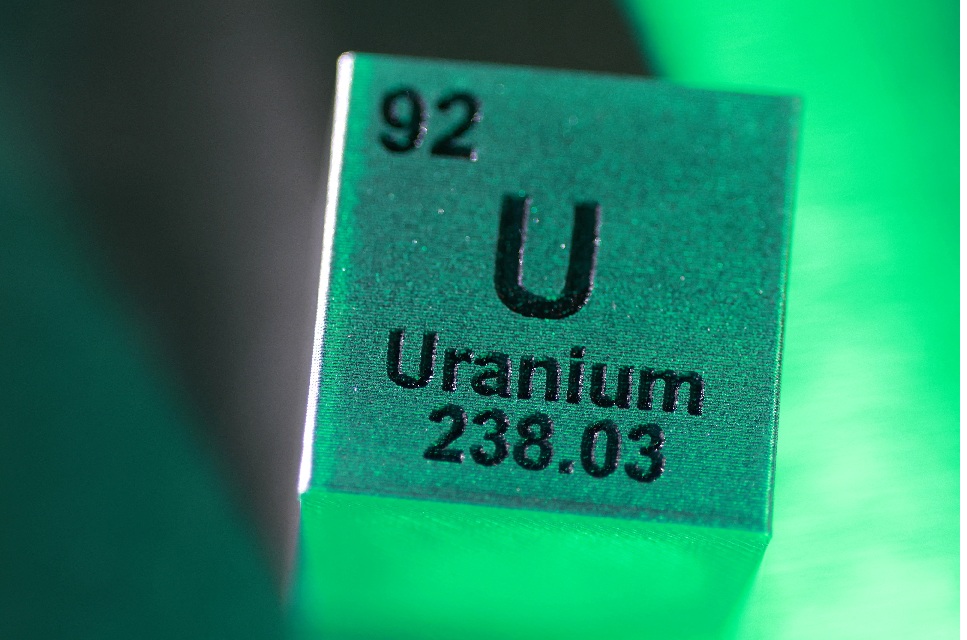
Uranium (U3O8) prices surged in late January 2026, briefly exceeding $100–$101.50 per pound (hitting levels not seen since early 2024), driven by strong buying from entities like the Sprott Physical Uranium Trust, expectations of rising nuclear demand and structural supply constraints.
However, prices have pulled back sharply in the first days of February: Futures fell around 5% overnight to $86 per pound in some reports, putting them 15% below last week’s peak. Recent quotes show levels around $85.70–$87.55 per pound like Trading Economics at $87.55 on Feb 4, down ~4.6% that day; other sources ~$85–$92 range.
This correction stems from factors like higher-than-expected supply announcements from Uzbekistan/Kazatomprom, profit-taking after the rapid run-up, and broader market dynamics including links to softer AI/tech sentiment impacting nuclear power demand expectations.
This has triggered heavy selling in uranium-related stocks, particularly on the ASX, contributing to declines in materials sectors. Meanwhile, gold and silver have experienced their own dramatic volatility around the same period: Both metals hit record highs recently (gold above $5,500–$5,600/oz, silver above $120/oz in some reports).
They then plunged sharply in a major sell-off; one of the worst in decades for precious metals, with gold dropping 9–21% from peaks to ~$4,400–$4,900/oz range in corrections, and silver falling even more steeply (15–40% from highs, to ~$70–$80/oz in lows).
Drivers included a stronger US dollar, shifts in monetary policy expectations; Fed chair nomination influencing leverage and risk sentiment, margin hikes on futures exchanges, and profit-taking after explosive gains.
The uranium drop appears more isolated to supply surprises and post-rally consolidation, while gold/silver’s moves tie into broader macro/commodity rotations.
Uranium remains in a longer-term bullish structural setup (supply deficits, nuclear renaissance), with forecasts pointing back toward $100+ later in 2026 or beyond, despite near-term weakness.
The surge in AI data centers is dramatically increasing global electricity demand, positioning nuclear power—including traditional reactors and emerging small modular reactors (SMRs)—as a key solution for reliable, clean, 24/7 baseload energy.
Explosive Demand Growth from AI Data Centers
AI workloads, particularly training and inference on large models, require massive, constant power. Data centers already consume significant electricity, and AI is accelerating this.
Global data center electricity demand rose sharply, with projections showing it could exceed 1,000 TWh by 2030 from ~460 TWh in 2024, potentially accounting for over 20% of electricity-demand growth in advanced economies.
In the US, data centers used ~183 TWh in 2024 about 4% of total electricity, expected to more than double to ~426 TWh by 2030. AI-specific demand could drive even steeper growth: Some forecasts suggest AI data center power needs surging dramatically, with global AI-related demand potentially reaching 68 GW by 2027 and much higher by 2030.
A single large AI-focused data center can consume as much power as 100,000 households, with hyperscale facilities under construction needing 20x that amount. Power shortages are already a top barrier, with analysts predicting constraints halting growth for many facilities by 2026–2027, forcing strategic shifts; building in power-rich regions or pursuing dedicated sources.
This has strained grids, leading tech giants to seek alternatives beyond intermittent renewables like solar/wind, which can’t guarantee constant supply. Nuclear provides high-capacity-factor ~92–93%, carbon-free power ideal for AI’s non-stop needs. Major deals in 2025–2026 reflect this pivot: Microsoft restarted Three Mile Island (Pennsylvania) via a long-term deal with Constellation Energy ~835 MW targeted for 2028.
Google partnered with Kairos Power for up to 500 MW of SMRs (first online ~2030) and NextEra for reopening Duane Arnold (Iowa, ~2029). Amazon invested in X-energy SMRs and deals like Talen Energy’s Susquehanna plant ~1.9 GW through 2042.
Meta announced agreements with Vistra, Oklo, and TerraPower for up to 6.6 GW by 2035, including existing plants and new SMRs—positioning it as one of the largest corporate nuclear buyers. These commitments often 10–20+ GW combined across hyperscalers support SMR development and plant extensions/revivals.
Governments and pledges to triple global nuclear capacity by 2050 align with this. Small Modular Reactors (SMRs) as the Game-Changer; SMRs typically <300 MW per unit, factory-built, scalable suit data centers perfectly: Compact footprints allow on-site or near-site deployment, reducing transmission needs.
Enhanced safety, flexibility, and faster build times compared to traditional reactors. Ideal for concentrated, gigawatt-scale loads from hyperscale campuses. Tech firms back SMR startups with pilots and regulatory progress aiming for 2026–2030 deployments.
Forecasts see SMRs playing a growing role post-2030, potentially meeting significant US data center demand. Regulatory hurdles, high upfront costs, long timelines (first commercial SMRs likely 2030+), and supply chain issues. Near-term, natural gas and renewables bridge gaps, but nuclear’s reliability makes it central long-term.
This nuclear renaissance underpins uranium demand. AI-driven power needs contribute to structural supply deficits (underinvestment in mines), pushing prices higher in early 2026 (spot ~$94–$100+/lb peaks). Even with recent corrections, the outlook remains bullish for uranium as nuclear capacity expands to fuel AI growth.
AI is catalyzing nuclear’s revival—potentially a multi-trillion-dollar opportunity—while addressing energy security, climate goals, and compute demands. If regulations evolve favorably, SMRs could transform data center power by the early 2030s.