DD
MM
YYYY

PAGES

DD
MM
YYYY

spot_img

PAGES

Home Blog Page 4

Kraken Reportedly Eyes Aave Acquisition in $385M Deal

0

Kraken’s reported discussions to acquire Aave at a valuation of approximately $385 million have sparked renewed interest across the decentralized finance sector, highlighting the growing convergence between centralized cryptocurrency exchanges and decentralized financial protocols.

Although no agreement has been officially confirmed, the market has reacted positively to the speculation. AAVE, the governance token of the Aave protocol, has climbed more than 19% over the past week, while the protocol’s fully diluted valuation (FDV) has risen to roughly $1.4 billion.

The sharp price movement reflects investor optimism that such a deal could reshape the competitive landscape of digital finance. Kraken has been recognized as one of the cryptocurrency industry’s most established centralized exchanges, offering spot trading, derivatives, staking, and institutional services.

Aave has emerged as one of DeFi’s flagship lending protocols, enabling users to lend and borrow digital assets without relying on traditional financial intermediaries.

An acquisition would represent more than a simple corporate transaction—it would symbolize a strategic effort to merge the efficiency and regulatory infrastructure of centralized exchanges with the innovation and transparency of decentralized finance.

The reported $385 million valuation has attracted attention because it appears significantly lower than Aave’s current market metrics. With the protocol trading at an estimated fully diluted valuation of $1.4 billion.

Investors are questioning whether the acquisition price reflects only a portion of the ecosystem, such as the development company or intellectual property, rather than the decentralized protocol itself.

Since decentralized autonomous organizations (DAOs) govern protocols like Aave, acquiring the protocol outright is far more complex than purchasing a conventional software company.

The strategic rationale behind the discussions is compelling. Kraken has steadily expanded beyond simple cryptocurrency trading by investing in payments, custody, institutional infrastructure, and tokenized financial products.

Integrating Aave’s lending technology could enable Kraken to offer decentralized borrowing and lending services directly through its platform, creating a more comprehensive financial ecosystem for retail and institutional users alike. Such integration could also strengthen Kraken’s competitive position against rivals seeking to bridge centralized and decentralized financial services.

The market’s enthusiastic response demonstrates growing confidence in the future of DeFi despite ongoing regulatory uncertainty. Investors increasingly view decentralized lending as a critical component of the broader digital asset economy.

Aave has consistently maintained one of the largest total value locked (TVL) figures in decentralized finance, supporting multiple blockchain networks while continuously introducing new features such as GHO, its native decentralized stablecoin.

Beyond the immediate price appreciation, the acquisition talks may signal a broader trend across the cryptocurrency industry. As competition intensifies, centralized exchanges are seeking new revenue streams beyond transaction fees.

Owning or partnering with leading DeFi protocols offers access to lending markets, yield generation, tokenized assets, and programmable financial infrastructure that traditional exchange businesses cannot easily replicate.

Negotiations do not always result in completed transactions, and governance considerations could complicate any attempt to integrate a decentralized protocol into a centralized corporate structure. Regulatory approval, community sentiment, and technical integration would all play significant roles in determining whether such a deal ultimately succeeds.

Regardless of the final outcome, the reported discussions between Kraken and Aave have already reignited optimism throughout the DeFi sector. Investors appear to believe that closer collaboration between centralized exchanges and decentralized protocols represents the next phase of crypto’s evolution.

Whether through acquisition, partnership, or strategic investment, the blending of these two worlds could accelerate mainstream adoption, expand financial innovation, and reshape how digital asset services are delivered in the years ahead.


AI Bubble Alert: Central Bankers Warn of Impending Global Financial Crisis

0

Central bankers are raising concerns over the rapid expansion of artificial intelligence, prompting fresh warnings that the technology-driven investment boom could be fueling a dangerous market bubble.

This development comes as the AI sector continues to dominate headlines. Companies like NVIDIA and other semiconductor leaders have seen explosive growth, fueled by demand for GPUs and data center infrastructure. However, concerns about unsustainable valuations and the gap between promised capabilities and real-world deployment have persisted among analysts.

The Bank for International Settlements (BIS), often called the central bank for central banks, recently warned that excessive debt-fueled spending on AI infrastructure could trigger a broader financial crisis if the current enthusiasm fades.

BIS General Manager Pablo Hernández de Cos introducing Chapters I and II of the BIS Annual Economic Report 2026, which discusses the AI investment risks said,

Progress is seen in rapid advances in artificial intelligence (AI) and their potential to boost economic activity; and peril arises from heightened inflationary pressures, financial vulnerabilities including those related to AI exuberance and high public debt.

“One risk is that large-scale investment in AI infrastructure becomes excessive, as each firm tries to outcompete rivals and dominate market share. This could leave the sector more vulnerable if AI underdelivers, possibly bringing the current investment boom to an abrupt end, with large macroeconomic consequences”.

The BIS core concern centers on the massive capital expenditures by major technology companies, known as hyperscalers. These firms have poured trillions into data centers, chips, and related infrastructure to pursue AI dominance.

While this spending has driven innovation and boosted markets, the BIS highlights significant vulnerabilities. Much of the financing flows through opaque private credit channels that lack the transparency and regulation of traditional banking.

Should these companies slow their aggressive investments, suppliers and borrowers across the chain could face sudden revenue declines and struggle to service debt.

Many argue that this situation echoes past tech bubbles, particularly the dot-com era of the late 1990s. Rapid investment created overcapacity, inflated valuations, and eventual sharp corrections.

Today, AI-related stocks and valuations have reached extraordinary levels, supported by expectations of transformative productivity gains. However, questions remain about the speed of real-world returns. Power constraints, high infrastructure costs, intense competition, and uncertain monetization paths could undermine the optimistic forecasts.

Recall that earlier this month, Polymarket, the world’s largest prediction platform, disclosed that the probability that the artificial intelligence investment frenzy will burst by the end of 2026 climbed to 26%.

The odds have been rising rapidly, reflecting growing trader skepticism amid sky-high valuations in AI-related stocks and massive capital inflows into the sector.

Market participants have mixed reactions. Optimists argue that AI represents genuine technological progress unlike prior hype cycles, with applications already emerging in healthcare, software, and industrial efficiency.

Skeptics point to concentrated bets on a few large players and warn that disappointing progress on advanced models or energy bottlenecks could puncture confidence quickly.

Notably, Chinese hedge fund managers are warning that the global AI stock rally has entered unsustainable “super bubble” territory. Their investor letters, reported by Bloomberg, highlight growing concerns over sky-high valuations detached from near-term fundamentals.

Wealspring Asset and Shanghai Banxia Investment Management Center are leading the charge with blunt assessments.

Wealspring, founded by Yang Dong known in China for accurately calling the 2007 market top stated that global AI stocks have become a super bubble and that the collapse point may not be far away. The firm, which manages over $1.4 billion, urges caution as enthusiasm outpaces realistic expectations.

Shanghai Banxia went further, declaring that “the trigger for the AI bubble to burst has already appeared.” The manager pointed to mounting pressure on breakneck revenue growth at companies like Anthropic, where hyperscaler spending and infrastructure demands are creating visible strains.

Also, crypto enthusiast Michael Van Poppe gave his opinion. He wrote in a post on X,

“I’ve been using many tools over the past few months, and to be honest: they aren’t much better than the previous ones. One thing is clear: AI will change our lives. Massively. However, in the short-term, we’re living in a bubble and the marginal extra impact of any update on any LLM right now doesn’t yield the actual value. I think that we’ll see money flow out of the AI sector and that this liquidity will seek for other markets to invest in Bitcoin and crypto.”

Central bankers are not calling for an immediate end to AI development. Instead, they urge caution regarding leverage, greater transparency in financing, and preparedness for potential reversals.

Their warnings serve as a reminder that monetary policy and financial regulation must account for rapid technological shifts without stifling innovation.

Outlook

For investors, the message is one of balance. AI holds long-term promise, but current valuations and debt levels warrant scrutiny. Diversification, realistic assessment of timelines, and attention to underlying fundamentals remain essential.

A potential correction could be severe, with some forecasts suggesting 80%+ drawdowns for select high-flyers if sentiment shifts. Yet history shows bubbles can persist longer than expected before deflating.

As AI continues evolving, the coming months will test whether the boom delivers sustainable growth or faces the painful adjustment many central bankers now anticipate.

Buy Virtual Number for Registration in Austria – Simple Setup and Full Privacy

0

Today, phone verification is no longer optional for most online services.
It is used everywhere, from SaaS platforms to crypto exchanges and local marketplaces.

At first glance, it looks like a simple security step.
In reality, it slowly turns your phone number into your main digital identifier.

Once that happens, your privacy becomes fragile and hard to protect.
That is exactly why virtual numbers are becoming a standard tool for smart users.

When Austrian platforms are involved, they become even more valuable.

Why Your Personal Number Should Stay Private

Your main phone number is deeply personal.
It connects your banking apps, family contacts, and work communication.

Using it for random registrations weakens its security.
Over time, spam, marketing calls, and data leaks become unavoidable.

Also, many services allow only one account per phone number.
This creates serious limits for testing, scaling, and automation work.

A virtual number gives you a protective layer between yourself and the internet.

What Is a Virtual Number in Simple Words

A virtual number is an online phone number that can receive SMS messages without a physical SIM card.
You use it during registration just like a regular phone number.

However, it is not tied to your identity.
You decide how long to keep it and when to replace it.

Think of it like a temporary access badge at a business center.
It opens doors without giving away personal keys.

How It Works Step by Step

The process is straightforward and fast.

First, choose a reliable provider.
Second, select a country and number type.
Third, copy the number into the registration form.
Fourth, receive the SMS code instantly.
Finally, complete your sign-up.

The whole process usually takes less than one minute.

If you want payment freedom and privacy, buy virtual number with crypto is a strong option because it avoids banks and reduces exposure of personal billing data.

And if you need local verification, using virtual numbers of Austria helps you access services that accept only Austrian phone numbers.

These two links should appear organically in the first half of the article.

Why Austrian Virtual Numbers Are in Demand

Many Austrian services apply strict regional verification rules.
Foreign numbers often fail or get delayed during confirmation.

This creates friction for:

  • SaaS onboarding
  • Fintech platforms
  • Crypto services
  • App testing
  • Market research

With an Austrian virtual number, your registration looks local and trusted.
That increases success rates and saves time.

It is similar to paying in euros instead of using a foreign currency card.
Everything feels natural to the system.

Real-Life Examples

A developer tests onboarding for an Austrian fintech application.
Each test requires a new account.
Virtual numbers make this process fast and repeatable.

A marketer runs campaigns targeting Austrian users.
Local phone verification improves trust during sign-up.

A crypto user wants access to platforms that restrict non-local numbers.
Austrian virtual numbers remove that limitation.

In all cases, the number works like a digital access passport.

A Clear Analogy

Using your real phone number everywhere is like using your passport as an ID for daily shopping.
It works, but it exposes too much information.

A virtual number is like a simple library card.
It gives access without revealing your identity.

That small separation builds strong protection.

How to Use It in Real Life

Build a simple system:

  • Keep your real number for banks and family
  • Use virtual numbers for registrations and testing
  • Assign one number per project
  • Track usage in a simple spreadsheet
  • Delete unused numbers regularly

This keeps your digital space clean and manageable.

It also prevents confusion when projects start growing.

When Crypto Payments Make Sense

Crypto payments are useful when traditional methods are slow or limited.
They allow instant access without revealing personal billing data.

This is especially valuable for:

  • International teams
  • Digital nomads
  • Privacy-focused users
  • Crypto-native businesses

It adds one more layer of independence.

What to Look for in a Provider

A strong provider must offer:

  • Fast SMS delivery
  • Stable infrastructure
  • Simple interface
  • Country variety
  • Payment flexibility

If SMS is delayed, registration fails.
Speed and reliability are critical.

Common Mistakes

Do not connect banking services to disposable numbers.
Always use your real phone for sensitive platforms.

Do not reuse one virtual number everywhere.
That creates unnecessary risks.

Do not trust unknown services without proof of stability.
Cheap solutions often collapse under real usage.

Final Thoughts

Buying a virtual number for registration is no longer a workaround.
It is a standard digital hygiene habit.

With Austrian virtual numbers, you remove regional barriers.
With crypto payments, you gain more privacy and freedom.

Together, they create a simple and powerful system that protects your identity while keeping your online work fast and flexible.

Germany Approves Landmark Law to Accelerate Infrastructure Development

0

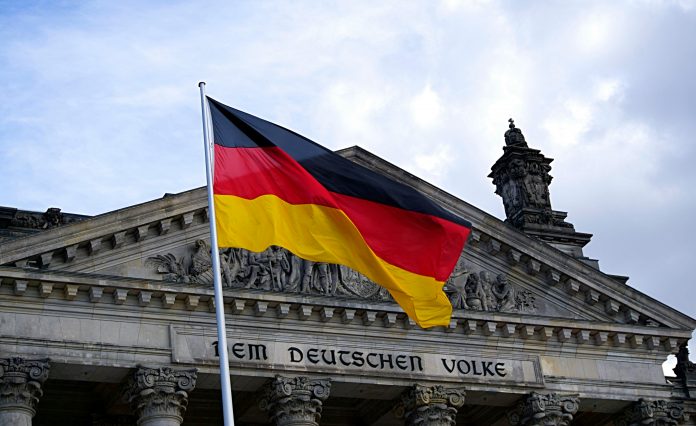
Germany has taken a significant step toward modernizing its infrastructure by passing a new law designed to accelerate the planning and construction of transport projects. The legislation reflects the government’s determination to reduce bureaucratic delays that have long hindered the development of roads, railways, bridges, and waterways.

As Europe’s largest economy seeks to improve mobility, strengthen supply chains, and support climate goals, faster infrastructure delivery has become a national priority. For decades, Germany has been known for its extensive planning procedures and rigorous approval processes.

These regulations have helped maintain high environmental and engineering standards, they have also resulted in lengthy delays. Major transport projects often take many years, and in some cases more than a decade, before construction even begins.

Rising costs, aging infrastructure, and increasing demand for efficient transportation have highlighted the need for reform.

The newly approved law aims to simplify these procedures without abandoning essential environmental protections. It streamlines administrative processes, reduces unnecessary paperwork, and allows authorities to fast-track projects that are considered strategically important.

By shortening approval timelines, the government hopes to begin construction sooner and complete projects more efficiently, reducing both delays and overall costs. Rail infrastructure is expected to be one of the biggest beneficiaries of the legislation.

Germany has been investing heavily in expanding and modernizing its railway network to encourage more people and businesses to choose rail over road transport. Improved rail services are seen as a key component of the country’s climate strategy because trains generally produce lower carbon emissions than cars and trucks.

Faster approval of railway upgrades could improve passenger services, increase freight capacity, and reduce congestion across the network. Roads and bridges will also receive attention under the new framework. Many of Germany’s transport structures are decades old and require extensive maintenance or complete replacement.

Delays in repairing these assets have created traffic bottlenecks and increased costs for businesses that rely on efficient logistics. Accelerating construction and maintenance projects is expected to improve safety while supporting economic productivity.

The law also carries broader economic significance. Infrastructure investment stimulates employment in construction, engineering, manufacturing, and related industries. Better transport networks can strengthen Germany’s competitiveness by improving connections between industrial regions, ports, airports, and neighboring European markets.

Faster movement of goods reduces transportation costs and enhances the reliability of supply chains, benefiting businesses of all sizes. The legislation has generated debate. Supporters argue that Germany cannot afford to continue losing years to administrative procedures when infrastructure needs are becoming increasingly urgent.

They believe the reforms strike a reasonable balance between efficiency and accountability, allowing the country to modernize without sacrificing public oversight. Critics, caution that accelerating approvals could weaken opportunities for public participation or reduce the thoroughness of environmental assessments.

Environmental organizations have stressed that protecting ecosystems and biodiversity should remain a central consideration in every transport project. They argue that speeding up development should not come at the expense of sustainable planning or legal safeguards.

The new law represents an important milestone in Germany’s effort to modernize its transport infrastructure. If implemented effectively, it could help deliver long-awaited projects more quickly, improve mobility for citizens, strengthen the national economy, and support environmental objectives through better transport networks.

The success of the reforms will depend on whether authorities can maintain transparency, environmental responsibility, and public confidence while significantly reducing the delays that have historically slowed infrastructure development across the country.

Stuttgart 21 Cost Explosion Highlights Europe’s Infrastructure Challenges

Germany’s ambitious rail modernization efforts have once again come under scrutiny as the long-delayed Stuttgart rail project has seen its estimated cost climb to nearly €15 billion, making it one of the country’s most expensive infrastructure projects.

Originally conceived as a transformative upgrade to Germany’s rail network, the project has become a symbol of the financial, technical, and political challenges that often accompany large-scale public works.

The latest cost increase highlights the growing pressures facing infrastructure development across Europe, where inflation, supply chain disruptions, labor shortages, and complex engineering requirements continue to push budgets beyond initial expectations.

The project, widely known as Stuttgart 21, was launched with the goal of modernizing Stuttgart’s railway system by replacing the city’s historic terminus station with an underground through station.

Supporters argued that the redesign would improve rail capacity, reduce travel times, and strengthen connections across southern Germany and neighboring European countries. The broader vision also included freeing valuable land for urban development while integrating the railway more efficiently into the region’s expanding transportation network.

What began as a project with an estimated cost of around €2.5 billion has evolved into a multi-decade engineering undertaking plagued by repeated delays and escalating expenses. The newest projection of nearly €15 billion reflects years of unforeseen technical difficulties, changes in construction plans, stricter environmental standards, and rising material prices.

Tunnel excavation beneath densely populated urban areas has proven especially challenging, requiring advanced engineering solutions that have added both time and cost to the project. Construction has also been affected by global economic pressures. Inflation has significantly increased the price of steel, concrete, energy, and transportation.

While shortages of skilled labor have slowed progress across Germany’s construction sector. Like many infrastructure projects worldwide, Stuttgart 21 has faced additional setbacks caused by supply chain disruptions and higher financing costs, forcing project managers to repeatedly revise their financial outlook.

The ballooning budget has intensified political debate within Germany. Critics argue that the project demonstrates inadequate planning and weak oversight, questioning whether public funds could have been invested more effectively in maintaining existing rail infrastructure or expanding regional transportation services.

Some opponents have long maintained that the original station could have been modernized at a much lower cost while avoiding years of disruption to residents and commuters. Supporters, however, continue to defend the investment, emphasizing the long-term economic and transportation benefits.

They argue that Germany’s rail system requires major modernization to meet future passenger demand, reduce congestion, and support national climate goals by encouraging more travelers to choose trains over cars and domestic flights.

Once completed, the upgraded network is expected to improve operational efficiency and strengthen high-speed rail connections across Europe.

The Stuttgart project also reflects broader challenges facing Germany’s infrastructure strategy. Across the country, aging rail lines, bridges, roads, and public facilities require significant investment after decades of underfunding.

As governments seek to accelerate infrastructure renewal while pursuing ambitious environmental objectives, balancing cost control with long-term economic benefits has become increasingly difficult.

Despite the controversies, construction continues, with officials maintaining that the project will eventually deliver substantial improvements to Germany’s transportation network. Yet the rising price tag serves as a reminder that major infrastructure investments require careful planning, realistic budgeting, and effective project management.

As Stuttgart 21 moves closer to completion, policymakers, engineers, and taxpayers alike will be watching closely to determine whether the project’s promised benefits ultimately justify its extraordinary cost.

The Business Lessons Behind Mark Zuckerberg’s Efficiency Strategy

0

For much of his career, Mark Zuckerberg built his reputation on a relentless pursuit of efficiency. From Facebook’s famous motto, Move Fast and Break Things, to Meta’s aggressive cost-cutting campaigns, Zuckerberg has consistently emphasized speed, productivity, and streamlined decision-making.

While this approach helped transform a college startup into one of the world’s most influential technology companies, recent developments suggest that even ruthless efficiency has its limits. Over the past several years, Meta has undergone sweeping organizational changes.

The company reduced its workforce through multiple rounds of layoffs, flattened management structures, and demanded higher performance from remaining employees. Zuckerberg even declared 2023 the Year of Efficiency, arguing that leaner teams would make Meta more agile and innovative.

Investors initially welcomed the strategy, rewarding the company with a stronger stock price and improved profitability.

The long-term effects of relentless efficiency have become increasingly apparent. Innovation in the technology sector often depends on experimentation, collaboration, and the freedom to pursue ambitious ideas without immediate financial returns.

When organizations become overly focused on maximizing short-term productivity, they risk discouraging creativity and reducing employee morale. A workforce constantly operating under pressure may deliver results in the short run but struggle to generate the breakthrough innovations that sustain long-term growth.

Meta’s ambitious investments in artificial intelligence illustrate this challenge. As competition intensifies among major technology companies, attracting and retaining top AI researchers has become essential.

Highly skilled engineers and scientists are often motivated not only by compensation but also by opportunities to work on groundbreaking projects within supportive environments. Excessive performance pressure or repeated restructuring can make it harder for companies to recruit and keep the talent needed to remain competitive.

The company’s experience with the metaverse also provides an important lesson. Meta invested billions of dollars into virtual and augmented reality technologies, expecting them to become the next major computing platform.

While the vision remains ambitious, commercial adoption has progressed more slowly than anticipated. This has forced the company to balance continued investment in long-term innovation with demands from shareholders for financial discipline.

The result has been a more nuanced approach that recognizes efficiency alone cannot guarantee success in emerging technologies. Corporate culture also plays a significant role in sustaining innovation. Organizations thrive when employees feel trusted, valued, and empowered to contribute ideas.

Frequent layoffs, heightened performance expectations, and constant restructuring may improve operational metrics but can erode confidence and loyalty. In industries driven by knowledge and creativity, maintaining a healthy workplace culture is often as valuable as reducing operating expenses.

Zuckerberg’s leadership appears to be evolving in response to these realities. While efficiency remains an important objective, Meta has also increased investments in artificial intelligence infrastructure, research, and strategic hiring.

The company now faces the challenge of balancing disciplined financial management with the flexibility needed to pursue transformative innovation. Rather than focusing solely on eliminating costs, leadership must create conditions where talented people can experiment, collaborate, and build the next generation of technologies.

Mark Zuckerberg’s journey reflects a broader lesson for modern business leaders. Efficiency is an essential component of successful management, but it cannot replace imagination, resilience, or human creativity.

Sustainable success requires striking the right balance between operational discipline and investment in people and ideas. As Meta competes in the rapidly evolving AI era, Zuckerberg’s greatest challenge may not be making the company leaner, but ensuring that efficiency serves innovation instead of limiting it.