DD
MM
YYYY

PAGES

DD
MM
YYYY

spot_img

PAGES

Home Blog Page 4

Bitcoin Slips Below $88,000 as Geopolitical Tensions and Bearish Signals Weigh on Crypto

0

Bitcoin extended its recent pullback on Thursday, briefly dipping below the $88,000 mark after falling about 1.5% over the past 24 hours. The decline came amid rising geopolitical tensions and growing uncertainty across global financial markets, prompting investors to rotate away from risk crypto assets.

The broader crypto sell-off coincided with renewed tensions between the United States and Iran. President Donald Trump intensified pressure on Tehran to negotiate a new nuclear deal, warning that a “massive armada” of U.S. warships was moving toward the region.

Retail sentiment reflected the unease. On Stocktwits, sentiment around Bitcoin deteriorated from “bearish” to “extremely bearish” within a day, underscoring weakening short-term confidence among retail traders.

Technically, analysts remain divided on Bitcoin’s near-term direction. BTC has repeatedly failed to reclaim the $90,000 level as support, keeping downside risks in focus. Analyst Ted Pillows noted that another test of the $88,000 zone would occur before any meaningful rebound. “BTC failed to reclaim the $90,000 level again,” he said, adding that a sweep of support could precede the next bounce.

Crypto research firm CryptoQuant flagged an early warning signal, noting that Bitcoin’s “supply in loss” metric has begun to rise. Historically, such a shift has appeared during the early stages of prolonged bear markets. While current levels remain far below those seen during full capitulation phases, CryptoQuant emphasized that the change in trend itself is significant, suggesting a potential shift toward a more bearish market structure rather than a brief correction.

Bitcoin’s recent price action reflects that uncertainty. Trading around $88,016 at the time of this report, the asset has struggled to regain momentum after sliding from yearly highs near $98,000. Buying pressure has weakened, erasing gains recorded earlier in the year.

Meanwhile, capital has continued to flow into precious metals. Gold and silver extended their record-breaking rallies, reinforcing the divergence between traditional safe havens and crypto assets. Gold surged 2.6% in the past day to a new all-time high of $5,597 per ounce, while silver climbed 1.3% to $119.3 per ounce. Year to date, gold is up roughly 28.6%, while silver has gained more than 65%, reflecting sustained demand and strong investor interest.

Despite crypto’s underperformance, some analysts see a potential rotation ahead. Market commentary from Milk Road highlighted a recurring pattern in which Bitcoin tends to follow gold’s price movements with an approximate six-month lag. If that historical relationship holds, Bitcoin’s current stagnation could precede a delayed upside move.

Macro investor Raoul Pal echoed that view, arguing that Bitcoin lagging gold is not unusual at this stage of the cycle. According to Pal, gold typically moves first, while Bitcoin catches up later as global liquidity conditions improve. He also suggested that many investors are currently underweight crypto, believing the bull cycle has ended. Should prices begin to rise again, he expects a rapid shift in positioning as investors rush to regain exposure.

Outlook

In the near term, Bitcoin faces a challenging environment. Geopolitical risks, fragile sentiment, and bearish on-chain signals could keep price action volatile, with the $88,000 level acting as a critical support zone. A sustained move above $90,000 remains necessary to restore bullish momentum.

Over the medium term, the outlook is more nuanced. If global macro conditions stabilize and liquidity continues to expand as reflected in the ongoing rally in gold and silver, Bitcoin could follow with a delayed catch-up move.

Tesla Doubles Down on AI Bet With $2bn xAI Investment as Robotaxi Promises Face Fresh Scrutiny

0

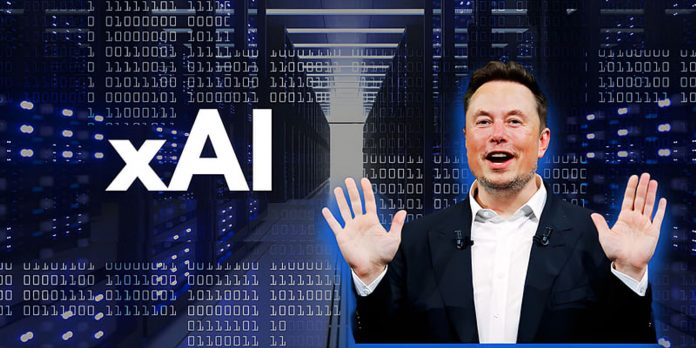
Tesla said on Wednesday it will invest $2 billion in xAI, the artificial intelligence startup founded by its chief executive, Elon Musk, reinforcing the company’s strategic pivot away from being viewed primarily as an electric vehicle maker and toward an AI and robotics-driven future.

The move underscores how much of Tesla’s $1.5 trillion valuation is now tied to expectations around autonomy, software, and AI-driven services rather than car sales alone.

The investment is expected to deepen the technical and financial link between Tesla and xAI, Musk’s artificial intelligence startup, which he has positioned as a counterweight to OpenAI and other large AI labs. The strategic logic is clear for Tesla as advances in large language models, computer vision, and decision-making systems are central to its ambitions in Full Self-Driving, robotaxis, and humanoid robotics.

By backing xAI directly, Tesla is effectively internalizing part of the AI supply chain that underpins those long-promised products, reducing reliance on third-party models and potentially accelerating development tailored to its own hardware and data.

Investors initially welcomed the announcement, with Tesla shares rising about 3.4% in extended trading, but the reaction also reflects a deeper dynamic. Markets have become increasingly tolerant of Tesla’s weaker vehicle fundamentals as long as there is evidence, however incremental, that the autonomy story is moving closer to commercial reality.

Reiterating that production plans for the Cybercab robotaxi and Semi trucks remain on track this year was therefore as important as the xAI investment itself. Tesla has a long history of missed timelines, and each reaffirmation is aimed squarely at rebuilding credibility after repeated delays.

That credibility challenge looms large. Musk has spent nearly a decade promising that Tesla vehicles were on the cusp of full autonomy, at various points predicting nationwide robotaxi networks and rapid revenue transformation. Those predictions have yet to materialize at scale. The company’s current robotaxi operations still largely rely on Model Y vehicles running supervised versions of Full Self-Driving, with no firm regulatory approval for widespread unsupervised use.

The purpose-built Cybercab, designed without a steering wheel or pedals, remains a symbol of Tesla’s ambitions and its execution risk. Musk previously said production would begin in April 2026, but more recent comments describing early output as “agonizingly slow” have only reinforced investor caution around timelines and volumes.

Against this backdrop, Tesla’s core vehicle business is under visible pressure. Competition has intensified as both established automakers and newer entrants roll out fresher models, often at lower prices. The expiration of a key U.S. tax incentive for electric vehicles has further weighed on demand, while Musk’s far-right political rhetoric has alienated some customers, particularly in urban and coastal markets that historically drove EV adoption.

These factors have forced Tesla to lean more heavily on lower-priced “Standard” versions of the Model 3 and Model Y to sustain volumes.

Analysts widely see this pricing strategy as a calculated compromise. By expanding the installed base of Tesla vehicles, even at the cost of thinner margins, the company increases the pool of cars that could later generate high-margin software and services revenue, from Full Self-Driving subscriptions to future robotaxi participation.

Wall Street expectations reflect cautious optimism rather than exuberance. Visible Alpha data shows analysts forecasting deliveries of 1.77 million vehicles in 2026, an 8.2% increase, a far cry from the explosive growth rates Tesla once enjoyed but still respectable in a maturing EV market.

Financially, the latest quarterly results offered some reassurance. Revenue for the three months ended December 31 came in at $24.9 billion, slightly ahead of consensus estimates, while adjusted earnings per share of 50 cents exceeded expectations. Perhaps more notable was automotive gross margin excluding regulatory credits, which reached 17.9%, well above forecasts.

That performance suggests Tesla has retained some pricing power and cost discipline, even as it discounts vehicles to defend market share.

Beyond cars and autonomy, Tesla’s energy generation and storage business continues to emerge as a stabilizing force. Energy-storage deployments jumped about 29% to a record 14.2 gigawatt-hours in the fourth quarter, benefiting from strong demand for grid-scale batteries as utilities and governments invest in renewable energy and grid resilience.

While still smaller than the automotive segment, energy is increasingly viewed by investors as a durable growth engine with less exposure to the volatility of consumer sentiment and Musk’s public persona.

The investment in xAI also needs to be understood in the context of Musk’s broader ecosystem. By linking Tesla more closely with xAI, alongside ventures such as SpaceX and Neuralink, Musk is reinforcing a network of companies that share talent, data, and strategic direction. Supporters argue this ecosystem creates powerful synergies that no traditional automaker can match. Sceptics counter that it concentrates risk, blurring corporate boundaries and raising governance questions, particularly when Tesla shareholders are effectively funding another Musk-controlled entity.

Those concerns are amplified by the scale of Musk’s compensation. The $1 trillion pay package tied to ambitious operational and valuation milestones has reassured some investors of his long-term commitment to Tesla, even as he juggles multiple businesses and political interests. Others worry it entrenches a dependence on Musk’s vision and execution at a time when the company may need more conventional discipline to navigate intensifying competition.

Ultimately, Tesla’s latest announcements reinforce a familiar pattern. The company continues to deliver solid, if unspectacular, results in its legacy businesses while doubling down on a future defined by artificial intelligence, autonomy, and robotics. The $2 billion investment in xAI is a tangible signal that Tesla is willing to put significant capital behind that future.

When Knocking Fails, Push: The Strategy of Entering Closed Doors

0

The door looks closed. Everyone can see it. But over time, I have learned that many closed doors are not locked. They are simply unattended. No one is inside waiting to respond to a knock. In such moments, knocking endlessly is an exercise in frustration. What is required is a push.

Life has many of these doors. Careers. Markets. Opportunities. We stand outside, knocking politely, hoping someone powerful will open. Often, nothing happens, not because the answer is “no,” but because no one is listening.

There is a difference between a knock and a push.

“Sir, may I review this work for you?” is a knock. The answer may be silence or a polite dismissal.

“Sir, this is my review of the work” is a push. Suddenly, you are inside the room.

A push demonstrates value. It collapses distance. It removes the burden of decision from the gatekeeper. Markets reward action, not permission-seeking. Power rarely opens doors; it responds to utility.

Here is the uncomfortable truth: the easiest way to get the attention of the powerful is not to ask for help, but to help them win. When you contribute to the growth of an empire, you earn a tent within it. The rich do not open doors for people, they open doors for leverage. Knocking is emotional. Pushing is strategic.

Simply, the best way to get help from the rich is finding a way to help them make more money! And that means you PUSH: “Chairman, with my understanding of this industry and technology vectors, here is a 5-page outlook for CoyA”. He or she reads that, and will then connect you to the MD or CEO or Director. Right there, you are IN.

China Grants Conditional Nvidia H200 Chip Approvals as U.S.-China AI Chip Race Intensifies

0

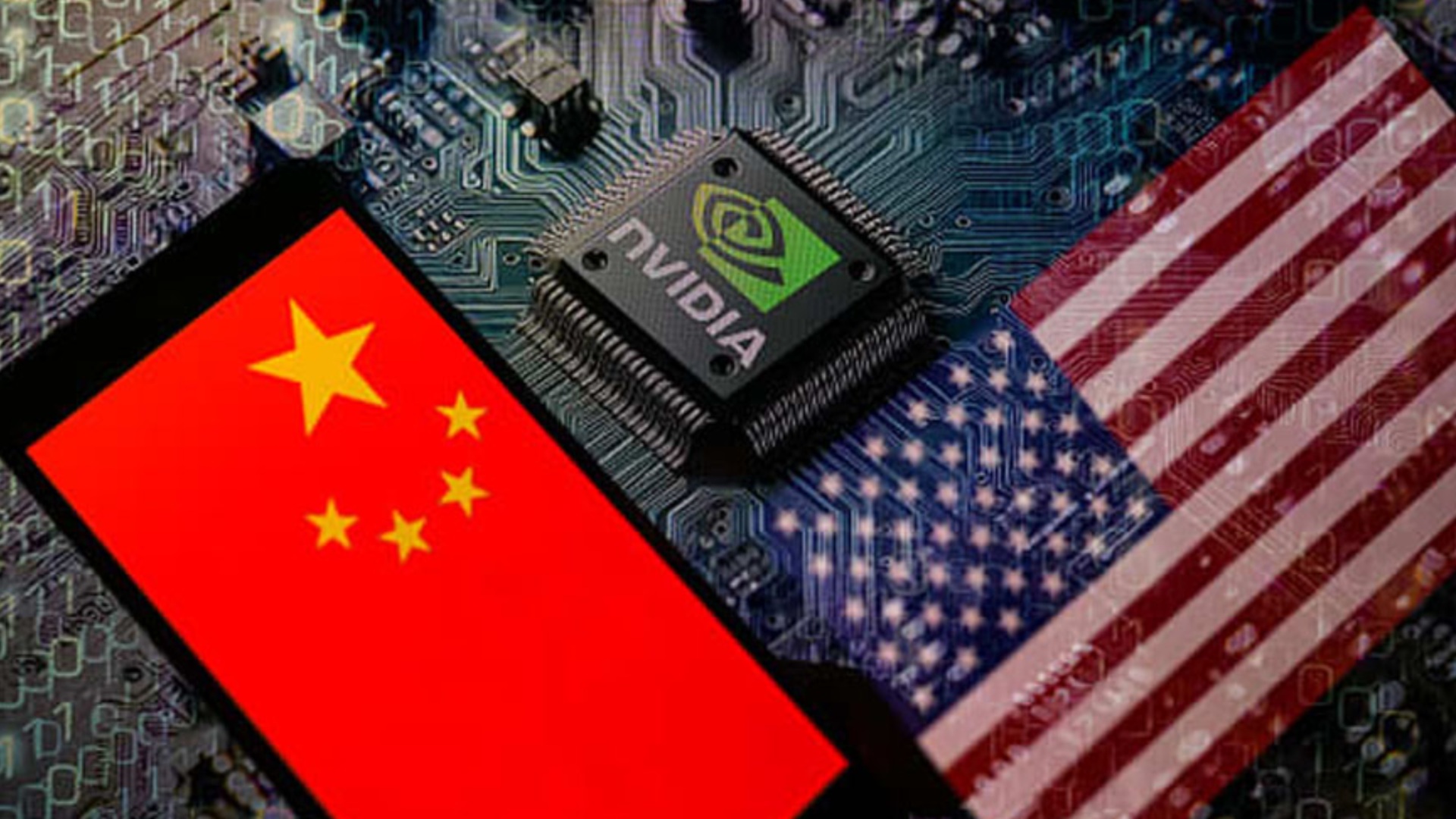
China has authorized three of its largest technology firms—ByteDance, Alibaba, and Tencent—to purchase Nvidia’s high-performance H200 AI chips, signaling a careful balancing act between meeting domestic AI demand and promoting homegrown semiconductor development.

According to sources familiar with the matter, who spoke to Reuters, the approvals cover more than 400,000 units, though the licenses are conditional, and exact terms are still being finalized. The news follows Nvidia CEO Jensen Huang’s recent visit to China, during which he engaged with regulators and company executives.

While the U.S. had already cleared Nvidia to export the H200 to China, Beijing’s approval remained the key barrier. Chinese regulators appear intent on limiting the amount of foreign technology entering the country without undermining domestic innovation, highlighting the strategic importance of the H200 in global AI development.

The approvals come with significant caveats. Chinese firms have yet to convert them into purchase orders, and sources said the licenses may include requirements to purchase domestic chips alongside imported H200 units. Previous reports suggested Beijing could enforce quotas to ensure foreign semiconductors complement, rather than replace, domestic production.

This is a clear signal that China intends to nurture its own semiconductor ecosystem even as it accelerates AI capabilities among its top internet companies.

Other firms remain in a queue for future approvals, suggesting a phased approach designed to prioritize the largest players while maintaining regulatory oversight. Chinese customs recently blocked H200 chips from entering the country pending approval, emphasizing the government’s careful control of the supply chain. Meanwhile, domestic companies have collectively placed orders exceeding two million H200 chips, far beyond Nvidia’s inventory, underscoring the intense demand for high-performance AI hardware.

The H200 represents a major leap in AI computing power. Delivering roughly six times the performance of Nvidia’s H20 chip, it allows firms to train and deploy large-scale generative AI models, process massive datasets, and run AI services at speeds previously unattainable.

While Chinese firms such as Huawei now produce chips that can rival the H20, they remain significantly behind the H200 in raw computational throughput. This gap has made controlled access to Nvidia chips both a practical necessity and a policy tool for Beijing.

From a strategic standpoint, the H200 approvals are a rare instance where U.S. and Chinese policy goals temporarily align. U.S. export controls were designed to restrict China’s access to leading-edge AI hardware, but the conditional approvals indicate a recognition by Beijing that top domestic AI players require state-of-the-art chips to remain competitive internationally.

Analysts suggest that selective imports for major companies will accelerate AI innovation while maintaining pressure on domestic semiconductor firms to close the technology gap.

China’s Domestic AI Chip Drive

Beijing’s cautious approach is part of a broader push to strengthen domestic semiconductor capabilities. Over the past decade, Chinese authorities have invested heavily in AI chip startups and state-owned ventures, seeking to reduce reliance on foreign suppliers. Even so, domestic chips remain behind in performance at the cutting edge of AI workloads, especially for large generative models and high-throughput inference tasks.

The approvals also incentivize domestic companies to accelerate innovation. Conditional purchases of foreign chips effectively create a hybrid ecosystem, where high-performance imported hardware supports immediate AI growth, while domestic chips are developed and deployed in parallel. Over time, this strategy could reduce China’s dependency on U.S.-made components, aligning with the country’s long-term industrial policy goals.

Implications for Global AI Competition

The Nvidia H200 approvals have significant ripple effects for the global AI and semiconductor landscape. China’s top firms, with access to these chips, can compete more effectively with U.S. rivals like OpenAI, Microsoft, and Google. At the same time, U.S. companies supplying cutting-edge hardware gain a lucrative market, albeit one constrained by Beijing’s regulatory conditions.

The approvals represent both an opportunity and a challenge for Nvidia. This is because Chinese demand for the H200 underscores the company’s dominant position in high-end AI chips. Also, the conditional nature of the approvals and potential bundling requirements introduces uncertainty in forecasting sales and supply chain management. With over two million units ordered by domestic firms, demand far exceeds supply, highlighting the tightness of the AI memory and compute market.

The approvals also underpin how semiconductor supply chains have become a central geopolitical issue. The U.S. aims to maintain technological leadership while limiting China’s access to top-tier chips, while China balances the need for competitiveness with the desire to grow its domestic industry. The result is a controlled, highly strategic flow of technology that could reshape AI development timelines, commercial competition, and cross-border technology cooperation.

The unfolding situation sets the stage for a new phase in the U.S.-China AI competition. Conditional imports of H200 chips enable immediate growth for top Chinese AI firms while reinforcing the government’s emphasis on domestic semiconductor development.

But China’s hybrid strategy—allowing conditional foreign imports while fostering domestic innovation—is likely to continue as both a safeguard and an accelerant for AI growth.

SK Hynix To Make $10 Billion AI Investment in U.S. as Memory Shortages and Trade Politics Converge

0

South Korea’s SK Hynix is deepening its commitment to artificial intelligence with a major strategic pivot toward the United States, announcing plans to establish a new U.S.-based company dedicated to AI solutions and to commit at least $10 billion to the effort.

The move underscores how central AI has become to the chipmaker’s growth strategy, while also reflecting the shifting geopolitical and trade pressures reshaping the global semiconductor industry.

The new entity, tentatively named “AI Company” or “AI Co.,” is designed to function as the nerve center for SK Group’s AI ambitions. According to the company, it will coordinate strategy across affiliates and accelerate the deployment of AI technologies in global markets, positioning SK Hynix not just as a component supplier, but as a broader solutions provider in the AI ecosystem.

SK Hynix’s growing influence in artificial intelligence is rooted in its dominance in high-bandwidth memory, or HBM, a specialized form of memory that has become essential for training and running large-scale AI models. HBM chips are tightly integrated with advanced processors, including Nvidia’s AI accelerators, and persistent shortages have turned them into one of the most strategically important bottlenecks in the AI supply chain.

That supply constraint has been financially transformative for SK Hynix. On the same day it announced the U.S. AI push, the company reported fourth-quarter results that exceeded market expectations, with profits lifted by tight memory supply and elevated prices. The imbalance between demand and production capacity has given leading memory suppliers unusual pricing power, reinforcing incentives to expand aggressively.

As part of the restructuring, SK Hynix said it will reorganize its California-based subsidiary Solidigm, an enterprise solid-state drive maker formed in 2021. Solidigm’s existing operations will be transferred into a newly established entity, Solidigm Inc., clearing the way for the creation of AI Co. as a distinct platform focused on higher-level AI solutions and strategic investments.

The planned $10 billion investment will not be deployed all at once. Instead, SK Hynix said funding will be provided on a capital-call basis, allowing flexibility as projects mature and opportunities emerge. Beyond internal development, AI Co. is expected to pursue strategic stakes in U.S. artificial intelligence companies, a move aimed at creating synergies across SK Group’s sprawling portfolio, which spans semiconductors, energy, telecommunications, and advanced materials.

The U.S. focus is not incidental, as Washington has made domestic semiconductor investment a central economic and national security priority, and President Donald Trump has repeatedly warned that foreign chipmakers could face tariffs if they fail to expand manufacturing and advanced packaging operations on U.S. soil. SK Hynix’s latest announcement fits squarely within that policy environment.

The company is already building a $3.87 billion advanced chip packaging and research facility in Indiana, a project unveiled in 2024. That site is expected to produce high-bandwidth memory for AI applications, with operations scheduled to begin in 2028. In parallel, SK Hynix has committed nearly $13 billion to an advanced packaging plant in South Korea, highlighting how the company is pursuing a dual-track strategy that strengthens capacity at home while embedding itself more deeply in the U.S. semiconductor ecosystem.

The timing also intersects with broader trade discussions between Washington and Seoul. President Trump has been engaged in tariff negotiations with South Korea in recent months, part of a wider effort to rebalance trade relationships. On Tuesday, he said the United States would “work something out” with South Korea after issuing fresh tariff threats, language that markets interpreted as a possible signal of de-escalation.

The convergence of AI-driven demand, memory shortages, and trade politics creates both opportunity and risk for SK Hynix. By anchoring a significant portion of its AI strategy in the United States, the company positions itself closer to its largest customers, including U.S. cloud and AI infrastructure giants, while also aligning with the industrial priorities of the Trump administration.

At the same time, the scale of the commitment reflects how fiercely contested the AI hardware race has become. With rivals such as Samsung Electronics and Micron Technology racing to expand HBM output and advanced packaging capacity, SK Hynix’s decision to establish a dedicated AI-focused U.S. company signals an ambition to move further up the value chain, from indispensable supplier to strategic partner in the AI era.