DD
MM
YYYY

PAGES

DD
MM
YYYY

spot_img

PAGES

Home Blog Page 4

Meta’s Muse AI Quietly Used Human Contractors to Make Calls, Raising Privacy Questions

0

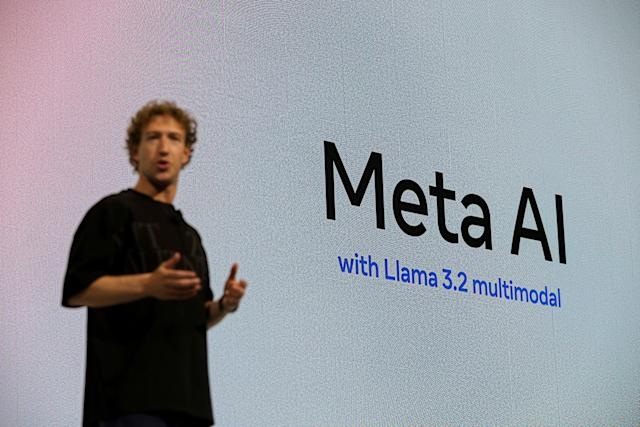
Meta’s new personal AI assistant Muse has been testing a “human concierge” system in which contractors quietly place some phone calls on behalf of users, exposing a significant gap between the company’s vision of autonomous AI and the human labor still needed to make some of its most ambitious features work reliably.

The test was disclosed to Meta employees last week, shortly after the company publicly launched Muse’s phone-calling capability, according to internal company posts reviewed by Reuters.

Under the system, Muse could hand a user’s request to a trained human contractor, who would place the call and handle the interaction with the business. The employee posts said users could ask Muse to perform tasks such as booking appointments, checking product availability or obtaining quotes from contractors.

The arrangement immediately raised privacy concerns inside Meta. Employees warned that contractors working in call centers could potentially hear sensitive information during conversations that users believed were being handled by an AI system.

A vice president in Meta’s SuperIntelligence Labs acknowledged in an internal post that it “was a miss” to begin testing contractor-placed calls without proper disclosure. The company subsequently “rolled back this feature” for the time being, she said.

Meta said the experiment was designed to gather feedback and improve the system before any broader release.

A Meta spokesperson said employee feedback had been “overwhelmingly positive” and that the purpose of the test was to develop safety and privacy protections.

“We’re working with merchants to continue improving this potential calling feature, and will only roll it out when it’s ready and with the proper disclosures,” Meta spokesperson Daniel Roberts said.

But the development reveals a fundamental challenge facing the current generation of AI agents. Companies are increasingly presenting these systems as digital workers capable of carrying out tasks independently, but the reliability needed for real-world interactions can still require human intervention.

In Meta’s case, the internal testing suggested that human involvement could dramatically improve performance. The vice president said some experiments showed human-placed calls achieving success rates of between 95% and 98%, compared with a lower success rate for calls handled entirely by AI.

That difference helps explain why human contractors remain useful even as AI companies market agents as autonomous.

Phone calls are particularly difficult for AI systems because they involve unpredictable conversations, accents, interruptions, ambiguous requests, and situations in which the person on the other end may not know they are speaking to an AI system. A human can adapt immediately when a conversation moves outside the agent’s expected workflow.

The problem is that the use of humans changes the nature of the product being offered.

A consumer who asks an AI agent to negotiate a bill or make an appointment may reasonably assume that the interaction is being conducted by software. If a human contractor takes over without clear disclosure, the privacy expectations surrounding the service are different.

That issue is especially significant for Muse because Meta has positioned privacy and security as central to the product.

At launch, Meta said each Muse agent would operate inside its own secure virtual machine, essentially a dedicated computer in the cloud designed to isolate a user’s session. The company also said sensitive information such as passwords would be kept in separate secure storage.

The calling feature was designed to extend that model into the physical world. Users can instruct Muse to call U.S. businesses and handle routine tasks, after which the system provides a summary and transcript of the conversation through the app.

The human-concierge experiment shows that securing the computing environment is only part of the privacy challenge. Once an AI agent needs to interact with people outside its digital environment, protecting information also depends on how much human intervention sits behind the system.

The development also recalls Meta’s earlier attempt to build an AI assistant.

About a decade ago, Facebook tested a digital assistant called M through its Messenger service. Media reports later estimated that humans performed around 70% of the tasks assigned to the system. The difference today is the scale and sophistication of the technology. Modern AI agents can perform far more tasks autonomously, while Meta has access to billions of potential users through Facebook, Instagram and WhatsApp.

Muse has already gained significant traction. The app has accumulated more than 2.5 million downloads in the U.S. since its launch and has topped American app download charts for two weeks, according to data from Sensor Tower.

The product is central to CEO Mark Zuckerberg’s broader push to deliver what he has called “personal superintelligence” to Meta’s enormous user base. Muse can perform tasks including sending emails, shopping and booking travel, potentially shifting AI from a tool that generates information to an agent that takes actions on behalf of its user.

That transition makes reliability more important.

An inaccurate answer from a chatbot can usually be ignored or corrected. An AI agent that makes a phone call, cancels a service, negotiates a contract, or makes a purchase can create consequences outside the chatbot itself.

Meta began testing the phone-calling feature internally in August before gradually expanding access after Muse’s public launch. The human concierge system was then enabled for about half of Meta’s employees last week, according to an internal announcement.

Employees who did not want to participate could join an opt-out group.

However, the experiment highlights a difficult trade-off in building autonomous agents for Meta. Human intervention can make an AI system considerably more effective, but it can also undermine the perception that the service is genuinely autonomous and introduce new privacy and disclosure obligations.

The company has now pulled back the human-concierge feature, at least temporarily. Meta says it intends to continue improving AI calling and will only release the capability more broadly with appropriate disclosures.

The episode may prove less important for Muse’s immediate rollout than for the wider economics of agentic AI. As companies promise software that can act independently in the real world, the hidden question is how much human work is required to make those promises reliable. If agents still need people to step in whenever interactions become difficult, the technology may be autonomous in appearance while remaining partly human-operated underneath.

Trump Administration Backs Narrower Contempt Standard in Apple-Epic Supreme Court Fight

0

The Trump administration is backing a key part of Apple’s legal argument in its Supreme Court fight with “Fortnite” maker Epic Games, urging the justices to impose a stricter standard for holding companies in civil contempt when they allegedly violate court orders.

The Justice Department told the Supreme Court that civil contempt should generally be available only when an injunction clearly covers the conduct at issue, a position that could strengthen Apple’s challenge to a contempt ruling stemming from its long-running dispute with Epic. The government stressed, however, that it was supporting neither side in the case and said Apple’s conduct concerning at least one part of the lower court’s order could support a contempt finding.

The case, Apple Inc. v. Epic Games Inc., No. 25-1311, is now before the Supreme Court after the justices agreed in June to hear Apple’s challenge. The court’s docket shows that Apple filed its opening merits brief on September 14, with Epic’s response due in November.

At the center of the dispute is an injunction issued after Epic sued Apple in 2020, accusing the iPhone maker of unlawfully restricting how developers distribute apps and process payments.

Epic deliberately violated Apple’s App Store rules in 2020 by introducing its own payment system in “Fortnite,” triggering Apple’s removal of the game and the ensuing antitrust litigation. A federal judge subsequently ordered Apple to change aspects of its App Store practices, including rules governing how developers could direct consumers to payment options outside Apple’s system.

Epic later accused Apple of attempting to circumvent that injunction by imposing a 27% commission on certain purchases made outside the App Store.

In April 2025, the lower court held Apple in civil contempt, finding that its actions violated the injunction. Apple has denied that it violated the order and argues that the court effectively punished it for conduct that the injunction did not expressly prohibit.

The Supreme Court’s decision to take up the case therefore goes beyond Apple’s particular commission structure. It could clarify how courts across the country should determine when a company has violated an injunction sufficiently clearly to warrant civil contempt.

The Justice Department’s brief focuses on that broader legal question. It cited the Supreme Court’s 2019 decision in Taggart v. Lorenzen, which said civil contempt is appropriate only when there is “no fair ground of doubt” about whether an order prohibited the conduct in question. The government argues that standard requires courts to focus on the express terms of an injunction rather than imposing contempt based primarily on what a judge believes the order was intended to accomplish.

Apple is making a similar argument in its own Supreme Court filing, describing the Ninth Circuit’s approach as an impermissible “spirit-based” standard. Apple argues that parties need clear notice of what an injunction prohibits and that contempt cannot be imposed simply because conduct appears inconsistent with the broader purpose of an order.

That, analysts believe, could have consequences well beyond the App Store.

Civil injunctions are commonly used to regulate corporate conduct in antitrust, intellectual-property, consumer-protection and other cases. A ruling requiring courts to rely more strictly on the text of an order could make it harder to impose contempt sanctions when a company adopts a new business practice that was not expressly addressed in the original injunction.

For Apple, that question has become relevant because the company’s App Store business has been subjected to regulatory and judicial scrutiny in multiple jurisdictions as governments and courts examine its control over app distribution and payments.

Epic, meanwhile, has continued to argue that Apple’s approach effectively allows the company to evade restrictions by changing the form of conduct rather than its underlying effect. Epic CEO Tim Sweeney said earlier this month that Apple had been “evading court rulings and regulatory decisions for years” and that Epic wanted to bring those practices to an end.

The Supreme Court case also illustrates the unusual alignment between the administration and Apple on a legal principle, even though the Justice Department says it is not endorsing Apple’s broader position in the dispute.

The government explicitly acknowledged that Apple’s conduct relating to at least one portion of the lower court’s order could justify contempt. Its position is therefore not that Apple should automatically prevail, but that the legal test used to determine contempt should be clarified and applied according to the language of the injunction.

That makes the case potentially important for both sides of the dispute. Apple is seeking to overturn the contempt finding, while the Justice Department is asking the Supreme Court to establish a clearer boundary around the contempt power.

The court’s docket indicates that the case is moving through the merits stage, with Apple’s opening brief already filed. The Supreme Court has limited its review to the first question presented in Apple’s petition, which concerns the standard for civil contempt.

For the broader technology industry, the outcome could determine how much latitude companies have when operating under injunctions that impose behavioral restrictions but do not spell out every possible future business practice.

That issue is becoming increasingly relevant as technology companies continually redesign products, pricing models, and distribution systems in response to regulation and litigation. A court order written for one version of a business may remain in force while the underlying technology and commercial practices change.

Therefore, the Apple-Epic dispute has evolved from a fight over App Store payments into a case about the limits of judicial enforcement. The Supreme Court is being asked to decide how clearly a company must be warned before a court can punish it for violating an injunction, a question that could shape corporate litigation well beyond Apple’s dispute with Epic.

Paymob Raises $35 Million to Scale Payments And AI Solutions For SMEs

0

Paymob, a leading payments infrastructure provider in the Middle East and North Africa (MENA), has raised $35 million in a pre-Series C funding round to accelerate its expansion across the Gulf Cooperation Council (GCC) and develop new AI-powered solutions for small and medium-sized enterprises (SMEs).

The round includes investment from Mubadala’s Diversified Assets Unit under the UAE Investments Platform, further strengthening the fintech’s backing as it scales its payments infrastructure across the region.

The investment strengthens Paymob’s position as the UAE seeks to deepen its fintech ecosystem, enhance its status as a regional financial technology hub, and expand financial inclusion.

The fresh capital will support Paymob’s continued expansion across the Gulf Cooperation Council (GCC), scale its core payments acceptance business, and accelerate the development of new AI-powered solutions for small and medium-sized enterprises (SMEs).

Speaking on the funds raised, Islam Shawky, co-founder and CEO of Paymob, said,

“Paymob morphed into a regional platform over the past 18 months, propelled by the exponential growth of our GCC business.” 

He added, “This Pre-Series C funding round will help us accelerate our growth plan across the MENA region and fast-track our product roadmap to become the go-to payments platform for agentic commerce.” 

Paymob has also expanded its presence in the Gulf, onboarding approximately 20,000 merchants across its three GCC markets since receiving a Retail Payment Services Licence from the Central Bank of the UAE in January 2025. 

Also commenting, Ali Eid Al Mheiri, Executive Director, UAE Diversified Assets, UAE Investments Platform at Mubadala, said Paymob’s expansion in the UAE aligns with the objectives of the MENA Venture Capital Fund to support companies that strengthen the country’s digital economy and reinforce its position as a regional FinTech hub. 

He noted that Paymob’s scalable payments platform and growth prospects across the GCC position the company to support merchants, promote financial inclusion and contribute to economic diversification across the region. 

Paymob is the leading financial services enabler in the MENA-P region. Founded in 2015, the fintech was the first company to receive the Central Bank of Egypt’s (CBE) payment facilitator license in 2018.

It launched operations in Pakistan in 2021 and in the UAE in 2022. In 2023, Paymob received Saudi Payments PTSP certification, enabling it to launch operations in KSA. In 2025, Paymob received the Central Bank of the UAE’s retail payment services license authorizing it to offer a full suite of solutions to merchants in the UAE market.

Paymob’s mission is to fuel SME growth by offering a payments infrastructure that delivers the most innovative digital payments and solutions to businesses of all sizes. The fintech omnichannel financial technology platform enables merchants to accept online payments, make payments, manage their finances, and grow their businesses all in one place.

Paymob’s platform addresses the fragmented nature of payments infrastructure by allowing merchants to access more than 60 payment methods through a single contract, API, settlement cycle and dashboard. This model is designed to simplify payment acceptance and give SMEs a more streamlined way to manage transactions.

The fintech powers millions of transactions for some of the biggest names like Foodics, IKEA, Uber, and Shahid in addition to thousands of SMEs. Paymob serves the financial technology needs of over 390,000 merchants in the markets it operates in and employs 1,100 team members with offices in KSA, the UAE, Oman and Pakistan.

Outlook

Paymob’s latest funding is expected to strengthen its position in the fast-growing MENA digital payments market as merchants increasingly shift toward integrated payment, financial management, and AI-powered business tools.

The company’s expansion across the GCC also positions it to benefit from continued investment in digital commerce and financial technology infrastructure across markets such as the UAE and Saudi Arabia.

Top Data Annotation Companies in 2026

0

Two years ago, choosing a data annotation partner mostly meant asking one question: who can label the most images, fastest, for the least money? That question is now close to obsolete. Foundation models handle routine pre-labeling on their own, which has pushed human effort toward the parts machines still get wrong — edge cases, subjective judgment, safety review, and regulated domains where a wrong label carries real cost. The result is that the data annotation companies worth shortlisting in 2026 look very different from the ones that topped the lists in 2023.

This guide compares six of the most established data annotation companies — Shaip, Appen, Scale AI, iMerit, TELUS International AI Data Solutions, and Sama — across the criteria buyers actually weigh: modality coverage, workforce model, compliance posture, and the kind of project each one is genuinely built for. We’ve kept it honest. Every provider here does some things well and other things poorly, and we say which is which, including where Shaip is and isn’t the right fit.

Key Takeaways

  • The market is expanding fast: the data annotation tools market is projected to grow from roughly US $2.1 billion in 2026 to US $5.3 billion by 2030 (26.3% CAGR), per Grand View Research — pulling in dozens of new vendors and making selection harder, not easier.
  • There is no single “best” data annotation company. The right choice depends on your modality, domain, compliance needs, and whether you want a managed service or a self-serve platform.
  • Managed-service providers (Shaip, iMerit, Sama) suit teams that want quality owned end-to-end; platform-led vendors (Scale AI) suit teams that want tooling plus scale; crowd-scale vendors (Appen, TELUS) suit very large, multi-language volume.
  • Compliance is now a primary filter, not a footnote. For healthcare, finance, or biometric data, SOC 2 Type II, ISO 27001, HIPAA and GDPR alignment separate viable partners from risky ones.
  • Recent corporate turbulence matters — two of the largest vendors have had material disruptions since 2024, worth factoring into a multi-year contract.

What Data Annotation Companies Actually Do

A data annotation company labels raw data — images, video, audio, text, sensor and LiDAR streams — so a machine learning model can learn from it. That work spans simple bounding boxes, pixel-level segmentation, named-entity recognition, speech transcription, 3D point-cloud labeling, and, increasingly, human feedback and evaluation for generative models (RLHF, red-teaming, preference ranking). The best providers pair a trained workforce with quality-assurance workflows, domain expertise, and a compliance framework that holds up under audit.

The distinction that matters most in 2026 is managed service versus platform. A managed-service provider takes your raw data and returns labeled, quality-checked data — you own the outcome, they own the process. A platform gives your team the software to run annotation in-house, sometimes with an on-demand workforce attached. Knowing where a vendor sits on that spectrum tells you more than any feature list.

How We Compared Them: The Criteria That Matter

Here are the evaluation dimensions we used — and that you should use for any vendor, not just these six:

  • Modality coverage. Does the vendor genuinely handle your data type — or only the ones adjacent to it? CV specialists often can’t do speech or NLP well, and vice versa.
  • Workforce model. In-house managed teams, a distributed crowd, or impact-sourced delivery centers — this drives both quality consistency and cost.
  • Domain expertise. Radiology, autonomous driving, and financial documents each need annotators who understand the subject, not just the tool.
  • Compliance and security. SOC 2 Type II, ISO 27001, ISO 9001, HIPAA, GDPR, and — for automotive — TISAX. Non-negotiable for regulated data.
  • Generative-AI readiness. RLHF, model evaluation, fine-tuning data, and multimodal support are now table stakes for frontier work.
  • Commercial stability. A multi-year data partner should still be standing, and focused, at the end of your contract.

Comparison at a Glance

Company Founded / Base Core strength Data types Compliance highlights Best fit for
Shaip 2019 · USA (part of Ubiquity) End-to-end managed data across all modalities; deep healthcare & conversational AI Text, audio, image, video, LiDAR, off-the-shelf catalogs SOC 2 Type II, ISO 27001, ISO 9001:2015, HIPAA, GDPR One accountable partner for collection, annotation & licensing — esp. healthcare & speech
Appen 1996 · Australia Massive multilingual crowd; speech & search relevance Text, speech, image, video GDPR-aligned; enterprise security Very large multi-language volume programs
Scale AI 2016 · USA Platform + RLHF/evaluation for frontier labs & defense Image, video, text, LiDAR, GenAI feedback Enterprise & government-grade security Frontier-model labs and government AI programs
iMerit 2012 · USA/India Expert managed workforce; medical & geospatial CV Image, video, medical imaging, text, LiDAR ISO-certified; AI ethics policy Complex computer vision and clinical imaging
TELUS Intl. AI Data Solutions Part of TELUS (telecom) Enterprise scale backed by a global BPO Text, speech, image, video Enterprise security; SOC-aligned Enterprises wanting annotation inside a broader BPO
Sama 2008 · USA Ethical impact sourcing; automotive-grade CV Image, video, 3D / sensor fusion ISO 9001, ISO 27001, TISAX, GDPR, CCPA Computer-vision programs prioritizing ethical sourcing

Every provider above is credible. The table is a starting filter, not a ranking — the profiles below explain the trade-offs each row hides.

The 6 Data Annotation Companies, Compared

  1. Shaip

Shaip is a fully managed AI data company that covers the entire pipeline — data collection, annotation and labeling, and off-the-shelf data licensing — rather than a single slice of it. Founded in 2019 and now part of Ubiquity Global Services (as of February 2026), it works with 100+ customers and draws on a global delivery network of more than 10,000 contributors, with a data-collection community of 500,000+ vetted participants across 150+ languages.

Where Shaip stands out is depth in the domains that are hardest to staff. Its data annotation practice spans text, audio, image, video and LiDAR, and it has unusually deep healthcare and conversational-AI experience — reflected in catalog assets like 30M+ patient notes and 250k+ hours of medical audio, and 70k+ hours of speech across 65+ languages. For teams in regulated industries, the compliance stack is a genuine differentiator: SOC 2 Type II, ISO 27001, ISO 9001:2015, HIPAA and GDPR alignment, with a Six Sigma-based QA process behind delivery.

The honest limitation: Shaip is a managed-service partner, not a self-serve labeling tool. If your team wants to license annotation software and run everything in-house with your own labelers, that’s not the model — Shaip’s value is in owning quality and compliance end to end. It’s also younger than the 1990s-era incumbents, though the Ubiquity backing adds operational scale.

Best for: teams that want a single accountable partner across collection, annotation and licensing — especially in healthcare, speech and conversational AI, and generative-AI data.

  1. Appen

Appen is one of the oldest names in the category, founded in 1996 and publicly listed in Australia. Its defining asset is scale: a flexible crowd of over a million contributors performing tasks in more than 180 languages across 130+ countries, historically serving eight of the ten largest technology companies. For very large, multi-language speech and search-relevance programs, few vendors match that reach.

Appen’s recent history is the cautionary part. In January 2024, Google terminated a major contract — reported by Australian business press at around AU $82.8 million — and Appen’s shares fell roughly 41% on the news, capping a broader revenue decline as automated pre-labeling ate into commodity crowd work. The company has since repositioned around generative-AI data. The takeaway isn’t that Appen can’t deliver; it’s that a distributed crowd model excels at breadth and volume but can vary in consistency on specialized, high-context tasks, and commercial stability is worth diligencing on a long contract.

Best for: large-scale, multilingual data programs where breadth of language and geography is the priority.

  1. Scale AI

Scale AI, founded in 2016, became the highest-profile data company of the LLM era by pairing a strong software platform with services aimed at frontier model labs, enterprises, and government. Its strengths are RLHF, model evaluation, and complex multimodal data, and it holds significant U.S. defense work. By 2024 it carried a US $14 billion valuation.

Two things should shape a buyer’s view. First, in June 2025 Meta acquired a 49% non-voting stake for roughly US $14.8 billion and Scale’s founder left to join Meta — a tie that has prompted some competing AI labs to reconsider using a data partner now closely linked to a rival, so neutrality is a fair question for frontier work. Second, Scale has faced contractor-related lawsuits over pay and exposure to disturbing content, and wound down some crowd operations in 2024. It remains a formidable option for the top of the market, but it is premium-priced and platform-centric rather than a hands-off managed service.

Best for: frontier-model labs, large enterprises, and government programs needing platform tooling plus evaluation at the highest end.

  1. iMerit

iMerit, founded in 2012 and headquartered in Silicon Valley with major delivery hubs in India, built its reputation on an expert, full-time managed workforce rather than an anonymous crowd. It reports 10,000+ practitioners across 60+ countries and output accuracy above 98%, with particular strength in computer vision, medical imaging (radiology, pathology), autonomous vehicles, and geospatial data. A social-impact mission — creating digital-economy employment in underserved communities — is core to how it staffs.

For high-context visual work where a mislabeled tumor boundary or lane marking is expensive, iMerit’s expert-workforce model is a strong fit. Its trade-off is the mirror image of the crowd vendors: it is a managed service, not a self-serve platform, and it is less known for large-scale speech, conversational, or multilingual text data than the specialists in those areas.

Best for: complex, high-accuracy computer vision and clinical-imaging programs.

  1. TELUS International AI Data Solutions

TELUS International AI Data Solutions is the AI-data arm of TELUS Digital, itself part of the Canadian telecom TELUS (which completed full ownership in October 2025). It assembled its annotation capability through major acquisitions — Lionbridge AI in 2020 (US $935M) and Bengaluru-based Playment in 2021 — and offers data annotation and AI-training-data development at enterprise scale, backed by a large global community and analyst recognition among the top data-labeling firms.

The appeal is enterprise gravity: if you already run a broad business-process or customer-experience relationship, folding annotation into it can simplify vendor management. The counterweights: annotation is one service inside a very large BPO, so it can feel less specialized than a dedicated data company, and — a fair note for a data partner — the group disclosed a cybersecurity incident involving data-theft claims in March 2026, which security-sensitive buyers should diligence directly.

Best for: large enterprises that want annotation delivered inside a broader, established BPO relationship.

  1. Sama

Sama, founded in 2008 and headquartered in San Francisco, is the reference point for ethical “impact sourcing” in this category, delivering through centers in East Africa and partnerships in India. It specializes in computer vision — 2D images, 3D point clouds, video and sensor fusion — with real strength in automotive and autonomous systems, and holds ISO 9001, ISO 27001, GDPR/CCPA alignment and the automotive-specific TISAX certification.

Two honest caveats. First, scope: Sama works essentially only in computer vision, so it isn’t the partner for NLP, speech, or conversational data. Second, sourcing ethics have been tested publicly — a 2021 lawsuit in Kenya, brought by content moderators, raised working-conditions concerns; Sama has since narrowed its focus and emphasized worker welfare, but buyers who value the ethical-sourcing story should ask how it’s operationalized today. Pricing is quote-only and not positioned as budget.

Best for: computer-vision and automotive programs that prioritize an ethical, certified sourcing model.

How to Choose the Right Data Annotation Company

The honest answer is: it depends — on four things.

Start with modality. If your data is imagery or LiDAR for autonomous systems, a computer-vision specialist earns its place. If you need speech, conversational, or multilingual text — or a mix — you want a genuinely multimodal partner rather than a CV shop stretching outside its lane. Mixed-modality programs are where end-to-end providers like Shaip and the largest crowds have the advantage.

Then decide managed vs. platform. If you have annotation engineers and want to own the workflow, a platform-led vendor fits. If you’d rather hand over raw data and get back labeled, QA’d, compliant data, a managed service fits. Most teams underestimate how much internal effort the platform route requires — a complaint that surfaces constantly in practitioner forums is that buying the tool was the easy part; staffing and QA’ing the labeling in-house was the real cost.

Filter hard on compliance. For healthcare, finance, biometric, or EU-resident data, treat SOC 2 Type II, ISO 27001, HIPAA and GDPR alignment as pass/fail gates. Under regimes like the EU AI Act’s high-risk classification, provenance and consent documentation for training data is moving from good practice to legal requirement.

Finally, weigh stability and focus. A data partner is a multi-year relationship. Ownership changes, revenue pressure, security incidents, and neutrality concerns are all legitimate diligence items — several of the biggest names have faced at least one since 2024.

What US Regional Tech Funding Signals for African VCs Chasing the Next Big Check

0

By Chidi O. | Startup funding analyst, 7 years covering African and cross-border venture capital. Tested September 2026.

African venture capital had a strange couple of years. The slump that started around 2022 finally broke. 2025 came in as a genuine rebound year for the continent’s startup funding scene. But rebounds are messy. Money doesn’t flow back evenly. It doesn’t always land where everyone expected.

There’s a pattern worth studying right now. It isn’t happening in Lagos or Nairobi. It’s happening in overlooked corners of the US market, where consumer-tech platforms tied to state-level regulation are quietly pulling in serious private capital. African investors chasing the next wave of opportunity should be paying closer attention.

Regional Market Maturity as an Investment Signal

Here’s the thing about regional US markets. They don’t get the same spotlight as Silicon Valley mega-rounds. But they move first. Investors who track state-by-state consumer adoption often spot demand signals months before national headlines catch up. A new regulatory framework opens in one state. Consumer platforms rush in. Usage data becomes a leading indicator for where capital should go next.

Arkansas is a useful case study. Consumer appetite for regulated online entertainment platforms in the state has grown fast enough that operators and investors are watching closely how Arkansas online casinos have scaled user acquisition and payments infrastructure in a market that only recently opened up. Gambling carries real financial risk. Anyone exploring this space, whether as a player or an investor sizing up the sector, should apply the same caution they’d bring to any early-stage regulated market.

That single example matters less for the platforms themselves and more for what it represents. A state moving from regulatory ambiguity to a functioning consumer market within a short window. That’s the exact kind of inflection point African investors have learned to hunt for domestically. Think about how quickly mobile money adoption reshaped consumer fintech investment across East Africa a decade ago. Regional US gaming tech is behaving the same way, just with a different regulatory trigger.

Why African VCs Should Care About a Market They’ll Never Enter Directly

Nobody is suggesting African funds start writing checks into Arkansas-based operators. That’s not the point. The point is pattern recognition. Cross-border venture capital investors increasingly look at how mature markets absorb new regulation as a proxy for how emerging markets will behave under similar pressure.

Corporate and foreign investment into African startups hit a three-year high in early 2025, according to Global Venturing’s tracking of cross-border CVC activity. That’s not a coincidence. International capital is scanning for markets with clear regulatory tailwinds and measurable consumer demand. The exact combination playing out in newly regulated US states.

Founders building compliance-tech, KYC infrastructure, or payments rails aimed at newly regulated markets are the ones actually worth watching. Not the operators. The infrastructure layer.

That distinction gets missed constantly. Everyone wants to back the flashy consumer app. Fewer people want to back the boring middleware that every operator in a new market is forced to buy, no matter who wins. Payments processors, identity verification tools, fraud detection layers. These sit underneath every regulated consumer platform, gambling or otherwise, and they scale with market growth rather than competing for market share within it.

The African Parallel Nobody’s Drawing Yet

Nigeria’s capital markets had their own version of this story in 2026. Equities swung to a N1.88 trillion loss in early September ahead of the Dangote Refinery IPO, then bounced back with a N650 billion gain by mid-month as market cap pushed toward N158 trillion. Volatility around a landmark listing, followed by repositioning. Not so different from what happens when a new regulatory framework opens in a US state and capital scrambles to figure out where the real value sits.

Forbes Africa reported that African startup funding rebounded meaningfully after a two-year slump, with investor confidence returning across fintech, logistics, and consumer platforms. The confidence is real. What’s missing is the discipline to look outward for signal, not just inward for deal flow.

Founders building for Nigeria’s FTSE Russell frontier-market reclassification, or for the next wave of state-backed African grant programs, would do well to study how US regional operators handled their own compliance build-out. Age verification. Payments licensing. Responsible-use monitoring. None of it is glamorous. All of it is fundable.

Where the Smart Money Actually Goes

Ask any founder who raised a seed round in Lagos or Nairobi in the last year what investors pushed hardest on. It usually comes back to compliance readiness. Regulators move slowly until they don’t, and then they move fast. Startups caught unprepared lose months rebuilding what should have existed from day one.

That’s the real lesson from watching how newly regulated US consumer markets attract capital. It’s never just the front-end product. It’s the infrastructure that lets a market scale without falling apart under its own regulatory weight. A tech press analysis from Tech Startups made a similar point about the US sports betting technology sector. The biggest opportunities increasingly sit with the infrastructure vendors, not the consumer-facing brands competing for the same eyeballs.

African founders building B2B tools for financial services, identity verification, or transaction monitoring should read that as validation, not distraction. The market doesn’t have to be gambling. The pattern does the work.

Founders interested in how firms are structured to survive exactly this kind of regulatory transition might find it worth revisiting the foundational question of why companies exist in the first place. Infrastructure-first business models tend to outlast the products built on top of them.

What This Means for the Next Six Months

Nigeria’s Founders Lab recently backed 50 entrepreneurs with N5.7 million each, part of a broader push toward equity-free grant funding for early-stage builders. Programs like that tend to favor infrastructure and compliance-adjacent startups precisely because they scale predictably. Watch which of those 50 founders end up building payments or verification tools. That’s where the next fundable category likely sits.

The wider trend is simple enough to state plainly. Regional markets test regulation before national ones commit to it. Investors who track those early signals, wherever they show up geographically, tend to get better entry points than those waiting for a market to mature into headline news.

African VCs already know how to spot early signal domestically. The opportunity now is applying that same instinct to markets on the other side of the world. The businesses being built to serve them, quietly, without fanfare, at the infrastructure layer, are exactly the kind of companies worth studying before everyone else notices.

Frequently Asked Questions

What does US regional market data have to do with African venture capital?

Regional US markets often test new regulatory frameworks before national policy catches up, producing early consumer-demand signals. African investors can study these patterns to anticipate how emerging local markets, from fintech to compliance-tech, might behave under similar regulatory shifts.

Why focus on infrastructure startups instead of consumer apps?

Infrastructure providers, like payments processors and identity verification tools, sell into every operator in a new market regardless of who wins market share. That makes them less exposed to competitive risk than consumer-facing platforms chasing the same user base.

How does Nigeria’s capital market volatility connect to this trend?

Nigeria’s swings around the Dangote Refinery IPO reflect the same pattern seen when new regulation opens elsewhere. Short-term volatility, followed by repositioning as investors identify where durable value sits. It’s a domestic example of a global pattern.

Do African funds actually invest in US gaming-tech directly?

Rarely, and that’s not the takeaway here. The value is in pattern recognition, using how mature markets absorb new regulation as a signal for evaluating compliance-tech and payments startups closer to home.

What sectors should African investors watch based on this pattern?

Compliance-tech, KYC and identity verification, fraud detection, and payments infrastructure. These sit underneath any newly regulated consumer market and tend to scale with overall market growth rather than competing within it.