DD
MM
YYYY

PAGES

DD
MM
YYYY

spot_img

PAGES

Home Blog Page 4001

Thug Life vs. Signuptoken.com: Comparing the Next Generation Meme Coins

0

In the world of cryptocurrency, new projects emerge every day, aiming to revolutionize the market and capture the attention of investors. Two such projects that have been making waves recently are Thug Life and Signuptoken.com(SIGN). These meme coins have garnered significant attention, with Thug Life recently raising $750,000 and generating considerable buzz.

In this comparative article, we will delve into the similarities and differences between Thug Life and Signuptoken.com, exploring their features, potential, and utility within the crypto landscape. As avid Thug Life and Signuptoken.com enthusiasts, as well as readers looking for a crypto project with utility, it is crucial to analyze these coins to understand their potential impact on the market.

Thug Life: The Rise of a Meme Coin

Thug Life, the new meme coin on the block, has been generating considerable hype and investor interest. Launched with a presale that raised an impressive $750,000, Thug Life aims to capture the spirit of meme culture while offering unique features and potential value for investors.

One of the standout characteristics of Thug Life is its limited supply, creating scarcity and potentially driving up its value over time. Additionally, Thug Life has implemented a reward mechanism for holders, allowing them to earn passive income through transaction fees. This feature has attracted many investors who see the potential for long-term gains.

Signuptoken.com: The Promising Utility Coin

In contrast to Thug Life’s meme-centric approach, Signuptoken.com positions itself as a utility coin with a focus on providing practical benefits to users. Signuptoken.com operates similarly to Thug Life, leveraging blockchain technology for secure and efficient transactions.

However, Signuptoken.com sets itself apart by offering users the ability to access an exclusive millionaires club. The token’s utility extends beyond the crypto space, creating a tangible link between the digital and physical worlds. Signuptoken.com’s aim is to bridge the gap between cryptocurrency and mainstream adoption, making it an appealing option for crypto enthusiasts seeking practical applications.

The Battle of Features

When comparing Thug Life and Signuptoken.com, it is crucial to assess their individual features and functionalities. Thug Life stands out with its limited supply, creating a sense of scarcity that may appeal to investors looking for potential value appreciation. On the other hand, Signuptoken.com positions itself as a utility token, offering tangible benefits to its users beyond mere investment value. This distinction is critical in determining the long-term viability and potential of each coin.

In terms of transaction speed and scalability, both Thug Life and Signuptoken.com leverage blockchain technology to ensure efficient and secure transactions. However, Signuptoken.com boasts the creation of a new millionaires club enabling it to tap into existing infrastructures and potentially accelerate adoption. Thug Life, on the other hand, relies on its growing community and meme culture to drive interest and market participation.

The Future of Thug Life and Signuptoken.com

As the crypto market continues to evolve, it is essential to evaluate the long-term prospects of Thug Life and Signuptoken.com. Thug Life’s success lies in its ability to sustain its meme-driven community and expand its user base. If it can leverage the power of memes and maintain the interest of investors, Thug Life has the potential to become a significant player in the crypto market.

Signuptoken.com, on the other hand, has positioned itself as a bridge between the crypto world and mainstream adoption. With its utility-focused approach, Signuptoken.com has the potential to gain widespread acceptance and utilization. The key to Signuptoken.com’s success lies in its ability to deliver on its promises and provide real-world value to its users.

Wrapping Up: The Crypto Take

In the battle of the meme coins, Thug Life and Signuptoken.com stand out as promising contenders. While Thug Life harnesses the power of memes and limited supply to attract investors, Signuptoken.com focuses on practical utility and mainstream adoption. Both projects offer unique features and potential value, catering to different segments of the market.

To position Signuptoken.com as the next big cryptocurrency project set to take the market by storm, it is crucial for investors to understand the distinguishing features of Signuptoken.com. By investing in Signuptoken.com’s presale and registering their emails, readers can ensure they are part of a project with tangible real-world applications. With Thug Life’s rise in popularity and Signuptoken.com’s utility-focused approach, the crypto market awaits an exciting future where these two coins battle for dominance.

So, why wait? Don’t miss out on the opportunity to be part of the next generation of meme coins and utility tokens.


Signuptoken.com:

Website: https://www.signuptoken.com

Twitter: https://twitter.com/_SignUpToken_

Telegram: https://t.me/SignUpToken
The Possible Future of Banking and Financial Services

0

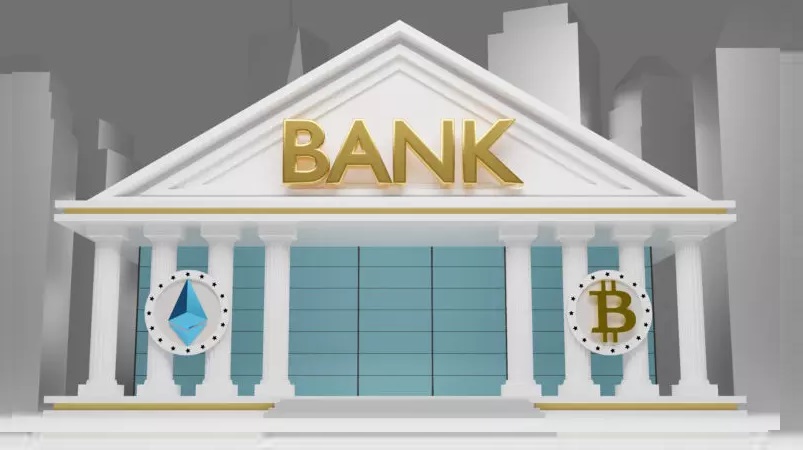
Banking and financial services are undergoing a rapid transformation in the digital age. The emergence of new technologies, such as artificial intelligence, blockchain, cloud computing, and biometrics, is reshaping the way people access and manage their money. These technologies are also creating new opportunities and challenges for banks and financial institutions, as they have to adapt to changing customer expectations, regulatory requirements, and competitive pressures.

Banking as a Platform

In this scenario, banks become platforms that offer a wide range of financial products and services from different providers, both traditional and non-traditional. Customers can access these products and services through a single interface, such as a mobile app or a website, and customize their own financial solutions according to their needs and preferences. Banks act as intermediaries that connect customers with providers, facilitate transactions, and provide value-added services, such as data analytics, personalization, and security.

This scenario may benefit customers by giving them more choice, convenience, and control over their finances. It may also benefit providers by allowing them to reach more customers and offer more tailored solutions. However, it may also pose some challenges and risks, such as:

How to ensure the quality, reliability, and trustworthiness of the products and services offered by different providers?

How to protect the privacy and security of the customer data that is shared among different providers?

How to comply with the different regulatory frameworks that may apply to different products and services in different jurisdictions?

How to maintain customer loyalty and differentiation in a crowded and competitive market?

Banking as a service

In this scenario, banks become service providers that offer specialized financial solutions to specific segments of customers or markets. Customers can access these solutions through various channels, such as online platforms, mobile apps, or physical branches. Banks focus on delivering high-quality customer experience, leveraging their expertise, reputation, and trust. They may also partner with other providers to complement their offerings or expand their reach.

This scenario may benefit customers by providing them with more personalized, relevant, and efficient financial solutions. It may also benefit providers by allowing them to leverage their core competencies, enhance their brand value, and create loyal customer relationships. However, it may also pose some challenges and risks, such as:

How to identify and serve the unmet or underserved needs of specific customer segments or markets?

How to innovate and differentiate their solutions from those of other providers in a fast-changing environment?

How to balance the trade-off between specialization and diversification in terms of product portfolio and revenue streams?

How to cope with the potential disruption or disintermediation from new entrants or alternative platforms?

Banking as an Ecosystem

In this scenario, banks become ecosystem orchestrators that create and manage networks of interconnected stakeholders, such as customers, providers, regulators, and other partners. Customers can access a variety of financial and non-financial products and services that are integrated and coordinated by the bank. Banks act as enablers that create value for all stakeholders by facilitating collaboration, innovation, and co-creation.

This scenario may benefit customers by providing them with a holistic, seamless, and engaging financial experience. It may also benefit providers by allowing them to access new markets, customers, and resources. However, it may also pose some challenges and risks, such as:

How to design and govern an effective and sustainable ecosystem that aligns the interests and incentives of all stakeholders?

How to manage the complexity and interdependency of the ecosystem in terms of technology, data, processes, and governance?

How to deal with the uncertainty and volatility of the ecosystem in terms of market dynamics, customer behavior, and regulatory changes?

How to balance the trade-off between openness and control in terms of ecosystem participation and governance?

The future of banking and financial services is not predetermined or predictable. It will depend on various factors, such as customer demand, technological innovation, regulatory environment, competitive landscape, social norms, etc. However, by exploring some of the possible scenarios based on current trends and innovations we can gain some insights into what might happen or what we might want to happen.

As customers we can use these insights to make informed decisions about our financial well-being. As providers we can use these insights to shape our strategies for creating value for our customers. As regulators we can use these insights to design policies that support innovation while protecting consumers. As society we can use these insights to foster dialogue about our collective vision for the future of banking.

Twitter Gears up Plan to Roll Out Notes, to Allow Users Publish Long-Form Content

0

Microblogging platform Twitter is working to roll out a new feature known as ‘Notes’, that will allow users to publish long-form content on the platform.

Unlike regular Tweets which are limited to 280 characters, Notes can see users publish a post of more than 10,000 words. Twitter CEO Elon Musk while responding to a user, disclosed that notes will allow users to post very long, complex articles with mixed media, further stating that users can publish a book if they want.

Notes introduction will see Twitter gradually move beyond its microblogging roots, as it will be like a constellation of expressions. It will include all the essential features of a blog post, which includes titles, header images, and embedded media. Unlike Tweets, it is possible to edit a Note after it has been published.

Notes are also;

  • Shareable: Notes are posted with a unique URL, so your reader can view them even if they don’t have Twitter or aren’t logged in.
  • Public: Notes are always public, even if the author has chosen to protect their tweets.
  • Editable: Notes are editable even after publication. If you do choose to edit your Note, an Edited tag will appear on the Note.

The new feature will address situations where it can be difficult to follow threads by allowing users to put all of the text into a Note. Notes will also address situations where users had to post screenshots of their Notes app to tweet a large portion of text.

Currently, only a select number of users can create Notes. The feature is being tested by users from Canada, Ghana, the United Kingdom, and the United States.

Notably, in a recent development, on Tuesday, Twitter user @Fausto Chou tweeted that Notes had been renamed to Articles, signaling a renewed development efforts on Twitter’s part.

Several Twitter users are already ecstatic about the platform’s plans to launch Notes which they suggest will give them more options to express their thoughts better.

@reynolds_01 said,

“Super excited for this. I feel like Twitter would be great to have actual Posts like on Reddit with a title. I would love to be able to search Twitter like I currently search Google (by adding “Reddit” to the end) and find relevant posts with comments.”

@stephenleary said,

“Sure I’ll publish a book if I can get some revenue for it”.

@BLSNWW said,

“I Love to see X evolving into a real everything app”.

@eva28060909 said,

“Publishing a book directly on the platform will be amazing Elon! it’s much better than a production and sales contract with publishers, the best part is that it doesn’t need a book signing and the hassle of touring to promote it. From when will this be possible?”

The timing of the launch of Notes comes as Twitter has been working to retain creators in the face of increased competition from Meta Threads and other rival platforms.

Analysts predict that the introduction of Notes could help retain other creators/ writers who want more distribution for articles that would otherwise be posted on their blogs or perhaps newsletters.

Also, the introduction of Twitter Notes may pose fierce competition to platforms like WordPress or Medium. If Twitter decides to integrate newsletters into Notes, the feature could potentially compete with popular platforms like Substack.

Musk recently launched, and soon-to-be-launched features on Twitter, is gradually actualizing his plan of turning the micro-blogging platform into an everything app.

Now Nigeria is Reviewing the N8,000 Cash Transfer to Poor Citizens, I Suggest An Idea for the N500 Billion

1

Very encouraging: The Nigerian government has ordered an immediate review of the plan to share N500 billion by N8,000 each to 12 million Nigerian households, as a palliative, to cushion the impact of subsidy removal. This is coming after the voices of the citizens were heard by the government.

I commend the government for this, and hope during the review they will pinpoint the root cause why many farmers need to be given food. Yes, our farmers generate famine and poverty, requiring the government to support them with handouts; a huge irony that in the land of farmers, farmers are hungry.

Why? It comes down to infrastructure and support systems. Let me take the case study of  my village, Ovim, and Isuikwuato local government area of Abia state, in general. Before our son, then-navy commander Ndubuisi Kanu, became a governor, the road connecting Ovim to the cities like Okigwe was not there. As a result of that, many local markets did not have access to larger markets. 

But when he built the road linking Ovim to Okigwe, he unlocked abundance in the village and environs. Magically, Oriendu Market became the most important market in the area, serving many communities because it has a decent road network. That road is like an economic liberation and till today, Admiral Kanu (RIP), remains an icon.

Then imagine if someone goes to Ovim and builds cold rooms which villagers could rent. So, when you come to the market to sell your farm produce, and you are unable to finish all the sales, that cold room can keep the produce fresh for the next market day, in four days. If that happens, the farmers will even become better because waste will drop.

To make that cold room work at scale, you need electricity. You get where I am going: can Nigeria use this N500 billion to provide coldroom-as-a-service in rural markets, supported by renewable energy startups? If that happens, the rural farmers will improve their incomes, and this N500 billion will become a pillar for the ascension of rural Nigeria. Of course, you can do a similar thing in many markets across our major cities.

Nigeria, do not share it; use it to build something productive!

Comment on Feed

Comment 1: Anytime I see people criticise the 8k cash transfer scheme, what comes to mind is “keynesian expenditure multiplier” but wetin I know.

My Response: I am not sure the  “keynesian expenditure multiplier”  works here. That works if you give that money so that local companies can produce to ensure people can keep their jobs, etc. It is likely this N8k will buy only imported products which means when you stop giving the handouts, everyone returns to ground zero.

Keynesian is designed to be a stimulant to be effective, and Nigeria has nothing to stimulant since we have no electricity, etc. If you give everyone in a village N8k, they may be fine for 4 days. But once that stops, you have not stimulated production in that village since the farmers have no electricity to build coldrooms, storage systems, etc.

Comment 1:Ndubuisi Ekekwe I taught keynesian expenditure multiplier was based on the marginal propensity to consume

My Response: You consume to help the production side. If not, when the funds end, you have not achieved anything. Under Buhari, we shared tons of money, scaling that consumerism, but with no connection to production. In the US, for example, they do it when companies are about to fold due to many factors (covid, recession, etc). By giving people money to spend, they save those companies since people buy their products. But it is not done in perpetuity. We have been sharing money for ages and that has not helped anything because it was never designed to drive and stimulate local production.

Nigerian Government Orders Review of ‘N8,000 Cash Transfer to Poor Nigerians’ Plan

0

President Bola Tinubu has ordered the review of his plan to disburse N500 billion by N8,000 each to 12 million Nigerian households as palliative to mitigate the impact of subsidy removal, following backlash from Nigerians.

Tinubu on Tuesday, ordered that the N8,000 conditional cash transfer
programme be reviewed immediately, according to a statement issued by Dele Alake Special Adviser to the President on Special Duties, Communications and Strategy.

The statement said the president directed immediate release of fertilizers and grains to approximately 50 million farmers and households respectively in all the 36 states and the FCT.

The earlier plan to disburse N8,000 to 12 million households, covering 60 million Nigerians was heavily criticized. Nigerians said, given the increasing prices of petrol – which has shot up the cost of living, that money is a mockery of their plights.

According to the statement, the move is said to be part of “the whole gamut of relief package”, which is designed by the federal government to ameliorate the effects of the subsidy removal.

The statement reads:
You will agree with me that it has become part of the culture of President Bola Ahmed Tinubu’s administration to constantly dialogue with Nigerians who voted him into office. The President covenanted with Nigerians that their welfare and security will be topmost in the Renewed Hope Agenda of his government.

In the last few days, the conventional and new media platforms have become awash with stories of the government intending to embark on conditional cash transfers to vulnerable households mostly affected by the painful but necessary decision to remove subsidy from petrol.

The story has been widely reported that the Federal Government is proposing to give 12 million households from the poorest of the poor N8,000 monthly for a period of six months as a government palliative to reduce the discomfort being experienced by Nigerians consequent upon subsidy removal.

A lot of ill-informed imputations have been read into the programme by not a few naysayers. The administration believes in the maxim that when there is prohibition, there must be provision. Since subsidy, the hydra-headed monster threatening to kill the economy has been stopped, the government has emplaced a broad spectrum of reliefs to bring help to Nigerians.

While it should be noted that the cash programme is not the only item in the whole gamut of relief package of President Bola Ahmed Tinubu, as a listening leader who has vowed to always put Nigerians at the heart of his policy and programme, the President has directed as follows:-

1. That the N8,000 conditional cash transfer programme envisaged to bring succor to most vulnerable households be reviewed immediately. This is in deference to the views expressed by Nigerians against it.

2. That the whole gamut of a palliative package of government be unveiled to Nigerians.

3. Immediate release of fertilizers and grains to approximately 50 million farmers and households respectively in all the 36 states and the FCT.

The President further assures Nigerians that the N500 billion approved by parliament to cushion the pain occasioned by the end of subsidy regime will be judiciously utilized. The beneficiaries of the reliefs shall be Nigerians, irrespective of their ethnic, religious or political affiliation.

President Bola Tinubu has promised to always prioritize the well-being of Nigerians, and he is irrevocably committed to the vow. A number of decisions taken so far by this Administration have buttressed this stance.

You will recall that the president took a similar decision after listening to complaints from the business community/stakeholders about burdensome taxes, particularly multiplicity of taxes they are made to experience. This warranted the signing of four (4) Executive Orders cancelling some classes of taxes while suspending the implementation dates of others.

In addition, the president has also set up a Tax Reform/Fiscal Policy Committee to bring up recommendations that will engender a wholesome fiscal environment for the country and remove anti-business barriers.

I wish to assure Nigerians that President Tinubu will continue to be a listening leader whose ears will not be dull to the views expressed by the citizenry. The President believes government exists to cater for the interest of the people, and he has demonstrated this so clearly.

Thank you all.

Dele Alake
Special Adviser to the President
(Special Duties, Communications and Strategy)
July 18, 2023