DD
MM
YYYY

PAGES

DD
MM
YYYY

spot_img

PAGES

Home Blog Page 4008

Cryptos Ready to Soar – Avalanche, Stellar, and Scorpion Casino Token

0

This week has been a reminder, if we ever needed one, that the world of cryptocurrencies is always filled with surprises and opportunities. As we look ahead to the coming months, there are specific cryptocurrencies that show significant promise and potential for a soaring future. In this article, we will delve into three exciting digital assets that are ready to take flight in the crypto market: Avalanche, Stellar, and Scorpion Casino Token.

1. Avalanche (AVAX): The Smart Contracts Platform

Avalanche is by now a well-established cryptocurrency, with a market cap of more than $3.5 billion. Known for its robust platform for creating custom blockchain networks and applications, Avalanche offers high-speed, low-cost transactions.

Its approach to consensus mechanisms and interoperability between different blockchains positions it as a prominent contender in the decentralized finance (DeFi) and decentralized application (dApp) sectors. AVAX’s unique architecture and adaptability could drive its rise in 2024.

2. Stellar (XLM): The Cross-Border Solution

Stellar, with its XLM token, is designed to facilitate cross-border transactions and promote financial inclusion. It aims to connect financial institutions, businesses, and individuals, enabling secure and efficient international money transfers.

Stellar’s partnerships with notable organizations have increased its visibility and credibility within the crypto industry. As the demand for cross-border payments and remittances continues to grow, Stellar is well-positioned for significant expansion, sitting just outside of the top 20 cryptocurrencies at the time of writing.

3. Scorpion Casino Token (SCORP): Gaming and Passive Income

Scorpion Casino Token (SCORP) is a unique cryptocurrency that aims to create a game-changing way of receiving passive income, as well as a comprehensive casino experience. SCORP offers a broader value proposition than almost all of its presale peers, as it serves as the key to an online gaming platform with over 200 casino games, 160 live events, and a plethora of betting opportunities across 35+ sports.

The recently announced upgrade to Scorpion Casino has made SCORP an even more exciting asset for potential investors.

Key Features of SCORP’s Upgraded Casino Platform:

  • Over 200 casino games
  • Over 160 live events
  • Over 35 sports on which to bet
  • Over 30,000 betting opportunities per month
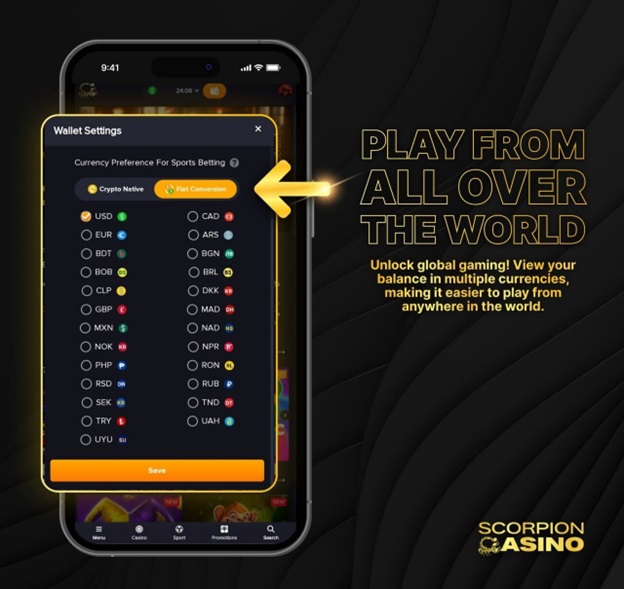
  • Over 20 currencies accepted, including BNB, BTC, ETH, SOL, USDT, and USDC
  • Auto currency conversion ensures global accessibility
  • Fiat support, including GBP, AUD, CNY, RUB, JPY, EUR, and other local currencies, promoting worldwide participation
  • A new presale stage this Sunday!
  • 20% bonus tokens with the code SC20

These three promising digital assets, Avalanche, Stellar, and Scorpion Casino Token, stand out due to their unique use cases and capabilities. It’s important to remember that cryptocurrency investments carry risks and should be approached with caution. Always conduct thorough research and consider your investment goals and risk tolerance. Diversifying your crypto portfolio can also be a wise strategy to mitigate potential volatility in this ever-evolving market. 

Find out more about SCORP:

Presale: https://presale.scorpion.casino/

Twitter: https://twitter.com/ScorpionCasino

Telegram: https://t.me/scorpioncasino_official

Nigeria’s ICT Sector Remains The Only Dominant Sector With A Fast Growth of 8.6% – PwC Report

0

In a recent PWC report, Nigeria’s ICT sector remains the only dominant sector with a fast growth of 8.6%.

Amid the challenging economic landscape in the country due to macroeconomic headwinds, inflation, FX issues, and several others, the growth in the sector is attributed to the increase in consumption of data services and subscriber numbers.

According to the new Gross Domestic Product (GDP) report by the National Bureau of Statistics (NBS), the sector contributed 19.54 percent in the second quarter (Q2) higher than 18.44 percent in the same quarter of 2022.

In August this year, the Nigerian Communications Commission (NCC) revealed that telecommunications subscribers in Nigeria consumed a total of 518,381.89 terabytes of data in 2022. On a year-on-year basis, the growth sector rate increased by 10.72 percent in 2022, higher than the 7.28 reported in 2021.

Industry operators say the growth can be attributed to the increasing number of internet service subscribers, mobile service subscribers, and the growth in broadband penetration.

Executive secretary of the Association of Telecommunication Companies of Nigeria (ATCON) said the growth in the ICT sector is a result of the number of digital literacy in the economy, noting that many Nigerians have been empowered with digital knowledge, especially on broadband penetration.

The industry has also increased its service in the rural area, this means that technology is gradually advancing to the low and untented environment in the economy”, he added.

Many factors are responsible for the growth of the ICT sector to Nigerian GDP, one of the major reasons is the steady awareness to move all services rendered by both the government and private sector online, this, however, leads to an increased usage of more data by the organization.

With the Central Bank of Nigeria on the quest to promote a cashless policy economy, more individuals and organisations are gradually embracing the use of USSD, mobile, internet banking, and many others, this also tends to improve the ICT sector.

Therefore, in order to meet the target set by the federal government to increase the contribution of the ICT sector to GDP via a five-year plan, all hands must be on deck where the government priorities of what is necessary to achieve the set goal by the end of the year 2025.

While the ICT sector is reported as one of the fastest-growing dominant sectors in Nigeria, several other sectors also showed great resilience and growth.

The financial and insurance sector recorded a  growth rate of 26.8%, which is attributed to the rise in interest income, digital transactions, and forex revaluation gains.

Also, the transportation and storage sector in Nigeria experienced a significant contraction primarily due to the Federal Government’s removal of the PMS subsidy. This decision resulted in higher PMS prices, prompting many private car owners to opt for public transportation especially those with lower income to reduce their travel.

As a result, transportation fares for both local and inter-state journeys have risen, deterring many from commuting and impacting their personal and business activities.

Germany Explores Limiting Migrant Remittances to Deter Immigration

0

As Germany grapples with regional election defeats and a rightward shift in political discourse, the government is exploring unconventional approaches to deter irregular migration, reports DW.

The latest proposal comes from Christian Lindner, leader of the Free Democratic Party (FDP), which has seen a significant drop in voter support. Lindner’s proposal involves investigating the technical and legal feasibility of preventing asylum-seekers from sending benefits received in Germany back to their home countries.

This move is being considered at a time when many developing nations rely on diaspora remittances to stabilize their foreign exchange markets. The proposal is expected to serve as a deterrent for potential migrants.

The influx of individuals from developing countries seeking opportunities in developed nations has been further compounded by recent conflicts in Ukraine and Afghanistan, leading to a surge in the number of refugees seeking asylum.

While the situation presents a challenge for countries like Germany, it inadvertently offers an opportunity for financial inflow to developing nations.

Remittances play a crucial role in global financial flows, surpassing development assistance from donor states. World Bank statistics indicate that remittances contribute significantly to poverty reduction, improved nutrition, and enhanced education opportunities for children in disadvantaged households.

In developing countries, families often pool resources to send an individual abroad with the hope that they will earn enough to send back home and alleviate their poverty. This practice has proven effective in many cases. For instance, in 2022, the 20.13 billion U.S. dollars in personal remittances received in Nigeria amounted to nearly half of the nation’s earnings from oil.

Amidst this backdrop, some German politicians are advocating for providing asylum-seeker benefits-in-kind through payment cards, rather than cash. Joachim Stamp, the German government’s commissioner for migration agreements, supports this shift, as do Chancellor Olaf Scholz and all of Germany’s state leaders.

However, skepticism surrounds the effectiveness of discontinuing remittances in Germany as a means to deter immigration.

“You can think of migration as a portfolio investment decision,” said Tobias Heidland, an economics professor at Kiel University. “Migration is for many people in the world the most profitable investment they can make. That’s why they take substantial risks.”

Migration experts question whether this would significantly impact the money sent home, given the relatively low benefits received by asylum-seekers.

Matthias Lücke, a migration expert at the Kiel Institute for the World Economy, told DW that the meager asylum-seeker benefits are unlikely to serve as a major pull factor for migration. He also raised moral concerns about inhibiting individuals from supporting those in need.

“I don’t think this has been thought through yet. When people come here they want to work properly and support their families, but the idea that the little asylum-seeker benefit is some kind of ‘pull factor’ — I don’t think that’s credible.

“I think it’s a very strange definition of freedom, to say: ‘Here’s a poor person, and they want to give money to even poorer people, and I want to forbid that,’ — I can’t understand how that is supposed to work legally or how it makes sense politically,” he said.

Heidland suggested that even if such a policy were to slow remittances, it could come at the cost of hindering integration efforts.

“I don’t think this would make a big difference. I think it’s mostly going to be a policy that has an impact as a signal to the population here that something has to be done,” he said.

While it remains uncertain if the German government will pursue this idea, its implementation, if undertaken, could set a precedent with potential ramifications for FX inflows in numerous countries.

Musk At Risk of Defaulting on Twitter Acquisition Loan, Banks Likely to Lose $2bn

0

Elon Musk is reportedly at risk of defaulting on the money borrowed to fund his acquisition of Twitter, now rebranded as “X.”

The acquisition, finalized in October for a staggering $44 billion, was partly financed with a $13 billion loan from major financial institutions, including Morgan Stanley, Bank of America, and Barclays.

These loans were secured by a portion of Musk’s Tesla stock.

In the year since Musk assumed ownership of X, the platform has encountered a series of challenges. The changes he brought to the platform have exacerbated revenue problems, resulting in a soured relationship between X and advertisers. Advertisers, unhappy with content moderation and other changes following Musk’s takeover, have departed in significant numbers and have yet to return. The marketing consultancy firm Ebiquity reported that only two of the world’s top 100 advertisers chose to advertise on X in the previous month.

The world’s wealthiest person has made several attempts to recoup his investment, including monetizing certain features of X, with a particular focus on verification badges. He has also strived to transform the platform into a financial hub, part of his broader “everything app” concept. Despite these efforts, the monetized features have not yielded the expected revenue, and user adoption has been slow.

Moreover, concerns have arisen about X’s user growth, which reports suggest has been declining, contrary to claims made by Musk and CEO Linda Yaccarino. App downloads fell by nearly 30% between July and September, according to data from Apptopia.

These challenges have led to concerns that Musk may default on his loan payments, as reported by Insider. Fidelity, an asset manager holding a stake in the company, has drastically reduced its valuation of Twitter, marking it down by two-thirds, reducing the company’s estimated worth to approximately $15 billion.

The Wall Street Journal has reported that Musk’s lenders are taking steps to unload the debt. Bankers involved in the transaction have suggested that X could receive a junk bond rating, indicating a heightened risk of loan default. This assessment arises from concerns regarding Musk’s unconventional management style and a sluggish advertising market.

Insiders familiar with the matter informed the Journal that the banks anticipate absorbing a 15% loss, totaling $2 billion. For major stakeholders like Morgan Stanley and Bank of America, this would translate into hundreds of millions in losses.

While Musk has acknowledged that it may take time for his changes to produce financial results, the burden of X’s revenue shortfalls is likely to be shouldered by the lending banks.

Transitional Legal Provisions On Land In Urban Areas of Nigeria

0

This article concerns the provisions of Nigerian law on land classified as land being the subject of statutory rights of ownership before the coming into effect of the Land Use Act. 

What are the transitional provisions om land in urban areas?

– This concerns land vested in  any person immediately before the commencement of the Land Use Act:-

1). Where the land is developed, it shall continue to be held by the person in whom it was vested immediately before the commencement of the Land Use Act as if the holder of the land was the holder of the land was the holder of a statutory right of occupancy issued by the relevant state governor.

2).In respect of land to which the paragraph above applies, there shall be issued by the governor on application to him in the prescribed form, a certificate of occupancy if the governor is satisfied that the land was vested in that person immediately before the Land Use Act.

3. Where the land to which the relevant sections of the Land Use Act applies was subject to any mortgage, encumbrance or valid interest in law, such land shall continue to be so subject and the issued certificate of occupancy shall indicate that the land is so subject unless the continued operation of the encumbrance or interest would in the opinion of the governor be inconsistent with the provisions or general intention of the Land Use Act.

What are the transitional provisions of law concerning where the subject land is undeveloped?

a). One (1) plot of the land not exceeding half of a hectare in area shall, subject to the Land Use Act, continue to be held by the person in whom the land was so vested as if the holder of the land was the holder of a statutory right of occupancy granted by the governor in respect of the plot or portion.

b). All rights formerly vested in the holder in respect of the excess of the land shall be extinguished on the commencement of the Land Use Act and the excess of the land shall be taken over by the governor and administered as provided by the act.

– Sub-paragraph (a) of the preceding paragraph shall not apply in the case of any person who was on the commencement of the act also the holder of any undeveloped land elsewhere in any urban area in the state & in respect of such a person all his holdings of undeveloped land in any urban area in the state shall be considered together and out of the undeveloped land so considered together :-

a) One plot or portion not exceeding half of 1 hectare shall continue to be held by such a person as if a right of occupancy had been granted to him by the governor in respect of that plot or portion.

b). The remainder of the land so considered together in excess of half of one hectare shall be taken over by the governor and administered in accordance with the Land Use Act and the rights formerly vested in the holder in respect of such land shall be extinguished.