DD
MM
YYYY

PAGES

DD
MM
YYYY

spot_img

PAGES

Home Blog Page 402

Top 10% Wealthiest Americans Add $5tn in Wealth as Stock Market Surge Deepens Global Wealth Divide

0

The wealthiest slice of Americans added another $5 trillion to their balance sheets in the second quarter of 2025, underscoring how much the current market rally is concentrating gains at the very top — and highlighting a sharp contrast with wealth dynamics elsewhere in the world.

New Federal Reserve data shows that the top 10% — those worth more than $2 million — now hold a record $113 trillion in wealth, up from $108 trillion in the previous quarter. It caps three years of uninterrupted growth, with the group amassing more than $40 trillion since 2020, a period marked by pandemic volatility, soaring equities, and tech-driven market momentum.

All wealth groups have posted increases over the past year, with the bottom half of Americans seeing their net worth rise 6%. Yet the acceleration has been sharpest for the wealthiest. The top 1% added $4 trillion in a year, lifting their combined fortunes to a record $52 trillion. The ultra-elite 0.1% — those worth at least $46 million — grew their wealth 10% over the year, nearly doubling their holdings since the pandemic to more than $23 trillion.

Despite this surge, the share of total wealth distribution has not shifted dramatically. The top 1% controlled 29% of household wealth in the second quarter, compared with 28% in 2000. The top 10% now hold 67% of all household wealth, leaving 33% for the bottom 90%.

The driving force has been equities. The value of corporate stocks and mutual funds held by the top 10% jumped from $39 trillion to $44 trillion over the past year. That group controls more than 87% of all such financial assets, showing how market gains are funneled almost exclusively upward.

Meanwhile, the number of ultra-rich Americans continues to expand. A separate report from Altrata shows the U.S. now counts 208,090 individuals worth at least $30 million, up 6.5% in just six months following a 21% jump last year, according to CNBC. That group alone represents 41% of the world’s ultra-wealthy.

This concentration of wealth has created what economists describe as a “K-shaped economy,” in which the top prospers while the lower rungs struggle with stagnant wages and higher living costs. Consumers in the top 10% of the income distribution now account for nearly half of all U.S. spending — 49.2% in the second quarter, the highest share since records began in 1989, according to Moody’s Analytics chief economist Mark Zandi.

So far, headline economic measures such as GDP and aggregate consumption have held up, powered by high-income spending. But economists warn of risks embedded in such dependence.

“The economy is being powered in big part by the spending of the extraordinarily well-to-do, who are cheered by the surging value of their stock portfolios,” Zandi said. “If the richly (over) valued stock market were to stumble, for whatever reason, and the well-to-do see more red on their stock tickers than green, they will quickly turn more cautious in their spending, posing a serious threat to the already fragile economy.”

Global Comparisons

The U.S. trajectory stands out globally. In Europe, wealth concentration is also rising, but more gradually. According to Credit Suisse’s Global Wealth Report, the top 1% in Europe hold about 22% of household wealth — significantly lower than the 29% in the U.S. The difference reflects Europe’s heavier reliance on real estate and pensions in household wealth, as opposed to America’s deep equity markets, which disproportionately benefit investors at the very top.

Asia tells another story. China, now home to the world’s second-largest population of ultra-high-net-worth individuals, has seen wealth gains tempered by a sluggish property market and slower stock market growth. While the U.S. saw its ultra-wealthy population climb 6.5% in just six months, Altrata data shows China’s grew by less than 3% in the same period, reflecting Beijing’s crackdown on tech giants and ongoing capital controls.

In Japan, wealth inequality has been less severe, with decades of low interest rates keeping asset bubbles in check. Yet the weakening yen has eroded international purchasing power for wealthy Japanese households — the opposite of the dollar-driven wealth surge in the U.S.

On a global scale, the U.S. dominates the ultra-wealthy landscape. With 208,090 individuals worth at least $30 million, America accounts for 41% of the world’s total. Europe as a whole hosts about 25%, while Asia holds around 29%, according to Altrata. That concentration underscores the centrality of Wall Street, the tech sector, and dollar-denominated assets in fueling wealth creation.

But the U.S. model also carries greater systemic risk. While Europe’s wealth is spread more evenly between financial assets, housing, and state pensions, America’s heavy reliance on equities to drive wealth means that a downturn on Wall Street would reverberate more sharply through its consumer economy.
Analysts Eye Blazpay ($BLAZ) as the Best Crypto Presale Poised for Explosive Growth

0
Blazpay - best crypto presale

The market for the best crypto presale opportunities is becoming increasingly competitive, but Blazpay ($BLAZ) is carving out a clear niche for businesses and developers alike. Through its B2B API and SDK, companies can seamlessly embed multi-chain DeFi functionality into any application, from token swaps and staking to cross-chain transfers and NFT management. With support for 20+ blockchains and AI-powered automation, Blazpay provides a ready-to-use infrastructure that reduces complexity while accelerating adoption.

Analysts tracking enterprise blockchain trends highlight Blazpay’s scalable architecture, real-world utility, and integration-ready approach as key drivers for growth, positioning it as one of the most compelling and high-potential best crypto presale opportunities in 2025. Early adoption of these B2B tools allows businesses to unlock engagement, optimize operations, and tap into new revenue streams while leveraging the credibility of a live, fully functional platform.

B2B API & SDK: Integrating Multi-Chain DeFi Into Any Application

Blazpay is not just building a platform for individual users — it is also empowering businesses and developers to leverage decentralized finance through its robust B2B API and SDK. These tools are designed to seamlessly embed Blazpay’s multi-chain DeFi functionality directly into external applications, enabling companies to offer advanced blockchain services without building infrastructure from scratch.

Key Advantages for Businesses:

  1. Seamless Multi-Chain Integration
     Blazpay’s API allows apps to interact with over 20+ blockchains natively, enabling instant token swaps, staking, and bridging across multiple networks. Businesses can provide their users with a unified DeFi experience without the technical overhead of connecting to each blockchain individually.
  2. Customizable Workflows
     Developers can tailor the SDK to their platform’s needs, creating bespoke DeFi experiences such as automated yield strategies, wallet management, or NFT operations. This flexibility ensures that applications can enhance user engagement and retention while maintaining full control over the interface and user journey.

Blazpay - best crypto presale

3. AI-Enhanced Automation
 Blazpay’s B2B tools integrate with BlazAI, the platform’s AI assistant, allowing automated actions such as optimal staking, portfolio rebalancing, and cost-efficient cross-chain transfers. This ensures that businesses can offer smart, adaptive DeFi features to their users with minimal manual intervention.

4. Scalable Infrastructure
 Designed for enterprises, the API and SDK handle high transaction volumes efficiently, with secure authentication, robust error handling, and real-time monitoring. Companies can scale their DeFi offerings confidently, knowing that Blazpay’s infrastructure supports both growth and security requirements.

5. Revenue & Token Utility Integration
 By embedding Blazpay’s functionality, businesses can leverage $BLAZ for transaction fees, rewards, or loyalty programs within their apps, driving both engagement and token utility. This transforms $BLAZ from a standalone asset into a functional component of real-world applications, reinforcing its demand and value.

Real-World Applications:

  • Fintech Platforms: Integrate staking, swaps, and cross-chain transfers into existing wallets or banking apps.
  • NFT Marketplaces: Enable direct token purchases, staking rewards, and multi-chain NFT minting without leaving the platform.
  • Gaming & Loyalty Apps: Embed DeFi rewards, BlazPoints, or in-game token mechanics powered by Blazpay’s multi-chain functionality.

best crypto presale

With Blazpay’s B2B API and SDK, businesses don’t just adopt blockchain technology they supercharge their offerings with fully functional, AI-driven, and multi-chain-ready DeFi capabilities. This positions Blazpay as a foundational layer for the next generation of crypto-powered applications, creating value not just for individual users but for entire ecosystems.

How to Buy in Phase 1 of the Blazpay Presale

Joining Blazpay’s presale in Phase 1 ensures access to the lowest entry price of $0.006 before automatic increases begin. Here’s how to get started:

  1. Visit the official Blazpay website.
  2. Connect your wallet (MetaMask, Trust Wallet, or another supported option).
  3. Select the number of $BLAZ tokens you want to purchase.
  4. Confirm your transaction to lock in Phase 1 pricing.

Entering early ensures the maximum upside potential as token prices rise in later phases.

Price Prediction: How $1,000 Could Turn Into $1 Million

Blazpay’s presale kicks off at just $0.006 per token, offering early participants a compelling entry point with significant upside potential. Even modest price movements translate into exponential returns:

  • $0.06 – a 10× gain (+900%)
  • $0.30 – a 50× gain (+4,900%)
  • $0.60 – a 100× gain (+9,900%)
  • $1.00 – nearly 166× gain (+16,500%)

Put simply, a $1,000 allocation at $0.006 could grow to $166,000 if the token reaches $1.00 and potentially much higher as adoption and platform activity increase.

From a market cap perspective, with 500 million tokens in circulation, a $0.50 price would imply a $250 million valuation, while $1.00 corresponds to $500 million — benchmarks already seen in many successful mid-tier crypto projects.

Blazpay’s phase-based presale structure, with roughly 25% price increases per stage, ensures that early participants in Phase 1 benefit from the maximum potential upside before subsequent rounds push prices higher.

Conclusion

Blazpay is proving that not all presales are created equal. At just $0.006, with multi-chain functionality, AI-powered accessibility, and community-driven rewards, it blends innovation with growth potential. For anyone seeking the best crypto presales, Blazpay stands out as a project with realistic 100x potential and long-term sustainability.

Secure your Blazpay ($BLAZ) tokens today before the next phase increase. Join the community and be part of one of the best crypto presales shaping the future of DeFi.

Blazpay - best crypto presale

Join the Blazpay Community

Website – https://blazpay.com

Twitter – https://x.com/blazpaylabs

Telegram – https://t.me/blazpay

FAQs for the Best Crypto Presale

FAQ 1: Why is Blazpay considered one of the best crypto presales?
 Blazpay combines AI-powered automation, 100+ blockchain integrations, and gamified rewards, making it more than just a token launch — it’s a functional DeFi ecosystem from the start.

FAQ 2: What is the Blazpay presale entry price?
 Phase 1 of the Blazpay presale starts at $0.006 per token, the lowest price before automatic increases of ~15% in later phases.

FAQ 3: What is the potential return on a $1,000 Blazpay investment?
 At $0.006, a $1,000 entry buys ~166,000 tokens. If $BLAZ reaches $1, the investment could be worth ~$166,000, with even higher upside at $5 or $10.

FAQ 4: How does Blazpay compare to other new presales?
 Unlike many presales that launch without a working product, Blazpay already has transaction history, 1M+ active users, and a functional multi-chain hub, making it a stronger contender.

FAQ 5: How do I join the Blazpay presale?
 Go to Blazpay.com, connect your wallet (MetaMask, Trust Wallet, or WalletConnect), choose your allocation, and confirm your purchase to lock in Phase 1 pricing.

Bezos Warns of AI ‘Industrial Bubble’ but Predicts Technology Will Transform Society and Jobs

0

At Italian Tech Week in Turin, Amazon founder Jeff Bezos described artificial intelligence as being in the middle of an “industrial bubble,” but stressed that the underlying technology is “real” and will ultimately bring profound benefits to society — including reshaping the global workforce.

Bezos compared today’s AI boom to historic speculative frenzies, noting that bubbles form when stock prices become “disconnected from the fundamentals” of a business, according to CNBC.

“The second thing that happens is that people get very excited like they are today about artificial intelligence,” Bezos said. During such periods, he explained, both “the good ideas and the bad ideas” attract funding, making it difficult for investors to separate long-term winners from failures.

He gave the example of a six-person startup receiving billions of dollars in funding, calling it “very unusual behavior,” while hinting that such activity illustrates the overheated nature of the current AI race.

Yet unlike financial bubbles that destroy wealth when they burst, Bezos argued that “industrial bubbles” often leave behind enduring breakthroughs. He cited the biotech and pharmaceutical boom of the 1990s, which, despite wiping out many companies, produced life-saving drugs.

“When the dust settles and you see who are the winners, societies benefit from those inventions. That is what is going to happen here too,” he said. “AI is real, and it is going to change every industry.”

Bezos’s remarks came in response to a question from Exor CEO John Elkann about whether today’s AI surge shows signs of overheating. His view aligns with warnings from other global business leaders that the AI trade is at risk of becoming a classic speculative mania.

In August, OpenAI CEO Sam Altman reportedly described the AI market as a bubble. Goldman Sachs CEO David Solomon also weighed in at the Turin event, warning that hype-fueled optimism often leads investors to “diminish the things you should be skeptical about that can go wrong.” He added: “There will be a reset, there will be a check at some point, there will be a drawdown. The extent of that will depend on how long this [bull run] goes.”

Karim Moussalem, chief investment officer of equities at Selwood Asset Management, recently compared today’s frenzy to “one of the great speculative manias of market history.”

The debate reflects a growing split among technologists and financiers: while many acknowledge the risks of runaway valuations, few doubt the transformative potential of AI. In fact, the current moment echoes the late 1990s dotcom boom. Then, as now, vast sums of money poured into untested startups. The dotcom crash in 2000 wiped out trillions in market value, but it also paved the way for long-lasting giants like Amazon, Google, and eBay. By drawing parallels to that period, Bezos suggested that even if today’s AI bubble bursts, the long-term outcome could be the same — a handful of resilient companies emerging to define the future of global technology.

But beyond valuations, AI’s disruptive power is increasingly being discussed in terms of jobs. Industry leaders, economists, and think tanks warn that the very industries Bezos said AI will transform could also face waves of displacement. Goldman Sachs, for instance, has estimated that as many as 300 million full-time jobs globally could be affected, with roles in administration, customer support, and clerical work among the most vulnerable.

Tech executives have echoed those concerns. Tesla and SpaceX CEO Elon Musk has repeatedly warned that AI could make most human jobs obsolete in the long term, with society needing to prepare for models such as a universal basic income. IBM’s CEO Arvind Krishna has already announced plans to slow or freeze hiring in roles that could be replaced by AI, particularly in back-office functions.

At the same time, other experts argue that AI could generate entirely new types of employment. The World Economic Forum has predicted that while 83 million jobs could be displaced by 2027, around 69 million new ones may emerge in fields like data science, AI governance, robotics, and digital education.

This duality — a looming wave of job displacement alongside the creation of new roles — mirrors the paradox of previous industrial revolutions. As the steam engine, electricity, and the internet disrupted old systems, they simultaneously opened new frontiers for work. Bezos’s assertion that “AI is real, and it is going to change every industry” fits squarely into this narrative, with both risk and opportunity intertwined.

Why XRP Holders Are Fleeing to Digitap ($TAP) for the Banking Bull Run

0

Digitap ($TAP) is gaining lots of traction with investors who are hunting for the best crypto to buy now, as Ripple’s (XRP) impressive year-long bull run that brought in over 340% growth appears to be at its end.

Digitap has emerged as the top crypto presale in 2025 thanks to the massive impact the project is expected to have on the cross-border payments industry, which is estimated to be valued at over $250 trillion by 2027.

Why XRP holders No Longer Believe it’s the Best Crypto to Buy Now

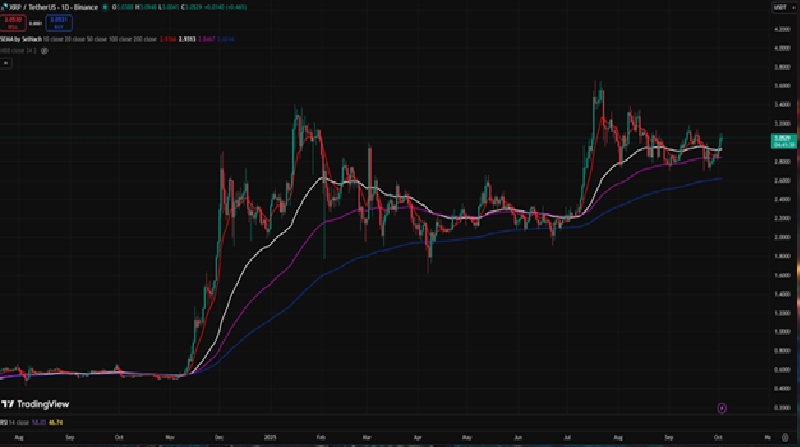
XRP investors are now considering alternative options, as short-term price charts indicate a descending channel that many interpret as bearish. The project’s recent struggles began when it set a new yearly high at $3.55 and encountered stiff resistance.

Support was found at the $2.70 mark, but prices have failed to reach the $3.55 resistance level since. The fact that over 94% of XRP holders are in the profits hasn’t helped, as an increasing number of investors take profits before prices come down any further.

Despite XRP’s recent price struggles, there have been some positive signs, such as whales accumulating sizable holdings and technical metrics, including its rising long-term moving averages.

Still, a growing number of investors are unwilling to sit through the volatile consolidation and are eyeing more attractive altcoins to buy, like Digitap. $TAP tokens are currently selling for $0.0125 as their presale kicks off, but prices will increase to $0.0159 when they move into their second stage, positioning investors for 27% gains in the next few weeks. XRP is unlikely to enjoy similar levels of growth, making Digitap a more attractive bet.

Best Crypto Presales 2025: How Digitap Secured the Spotlight

Digitap aims to play a substantial role in the cross-border payment space. Unlike most new entrants into the cryptocurrency space, the project comes with fully functional products that are already making a difference.

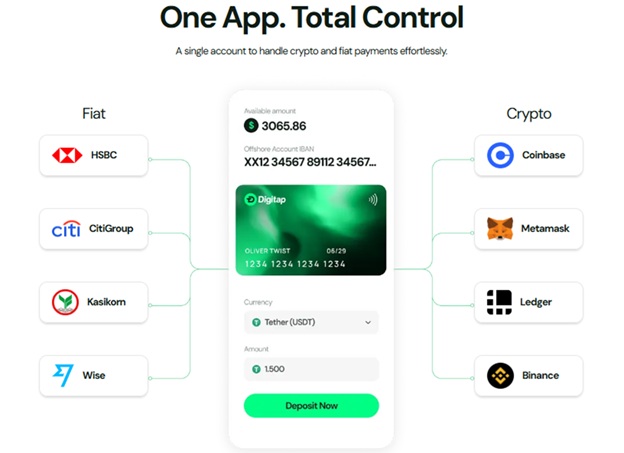
One of the most attractive features that Digitap currently offers is its omni-banking app, which comes with a Visa card that seamlessly converts cryptocurrencies into fiat when swiped. The app also supports Apple Pay and Google Pay, allowing users to instantly create unlimited virtual cards so they can shop online with confidence.

Digitap’s ecosystem is built on solid tokenomics. The token supply is 2 billion, with various burn mechanisms to reduce the supply and push prices upward. Unlike most ICOs that require investors to hold onto their tokens until they are listed on exchanges, Digitap allows investors to stake their holdings and earn up to 124% APR.

With numerous attractive features to offer users and investors, some analysts have declared that $TAP is the top altcoin to buy right now, with projections expecting prices to rise by as much as 100 times once listed on exchanges. The sky is the limit regarding how high $TAP prices can go once launched. A $TAP token that costs $0.0125 today could be worth several dollars in the next couple of years.

The Digitap Allure: A Crypto Presale with Real Utility and a Live Product

Digitap is one of the most unique cryptocurrency projects ever launched. The allure of its presale lies in the incredible product it already offers users: a banking app that enables them to handle all their traditional and cryptocurrency banking needs, and more.

It directly addresses problems facing the traditional banking system, like high remittance costs for cross-border payments. It also provides a solution to one of the most significant problems that has hindered the mainstream adoption of cryptocurrencies: the complexity of the landscape. That was evident when Alex Choi, the founder of Fortune Collective, lost over $1 million worth of ETH after accidentally signing a malicious contract.

Gas fees, slow confirmation times, and other complexities have hindered the adoption of cryptocurrencies, as a significant fraction of the global population is unwilling to deal with the extra hassle that comes with cryptos. Digitap brings the worlds of traditional banking and cryptocurrencies together, allowing users to buy, sell, transfer, or spend cryptocurrencies without needing to understand concepts like gas fees. This positions Digitap as a leading example of crypto presales with real utility.

Digitap Dubbed Best New Cryptocurrency to Invest in

The increasing number of investors cashing out their XRP holdings and investing in Digitap is a sign of the enthusiasm in the cryptocurrency space for products that make it easier for everyday people to manage cryptocurrencies. XRP still has considerable long-term growth potential, but it is unlikely to keep pace with Digitap.


Discover how Digitap is unifying cash and crypto by checking out their project here:

Presale: https://presale.digitap.app

Website: https://digitap.app

Social: https://linktr.ee/digitap.app