DD
MM
YYYY

PAGES

DD
MM
YYYY

spot_img

PAGES

Home Blog Page 4028

How The Law Protects a Content Creator on Social Media

0

The number one problem that content creators and creatives face on social media and around the internet space is copyright infringement and intellectual property theft, which happens in the form of other people posting, and reposting their content on their pages or blog without crediting the original creators of the content.

I do often see some social media skit makers and content creators complain bitterly about how big blogs and pages post and repost their contents without tagging them or giving them post credit as the creators of the work.

Creators in this instance sometimes do feel that they are helpless and there is nothing they can legally do about it but contrary to their blissful ignorance, someone is not permitted to post or repost your work on their pages or blogs without tagging you or crediting you, the original owner creator of the work; any blog or pages that does that have infringed on the copyright of the original creator of the work and if the blog or page passes off the content as if it’s theirs, then that has amounted to intellectual property or copyright theft which is actionable in law.

A skit maker or a social media content creator owns the copyright to his content or skits and it is expected and as a matter of law that any other person who intends post or to repost that skit or that content must seek express permission from the creator of the work and if that content gets posted or reposted, the “reposter” must give credit by tagging or mentioning the original creator of the work if not it will be held that the reposter has infringed on the rights of the creator of the work and the owner creator can commence an action for copyright infringement or theft.

As an original owner or creator of content; be it video content, picture content, music or written (article) content, you own the copyright to that content and you are allowed to share or refuse to share that copyright you possess over your content and you have the legal right to ask whomsoever repost your content on their platforms without your express permission to pull it down and failure for them to do that will become actionable.

You only get to have the legal right to post or repost someone’s content when they have given you express permission or when you have acquired the either exclusive or non-exclusive right to the content; through that, you become a co-owner, joint owner or exclusive owner of the work.

The law deems it fit to protect content creators and creatives and the law classified whatever content they birth out as their intellectual properties and it enjoys special recognition and protection under the law known as intellectual property protection. Therefore, the least you can do for the owner of the content you are using to entertain your followers or bring traffic to your page is to tag, mention or give credit to the owner if not the owner can sue you for theft or infringement on his copyright.

In summary, posting someone’s content on Instagram, Facebook, Tiktok, Twitter, blog or whatever other platform without tagging or giving credit to the creator of the work, be it picture or video amounts to copyright infringement and in some cases when you pass it off as if you are the original owner of the work it becomes theft and the rightful owner can commence an action against you.

Expert Predicts Apple Will Soon Eclipse Windows In the Enterprise Market

0

The end of Windows topping the enterprise market is near, and Apple is waxing strong to take over, Dean Hager, the outgoing chief executive officer of Apple’s device management firm, Jamf, was reported to have said.

In a correspondence with the ComputerWorld, Dean Hager, reportedly expressed his views that Window’s age-long dominance at the enterprise platform is increasingly declining, and this cast no spell on Apple which is fast developing to take over the market.

His words: “No matter which way you look at it, Windows is a declining ecosystem and has been for 20 years, and that’s not a knock at Windows, it’s a statement of fact.

“In 10 years’ time, Windows will not be the dominant ecosystem. Apple is coming up because it already dominates the mobile enterprise.

“When I joined Jamf in 2015, I thought some pretty special things were going to happen with Apple in the enterprise,” continued Hager. But I think even my predictions would have fallen far short of what has actually happened in the last eight years,” Hager said.

Stressing on the increasing influence of users over their choice of platforms, Hager noted that the impending displacement will be driven mainly by user-experience, rather than management bias which has been the case with many corporate organisations in the past.

“We live in an environment where people using the technology have a stronger voice than they’ve ever had in the history of the corporate world. And ultimately that voice will prevail.

“[Users] will choose the technology that they want, and this just wasn’t true 20 or even 10 years ago. But the world has changed, employees have a choice, and those organizations that don’t allow that choice are falling behind today,” Hager said.

Hager also stressed on Apple’s excellence in the mobile industry compared to windows’ to drive home his point.

“Hager’s point is partly that he says Windows has no mobile device to equal the iPhone, and so can’t be what he calls an ‘endpoint leader’. It can’t dominate because it isn’t competing across the platforms enterprise users want. But it’s also that issue of the customer and their needs,” Applelnsider analyst William Gallagher wrote.

However, many Internet users have reacted to and commented on the report posted on the Appleinsider official Facebook page. Some excerpts of the people’s views are highlighted below:

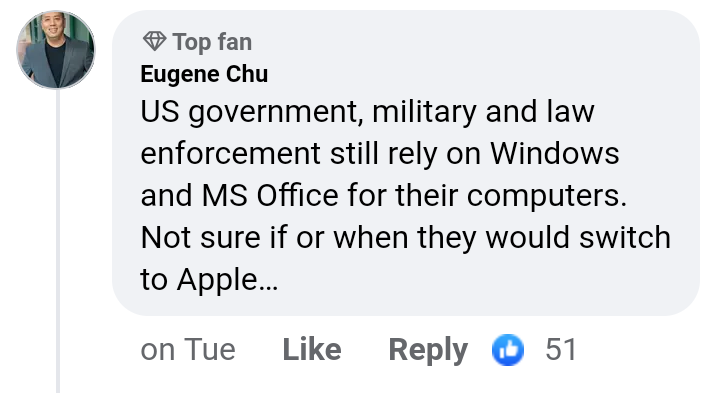
Someone wrote that the big institutions like the US Government, the military and the law enforcement will continue to rely on windows and MS for many years to come.

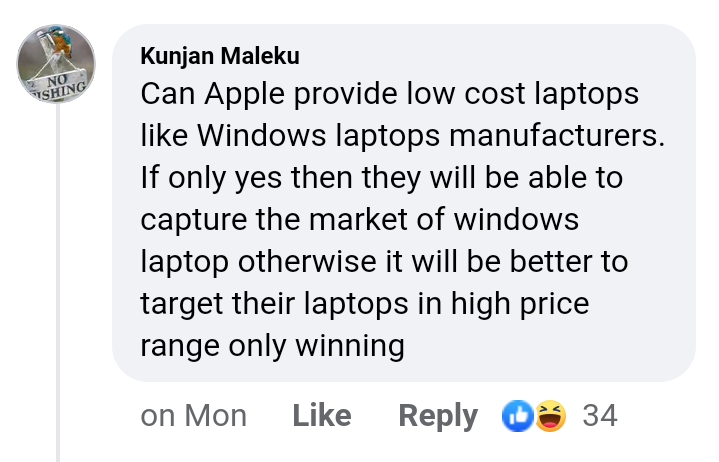
Another user argued that the possibility depends on Apple’s pricing and readiness to capture the lower market that some windows products cater for.

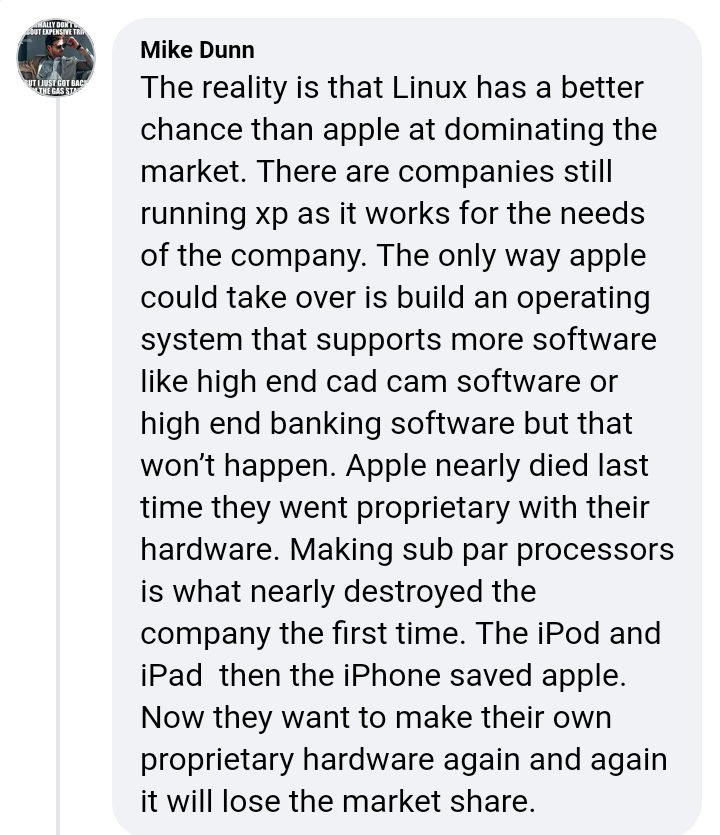
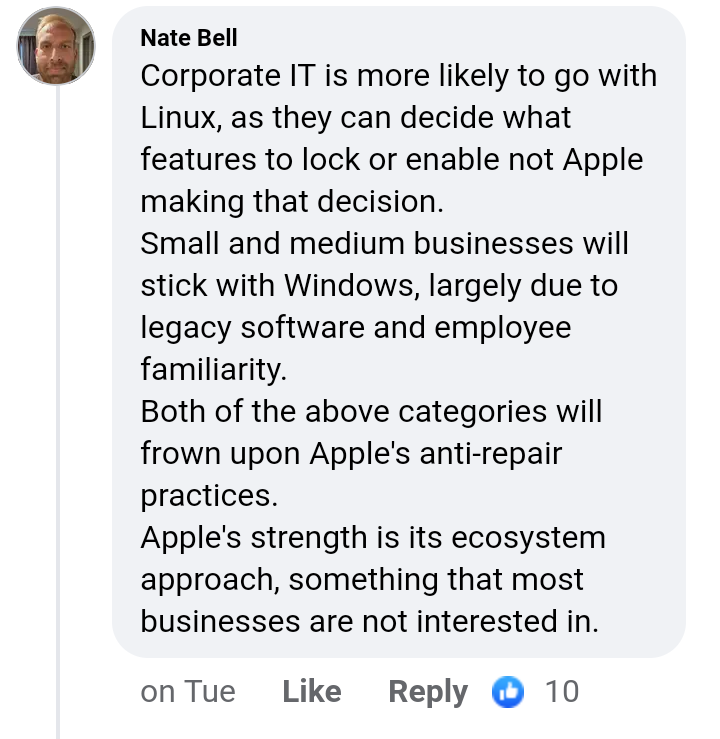
Some others believe many corporate brands, especially small and medium enterprises would rather ditch Apple for Windows or Linux due to its software complexity.

The America’s Symphonic Public Policy And Why TikTok Could Explore Ecommerce

1

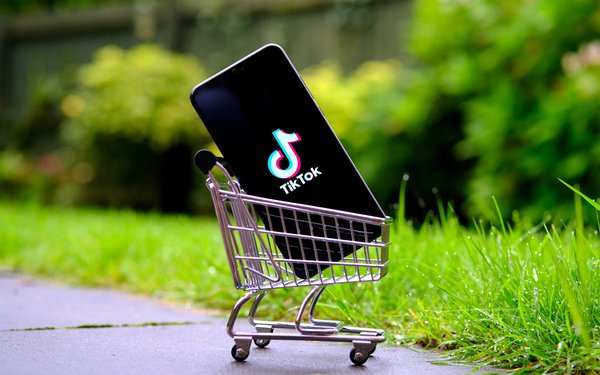
TikTok plots entering the US e-commerce market: “TikTok is pursuing a new revenue stream and reportedly entering the U.S. e-commerce market with a platform for made-in-China goods”.  There is no reason not to do that since TikTok has become a very huge market. When you have access to the goods (it has a Chinese origin) and you have American buyers in your ecosystem, a smart way to drive growth is to offer that Shop button since most of the items are already discovered within your videos. So like Temu, an AI-powered ecommerce company, another Chinese company goes after Amazon.

Why is that possible? The US has a great logistical system with an affordable postal service. With that, the world becomes a market (yes, “uwa bu ahia” the Igbo Nation says), and players can buy and sell at scale. But positioning the US to become this important e-commerce market has one secret:  the US postal service which makes the online market to keep flourishing has not made a SINGLE PROFIT in the last 20 years.

Yes, the US post office declares losses and losses. But do not be deceived, they can make profits if they want, and they don’t really care. They want to build platforms upon which markets run, and logistics with postal services is one of the most important platforms in the ecommerce universe. At the end, they tax that market, and recover the losses via postal services.

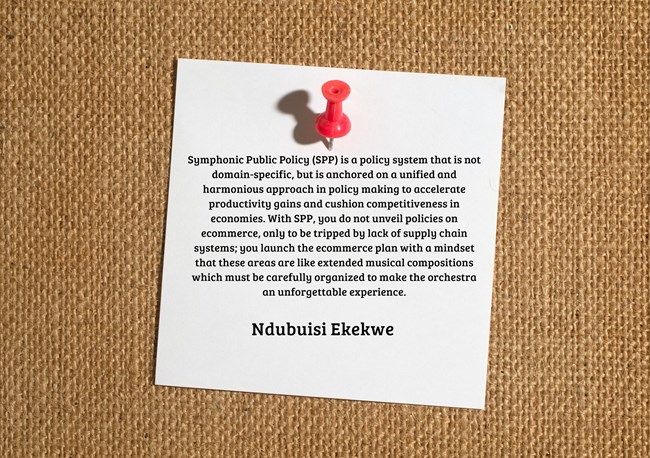
It is called Symphonic Public Policy (SPP) – a policy system that is not domain-specific, but is anchored on a unified and harmonious approach in policy making to accelerate productivity gains and cushion competitiveness in economies. With SPP, you do not unveil policies on ecommerce, only to be tripped by lack of supply chain systems; you launch the ecommerce plan with a mindset that these areas are like extended musical compositions which must be carefully organized to make the orchestra an unforgettable experience. (I coined that SPP in case you want to borrow it.)

Nigeria needs to have its moment  and if we get it right, great things will happen in our communities.

TikTok is pursuing a new revenue stream and reportedly entering the U.S. e-commerce market with a platform for made-in-China goods. The TikTok Shop, which the company hopes will have similar success as China’s Shein and Temu, is expected to launch in the U.S. in early August, reports The Wall Street Journal, citing people familiar with the plan. Its operations will resemble Amazon’s third-party program, which stores, sells, markets and ships products and handles customer service for outside sellers. Per the Journal, plans are to eventually expand to goods from countries other than China.

Combined, Shein and Temu have about one fifth of TikTok’s billion monthly active users. This week, TikTok debuted Instagram-like text posts in the U.S. and expanded its music streaming service from Indonesia and Brazil to Australia, Mexico and Singapore.

Postal Service Net Income/Loss By Year

  • 2021 – $9.7 billion loss (projected)
  • 2020 – $9.2 billion loss
  • 2019 – $8.8 billion loss
  • 2018 – $3.9 billion loss
  • 2017 – $2.7 billion loss
  • 2016 – $5.6 billion loss
  • 2015 – $5.1 billion loss
  • 2014 – $5.5 billion loss
  • 2013 – $5 billion loss
  • 2012 – $15.9 billion loss
  • 2011 – $5.1 billion loss
  • 2010 – $8.5 billion loss
  • 2009 – $3.8 billion loss
  • 2008 – $2.8 billion loss
  • 2007 – $5.1 billion loss
  • 2006 – $900 million surplus
  • 2005 – $1.4 billion surplus
  • 2004 – $3.1 billion surplus
  • 2003 – $3.9 billion surplus
  • 2002 – $676 million loss
  • 2001 – $1.7 billion loss

Nigeria Labour Congress (NLC) Threatens to Embark on Strike Wednesday, If “Anti-poor Policies” Are Not Reversed

0

The Nigeria Labour Congress (NLC) has once again given a seven-day ultimatum to President Bola Tinubu administration, demanding it reverses all recent policies that have exacerbated the suffering of Nigerians or face indefinite industrial action.

Following the conclusion of its Central Working Committee (CWC) meeting on Tuesday, the labor union issued a communiqué, warning that if the Federal Government fails to address the “anti-poor” policies – among them; fuel subsidy removal and floating of the naira that have resulted in high cost of living, it will embark on strike starting from Wednesday, August 2, 2023.

The communiqué, co-signed by the NLC President, Joe Ajaero, and the union’s General Secretary, Emmanuel Ugboaja, expressed the NLC’s concern over the Federal Government’s apparent disdain and contempt for the Nigerian people. The union perceives the government’s actions as a deliberate attempt to undermine Nigerian workers and the general populace, hence declaring it a “war of attrition” against them.

The NLC had last month moved to embark on total industrial action due to the same reasons, but was stopped by the federal government, which secured a court injunction mandating the labor union to abort the proposed strike until the matter is determined by court.

The government set up a committee to address the NLC’s concerns by working out a plan to mitigate the effects of the policies. But the labor union said it has been sidelined by the committee, which is supposed to carry it and the Trade Union Congress along.

“Since the committee was set up to work out the palliatives for workers and Nigerians, the committee hasn’t met. The government only set up the committee to give the impression that it was serious about doing something to ameliorate the pain of Nigerians.

“The government hasn’t convened the meeting of the committee, Labour hasn’t been carried along,” Chris Onyeka, one of the spokespersons of the NLC, told BusinessDay on Wednesday.

After the CWC meeting on Tuesday, the labor union expressed its concern about the impact of the President’s statement on May 29, 2023, declaring that the subsidy on fuel is permanently removed. According to the union, since that speech, “the peace of mind of Nigerians has gone”.

The NLC further said the “government has continued to treat Nigerians as slaves and a conquered people which it treats with impunity without any concern on the consequences”. The union felt that the government’s approach has been insensitive and lacking in consideration for the well-being and welfare of the people.

“That the Federal Government has continued in an unholy mission of robbing the poor to pay the rich in Nigeria as typified by its continued frustration of the activation of the agreed alternatives to Premium Motor Spirit (PMS) and new hike in prices of PMS to N617 per liter,” the communiqué partly read.

“That the NNPCL (Nigerian National Petroleum Company Limited) has turned itself into the forces of demand and supply and fixes the price of Petroleum products while mouthing deregulation.

“That Government’s conduct suggests it does not intend to commit itself to the MoU it signed with NLC and TUC (Trade Union Congress).”

The NLC thereafter released a list of demands it wants the government to meet in order to suspend the proposed strike. Among the demands are: “the immediate reversal of all anti-poor policies of the federal government including the recent hike in PMS price, increase in public school fees, the release of the eight months withheld Salary of university lecturers and workers”. It also added “the immediate inauguration of the Presidential Steering Committee.”

The removal of fuel subsidy and the deregulation of the forex market have resulted in a significant spike in petrol prices. This in turn has stoked the cost of goods and services, making life unaffordable for most Nigerians.

The federal government has been dragging its feet in providing palliatives that will ameliorate the impact of the policies. Its plan to disburse N8,000 each to 12 million households, covering about 60 million Nigerians, was met with severe criticism.

However, experts believe that an indefinite strike will further hurt the nation’s crippled economy.

MasterCard Partners Alerzo to Offer Digital Payment Solutions For SMEs in The Nigerian FMCG Sector

0

Financial services company Mastercard has partnered with Nigeria’s E-commerce platform Alerzo, to offer digital payment solutions, to address the challenges faced by SMEs in Nigeria’s Fast Moving Consumer Goods (FMCG) sector.

This partnership aims to promote the use of financial solutions over the next five years and provide practical financial training and knowledge to one million Nigerian SMEs.

Alerzo’s background expertise in leveraging technology to empower retailers in the informal sector, so they are equipped to run profitable & sustainable businesses, and Mastercard’s extensive global infrastructure and network will make it simpler for companies of all sizes to access digital payments.

Speaking on this strategic partnership, CEO of Alerzo Limited, Adewale Opaleye, said, “We’re excited to partner with Mastercard to support the growth and success of SMEs in Nigeria. With our combined expertise and resources, we look forward to continuing to provide training, financial support, and innovative payment solutions to businesses in Nigeria. These solutions could be a game-changer, especially for our informal retailers, who often get overlooked.”

Also commenting, Country Manager and Area Business Head, West Africa at Mastercard, Ebehijie Momoh said:

“Nigerian small businesses have proved their resiliency in recent years, but still face many pressures to remain profitable. Through our partnership with Alerzo, we are excited to combine our expertise and resources to drive digital transformation and financial inclusion, providing training and solutions that enable Nigerian businesses to thrive. This collaboration will play a crucial role in digitizing payments and supporting the growth and success of Nigerian businesses.”

Following reports that only 15% of Nigerian SMEs have access to formal credit, Alerzo’s partnership with Mastercard will provide these businesses with access to micro-lending options which is crucial for business growth.

The impact of this partnership extends beyond individual businesses. By empowering SMEs and informal retailers, millions of people who rely on their small businesses to support themselves and their families will experience positive changes.

Also, SMEs and informal retailers will benefit from the low-cost acceptance solutions provided by the partnership, such as Tap on Phone, QR, Pay-By-Link and Payment Gateway service.

Through this partnership, a range of innovative solutions will be offered, including VeedezPay, a digital payment solution designed for informal and small businesses, VeedezPro, a comprehensive business management tool tailored for SMEs and ERP solutions for more established businesses.

Additionally, micro-lending services will be made available to businesses using the VeedezPay and VeedezPro solutions. Alerzo is an all-in-one technology platform designed to equip micro-businesses with the digital products and services necessary to run profitable and sustainable businesses.

The startup has continued to provide customers with access to a one-of-a-kind platform that enables its customers to easily grow their businesses through the use of technology.