DD
MM
YYYY

PAGES

DD
MM
YYYY

spot_img

PAGES

Home Blog Page 4030

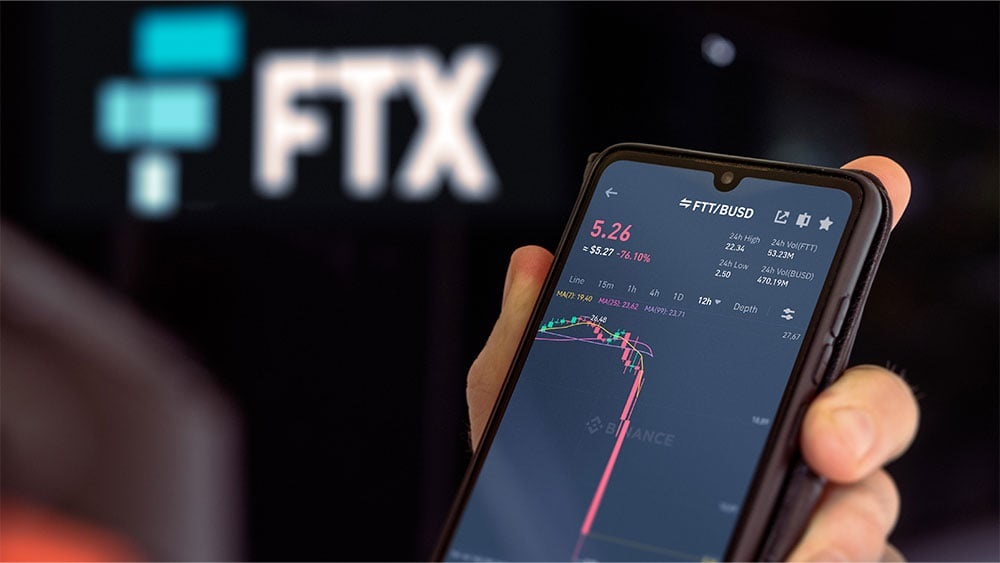
FTX Gate : Sam Bankman-Fried perpetrated one of the biggest financial crimes in US history

0

In a shocking announcement, the US Attorney for the Southern District of New York has accused Sam Bankman-Fried, the founder and CEO of FTX, of orchestrating one of the biggest financial crimes in US history.

According to the indictment, Bankman-Fried and his associates allegedly manipulated the prices of various cryptocurrencies on FTX and other platforms, defrauding investors of billions of dollars. The US Attorney also alleged that Bankman-Fried used his influence and connections to evade regulatory scrutiny and launder money through offshore entities.

The indictment comes as a major blow to the crypto industry, which has been enjoying a surge of popularity and innovation in recent years. Bankman-Fried is widely regarded as one of the most influential and successful figures in the space, having built FTX into one of the largest and most innovative crypto exchanges in the world. He is also known for his philanthropic efforts, having pledged to donate most of his wealth to effective altruism causes.

However, the US Attorney claims that behind this facade of benevolence lies a ruthless and greedy scheme to enrich himself and his cronies at the expense of unsuspecting investors. The indictment details how Bankman-Fried and his co-conspirators allegedly used sophisticated trading algorithms and bots to manipulate the prices of various cryptocurrencies, such as Bitcoin, Ethereum, Solana, and Dogecoin.

By creating artificial demand and supply, they were able to inflate and deflate the prices at will, profiting from both the ups and downs. They also allegedly exploited their access to insider information and market data to execute their trades ahead of other participants, giving them an unfair advantage.

The US Attorney also alleges that Bankman-Fried and his associates used various methods to conceal their illicit activities and evade detection. They allegedly created multiple accounts and identities on FTX and other platforms, using VPNs, proxies, and encryption tools to mask their locations and IP addresses.

They also allegedly transferred their ill-gotten gains to offshore entities and accounts, using complex layers of shell companies, trusts, and foundations to obscure their ownership and origin. The indictment names several jurisdictions where Bankman-Fried allegedly operated his scheme, including Hong Kong, Singapore, Switzerland, Panama, and the Cayman Islands.

Sam Bankman-Fried, the billionaire founder and CEO of cryptocurrency exchange FTX, has a surprising ambition: he wants to be the president of the United States. That’s according to his ex-girlfriend Caroline Ellison, who spoke to Business Insider about their relationship and his political aspirations.

Ellison, a 28-year-old software engineer, dated Bankman-Fried for about a year and a half, from late 2018 to mid-2020. She said they met on a dating app and bonded over their shared interest in math, logic and cryptocurrencies. They also shared a passion for social causes and effective altruism, a philosophy that advocates for using evidence and reasoning to maximize positive impact in the world.

Ellison said Bankman-Fried was always very ambitious and driven, but also humble and generous. He donated millions of dollars to various charities and political campaigns, especially those that supported climate change mitigation and animal welfare. He also founded the FTX Foundation, which donates 1% of FTX’s revenue to effective altruism causes.

But Ellison said Bankman-Fried had another goal that he rarely talked about publicly: he wanted to run for president of the United States someday. She said he believed that he could use his skills and influence to make the world a better place, and that being the leader of the most powerful country would give him the best opportunity to do so.

“He always had this idea that he wanted to be president,” Ellison said. “He thought that he had the best chance of solving the world’s problems, and that he could do it better than anyone else.”

Ellison said Bankman-Fried was serious about his presidential ambitions, and that he had a detailed plan for how to achieve them. He planned to use his wealth and connections to build a network of supporters and allies, and to fund his own campaign. He also planned to leverage his expertise in cryptocurrencies and blockchain technology to create innovative solutions for various issues, such as voting systems, campaign finance and digital identity.

Ellison said Bankman-Fried was not deterred by the challenges or risks involved in running for president. He was confident in his abilities and vision, and he was willing to sacrifice his personal life and privacy for the greater good. He also believed that he had a unique advantage over other candidates: he was not affiliated with any political party or ideology, and he could appeal to voters across the spectrum with his rational and pragmatic approach.

“He didn’t care about labels or categories,” Ellison said. “He just cared about what worked and what didn’t work. He was very data-driven and evidence-based. He wanted to find the best solutions for every problem, regardless of whether they were left-wing or right-wing or something else.”

Ellison said she supported Bankman-Fried’s presidential aspirations, but she also had some reservations. She said she worried about how the public would react to his unconventional background and personality, and how the media would portray him. She also worried about how their relationship would change if he became president, and whether they would be able to maintain their intimacy and privacy.

“I loved him very much, but I also knew that being with him would mean giving up a lot of things,” Ellison said. “I knew that if he became president, I would have to share him with the world, and that I would have to deal with a lot of scrutiny and pressure. I wasn’t sure if I was ready for that.”

Ellison said she ultimately decided to break up with Bankman-Fried in June 2020, shortly after he moved from Hong Kong to the Bahamas to set up his new headquarters for FTX. She said the distance and the pandemic made it harder for them to stay in touch, and that they grew apart over time. She said they still remained friends, and that they occasionally talked on the phone or online.

Ellison said she did not know if Bankman-Fried still planned to run for president in the future, but she wished him all the best. She said she still admired him for his intelligence, generosity and vision, and that she hoped he would achieve his goals.

“I think he would make a great president,” Ellison said. “He has a lot of potential and a lot of ideas. He could really make a difference in the world.”

The US Attorney stated that this is one of the most complex and sophisticated financial crimes he has ever seen, involving multiple jurisdictions, currencies, platforms, and actors. He said that his office is determined to bring Bankman-Fried and his associates to justice, and to recover the stolen funds for the victims.

He also warned that this is not an isolated case, but part of a larger crackdown on crypto-related fraud and money laundering. He urged anyone who has invested in or traded cryptocurrencies on FTX or other platforms to contact his office or the FBI immediately.

Bankman-Fried has not yet commented on the allegations, but his lawyers have issued a statement denying any wrongdoing and vowing to fight the charges. They said that Bankman-Fried is a visionary entrepreneur who has contributed immensely to the development and innovation of the crypto industry.

They said that he has always operated with integrity and transparency, and that he has complied with all applicable laws and regulations. They said that the indictment is based on false accusations and misunderstandings of how crypto markets work. They said that they are confident that Bankman-Fried will be exonerated in court.


Bitcoin is exactly 50% below ATH amid FED threatening to sue Bitcoin Magazine

0

Bitcoin is the most popular and widely used cryptocurrency in the world, with a market capitalization of over $1 trillion as of November 2023. It was created in 2009 by an anonymous person or group using the pseudonym Satoshi Nakamoto, who wanted to create a decentralized and peer-to-peer electronic cash system that does not rely on any central authority or intermediary.

Bitcoin operates on a network of computers called nodes, which validate transactions and maintain a shared ledger of all the transactions that have ever occurred on the network. This ledger is called the blockchain, and it is the source of truth for the state of the Bitcoin system. Anyone can join the network and participate in the consensus process, which ensures that the network is secure and resilient against attacks.

One of the unique features of Bitcoin is that it has a limited supply of 21 million coins, which are generated through a process called mining. Mining is the act of solving complex mathematical problems that require a lot of computational power and electricity. The miners who solve these problems are rewarded with newly created bitcoins and transaction fees. The difficulty of these problems adjusts every 2016 block (about two weeks) to ensure that the average time between blocks is 10 minutes.

The limited supply of Bitcoin means that it is subject to deflationary pressure, which means that its value tends to increase over time as demand exceeds supply. This is in contrast to fiat currencies, which are subject to inflationary pressure, which means that their value tends to decrease over time as supply exceeds demand. Fiat currencies are controlled by central banks, which can print more money or change interest rates to influence the economy.

Bitcoin reached its all-time high of $67,000 in 2021, after a period of rapid growth fueled by institutional adoption, regulatory clarity, innovation, and public awareness. However, since then, it has experienced a series of corrections and crashes that have brought its price down to $34,561 as of November 3, 2023. This represents a 50% drop from its peak value.

There are many factors that can affect the price of Bitcoin, such as supply and demand, market sentiment, news events, technical analysis, innovation, competition, regulation, security breaches, hacks, scams, and more. Some of the possible reasons for the recent decline include:

Profit-taking: Some investors may have decided to sell their bitcoins after making huge gains during the bull run, which creates downward pressure on the price.

Market manipulation: Some large players may have deliberately influenced the price by buying or selling large amounts of bitcoins in order to create artificial volatility or panic in the market.

Regulatory uncertainty: Some governments may have imposed restrictions or bans on cryptocurrency activities, such as trading, mining, or holding bitcoins, which reduces the demand and confidence in the market.

Innovation lag: Some competitors may have introduced new features or technologies that make their cryptocurrencies more attractive or superior to Bitcoin, such as faster transactions, lower fees, higher scalability, more privacy, or more functionality.

Security breaches: Some hackers may have exploited vulnerabilities or stolen funds from exchanges, wallets, or other platforms that deal with bitcoins, which erodes trust and security in the market.

Despite these challenges, many experts and enthusiasts believe that Bitcoin still has a bright future and a lot of potential to grow and improve. Some of the possible reasons for optimism include:

Scarcity: The limited supply of Bitcoin makes it a scarce and valuable asset that can serve as a hedge against inflation and currency devaluation.

Network effect: The more people use and accept Bitcoin as a form of money or payment, the more valuable and useful it becomes.

Innovation: The Bitcoin community is constantly working on developing new solutions and technologies that can enhance the performance and functionality of Bitcoin, such as layer two solutions (e.g., Lightning Network), sidechains (e.g., Liquid), smart contracts (e.g., Taproot), privacy (e.g., CoinJoin), and more.

Adoption: The adoption of Bitcoin by individuals, businesses, institutions, and governments is increasing every day, which creates more demand and legitimacy for the cryptocurrency.

Regulation: The regulation of Bitcoin by authorities can provide more clarity and certainty for the market participants and foster a healthy and compliant environment for innovation and growth.

Bitcoin is currently trading at half of its all-time high value due to various factors that affect its price. However, this does not mean that Bitcoin is doomed or worthless. On the contrary, Bitcoin still has many advantages and opportunities that can make it a viable and valuable asset for the long term. As always, investors should do their own research and due diligence before making any decisions regarding their investments.

Federal Reserve threatens to sue Bitcoin Magazine in attempt to silence criticism of its FedNow service

The Federal Reserve has issued a cease-and-desist letter to Bitcoin Magazine, a leading publication in the cryptocurrency space, accusing it of defamation and false advertising for its coverage of the FedNow service, a proposed instant payment system that competes with Bitcoin and other decentralized platforms.

According to the letter, which was obtained by CoinDesk, the Fed claims that Bitcoin Magazine has engaged in “a systematic campaign of misinformation and disparagement” against the FedNow service, which is still in development and expected to launch in 2023. The letter alleges that Bitcoin Magazine has made “false, misleading, and unsubstantiated statements” about the FedNow service, such as:

Claiming that the FedNow service is a “centralized and insecure” system that will “undermine the privacy and sovereignty of individuals and businesses.”

Suggesting that the FedNow service is a “desperate attempt” by the Fed to “maintain its monopoly and relevance in the face of the growing adoption and innovation of Bitcoin and other cryptocurrencies.”

Implying that the FedNow service is a “threat to the stability and security of the global financial system” and a “potential tool for censorship and surveillance.

The letter demands that Bitcoin Magazine immediately stop publishing such statements and remove any existing articles or posts that contain them. It also warns that the Fed will pursue legal action against Bitcoin Magazine if it fails to comply with these demands.

Bitcoin Magazine has responded to the letter with a defiant statement, saying that it stands by its reporting and analysis of the FedNow service and that it will not be intimidated or silenced by the Fed’s threats. The statement argues that Bitcoin Magazine has a right to express its opinions and criticisms of the FedNow service, which it views as a “flawed and inferior” alternative to Bitcoin and other cryptocurrencies. The statement also challenges the Fed to prove its claims and provide evidence for its allegations.

Bitcoin Magazine’s editor-in-chief, Aaron van Wirdum, told CoinDesk that he believes the letter is an attempt by the Fed to stifle dissent and suppress public debate about the FedNow service, which he said poses serious risks to the users and the economy. He said that Bitcoin Magazine will continue to cover the FedNow service and expose its shortcomings and dangers.

“We are not afraid of the Fed or its lawyers. We are journalists and we have a duty to inform our readers and the public about the truth. The FedNow service is a bad idea and a bad product, and we will not stop saying so,” van Wirdum said.

Nigeria Grants Approval to Additional Loan Apps

0

The Federal Competition and Consumer Protection Commission (FCCPC) has recently approved more loan apps in the country.

As a result, the list of companies that have received this approval now stands at a total of 211. The 211 companies comprise 172 that have received full approval from the FCCPC and 39 others with conditional approval.

The recent approval suggests that these digital lenders have met the necessary regulatory requirements.

The expansion signifies increased access to loan and credit options for Nigerian consumers, which will significantly benefit them.

Also, this expansion carries potential implications for consumers and the industry as a whole. On the consumer side, it signifies that there may be a wider array of options available for obtaining loans and accessing credit, which can be beneficial for individuals seeking financial support.

Additionally, the increased competition among these approved companies could lead to more competitive interest rates, terms, and services, ultimately offering consumers better choices and potentially driving improvements in the lending industry.

For the financial technology and lending companies themselves, gaining approval from regulatory bodies like the FCCPC is a significant milestone. It shows their adherence to the necessary legal and ethical standards, which can enhance their credibility and trustworthiness in the eyes of both consumers and investors.

Meanwhile, the number of loan apps under the FCCPC watch has increased from 55 in September to 84 as of October, due to unethical practices.

Some of these apps include; Cashlawn App, Easynaira App, Crediting App, Yoyi App, Nut Loan App, Cashpal App, Nairaeasy Gist Loan App, Camelloan App, Nairaloan App, Moneytreefinance Made Easy App, Cashme App, Secucash App, Creditbox App, and Cashmama App.

Others include Crimson Credit App, Galaxy Credit App, Ease Cash App, Xcredit, money, Naira Naija, Imoneyplus-Instant, Nairanaija-Instant, Nownowmoney, Naija Cash, and Getloan.

Aside from those on the watchlist, the consumer protection watchdog said, it has partnered with Google to delist a total of 45 loan apps from the Google Play Store, which comprises apps found operating illegally in the country.

The FCCPC chairman Mr. Babatunde Irukera had hinted that the commission would continue to engage with Google to clarify how and why apps that have not received relevant regulatory approvals are available on Google’s Play Store.

This is to note that only Digital Money Lenders (DMLs) that have been subjected to regulatory scrutiny and compliance evidenced by written approval from the commission will be allowed on the Play Store.

Elon Musk Announces Plan to Make Grok, xAI, Available for X Premium Users

0

X owner Elon Musk has announced a plan to make Grok, the AI assistant that he launched in July, a part of X Premium+, urging users to sign up. 

Early Friday, Musk announced that xAI would unveil Grok to a “select group” on Saturday, November 4. However, in a subsequent tweet later in the evening, Musk clarified that all subscribers to X’s newly launched Premium Plus plan, which is priced at $16 per month and offers ad-free access to X, would gain access to Grok “once it transitions out of the early beta stage.”

The Tesla CEO, who has been critical of OpenAI over ChatGPT, which he said was not developed as planned – created Grok as an alternative. Musk who accused ChatGPT of going woke among other things, has a plan to incorporate Grok into X as part of his plan to make the social media platform ‘everything app.’

The new AI model has recently been trademarked, and it promises to take conversational AI to the next level. Much like ChatGPT and similar text-generating models, Grok is designed to answer questions conversationally. It taps into a knowledge base similar to the one used to train ChatGPT, which provides it with a wide range of information to draw from when responding to queries.

What sets Grok apart is its emphasis on “real-time access” to information. Musk has indicated that the model has the ability to access and retrieve up-to-date information on various topics. This real-time information retrieval capability is a significant step forward, as it ensures that Grok can provide accurate and current responses to user queries.

Additionally, Grok shares another feature with models like ChatGPT – internet browsing capabilities. This enables the AI to browse the web, just like a human, in order to search for and fetch the most recent and relevant information. 

In a series of posts on Saturday, Musk shared some capabilities of Grok, which differentiate it from other AI models, particularly ChatGPT.

Musk suggested that Grok might decline to respond to certain inquiries of a more sensitive nature, such as requesting a step-by-step guide on making cocaine. Based on a screenshot, the model’s response to that specific question appears to be somewhat more playful or tongue-in-cheek compared to ChatGPT’s responses. It remains uncertain whether this response is a pre-programmed canned answer or if the system is genuinely, as Musk claims in a tweet, “designed to inject a bit more humor into its responses.”

This capability is crucial in a rapidly evolving world where information is constantly changing. It ensures that Grok remains at the cutting edge of knowledge, making it a valuable tool for staying informed about the latest developments in various fields.

The introduction of Grok into the AI landscape is likely to have far-reaching implications, not only for enhancing conversational AI but also for providing accurate, up-to-date information on a wide range of subjects. As technology continues to advance, AI models like Grok are pushing the boundaries of what’s possible in natural language understanding and information retrieval.

Though its rollout is expected to disrupt the AI status quo, there is not much known about the AI model now.

In September, Larry Ellison, co-founder of Oracle and a self-proclaimed close friend of Musk, disclosed that xAI had entered into a contract to train its AI models on Oracle’s cloud platform. However, xAI itself has not revealed any specifics about the inner workings of its AI models or the specific tasks they have been designed to accomplish.

Elon Musk first introduced xAI in July, accompanied by the grand vision of creating AI that could “understand the true nature of the universe.” The company, under Musk’s leadership and with a team comprised of experts from prominent organizations like DeepMind, OpenAI, Google Research, Microsoft Research, Tesla, and the University of Toronto, has been advised by Dan Hendrycks, the director at the Center for AI Safety, an AI research nonprofit. 

Additionally, xAI has formed collaborations with other companies within Musk’s expansive portfolio, including Tesla.

In an interview with Tucker Carlson in April, Musk expressed his desire to build a “maximum-truth-seeking AI.” The question that arises now is whether Grok, Musk’s recently trademarked AI model, is a realization of this aspiration or merely a stepping stone towards a more profound AI endeavor.

Elon Musk predicted that human work will become obsolete as artificial intelligence progresses, calling it “the most disruptive force in history.” Speaking with U.K. Prime Minister Rishi Sunak late Thursday, the owner of Tesla, SpaceX, social media platform X and the newly formed AI startup xAI said “there will come a point where no job is needed” as AI does everything. It came just after world leaders at the AI Safety Summit in Bletchley Park signed a global declaration on the risks AI poses, with even the U.S. and China agreeing to seek consensus on its development. Instagram is currently working on an “AI friend” that users can customize, from ethnicity to personality.

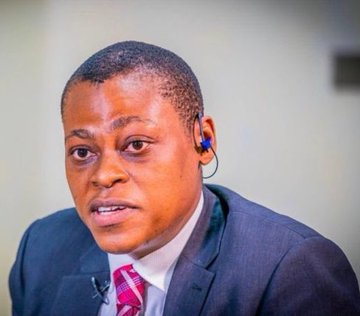
Rufai Oseni, and the challenging Current Affairs Interview space

0

It appears that many leaders and indeed even some of the general public, do not fully understand the role of a current affairs interview/show chat host. I’m talking here in particular of Rufai Oseni, who has come in for a barrage of criticism recently.

Oseni has regularly lambasted governance, and in particular the use of a divisive repeat slogan (‘let us breathe’) allegedly mocking the plight of Nigerians, in particular amidst hardships around fuel price and forex problems.

I’m not making a political statement here, but merely pointing out the nature of the current affairs interview/show chat host environment, and the intensive live probing nature that goes with the territory. I’m not sure what some people expect when they go on Rufai Oseni for a live show.

Nigeria hails itself as a democracy, and if someone seeks engagement with a submissive TV channel, perhaps they should have become a politician or public servant in China, North Korea or Russia instead.

If anything, Osenis’ style is lenient when compared to peers in democracies elsewhere. Anybody that saw Stephen Sackur on Hard Talk (UK) with Joice Mujuru, the former Zimbabwean vice-president, will know that he didn’t mince his words.

Now, those that like to score social media metrics, by appealing to sectarian rhetoric sponges, came out on a prejudicial note, fuelled by the obvious ethnic divergence between Sackur and Mujuru…

… but as Prof. Ndubuisi says in a Nigerian context, before reading me (my content) you have read ‘Ndubuisi’.

Mujuru fell out with (then President) Robert Mugabe in 2015 and created her own party …But… How could she claim to champion freedom and democracy when she had been Mugabe’s cabinet ally most of her adult life? How could she avoid responsibility for Zimbabwe’s economic collapse, or the Gukurahundi massacre of 20,000 civilians, or the destruction of hundreds of thousands of slum dwellers’ homes?

Why was Zimbabwe’s biggest diamond field known as “Mrs Mujuru’s anthill”?

We do not get powerful people to acknowledge their contribution to bad actions by wasting airtime with ‘fandom’ interviews that stroke their egos.

When coming on this kind of show, participants must realize some things.

It does not matter if you are the leading global entertainer, the leading global sportsperson or the President of the most powerful nation on earth.

You are stepping into a Lions Den, and newsflash – You are not the Lion!

Most things go wrong when interviewees don’t control their ego, and let their ego, pride and vanity control them. You have to understand you attend as a ‘small’ boy or girl, not as an Oga or Madam. This countenance needs to be instantly impacted upon the interviewer – powerful Nigerians suck at this. In this ‘land’ that will last only the length of the airtime, you need to accept you ‘junior’ the interviewer, even if you have title, position, and are old enough to be their grandfather or mother.

Some people are really good at handling situations where interviewers or show hosts have unorthodox or combative engagement styles.

A great example of this is the interview for charity between Sacha Baron Cohen and the celebrity couple David and Victoria Beckham (commonly known as ‘Posh and Becks’). Baron Cohen plays a number of fictitious characters, the most famous being ‘Ali G’.

He conducted the interview of Posh and Becks while in the character of Ali G.

Being a known celebrity and handling the unknown situations that comes from Baron Cohen’s bizarre ad lib while in the ‘Ali G’ character is not easy. My personal favourite as a rebuttal, is when ‘Ali G’ provoking Victoria asks (about her son) ‘Do you want him to grow up to be a footballer… like his Dad.. or a singer… like Mariah Carey? … and she calmly answers –

‘I’d like him to grow up to be a footballer like his Dad… and I’d like to grow up to be a singer, like Mariah Carey!’

In the more serious sphere, I’ve seen some people handle quite hostile interviews very well…  The best I’ve known (names that most people would know) would be ex US President Barrack Obama, UK ex-Prime Minister Tony Blair, and ex UN Secretary General, Kofi Annan.  This is not otherwise a reflection of their professional performance necessarily.

Leaders can do their homework and understand the engagement style of a host before agreeing to become a guest on a show or current affairs program.

There is a difference between being direct and candid on the one hand to being rude and offensive on the other. I can’t say I have watched all Rufai Oseni interviews, but from what I have seen, I can see no evidence of the latter.

However, it is important we recognise that people in Rufai Osenis’ position have a duty of service to the Nigerian citizenry. If guests come on the program with cases to answer, then there are questions to be put. It isn’t rude to put them.

To not put them, would be a case of Rufai Osenis’ failing the Nigerian public.

An article in Peoples Gazette however, has claimed all media personalities in Nigeria are politically partisan. ‘… people who sing Osenis’ praises are overt or covert Obi supporters and those who are censorious of his journalism are overt or covert Tinubu supporters’.

To what extent this is true, remains to be seen.

I do not see any problem with his conduct. He is not there to shrug his shoulders and say ‘It is well’.
The public already fulfil that role en masse

9ja Cosmos is here… 

Get your .9jacom and .9javerse Web 3 domains  for $2 at:

.9jacom Domains

.9javerse Domains

Visit 9ja Cosmos

Follow us on LinkedIn HERE

All reference sites accessed 04/11/2023

tribuneonlineng.com/i-think-like-a-scientist-not-as-a-partisan-person-rufai-oseni/ lindaikejisblog.com/2023/7/let-us-breathe-its-not-funny-arise-tv-host-rufai-oseni-berates-nigerian-senators-for-mocking-poor-and-suffering-nigerians-2.html en.wikipedia.org/wiki/Sacha_Baron_Cohen                           en.wikipedia.org/wiki/HARDtalk                                                                                       20 years of HardTalk video: youtube.com/watch?v=tzDgWBy9acg           youtube.com/watch?v=wjRj9nBGaAE Kofi Annan in 2018                               thecable.ng/rufai-oseni-nigerian-presidents-are-like-monarchs-theyre-hard-to-unseat gazettengr.com/farooq-kperogi-partisan-comparisons-of-channel-tvs-seun-and-arise-tvs-rufai