DD
MM
YYYY

PAGES

DD
MM
YYYY

spot_img

PAGES

Home Blog Page 4033

Niger State Governor Demands 13% Derivation Fund for Hydrocarbon Exchange

0

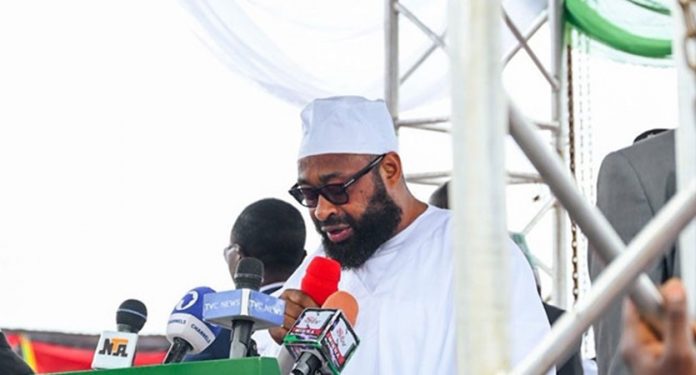
Governor Umaru Bago of Niger State has taken a bold stand in demanding the payment of a 13% derivation fund, similar to other oil-producing states in Nigeria.

The governor made the demand during a meeting with the Federal Commissioner of the National Commission for Refugees, Migrants, and Internally Displaced Persons, Tijani Aliyu, in Minna on Monday.

Bago firmly believes that Niger State, despite not being traditionally classified as an oil-producing state, should receive compensation for the hydrocarbon exchange taking place within its borders. He emphasized that the state deserved to be paid approximately N1 trillion for the resources flowing from Niger State to the Delta region.

“We need 13 percent derivation for water supplied to the Delta. Our people are ravaged and displaced year in, year out because of the flow of water from the Niger to the Delta,” he stated, highlighting the environmental impact and hardships faced by Niger State’s residents.

Bago’s demands are not limited to financial compensation. He urged relevant entities, including the Federal Government, Abuja Electricity Distribution Company (AEDC), and the Nigerian National Petroleum Corporation (NNPC), to acknowledge the contributions of Niger State and pay their dues.

“The Federal Government will pay Niger State N1 trillion in the next three months for hydrocarbon exchange; they must. We have provided this country with hydropower for a long time; nobody is compensating us for it,” the governor asserted.

Bago’s resolve appears unwavering, as he warned that Niger State would take drastic measures to ensure its demands are met.

“We have woken up; we can never ever tolerate being neglected or abandoned again. The only way we can ensure that the federal government heeds to us is to shut down the hydro dams unless we are paid,” he threatened.

He continued, “We are serious about this, it is not a threat; it is a statement. Every dime that is due to us, we will take it, we will take every kobo that is for Niger State. We are not going to be marginalized again; our waters, our lands, our borders are strengths for us and not weaknesses.”

The governor emphasized that every resource originating from Niger State must be compensated, and the state will not tolerate being overlooked any longer. He announced, “We are going to the Supreme Court, and we will take the Federal Government to the Supreme Court unless the 13 percent derivation from our land, water, air, grass, and everything given to us is paid. We must be compensated. Our people have done enough for Nigeria.”

Governor Bago’s demands have once again brought to the fore the issue of fiscal federalism, which has been advocated for years. While Niger State’s determination to secure its rightful share of the hydrocarbon exchange brought attention to a broader conversation about fairness and recognition for all contributing regions in Nigeria, the demand for 13% derivation has raised eyebrows.

Many believe that Bago’s demand is unrealistic given that about 80% of Nigeria’s power generation comes from gas-fired power plants while hydro is about 20%.

Nigerian Banks Are Capturing Value in the Economy; Among The Most Profitable Firms in 9M of 2023

0

It is raining Naira in some headquarters in Nigeria, over the last 9 months to Sept 2023. Pre-tax profits*:

  • Zenith Bank: N505 billion
  • UBA: N502.1 billion
  • GTBank’s GTCO: N433.2 billion
  • Dangote Cement: N404.9 billion
  • Access Bank’s Access Holdings: N294.4 billion
  • First Bank’s FBNH: N270.3 billion
  • MTN Nigeria: N232.5 billion.

UBA remains the most geographical diversified banking institution in Nigeria and the results are showing the power of that playbook. Indeed, operating in about 20 African countries with shops in Dubai, New York, Paris and London, UBA has a good spot. Zenith Bank has used scale to become the leader. Of course, though it is no more the rainmaker, GTBank* continues to mint money.

For banks, 2023 is the best year yet. Do not expect these numbers in 2024; the FX gains will calibrate out by then. Of course, these numbers are relatively small, but considering the size of Nigeria’s economy, the banks are adequately capturing value – and that is why investors are cheering.

*Nairametrics data

FTX Wants to Sell its GBTC Shares and other Trust Assets

0

FTX, one of the largest cryptocurrency exchanges in the world, has announced that it plans to sell its Grayscale Bitcoin Trust (GBTC) shares on the secondary market. GBTC is a popular investment vehicle that allows investors to gain exposure to Bitcoin without holding the actual cryptocurrency. GBTC shares trade at a premium or discount to the net asset value (NAV) of the underlying Bitcoin, depending on the supply and demand dynamics.

According to the motion filed at the bankruptcy court in Delaware, FTX has reached an agreement with a group of investors, led by Paradigm Capital, to purchase some of its trust assets for $150 million. The trust assets include FTX’s stakes in various crypto projects, such as Solana, Serum, and FTX Token. The sale would allow FTX to repay its secured and unsecured creditors, who are owed more than $200 million.

FTX claims that the sale is in the best interest of its stakeholders, as it would provide a quick and efficient resolution of its bankruptcy case. FTX also argues that the sale is fair and reasonable, as it reflects the current market value of the trust assets and was negotiated at arm’s length. FTX says that it received multiple offers from potential buyers but chose Paradigm Capital as the highest and best bidder.

The motion is subject to approval by the bankruptcy court, which will hold a hearing on November 15. If approved, the sale would mark one of the largest transactions involving crypto assets in a bankruptcy context. The sale would also have implications for the crypto industry, as it would demonstrate the viability and liquidity of crypto assets as a form of collateral and payment.

FTX CEO Sam Bankman-Fried said that the exchange acquired about $1.7 billion worth of GBTC shares earlier this year, when the premium was around 10%. However, since then, the premium has turned negative, meaning that GBTC shares are trading below the NAV of Bitcoin. This has resulted in a loss for FTX and other GBTC holders, who are locked in for six months before they can sell their shares.

Bankman-Fried said that FTX is looking for buyers who are willing to pay a fair price for the GBTC shares, which he estimated to be around 0.5% below NAV. He said that FTX is not interested in holding GBTC for the long term, as it prefers to invest in Bitcoin directly or through other products. He also said that FTX is open to selling its GBTC shares to Grayscale itself, if the trust decides to buy back its own shares.

The negative premium of GBTC has been a source of concern for many investors, who fear that it could affect the performance and reputation of the product. Some analysts have suggested that Grayscale should convert GBTC into an exchange-traded fund (ETF), which would allow for more liquidity and arbitrage opportunities. However, Grayscale has not indicated any plans to do so, as it faces regulatory hurdles and competition from other Bitcoin ETFs that have been approved in Canada and Europe.

FTX filed for Chapter 11 bankruptcy protection in the U.S. bankruptcy court of Delaware. This means that FTX is unable to pay its debts and needs to reorganize its business under the supervision of the court. FTX has more than $200 million in liabilities, mainly to its creditors who lent money or provided services to FTX.

Devaluation of Currency through printing is like Hidden Tax

0

One of the most insidious effects of inflation is the erosion of purchasing power. Inflation is the general increase in the prices of goods and services over time, which reduces the value of money. When the government prints more money to finance its spending, it increases the money supply and creates inflationary pressure. This is equivalent to a hidden tax, because it reduces the real income and savings of the people.

Printing money devalues the Currency.

The value of a currency is determined by supply and demand. When there is more money in circulation than the demand for it, the value of each unit of money decreases. This means that it takes more money to buy the same amount of goods and services as before. For example, if a loaf of bread costs $1 today and the government prints 10% more money, tomorrow the same loaf of bread may cost $1.10. This means that the purchasing power of $1 has decreased by 10%.

This is not a one-time effect. As long as the government continues to print more money than the growth of the economy, inflation will persist and accelerate. The more money is printed, the faster the value of the currency declines. This creates a vicious cycle, where the government needs to print more money to pay for its expenses, which causes more inflation, which reduces the value of the money, which requires more printing, and so on.

The devaluation of currency through printing has many negative consequences for the economy and society. Some of these are:

It distorts price signals and resource allocation. Prices are signals that convey information about the relative scarcity and value of goods and services. When prices are distorted by inflation, they lose their meaning and function. This leads to misallocation of resources, inefficiencies, waste, and malinvestment.

It creates uncertainty and instability. Inflation makes it difficult for people to plan for the future, because they do not know how much their money will be worth in the future. This reduces saving and investment, which are essential for economic growth and development. It also increases risk and volatility, which discourages entrepreneurship and innovation.

It redistributes wealth unfairly. Inflation benefits those who receive the newly printed money first, such as the government and its cronies, at the expense of those who receive it last, such as workers and savers. This creates inequality and injustice, as well as resentment and social unrest.

It erodes trust and confidence. Inflation undermines the credibility and legitimacy of the government and its institutions, as well as the trust and confidence of the people in their currency and financial system. This can lead to a loss of faith in the currency, a flight to other assets or currencies, or even a hyperinflationary collapse.

What can be done to prevent or mitigate this problem?

The solution to this problem is simple but not easy: stop printing money. The government should adopt a sound monetary policy that limits the growth of the money supply to match the growth of the economy. This would stabilize the value of the currency and prevent inflation.

Alternatively, if printing money is unavoidable due to fiscal deficits or debt obligations, then there are some measures that can be taken to mitigate its effects:

Indexing wages and contracts to inflation. This would protect workers and creditors from losing their real income and wealth due to inflation.

Implementing anti-inflationary policies. These include raising interest rates, reducing government spending, increasing taxes, or adopting a currency peg or a currency board. Educating people about inflation and its causes and consequences. This would increase public awareness and pressure on the government to adopt responsible fiscal and monetary policies.

How does inflation affect interest rates?

One way that inflation affects interest rates is through the expectations of investors and lenders. If they expect inflation to rise in the future, they will demand higher interest rates to protect their purchasing power. For example, if a lender expects inflation to be 3% next year, they will charge at least 3% interest to break even. If they expect inflation to be 5%, they will charge at least 5% interest to make a profit.

Another way that inflation affects interest rates is through the actions of central banks. Central banks are the institutions that control the money supply and set the benchmark interest rates for the economy. They use monetary policy to influence inflation and economic growth.

For example, if inflation is too high, central banks may raise interest rates to reduce the demand for money and credit and slow down the economy. This can help lower inflation by reducing the pressure on prices. Conversely, if inflation is too low, central banks may lower interest rates to increase the demand for money and credit and stimulate the economy. This can help raise inflation by boosting the spending power of consumers and businesses.

The relationship between inflation and interest rates is complex and dynamic, and it depends on many factors such as economic conditions, market forces, and policy objectives. In general, higher inflation tends to lead to higher interest rates, and lower inflation tends to lead to lower interest rates.

However, there may be exceptions or variations depending on the specific circumstances. For example, if inflation is high but expected to fall, interest rates may not rise as much as inflation. Or if inflation is low but expected to rise, interest rates may not fall as much as inflation.

Understanding how inflation affects interest rates is important for both borrowers and lenders, as well as for anyone who wants to make informed financial decisions. Inflation and interest rates can affect the value of money, the cost of debt, the return on savings, and the profitability of investments. By keeping track of the trends and forecasts of inflation and interest rates, one can plan ahead and adjust their strategies accordingly.

The devaluation of currency through printing is like a hidden tax that harms the economy and society in many ways. It is a short-sighted and unsustainable way of financing government spending that ultimately backfires. The only way to avoid this problem is to stop printing money or to take measures to limit its impact.

Tinubu Adviser Projects The Naira to Further Strengthen to N600/$1

0

Dr. Tope Fasua, a special adviser to President Bola Ahmed Tinubu, has made a bold projection that the Nigerian naira may continue to strengthen and could potentially exchange at N600 to the US dollar in the foreign exchange market.

Fasua shared this forecast at the “Cowries to Cash” lecture and lunch event held in Abuja.

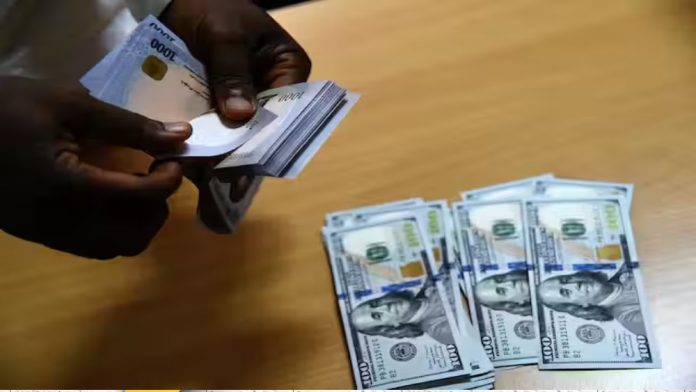
This prediction comes as the Nigerian naira has been appreciating against the US dollar, reaching as high as N901/$1 in the parallel market, marking a notable shift in its value.

However, Fasua also issued a warning to Nigerians against hoarding foreign currencies in the expectation that the local currency will continue to depreciate. He hinted that government policies would surprise those who have such expectations.

Fasua pointed out that there would be significant reorganization in the banking sector to enhance the stability and strength of the naira. He also highlighted the government’s commitment to implementing policies that would support the naira and ultimately result in a stronger currency.

He said: “Some people thought that the naira would continue to lose value. Of course, we can already see what’s going on, and who knows, maybe the naira will strengthen even further to something like N500 or N600/$1.

“For those speculating, praying, and wishing that the currency would become nonsense, I believe that the Central Bank is rolling out the policies and the government that I serve, led by the President, will shock some of them.

“You need to listen to the agenda, the man himself (Tinubu), and you will see that the level at which he is thinking is far ahead of most of us.

“You know, he has some very great ideas coming up. Some of them are what you’ve seen reversing the fall in the value of the naira, but he has also challenged us to review forward many of the targets, for example, the idea that Nigeria’s economy will get to a trillion dollars. He wants to achieve it by 2026.”

Currently, at the official market, the exchange rate between the naira and the US dollar fell to 869.91/$1, indicating a 6.99% decline in the local currency compared to its value at the beginning of the week. This marks the second time the naira has experienced depreciation since the Central Bank of Nigeria initiated efforts to clear some of its FX backlog.

It’s worth noting that while the official market exchange rate showed a decline, the black market reported an appreciation, with the exchange rate quoted at N1050/$1, and peer-to-peer traders quoting around N1062.10/$1.

The situation reflects the dynamic nature of the Nigerian foreign exchange market, with different rates across various segments.