DD
MM
YYYY

PAGES

DD
MM
YYYY

spot_img

PAGES

Home Blog Page 4039

Network Smartly To Overcome that Career Turbulence

0

It is Sunday and let the Sunday School teacher pick a case study from the Holy Book. From Scripture Union in Secondary School, to University Chapel in FUTO, to RCCG, etc, yours truly has one singular call: teaching. So, today, I will discuss why you need to have a Mentor, a Coach, a Counsellor or a Guardian in your professional life. Yes, most times, when you hit your limit, they could be handy to help you. Here we go…

They were men of great capabilities. They excelled in their fields. They were masters of waters, having core competencies in navigating sea waves as fishermen. But one day, they were on the Sea of Galilee, legendary for its shallow depth – the lowest freshwater and second-lowest lake on earth. Fed by River Jordan, with the Golan Heights by the side, a wave easily gathered momentum, causing problems along the paths.

On that day, the disciples had their capabilities tested.  Four of them were recruited by Christ while working on that very Sea. The waves were ferocious. Yet,  the men trusted their skills. Then, they gave up, and asked for help. “Peace be still” were the words, and the storm stopped!

Our education, networks, and experiences are things we cherish. We use them to navigate careers and professional lives. But sometimes, waves of careers come – big storms which overwhelm – and having higher mentors or plans could help.

Remember, men of water needed to be saved in waters by a Higher Mentor. As tech brings disruptions in markets, causing troubles on careers, it is time to invest to be in the right company with people who can say “peace be still” on that career turbulence. #network smartly!

Comment on Feed

Comment 1: A sure recipe for disaster is to always feel one can put everything under control all the time.

No matter your capabilities life will always present with its own treachery of currents.This could be economic, natural, environmental, career or family.

When this happens there is need for a shoulder to lean on. Remember, when we lean on the shoulders of giants we see farther.

Thanks, prof Ndubuisi Ekekwe as always for this piece.

Fuel Subsidy Removal: Universal Basic Income (UBI) Implementation for Nigerians’ Hardships

0

Universal Basic Income (UBI) is “a periodic cash payment unconditionally delivered to all on an individual basis, without means-test or work requirement”. This is quite different from the existing conditional cash transfer in Nigeria. Our analyst notes that genuine implementation of the framework, like what operates in the United States of America and other countries in the global north, can help alleviate the hardships caused by fuel subsidy removal. Here are the critical stages for implementing it.

Policy Development and Design
a. Establish a task force or committee consisting of economists, social scientists, policymakers, and representatives from various sectors to develop the UBI policy framework.
b. Analyze existing social welfare programs, economic conditions, and demographic data to determine the appropriate UBI amount and eligibility criteria.
c. Consider international best practices and case studies to inform the design of the Nigerian UBI framework.

Funding Mechanism
a. Identify potential funding sources for the UBI program, such as redirecting subsidies, introducing new taxes, or leveraging natural resource revenues.
b. Conduct cost-benefit analyses and economic modeling to ensure the financial sustainability of the UBI program.
c. Explore partnerships with international organizations or seek foreign aid to support the initial implementation phase.

Pilot Programmes and Evaluation
a. Conduct small-scale pilot programs in selected regions or communities to assess the effectiveness of the UBI framework.
b. Monitor and evaluate the impact of the UBI on poverty reduction, income inequality, employment rates, education, healthcare, and other key indicators.
c. Use the findings from pilot programs to make necessary adjustments and improvements to the UBI framework.

Public Awareness and Stakeholder Engagement
a. Conduct extensive public awareness campaigns to educate citizens about the benefits and goals of the UBI programme.
b. Engage with community leaders, civil society organizations, and businesses to build support and gather feedback for continuous improvement.
c. Establish feedback mechanisms to address concerns, evaluate program performance, and incorporate stakeholders’ input into decision-making processes.

Implementation and Scale-Up
a. Develop a robust and secure payment system, leveraging existing financial infrastructure or exploring innovative technologies like mobile banking or blockchain.
b. Establish a transparent and efficient application process for citizens to enroll in the UBI programme.
c. Gradually scale up the UBI programme, starting with vulnerable groups such as low-income households, unemployed individuals, and persons with disabilities.

Monitoring, Evaluation, and Continuous Improvement
a. Develop robust monitoring and evaluation systems to track the outcomes and impacts of the UBI programme on the well-being of citizens and the overall economy.
b. Regularly review and analyze data to identify areas of improvement and make evidence-based policy decisions.
c. Ensure transparency and accountability in the management and administration of the UBI programme.

It is important to note that the successful implementation of a UBI framework requires careful planning, coordination, and continuous assessment to adapt to changing circumstances and address any potential challenges or unintended consequences.

Insolvency Law: Receivers and Managers Under the Companies & Allied Matters Act (CAMA) 2020 Nigeria

0
CAC

A company discovered to be bankrupt or insolvent to the point of being unable to pay its debts or continue business operations is a trigger for a chain of events that can could lead to the company being restructured or falling into a winding up procedure, but before this the first step is to enter the company into receivership and management which involves the appointment of a person known as a receiver and/or manager charged with the administration of the company and receiving its income for the satisfaction of priority debts until they have been exhausted.

With the novel Introduction of Administration (which i talked about in an earlier article), it is thus prudent to see what becomes of receivership and management as a lnsolvency tool under the Companies & Allied Matters Act (CAMA)2020, which will be the focus of this article.

Who is disqualified from being appointed as a receiver/manager under CAMA 2020?

The following persons shall not be appointed or act as receivers or managers of any property or undertaking of any company :

(a) an infant ;

(b) any person found by a competent Court to be of unsound mind ;

(c) a body corporate ;

(d) an undischarged bankrupt, unless he is given leave to act as a receiver or manager of the property or undertaking of the company by the Court by which he was adjudged bankrupt ;

(e) a director or auditor of the company ; and

(f ) any person convicted of any offence involving fraud, dishonesty,official corruption or moral turpitude or who is disqualified under section 280 of CAMA 2020.

It should be noted that any appointment made in contravention of the provisions of subsection(1) of the provisions of CAMA regarding qualification to be appointed a receiver, is void and if any of the persons named in paragraphs (c), (d), (e) and (f )acts as a receiver or manager, he commits an offence and is liable to a fine in such amount as the  Corporate Affairs Commission (CAC) shall specify in its regulations, and in the case of a body corporate or, in the case of an individual, to imprisonment for a term not exceeding six months or a fine as the Court deems fit.

– Where any of the persons mentioned in subsection (1) is at the commencement of this Act acting as a receiver or manager, he may be removed by a Court on an application by a person interested in the cause of action. 

What does the act say on the power of the court to appoint a receiver?

Where an application is made to the Court to appoint a receiver on behalf of the debenture holder or other creditors of a company which is being wound up by a court, an official receiver may be appointed.

What does CAMA 2020 say about the appointment of receivers and managers by the court?

-Notwithstanding the provisions of section 233 (1) (d) of CAMA 2020, the court may, on the application of a person interested, appoint a receiver or a receiver and manager of the property or undertaking of a company if the:

(a) principal money borrowed by the company or the interest is in arrears ; or

(b) security or property of the company is in jeopardy.

-A receiver or manager of any property or undertaking of a company appointed by the Court is deemed to be an officer of the Court and not of the company and shall act in accordance with the directions and instructions of the Court.

What does CAMA 2020 say about receivers and managers appointed out of court?

A receiver or manager of any property or undertaking of a company appointed out of Court under a power contained in any instrument is, subject to section 554 of this Act, deemed to be an agent of the person or persons on whose behalf he is appointed and, if appointed manager of the whole or any part of the undertaking of a company, he is deemed to stand in a fiduciary relationship to the company and observe the utmost good faith towards it in any transaction with it or on its behalf.

– Such a manager:-

(a) shall act at all times in what he believes to be the best interests of the company as a whole so as to preserve its assets, further its business, and promote the purposes for which it was formed, and in such manner as a faithful, diligent, careful and ordinarily skillful manager would act in the circumstances ; 

(b) in considering whether a particular transaction or course of action is in the best interest of the company as a whole, may have regard to the interests of the employees, as well as the members of the company, and, when appointed by, or as a representative of, a special class of members or creditors may give special, but not exclusive, consideration to the interests of that class.

-Nothing contained in the articles, or in any contract, or in any resolution of a company, shall relieve any manager from the duty to act in accordance with the relevant provisions of CAMA or relieve him from any liability incurred as a result of any breach of such duty.

What are the duties and powers of receivers and managers under the act?

A person appointed as a receiver of any property of a company shall, subject to the rights of prior encumbrances, take possession of and protect the property, receive rents and profits and discharge all out-goings in respect thereof and realise the security for the benefit of those on whose behalf he is appointed, but unless he is an appointed manager, he does not have power to carry on any business or undertaking.

– A person appointed manager of the whole or any part of the undertaking of a company shall manage the same with a view to the realisation of the security of those on whose behalf he is appointed.

-Without prejudice to subsection (1) or (2) of the relevant section of CAMA 2020, where a receiver or manager is appointed for the whole or substantially the whole of a company’s property, the powers conferred on him by the debentures by virtue of which he was appointed are deemed to include (except they are inconsistent with any of the provisions of those debentures) the powers specified in the Eleventh Schedule to this Act.

– From the date of appointment of a receiver or manager, the powers of the directors or liquidators in a members’ voluntary winding-up to deal with the property or undertaking over which he is appointed, shall cease, unless the receiver or manager is discharged or the security is realised.

– If, on the appointment of a receiver or manager, the company is being wound up under the provision relating to creditors’ voluntary winding up, or the property concerned is in the hands of some other officer of the court, the liquidator or officer shall not be bound to relinquish control of such property to the receiver or manager except under the order of the Court.

What does the act say on the liabilities of receivers and managers in contracts?

-A receiver or manager of any property or undertaking of a company is personally liable on any contract entered into by him except in so far as the contract otherwise expressly provides.

– As regards contracts entered into by a receiver or manager in  of the proper performance of his functions, such receiver or manager is, subject to the rights of any prior encumbrance, entitled to an indemnity in respect of liability thereon out of the property over which he has been appointed to act as a receiver or manager.

-A receiver or manager appointed out of court under a power contained in any instrument is also entitled, as regards contracts entered into by him with the express or implied authority of those appointing him, to an indemnity in respect of liability thereon from those appointing him to the extent to which he is unable to recover in accordance with the relevant provisions of CAMA 2020.

What does CAMA 2020 say on the power of the court to fix remuneration on the application of liquidators?

– The Court may, on the application of the company or the liquidator by order fix the amount to be paid by way of remuneration to any person who, under the powers contained in any instrument, has been appointed as a receiver or manager of the property of the company.

– The powers of the Court under subsection (1) shall, where no previous order is made under that subsection:

(a) extend to fixing the remuneration for any period before the making of the order or the application ;

(b) be exercisable notwithstanding that the receiver or manager has died or ceased to act before the making of the order or the application ;

(c) extend, where the receiver or manager has been paid or has retained as his remuneration for any period before the making of the order any amount in excess of that so fixed for that period, to requiring him or his personal representatives to account for the excess or such part as may be specified in the order :

  • a) Provided that the power conferred by this paragraph shall not be exercised as respects any period before the making of the application for the order unless,in the opinion of the Court there are special circumstances making it proper for the power to be exercised.

– The Court may, on an application made by the company, liquidator or by the receiver or manager, vary or amend an order made under the relevant section of CAMA.

– This section applies whether the receiver or manager has been appointed before or after the commencement of this Act.

Twitter v Meta Legal Battle; The Possible Outcome

0

Without prejudice: information and opinions contained and expressed herein are personal legal opinions. They are merely presumptions of how the legal battle unfolding between Twitter Inc and Meta Inc may likely play out if the case ends up in court judging from my experience as an intellectual property lawyer. It may turn out differently but it will definitely not be far from what I analyzed here. 

                *******************

Meta Inc launched a social platform app called Thread on Wednesday, the 5th of July, 2023, in less than twenty-four hours after they launched, they were slammed with a pre action notice by X Corp, the company that acquired Twitter Inc for 44B USD in October 2022.

In the letter dated July 5 which serves as a formal pre action notice from Twitter signed by their attorney, Alex Spiro, Twitter accused Meta of the following; 

1 misappropriation of trade secret 

2 intellectual property theft 

3 breach of non compete clause by Twitter former employees employed by Meta 

4 Employment of Twitter’s ex-employees by Meta. 

These are core issues that will be the focus in determining in court if Twitter has a clear case against Meta but how far and how possible can Twitter make their case against Meta especially establishing the allegation of intellectual property theft against Meta? 

Let’s address these issues raised one after the other; one of the allegations leveled by Twitter is that its formal employees breached their non-compete agreement by joining Meta Inc to build a Twitter similar app.

What does the law say in this regard; 

Section 16600 of the California Business and Professions Code states thus; “Except as provided in this chapter, every contract by which anyone is restrained from engaging in a lawful profession, trade, or business of any kind is to that extent void”. This provision means that a non-compete clause is null and void as it is generally unenforceable in California where both Twitter and Meta base and carry out their operation. Therefore, it is illegal in California to enforce non-compete agreements that put limits on an employee’s future job prospects. 

North Dakota, Oklahoma, and Washington DC are some other states of the US where non compete clauses are unenforceable. In these States like California, an employee cannot be prohibited from working with another organization that is in the same line of trade as the previous employer.

Therefore, on the issue of breaching a non-compete clause, raised by Twitter the issue will not fly in court.

The subsequent issue raised by Twitter in their pre action notice which will form the bases of their upcoming lawsuit is the issue of misappropriation of trade secrets by its former employees which was utilized in the building of the Threads app.

The primary purpose of a non-compete clause in the contract of employment  is to protect trade secrets, confidential customer information, or intellectual properties so that an employee who leaves the organization will not utilize this information or disclose this information to competitors. This issue of misappropriation of trade secrets will be subsumed under a non-compete clause. Since we have established that the non-compete clause issue will not fly therefore this issue of misappropriation of trade secrets will not fly either.

The next issue raised by Twitter against Meta is the employment of their ex-employees. A company is not under any restriction or prohibited from employing staff that was fired from a competing organization. An ex-employee can legally move to another company if he so wishes. This was made legal in the state of California by the unenforceability of non compete clauses.  Therefore, this issue will as well be trashed out in court. 

The final issue raised by Twitter against Meta which tends to be the most critical issue is the allegation of intellectual property theft. It will be a herculean task for Twitter to legally prove to the satisfaction of the court that Meta stole their intellectual properties in the building of threads. That an app shares similarities with another app does not mean that the latter app stole the intellectual property of the formal. 

In determining intellectual property theft or infringement, what the court looks at is if the latter app is trying to pass off the formal’s product as theirs; if there are so many similarities either in name, design, logo, etc that users won’t be able to distinguish or differentiate the later app from the formal app. 

These questions will be answered in the negative as there are no close similarities in name, logo, design etc that will make users mistake Threads for Twitter.

The state of California generally encourages competition hence why cases of allegation of intellectual property theft amongst tech companies in the state rarely fly and there is a high standard of proof a claimant in suits like these do undergo so as to satisfy the court to give judgment in his favor. 


Gemini Sues Digital Currency Group, Barry Silbert

0
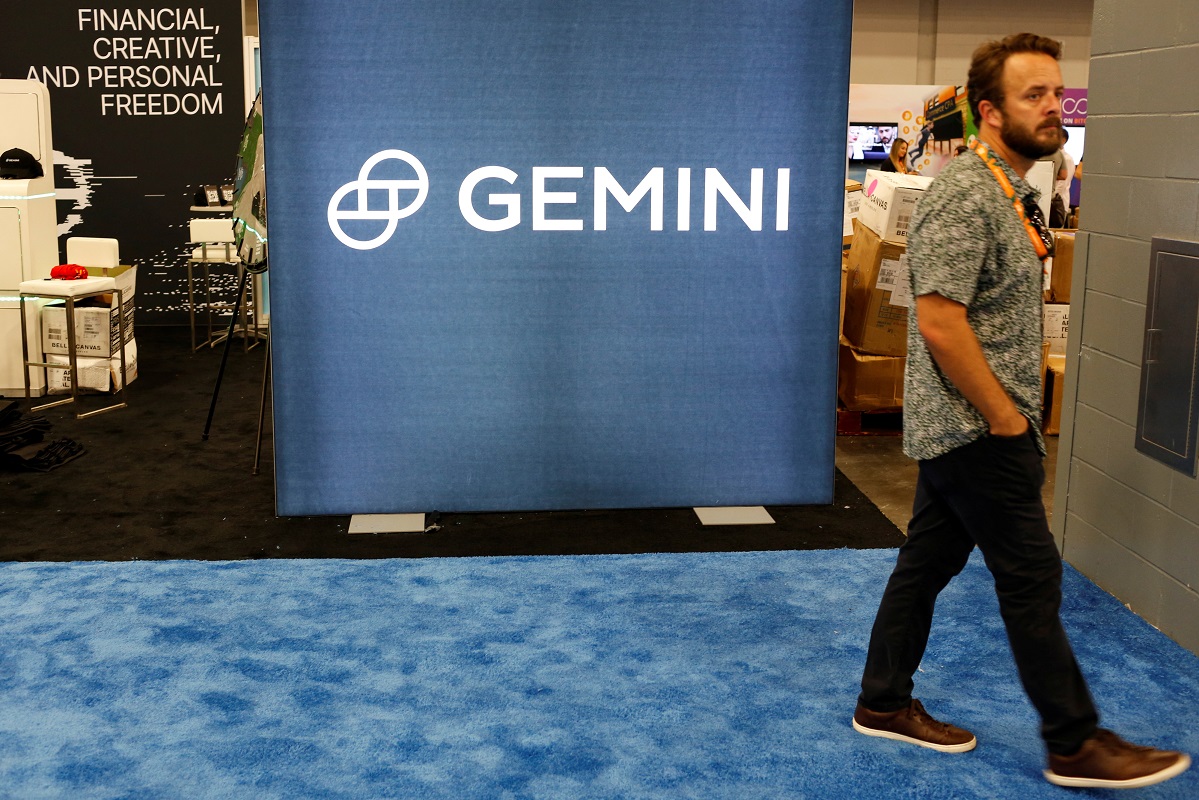
A man walks past the logo of Gemini Trust, a digital currency exchange and custodian, during the Bitcoin Conference 2022 in Miami Beach, Florida, U.S. April 6, 2022. REUTERS/Marco Bello/Files

Gemini, one of the leading cryptocurrency exchanges in the US, has filed a lawsuit against Digital Currency Group (DCG), the parent company of Grayscale Investments and CoinDesk, and its founder and CEO Barry Silbert. The lawsuit, which was filed in the New York Supreme Court on July 6, 2023, alleges that DCG and Silbert engaged in a “fraudulent scheme” to manipulate the price of Bitcoin and other cryptocurrencies, and to harm Gemini’s reputation and business.

According to the complaint, DCG and Silbert used their influence and control over Grayscale, which operates the largest Bitcoin trust in the world, and CoinDesk, which is the most popular cryptocurrency news outlet, to create artificial demand and supply for Bitcoin and other digital assets. The complaint seeks compensatory damages, punitive damages, injunctive relief, and attorney’s fees from DCG and Silbert. Gemini also demands a jury trial for the case.

The complaint claims that DCG and Silbert orchestrated a series of “pump and dump” schemes, in which they would hype up certain cryptocurrencies through Grayscale’s products and CoinDesk’s coverage, and then sell them at inflated prices to unsuspecting investors.

The complaint also accuses DCG and Silbert of spreading false and defamatory information about Gemini and its founders, Tyler and Cameron Winklevoss, who are well-known advocates of Bitcoin regulation and innovation.

The complaint states that DCG and Silbert were motivated by “greed, envy, and malice” towards Gemini and the Winklevoss twins, who have been rivals in the cryptocurrency space since 2014, when they sued Silbert for allegedly stealing their idea of creating a Bitcoin exchange-traded fund (ETF).

The lawsuit seeks unspecified damages for fraud, breach of contract, defamation, unfair competition, and other claims. It also demands a jury trial and an injunction to stop DCG and Silbert from continuing their alleged misconduct. Gemini issued a statement on its website, saying that it filed the lawsuit “to protect our customers, our industry, and the integrity of the cryptocurrency market.”

“We believe that DCG and Silbert have violated the trust of millions of investors and consumers who rely on them for unbiased and accurate information and services.

According to the complaint, DCG and Silbert used their “vast network of media outlets, social media accounts, industry connections, and loyal followers” to spread false and defamatory statements about Gemini, its products, its security, its compliance, and its founders. The complaint also claims that DCG and Silbert orchestrated a series of “cyberattacks, hacking attempts, phishing schemes, and denial-of-service attacks” against Gemini’s platform and systems, causing significant damages and losses.

The lawsuit further accuses DCG and Silbert of violating the terms of a confidential settlement agreement that was reached in 2018, after Gemini sued DCG for infringing on its trademark rights over the term “Gemini Dollar”, a stablecoin issued by Gemini. The settlement agreement required DCG to cease using the term “Gemini Dollar” and to refrain from any conduct that would harm Gemini’s goodwill or reputation.

Gemini’s co-founders Tyler and Cameron Winklevoss issued a joint statement on their official blog, saying that they were “left with no choice but to take legal action” after exhausting all other options to resolve the dispute amicably. They said that they were “confident that the truth will prevail” and that they would “continue to focus on building the future of money”.

DCG and Silbert have not yet responded to the lawsuit or commented on the allegations. However, sources close to DCG told CoinDesk, a media outlet owned by DCG, that the lawsuit was “baseless and frivolous” and that they would “vigorously defend themselves in court”.