DD
MM
YYYY

PAGES

DD
MM
YYYY

spot_img

PAGES

Home Blog Page 4043

US Stock Surge After House of Representatives Passed a Bill to Avoid a Government Shutdown

0

Investors breathed a sigh of relief on Wednesday morning, as US stock futures indicated a higher open for the major indexes. The positive sentiment came after the House of Representatives approved a bill late Tuesday night that would fund the government through December 3, averting a potential shutdown that could have disrupted the economy and the markets.

The bill, which passed by a vote of 220 to 211, with no Republicans supporting it, now heads to the Senate, where it faces an uncertain fate. The Senate must act by Thursday night to prevent a lapse in federal funding that would affect millions of workers and services. The bill also includes a suspension of the debt ceiling until December 2022, which would allow the government to continue paying its bills and avoid a default that could trigger a global financial crisis.

However, some Republican senators have vowed to block the bill, arguing that raising the debt limit would enable more spending by the Democrats, who are pursuing a $3.5 trillion social and environmental package. The Democrats have said they will not negotiate with the Republicans over the debt ceiling, which they say is a bipartisan responsibility that has been raised dozens of times under both parties.

The impasse over the debt ceiling could overshadow the positive news from the House vote, which lifted some of the uncertainty that has weighed on the markets in recent weeks. The Dow Jones Industrial Average futures rose 0.4%, while the S&P 500 futures and the Nasdaq 100 futures gained 0.5% and 0.6%, respectively, as of 6:30 a.m. ET Wednesday.

The market rally also reflected optimism about the economic recovery, as data showed that consumer confidence rebounded in September after a sharp drop in August. The Conference Board’s consumer confidence index rose to 109.3 from 115.2 in August, beating expectations of 115.0. The index measures consumers’ assessment of current economic conditions and their outlook for the next six months.

The improvement in consumer confidence could bode well for consumer spending, which accounts for about 70% of US economic activity. Consumer spending has been resilient despite the surge in Covid-19 cases due to the Delta variant, which has dampened business activity and hiring. The Commerce Department reported on Tuesday that personal income rose 0.2% in August, while personal spending increased 0.8%, both beating estimates.

The market will also be watching for new clues on the Federal Reserve’s monetary policy plans, as Fed Chair Jerome Powell testifies before the House Financial Services Committee. Powell is expected to reiterate his message from last week’s Fed meeting, where he said that the central bank could start tapering its $120 billion monthly bond purchases as soon as November, if the economy continues to improve.

However, he also stressed that tapering does not mean tightening, and that interest rates will remain near zero until inflation and employment reach the Fed’s goals. Investors will get more clues about the state of the economy from the ADP private payrolls report, which is expected to show that employers added 428,000 jobs in September, up from 374,000 in August.

The report is seen as a precursor to Friday’s nonfarm payrolls report, which is one of the most closely watched indicators of the health of the labor market and the recovery. The consensus estimate is for 488,000 jobs added in September, down from 235,000 in August. The unemployment rate is expected to drop to 5.1% from 5.2%. Other data on tap for Wednesday include the final reading of second-quarter GDP growth, which is expected to be unchanged at 6.6%, and pending home sales for August, which are expected to rise by 0.4% after falling by 1.8% in July.
Argentina’s Inflation Rises to 143%

0

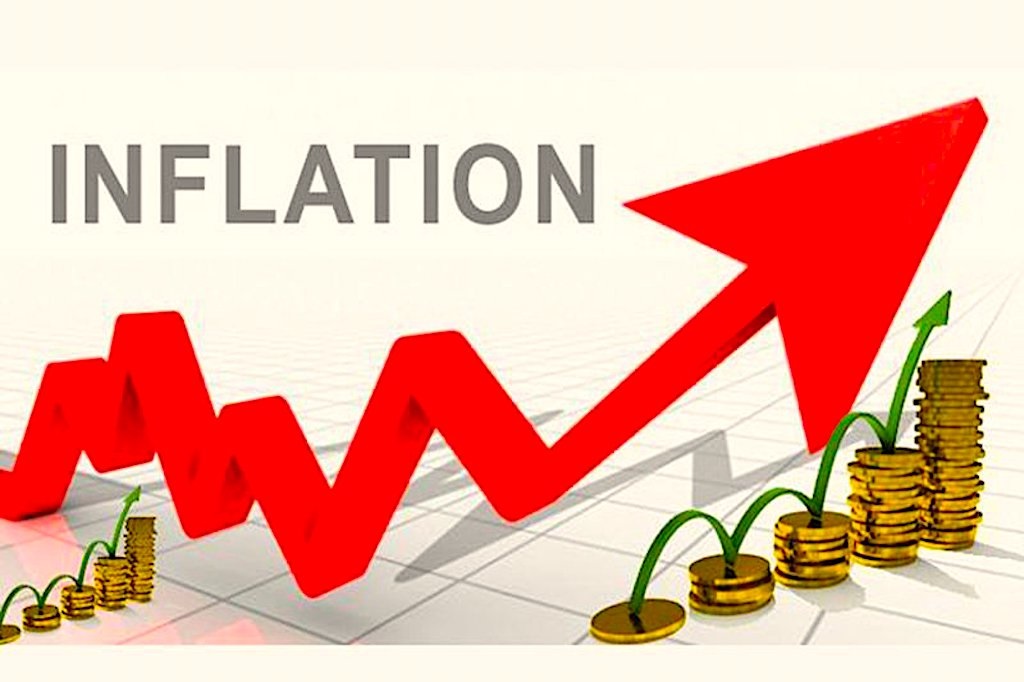
Argentina is facing a deepening economic and social crisis as its annual inflation rate reached 143% in October, the highest in the world. The country has been struggling with chronic inflation for decades, but the situation has deteriorated sharply since the onset of the Covid-19 pandemic, which has triggered a collapse in economic activity, a surge in public spending, and a loss of confidence in the peso.

The government of President Alberto Fernández has tried to contain the inflationary spiral by imposing price controls, subsidies, and exchange rate restrictions, but these measures have failed to address the underlying causes of the problem and have created distortions and shortages in the market.

Moreover, the government has been unable to secure a new deal with the International Monetary Fund (IMF) to restructure its $45 billion debt, which has increased the uncertainty and risk aversion among investors and consumers.

The consequences of hyperinflation are devastating for the population, especially for the poor and vulnerable groups. According to official data, poverty increased from 35.5% in 2019 to 42% in 2020 and is expected to rise further this year. The purchasing power of wages and pensions has eroded dramatically, while basic goods and services have become unaffordable for many. Social unrest and political instability are also growing, as people express their frustration and anger with the government’s policies and performance.

History of Argentina’s inflation problem

Argentina is currently facing the worst inflation crisis in the world, with an annual rate of 143% in October. This is not a new phenomenon, however, as the country has a long and painful history of high and volatile inflation, dating back to the 1940s.

The first episode of hyperinflation occurred in 1989-1990, when prices rose by more than 3000% per year, as a result of fiscal imbalances, monetary expansion, and external shocks. The government of Carlos Menem implemented a radical stabilization plan, known as the Convertibility Plan, which fixed the exchange rate at one peso per dollar and eliminated the central bank’s autonomy. This brought inflation down to single digits, but also created a rigid and unsustainable economic system that collapsed in 2001-2002, after a severe recession and a massive debt default.

The second episode of hyperinflation took place in 2002-2003, when prices increased by more than 1000% per year, as a consequence of the devaluation of the peso, the breakdown of the banking system, and the social and political turmoil. The government of Néstor Kirchner adopted a heterodox approach, based on fiscal surpluses, export taxes, price controls, and exchange rate interventions. This allowed for a rapid recovery and growth, but also generated distortions and imbalances that undermined the credibility and effectiveness of the policy framework.

The third episode of hyperinflation is happening now, since 2018, when inflation accelerated from 25% to over 140% per year, as a result of fiscal deficits, monetary emission, and external vulnerabilities. The government of Mauricio Macri sought to restore macroeconomic stability and confidence, with the support of a $45 billion loan from the IMF but failed to achieve its targets and faced a severe currency crisis and recession.

The current government of Alberto Fernández has inherited a difficult situation, worsened by the Covid-19 pandemic, and has not been able to implement a coherent and consistent strategy to reduce inflation and restore growth.

Argentina’s inflation problem is not only an economic issue, but also a social and political one. It affects the living standards and well-being of millions of people, especially the poor and vulnerable groups. It also erodes the trust and legitimacy of the institutions and authorities responsible for managing the economy.

It requires a comprehensive and long-term solution, based on fiscal and monetary discipline, structural reforms, and social consensus. Without these elements, Argentina will continue to suffer from chronic inflation and instability.

The outlook for Argentina is bleak, unless there is a radical change in the economic strategy and a credible commitment to fiscal and monetary discipline. The country needs to restore macroeconomic stability, reduce inflation expectations, and regain access to international financing.

This will require tough decisions and sacrifices, but also a broad consensus and dialogue among all sectors of society. Only then can Argentina hope to overcome its chronic inflation problem and achieve sustainable and inclusive growth.

Investors are Shaking up the Venture Capital Market by Raising Money to Buy Out Startups

0

A new trend is emerging in the Startup Ecosystem, where investors are creating funds to acquire companies that have been overlooked or rejected by traditional venture capital firms. These investors, sometimes called “acquirers”, are looking for profitable, scalable and sustainable businesses that can generate cash flow and growth without relying on external funding.

Acquirers are different from private equity firms, which typically buy mature companies with established market positions and revenues. Acquirers target younger companies that have not yet reached their full potential but have proven their product-market fit and customer loyalty. Acquirers offer these companies a way to exit the market without going through an IPO or a trade sale, which can be risky, costly and time-consuming.

Acquirers claim that they can provide more value to the founders and employees of these companies than venture capitalists, who often impose strict terms and conditions on their investments, such as board seats, veto rights, liquidation preferences and dilution. Acquirers say that they can offer more flexibility, autonomy and alignment to the entrepreneurs, who can retain a significant stake in their businesses and continue to run them as they see fit.

Acquirers also argue that they can create more social impact than venture capitalists, who tend to focus on high-growth sectors such as software, biotech and fintech, while neglecting other areas such as education, health care and sustainability. Acquirers say that they can support more diverse and inclusive founders and teams, who may face discrimination or bias from traditional investors.

Acquirers are not a new phenomenon, but they have gained more prominence and popularity in recent years, as the startup landscape has become more crowded and competitive. According to Pitchbook, a data provider, there were 2,277 acquisitions of venture-backed companies in 2020, up from 1,838 in 2019. The median deal size was $60 million, up from $40 million in 2019. Some of the most active acquirers in 2020 were Thomma Bravo, Vista Equity Partners, Insight Partners and Francisco Partners.

Some examples of successful acquisitions by acquirers include:

Mailchimp, an email marketing platform, was acquired by Intuit for $12 billion in November 2021. Mailchimp was founded in 2001 and bootstrapped its way to profitability and scale, reaching $800 million in revenue in 2020. It had never raised any venture capital funding.

Wrike, a project management software company, was acquired by Citrix for $2.25 billion in January 2021. Wrike was founded in 2006 and raised only $26 million in venture capital funding. It had over 20,000 customers and 1,000 employees at the time of the acquisition.

Calendly, a scheduling software company, was acquired by OpenView Partners for $3 billion in January 2021. Calendly was founded in 2013 and raised only $550,000 in seed funding. It had over 10 million users and 200 employees at the time of the acquisition.

The rise of acquirers poses both opportunities and challenges for the venture capital industry. On one hand, acquirers can provide an alternative exit option for venture-backed companies that may not be able to go public or sell to a larger corporation. Acquirers can also help venture capitalists recycle their capital faster and generate higher returns for their limited partners.

On the other hand, acquirers can also compete with venture capitalists for deal flow and talent, as they may offer more attractive terms and conditions to the entrepreneurs. Acquirers can also disrupt the traditional power dynamics and incentives between investors and founders, as they may have different goals and expectations for the companies they acquire.

Why are SPACs shaking up the venture capital market by raising money to buy out startups?

SPACs, or special purpose acquisition companies, are a new trend in the venture capital market that has been gaining momentum in recent years. SPACs are essentially shell companies that go public with the sole purpose of acquiring a private company, usually a startup, within a specified time frame. SPACs raise money from investors through an initial public offering (IPO), and then use that money to buy out a target company, which then becomes public as a result of the merger.

SPACs offer several advantages for both the acquirers and the targets. For the acquirers, SPACs provide a faster and cheaper way to go public than a traditional IPO, which can take months or years and involve hefty fees and regulatory hurdles. SPACs also allow the acquirers to have more control over the valuation and deal terms, as they can negotiate directly with the target company without the interference of underwriters or market fluctuations.

For the targets, SPACs offer an alternative exit strategy that can be more attractive than an IPO or a trade sale. SPACs can offer higher valuations, more certainty, and less dilution for the target company’s shareholders, as well as access to a larger pool of capital and public market exposure.

However, SPACs also come with some risks and challenges. For the acquirers, SPACs require them to find a suitable target company within a limited time frame, usually 18 to 24 months, or else they have to return the money to the investors and dissolve the SPAC. SPACs also face competition from other SPACs and traditional investors for attractive targets, which can drive up the prices and lower the returns.

For the targets, SPACs can expose them to more scrutiny and liability as public companies, which can be challenging for early-stage startups that may not have mature products, revenues, or governance structures. SPACs can also dilute the target company’s ownership and influence, as they typically give up 20% of their equity to the SPAC sponsors and investors.

SPACs are shaking up the venture capital market by raising money to buy out startups because they offer a new way of bridging the gap between private and public markets. SPACs can create value for both the acquirers and the targets by facilitating faster and more flexible transactions that can benefit both parties. However, SPACs also entail some trade-offs and uncertainties that need to be carefully weighed and managed by both sides. SPACs are not a one-size-fits-all solution, but rather a novel option that can complement or compete with other forms of financing and exiting for startups.

The emergence of acquirers is a sign of the evolution and maturation of the startup ecosystem, where different types of investors can coexist and cater to different types of entrepreneurs. Acquirers are shaking up the venture capital market by offering a new way to buy out startups that have been shunned by venture capitalists.

Nigeria’s 2024 Budget Plan And Three Critical Elements for Development

0

As expected, there is a convergence in the market system, and whenever that happens, changes must take place for new equilibriums to emerge. In Nigeria, we cannot rely on Goldman Sachs and other big American banks to fund our national budgets, even if we want to sign off crude oil and natural gas deliveries, primarily because the interest rate regime in America is now out of the roof.

The minister echoed the words: “Clearly, the environment that we have now, internationally as well as nationally, we are in no position to rely on borrowing.”

Consequently, like they say in the Igbo Nation, you do not tell a deaf person that war has broken out, because when wars begin, everyone knows, including the deaf. The credit system in the Western world has changed and even with crude oil and natural gas serving as collaterals, it makes no sense to borrow, since if you take that loan at those high rates, the unborn tomorrow would have been dead yesterday.

What is the plan? Do what nations do to thrive: Merit-based system, Pragmatic Innovation, and Honest Leadership. Nigeria must meet those three elements before we can advance; no short-cut! I have a plot of 2,000 years of gross world product and all the nations I examined for that piece in the Harvard Business Review, these three elements elevated them into abundance and prosperity.

“They are in the process, sacrificing that immediate goal for compacting their economies, or at least contracting the money supplies and pushing up the interest rates and of course, high-interest rates and investments don’t go together.

“What is left for us to access those funds are expensive so it is the last thing that we must rely on. As we know we have all the figures and debt servicing and cushioning 98 per cent of government revenue.

“The last thing you can think of is to pike on more debts. The government needs to not just maintain its activity, it needs to spend more. If you look at government spending, if you look at the budget as a percentage of GDP, ours is one of the lowest being 10%, even Ghana is at 25%, and rich ones they are 50%.”

Nigeria’s Reliance on Borrowing to Fund Budgets No Longer Sustainable – Finance Minister

Nigeria’s Reliance on Borrowing to Fund Budgets No Longer Sustainable – Finance Minister

0

Nigeria’s Minister of Finance and Coordinating Minister for the Economy, Wale Edun, has stated that relying on borrowing to fund the 2024 budget is not a sustainable option for the country.

Edun made this disclosure during his appearance on Thursday before the joint Senate Committee examining the 2024-2026 Medium Term Expenditure Framework and Fiscal Strategy Paper, chaired by Senator Sani Musa.

Accompanied by the Executive Chairman of the Federal Inland Revenue Service (FIRS), Zacch Adedeji, and the Director General of the Debt Management Office, Patience Oniha, the finance minister disclosed that the most viable approach for funding Nigeria’s annual budgets is to prioritize increased spending on infrastructure rather than relying heavily on borrowing.

He stated: “We have an existing borrowing profile. Our direction of tariff is to reduce the quantum of borrowing or intercepting deficit financing in the 2024 budget.

“Clearly, the environment that we have now, internationally as well as nationally, we are in no position to rely on borrowing.

“They are in the process, sacrificing that immediate goal for compacting their economies, or at least contracting the money supplies and pushing up the interest rates and of course, high-interest rates and investments don’t go together.

“What is left for us to access those funds are expensive so it is the last thing that we must rely on. As we know we have all the figures and debt servicing and cushioning 98 per cent of government revenue.

“The last thing you can think of is to pike on more debts. The government needs to not just maintain its activity, it needs to spend more. If you look at government spending, if you look at the budget as a percentage of GDP, ours is one of the lowest being 10%, even Ghana is at 25%, and rich ones they are 50%.”

Nigeria’s public debt stock rose from N12.6 trillion in 2015 to N87 trillion in 2023 without significant improvements in developmental indices such as education, healthcare, poverty alleviation, and security. This backdrop has created a dire economic situation that the country is currently grappling with.

Economic reforms aimed at reviving the economy are yet to yield results. Edun said at the 2023 Annual Directors Conference of the Chartered Institute of Directors Nigeria on Thursday in Abuja that its benefits will take some time to materialize.

The minister highlighted that the country lacks sufficient foreign exchange savings to maintain a positive balance of trade. Consequently, he emphasized the importance of ensuring that export earnings surpass import expenditures in order to stabilize the national currency.

“The agenda is to provide first and foremost a stable economy, growing more than population growth, with low inflation, stable foreign exchange to enable investments in productive activities. This is what the president is working on and we are a work in progress and we look forward to the task at hand.

“The big price is to make ourselves a formidable economy, our institutions a corporate governance place so that those interested in investing can have trust in their investment. The IoD has a major role to play in championing corporate governance, so we have a clean lead corporate sector which the world can come and partner for growth and progress,” he said.

This approach is seen as crucial for achieving a more favorable trade balance and addressing foreign exchange challenges.