
DD
MM
YYYY

PAGES

DD
MM
YYYY

spot_img

PAGES

Home Blog Page 4045

Native Banks, Blockchain and the Future of Financial Services

0

Web 3.0’s upcoming layer 2.0 creation is characterized by the advancement of digital finance and the unwaveringly quick rise of technology in the world market. A problem can generate countless conclusions that can lead to countless solutions, whether they make life simpler or not. With the help of chatbotGPT and Google search (Blackbox AI), the history of the internet is well-known. I’m not writing about AI protocol, yet it is the future. Blockchain is a technology that is here to stay in terms of advancing society. The majority of the world’s power is battling against this technology because they are not earning as much from it as they do from the local banks.

I can’t speak for everyone, but because of their thinking, not everyone is aware of the nature of blockchain or has discovered it. The creation of projects that access the test net, the node protocol, the deployment of contracts, and so many other things make this space confusing and call for more explanation (education).

Whether owned by the private sector or not, the government always controls native banks through its rules and regulations. According to the social stratification theory, the lower middle class or lower class is actually affected by this rule and order. Money shortage occurred during this time, and the local banks severely suffered before the previous Nigerian election started. Many Nigerians were unable to access their money. Many citizens from various parts of the nation lost their life at this time. Why was it impossible for the Nigerian government or central bank to resolve these issues at the time? It’s because the Nigerian government has already taken control of the financial system’s power center, which now makes the local native region banks acts like a zombie. This should serve as a warning to local banks at this time. What the POS charges for withdrawals is unimportant to discuss. Because of the massive manipulation of domestic banks, I said that blockchain technology was here to stay. I was able to handle some transactions from the blockchain network during this time without experiencing any stress, and some knowledgeable vendors who really understood the instructional nature of blockchain took advantage of it.

This summary will help you better grasp the topic we’re about to explore;

Native Bank Technology’s Properties

Anything that is typically accepted as a means of commerce or other forms of financial obligation is considered money. The brilliant economist discussed and emphasized the history of money and its applications so that everyone may understand how priceless and important it is. Based on research that promotes learning and development, native banks have implemented new laws and policies because outdated methods of saving money don’t work and cause the value of the currency to decline. However, education allows consumers to start using their local banks to save and invest in bonds, fixed income, and other investment requirements. However, I have embraced this innovation up to this point and am still using it since new technology cannot instantaneously replace or subvert old technology. I don’t mean to criticize the local banks, but their connection with the government is like that of a monkey and a banana.
The higher and middle classes benefit from this approach while the common user is seriously harmed by the manipulation of the local banks. This is referred to as banking’s centralized nature. A centralized banking system essentially means that the decision to approve or reject each and every transaction that occurs within the system rests with them.

All user data is under their control for simple manipulation

Native banks have made significant contributions to society at large, enabling the general public to feel secure and believe in the value of saving money. The establishment of native banks strongly encourages individuals to stop storing their valuables, such as gold, diamonds, native currency, and other precious materials, in their houses. Through the process of study, this technology has provided solutions to a myriad of issues, and it has also brought about a number of innovations that have given consumers greater confidence in their local banking system. the introduction of electronic banking services like mobile banking, ATMs, and others.

Blockchain technology was created as a result of constraints in native bank transactions
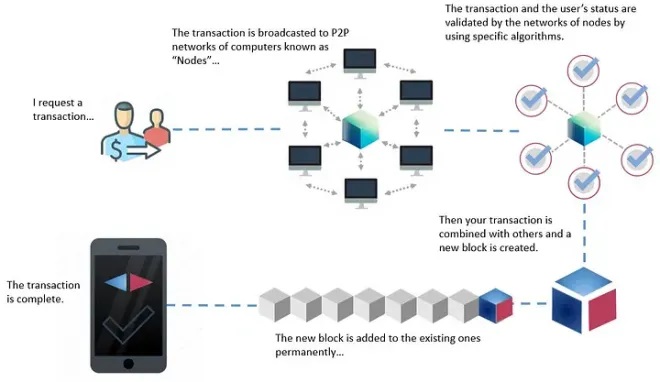
A single theory can enrich several creations and innovations to address issues that can be on the right or incorrect side. Blockchain technology is created by a native bank thanks to an anonymous protocol. I believe there would be no need for research if there were no issues. There is a tendency for humans to solve problems, create things, and develop things that will lead to a better existence. Nothing worthwhile — good or bad — comes easily and requires a lot of effort to accomplish.

Blockchain technology was created as a result of the native banking system protocols on transactional policy, western payment policy, American payment policy, Barriers in cross-border transfer, governmental policy, bank liquidation, fees, and minimum/maximum withdrawal. Although some people have been employing this technology on the dark web, where physical science is altered, since Satoshi, the individual who is credited with creating Bitcoin, first introduced it to the world. To complete an offer, these people engaged in a peer-to-peer transaction on the dark web. However, examining the history of cryptocurrencies will bring you to your knees as you realize that they were initially used as a dark web payment method.

The straightforward definition of money as it is used for payments and other commercial obligations in general. It is no longer anonymous or legitimate as long as it is accepted on a worldwide scale. Well, some nations continue to fight against blockchain technology to this day.

In terms of the financial transaction protocol, blockchain technology only facilitates transactions more than native institutions, but the nature of blockchain transactions and their use demands a clear, educational explanation for the user. 90% of individuals feel more at ease utilizing a native bank to complete their transaction because they perceive it to be more trustworthy and reliable given how natives protect citizens’ interests and uphold the law. You can’t, however, do it all.

Is the native bank going out of business?

It may depend on the technology, but new technology never completely surpasses old technology. However, as you can see, bank-native technology is here to stay and will eventually become obsolete. 90% of people worldwide utilize local banks for their regular financial transactions. All users must have the attitude that creating a bank account is absolutely important in order to conduct their everyday transactional activity. Yes, native banks are more often regarded as trustworthy financial institutions than blockchain technology. When discussing blockchain technology with a buddy yesterday, he responded that he had no idea what I was talking about but that having a native bank account was 100% necessary.

Even the supposedly poorest members of society in Nigeria joke about opening a native bank account. I haven’t seen anyone in Nigeria without a native bank account. These examples demonstrate how native banks have made significant and continuous contributions to the local and international communities in order to secure their assets and properties. Blockchain is still a young technology, and because banking is a native technology, native will always exist in 100 years. Native Bank’s motto is “War will come and go, but our land still remains our land.”

Why is there a lot of government policy around Blockchain technology?

I believe that government policies have influenced international trade, allowing the government to tax its way to a better understanding of the nature of production and development. The global government embraces and legally protects the technology that is profitable to them. Due to its anonymous nature, blockchain technology continues to generate headaches for the world’s governments.

Any land on which you personally uncover gold is the one you must secure and protect until you remove everything from the land. This is how some businesses, particularly those that provide goods and services, and some technologies are governed by the government.

Whether it be due to blockchain technology’s anonymous character, the many trends of wallet losses, or fraud in the protocols, the official and legal world government does not gain from it. The reason why the government detested blockchain technology was that they could never influence it. The primary cause of this animosity is that. They made an effort to learn how transactions are handled and who is in charge of managing them. However, the technology’s nature has remained anonymous ever since the dark web. However, they enforce a regulation requiring blockchain technology to have a KYC mechanism. Now for the summary.

In conclusion, as a beginner, I’m interested in learning how to create money and manage it as well.
Blockchain and native banks are essential to human financial existence. Just accept and become familiar with the process to find out how to conduct business while surpassing regulatory regulations.


Customers seek financial assistance from Access Bank amidst economic challenges

0

In what appears to be a response to the lingering impacts of some recent policies of the administration of President Bola Ahmed Tinubu, our analyst reports that some customers of Access Bank, one of the leading commercial banks in Nigeria, have turned Twitter into a space where they could get financial support from the bank. Our analyst observes this from over 300 tweets monitored between July 1 and July 2, 2023, until 4:00 am local time.

Our analyst notes that a significant number of tweets highlight individuals facing financial difficulties and seeking help from Access Bank or other Twitter users. These requests range from basic needs like food and shelter to requests for loans or grants. The prevalence of such tweets suggests a broader concern regarding the economic challenges faced by individuals and their reliance on financial institutions for support.

According to our analyst, the majority of the help seekers provided a detailed account without considering the potential public outcry that could follow their action. One customer says, “Boss, please help me. I need to pay my wife’s hospital bill for surgery.” This was tweeted at 3:54 a.m. on July 2, 2023.

“I have never won your give-away before. I am hopeful you will select me today. I really need it for my school fee and drugs for my parents. Thank you,” another user says.

“Please locate me today, sir. I am tired of being here, but I will never relent.”

“Exams didn’t let me work this period. Nothing at home, which I’d really appreciate!

“I surely know that one day my time will come; I believe that…”

A user with JacksonMfon07, who tagged BlessingGives, appears to be requesting help from an individual, not the bank, saying everything the person (BlessingGives) asked for has been done. JacksonMfon07 states further that please, my birthday is this month, July 19th.”

It will be recalled that in 2020, the bank gave out N5 billion to 20,000 customers in the DiamondXtra savings scheme. As of the time of writing this insight, our analyst could not link the help patterns to this scheme. However, our checks using multiple search engines reveal that people have had significant interest in whether the bank is giving out money to people through one of its marketing and sales promotion schemes or campaigns.

Ethereum co-founder Vitalik Buterin thinks the over $40 Billion Staked ETH can be Stolen

3

In a recent Podcast, Ethereum co-founder Vitalik Buterin expressed his concerns about the security of the Ethereum 2.0 network, which is currently in the process of transitioning from a proof-of-work (PoW) to a proof-of-stake (PoS) consensus mechanism. PoS is supposed to make the network more scalable, energy-efficient and decentralized, but it also introduces new risks and challenges.

One of the main issues that Buterin highlighted is the possibility of a large-scale theft of the staked ETH, which are the tokens that validators lock up in order to participate in the network and earn rewards. According to Buterin, there are two scenarios in which this could happen: a software bug or a malicious attack.

A software bug could occur if there is a flaw in the code of the Ethereum 2.0 client software, which is responsible for running the nodes and validating the transactions. If such a bug is exploited, it could allow an attacker to steal or manipulate the staked ETH of other validators, or even cause the network to fork or halt. Buterin said that this is a “low-probability but high-impact” event, and that the developers are working hard to ensure that the code is as secure and bug-free as possible.

A malicious attack could occur if a large enough group of validators colludes to take over the network and censor or revert transactions. This is known as a “51% attack”, and it is theoretically possible in any blockchain network. However, Buterin argued that this is more likely to happen in PoS than in PoW, because PoS makes it easier and cheaper for validators to acquire a majority stake in the network. He said that this is a “high-probability but low-impact” event, and that the network has built-in mechanisms to deter and punish such behavior.

Buterin estimated that the total value of the staked ETH on Ethereum 2.0 is currently over $40 billion, making it a very attractive target for hackers and attackers. He said that this is one of the reasons why he is not staking his own ETH on the network, and that he prefers to keep his tokens in cold storage. He also advised other users to be careful and vigilant when staking their ETH, and to use reputable and trustworthy staking services or platforms.

Buterin concluded by saying that he is optimistic about the future of Ethereum 2.0, and that he believes that the benefits of PoS outweigh the risks. He said that he expects the network to become more secure, stable and efficient over time, as more validators join and more features are implemented. He also said that he hopes that Ethereum 2.0 will inspire other blockchain projects to adopt PoS and contribute to the innovation and growth of the crypto space.

A Business Owner Can Refuse Serving Gay Couple; The Recent US Supreme Court judgment

1

The media has been awash with the reportage of the United States Supreme Court judgment of 30th June 2023 in the case of 303 Creative LLC v. Elenis which in effect holds that a private business can refuse to render services to customers they believe are gay if their beliefs are against gay and the state cannot force them to go against their belief to render services to any and everybody.

I have so far seen and read a series of false reportage embellished with propaganda on this case, obviously sponsored by gay rights activists so as to cause public uproar  but most of those reportage are false and misleading but herein is a summary of the event leading to this famous case, the judgment of the Supreme Court and its ratio decidendi;

Lorie Smith, a Christian graphic artist and website designer based in Colorado was contacted by a gay couple to design a website for them for their gay marriage, Lorie Smith being a Christain turned down the job stating affirmatively that her beliefs and faith as a Christain is against same-sex marriage and it will go against her believe to design a website that is promoting and passing gay messages.

The state of Colorado was to compel her to take any and every job and turning down any job just because it offends her beliefs will go against Colorado’s Anti-Discrimination Act. Lorie Smith then approached the court seeking an injunction against the state of Colorado not compelling her to design artwork for gay couples.

The Supreme Court in a 6-3 decision subsequently ruled that Lorie Smith cannot be compelled by the state to design same-sex marriage sites if it offends her belief or faith, forcing her to do that offends the United States first amendment rights. 

This case has cast a shell against gay rights activists who always want to force their sexual orientation down the throat of others and if you dare resist them they will come after you for discriminating against them based on their sexual orientation.

Therefore, from now henceforth, a restaurant owner may refuse to attend to gay couples or allow gay couples to host their events in his venue if it offends his or her belief; a Christian priest can now legally turn down officiating a gay couple’s wedding and he won’t be sued for discrimination.

As you are validly exercising your right to be gay, another person can as well exercise his or her rights not to be associated with you and both exercises will be valid and legal. You cannot force the exercise of your own rights down the throat of others.

See The Professional “Burning Bush”, and Position to Lead in That Company

0

One of the greatest attributes for leadership is authenticity. Others are awareness and observation. Without awareness and observation, we miss opportunities even when they’re glaring.  Let’s take a case study.

He was on Horeb, and saw a burning bush. The bush was on fire but it did not burn up. So he thought, “I will go over and see this strange sight—why the bush does not burn up.”

First, his attention was needed for a very important message. He needed to be consumed by something uncommon. Secondly, his bravery was tested: he went over instead of running away when he saw the burning bush. Then, his God called him “Moses! Moses!” and revealed a mission.

Simply, the burning bush was to get his attention, and that was critical before a big message was to be revealed. In your career, when you see that “burning bush”, did the “burning bush” even get your attention? And if it does, what do you do? Do you run away?

Some people run away while others take the challenges. Yes, take those huge tasks to save that company. Usually, in the middle of that challenge, glory will come. For Moses, it was to lead his brethren; in business, you could be the next CEO, GM, ED, etc!

What is the “burning bush” before you in that company? Without awareness and observation, you may not even know the company is asking for your attention to be called to #LEAD. Until you can see, and approach the “burning bush”, that career ascension may not come.

As we say in the Scripture Union, the next praise will be better because more songs will be discovered, open your eyes to see that professional “burning bush”, and position to lead. Happy Sunday from a nice resort somewhere in America with family.

The Lord said, “I have indeed seen the misery of my people in Egypt. I have heard them crying out because of their slave drivers, and I am concerned about their suffering. So I have come down to rescue them from the hand of the Egyptians and to bring them up out of that land into a good and spacious land, a land flowing with milk and honey—the home of the Canaanites, Hittites, Amorites, Perizzites, Hivites and Jebusites. And now the cry of the Israelites has reached me, and I have seen the way the Egyptians are oppressing them. 10 So now, go. I am sending you to Pharaoh to bring my people the Israelites out of Egypt.”

11 But Moses said to God, “Who am I that I should go to Pharaoh and bring the Israelites out of Egypt?”

12 And God said, “I will be with you. And this will be the sign to you that it is I who have sent you: When you have brought the people out of Egypt, you[b] will worship God on this mountain.”

13 Moses said to God, “Suppose I go to the Israelites and say to them, ‘The God of your fathers has sent me to you,’ and they ask me, ‘What is his name?’ Then what shall I tell them?”